Results by title
1104 books match the query 'Gender Studies' and 37 start with l
Labor of Love
Gestational Surrogacy and the Work of Making BabiesJacobson, Heather
Rutgers University Press, 2016
For more, visit http://www.heatherjacobsononline.com/
Laboring For Rights
edited by Gerald Hunt
Temple University Press, 1999
The chapters included in Laboring for Rights give a global vision to the increasingly important subject of equity in the workplace. They offer a much-needed look at labor's involvement with current international workplace conditions from such diverse countries as the United States, Canada, Australia, Germany, Britain, France, the Netherlands, and South Africa, as well as parts of the South Pacific. Some of these countries have strong and progressive labor unions; some, like the U.S., have relatively weak labor organizations. But whatever the context, as these articles demonstrate, there seems to be a growing and in some instances prospering gay/lesbian labor alliance in many parts of the world.
Laboring for Rights is a pioneering text in an important new area of labor study. It will engage readers interested in equality in the workplace, labor and organizational studies, gay and lesbian activism, and international, comparative studies.
Ladies and Gents
Public Toilets and Genderedited by Olga Gershenson and Barbara Penner, foreword by Judith Plaskow, afterword by Peter Greenaway
Temple University Press, 2009
Public toilets provide a unique opportunity for interrogating how conventional assumptions about the body, sexuality, privacy, and technology are formed in public spaces and inscribed through design across cultures. This collection of original essays from international scholars is the first to explore the cultural meanings, histories, and ideologies of public toilets as gendered spaces.
Ladies and Gents consists of two sets of essays. The first, "Potty Politics: Toilets, Gender and Identity," establishes the importance of accessible, secure public toilets to the creation of inclusive cities, work, and learning environments. The second set of essays, "Toilet Art: Design and Cultural Representations," discusses public toilets as spaces of representation and representational spaces, with reference to architectural design, humor, film, theater, art, and popular culture. Compelling visual materials and original artwork are included throughout, depicting subjects as varied as female urinals, art installations sited in public restrooms, and the toilet in contemporary art.
Taken together, these seventeen essays demonstrate that public toilets are often sites where gendered bodies compete for resources and recognition—and the stakes are high.
Contributors include: Nathan Abrams, Jami L. Anderson, Johan Andersson, Kathryn H. Anthony, Kathy Battista, Andrew Brown-May, Ben Campkin, Meghan Dufresne, Peg Fraser, Deborah Gans, Clara Greed, Robin Lydenberg, Claudia Mitchell, Alison Moore, Frances Pheasant-Kelly, Bushra Rehman, Alex Schweder, Naomi Stead, and the editors.
Lady Chatterley's Legacy in the Movies
Sex, Brains, and Body GuysLehman, Peter
Rutgers University Press, 2010
Peter Lehman and Susan Hunt relate a host of wide-ranging films to a literary tradition dating back to D. H. Lawrence's Lady Chatterley's Lover and an emerging body culture of our time. Through an engaging and compelling narrative, they argue that the hero's body, lovemaking style, and penis-revealed through extensive male nudity-celebrate conformity to norms of masculinity and male sexuality. Simultaneously, these films denigrate the vital, creative, erotic world of the mind. Just when women began to successfully compete with men in the workplace, these movies, if you will, unzip the penis as the one thing women do not have but want and need for their fulfillment.
But Lehman and Hunt also find signs of a yearning for alternative forms of sexual and erotic pleasure in film, embracing diverse bodies and vibrant minds. Lady Chatterley's Legacy in the Movies shows how filmmakers, spectators, and all of us can be empowered to dethrone the body guy, his privileged body, and preferred style of lovemaking, replacing it with a wide range of alternatives.
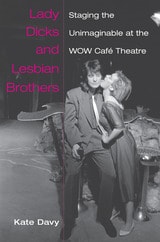
Lady Dicks and Lesbian Brothers
Staging the Unimaginable at the WOW Café TheatreKate Davy
University of Michigan Press, 2010
"A rich and detailed picture of a particular historical moment that has now passed . . . I found myself immersed in the world of the East Village theatre scene and its connections to the larger world of feminism, theatre, and politics. Davy's long-standing association with this world pays off handsomely---it is impossible to imagine that anyone could write a more informative portrait."
---Charlotte Canning, University of Texas at Austin
"After hosting two annual international women's performance festivals in 1980 and '81, Peggy Shaw, Lois Weaver, and comrades put on such extravaganzas as the Freudian Slip party and the Debutante Ball (a coming-out party if ever there was one) to raise the first several months' rent for a narrow vestibule on East 11th Street, where they could keep the creativity going year-round. There, on a stage no bigger than a queen-sized mattress, . . . artists honed their craft, giving birth to a celebratory feminist-and-tinsel-tinged queer aesthetic. By the mid '80s . . . the rent quadrupled, and WOW moved to a city-owned building on East 4th Street, where it has flourished ever since, presenting hundreds---if not thousands---of plays, solo shows, concerts, dance pieces, cabarets, and sundry performances that defy classification."
---Alisa Solomon, Village Voice
Out of a small, hand-to-mouth, women's theater collective called the WOW Café located on the lower east side of Manhattan, there emerged some of the most important theater troupes and performance artists of the 1980s and 1990s, including the Split Britches Company, the Five Lesbian Brothers, Carmelita Tropicana, Holly Hughes, Lisa Kron, Deb Margolin, Reno, Peggy Shaw, and Lois Weaver. The WOW (Women's One World) Café Theatre appeared on the cultural scene at a critical turning point in both the women's movement and feminist theory, putting a witty, hilarious, gender-bending and erotically charged aesthetic on the stage for women in general and lesbians in particular.
The storefront that became the WOW Café Theatre saw dozens of excitingly original and enormously funny performances created, performed, and turned over at lightning speed---a kind of "hit and run" theater. As the demands on the space increased, the women behind WOW organized as a collective and moved their theater to an abandoned doll factory where it continues to operate today. For three decades the WOW Café has nurtured fledgling women writers, designers, and performers who continue to create important performance work.
Lady Dicks and Lesbian Brothers provides a critical history of this avant-garde venture whose ongoing "system of anarchy" has been largely responsible for its thirty-year staying power, after dozens of other women's theaters have collapsed. WOW artists were creating a wholly original cultural landscape across which women could represent themselves on their own terms. Parody, cross-dressing, zany comedy, and an unbridled eroticism are hallmarks of WOW's aesthetic, combined---importantly and powerfully---with a presumptive address to the audience as if everyone onstage, in the audience, and in the world is lesbian. Author Kate Davy's extensive research included in-depth interviews with WOW veterans; newspaper reviews of the earliest productions; and rare, unpublished photographs. The book also includes a chronology of productions that have highlighted WOW's performance schedule since the early '80s.
Kate Davy is currently Provost and Vice Chancellor for Academic Affairs at the University of Michigan-Dearborn. Her previous books include Richard Foreman: Plays and Manifestos and Richard Foreman and the Ontological-Hysteric Theatre.

Lady Dicks and Lesbian Brothers
Staging the Unimaginable at the WOW Café TheatreKate Davy
University of Michigan Press, 2010
"A rich and detailed picture of a particular historical moment that has now passed . . . I found myself immersed in the world of the East Village theatre scene and its connections to the larger world of feminism, theatre, and politics. Davy's long-standing association with this world pays off handsomely---it is impossible to imagine that anyone could write a more informative portrait."
---Charlotte Canning, University of Texas at Austin
"After hosting two annual international women's performance festivals in 1980 and '81, Peggy Shaw, Lois Weaver, and comrades put on such extravaganzas as the Freudian Slip party and the Debutante Ball (a coming-out party if ever there was one) to raise the first several months' rent for a narrow vestibule on East 11th Street, where they could keep the creativity going year-round. There, on a stage no bigger than a queen-sized mattress, . . . artists honed their craft, giving birth to a celebratory feminist-and-tinsel-tinged queer aesthetic. By the mid '80s . . . the rent quadrupled, and WOW moved to a city-owned building on East 4th Street, where it has flourished ever since, presenting hundreds---if not thousands---of plays, solo shows, concerts, dance pieces, cabarets, and sundry performances that defy classification."
---Alisa Solomon, Village Voice
Out of a small, hand-to-mouth, women's theater collective called the WOW Café located on the lower east side of Manhattan, there emerged some of the most important theater troupes and performance artists of the 1980s and 1990s, including the Split Britches Company, the Five Lesbian Brothers, Carmelita Tropicana, Holly Hughes, Lisa Kron, Deb Margolin, Reno, Peggy Shaw, and Lois Weaver. The WOW (Women's One World) Café Theatre appeared on the cultural scene at a critical turning point in both the women's movement and feminist theory, putting a witty, hilarious, gender-bending and erotically charged aesthetic on the stage for women in general and lesbians in particular.
The storefront that became the WOW Café Theatre saw dozens of excitingly original and enormously funny performances created, performed, and turned over at lightning speed---a kind of "hit and run" theater. As the demands on the space increased, the women behind WOW organized as a collective and moved their theater to an abandoned doll factory where it continues to operate today. For three decades the WOW Café has nurtured fledgling women writers, designers, and performers who continue to create important performance work.
Lady Dicks and Lesbian Brothers provides a critical history of this avant-garde venture whose ongoing "system of anarchy" has been largely responsible for its thirty-year staying power, after dozens of other women's theaters have collapsed. WOW artists were creating a wholly original cultural landscape across which women could represent themselves on their own terms. Parody, cross-dressing, zany comedy, and an unbridled eroticism are hallmarks of WOW's aesthetic, combined---importantly and powerfully---with a presumptive address to the audience as if everyone onstage, in the audience, and in the world is lesbian. Author Kate Davy's extensive research included in-depth interviews with WOW veterans; newspaper reviews of the earliest productions; and rare, unpublished photographs. The book also includes a chronology of productions that have highlighted WOW's performance schedule since the early '80s.
Kate Davy is currently Provost and Vice Chancellor for Academic Affairs at the University of Michigan-Dearborn. Her previous books include Richard Foreman: Plays and Manifestos and Richard Foreman and the Ontological-Hysteric Theatre.
Language and Sexuality
Contesting Meaning in Theory and PracticeEdited by Kathryn Campbell-Kibler, Robert J. Podesva, Sarah Roberts, and Andrew
CSLI, 2001
Lara Croft
Cyber HeroineAstrid Deuber-Mankowsky
University of Minnesota Press, 2005
Latina/o Sexualities
Probing Powers, Passions, Practices, and PoliciesAsencio, Marysol
Rutgers University Press, 2010
Situated at the juncture of Latina/o studies and sexualities studies, Latina/o Sexualities provides a single resource that addresses the current state of knowledge from a multidisciplinary perspective. Contributors synthesize and critique the literature and carve a separate space where issues of Latina/o sexualities can be explored given the limitations of prevalent research models. This work compels the current wave in sexuality studies to be more inclusive of ethnic minorities and sets an agenda that policy makers and researchers will find invaluable.
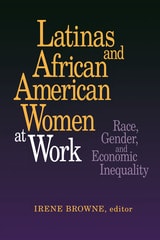
Latinas and African American Women at Work
Race, Gender, and Economic InequalityIrene Browne
Russell Sage Foundation, 1999
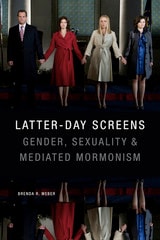
Latter-day Screens
Gender, Sexuality, and Mediated MormonismBrenda R. Weber
Duke University Press, 2019

Laughing at the End of the World
Unsettling Laughter in Black LiteratureDiego A. Millan
Duke University Press, 2027
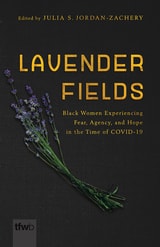
Lavender Fields
Black Women Experiencing Fear, Agency, and Hope in the Time of COVID-19Edited by Julia S. Jordan-Zachery
University of Arizona Press, 2023
Black women and girls in the United States are among the hardest hit by the pandemic in terms of illnesses, deaths, evictions, and increasing economic inequality. Riffing off Alice Walker’s telling of her search for Zora Neal Hurston, the authors of these essays and reflections offer raw tellings of Black girls’ and women’s experiences written in real time, as some of the contributors battled COVID-19 themselves.
The essays center Black girls and women and their testimonies in hopes of moving them from the margin to the center. With a diversity of voices and ages, this volume taps into the Black feminine interior, that place where Audre Lorde tells us that feelings lie, to access knowledge—generational, past, and contemporary—to explore how Black women navigate COVID-19. Using womanism and spirituality, among other modalities, the authors explore deep feelings, advancing Black feminist theorizing on Black feminist praxis and methodology.
In centering the stories of Black girls and women’s experiences with COVID-19, this work brings much-needed justice and equity to conversations about the pandemic. Just as Walker worked diligently to find Hurston, Lavender Fields attempts to “find” Black women amid all we are experiencing, ensuring visibility and attention.
Contributors
Tamaya Bailey
reelaviolette botts-ward
Kyrah K. Brown
Brianna Y. Clark
Kenyatta Dawson
LeConté J. Dill
Maryam O. Funmilayo
Brandie Green
Courtney Jackson
Sara Jean-Francois
Julia S. Jordan-Zachery
Angela K. Lewis-Maddox
Annet Matebwe
Mbali Mazibuko
Radscheda Nobles
Nimot Ogunfemi
J. Mercy Okaalet
Chizoba Uzoamaka Okoroma
Peace Ossom-Williamson
Elizabeth Peart
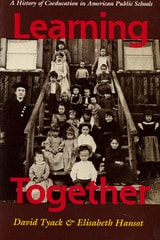
Learning Together
A History of Coeducation in American Public SchoolsDavid Tyack
Russell Sage Foundation, 1992
Learning to Love
Arranged Marriages and the British Indian DiasporaRaksha Pande
Rutgers University Press, 2021
Left in the Midwest
St. Louis Progressive Activism in the 1960s and 1970sAmanda L. Izzo
University of Missouri Press, 2023
Despite St. Louis’s mid-twentieth-century reputation as a conservative and sleepy midwestern metropolis, the city and its surrounding region have long played host to dynamic forms of social-movement organizing. This was especially the case during the 1960s and 1970s, when a new generation of local activists lent their energies to the ongoing struggles for Black freedom, lesbian and gay liberation, feminist social transformations, environmental protection, an end to the Vietnam War, and more. This volume, the first of its kind, offers fifteen scholarly contributions that together bring into focus the exceptional range of progressive activist projects that took shape in a single midwestern city during these tumultuous decades.
In contrast to scholarship that seeks to interpret the era’s social-movement initiatives in a primarily national context, the works presented in this expansive collection emphasize the importance of locality, neighborhood, community institutions, and rooted social networks. Documenting wrenching forces of metropolitan change as well as grassroots resilience, Left in the Midwest shows us how place powerfully shaped agendas, worldviews, and opportunities for the disparate groups that dedicated themselves to progressive visions for their city. By revising our sense of the region’s past, this volume also expands our sense of the possibilities that the future may hold for activist movements seeking change in St. Louis and beyond.

Legacies of War
Violence, Ecologies, and KinKimberly Theidon
Duke University Press, 2022

Legal Inversions
Lesbians, Gay Men, and the Politics of the Lawedited by Didi Herman and Carl Stychin
Temple University Press, 1995
Law reform struggles have always been a part of the grassroots lesbian and gay agenda. These critical essays examine the politics of these engagements, of lesbians, gay men, and the law in the United States, Canada, and the United Kingdom. From a wide range of perspectives, the contributors combine new conceptual insights with a concern for the practicalities of political engagements, tackling such vital topics as legal definitions of homosexuality, AIDS activism, and race and sexuality.
Contributors: Katherine Arnup, Susan Boyd, Peter M. Cicchino, Davina Cooper, Bruce R. Deming, Mary Eaton, William F. Flanagan, Leo Flynn, Shelley A. M. Gavigan, Leslie J. Moran, Katherine M. Nicholson, Cynthia Petersen, Ruthann Robson, and the editors.
Legal Spectatorship
Slavery and the Visual Culture of Domestic ViolenceKelli Moore
Duke University Press, 2022
Duke University Press Scholars of Color First Book Award recipient
Legislating Gender and Sexuality in Africa
Human Rights, Society, and the StateEdited by Lydia Boyd and Emily Burrill
University of Wisconsin Press, 2020
Legislating Gender and Sexuality in Africa details how legal efforts in the continent can often be moralizing enterprises, illuminating how these processes are closely tied to notions of ethics, personhood, and citizenship. The contributors provide new appraisals of recent events, with fresh arguments about the relationships between local and global fights for rights. This interdisciplinary approach will appeal to scholars in African studies, anthropology, history, and gender studies.
Lesbian Death
Desire and Danger between Feminist and QueerMairead Sullivan
University of Minnesota Press, 2022
Engaging with fears of lesbian death to explore the value of lesbian beyond identity
The loss of lesbian spaces, as well as ideas of the lesbian as anachronistic has called into question the place of lesbian identity within our current culture. In Lesbian Death, Mairead Sullivan probes the perception that lesbian status is in retreat, exploring the political promises—and especially the failures—of lesbian feminism and its usefulness today.
Lesbian Death reads how lesbian is conceptualized in relation to death from the 1970s onward to argue that lesbian offers disruptive potential. Lesbian Death examines the rise of lesbian breast cancer activism in San Francisco in conversation with ACT UP, the lesbian separatist manifestos “The C.L.I.T. Papers,” the enduring specter of lesbian bed death, and the weaponization of lesbian identity against trans lives.
By situating the lesbian as a border figure between feminist and queer, Lesbian Death offers a fresh perspective on the value of lesbian for both feminist and queer projects, even if her value is her death.
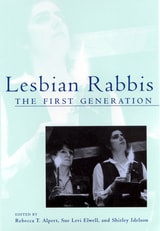
Lesbian Rabbis
The First GenerationRebecca T. Alpert, Sue Levi Elwell, and Shirley Idelson
Rutgers University Press, 2001
Lesbian Rabbis: The First Generation documents a monumental change in Jewish life as eighteen lesbian rabbis reflect on their experiences as trailblazers in Judaism's journey into an increasingly multicultural world. In frank and revealing essays, the contributors discuss their decisions to become rabbis and describe their experiences both at the seminaries and in their rabbinical positions. They also reflect on the dilemma whether to conceal or reveal their sexual identities to their congregants and superiors, or to serve specifically gay and lesbian congregations. The contributors consider the tensions between lesbian identity and Jewish identity, and inquire whether there are particularly "lesbian" readings of traditional texts. These essays also ask how the language of Jewish tradition touches the lives of lesbians and how lesbianism challenges traditional notions of the Jewish family.
"'Today I am completely 'out' personally and professionally, and yet I have learned that the 'coming out' process never ends. Even today, I find myself in professional situations in which yet again I must reveal that I am a lesbian, yet again I must prove myself worthy of functioning professionally in the 'straight' world. I still encounter moments of awkwardness, some hostility, and some sense of exclusion as I negotiate the pathways of my professional life."-Rabbi Leila Gal Berner, from Lesbian Rabbis: The First Generation
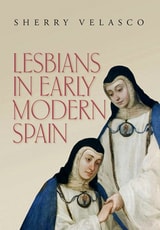
Lesbians in Early Modern Spain
Sherry Velasco
Vanderbilt University Press, 2011
The women in these accounts, stories, and cases range from internationally famous transgendered celebrities to lesbian criminals, from those suspected of "special friendships" in the convent to ordinary villagers.
Velasco argues that the diverse and recurrent representations of lesbian desire provide compelling evidence of how different groups perceived intimacy between women as more than just specific sex acts. At times these narratives describe complex personal relationships and occasionally characterize these women as being of a certain "type," suggesting an early modern precursor to what would later be recognized as divergent lesbian, bisexual, and transgender identities.
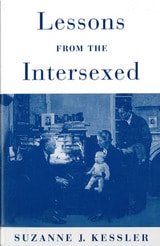
Lessons from the Intersexed
Kessler, Suzanne J
Rutgers University Press, 1998
From the moment intersexuality-the condition of having physical gender markers (genitals, gonads, or chromosomes) that are neither clearly female nor male-is suspected and diagnosed, social institutions are mobilized in order to maintain the two seemingly objective sexual categories. Infants' bodies are altered, and what was "ambiguous" is made "normal." Kessler's interviews with pediatric surgeons and endocrinologists reveal how the intersex condition is normalized for parents and she argues that the way in which intersexuality is managed by the medical and psychological professions displays our culture's beliefs about gender and genitals.
Parents of intersexed children are rarely heard from, but in this book they provide another perspective on reasons for genital surgeries and the quality of medical and psychological management. Although physicians educate parents about how to think about their children's condition, Kessler learned from parents of intersexed children that some parents are able to accept atypical genitals. Based on analysis of the medical literature and interview with adults who had received treatment as interesexed children, Kessler proposes new approaches for physicians to use in talking with parents and children. She also evaluates the appearance of a politicized vanguard, many of who are promoting an intersexual identity, who seek to alter the way physicians respond to intersexuality.
Kessler explores the possibilities and implications of suspending a commitment to two "natural" genders and addresses gender destabilization issues arising from intersexuality. She thus compels readers to re-think the meaning of gender, genitals, and sexuality.
"This is a brave book. Kessler says things that need to be said, and she says them clearly, concisely, and with respect for the people whose lives are most affected by the questions she confronts. A must read for anyone concerned with intersex issues." --Holly Devor, author of Gender Blending: Confronting the Limits of Duality and FTM: Female-to-Male Transsexuals in Society.
"While the physician's response to an infant with ambiguous genitalia has been to produce categories like the 'successful vagina' and the 'good enough penis,' Kessler takes her cues from intersexuals themselves. This book is a brilliant and long overdue call for the reevaluation of gender variability." --Judith Halberstam, author of Female Masculinity
"Fascinating in what it tells us not only about situation in which sex assignment is uncertain but about the astonishingly weak empirical foundations on which the medical orthodoxies of binary sex and gender are built. A must for anyone interested in the ways widely accepted social beliefs and scientific explanations generate and reinforce each other." --Ruth Hubbard, author of The Politics of Women's Biology and Exploding the Gene Myth
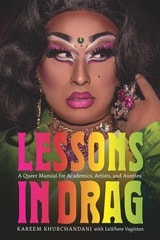
Lessons in Drag
A Queer Manual for Academics, Artists, and AuntiesKareem Khubchandani with LaWhore Vagistan
Brandeis University Press, 2025
Lessons in Drag brings to life a vibrant and thought-provoking dialogue between scholar Kareem Khubchandani and his drag persona LaWhore Vagistan. Beginning with an intimate interview, the book unfolds in alternating chapters where the two exchange insights, stories, and critiques. Khubchandani delves into the lessons LaWhore’s drag practice offers about academia—shaping his approaches to research, teaching, and writing—while Vagistan reveals how Khubchandani’s scholarship influences her performances, inspiring her understanding of fashion, music, divas, and aunties. Together, their reflections and conversations weave a compelling tapestry of drag’s instructive power. Witty, bold, and deeply personal, Lessons in Drag is both an invitation to explore drag as a practice and a celebration of its transformative potential.
Lewd and Notorious
Female Transgression in the Eighteenth CenturyKatharine Kittredge, Editor
University of Michigan Press, 2003
Liberating Hollywood
Women Directors and the Feminist Reform of 1970s American CinemaSmukler, Maya M
Rutgers University Press, 2019
Liberating Hollywood examines the professional experiences and creative output of women filmmakers during a unique moment in history when the social justice movements that defined the 1960s and 1970s challenged the enduring culture of sexism and racism in the U.S. film industry. Throughout the 1970s feminist reform efforts resulted in a noticeable rise in the number of women directors, yet at the same time the institutionalized sexism of Hollywood continued to create obstacles to closing the gender gap. Maya Montañez Smukler reveals that during this era there were an estimated sixteen women making independent and studio films: Penny Allen, Karen Arthur, Anne Bancroft, Joan Darling, Lee Grant, Barbara Loden, Elaine May, Barbara Peeters, Joan Rivers, Stephanie Rothman, Beverly Sebastian, Joan Micklin Silver, Joan Tewkesbury, Jane Wagner, Nancy Walker, and Claudia Weill. Drawing on interviews conducted by the author, Liberating Hollywood is the first study of women directors within the intersection of second wave feminism, civil rights legislation, and Hollywood to investigate the remarkable careers of these filmmakers during one of the most mythologized periods in American film history.
Like Family
Narratives of Fictive KinshipMargaret K. Nelson
Rutgers University Press, 2020

Living Between Danger and Love
The Limits of ChoiceJones, Kathleen B.
Rutgers University Press, 1999
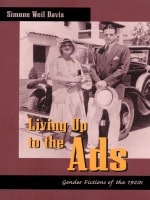
Living Up to the Ads
Gender Fictions of the 1920sSimone Weil Davis
Duke University Press, 2000
Materials from advertising firms—including memos, manuals, meeting minutes, and newsletters—are considered alongside the fiction of Sinclair Lewis, Nella Larsen, Bruce Barton, F. Scott Fitzgerald, and Zelda Fitzgerald. Davis engages such books as Babbitt, Quicksand, and Save Me the Waltz in original and imaginative ways, asking each to participate in her discussion of commodity culture, gender, and identity. To illuminate the subjective, day-to-day experiences of 1920s consumerism in the United States, Davis juxtaposes print ads and industry manuals with works of fiction. Capturing the maverick voices of some of the decade’s most influential advertisers and writers, Davis reveals the lines that were drawn between truths and lies, seduction and selling, white and black, and men and women.
Davis’s methodology challenges disciplinary borders by employing historical, sociological, and literary practices to discuss the enduring links between commodity culture, gender, and identity construction. Living Up to the Ads will appeal to students and scholars of advertising, American studies, women’s studies, cultural studies, and early-twentieth-century American history.

Locked Up, Locked Out
Young Men in the Juvenile Justice SystemAnne M. Nurse
Vanderbilt University Press, 2010
Status is key to everyday life in prison, and it is often played out in demonstrations of masculinity, misogyny, and violence. Some gangs and some "area codes" (as the old neighborhoods are called) are seen as tougher than others and are given more respect. Even letters from family members and girlfriends are important signs of whether a prisoner matters: one young man says, "I'd write letters every day to people to beg 'em to write me back." Another reports, "There would be people in there writing girls, saying, hey, write me this nasty letter of things we're going to do and things we did. And they'd write back with these letters. And now he'll get to walk around with his letter bragging, like, hey, check this out. These are the kind of girls I got."
Incarcerated youth also work hard at impression management. Coping with prison requires a young man to present one face to fellow prisoners and another to the authorities who will decide his release date.
The author pays substantial attention to the programs youth are offered, including those focusing on education, anger management, job training, and parenting skills. Another section looks at contact between incarcerated youth and the outside world, including a discussion of the impact of incarceration on families.
Based on her extensive knowledge of policies in other states, the author also provides a broad overview of the juvenile justice system nationally, describing how the system is organized, administered, and funded. Readers are taken through the juvenile justice process from conviction through parole with special attention paid to new state initiatives and sentencing structures.
Love Apocalypse
New Intimacies and the Decline of Marriage and FertilityAlex J. Nelson
Rutgers University Press, 2026
Marriage and fertility rates are falling around the world, upending social security planning and threatening economic growth. In Love Apocalypse, anthropologists present their insights into this society-altering demographic shift, drawing on their research into the ways love, romantic relationships, and family are being transformed by cultural, social, and economic forces. Each case study in this volume examines a unique cultural context from either Asia (China, South Korea, Japan, India), Europe (Germany, Lithuania), or Latin America (Cuba, Peru), grounded in years of ethnographic research into how communities’ experiences and perceptions of love, marriage, and family are changing in response to economic precarity, shifting gender relations, status competition, and diversifying cultural norms. It is increasingly clear that marriage and two-parent nuclear families will not be the universal norm of the twenty-first century even if this arrangement was largely idealized a mere generation ago. However, this does not mean the end of love, intimacy, or family but rather its transformation and the emergence of new intimate relationships and adaptations to the challenges and opportunities of life in the twenty-first century.
Love, Sex, Gender, and Superheroes
Jeffrey A. Brown
Rutgers University Press, 2022
Love, Sex, Gender, and Superheroes examines a full range of superhero media, from comics to films to television to merchandising. With a keen eye for the genre’s complex and internally contradictory mythology, comics scholar Jeffrey A. Brown considers its mixed messages. Superhero comics may reinforce sex roles with their litany of phallic musclemen and slinky femme fatales, but they also blur gender binaries with their emphasis on transformation and body swaps. Similarly, while most heroes have heterosexual love interests, the genre prioritizes homosocial bonding, and it both celebrates and condemns gendered and sexualized violence.
With examples spanning from the Golden Ages of DC and Marvel comics up to recent works like the TV series The Boys, this study provides a comprehensive look at how superhero media shapes our perceptions of love, sex, and gender.
Loving Black Boys
A Black Feminist Bible on Racism and Revolutionary MotheringTamura Lomax
Duke University Press, 2026
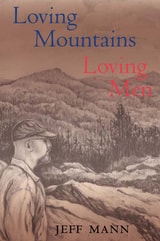
Loving Mountains, Loving Men
Memoirs of a Gay AppalachianJeff Mann
Ohio University Press, 2005
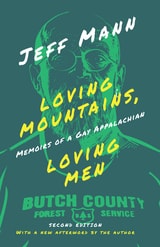
Loving Mountains, Loving Men
Memoirs of a Gay AppalachianJeff Mann
Ohio University Press, 2023
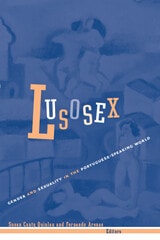
Lusosex
Gender And Sexuality In The Portuguese-Speaking WorldSusan Canty Quinlan
University of Minnesota Press, 2002
The first book to examine these essential issues in a Lusophone context.
Some of the most compelling theoretical debates in the humanities today center on representations of sexuality. This volume is the first to focus on the topic-in particular, the connections between nationhood, sex, and gender-in the lusophone, or Portuguese-speaking, world. Written by prominent scholars in Brazilian, Portuguese, and Lusophone African literary and cultural studies, the essays range across multiple discourses and cultural expressions, historical periods and theoretical approaches to offer a uniquely comprehensive perspective on the issues of sex and sexuality in the literature and culture of the Portuguese-speaking world that extends from Portugal to Brazil to Angola, Cape Verde, and Mozambique.
Through the critical lenses of gay and lesbian studies, queer theory, postcolonial studies, feminist theory, and postmodern theory, the authors consider the work of such influential literary figures as Clarice Lispector and Silviano Santiago. An important aspect of the volume is the publication of a newly discovered-and explicitly homoerotic-poem by Fernando Pessoa, published here for the first time in the original Portuguese and in English translation. Chapters take up questions of queer performativity and activism, female subjectivity and erotic desire, the sexual customs of indigenous versus European Brazilians, and the impact of popular music (as represented by Caetano Veloso and others) on interpretations of gender and sexuality. Challenging static notions of sexualities within the Portuguese-speaking world, these essays expand our understanding of the multiplicity of differences and marginalized subjectivities that fall under the intersections of sexuality, gender, and race.Contributors: Severino João Albuquerque, U of Wisconsin; Jossianna Arroyo, U of Michigan; César Braga-Pinto, Rutgers; Ana Paula Ferreira, U of California, Irvine; John Gledson, U of Liverpool; Russell G. Hamilton, Vanderbilt; André Torres Lepecki; Mário César Lugarinho, Universidade Federal Fluminense, Brazil; Phyllis Peres, U of Maryland; Ronald W. Sousa, U of Illinois; João Silvério Trevisan; Richard Zenith.