Results by title
932 books match the query 'Genres & Styles' and 41 start with l

La Cenerentola, ossia La bonta in trionfo
Melodramma giocoso In two acts by Jacopo FerrettiGioachino Rossini
University of Chicago Press, 1998
For the hastily-prepared premiere of La Cenerentola in Rome in 1817 a collaborator wrote the simple recitatives, a chorus, and arias for Alidoro (the Prince's tutor) and Clorinda (a stepsister). The chorus was soon dropped, and in 1821 Rossini wrote a new aria for Alidoro. This critical edition provides all the music for the first version, including variants for Clorinda. Appendixes include Rossini's own aria for Alidoro and his variations for Cinderella's final Rondo.
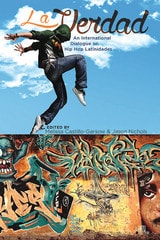
La Verdad
An International Dialogue on Hip Hop LatinidadesEdited by Melissa Castillo-Garsow and Jason Nichols
The Ohio State University Press, 2016
A truly international effort, La Verdad: An International Dialogue on Hip Hop Latinidades brings together exciting new work about Latino/a hip hop across more than a dozen countries, from scholars and practitioners in the United States and in Latin America, highlighting in new ways the participation of women, indigenous peoples, and Afro-descendants in a reimagined global, hip hop nation. From graffitera crews in Costa Rica and Nicaragua to Mexican hip hop in New York, from Aymara rap in Bolivia to Chicano rap in Taiwan, this volume explodes stereotypes of who and how hip hop is consumed, lived, and performed. Examining hip hop movements in Spanish, English, Portuguese, Aymara, and Creole, La Verdad demonstrates that Latino hip hop is a multilingual expression of gender, indigeneity, activism, and social justice.

La gazzetta
Dramma (giocoso) in Two Acts by Giuseppe Palomba, revised by Andrea Leone TottolaGioachino Rossini
University of Chicago Press, 2003

La scala di seta
Farsa comica in One Act by Giuseppe FoppaGioachino Rossini
University of Chicago Press, 1991
La traviata
Critical Edition Study ScoreGiuseppe Verdi
University of Chicago Press, 2017
The University of Chicago Press, in collaboration with Casa Ricordi, has undertaken to publish the first critical edition of the complete works of Giuseppe Verdi. The series, based exclusively on original sources, is the only one to present authentic versions of all of the composer’s works; together with his operas, the critical edition presents his songs, his choral music and sacred pieces, and his string quartet and other instrumental works.
The Works of Giuseppe Verdi will be an invaluable standard reference work—a necessary acquisition for all music libraries and a joy to own for all lovers of opera. The new series of study scores presents an adaptation of each critical edition that provides scholars with an affordable and portable option for exploring Verdi’s oeuvre. The study scores have been designed to distinguish editors’ marks from Verdi’s own notations while remaining clear enough for use in performance. The introduction to each score discusses the work’s sources, composition, and performance history, as well as performance practices, instrumentation, and problems of notation. The newest editions of the study scores examine two of Verdi’s three-act operas: La traviata and Rigoletto.
La traviata
Melodramma in Three Acts, Libretto by Francesco Maria PiaveGiuseppe Verdi
University of Chicago Press, 1997
This critical edition presents the 1854 version as the main score, and also makes available for the first time in full score the original 1853 settings of the revised pieces. For this edition Fabrizio della Seta used not only the composer's autograph and many secondary sources, but also Verdi's previously unknown sketches. These sketches helped corroborate the original readings and illuminate the work's compositional stages. The editor's wide-ranging introduction traces the opera's genesis, sources, performance history and practices, and a detailed critical commentary discusses source problems and ambiguities.
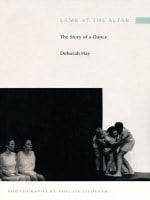
Lamb at the Altar
The Story of a DanceDeborah Hay
Duke University Press, 1994
Her movements are uncharacteristic, her words subversive, her dances unlike anything done before—and this is the story of how it all works. A founding member of the famed Judson Dance Theater and a past performer in the Merce Cunningham Dance Company, Deborah Hay is well known for choreographing works using large groups of trained and untrained dancers whose surprising combinations test the limits of the art. Lamb at the Altar is Hay’s account of a four-month seminar on movement and performance held in Austin, Texas, in 1991. There, forty-four trained and untrained dancers became the human laboratory for Hay’s creation of the dance Lamb, lamb, lamb . . . , a work that she later distilled into an evening-length solo piece, Lamb at the Altar. In her book, in part a reflection on her life as a dancer and choreographer, Hay tells how this dance came to be. She includes a movement libretto (a prose dance score) and numerous photographs by Phyllis Liedeker documenting the dance’s four-month emergence.
In an original style that has marked her teaching and writing, Hay describes her thoughts as the dance progresses, commenting on the process and on the work itself, and ultimately creating a remarkable document on the movements—precise and mysterious, mental and physical—that go into the making of a dance. Having replaced traditional movement technique with a form she calls a performance meditation practice, Hay describes how dance is enlivened, as is each living moment, by the perception of dying and then involves a freeing of this perception from emotional, psychological, clinical, and cultural attitudes into movement. Lamb at the Altar tells the story of this process as specifically practiced in the creation of a single piece.
Langston Hughes and the Blues
Steven C. Tracy
University of Illinois Press, 2024

Latin America and the Transports of Opera
Fragments of a Transatlantic DiscourseRoberto Ignacio Díaz
Vanderbilt University Press, 2023
Latin America and the Transports of Opera studies a series of episodes in the historical and textual convergence of a hallowed art form and a part of the world often regarded as peripheral. Perhaps unexpectedly, the archives of opera generate new arguments about several issues at the heart of the established discussion about Latin America: the allure of European cultural models; the ambivalence of exoticism; the claims of nationalism and cosmopolitanism; and, ultimately, the place of the region in the global circulation of the arts. Opera’s transports concern literal and imagined journeys as well as the emotions that its stories and sounds trigger as they travel back and forth between Europe—the United States, too—and Latin America.
Focusing mostly on librettos and other literary forms, this book analyzes Calderón de la Barca’s baroque play on the myth of Venus and Adonis, set to music by a Spanish composer at Lima’s viceregal court; Alejo Carpentier’s neobaroque novella on Vivaldi’s opera about Moctezuma; the entanglements of opera with class, gender, and ethnicity throughout Cuban history; music dramas about enslaved persons by Carlos Gomes and Hans Werner Henze, staged in Rio de Janeiro and Copenhagen; the uses of Latin American poetry and magical realism in works by John Adams and Daniel Catán; and a novel by Manuel Mujica Lainez set in Buenos Aires’s Teatro Colón, plus a chamber opera about Victoria Ocampo with a libretto by Beatriz Sarlo. Close readings of these texts underscore the import and meanings of opera in Latin American cultural history.
This book is the recipient of the 2024 Norman L. and Roselea J. Goldberg Prize from Vanderbilt University Press for the best book in the area of art or medicine.
Le Jazz
Jazz and French Cultural IdentityMatthew F. Jordan
University of Illinois Press, 2010
In Le Jazz, Matthew F. Jordan deftly blends textual analysis, critical theory, and cultural history in a wide-ranging and highly readable account of how jazz progressed from a foreign cultural innovation met with resistance by French traditionalists to a naturalized component of the country's identity. Jordan draws on sources including ephemeral critical writing in the press and twentieth-century French literature to trace the country's reception of jazz, from the Cakewalk dance craze and the music's significance as a harbinger of cultural recovery after World War II to its place within French ethnography and cultural hybridity.
Countering the histories of jazz's celebratory reception in France, Jordan delves in to the reluctance of many French citizens to accept jazz with the same enthusiasm as the liberal humanists and cosmopolitan crowds of the 1930s. Jordan argues that some listeners and critics perceived jazz as a threat to traditional French culture, and only as France modernized its identity did jazz become compatible with notions of Frenchness. Le Jazz speaks to the power of enlivened debate about popular culture, art, and expression as the means for constructing a vibrant cultural identity, revealing crucial keys to understanding how the French have come to see themselves in the postwar world.

Le trouvère
Opera in Four Acts by Salvadore Cammarano, French Translation by Émilien PaciniGiuseppe Verdi
University of Chicago Press, 2025
By the time Le trouvère premiered at the Paris Opéra in 1857, Giuseppe Verdi had first-hand knowledge of the unique demands of French theater. He had adapted his earlier work I Lombardi alla prima crociata (La Scala, 1843) as Jérusalem in 1847, and in 1855 he composed Les vêpres siciliennes, especially for the Opéra. Il trovatore, set in Spain against the backdrop of civil unrest, was especially suited to Parisian tastes, which required spectacular performances with plenty of choreography. Verdi expanded the score with a four-part ballet in the third act and rewrote the ending, where he introduced a reprise of his celebrated “Miserere,” which is first heard at the start of the fourth act. By all accounts, the resulting work displayed extraordinary musical and dramatic efficacy and, after a successful premiere, Le trouvère remained in the Opéra repertory through the opening decades of the twentieth century.
There is no extant autograph manuscript for Le trouvère. This critical edition is based primarily on a manuscript full score used at the premiere and during rehearsals, preserved at the Bibliothèque de l’Opéra in Paris. Editor David Lawton’s introduction to this edition discusses the origins, rehearsals, and reception of Le trouvère, the numerous sources preserved in French, Belgian, Italian, and British archives, and performance issues including staging, vocal style, and orchestral considerations.
Learning to Listen
A Handbook for MusicGrosvenor Cooper
University of Chicago Press, 1962
Lee Konitz
Conversations on the Improviser's ArtAndy Hamilton
University of Michigan Press, 2007
“Meticulously researched, detailed and documented, this long awaited overview justly establishes Konitz as one of the most consistently brilliant, adventurous and original improvisers in the jazz tradition—a genius as rare as Bird himself.”
—John Zorn
“Hamilton’s work may well mark the inception of a format new to writing on Western music, one which avoids both the self-aggrandizing of autobiography and the stylized subjectification of biography.”
—The Wire
“An extraordinary approach to a biography, with the man himself speaking for extended sessions. The main vibration I felt from Lee’s words was total honesty, almost to a fault. Konitz shows himself to be an acute observer of the scene, full of wisdom and deep musical insights, relevant to any historical period regardless of style. The asides by noted musicians are beautifully woven throughout the pages. I couldn’t put the book down—it is the definition of a living history.”
—David Liebman
The preeminent altoist associated with the “cool” school of jazz, Lee Konitz was one of the few saxophonists of his generation to forge a unique sound independent of the influence of Charlie Parker. In the late 1940s, Konitz began his career with the Claude Thornhill band, during which time he came into contact with Miles Davis, with whom he would later work on the legendary Birth of the Cool sessions. Konitz is perhaps best known through his association with Lennie Tristano, under whose influence much of his sound evolved, and for his work with Stan Kenton and Warne Marsh. His recordings have ranged from cool bop to experimental improvisation and have appeared on such labels as Prestige, Atlantic, Verve, and Polydor.
Crafted out of numerous interviews between the author and his subject, the book offers a unique look at the story of Lee Konitz’s life and music, detailing Konitz’s own insights into his musical education and his experiences with such figures as Miles Davis, Stan Kenton, Warne Marsh, Lennie Tristano, Charles Mingus, Bud Powell, and Bill Evans.
Andy Hamilton is a jazz pianist and contributor to major jazz and contemporary music magazines. He teaches philosophy, and the history and aesthetics of jazz, at Durham University in the United Kingdom. He is also the author of the book Aesthetics and Music (Continuum 2007).
Joe Lovano is a Grammy Award–winning tenor saxophonist. His most recent album is Streams of Expression.

Legions of Boom
Filipino American Mobile DJ Crews in the San Francisco Bay AreaOliver Wang
Duke University Press, 2015
Lennie Tristano
His Life in MusicEunmi Shim
University of Michigan Press, 2007
“In Lennie Tristano: His Life in Music, Shim has provided a comprehensive biographical and analytical account of one of jazz’s most important and most frequently misunderstood figures. Her insights into Tristano’s personality are well nuanced, and the focus on his teaching makes a unique contribution to the history of jazz. This vividly written study is likely to become a standard work.”
—Brian Priestley, author of Chasin’ the Bird: The Life and Legacy of Charlie Parker and coauthor of The Rough Guide to Jazz
“Eunmi Shim’s book is clearly a labor of love. Her thorough examination of Tristano’s teaching is particularly important, for no one previously has assembled the thoughts of so many former students. Her illuminating transcriptions of, and commentaries on, Tristano’s solos are also valuable. Lennie Tristano is an important contribution to the literature on jazz.”
—Thomas Owens, author of Bebop: The Music and Its Players
“Comprehensive, objective, and acute in its judgments, this is the biography of Lennie Tristano we have been waiting for.”
—Larry Kart, author of Jazz in Search of Itself
Lennie Tristano occupies a rare position not only in jazz history but in the history of twentieth-century music. Emerging from an era when modernism was the guiding principle in art, Tristano explored musical avenues that were avant-garde even by modernism’s experimental standards. In so doing, he tested and transcended the boundaries of jazz.
In 1949, years before musicians such as Ornette Coleman and Cecil Taylor took credit for the movement, Tristano made the first recordings of “free jazz,” a new kind of group improvisation based on spontaneous interaction among band members without any regard for predetermined form, harmony, or rhythm. Then, in the 1950s, Tristano broke new ground by his use of multitracking.
Tristano was also a pioneer in the teaching of jazz, devoting the latter part of his career almost exclusively to music instruction. He founded a jazz school—the first of its kind—among whose students were saxophonists Warne Marsh and Lee Konitz, and pianist Sal Mosca.
With its blend of oral history, archival research, and musical analysis, Lennie Tristano sheds new light on the important role Tristano played in the jazz world and introduces this often-overlooked musician to a new generation of jazz aficionados.
Eunmi Shim received her Ph.D. in musicology from the University of Illinois at Urbana-Champaign and is now Assistant Professor of Music at Worcester Polytechnic Institute. This is her first book.
Leo Sowerby
Joseph Sargent
University of Illinois Press, 2024
Leonard Bernstein and the Language of Jazz
Katherine Baber
University of Illinois Press, 2019
Lester Young
Lewis Porter
University of Michigan Press, 2005
". . . a schematic of unparalleled insight and detail."
---Down Beat
"A monumental work."
---Dizzy Gillespie
". . . a major contribution to jazz scholarship . . . for its illumination of Lester Young's music and for setting the biographical record straight."
---Dan Morgenstern
Several new biographies of Lester Young have been published in the years since Lewis Porter's Lester Young first appeared, but none have supplanted or even attempted the in-depth study that Porter brings to his subject's music. With the same care and scholarship that characterized his John Coltrane, Porter analyzes the music that made Lester Young "the most original tenor sax in jazz."
In addition to helping us understand Lester Young's playing and stylistic evolution, Porter's analysis demonstrates that Young's playing at the end of his career did not mark a serious decline over his earlier style, as many critics have claimed.
Let Freedom Swing
Collected Writings on Jazz, Blues, and GospelHoward Reich
Northwestern University Press, 2010
Each section of Let Freedom Swing composes a suite, focusing on either a person, place, or scene. Reich gives new life to the standards with his profiles and elegies for such giants as Gershwin, Ellington, and Sinatra. A profile of Louis Armstrong brings out the often angry side of Satchmo but also reveals a more remarkable musician and human being.
His open-mindedness makes Reich a particularly astute observer of the experimental and new, from Ornette Coleman to Chicago experimentalist Ken Vandermark. And his observations about street music open our ears to the songs of everyday life. Reich’s fearlessness is evident in his writing about daunting subjects, such as the New Orleans music scene after Katrina, the lost legacy of jazz in Panama, and the complicated legacy of "race music" in America.
Howard Reich combines a deep enthusiasm for music, a breadth of knowledge, and an ability to share his world with his readers, and Let Freedom Swing is essential reading for anyone interested in the continuing vitality of jazz, gospel, blues, and American music in general.

Let Me Take You Down
Penny Lane and Strawberry Fields ForeverJonathan Cott
University of Minnesota Press, 2024
The conception, creation, recording, and significance of the Beatles’ “Penny Lane” and “Strawberry Fields Forever”
John Lennon wrote “Strawberry Fields Forever” in Almería, Spain, in fall 1966, and in November, in response to that song, Paul McCartney wrote “Penny Lane” at his home in London. A culmination of what was one of the most life-altering and chaotic years in the Beatles’ career, these two songs composed the 1967 double A-side 45 rpm record that has often been called the greatest single in the history of popular music and was, according to Beatles producer George Martin, “the best record we ever made.”
In Let Me Take You Down: Penny Lane and Strawberry Fields Forever, Jonathan Cott recounts the conception and creation of these songs; describes the tumultuous events and experiences that led the Beatles to call it quits as a touring band and redefine themselves solely as recording artists; and details the complex, seventy-hour recording process that produced seven minutes of indelible music. In writing about these songs, he also focuses on them as inspired artistic expressions of two unique ways of experiencing and being in the world, as Lennon takes us down to Strawberry Fields and McCartney takes us back to Penny Lane.
In order to gain new vistas and multiple perspectives on these multifaceted songs, Cott also engages in conversation with five remarkable people: media artist Laurie Anderson; guitarist Bill Frisell; actor Richard Gere; Jungian analyst Margaret Klenck; and urban planner, writer, and musician Jonathan F. P. Rose. The result is a wide-ranging, illuminating exploration of the musical, literary, psychological, cultural, and spiritual aspects of two of the most acclaimed songs in rock and roll history.

Libby Larsen
Composing an American LifeDenise Glahn
University of Illinois Press, 2017
Denise Von Glahn’s in-depth examination of Larsen merges traditional biography with a daring scholarly foray: an ethnography of one active artist. Drawing on musical analysis, the composer’s personal archive, and seven years of interviews with Larsen and those in her orbit, Von Glahn illuminates the polyphony of achievements that make up Larsen’s public and private lives. In considering Larsen’s musical impact, Von Glahn delves into how elements of the personal—a 1950s childhood, spiritual seeking, love of nature, and status as an “important woman artist”—inform her work. The result is a portrait of a musical pathfinder who continues to defy expectations and reject labels.
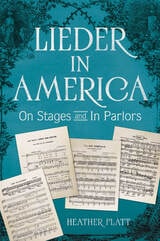
Lieder in America
On Stages and In ParlorsHeather Platt
University of Illinois Press, 2023
Though viewed as quintessentially German, lieder became a centerpiece of nineteenth century song recitals in the United States. By the 1890s, these songs, which were often sung in English, were a sensation among tutored and untutored music lovers alike. Heather Platt examines the varied supporters and singers who both established the lied as a concert repertoire and shaped a new kind of recital dedicated to art songs. Lieder were embraced and spread by performers like Max Heinrich and advocates like John Sullivan Dwight, as well as by the women’s clubs that flourished nationwide. At the same time as examining the critical reception of the artists and songs, Platt reveals ways in which US recital programs anticipated trends in European recitals. She also places lieder against the backdrop of the time, when factors like the growth in the sheet music industry, the evolution of American art song, and emerging anti-German feeling had a profound impact on the genre’s popularity.
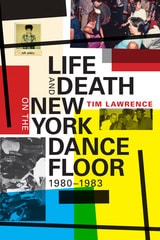
Life and Death on the New York Dance Floor, 1980–1983
Tim Lawrence
Duke University Press, 2016

Lion Songs
Thomas Mapfumo and the Music That Made ZimbabweBanning Eyre
Duke University Press, 2015
Listening in Detail
Performances of Cuban MusicAlexandra T. Vazquez
Duke University Press, 2013
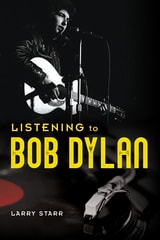
Listening to Bob Dylan
Larry Starr
University of Illinois Press, 2021
Reader-friendly and revealing, Listening to Bob Dylan encourages hardcore fans and Dylan-curious seekers alike to rediscover the music legend.

Listening to Popular Music
Or, How I Learned to Stop Worrying and Love Led ZeppelinTheodore Gracyk
University of Michigan Press, 2007
It has long been assumed that people who prefer Led Zeppelin to Mozart live aesthetically impoverished lives. But why? In Listening to Popular Music, award-winning popular music scholar Theodore Gracyk argues that aesthetic value is just as important in popular listening as it is with “serious” music. And we don’t have to treat popular music as art in order to recognize its worth. Aesthetic values are realized differently in different musical styles, and each requires listening skills that people must learn.
—William Echard, Department of Music, and Institute for Comparative Studies in Literature, Art, and Culture, Carleton University
—Stephen Davies, Department of Philosophy, University of Auckland, and author of The Philosophy of Art
—Mark Katz, Assistant Professor of Music, University of North Carolina at Chapel Hill, and author of Capturing Sound: How Technology Has Changed Music
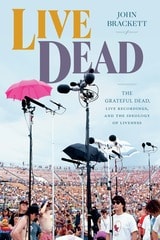
Live Dead
The Grateful Dead, Live Recordings, and the Ideology of LivenessJohn Brackett
Duke University Press, 2023

Live Fast, Love Hard
The Faron Young StoryDiane Diekman
University of Illinois Press, 2012
As one of the best-known honky tonkers to appear in the wake of Hank Williams’s death, Faron Young was a popular presence on Nashville’s music scene for more than four decades. The Singing Sheriff produced a string of Top Ten hits, placed over eighty songs on the country music charts, and founded the long-running country music periodical Music City News in 1963. Flamboyant, impulsive, and generous, he helped and encouraged a new generation of talented songwriter-performers that included Willie Nelson and Bill Anderson. In 2000, four years after his untimely death, Faron was inducted into the Country Music Hall of Fame.
Presenting the first detailed portrayal of this lively and unpredictable country music star, Diane Diekman masterfully draws on extensive interviews with Young’s family, band members, and colleagues. Impeccably researched, Diekman’s narrative also weaves anecdotes from Louisiana Hayride and other old radio shows with ones from Young’s business associates, including Ralph Emery. Her unique insider’s look into Young’s career adds to an understanding of the burgeoning country music entertainment industry during the key years from 1950 to 1980, when the music expanded beyond its original rural roots and blossomed into a national (ultimately, international) enterprise. Echoing Young’s characteristic ability to entertain and surprise fans, Diekman combines an account of his public career with a revealing, intimate portrait of his personal life.

Living Metal
Metal Scenes around the WorldEdited by Bryan Bardine and Jerome Stueart
Intellect Books, 2021
This edited volume expands the research in the field of metal studies by examining metal music communities around the world, from Dayton, Ohio, to Estonia to post-apartheid South Africa and beyond. The chapters are detailed, richly embedded in local histories and contexts, and provide important analyses of their respective scenes. The diversity of the chapters connects metal to other disciplines in the music field and a foreword by Henkka Seppälä, former bassist of the Finnish extreme metal band Children of Bodom, accompanies the essays. Living Metal is a groundbreaking contribution to the field, with much appeal for fans and scholars of metal music as well as those in the fields of anthropology, musicology, and history.

Lonesome Cowgirls and Honky-Tonk Angels
The Women of Barn Dance RadioKristine M. McCusker
University of Illinois Press, 2007
Drawing on personal interviews and rich archival material from the Grand Ole Opry, Kristine M. McCusker examines the gendered politics of the images through the lives and careers of six women performers: Linda Parker, the Girls of the Golden West (Milly and Dolly Good), Lily May Ledford, Minnie Pearl, and Rose Lee Maphis.
Lonesome Roads and Streets of Dreams
Place, Mobility, and Race in Jazz of the 1930s and '40sAndrew S. Berish
University of Chicago Press, 2012
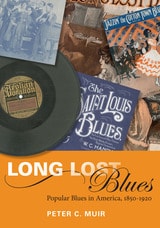
Long Lost Blues
Popular Blues in America, 1850-1920Peter C. Muir
University of Illinois Press, 2010
Long Lost Blues exposes for the first time the full scope and importance of early popular blues to mainstream American culture in the early twentieth century. Closely analyzing sheet music and other print sources that have previously gone unexamined, Muir revises our understanding of the evolution and sociology of blues at its inception.

Long Steel Rail
Norm Cohen
University of Illinois Press, 2000

Long Walk Home
Reflections on Bruce SpringsteenJonathan D. Cohen
Rutgers University Press, 2019
Contributors to Long Walk Home include novelists like Richard Russo, rock critics like Greil Marcus and Gillian Gaar, and other noted Springsteen scholars and fans such as A. O. Scott, Peter Ames Carlin, and Paul Muldoon. They reveal how Springsteen’s albums served as the soundtrack to their lives while also exploring the meaning of his music and the lessons it offers its listeners. The stories in this collection range from the tale of how “Growin’ Up” helped a lonely Indian girl adjust to life in the American South to the saga of a group of young Australians who turned to Born to Run to cope with their country’s 1975 constitutional crisis. These essays examine the big questions at the heart of Springsteen’s music, demonstrating the ways his songs have resonated for millions of listeners for nearly five decades.
Commemorating the Boss’s seventieth birthday, Long Walk Home explores Springsteen’s legacy and provides a stirring set of testimonials that illustrate why his music matters.
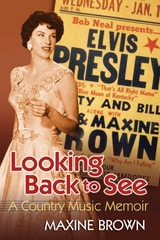
Looking Back to See
A Country Music MemoirMaxine Brown
University of Arkansas Press, 2005
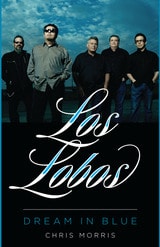
Los Lobos
Dream in BlueBy Chris Morris
University of Texas Press, 2015
Los Lobos leaped into the national spotlight in 1987, when their cover of “La Bamba” became a No. 1 hit. But what looked like an overnight achievement to the band’s new fans was actually a way station in a long musical journey that began in East Los Angeles in 1973 and is still going strong. Across four decades, Los Lobos (Cesar Rosas, Conrad Lozano, David Hidalgo, Louie Pérez, and Steve Berlin) have ranged through virtually the entire breadth of American vernacular music, from rockabilly to primal punk rock, R&B to country and folk, Mexican son jarocho to Tex-Mex conjunto and Latin American cumbia. Their sui generis sound has sold millions of albums and won acclaim from fans and critics alike, including three Grammy Awards.
Los Lobos, the first book on this unique band, traces the entire arc of the band’s career. Music journalist Chris Morris draws on new interviews with Los Lobos members and their principal collaborators, as well as his own reporting since the early 1980s, to recount the evolution of Los Lobos’s music. He describes the creation of every album, lingering over highlights such as How Will the Wolf Survive?, La Pistola y El Corazon, and Kiko, while following the band’s trajectory from playing Mexican folk music at weddings and dances in East L.A. to international stardom and major-label success, as well as their independent work in the new millennium. Giving one of the longest-lived and most-honored American rock bands its due, Los Lobos celebrates the expansive reach and creative experimentalism that few other bands can match.

Los Romeros
Royal Family of the Spanish GuitarWalter Aaron Clark
University of Illinois Press, 2018
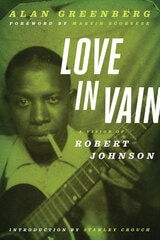
Love in Vain
A Vision of Robert JohnsonAlan Greenberg
University of Minnesota Press, 2012
Robert Johnson was undoubtedly the most outstanding of the Mississippi Delta blues musicians and also one of the first inductees into the Rock and Roll Hall of Fame, but his short life remains steeped in mystery and wrapped in some of the most enduring legends of modern music. Love in Vain is Alan Greenberg’s remarkable, highly acclaimed, and genre-defying screenplay and is widely considered to be one of the foremost books on Robert Johnson’s life and legacy and an extraordinary exercise in American mythmaking. Newly revised and complete with extensive historical notes on Johnson’s life and the culture of the Mississippi Delta and blues music during the 1930s, Love in Vain is at once a classic of music writing and a screenplay whose reputation lies firmly in the realm of great American literature.
Luisa Miller
Melodramma tragico in Three Acts by Salvadore CammaranoGiuseppe Verdi
University of Chicago Press, 1992
Luisa Miller, a milestone in the maturation of Verdi's style, is the fifth work to be published in The Works of Giuseppe Verdi. Following the strict requirements of the series, this edition is based on Verdi's autograph and other authentic sources, and has been reviewed by a distinguished editorial board—Philip Gossett (general editor), Julian Budden, Martin Chusid, Francesco Degrada, Ursula Günter, Giorgio Pestelli, and Pierluigi Petrobelli. It is available as a two-volume set: a full orchestral score and a critical commentary. The newly set score is printed on acid-free paper and beautifully bound in an oversized format. The introduction to the score discusses the work's genesis, sources, and performance history as well as performance practice, instrumentation, and problems of notation. The critical commentary discusses editorial decisions and identifies the sources of alternate readings of the music and libretto.
Lying in the Middle
Musical Theater and Belief at the Heart of AmericaJake Johnson
University of Illinois Press, 2021
Vibrant and strikingly original, Lying in the Middle discovers some of the most potent musical theater taking place in the hoping, beating hearts of Americans.