Results by title
184 books match the query 'Hispanic Americans' and 28 start with l
Latin American Migrations to the U.S. Heartland
Changing Social Landscapes in Middle AmericaEdited by Linda Allegro and Andrew Grant Wood
University of Illinois Press, 2019
Filled with varied and eye-opening perspectives, Latin American Migrations to the U.S. Heartland reveals how identities, economies, and geographies are changing as Latin Americans adjust to their new homes, jobs, and communities.
Contributors: Linda Allegro, Tisa M. Anders, Scott Carter, Caitlin Didier, Miranda Cady Hallett, Edmund Hamann, Albert Iaroi, Errol D. Jones, Jane Juffer, László J. Kulcsár, Janelle Reeves, Jennifer F. Reynolds, Sandi Smith-Nonini, and Andrew Grant Wood.

Latin Moon in Manhattan
A NovelJaime Manrique
University of Wisconsin Press, 2003
Exuberant and colorful, Latin Moon in Manhattan paints a vivid portrait of New York City as the land of El Dorado for today’s Latino immigrants. From Little Colombia in Queens to the street life of Times Square, this brilliant novel is crowded with an extraordinary cast of characters: Hot Sauce, a midget hooker; Simon Bolivar, a parrot who croons Julio Iglesias songs; the Urrutias, a family rich from cocaine smuggling; Santiago Martinez, a loner and would-be poet whose ancient cat, Mr. O’Donnell, is slowly dying of an enlarged heart. Exploding with a profusion of plots and subplots involving drug smuggling, romance, and the literary politics of Queens, Latin Moon in Manhattan is a rich and utterly charming work.
Latin Numbers
Playing Latino in Twentieth-Century U.S. Popular PerformanceBrian Eugenio Herrera
University of Michigan Press, 2015
Latin@s' Presence in the Food Industry
Changing How We Think about FoodMeredith E. Abarca
University of Arkansas Press, 2016
The networks Latin@s create, the types of identities they fashion through food, and their relationship to the US food industry are analyzed to understand Latin@s as active creators of food-based communities, as distinctive cultural representations, and as professionals. This vibrant new collection acknowledges issues of labor conditions, economic politics, and immigration laws—structural vulnerabilities that certainly cannot be ignored—and strives to understand more fully the active and conscious ways that Latina@s create spaces to maneuver global and local food systems.
Latina Politics, Latino Politics
Gender, Culture, and Political Participation in BostonCarol Hardy-Fanta
Temple University Press, 1993
Through an in-depth study of the Latino community in Boston, Carol hardy-Fanta addressees three key debates in American politics: how to look at the ways in which women and men envision the meaning of politics and political participation; how to understand culture and the political life of expanding immigrant populations; and how to create a more participatory America. The author's interviews with Latinos from Puerto Rico, the Dominican Republic, and Central and South America and her participation in community events in North Dorchester, Jamaica Plain, and the South End document the often ignored contribution of Latina women as candidates, political mobilizers, and community organizers. Hardy-Fanta examines critical gender differences in how politics is defined, what strategies Latina women and Latino men use to generate political participation, and how culture and gender interact in the political empowerment of the ethic communities.
Hardy-Fanta challenges the notion of political apathy among Latinos and presents factors that stimulate political participation. She finds that the vision of politics promoted by Latina women—one based on connectedness, collectivity, community, and consiousness-raising—contrasts sharply with a male political concern for status, hierarchy, and personal opportunity.
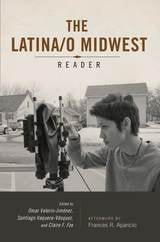
Latina/o Midwest Reader
Omar Valerio-Jimenez , Santiago Vaquera-Vasquez
University of Illinois Press, 2017
Eye-opening and provocative, The Latina/o Midwest Reader rewrites the conventional wisdom on today's Latina/o community and how it faces challenges—and thrives—in the heartland.
Contributors: Aidé Acosta, Frances R. Aparicio, Jay Arduser, Jane Blocker, Carolyn Colvin, María Eugenia Cotera, Theresa Delgadillo, Lilia Fernández, Claire F. Fox, Felipe Hinojosa, Michael D. Innis-Jiménez, José E. Limón, Marta María Maldonado, Louis G. Mendoza, Amelia María de la Luz Montes, Kim Potowski, Ramón H. Rivera-Servera, Rebecca M. Schreiber, Omar Valerio-Jiménez, Santiago Vaquera-Vásquez, Darrel Wanzer-Serrano, Janet Weaver, and Elizabeth Willmore
Latina/o Sexualities
Probing Powers, Passions, Practices, and PoliciesAsencio, Marysol
Rutgers University Press, 2010
Situated at the juncture of Latina/o studies and sexualities studies, Latina/o Sexualities provides a single resource that addresses the current state of knowledge from a multidisciplinary perspective. Contributors synthesize and critique the literature and carve a separate space where issues of Latina/o sexualities can be explored given the limitations of prevalent research models. This work compels the current wave in sexuality studies to be more inclusive of ethnic minorities and sets an agenda that policy makers and researchers will find invaluable.
Latina/o/x Education in Chicago
Roots, Resistance, and TransformationEdited by Isaura Pulido, Angelica Rivera, and Ann M. Aviles
University of Illinois Press, 2022
Insightful and enlightening, Latina/o/x Education in Chicago brings to light the ongoing struggle for educational equity in the Chicago Public Schools.
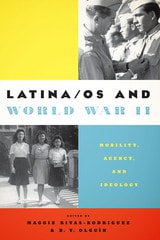
Latina/os and World War II
Mobility, Agency, and IdeologyEdited by Maggie Rivas-Rodriguez and B.V. Olguín
University of Texas Press, 2014
The first book-length study of Latina/o experiences in World War II over a wide spectrum of identities and ancestries—from Cuban American, Spanish American, and Mexican American segments to the under-studied Afro-Latino experience—Latina/os and World War II probes the controversial aspects of Latina/o soldiering and citizenship in the war, the repercussions of which defined the West during the twentieth century. The editors also offer a revised, more accurate tabulation of the number of Latina/os who served in the war.
Spanning imaginative productions, such as vaudeville and the masculinity of the soldado razo theatrical performances; military segregation and the postwar lives of veterans; Tejanas on the homefront; journalism and youth activism; and other underreported aspects of the wartime experience, the essays collected in this volume showcase rarely seen recollections. Whether living in Florida in a transformed community or deployed far from home (including Mexican Americans who were forced to endure the Bataan Death March), the men and women depicted in this collection yield a multidisciplinary, metacritical inquiry. The result is a study that challenges celebratory accounts and deepens the level of scholarly inquiry into the realm of ideological mobility for a unique cultural crossroads. Taking this complex history beyond the realm of war narratives, Latina/os and World War II situates these chapters within the broader themes of identity and social change that continue to reverberate in postcolonial lives.
Latinas/os in New Jersey
Histories, Communities, and CulturesAldo A. Lauria Santiago
Rutgers University Press, 2025
Contributors: Yamil Avivi; Jennifer Ayala; Ulla D. Berg; Giovani Burgos; Elsa Candelario; Laura Curran; Lilia Fernández; Ismael García Colón; Olga Jiménez de Wagenheim; Benjamin Lapidus; Aldo A. Lauria Santiago; Johana Londoño; Kathleen Lopez; Giancarlo Muschi; Melanie Z. Plasencia; Ana Y. Ramos-Zayas; Elena Sabogal; Raymond Sanchez Mayers; William Suárez Gómez; Alex F. Trillo; Daniela Valdez; Anil Venkatesh; Lyna L. Wiggins
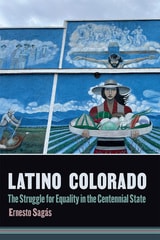
Latino Colorado
The Struggle for Equality in the Centennial StateErnesto Sagás
University Press of Colorado, 2026
Author Ernesto Sagás also explores the ways in which Latinos—as a racialized, subordinate group—have historically interacted with Colorado’s Anglo society in carving out their own spaces while struggling for social and legal equality. He presents a demographic and socioeconomic profile of Latinos in Colorado based on field research and the latest US Census data to dispel common stereotypes while also pointing out areas of concern for state policymakers.
Latino Colorado sheds light on this marginalized community and advances the understanding of the state’s racialized dynamics. It is about everyone in the American West—Anglos, Latinos, and others—and how they interact with and continue to (re)define one another in real and imagined ways in the most mythologized of American regions.
Latino Lives in America
Making It HomeLuis R. Fraga, John A. Garcia, Rodney E. Hero, Michael Jones-Correa, Valerie Martinez-Ebers and Gary Segura
Temple University Press, 2010
Latinos are the largest and fastest growing ethnic group in the United States, with increased levels of political mobilization and influence. In the timely and thoroughgoing Latino Lives in America, six prominent Latino scholars explore the profound implications of Latinos’ population growth and geographic dispersion for American politics and society, tracking key changes and continuities in Latinos' attitudes, behavior, and social experiences.
Utilizing a unique set of “narratives” from focus group interviews, supplemented with quantitative findings from the 2006 Latino National Survey, the authors provide a snapshot of Latino life in America. The Latinos interviewed provide their thoughts regarding their sense of belonging and group identification, assimilation and transnationalism, housing, education, civic engagement, and perceptions of discrimination, as well as their experiences in new destinations, where they are trying to realize the “Americano” dream.
Latino Lives in America uses these conversations and the survey data to offer both a micro and macro look at how Latinos are transforming various aspects of American politics, culture, and life and how their experiences in the United States are changing them and their families.
Latino Los Angeles
Transformations, Communities, and ActivismEdited by Enrique C. Ochoa and Gilda L. Ochoa
University of Arizona Press, 2005
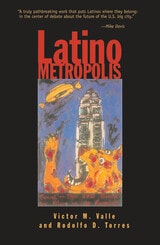
Latino Metropolis
Victor M. Valle
University of Minnesota Press, 2000
A readable look at culture and politics in Los Angeles through a Latino lens.
Los Angeles: scratch the surface of the city’s image as a rich mosaic of multinational cultures and a grittier truth emerges-its huge, shimmering economy was built on the backs of largely Latino immigrants and still depends on them. This book exposes the underside of the development and restructuring that have turned Los Angeles into a global city, and in doing so it reveals the ways in which ideas about ethnicity-Latino identity itself-are implicated and elaborated in the process. A penetrating analysis of the social, economic, cultural, and political consequences of the growth of the Latino working-class populations in Los Angeles, Latino Metropolis is also a nuanced account of the complex links between political economy and the social construction of ethnicity.
Lifting examples from recent news stories, political encounters, and cultural events, the authors demonstrate how narratives about Latinos are used to maintain the status quo-particularly the existing power grid-in the city. In media representations of riots, in the recasting (and "whitening") of Mexican food as Spanish-American cuisine, in the community displacement that occurred as part of the development of the Staples Center-in telling instances large and small, we see how Los Angeles and its Latino population are mutually transforming. And we see how an old Latino politics of "racial" identity is inevitably giving way to a new politics of class. Combining political and economic insight with trenchant social and cultural analysis, this work offers the clearest statement to date of how ethnicity and class intersect in defining racialized social relations in the contemporary metropolis.Globalization and Community Series, volume 7Translation Inquiries: University of Minnesota Press
Latinos and American Law
Landmark Supreme Court CasesBy Carlos R. Soltero
University of Texas Press, 2006
To achieve justice and equal protection under the law, Latinos have turned to the U.S. court system to assert and defend their rights. Some of these cases have reached the United States Supreme Court, whose rulings over more than a century have both expanded and restricted the legal rights of Latinos, creating a complex terrain of power relations between the U.S. government and the country's now-largest ethnic minority. To map this legal landscape, Latinos and American Law examines fourteen landmark Supreme Court cases that have significantly affected Latino rights, from Botiller v. Dominguez in 1889 to Alexander v. Sandoval in 2001.
Carlos Soltero organizes his study chronologically, looking at one or more decisions handed down by the Fuller Court (1888-1910), the Taft Court (1921-1930), the Warren Court (1953-1969), the Burger Court (1969-1986), and the Rehnquist Court (1986-2005). For each case, he opens with historical and legal background on the issues involved and then thoroughly discusses the opinion(s) rendered by the justices. He also offers an analysis of each decision's significance, as well as subsequent developments that have affected its impact. Through these case studies, Soltero demonstrates that in dealing with Latinos over issues such as education, the administration of criminal justice, voting rights, employment, and immigration, the Supreme Court has more often mirrored, rather than led, the attitudes and politics of the larger U.S. society.
Latinos and Nationhood
Two Centuries of Intellectual ThoughtNicolás Kanellos
University of Arizona Press, 2023
Over the course of two centuries, these Latino or Hispanic intellectuals were natural-born citizens of the United States, immigrants, or political refugees. Many of these intellectuals, whether citizens or not, strove to embrace and enliven such democratic principles as freedom of speech and of the press, the protection of minorities in the Bill of Rights and in subsequent laws, and the protection of linguistic and property rights, among many others, guaranteed by treaties when the United States incorporated their homelands into the Union.
The first six chapters present the work of lesser-known historical figures—most of whom have been consistently ignored by Anglo- and Euro-centric history and whose works have been widely inaccessible until recently—who were revolutionaries, editors of magazines and newspapers, and speechmakers who influenced the development of a Latino consciousness. The last three chapters deal with three foundational figures of the Chicano Movement, the last two of whom either subverted the concept of nationhood or went beyond it to embrace internationalism in an outreach to humanity as a whole.
Latinos and Nationhood sheds new light on the biographies of Félix Varela, José Alvarez de Toledo y Dubois, Francisco Ramírez, Tomás Rivera, Rolando Hinojosa-Smith, and Gloria E. Anzaldúa, among others.
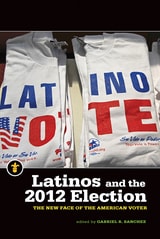
Latinos and the 2012 Election
The New Face of the American VoterGabriel R. Sanchez
Michigan State University Press, 2015
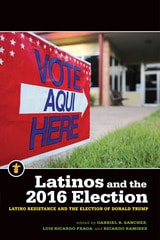
Latinos and the 2016 Election
Latino Resistance and the Election of Donald TrumpGabriel R. Sanchez
Michigan State University Press, 2020
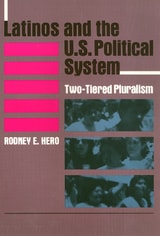
Latinos and the U.S. Political System
Two-Tiered PluralismRodney E. Hero
Temple University Press, 1992
Bringing together political science research on Latinos and an analysis of American politics from the vantage point of the Latino political condition, Rodney Hero presents a comprehensive discussion of contemporary Latino politics. The distinct and tenuous nature of Latino status in the U.S. has made it difficult to explain their unique status. This "uniqueness" stems from a variety of circumstances, including the differences among Mexican Americans, Puerto Ricans, and Cubans, and their ambivalent racial classification (white but not "Anglo," or nonwhite but not black).
Hero introduces the concept of "two-tiered pluralism," which describes the political situation for Latinos and other minorities in which equality is largely formal or procedural, but not substantive. He observes that this formal but marginalized inclusion exists for minorities in most facets of the political process. In his critical overview of American politics, Hero explores the major theoretical perspectives that have been used to understand Latino "cultural politics"; he contrasts the three largest Hispanic population in this country; and he considers major political activities and American institutions with specific reference to Latinos. This timely work addresses the politics of an increasingly important segment of the U.S. population and an area in which previous research has been scant.
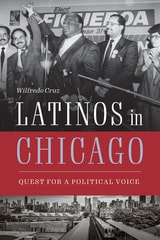
Latinos in Chicago
Quest for a Political VoiceWilfredo Cruz
Southern Illinois University Press, 2022
The path to political power for Latinos in Chicago
In the Midwest’s largest city, Latinos have been fighting for political representation for more than half a century. In this exploration of urban politics in Chicago, Wilfredo Cruz shows for the first time how Latinos went from being ignored by the Irish-controlled political machine to becoming a respected constituency.
Beginning with the Latino community’s first attempt to acquire a political voice in Chicago politics in 1911 and continuing through Latino officeholders of the early twenty-first century, Cruz surveys not only the struggles of this community—specifically the two largest Latino groups in the city, Mexicans and Puerto Ricans—but also the ways in which Chicago’s Latinos overcame those challenges to gain their political voice.
For most of the twentieth century, Chicago politicians ignored the growing Latino community. This disregard changed with the 1983 election of Mayor Harold Washington, an African American who defied the political machine and actively recruited Latinos to his administration and helped them win city and statewide political offices. His actions opened the doors of government for Latinos in Chicago. Subsequent mayors, seeing the political success of Washington’s move, continued his policies.
Many up-and-coming Latino politicians making strides in Chicago, including state representative Aarón Ortíz, Alderman Andre Vasquez, and Alderman Rossana Rodríguez-Sanchez, contribute their takes on the struggle for political power and the challenges facing the rising new generation of elected officials. With this book, Cruz asks and answers this question: What does the future hold for Latinos politically in Chicago?
Latinos in Michigan
David A. Badillo
Michigan State University Press, 2003
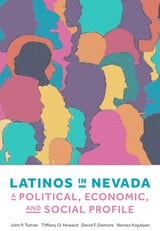
Latinos in Nevada
A Political, Economic, and Social ProfileJohn P. Tuman
University of Nevada Press, 2021
This extensive study by a distinguished and multidisciplinary team of scholars discusses the impact of the Latinx population from the early development of the state of Nevada and highlights their roles in society, as well as the specific implications of their growing presence in the state. It also contemplates the future of the Latinx population and the role they will continue to play in politics and the economy.
This in-depth examination of a large and relatively understudied population will be of interest to scholars and students who study disparities in health and education opportunities as well as the political and economic climate among Latinos and other groups in Nevada and beyond. A political, economic, and demographic profile, this book:
- Explores the history, growth, and diversity of the Latinx population.
- Draws on an array of census data, voter surveys, statistics, interviews, and health, education, employment, wages, and immigration statistics.
- Evaluates key trends in employment, education, religion, and health.
- Analyzes the dynamics of political participation, including implications of a growing Latino political electorate in a western swing state.
- Assesses key determinants of health disparities, educational inequities, and civic engagement among Latinos in the state.
- Demonstrates the impact of the Great Recession of 2008 and provides a preliminary assessment of the COVID-19 pandemic on Latino employment.
Latinos in New England
edited by Andrés Torres
Temple University Press, 2006
Latinos in the Midwest
Rubén O. Martinez
Michigan State University Press, 2011
Latinx Environmentalisms
Place, Justice, and the DecolonialSarah D. Wald
Temple University Press, 2019
The whiteness of mainstream environmentalism often fails to account for the richness and variety of Latinx environmental thought. Building on insights of environmental justice scholarship as well as critical race and ethnic studies, the editors and contributors to Latinx Environmentalisms map the ways Latinx cultural texts integrate environmental concerns with questions of social and political justice.
Original interviews with creative writers, including Cherríe Moraga, Helena María Viramontes, and Héctor Tobar, as well as new essays by noted scholars of Latinx literature and culture, show how Latinx authors and cultural producers express environmental concerns in their work. These chapters, which focus on film, visual art, and literature—and engage in fields such as disability studies, animal studies, and queer studies—emphasize the role of racial capitalism in shaping human relationships to the more-than-human world and reveal a vibrant tradition of Latinx decolonial environmentalism.
Latinx Environmentalisms accounts for the ways Latinx cultures are environmental, but often do not assume the mantle of “environmentalism.”
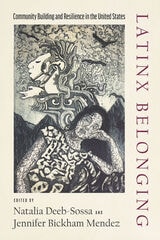
Latinx Belonging
Community Building and Resilience in the United StatesEdited by Natalia Deeb-Sossa and Jennifer Bickham Mendez
University of Arizona Press, 2022
What does it mean to be Latinx? This pressing question forms the core of Latinx Belonging, which brings together cutting-edge research to discuss the multilayered ways this might be answered.
Latinx Belonging is anchored in the claim that Latinx people are not defined by their marginalization but should instead be understood as active participants in their communities and contributors to U.S. society. The volume’s overarching analytical approach recognizes the differences, identities, and divisions among people of Latin American origin in the United States, while also attending to the power of mainstream institutions to shape their lives and identities. Contributors to this volume view “belonging” as actively produced through struggle, survival, agency, resilience, and engagement.
This work positions Latinxs’ struggles for recognition and inclusion as squarely located within intersecting power structures of gender, race, sexuality, and class and as shaped by state-level and transnational forces such as U.S. immigration policies and histories of colonialism. From the case of Latinxs’ struggles for recognition in the arts, to queer Latinx community resilience during COVID-19 and in the wake of mass shootings, to Indigenous youth’s endurance and survival as unaccompanied minors in Los Angeles, the case studies featured in this collection present a rich and textured picture of the diversity of the U.S. Latinx experience in the twenty-first century.
Contributors
Andrés Acosta
Jack “Trey” Allen
Jennifer Bickham Mendez
Stephanie L. Canizales
Christopher Cuevas
Natalia Deeb-Sossa
Yvette G. Flores
Melanie Jones Gast
Monika Gosin
Pierrette Hondagneu-Sotelo
Nolan Kline
Verónica Montes
Yvonne Montoya
Michael De Anda Muñiz
Suzanne Oboler
Gilda L. Ochoa
Dina G. Okamoto
Marco Antonio Quiroga
Michelle Téllez
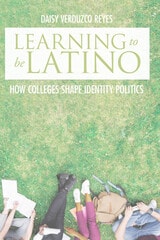
Learning to Be Latino
How Colleges Shape Identity PoliticsReyes, Daisy Verduzco
Rutgers University Press, 2018
Drawing on extensive ethnographic observations, Reyes shows how college campuses shape much more than students’ academic and occupational trajectories; they mold students’ ideas about inequality and opportunity in America, their identities, and even how they intend to practice politics.
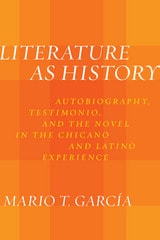
Literature as History
Autobiography, Testimonio, and the Novel in the Chicano and Latino ExperienceMario T. García
University of Arizona Press, 2016
Literature as History offers a critical new path for Chicano and Latino history. Historian Mario T. García analyzes prominent works of Chicano fiction, nonfiction, and autobiographical literature to explore how they can sometimes reveal even more about ordinary people’s lives. García argues that this approach can yield personal insights into historical events that more formal documents omit, lending insights into such diverse issues as gender identity, multiculturalism, sexuality, and the concerns of the working class.
In a stimulating and imaginative look at the intersection of history and literature, García discusses the meaning and intent of narratives. Literature as History represents a unique way to rethink history. García, a leader in the field of Chicano history and one of the foremost historians of his generation, explores how Chicano historians can use Chicano and Latino literature as important historical sources. Autobiography, testimonio, and fiction are the genres the author researches to obtain new and insightful perspectives on Chicano history at the personal and grassroots levels. Breaking the boundaries between history and literature, García provides a thought-provoking discussion of what constitutes a historical source.