Results by title
148 books match the query 'History, Military' and 4 start with l
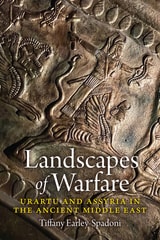
Landscapes of Warfare
Urartu and Assyria in the Ancient Middle EastTiffany Earley-Spadoni
University Press of Colorado, 2025
Tiffany Earley-Spadoni challenges traditional views by emphasizing warfare’s role in organizing ancient landscapes, suggesting that Urartu’s strength lay in its strategic optimization of terrain through fortified regional networks. Using an interdisciplinary approach that includes GIS-enabled studies and integrates archaeological, historical, and art-historical evidence, she illustrates how warfare was a generative force in structuring space and society in the ancient Middle East. Landscapes of Warfare situates Urartu’s developments within the broader context of regional empires, providing insights into the mechanisms of warfare, governance, and cultural identity formation.
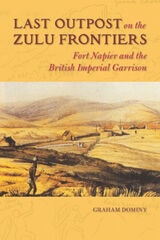
Last Outpost on the Zulu Frontiers
Fort Napier and the British Imperial GarrisonGraham Dominy
University of Illinois Press, 2016
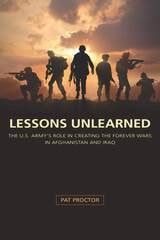
Lessons Unlearned
The U.S. Army's Role in Creating the Forever Wars in Afghanistan and IraqPat Proctor
University of Missouri Press, 2020
In this blunt critique of the senior leadership of the U.S. Army, Proctor contends that after the fall of the Soviet Union, the U.S. Army stubbornly refused to reshape itself in response to the new strategic reality, a decision that saw it struggle through one low-intensity conflict after another—some inconclusive, some tragic—in the 1980s and 1990s, and leaving it largely unprepared when it found itself engaged—seemingly forever—in wars in Afghanistan and Iraq. The first book-length study to connect the failures of these wars to America’s disastrous performance in the war on terror, Proctor’s work serves as an attempt to convince Army leaders to avoid repeating the same mistakes.
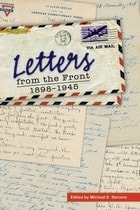
Letters from the Front, 1898-1945
Michael E. Stevens
Wisconsin Historical Society Press, 1992
This volume tells the stories of 62 men and women from Wisconsin who served in the Spanish-American War, World War I, and World War II. Letters from the Front is a vivid social history of wartime as told by those who took part in these foreign conflicts. Most of them are "ordinary" people, uprooted from farms, factories, and offices, who took part in extraordinary events. This work explores how war changed their lives and reveals the emotions they felt in uniform, in remote outposts, in combat, and in prison camps. These letters, diaries, oral histories, newspapers, and contemporary accounts provide a history of adaptation to military life; they also reflect the changes that occurred over the half-century encompassing these confilcts, an era of great technological innovation — and one in which America's vision of itself also changed.