Results by title
468 books match the query 'Identity' and 13 start with l
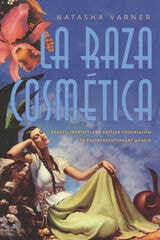
La Raza Cosmética
Beauty, Identity, and Settler Colonialism in Postrevolutionary MexicoNatasha Varner
University of Arizona Press, 2020
Critically examining beauty pageants, cinema, tourism propaganda, photography, murals, and more, Natasha Varner shows how postrevolutionary understandings of mexicanidad were fundamentally structured by legacies of colonialism, as well as shifting ideas about race, place, and gender. This interdisciplinary study smartly weaves together cultural history, Indigenous and settler colonial studies, film and popular culture analysis, and environmental and urban history. It also traces a range of Indigenous interventions in order to disrupt top-down understandings of national identity construction and to “people” this history with voices that have all too often been entirely ignored.
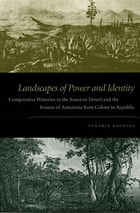
Landscapes of Power and Identity
Comparative Histories in the Sonoran Desert and the Forests of Amazonia from Colony to RepublicCynthia Radding
Duke University Press, 2005
Radding’s comparative approach illuminates what happened when similar institutions of imperial governance, commerce, and religion were planted in different physical and cultural environments. She draws on archival documents, published reports by missionaries and travelers, and previous histories as well as ecological studies and ethnographies. She also considers cultural artifacts, including archaeological remains, architecture, liturgical music, and religious dances. Radding demonstrates how colonial encounters were conditioned by both the local landscape and cultural expectations; how the colonizers and colonized understood notions of territory and property; how religion formed the cultural practices and historical memories of the Sonoran and Chiquitano peoples; and how the conflict between the indigenous communities and the surrounding creole societies developed in new directions well into the nineteenth century.
Language Policy & Identity In The U.S.
Ronald Schmidt, Sr.
Temple University Press, 2000
This book lays out the two approaches to language policy -- linguistic assimilation and linguistic pluralism -- in clear and accessible terms. Filled with examples and narratives, it provides a readable overview of the U.S. "culture wars" and explains why the conflict has just now emerged as a major issue in the United States.
Professor Schmidt examines bilingual education in the public schools, "linguistic access" rights to public services, and the designation of English as the United States' "official" language. He illuminates the conflict by describing the comparative, theoretical, and social contexts for the debate. The source of the disagreement, he maintains, is not a disagreement over language per se but over identity and the consequences of identity for individuals, ethnic groups, and the country as a whole. Who are "the American people"? Are we one national group into which newcomers must assimilate? Or are we composed of many cultural communities, each of which is a unique but integral part of the national fabric? This fundamental point is what underlies the specific disputes over language policy. This way of looking at identity politics, as Professor Schmidt shows, calls into question the dichotomy between "material interest" politics and "symbolic" politics in relation to group identities.
Not limited to describing the nature and context of the language debate, Language Policy and Identity Politics in the United States reaches the conclusion that a policy of linguistic pluralism, coupled with an immigrant settlement policy and egalitarian economic reforms, will best meet the aims of justice and the common good. Only by attacking both the symbolic and material effects of racialization will the United States be able to attain the goals of social equality and national harmony.
Language, History, and Identity
Ethnolinguistic Studies of the Arizona TewaPaul V. Kroskrity
University of Arizona Press, 1993
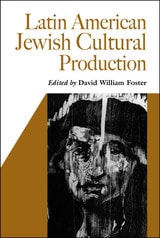
Latin American Jewish Cultural Production
David William Foster
Vanderbilt University Press, 2008
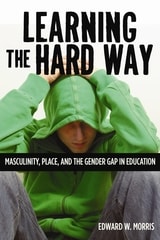
Learning the Hard Way
Masculinity, Place, and the Gender Gap in EducationMorris, Edward
Rutgers University Press, 2012
An avalanche of recent newspapers, weekly newsmagazines, scholarly journals, and academic books has helped to spark a heated debate by publishing warnings of a “boy crisis” in which male students at all academic levels have begun falling behind their female peers. In Learning the Hard Way, Edward W. Morris explores and analyzes detailed ethnographic data on this purported gender gap between boys and girls in educational achievement at two low-income high schools—one rural and predominantly white, the other urban and mostly African American. Crucial questions arose from his study of gender at these two schools. Why did boys tend to show less interest in and more defiance toward school? Why did girls significantly outperform boys at both schools? Why did people at the schools still describe boys as especially “smart”?
Morris examines these questions and, in the process, illuminates connections of gender to race, class, and place. This book is not simply about the educational troubles of boys, but the troubled and complex experience of gender in school. It reveals how particular race, class, and geographical experiences shape masculinity and femininity in ways that affect academic performance. His findings add a new perspective to the “gender gap” in achievement.
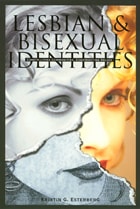
Lesbian & Bisexual Identities
Kristin G. Esterberg
Temple University Press, 1997
In interviews conducted over a four-year time period, women describe the lesbian community they live in; how they see its structure, its social groups, its informal rules and norms for behavior; and their places inside -- or on the margins of -- the community. Lesbian and Bisexual Identities reveals how women fall in and out of love, how they "perform" lesbian or bisexual identity through clothing, hairstyle, body language, and talk, and many other aspects typically not considered. The women present a variety of accounts. Some consider themselves "lesbian from birth" and have constructed their lives accordingly, while others have experienced significant shifts in their identities, depending on the influences of feminism, progressive politics, the visibility of the lesbian community, and other factors.
Esterberg offers vivid accounts that defy the stereotypes so commonly offered. Lesbian and Bisexual Identities not only presents women's stories in their own words, it moves beyond storytelling to understand how these accounts resonate with social science theories of identity and community.
Lesbian Death
Desire and Danger between Feminist and QueerMairead Sullivan
University of Minnesota Press, 2022
Engaging with fears of lesbian death to explore the value of lesbian beyond identity
The loss of lesbian spaces, as well as ideas of the lesbian as anachronistic has called into question the place of lesbian identity within our current culture. In Lesbian Death, Mairead Sullivan probes the perception that lesbian status is in retreat, exploring the political promises—and especially the failures—of lesbian feminism and its usefulness today.
Lesbian Death reads how lesbian is conceptualized in relation to death from the 1970s onward to argue that lesbian offers disruptive potential. Lesbian Death examines the rise of lesbian breast cancer activism in San Francisco in conversation with ACT UP, the lesbian separatist manifestos “The C.L.I.T. Papers,” the enduring specter of lesbian bed death, and the weaponization of lesbian identity against trans lives.
By situating the lesbian as a border figure between feminist and queer, Lesbian Death offers a fresh perspective on the value of lesbian for both feminist and queer projects, even if her value is her death.

Lesbian Rule
Cultural Criticism and the Value of DesireAmy Villarejo
Duke University Press, 2003
Integrating cinema studies, queer and feminist theory, and cultural studies, Villarejo illuminates the contexts within which the lesbian is rendered visible. Toward that end, she analyzes key portrayals of lesbians in public culture, particularly in documentary film. She considers a range of films—from documentaries about Cuba and lesbian pulp fiction to Exile Shanghai and The Brandon Teena Story—and, in doing so, brings to light a nuanced economy of value and desire.
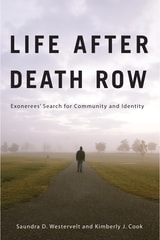
Life after Death Row
Exonerees' Search for Community and IdentitySaundra D. Westervelt and Kimberly J. Cook
Rutgers University Press, 2012
Life after Death Row examines the post-incarceration struggles of individuals who have been wrongly convicted of capital crimes, sentenced to death, and subsequently exonerated.
Saundra D. Westervelt and Kimberly J. Cook present eighteen exonerees’ stories, focusing on three central areas: the invisibility of the innocent after release, the complicity of the justice system in that invisibility, and personal trauma management. Contrary to popular belief, exonerees are not automatically compensated by the state or provided adequate assistance in the transition to post-prison life. With no time and little support, many struggle to find homes, financial security, and community. They have limited or obsolete employment skills and difficulty managing such daily tasks as grocery shopping or banking. They struggle to regain independence, self-sufficiency, and identity.
Drawing upon research on trauma, recovery, coping, and stigma, the authors weave a nuanced fabric of grief, loss, resilience, hope, and meaning to provide the richest account to date of the struggles faced by people striving to reclaim their lives after years of wrongful incarceration.
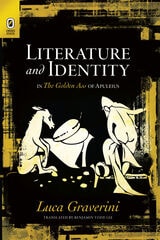
Literature and Identity in The Golden Ass of Apuleius
Luca Graverini
The Ohio State University Press, 2012
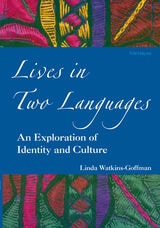
Lives in Two Languages
An Exploration of Identity and CultureLinda Watkins-Goffman
University of Michigan Press, 2001
Lives in Two Languages focuses on the experience of multicultural authors--like Richard Rodriguez, Amy Tan, Eva Hoffman, Chang-rae Lee, and Julia Alvarez--whose experiences can be related to anyone who has moved from one culture or subculture to another. As such, this text is an excellent comprehensive introduction to the multicultural experience for teachers and educators in all disciplines, as well as of interest to anyone interested in language culture and psychological process of identity.
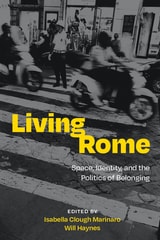
Living Rome
Space, Identity, and the Politics of BelongingEdited by Isabella Clough Marinaro and Will Haynes
Lever Press, 2026
Living Rome: Space, Identity, and the Politics of Belonging looks beyond the romanticized image of Rome, towards a kaleidoscopic view of the city shaped by inequalities, socio-political challenges, and acts of resistance and solidarity. In the wake of urban developments related to migration, housing shortages, COVID-19, crime, and other social changes, this volume offers a grounded approach, mapping the contemporary realities of Italy’s capital from a variety of methodological standpoints. Contributors argue that the unseen fringes, both geographically peripheral and those embedded within the very heart of Rome, are crucial for understanding its social dynamics. These ‘hidden’ geographies foster vibrant communities, challenge ideas of home and belonging, and act as key sites of creativity, resistance and everyday life.
Bringing together urban sociologists, anthropologists, geographers, demographers, criminologists, decolonizing and feminist scholars, this study contributes to a growing body of research on the city and its social movements, aiming to inform policy and contribute to a more just and sustainable Rome. Using a variety of methods, from quantitative cartography and policy analysis to (auto)ethnography and creative methodologies, this volume speaks well beyond Rome, to conversations about cities worldwide.