Results by title
124 books match the query 'Information technology' and 4 start with l
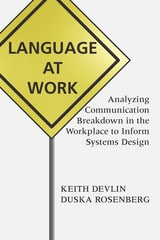
Language at Work
Analyzing Communication Breakdown in the Workplace to Inform Systems DesignKeith Devlin and Duska Rosenberg
CSLI, 1996
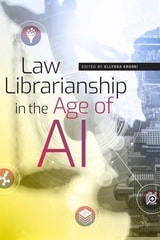
Law Librarianship in the Age of AI
Ellyssa Kroski
American Library Association, 2019
Futurists predict that in the next ten years the profession of “lawyer” will splinter into job titles like “legal process analyst” or “legal knowledge engineer.” And some in the field are already taking a proactive approach — in fact, more than two dozen law schools have developed innovation centers to explore artificial intelligence (AI) and the law. In a competitive marketplace, both firms and individuals need to familiarize themselves with the dazzling array of new products and enhanced features capable of improving efficiency. Written by leading practitioners and visionaries like Robert Ambrogi, this groundbreaking survey of current practices and future trends offers an incisive examination of the evolving roles for law librarians. Readers will learn how AI technology is changing law school curricula, lawyer practice, marketing, and other key aspects of the field through coverage of such topics as
- the benefits of AI to law librarianship, including areas like legal research, contract review, compliance, and administration, and their associated risks;
- four professional ethics rules that apply to the use or (non-use) of AI;
- how lawyers and staff work side by side with AI, utilizing intelligence like RAVN ACE or FastCase to attack the drudgery of due diligence and document review;
- surprising machine-learning insights from tokenizing, stemming, and lemmatizing the text of Shakespeare’s plays;
- the potential for chatbots and new natural language processing products to improve access to justice; and
- ways to develop sought-after skills through new technology departments, practice management groups, and legal innovation labs.
Reading this collection will give you a firm grasp of the innovations, tools, benefits, and risks of AI in law librarianship.
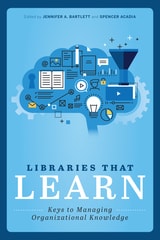
Libraries that Learn
Keys to Managing Organizational KnowledgeJennifer A. Bartlett
American Library Association, 2019

Library Technology Buying Strategies
Marshall Breeding
American Library Association, 2016