Results by title
477 books match the query 'Italy' and 18 start with l
La Grande Italia
The Rise and Fall of the Myth of the Nation in the Twentieth CenturyEmilio Gentile
University of Wisconsin Press, 2008
Gentile’s definition of “Italians” encompasses the whole range of political, cultural, and social actors: Liberals and Catholics, Monarchists and Republicans, Fascists and Socialists. La Grande Italia presents a sweeping study of the development of Italian national identity in all its incarnations throughout the twentieth century. This important contribution to the study of modern Italian nationalism and the ambition to achieve a “great Italy” between the unification of Italy and the advent of the Italian Republic will appeal to anyone interested in modern European history, Fascism, and nationalism.
Best Books for Special Interests, selected by the American Association of School Librarians, and Best Books for Regional General Interests, selected by the Public Library Association
Ladies Errant
Wayward Women and Social Order in Early Modern ItalyDeanna Shemek
Duke University Press, 1998
Seeing errancy as an act of resistance rather than of error, Shemek carries her study beyond the didactic and prescriptive literature on femininity in early modern Italy to an arena in which theories about femininity are considered jointly with real and fictional instances of women’s waywardness. As prostitutes, warriors, lovers, and poets, the women of Shemek’s study are found in canonical texts, marginal works, and popular artistic activity, appearing, for instance, in literature, paintings, legal proceedings, and accounts of public festivals. By juxtaposing these varied places of errancy—from Ariosto’s chivalric Orlando furioso to the prostitutes’ race in the Palio di San Giorgio—Shemek points to the important contact between elite and popular cultures in early modernity, revealing the strength and flexibility of a gender boundary fundamental to early modern conceptions of social order.
Latin Letters of C.S. Lewis
C.S. Lewis and Don Giovanni Calabria
St. Augustine's Press, 1999
Law, Family, and Women
Toward a Legal Anthropology of Renaissance ItalyThomas Kuehn
University of Chicago Press, 1991
influence of law on Italian society during the Renaissance,
especially in the spheres of family and women. Kuehn's use
of legal sources along with letters, diaries, and
contemporary accounts allows him to present a compelling
image of the social processes that affected the shape and
function of the law.
The numerous law courts of Italian city-states
constantly devised and revised statutes. Kuehn traces the
permutations of these laws, then examines their use by
Florentines to arbitrate conflict and regulate social
behavior regarding such issues as kinship, marriage,
business, inheritance, illlegitimacy, and gender. Ranging
from one man's embittered denunciation of his father to
another's reaction to his kinsmen's rejection of him as
illegitimate, Law, Family, and Women provides
fascinating evidence of the tensions riddling family life in
Renaissance Florence. Kuehn shows how these same tensions,
often articulated in and through the law, affected women. He
examines the role of the mundualdus—a male legal guardian
for women—in Florence, the control of fathers over their
married daughters, and issues of inheritance by and through
women. An ambitious attempt to reformulate the agenda of
Renaissance social history, Kuehn's work will be of value to
both legal anthropologists and social historians.
Thomas Kuehn is professor of history at Clemson
University.
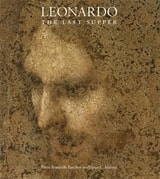
Leonardo, The Last Supper
Pinin Brambilla Barcilon and Pietro C. Marani
University of Chicago Press, 2001
The technical problems with the Last Supper began as soon as Leonardo started to paint it. He jettisoned the traditional fresco technique of applying paint to wet plaster, a method unsuited to Leonardo's slow and thorough execution, and created the work instead with an experimental technique that involved painting directly on the dry plaster. With this renegade method, Leonardo rendered one of the most enduring painting techniques volatile and unstable. Added to this initial complication have been centuries of pollution, tourists, candle smoke, and the ravages of age, not to mention food fights in the refectory staged by Napoleonic soldiers and Allied bombs in 1943. By the middle of the twentieth century, the Last Supper was in desperate need of a complete restoration.
Pinin Brambilla Barcilon was chosen to head this twenty-year project, and Leonardo, The Last Supper is the official record of her remarkable effort. It first documents the cleaning and removal of the overpainting performed in the other attempts at restoration and then turns to Barcilon's meticulous additions in watercolor, which were based on Leonardo's preparatory drawings, early copies of the painting, and contemporary textual descriptions. This book presents full-scale reproductions of details from the fresco that clearly display and distinguish Leonardo's hand from that of the restorer. With nearly 400 sumptuous color reproductions, the most comprehensive technical documentation of the project by Barcilon, and an introductory essay by art historian and project codirector Pietro C. Marani that focuses on the history of the fresco, Leonardo, The Last Supper is an invaluable historic record, an extraordinarily handsome book, and an essential volume for anyone who appreciates the beauty, technical achievements, and fate of Renaissance painting.
Letters 91-120
Catholic University of America Press, 1998
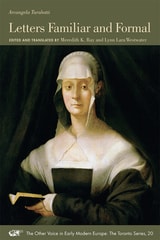
Letters Familiar and Formal
Arcangela Tarabotti
Iter Press, 2012
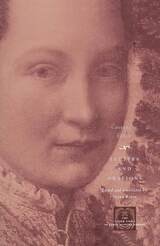
Letters and Orations
Cassandra Fedele
University of Chicago Press, 2000
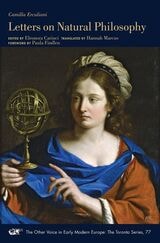
Letters on Natural Philosophy
The Scientific Correspondence of a Sixteenth-Century Pharmacist, with Related TextsCamilla Erculiani
Iter Press, 2020
This edition presents the first full English translation of Erculiani’s book and other relevant texts, bringing to light the cultural context and scientific thought of this unique natural philosopher.
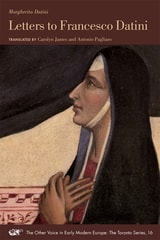
Letters to Francesco Datini
Margherita Datini
Iter Press, 2012
—Jane Tylus
Professor of Italian Studies and vice provost for academic affairs, New York University
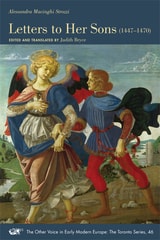
Letters to Her Sons, 1447–1470
Alessandra Macinghi Strozzi
Iter Press, 2016
The seventy-three surviving letters written by Florentine widow, Alessandra Macinghi Strozzi (c.1406–1471), to her distant sons first appeared in print well over a century ago, but are here translated into English in their entirety for the first time. Whether for the professional historian or for the general reader interested in Renaissance Florence, they constitute a most precious testimony regarding both private and public life in the mid-fifteenth century, with themes ranging from familial relations, motherhood, marriage, and aspects of material culture to the harsh realities of political exile meted out by the Medici to their perceived opponents, these latter including her husband and, subsequently, her sons.
Letters, 121-150
Owen J. Peter Damian
Catholic University of America Press, 2004
Letters, 151-180
Owen J. Peter Damian
Catholic University of America Press, 2005
Life and Death in a Venetian Convent
The Chronicle and Necrology of Corpus Domini, 1395-1436Sister Bartolomea Riccoboni
University of Chicago Press, 2000
While the chronicle recounts the history of the nuns' collective life, the necrology provides highly individualized biographies of nearly fifty women who died in the convent between 1395 and 1436. We follow the fascinating stories that led these women, from adolescent girls to elderly widows, to join the convent; and we learn of their cultural backgrounds and intellectual accomplishments, their ascetic practices and mystical visions, their charity and devotion to each other and their fortitude in the face of illness and death.
The personal and social meaning of religious devotion comes alive in these texts, the first of their kind to be translated into English.
Life, Brazen and Garish
A Tale of Three WomenDacia Maraini
Rutgers University Press, 2024
Life, Brazen and Garish offers a fresh take on the epistolary novel, telling the story of a family through the fragmented and disparate perspectives of daughter, mother, and grandmother. Yet even as each woman endures her private struggles with love and betrayal, youth and maturity, knowledge and ignorance, reality and illusion, the Cascadeis forge a solidarity that transcends generations. In turns heartbreaking and laugh-out-loud funny, this novel is a triumph of narrative voice and literary style from one of Italy’s most renowned writers.
Questo libro è stato tradotto grazie a un contributo del Ministero degli Affari Esteri e della Cooperazione Internazionale italiano.
This book has been translated thanks to a contribution from the Italian Ministry of Foreign Affairs and International Cooperation.
Living Rome
Space, Identity, and the Politics of BelongingEdited by Isabella Clough Marinaro and Will Haynes
Lever Press, 2026
Living Rome: Space, Identity, and the Politics of Belonging looks beyond the romanticized image of Rome, towards a kaleidoscopic view of the city shaped by inequalities, socio-political challenges, and acts of resistance and solidarity. In the wake of urban developments related to migration, housing shortages, COVID-19, crime, and other social changes, this volume offers a grounded approach, mapping the contemporary realities of Italy’s capital from a variety of methodological standpoints. Contributors argue that the unseen fringes, both geographically peripheral and those embedded within the very heart of Rome, are crucial for understanding its social dynamics. These ‘hidden’ geographies foster vibrant communities, challenge ideas of home and belonging, and act as key sites of creativity, resistance and everyday life.
Bringing together urban sociologists, anthropologists, geographers, demographers, criminologists, decolonizing and feminist scholars, this study contributes to a growing body of research on the city and its social movements, aiming to inform policy and contribute to a more just and sustainable Rome. Using a variety of methods, from quantitative cartography and policy analysis to (auto)ethnography and creative methodologies, this volume speaks well beyond Rome, to conversations about cities worldwide.
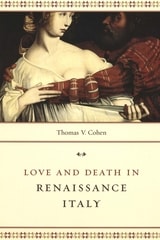
Love and Death in Renaissance Italy
Thomas V. Cohen
University of Chicago Press, 2004
Each of the chapters in this history chronicles a domestic drama around which the lives of ordinary Romans are suddenly and violently altered. You might read the gruesome murder that opens the book—when an Italian noble takes revenge on his wife and her bastard lover as he catches them in delicto flagrante—as straight from the pages of Boccaccio. But this tale, like the other stories Cohen recalls here, is true, and its recounting in this scintillating work is based on assiduous research in court proceedings kept in the state archives in Rome.
Love and Death in Renaissance Italy contains stories of a forbidden love for an orphan nun, of brothers who cruelly exact a will from their dying teenage sister, and of a malicious papal prosecutor who not only rapes a band of sisters, but turns their shambling father into a pimp! Cohen retells each cruel episode with a blend of sly wit and warm sympathy and then wraps his tales in ruminations on their lessons, both for the history of their own time and for historians writing today. What results is a book at once poignant and painfully human as well as deliciously entertaining.
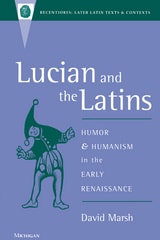
Lucian and the Latins
Humor and Humanism in the Early RenaissanceDavid Marsh
University of Michigan Press, 1998
Until now, no study has attempted to connect the Latin translators and imitators of Lucian with his wider European influence. In Lucian and the Latins, David Marsh describes how Renaissance authors rediscovered the comic writings of Lucian. He traces how Lucianic themes and structures made an essential contribution to European literature beginning with a survey of Latin translations and imitations, which gave new direction to European letters in the fifteenth and sixteenth centuries. The Lucianic dialogues of the dead and dialogues of the gods were immensely popular, despite the religious backlash of the sixteenth century. The paradoxical encomium, represented by Lucian's "The Fly" and "The Parasite," inspired so-called serious humanists like Leonardo Bruni and Guarino of Verona. Lucian's "True Story" initiated the genre of the fantastic journey, which enjoyed considerable popularity during the Renaissance age of discovery. Humanist descendants of this work include Thomas More's Utopia and much of Rabelais' Pantagruel.
Lucian and the Latins will attract readers interested in a wide variety of subjects: the classical tradition, the early Italian Renaissance, the origins of modern European literature, and the uses of humor and satire as instruments of cultural critique.
David Marsh is Professor of Italian, Rutgers University.