Results by title
645 books match the query 'Judaism' and 14 start with l
L'chol Z'man v'Eit- PDF Electronic Version
For Sacred Moments: The CCAR Life-Cycle GuideRabbi Don Goor
Central Conference of American Rabbis, 2015
L'chol Z'man v'Eit
For Sacred Moments 2021 Supplement: The CCAR Life-Cycle GuideDonald Goor
Central Conference of American Rabbis, 2021
This supplement to the CCAR clergy manual contains a wealth of prayers, readings, rituals, and ceremonies, expanding the original to encompass many new situations. Designed for the current moment, its prayers and blessings respond to the evolving role of Reform clergy and the changing life experiences of our congregants. Among these liturgical responses are blessings for moving, starting school, and taking a new name; prayers to support community members dealing with infertility, premature birth, abortion, addiction, eating disorders, assault, and suicide; and an extensive collection of readings to guide communities through times of challenge and pain such as natural disasters, shootings, and antisemitic incidents. The loose-leaf-print and digital formats enable clergy to customize the manual with the resources they find most useful.
L'chol Z'man v'Eit
For Sacred Moments Book + 2021 Supplement: The CCAR Life-Cycle GuideRabbi Donald Goor and Rabbi April Davis
Central Conference of American Rabbis, 2021
This is a PDF version of the manual. You will receive a link to download a PDF that directly integrates the supplement material and the material found in the original manual.
Now with a new supplement, the CCAR clergy manual contains a wealth of prayers, readings, rituals, and ceremonies, expanding the original to encompass many new situations. Designed for the current moment, its prayers and blessings respond to the evolving role of Reform clergy and the changing life experiences of our congregants. Among these liturgical responses are blessings for moving, starting school, and taking a new name; prayers to support community members dealing with infertility, premature birth, abortion, addiction, eating disorders, assault, and suicide; and an extensive collection of readings to guide communities through times of challenge and pain such as natural disasters, shootings, and antisemitic incidents.
Last Works
Moses Mendelssohn. Translated by Bruce Rosenstock
University of Illinois Press, 2012
Learning to Trust in Freedom
Signs from Jewish, Christian, and Muslim TraditionsDavid B. Burrell, C.S.C.
University of Scranton Press, 2010
True religious faith cannot be confirmed by any external proofs. Rather, it is founded on a basic act of trust—and the common root of that trust, for Jewish, Christian, and Islamic traditions, is a belief in the divine creation of the universe. But with Learning to Trust in Freedom, David B. Burrell asks the provocative question: How do we reach that belief, and what is it about the universe that could possibly testify to its divine origins? Even St. Augustine, he points out, could only find faith after a harrowing journey through the lures of desire—and it is that very desire that Burrell seizes on as a tool with which to explore the origin and purpose of the world. Delving deep into the intertwinings of desire and faith, and drawing on St. John of the Cross, Edith Stein, and Charles Taylor, Burrell offers a new understanding of free will, trust, and perception.
Leo Strauss and the Rediscovery of Maimonides
Kenneth Hart Green
University of Chicago Press, 2013
An invaluable companion to Green’s comprehensive collection of Strauss’s writings on Maimonides, this volume shows how Strauss confronted the commonly accepted approaches to the medieval philosopher, resulting in both a new understanding of Maimonides and a new depth and direction for his own thought. It will be welcomed by anyone engaged with the work of either philosopher.
Leo Strauss on Maimonides
The Complete WritingsLeo Strauss
University of Chicago Press, 2013
With Leo Strauss on Maimonides, Kenneth Hart Green presents for the first time a comprehensive, annotated collection of Strauss’s writings on Maimonides, comprising sixteen essays, three of which appear in English for the first time. Green has also provided careful translations of materials that had originally been quoted in Hebrew, Arabic, Latin, German, and French; written an informative introduction highlighting the original contributions found in each essay; and brought references to out-of-print editions fully up to date. The result will become the standard edition of Strauss’s writings on Maimonides.
Leo Strauss on Moses Mendelssohn
Leo Strauss
University of Chicago Press, 2012
Moses Mendelssohn (1729–86) was the leading Jewish thinker of the German Enlightenment and the founder of modern Jewish philosophy. His writings, especially his attempt during the Pantheism Controversy to defend the philosophical legacies of Spinoza and Leibniz against F. H. Jacobi’s philosophy of faith, captured the attention of a young Leo Strauss and played a critical role in the development of his thought on one of the fundamental themes of his life’s work: the conflicting demands of reason and revelation.
Leo Strauss on Moses Mendelssohn is a superbly annotated translation of ten introductions written by Strauss to a multi-volume critical edition of Mendelssohn’s work. Commissioned in Weimar Germany in the 1920s, the project was suppressed and nearly destroyed during Nazi rule and was not revived until the 1960s. In addition to Strauss’s introductions, Martin D. Yaffe has translated Strauss’s editorial remarks on each of the passages he annotates in Mendelssohn’s texts and brings those together with the introductions themselves. Yaffe has also contributed an extensive interpretive essay that both analyzes the introductions on their own terms and discusses what Strauss writes elsewhere about the broader themes broached in his Mendelssohn studies.
Strauss’s critique of Mendelssohn represents one of the largest bodies of work by the young Strauss on a single thinker to be made available in English. It illuminates not only a formerly obscure phase in the emergence of his thought but also a critical moment in the history of the German Enlightenment.
Lessons and Legacies IV
Reflections on Religion, Justice, Sexuality, and GenocideLarry V. Thompson
Northwestern University Press, 2003
Variously concerned with issues of guilt and victimization, the essays examine individuals like Pius XII and Romano Guardini and the institutions of organized religion as well as the roles of the Jewish Councils and the retributive judicial proceedings in Hungary. They reveal that victimization within the Holocaust experience is surprisingly open-ended, with Jewish women doubly victimized by their gender; postwar Germans viewing themselves as the epoch's greatest victims; Poles, whether Jewish or not, victimized beyond others because of their proximity to the epicenter of the Holocaust; and German university students corrupted by ideological inculcation and racist propaganda.
Though offering no "positive lessons" or comforting assurances, these essays add to the ongoing examination of Holocaust consequences and offer insightful analyses of facets previously minimized or neglected. Together they illustrate that matters of gender, sexuality, and proximity are crucial for shaping perceptions of a Holocaust reality that will always remain elusive.

Let Jasmine Rain Down
Song and Remembrance among Syrian JewsKay Kaufman Shelemay
University of Chicago Press, 1998
Shelemay views the intersection of music, individual remembrances, and collective memory through the pizmonim. Reconstructing a century of pizmon history in America based on research in New York, Mexico, and Israel, she explains how verbal and musical memories are embedded in individual songs and how these songs perform both what has been remembered and what otherwise would have been forgotten. In confronting issues of identity and meaning in a postmodern world, Shelemay moves ethnomusicology into the domain of memory studies.
Light for the Nations
The Scriptures on the Universal Mission of Israel and the ChurchLuis Sanchez-Navarro
Catholic University of America Press, 2024
Lights in the Forest
Rabbis Respond to Twelve Essential Jewish QuestionsRabbi Paul Citrin
Central Conference of American Rabbis, 2014
Perfect for self-study, group study, adult learning, and conversion, the collection strives to encourage further study and ongoing discussion through presenting Judaism's intellectual and spiritual tools as means for leading a life full of purpose and commitment.
Questions addressed by the anthology can found below:
-Questions about God
-Questions about Our Humanity
-Questions about the Jewish People
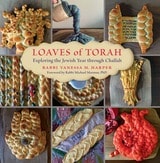
Loaves of Torah
Exploring the Jewish Year through ChallahRabbi Vanessa M. Harper
Central Conference of American Rabbis, 2023
Braided and spiral loaves of challah have long been a delicious centerpiece of the Jewish table, but with a few extra twists, the beloved Shabbat bread can become a work of art that teaches Torah. In Loaves of Torah, Rabbi Vanessa M. Harper— creator of the hit Instagram account @lechlechallah—shapes interpretive challot for each weekly Torah portion and Jewish holiday. A creative journey through the Jewish year, the book pairs gorgeous color photographs with insightful commentary, in-depth questions for reflection and discussion, as well as beautiful kavanot. Rabbi Harper also includes blessings, recipes, and tips for creating your own interpretive challot. A fresh, contemporary commentary on our holiest text, Loaves of Torah will inspire you to think outside the braid and take Torah into your own hands.
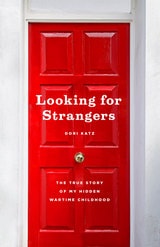
Looking for Strangers
The True Story of My Hidden Wartime ChildhoodDori Katz
University of Chicago Press, 2013