Results by title
358 books match the query 'Labor & Industrial Relations' and 21 start with l
Labor Histories
Class, Politics, and the Working-Class ExperienceEdited by Eric Arnesen, Julie Greene, and Bruce Laurie
University of Illinois Press, 1998

Labor Journalism, Labor Feminism
Women at the Federated PressVictoria M. Grieve
University of Illinois Press, 2026
These journalists wrote women into labor news by shedding light on essential issues like the need for equal pay and an end to discrimination. Their work increased women’s visibility in unions and the workforce while revealing that not only class but gender and race shaped their on-the-job experiences. Grieve also examines labor feminism within the larger stories of links between the Old Left and New Left and the FP’s pioneering role in articulating early iterations of intersectional feminism.
A compelling portrait of four women and a movement, Labor Journalism, Labor Feminism looks at an essential labor press organization and profiles politically active, leftist women who created relationships, established networks, and worked for social change.
Labor Justice across the Americas
Leon Fink, Juan Palacio
University of Illinois Press, 2018
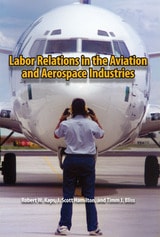
Labor Relations in the Aviation and Aerospace Industries
Robert W. Kaps, J. Scott Hamilton, Timm J. Bliss
Southern Illinois University Press, 2012
In this textbook designed for courses on aviation labor relations, the authors-experts with many years of experience in these sectors-examine and evaluate the labor process for all aspects of the aviation and aerospace industries, including aerospace manufacturing, airlines, general aviation, federal and state administrative agencies, and public airports.
Divided into three parts-Public Policy and Labor Law; Principles, Practices and Procedures in Collective Bargaining and Dispute Resolution; and the Changing Labor Relations Environment-the book provides an overview of the industries and the development of US labor law and policy, then explores the statutory, regulatory, and case laws applicable to each industry segment before concluding with an examination of current and developing issues and trends. The authors present the evolution of aviation and aerospace labor laws, going as far back as the early nineteenth century to lay the historical foundation, and cover the development and main features of the principal statutes governing labor relations in the United States today, the Railway Labor Act, the National Labor Relations Act, and the Civil Service Reform Act. They also investigate the growth of the industries and their impact on labor relations, as well as the current issues and challenges facing management and labor in each segment of this dynamic, sometimes volatile, business and their implications for collective bargaining. Twenty case studies not only illuminate practical applications of such fundamental concepts as unfair labor practices and unions' duty of fair representation but also enliven the subject, preparing the reader to use the concepts in real-world decision making.
A study guide with review questions, online assignments, supplemental readings, and exercises is available for students. For those teachers using the textbook in their courses, there is an instructor's manual with additional resources for developing courses in the classroom, online, or by blended learning, as well as a variety of assignments and materials to enhance and vary the mock negotiation exercise.
A revision and expansion of Robert W. Kaps's Air Transport Labor Relations, this outstanding new volume provides students and teachers with valuable information and perspectives on industries that are highly dependent on technologically skilled labor. Labor Relations in the Aviation and Aerospace Industries offers a sweeping and thorough treatment of labor relations, public policy, law, and practice and is the definitive work on the labor process in the aviation and aerospace sectors.
Labor Relations in the Aviation and Aerospace Industries
Study GuideRobert W. Kaps, J. Scott Hamilton, Timm J. Bliss
Southern Illinois University Press, 2012
This Study Guide is designed to be used with the textbook Labor Relations in the Aviation and Aerospace Industries. It is intended to assist students in comprehending basic terminology and principles of labor relations and the law, to relate those principles to unique features of the aviation and aerospace industry, and to prepare for the kinds of labor relations–related decisions students will soon be making as aviation professionals, whether in private or public sector employment. It includes review questions, online assignments, supplemental readings, and exercises.
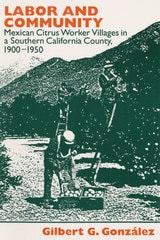
Labor and Community
Mexican Citrus Worker Villages in a Southern California County, 1900-1950Gilbert G. González
University of Illinois Press, 1994

Labor and Democracy in Namibia, 1971–1996
Gretchen Bauer
Ohio University Press, 1998
In this compelling study of labor and nationalism during and after Namibia's struggle for liberation, Gretchen Bauer addresses the very difficult task of consolidating democracy in an independent Namibia. Labor and Democracy in Namibia, 1971-1996 argues that a vibrant and autonomous civil society is crucial to the consolidation of new democracies, and it identifies trade unions, in particular, as especially important organizations of civil society. In Namibia, however, trade unions have emerged from the liberation struggle and the first years of independence in a weakened state. Dr. Bauer gives a lucid explanation for this phenomenon by tracing the origins and evolution of the trade unions in Namibia and discusses the implications thereof for the future of democracy in Namibia.
Based on material not widely available before independence in 1990, this study takes a critical look at the nationalist movement in Namibia. Through the use of dozens of interviews with political leaders, trade unionists, community activists, and others, Bauer offers the controversial suggestion that there are many within the nationalist movement (now the ruling party in government) who would rather not see a strong trade union movement (or any other potential rival) emerge in independent Namibia.
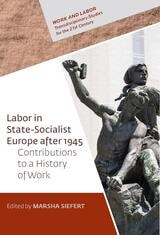
Labor in State-Socialist Europe, 1945–1989
Contributions to a History of WorkMarsha Siefert
Central European University Press, 2020
Labor regimes under communism in East-Central Europe were complex, shifting, and ambiguous. This collection of sixteen essays offers new conceptual and empirical ways to understand their history from the end of World War II to 1989, and to think about how their experiences relate to debates about labor history, both European and global.
The authors reconsider the history of state socialism by re-examining the policies and problems of communist regimes and recovering the voices of the workers who built them. The contributors look at work and workers in Albania, Bulgaria, Czechoslovakia, the German Democratic Republic, Hungary, Poland, Romania, and Yugoslavia. They explore the often contentious relationship between politics and labor policy, dealing with diverse topics including workers’ safety and risks; labor rights and protests; working women’s politics and professions; migrant workers and social welfare; attempts to control workers’ behavior and stem unemployment; and cases of incomplete, compromised, or even abandoned processes of proletarianization. Workers are presented as active agents in resisting and supporting changes in labor policies, in choosing allegiances, and in defining the very nature of work.
Labor'S War At Home
The Cio In World War IiNelson Lichtenstein
Temple University Press, 2003
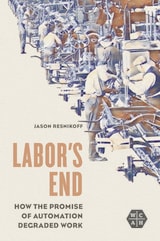
Labor's End
How the Promise of Automation Degraded WorkJason Resnikoff
University of Illinois Press, 2022
A forceful intellectual history, Labor's End challenges entrenched assumptions about automation's transformation of the American workplace.
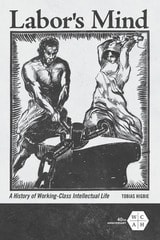
Labor's Mind
A History of Working-Class Intellectual LifeTobias Higbie
University of Illinois Press, 2019
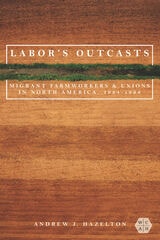
Labor's Outcasts
Migrant Farmworkers and Unions in North America, 1934-1966Andrew J. Hazelton
University of Illinois Press, 2022
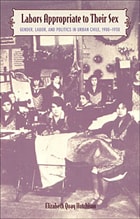
Labors Appropriate to Their Sex
Gender, Labor, and Politics in Urban Chile, 1900–1930Elizabeth Quay Hutchison
Duke University Press, 2001
In addition to population and industrial censuses, Hutchison culls published and archival sources to illuminate such misconceptions and to reveal how women’s paid labor became a locus of anxiety for a society confronting social problems—both real and imagined—that were linked to industrialization and modernization. The limited options of working women were viewed by politicians, elite women, industrialists, and labor organizers as indicative of a society in crisis, she claims, yet their struggles were also viewed as the potential springboard for reform. Labors Appropriate to Their Sex thus demonstrates how changing norms concerning gender and work were central factors in conditioning the behavior of both male and female workers, relations between capital and labor, and political change and reform in Chile.

Labour, Nature and Capitalism
Exploring Labour-Environmental Conflicts in Kerala, IndiaSilpa Satheesh
University College London, 2025
Set against the industrial belt of Eloor-Edayar, Labour, Nature and Capitalism investigates the uneasy tensions between trade unions and environmental movements in Kerala, complicating the celebrated “Kerala Model” of development. Through ethnographic research and document analysis, Silpa Satheesh studies how capitalist interests shape and divide movements that appear to share common ground. The book challenges the simplistic “environment versus development” binary, depicting how industrial labor and grassroots environmental activism frequently find themselves at odds, despite both being embedded in struggles for justice.
By foregrounding the lived experiences of movement actors and examining the ideological fractures that emerge in postcolonial capitalism, Satheesh provides a much-needed intervention into debates on labor and ecology in the Global South. This interdisciplinary work is particularly valuable for scholars and activists working at the intersection of environmental justice and working-class mobilization, shedding light on the possibilities and limits of solidarity in the fight for just transitions.

Latin American Migrations to the U.S. Heartland
Changing Social Landscapes in Middle AmericaEdited by Linda Allegro and Andrew Grant Wood
University of Illinois Press, 2019
Filled with varied and eye-opening perspectives, Latin American Migrations to the U.S. Heartland reveals how identities, economies, and geographies are changing as Latin Americans adjust to their new homes, jobs, and communities.
Contributors: Linda Allegro, Tisa M. Anders, Scott Carter, Caitlin Didier, Miranda Cady Hallett, Edmund Hamann, Albert Iaroi, Errol D. Jones, Jane Juffer, László J. Kulcsár, Janelle Reeves, Jennifer F. Reynolds, Sandi Smith-Nonini, and Andrew Grant Wood.
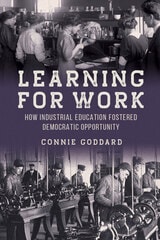
Learning for Work
How Industrial Education Fostered Democratic OpportunityConnie Goddard
University of Illinois Press, 2024
Rooting her account in John Dewey’s ideas, Goddard moves from early nineteenth century supporters of the union of learning and labor to the interconnected histories of CMTS, New Jersey’s Manual Training and Industrial School for Colored Youth, North Dakota’s Normal and Industrial School, and related programs elsewhere. Goddard analyzes the work of movement figures like abolitionist Theodore Weld, educators Calvin Woodward and Booker T. Washington, social critic W.E.B. Du Bois, Dewey himself, and his influential Chicago colleague Ella Flagg Young. The book contrasts ideas about manual training held by advocate Nicholas Murray Butler with those of opponent William Torrey Harris and considers overlooked connections between industrial education and the Arts and Crafts Movement.
An absorbing merger of history and storytelling, Learning for Work looks at the people who shaped industrial education while offering a provocative vision of realizing its potential today.

Liberating Memory
Our Work and Our Working-Class ConsciousnessZandy, Janet
Rutgers University Press, 1994
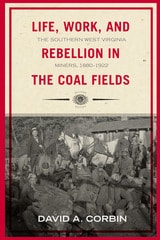
Life, Work, and Rebellion in the Coal Fields
The Southern West Virginia Miners, 1880-1922 2nd EditionDavid Corbin
West Virginia University Press, 2015
Between 1880 and 1922, the coal fields of southern West Virginia witnessed two bloody and protracted strikes, the formation of two competing unions, and the largest armed conflict in American labor history—a week-long battle between 20,000 coal miners and 5,000 state police, deputy sheriffs, and mine guards. These events resulted in an untold number of deaths, indictments of over 550 coal miners for insurrection and treason, and four declarations of martial law. Corbin argues that these violent events were collective and militant acts of aggression interconnected and conditioned by decades of oppression. His study goes a long way toward breaking down the old stereotypes of Appalachian and coal mining culture. This second edition contains a new preface and afterword by author David A. Corbin.
Liquor and Labor in Southern Africa
Jonathan Crush
Ohio University Press, 1992
In June 1976 political demonstrations in the black township of Soweto exploded into an insurrection that would continue sporadically and spread to urban areas across South Africa. In their assault on apartheid the youths who spearheaded the rebellion attacked and often destroyed the state institutions that they linked to their oppression: police stations, government offices, schools, and state-owned liquor outlets. In Soweto alone during the first days of the revolt protestors smashed and burned eighteen beerhalls and a similar number of bottle stores; as the rebellion spread more were destroyed. This study sets out to demonstrate that liquor outlets were not simply convenient symbols of oppression. The anger that launched gasoline bombs into beerhalls across South Africa had specific origins in deep and complicated struggles over the control of alcohol production and consumption in South Africa.
Conflict over alcohol has continuously intruded upon the lives of the black residents of southern African towns, cities, and labor compounds and upon the rural communities to which these people traced their origins. Yet the subject has received little systematic scholarly attention until now. In Liquor and Labor in Southern Africa scholars explore the complex relationship between alcohol use and the emergence of the modern urban-industrial system. In examining the role of alcohol in social control and the state, they also reveal the vibrant subcultures nurtured in beerhalls and underground shebeens and expose the bitter conflicts over alcohol that run along the fault lines of age, gender, class, and ethnicity.
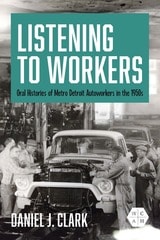
Listening to Workers
Oral Histories of Metro Detroit Autoworkers in the 1950sDaniel J. Clark
University of Illinois Press, 2024
Historians and readers alike often overlook the everyday experiences of workers. Drawing on years of interviews and archival research, Daniel J. Clark presents the rich, interesting, and sometimes confounding lives of men and women who worked in Detroit-area automotive plants in the 1950s.
In their own words, the interviewees frankly discuss personal matters like divorce and poverty alongside recollections of childhood and first jobs, marriage and working women, church and hobbies, and support systems and workplace dangers. Their frequent struggles with unstable jobs and economic insecurity upend notions of the 1950s as a golden age of prosperity while stories of domestic violence and infidelity open a door to intimate aspects of their lives. Taken together, the narratives offer seldom-seen accounts of autoworkers as complex and multidimensional human beings.
Compelling and surprising, Listening to Workers foregoes the union-focused strain of labor history to provide ground-level snapshots of a blue-collar world.

Los Yarderos
Mexican Yard Workers in Transborder ChicagoSergio Lemus
University of Illinois Press, 2025
Sergio Lemus explores the lives of these migrants and looks at the struggles they face as they work to make the city their home. Drawing on fieldwork in South Chicago, Lemus tells the stories of first and second-generation yarderos and discusses the historical, economic, cultural, and political ramifications they face as they acquire their working-class identity. Lemus’s compassionate portrait places them within America’s ongoing tradition as a nation of immigrants while analyzing their place within today’s transborder cultural moment.
Perceptive and humane, Los Yarderos reveals how a group of Mexican immigrants navigates the crossings of the borders that divide class, color hierarchies, gender, and belonging.