Results by title
108 books match the query 'Landscapes' and 30 start with l
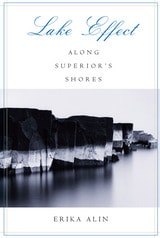
Lake Effect
Along Superior’s ShoresErika Alin
University of Minnesota Press, 2003
Personal reflections on the natural splendors and human history of the Lake Superior shoreline
The 2,900-mile shoreline of Lake Superior offers some of the most beautiful scenery in the world: stunning juxtapositions of shape, color, and texture, from the birch and evergreen forests of Minnesota’s north shore and the maple-clad slopes of Wisconsin to Ontario’s granite outcrops and Michigan's sandstone shelves. Inhabited by hundreds of species of mammals, birds, and insects, the diverse ecosystems around Superior have also experienced human habitation for millennia.
In Lake Effect, writer Erika Alin explores both the natural and the human landscapes of Lake Superior, meditating on the rich geological, historical, and cultural events that have shaped the region. She begins her journey around Superior at the St. Louis River near Duluth and continues along the shores of the lake to Temperance River State Park, Grand Marais’s Artist’s Point, and Lake Superior Provincial Park. Following the Michigan and Wisconsin coasts, Alin visits the Keweenaw Peninsula, the Porcupine Mountains, and Chequamegon Bay before concluding at the south shore’s Brule River. Inspired by these and other places on the lake, Alin’s engaging essays delve into such diverse topics as the origins of river names, early Native American settlement, the exploits of seventeenth-century French-Canadian voyageurs, the breeding habits of ring-billed gulls, the contributions of women botanists, Canada’s Group of Seven painters, and aboriginal rock art. A holistic and deeply personal reflection on Superior’s shoreline, Lake Effect reveals a profound sensitivity to the natural world and a penetrating historical imagination.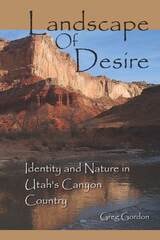
Landscape Of Desire
Greg Gordon
Utah State University Press, 2003
Landscape of Desire powerfully documents and celebrates a place and the evolutions that occur when human beings are intimately connected to their surroundings. Greg Gordon accomplishes this with a tapestry of writing that interweaves land use history, natural history, experiential education, and personal reflection. He tracks the geomorphology of southern Utah as well as the creatures and plants his student group encounters, the history lessons (planned and unplanned), the trials and joys of gathering so many individuals into a cohesive will, and his own personal epiphanies, restraints, insights, and disillusionments.
Landscape of Desire examines the plight of the western landscape. It discusses a wide range of issues, including mining, grazing, dams, recreation, wilderness, and land management. Since recreation has replaced extraction industries as the primary use of wilderness, especially in southern Utah, Gordon addresses its impactful qualities. He overviews the history of the conflict between preservation and development and places these issues in a cultural context. The text is presented in a narrative format, following the individuals of one field course Gordon lead that explored Muddy Creek and the Dirty Devil River from Interstate 70 to Lake Powell. Though each chapter focuses on the geologic formation the group is traveling through, the plants, animals, ecology, and human impacts are all tightly woven into the narrative. Not only does the land affect the members of the field course, but their attitudes and insights affect the land.
In Landscape of Desire Gordon achieves a vision of wholeness of this popular and contested region of Utah that centers around the implications of being human and also stewards of the wild.

Landscape, Memory and History
Anthropological PerspectivesEdited by Pamela J. Stewart and Andrew Strathern
Pluto Press, 2003
Contributors from North America, Australia, New Zealand, Taiwan, and Europe explore a wide variety of case studies that includes seascapes in Jamaica; the Solomon Islands; the forests of Madagascar; Aboriginal and European notions of landscape in Australia; place and identity in 19th century maps and the bogs of Ireland; contemporary concerns over changing landscapes in Papua New Guinea; and representations of landscape and history in the poetry of the Scottish Borders.
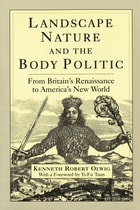
Landscape, Nature, and the Body Politic
From Britain's Renaissance to America's New WorldKenneth Robert Olwig
University of Wisconsin Press, 2002
Landscape, Nature, and the Body Politic explores the origins and lasting influences of two contesting but intertwined discourses that persist today when we use the words landscape, country, scenery, nature, national. In the first sense, the land is a physical and bounded body of terrain upon which the nation state is constructed (e.g., the purple mountain majesties above the fruited plain, from sea to shining sea). In the second, the country is constituted through its people and established through time and precedence (e.g., land where our fathers died, land of the Pilgrims’ pride). Kenneth Robert Olwig’s extended exploration of these discourses is a masterful work of scholarship both broad and deep, which opens up new avenues of thinking in the areas of geography, literature, theater, history, political science, law, and environmental studies.
Olwig tracks these ideas though Anglo-American history, starting with seventeenth-century conflicts between the Stuart kings and the English Parliament, and the Stuart dream of uniting Scotland with England and Wales into one nation on the island of Britain. He uses a royal production of a Ben Jonson masque, with stage sets by architect Inigo Jones, as a touchstone for exploring how the notion of "landscape" expands from artful stage scenery to a geopolitical ideal. Olwig pursues these contested concepts of the body politic from Europe to America and to global politics, illuminating a host of topics, from national parks and environmental planning to theories of polity and virulent nationalistic movements.
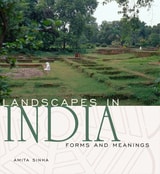
Landscapes In India
A Sinha
University Press of Colorado, 2006
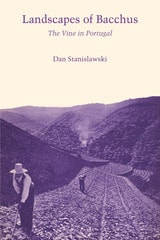
Landscapes Of Bacchus
The Vine in PortugalBy Dan Stanislawski
University of Texas Press, 1970
In a country of disparate parts and of long, unbroken historical experience, there may be one dominant feature, a clue to the character of its regions. In Portugal the vine serves as this clue.
The vine has been an important aspect of the Iberian landscape since prehistoric times, and farmers still use Roman methods of cultivation that have been adapted to regional physical conditions and to socioeconomic structure. Southern Portugal today is almost vineless, but in the north three areas can be distinguished by their vine forms and their products. Dan Stanislawski examines these areas in detail.
High tree-vines surround plots of grain in the Minho Province. The grains and the slightly acid Green Wines provide subsistence and cash for the densely settled area of owner-operated small farms.
In the hanging garden terrace of the Douro, vines grown on tawny, baked schist slopes yield world-famous Port Wine, a product that must conform to strict quantity and quality controls supervised by the central government.
Mature table wines are produced in the Dão, an isolated cul-de-sac where cordons of vines are planted on small, individually owned plots. Control of wine-making is exercised by a central governing group and by producers’ cooperatives.
Various wines originate in central Portugal. The lesser demarcated zones of Setubal, Colares, Carcavelos, and Bucelas yield fine wines. In other parts of the central region several wine types are produced in bulk. Some are used for blending and some for aging into quality table wines, but none is distinguished as a wine whose character is derived from its geographical location.
Dan Stanislawski demonstrates that vine form differences—and differences in the resulting product, wine—mirror the Portuguese historical experience and indicate regional distinctions in Portuguese life styles.
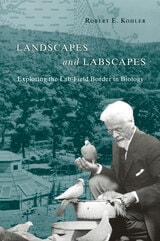
Landscapes and Labscapes
Exploring the Lab-Field Border in BiologyRobert E. Kohler
University of Chicago Press, 2002
In Landscapes and Labscapes, Robert E. Kohler explores the people, places, and practices of field biology in the United States from the 1890s to the 1950s. He takes readers into the fields and forests where field biologists learned to count and measure nature and to read the imperfect records of "nature's experiments." He shows how field researchers use nature's particularities to develop "practices of place" that achieve in nature what laboratory researchers can only do with simplified experiments. Using historical frontiers as models, Kohler shows how biologists created vigorous new border sciences of ecology and evolutionary biology.
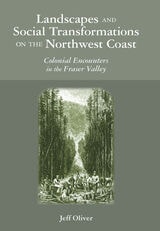
Landscapes and Social Transformations on the Northwest Coast
Colonial Encounters in the Fraser ValleyJeff Oliver
University of Arizona Press, 2010
The Fraser Valley has long been a scene of natural resource appropriation—furs and fish, timber and agriculture—with settlement patterns and land claims centering on the use of these materials. Oliver demonstrates how social change and cultural understanding are tied to the way that people use and remake the landscape. Drawing on ethnographic texts, archaeological evidence, cartography, and historical writing, he has created a deep history of the valley that enables us to view how human entanglements with landscape were creative of a variety of contentious issues. By capturing the multiple dynamics that were operating in the past, Oliver shows us not only how landscape transformations were implicated in constructing different perceptions of place but also how such changes influenced peoples’ understanding of history and identity.
This groundbreaking work examines engagement between people and the environment across a variety of themes, from aboriginal appropriation of nature to colonists’ reworking of physical and conceptual geographies, demonstrating the consequences of these interactions as they permeated various social and cultural spheres. It offers a new lens for viewing a region as it provides fresh insight into such topics as landscape change, perceptions of place, and Indigenous-white relations.
Landscapes in Transition
B. Finlayson
Council for British Research in the Levant, 2010
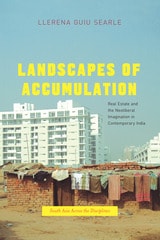
Landscapes of Accumulation
Real Estate and the Neoliberal Imagination in Contemporary IndiaLlerena Guiu Searle
University of Chicago Press, 2016
In Landscapes of Accumulation, Llerena Guiu Searle examines India’s booming developments and offers a nuanced ethnographic treatment of late capitalism. India’s land, she shows, is rapidly transforming from a site of agricultural and industrial production to an international financial resource. Drawing on intensive fieldwork with investors, developers, real estate agents, and others, Searle documents the new private sector partnerships and practices that are transforming India’s built environment, as well as widely shared stories of growth and development that themselves create self-fulfilling prophecies of success. As a result, India’s cities are becoming ever more inaccessible to the country’s poor. Landscapes of Accumulation will be a welcome contribution to the international study of neoliberalism, finance, and urban development and will be of particular interest to those studying rapid—and perhaps unsustainable—development across the Global South.
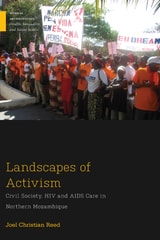
Landscapes of Activism
Civil Society, HIV and AIDS Care in Northern MozambiqueReed, Joel Christian
Rutgers University Press, 2018
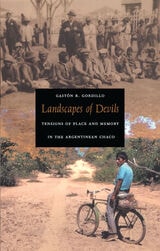
Landscapes of Devils
Tensions of Place and Memory in the Argentinean ChacoGastón R. Gordillo
Duke University Press, 2004
As Gordillo explains, the bush is the result of social, cultural, and political processes that intertwine this place with other geographies. Labor exploitation, state violence, encroachment by settlers, and the demands of Anglican missionaries all transformed this land. The Toba’s lives have been torn between alienating work in sugar plantations and relative freedom in the bush, between moments of domination and autonomy, abundance and poverty, terror and healing. Part of this contradictory experience is culturally expressed in devils, evil spirits that acquire different features in different places. The devils are sources of death and disease in the plantations, but in the bush they are entities that connect with humans as providers of bush food and healing power. Enacted through memory, the experiences of the Toba have produced a tense and shifting geography. Combining extensive fieldwork conducted over a decade, historical research, and critical theory, Gordillo offers a nuanced analysis of the Toba’s social memory and a powerful argument that geographic places are not only objective entities but also the subjective outcome of historical forces.
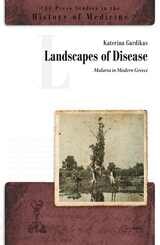
Landscapes of Disease
Malaria in Modern GreeceKaterina Gardikas
Central European University Press, 2018
Malaria has existed in Greece since prehistoric times. Its prevalence fluctuated depending on climatic, socioeconomic and political changes. The book focuses on the factors that contributed to the spreading of the disease in the years between independent statehood in 1830 and the elimination of malaria in the 1970s.
By the nineteenth century, Greece was the most malarious country in Europe and the one most heavily infected with its lethal form, falciparum malaria. Owing to pressures on the environment from economic development, agrarian colonization and heightened mobility, the situation became so serious that malaria became a routine part of everyday life for practically all Greek families, further exacerbated by wars. The country’s highly fragmented geography and its variable rainfall distribution created an environment that was ideal for sustaining and spreading of diseases, which, in turn, affected the tolerance of the population to malaria. In their struggle with physical suffering and death, the Greeks developed a culture of avid quinine consumption and were likewise eager to embrace the DDT spraying campaign of the immediate post WW II years, which, overall, had a positive demographic effect.
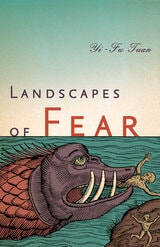
Landscapes of Fear
Yi-Fu Tuan
University of Minnesota Press, 2013
To be human is to experience fear, but what is it exactly that makes us fearful? Landscapes of Fear—written immediately after his classic Space and Place—is renowned geographer Yi-Fu Tuan’s influential exploration of the spaces of fear and of how these landscapes shift during our lives and vary throughout history.
In a series of linked essays that journey broadly across place, time, and cultures, Tuan examines the diverse manifestations and causes of fear in individuals and societies: he describes the horror created by epidemic disease and supernatural visions of witches and ghosts; violence and fear in the country and the city; fears of drought, flood, famine, and disease; and the ways in which authorities devise landscapes of terror to instill fear and subservience in their own populations.
In this groundbreaking work—now with a new preface by the author—Yi-Fu Tuan reaches back into our prehistory to discover what is universal and what is particular in our inheritance of fear. Tuan emphasizes that human fear is a constant; it causes us to draw what he calls our “circles of safety” and at the same time acts as a foundational impetus behind curiosity, growth, and adventure.
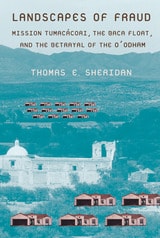
Landscapes of Fraud
Mission Tumacácori, the Baca Float, and the Betrayal of the O’odhamThomas E. Sheridan
University of Arizona Press, 2006
Landscapes of Fraud explores how the penetration of the evolving capitalist world-system created and destroyed communities in the Upper Santa Cruz Valley of Arizona from the late 1600s to the 1970s. Thomas Sheridan has melded history, anthropology, and critical geography to create a penetrating view of greed and power and their lasting effect on those left powerless.
Sheridan first examines how O’odham culture was fragmented by the arrival of the Spanish, telling how autonomous communities moving across landscapes in seasonal rounds were reduced to a mission world of subordination. Sheridan then considers the fate of the Tumacácori grant and Baca Float No. 3, another land grant. He tells the unbroken story of land fraud from Manuel María Gándara’s purchase of the “abandoned” Tumacácori grant at public auction in 1844 through the bankruptcy of the shady real estate developers who had fraudulently promoted housing projects at Rio Rico during the 1960s and ’70s.
As the Upper Santa Cruz Valley underwent a wrenching transition from a landscape of community to a landscape of fraud, the betrayal of the O’odham became complete when land, that most elemental form of human space, was transformed from a communal resource into a commodity bought and sold for its future value. Today, Mission Tumacácori stands as a romantic icon of the past while the landscapes that supported it lay buried under speculative schemes that continue to haunt our history.
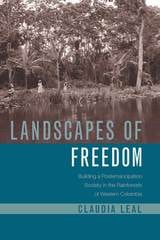
Landscapes of Freedom
Building a Postemancipation Society in the Rainforests of Western ColombiaClaudia Leal
University of Arizona Press, 2018
After emancipation in 1851, the African descendants living in the extra-humid rainforests of the Pacific coast of Colombia attained levels of autonomy hardly equaled anywhere else in the Americas. This autonomy rested on their access to a diverse environment—including small strips of fertile soils, mines, forests, rivers, and wetlands—that contributed to their subsistence and allowed them to procure gold, platinum, rubber, and vegetable ivory for export.
Afro-Colombian slave labor had produced the largest share of gold in the colony of New Granada. After the abolishment of slavery, some free people left the mining areas and settled elsewhere along the coast, making this the largest area of Latin America in which black people predominate into the present day. However, this economy and society, which lived off the extraction of natural resources, was presided over by a very small white commercial elite living in the region’s ports, where they sought to create an urban environment that would shelter them from the jungle.
Landscapes of Freedom reconstructs a nonplantation postemancipation trajectory that sheds light on how environmental conditions and management influenced the experience of freedom. It also points at the problematic associations between autonomy and marginality that have shaped the history of Afro-America. By focusing on racialized landscapes, Leal offers a nuanced and important approach to understanding the history of Latin America.
Landscapes of Movement and Predation
Perspectives from Archaeology, History, and AnthropologyBrenda J. Bowser and Catherine M. Cameron
University of Arizona Press, 2024
Landscapes of predation also developed in precolonial times in places where people were subjected to repeated ruthless attacks and dislocation. With contributions from archaeologists and a historian, the book provides a startling new perspective on an aspect of the past that is often overlooked: the role of violence in shaping where, how, and with whom people lived. Using ethnohistoric, ethnographic, historic, and archaeological data, the authors explore the actions of both predators and their targets and uncover the myriad responses people took to protect themselves.
Contributors
Fernando Almeida
Thomas John Biginagwa
Brenda J. Bowser
Catherine M. Cameron
Charles Cobb
Robbie Ethridge
Thiago Kater
Richard M. Leventhal
Lydia Wilson Marshall
Cliverson Pessoa
Neil Price
Ben Raffield
Andrés Reséndez
Samantha Seyler
Fabíola Andréa Silva
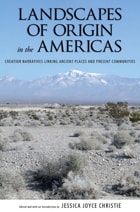
Landscapes of Origin in the Americas
Creation Narratives Linking Ancient Places and Present CommunitiesEdited and with an introduction by Jessica Joyce Christie
University of Alabama Press, 2009
By linking ancient places with present communities, Landscapes of Origin in the Americas explores how cultural landscapes sustain the continuity of origin narratives.
Landscape is a powerful factor in the operation of memory because of the associations narrators make between the local landscape and the events of the stories they tell. Ancestors and mythological events often become fixed in a specific landscape and act as timeless reference points.
In conventional anthropological literature, "landscape" is the term applied to the meaning local people bestow on their cultural and physical surroundings. In this work, the authors explore the cultural and physical landscapes an individual or cultural group has constructed to define the origins or beginnings of that cultural group as revealed through shared or traditional memory. The cultural landscapes of origins in diverse sites throughout the Americas are investigated through multidisciplinary research, not only to reveal the belief system and mythologies but also to place these origin beliefs in context and relationship to each other. In a continual interaction between the past, present, and future, time is subordinate to place, and history, as defined in Western academic terms, does not exist.
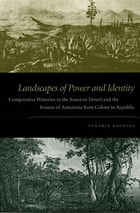
Landscapes of Power and Identity
Comparative Histories in the Sonoran Desert and the Forests of Amazonia from Colony to RepublicCynthia Radding
Duke University Press, 2005
Radding’s comparative approach illuminates what happened when similar institutions of imperial governance, commerce, and religion were planted in different physical and cultural environments. She draws on archival documents, published reports by missionaries and travelers, and previous histories as well as ecological studies and ethnographies. She also considers cultural artifacts, including archaeological remains, architecture, liturgical music, and religious dances. Radding demonstrates how colonial encounters were conditioned by both the local landscape and cultural expectations; how the colonizers and colonized understood notions of territory and property; how religion formed the cultural practices and historical memories of the Sonoran and Chiquitano peoples; and how the conflict between the indigenous communities and the surrounding creole societies developed in new directions well into the nineteenth century.
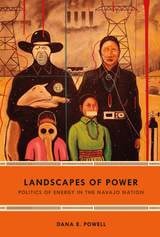
Landscapes of Power
Politics of Energy in the Navajo NationDana E. Powell
Duke University Press, 2018
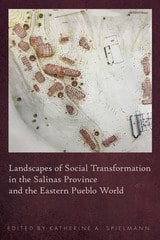
Landscapes of Social Transformation in the Salinas Province and the Eastern Pueblo World
Edited by Katherine A. Spielmann
University of Arizona Press, 2017
Landscapes of Social Transformation in the Salinas Province and the Eastern Pueblo World investigates relationships between diverse regional and local changes in the Rio Grande and Salinas areas from 1100 to 1500 C.E. The contributing authors draw on the results of sixteen seasons of archaeological survey and excavation in the Salinas Province of central New Mexico. The chapters offer cross-scale analyses to compare broad perspectives in well-researched southwestern culture changes to the finer details of stability and transformation in Salinas. This stability—which was unusual in the Pueblo Southwest—from the 1100s until its abandonment in the 1670s provides an interesting contrast to migration-based transformations studied elsewhere in the Rio Grande region.
CONTRIBUTORS
Patricia Capone
Matthew Chamberlin
Tiffany C. Clark
William M. Graves
Cynthia L. Herhahn
Deborah Huntley
Keith Kintigh
Ann Kinzig
Jeannette L. Mobley-Tanaka
Alison E. Rautman
Jonathan Sandor
Grant Snitker
Julie Solometo
Katherine A. Spielmann
Colleen Strawhacker
Maryann Wasiolek
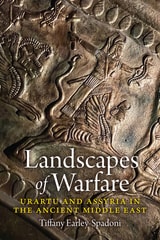
Landscapes of Warfare
Urartu and Assyria in the Ancient Middle EastTiffany Earley-Spadoni
University Press of Colorado, 2025
Tiffany Earley-Spadoni challenges traditional views by emphasizing warfare’s role in organizing ancient landscapes, suggesting that Urartu’s strength lay in its strategic optimization of terrain through fortified regional networks. Using an interdisciplinary approach that includes GIS-enabled studies and integrates archaeological, historical, and art-historical evidence, she illustrates how warfare was a generative force in structuring space and society in the ancient Middle East. Landscapes of Warfare situates Urartu’s developments within the broader context of regional empires, providing insights into the mechanisms of warfare, governance, and cultural identity formation.
Landscapes of a Distant Mother
SAID
University of Chicago Press, 2004
There wasn't one.
You never smiled.
Born in Tehran but living in Germany, the eminent writer SAID has suffered two forms of exile. Forced to leave Iran for political reasons, he was also separated from his mother shortly after his birth when his parents divorced. At the age of forty-three, however, SAID received word that his mother was traveling abroad and wanted to see him. Landscapes of a Distant Mother is the account of their wrenching reunion. A memoir of longing and loss, the book offers a haunting portrait of a son's broken relationship with his mother and the Islamic dictatorship that shadows both their lives.
Landscapes of a Distant Mother gives English-speaking readers an introduction to one of Europe's most important immigrant writers. Unsentimental and spare, the book chronicles the discomfiting sensation of viewing one's mother as a stranger and all the psychological implications of their mutual disappointment. SAID's distance from his mother—whom he describes almost clinically, with her "particular way of speaking, the style laced with religious formulas, inclined to emotionalism, self-pity and expletives"—becomes a measure of the alienation he feels from everything around him. His book gives voice to the full meaning of modern exile—its political force, profound sadness, and perpetual yearning.
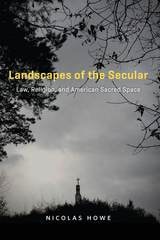
Landscapes of the Secular
Law, Religion, and American Sacred SpaceNicolas Howe
University of Chicago Press, 2016
Fusing geography, legal scholarship, and religion in a potent analysis, Howe shows how seemingly routine questions about how to look at a sunrise or a plateau or how to assess what a mountain is both physically and ideologically, lead to complex arguments about the nature of religious experience and its implications for our lives as citizens. In American society—nominally secular but committed to permitting a diversity of religious beliefs and expressions—such questions become all the more fraught and can lead to difficult, often unsatisfying compromises regarding how to interpret and inhabit our public lands and spaces. A serious commitment to secularism, Howe shows, forces us to confront the profound challenges of true religious diversity in ways that often will have their ultimate expression in our built environment. This provocative exploration of some of the fundamental aspects of American life will help us see the land, law, and society anew.
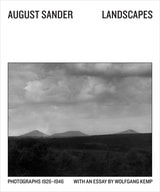
Landscapes
Photographs 1926-1946August Sander
University of Chicago Press, 2016
These photographs showcase a variety of scenes, from a sunrise over Cologne to the slopes of the Rhine valley. The Rhine River flows through many of these pictures, its dynamic curves and lively current leading the eye through an intriguing mix of natural and urban landscapes. A new essay by art historian Wolfgang Kemp provides context for Sander’s work while introducing his contemporaries, including the writer Hans Ludwig Mathar and the painter Franz M. Jansen. Also explored are the ties between Sander’s landscapes and his portrait photography, which is celebrated worldwide. Crucially, Kemp highlights the need to consider the Rhineland’s unique political situation in the 1920s and 1930s for any discussion of Sander’s artistic approach.
Shining welcome light on the full range of Sander’s practice, this book offers a glorious journey through the landscapes that most affected him.

Landscapes
Selected Writings of J.B. JacksonJ. B. Jackson
University of Massachusetts Press, 1970
Landscaping Indigenous Mexico
The Liberal State and Capitalism in the Purépecha HighlandsFernando Pérez Montesinos
University of Texas Press, 2025
2026 Bolton-Johnson Prize, Conference on Latin American History
2026 María Elena Martínez Prize in Mexican History, Conference on Latin American History
2026 Honorable Mention, Environment Section of the Latin American Studies Association
A history of the Purépecha people's survival amid environmental and political changes.
Landscapes are more than geological formations; they are living records of human struggles. Landscaping Indigenous Mexico unearths the history of Juátarhu, an Indigenous landscape shaped and nurtured by the Purépecha—a formidable Mesoamerican people whose power once rivaled that of the Aztecs. Although cataclysmic changes came with European contact and colonization, Juátarhu’s enduring agroecology continued to sustain local life through centuries of challenges.
Contesting essentialist narratives of Indigenous penury, Pérez Montesinos shows how Purépechas thrived after Mexican independence in 1821, using Juátarhu’s diverse agroecology to negotiate continued autonomy amid waves of national economic and political upheaval. After 1870, however, autonomy waned under the pressure of land privatization policies, state intervention, and industrial logging. On the eve of the Mexican Revolution in 1910, Purépechas stood at a critical juncture: Would the Indigenous landscape endure or succumb? Offering a fresh perspective on a seemingly well-worn subject, Pérez Montesinos argues that Michoacán, long considered a peripheral revolutionary region, saw one of the era’s most radical events: the destruction of the liberal order and the timber capitalism of Juátarhu.
Lie Of The Land
Migrant Workers and the California LandscapeDon Mitchell
University of Minnesota Press, 1996
A hard-hitting look at the story behind California's famous scenery.
The beauty of the California landscape is integral to its place in the imagination of generations of people around the world. In The Lie of the Land, geographer Don Mitchell looks at the human costs associated with this famous scenery. Through an account of the labor history of the state, Mitchell examines the material and ideological struggles over living and working conditions that played a large part in the construction of the contemporary California landscape.
The Lie of the Land examines the way the California landscape was built on the backs of migrant workers, focusing on migratory labor and agribusiness before World War II. The book relates the historical geography of California to the processes of labor that made it, discussing not only significant strikes but also on the everyday existence of migrant workers in the labor camps, fields, and “Hoovervilles” where they lived. Mitchell places class struggle at the heart of social development, demonstrating concretely how farm workers affected their social and material environment, as well as exploring how farm owners responded to their workers’ efforts to improve their living and working conditions. Mitchell also places “reformers” in context, revealing the actual nature of their role in relation to migrant workers’ efforts—that of undermining the struggle for genuine social change. In addition, this volume captures the significance of the changing composition of the agricultural workforce, particularly in racial terms, as the class struggle evolved over a period of decades. Mitchell has written a narrative history that describes the intimate connection between landscape representations and the material form of geography. The Lie of the Land places people squarely in the middle of the landscapes they inhabit, shedding light on the complex and seemingly contradictory interactions between progressive state agents, radical workers, and California growers as they seek to remake the land in their own image.
Lives Lived, Lives Imagined
Landscapes of Resilience in the Works of Miriam ToewsSabrina Reed
University of Manitoba Press, 2022
Lost Homelands
Ruin and Reconstruction in the 20th-Century SouthwestAudrey Goodman
University of Arizona Press, 2010
Through analyzing a variety of texts and images, Goodman illuminates the ways that modern forces such as militarization, environmental degradation, internal migration, and an increased border patrol presence have shattered the perception of a secure homeland in the Southwest. The deceptive natural beauty of the Southwest deserts shields a dark history of trauma and decimation that has remained as a shadow on the region’s psyche. The first to really synthesize such wide-ranging material about the effects of the atomic age in the Southwest, Goodman realizes the value of combined visual and verbal art and uses it to put forth her own original ideas about reconstructing a new sense of homeland.
Lost Homelands reminds us of the adversity and dislocation suffered by people of the Southwest by looking at the ways that artists, photographers, filmmakers, and writers have grappled with these problems for decades. In assessing the ruination of the region, however, Goodman argues that those same artists and writers have begun to reassemble a new sense of homeland from these fragments.