Results by title
112 books match the query 'Languages' and 11 start with l
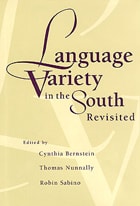
Language Variety in the South Revisited
Cynthia Bernstein
University of Alabama Press, 1994
Top linguists from diverse fields address language varieties in the South.
Language Variety in the South
Perspectives in Black and WhiteMichael B. Montgomery
University of Alabama Press, 1986
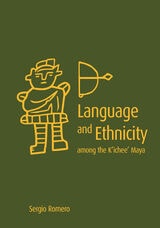
Language and Ethnicity among the K'ichee' Maya
Sergio Romero
University of Utah Press, 2015
This book explores the articulation between “accent” and ethnic identification in K’ichee’, a Mayan language spoken by more than one million people in the western highlands of Guatemala. Based on years of ethnographic work, it is the first anthropological examination of the social meaning of dialectal difference in any Mayan language. Romero deconstructs essentialist perspectives on ethnicity in Mesoamerica and argues that ethnic identification among the highland Maya is multiple and layered, the result of a diverse linguistic precipitate created by centuries of colonial resistance.
In K’ichee’, dialect stereotypes—accents—act as linguistic markers embodying particular ethnic registers. K’ichee’ speakers use and recombine their linguistic repertoire—colloquial K’ichee’, traditional K’ichee’ discourse, colloquial Spanish, Standard Spanish, and language mixing—in strategic ways to mark status and authority and to revitalize their traditional culture. The book surveys literary genres such as lyric poetry, political graffiti, and radio broadcasts, which express new experiences of Mayan-ness and anticolonial resistance. It also takes a historical perspective in examining oral and written K’ichee’ discourses from the sixteenth to the twenty-first centuries, including the famous chronicle known as the Popol Vuh, and explores the unbreakable link between language, history, and culture in the Maya highlands.

Languages of Modern Jewish Cultures
Comparative PerspectivesEdited by Joshua L. Miller and Anita Norich
University of Michigan Press, 2016
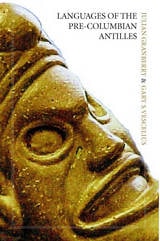
Languages of the Pre-Columbian Antilles
Julian Granberry and Gary Vescelius
University of Alabama Press, 2004
A linguistic analysis supporting a new model of the colonization of the Antilles before 1492
This work formulates a testable hypothesis of the origins and migration patterns of the aboriginal peoples of the Greater Antilles (Cuba, Jamaica, Hispaniola, and Puerto Rico), the Lucayan Islands (the Commonwealth of the Bahamas and the Crown Colony of the Turks and Caicos), the Virgin Islands, and the northernmost of the Leeward Islands, prior to European contact. Using archaeological data as corroboration, the authors synthesize evidence that has been available in scattered locales for more than 500 years but which has never before been correlated and critically examined.
Within any well-defined geographical area (such as these islands), the linguistic expectation and norm is that people speaking the same or closely related language will intermarry, and, by participating in a common gene pool, will show similar socioeconomic and cultural traits, as well as common artifact preferences. From an archaeological perspective, the converse is deducible: artifact inventories of a well-defined sociogeographical area are likely to have been created by speakers of the same or closely related language or languages.
Languages of the Pre-Columbian Antilles presents information based on these assumptions. The data is scant—scattered words and phrases in Spanish explorers' journals, local place names written on maps or in missionary records—but the collaboration of the authors, one a linguist and the other an archaeologist, has tied the linguistics to the ground wherever possible and allowed the construction of a framework with which to understand the relationships, movements, and settlement patterns of Caribbean peoples before Columbus arrived.

Lexical Change and Variation in the Southeastern United States, 1930-1990
Ellen Johnson
University of Alabama Press, 1996
This book discusses words used in the Southeast and how they have changed
during the 20th century. It also describes how the lexicon varies according
to the speaker's age, race, education, sex, and place of residence
(urban versus rural; coastal versus piedmont versus mountain). Data collected
in the 1930s as part of the Linguistic Atlas of the Middle and South Atlantic
States project were compared with data collected in 1990 from similar speakers
in the same communities.
The results show that region was the most important
factor in differentiating dialects in the 1930s but that it is the least
important element in the 1990s, with age, education, race, and age all
showing about the same influence on the use of vocabulary. An appendix
contains a tally of the responses given by 78 speakers to 150 questions
about vocabulary items, along with speakers' commentary. Results
from the 1930s may be compared to those from 1990, making this a treasure
trove for anyone interested in regional terms or in how our speech is changing
as the South moves from an agricultural economy through industrialization
and into the information age.
Linguistic Diversity and National Unity
Language Ecology in ThailandWilliam A. Smalley
University of Chicago Press, 1994
Smalley contends that because the people of Thailand perceive their social hierarchy as the normal order, Standard Thai, spoken by members of the higher levels of society, prevails as the uncontested national language. By examining the hierarchy of Thailand's diverse languages and dialects in light of Thai history, education, culture, and religion, Smalley shows how Thailand has been able to keep its many ethnic groups at peace.
Linguistic Diversity and National Unity explores the intricate relationship between language and power and the ways in which social and linguistic rank can be used to perpetuate order.

Listening to the Languages of the People
Lazare Sainéan on Romanian, Yiddish, and FrenchNatalie Zemon Davis
Central European University Press, 2022
This tale of great achievements and great disappointments offers a fresh perspective on the interplay between scholarship and political sentiment in the late nineteenth and early twentieth centuries.
Lazăr Șăineanu (1859-1934), linguist and folklorist, was a pioneer in his native Romania, seeking out the popular elements in culture along with high literary ones. He was among the first to publish a study of Yiddish as a genuine language, and he uncovered Turkish features in Romanian language and customs. He also made an index of hundreds of Romanian folktales. Yet when he sought Romanian citizenship and a professorship, he was blocked by powerful figures who thought Jews could not be Romanians and who fancied the origins of Romanian culture to be wholly Latin. Faced with anti-Semitism, some of his friends turned to Zionism. Instead he tried baptism, which brought him only mockery and shame.
Hoping to find a polity to which he could belong, Șăineanu moved with his family to Paris in 1900 and became Lazare Sainéan. There he made innovative studies of French popular speech and slang, culminating in his great work on the language of Rabelais. Once again, he was contributing to the development of a national tongue. Even then, while welcomed by literary scholars, Sainéan was unable to get a permanent university post. Though a naturalized citizen of France, he felt himself a foreigner, an “intruder,” into his old age.

Literate Programming
Donald E. Knuth
CSLI, 1992
This volume is first in a series of Knuth's collected works.

Lives of the Great Languages
Arabic and Latin in the Medieval MediterraneanKarla Mallette
University of Chicago Press, 2021
In this ambitious book, Karla Mallette studies the nature and behaviors of the medieval cosmopolitan languages of learning—classical Arabic and medieval Latin—as they crossed the Mediterranean. Through anecdotes of relationships among writers, compilers, translators, commentators, and copyists, Mallette tells a complex story about the transmission of knowledge in the period before the emergence of a national language system in the late Middle Ages and early modernity.
Mallette shows how the elite languages of learning and culture were only tenuously related to the languages of everyday life. These languages took years of study to master, marking the passage from intellectual childhood to maturity. In a coda to the book, Mallette speculates on the afterlife of cosmopolitan languages in the twenty-first century, the perils of monolingualism, and the ethics of language choice. The book offers insight for anyone interested in rethinking linguistic and literary tradition, the transmission of ideas, and cultural expression in an increasingly multilingual world.

Logic and Visual Information
Eric M. Hammer
CSLI, 1995