Results by title
59 books match the query 'Lawyers & Judges' and 5 start with l
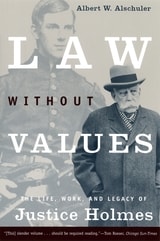
Law Without Values
The Life, Work, and Legacy of Justice HolmesAlbert W. Alschuler
University of Chicago Press, 2000
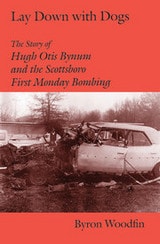
Lay Down with Dogs
Hugh Otis Bynum and the Scottsboro First Monday BombingByron Woodfin
University of Alabama Press, 2002
The gripping story of the attempted murder of Scottsboro attorney and state legislator Loy Campbell
“As with any good book about a great event, this one has a little of everything—suspense, humor, pathos, melodrama.” —Journal of Southern History
On a quiet December morning in 1972, Scottsboro attorney and former state legislator Loy Campbell started his car and detonated a bomb hidden beneath the hood. The explosion tore through the vehicle, cost him both legs, and nearly killed him, shattering the calm of the northeast Alabama town. Lay Down with Dogs reconstructs the attempted assassination of Campbell and subsequent trial. As Alabama’s young and ambitious attorney general, Bill Baxley took personal charge of the case. He led the state’s investigation and prosecution against those accused of planning and financing the assassination attempt, most notably Hugh Otis Bynum Jr., one of the most powerful local figures in Scottsboro. More than a crime story, it is a gripping account of violence, power, and survival at a volatile moment in modern Southern history.
Drawing on court records, investigative files, contemporary journalism, and firsthand testimony, Byron Woodfin offers the most comprehensive account of the bombing and its aftermath. With the skill of an experienced historian and storyteller, the narrative follows both the painstaking investigation and the dramatic prosecution that ultimately exposed the forces behind the attack. The author’s deep familiarity with Alabama history and legal culture lends authority and insight, while a clear, compelling prose style keeps the story moving with the momentum of a true‑crime classic.
Lay Down with Dogs will appeal to readers of Southern history, legal history, and true crime, as well as anyone interested in justice, civic life, and unsolved tensions in twentieth‑century America. It is ideal for scholars, students, and general readers seeking a powerful, unsettling, and unforgettable story rooted in real events.
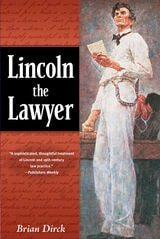
Lincoln the Lawyer
Brian Dirck
University of Illinois Press, 2006
Despite historians' focus on the man as president and politician, Abraham Lincoln lived most of his adult life as a practicing lawyer. It was as a lawyer that he fed his family, made his reputation, bonded with Illinois, and began his political career. Lawyering was also how Lincoln learned to become an expert mediator between angry antagonists, as he applied his knowledge of the law and of human nature to settle one dispute after another. Frontier lawyers worked hard to establish respect for the law and encourage people to resolve their differences without intimidation or violence. These were the very skills Lincoln used so deftly to hold a crumbling nation together during his presidency.
The growth of Lincoln's practice attests to the trust he was able to inspire, and his travels from court to court taught him much about the people and land of Illinois. Lincoln the Lawyer explores the origins of Lincoln's desire to practice law, his legal education, his partnerships with John Stuart, Stephen Logan, and William Herndon, and the maturation of his far-flung practice in the 1840s and 1850s. Brian Dirck provides a context for law as it was practiced in mid-century Illinois and evaluates Lincoln's merits as an attorney by comparison with his peers. He examines Lincoln's clientele, his circuit practice, his views on legal ethics, and the supposition that he never defended a client he knew to be guilty. This approach allows readers not only to consider Lincoln as he lived his life--it also shows them how the law was used and developed in Lincoln's lifetime, how Lincoln charged his clients, how he was paid, and how he addressed judge and jury.
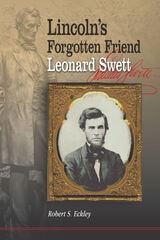
Lincoln's Forgotten Friend, Leonard Swett
Robert S. Eckley
Southern Illinois University Press, 2012
In 1849, while traveling as an attorney on the Eighth Judicial Circuit in Illinois, Abraham Lincoln befriended Leonard Swett (1825–89), a fellow attorney sixteen years his junior. Despite this age difference, the two men built an enduring friendship that continued until Lincoln’s assassination in 1865. Until now, no historian has explored Swett’s life or his remarkable relationship with the sixteenth president. In this welcome volume, Robert S. Eckley provides the first biography of Swett, crafting an intimate portrait of his experiences as a loyal member of Lincoln’s inner circle.
Eckley chronicles Swett’s early life and the part he played in Lincoln’s political campaigns, including his role as an essential member of the team behind Lincoln’s two nominations and elections for the presidency. Swett counseled Lincoln during the formation of his cabinet and served as an unofficial advisor and sounding board during Lincoln’s time in office. Throughout his life, Swett wrote a great deal on Lincoln, and planned to write a biography about him, but Swett’s death preempted the project. His eloquent and interesting writings about Lincoln are described and reproduced in this volume, some for the first time.
With Lincoln’s Forgotten Friend, Eckley removes Swett from the shadows of history and sheds new light on Lincoln’s personal relationships and their valuable contributions to his career.
Superior Achievement from the Illinois State Historical Society, 2013
Lister Hill
Statesman from the SouthVirginia Van der Veer Hamilton
University of Alabama Press, 2004