Results by title
275 books match the query 'Letters' and 77 start with l

Latin Letters of C.S. Lewis
C.S. Lewis and Don Giovanni Calabria
St. Augustine's Press, 1999
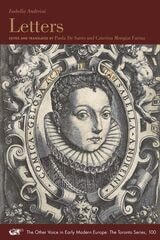
Letters
Isabella Andreini
Iter Press, 2023
Isabella Andreini (1562–1604) was a commedia dell’arte diva who toured Italy and France as part of the Compagnia dei Comici Gelosi. Letters is a collection of epistles written by Andreini in fictional, anonymous, male, and female voices, a “hermaphroditic” alternation of gender unlike any that had been seen in letter writing to that time. In her letters, Andreini remade the humanistic epistolary genre into a distinctive fusion of literary and dramatic performance. The guise of epistolary intimacy cedes to a knowing artificiality, which allows for the emergence of Andreini’s modern critique of the gendered self as a uniform entity. The collection centers on love and examines—from surprising perspectives—pertinent issues such as death, the birth of a girl, prostitution, patriarchal marital practices, love in old age, courtiership, country and city life, human nature, and defenses and critiques of both sexes.
Letters
Saint Leo the Great
Catholic University of America Press, 1957
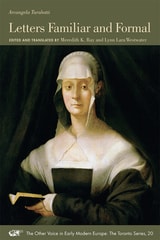
Letters Familiar and Formal
Arcangela Tarabotti
Iter Press, 2012

Letters From Alaska
John Muir
University of Alaska Press, 2009
John Muir (1838–1914), founder of the Sierra Club, was one of the most famous and influential environmental conservationists of all time. From 1879 to 1880 Muir traveled the waters of southeastern Alaska in a Tlingit Indian dugout canoe and reported his encounters in a series of letters published in the San Francisco Daily Evening Bulletin. Collected here are Muir’s original letters, bearing the immediacy and candor of his best work and providing a rare account of southeastern Alaska history, alongside breathtaking observations of glaciers and the untamed landscape. Through Muir we encounter gold miners, rogue towns, Taku Inlet, Glacier Bay, profiles of Tlingit Indians, and the infancy of the tourist industry. This collection of work by one of America’s foremost naturalists provides a magnificent look into early conservationist thought and one individual’s encounter with nature.

Letters From Lexington
Reflections on PropagandaNoam Chomsky
Pluto Press, 2004
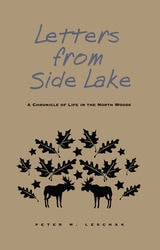
Letters From Side Lake
A Chronicle of Life in the North WoodsPeter M. Leschak
University of Minnesota Press, 1992
After a brief taste of urban life, and convinced that nothing equaled the formidable challenge of life in the heart of the vast woods, Peter M. Leschak returned to northern Minnesota. Letters from Side Lake chronicles the marvelous range of adventures and reflections-described with thoughtfulness and humor-springing from his pioneer-like existence. In Leschak's unique voice and beautifully crafted style, Letters from Side Lake captures the great pleasures and rugged feats and hardships of North Woods living.
"Letters from Side Lake is a celebration. Leschak revels in what he loves the best: the beauty of the north woods; the sweep of Andromeda across a black sky; the sleek thrust of his canoe slicing across a mirror-flat lake; and the simplicity of small-town life." -Washington Post Book World"A vivid, engaging book by a talented writer." -New York Times Book Review
Letters From The Promised Land
Swedes in America, 1840-1914H. Arnold Barton
University of Minnesota Press, 2000
Swedish immigrants tell their own stories in this collection of letters, diaries, and memoirs—a perfect book for those interested in history, immigration, or just the daily lives of early Swedish-American settlers.
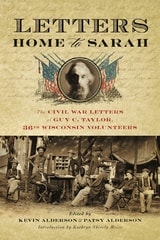
Letters Home to Sarah
The Civil War Letters of Guy C. Taylor, Thirty-Sixth Wisconsin VolunteersGuy C. Taylor; Edited by Kevin L. Alderson and Patsy Alderson; Introduction by Kathryn Shively Meier
University of Wisconsin Press, 2012
From the initial mustering and training of his regiment at Camp Randall in Wisconsin, through the siege of Petersburg in Virginia, General Lee’s surrender at Appomattox, and the postwar Grand Review of the Armies parade in Washington, D.C., Taylor conveys in vivid detail his own experiences and emotions and shows himself a keen observer of all that is passing around him. While at war, he contracts measles, pneumonia, and malaria, and he writes about the hospitals, treatments, and sanitary conditions that he and his comrades endured during the war. Amidst the descriptions of soldiering, Taylor’s letters to Sarah are threaded with the concerns of a young married couple separated by war but still coping together with childrearing and financial matters. The letters show, too, Taylor’s transformation from a lonely and somewhat disgruntled infantryman to a thoughtful commentator on the greater ideals of the war.
This remarkable trove of letters, which had been left in the attic of Taylor’s former home in Cashton, Wisconsin, was discovered by local historian Kevin Alderson at a household auction. Recognizing them for the treasure they are, Alderson bought the letters and, aided by his wife Patsy, painstakingly transcribed the letters and researched Taylor’s story in Wisconsin and at historical sites of the Civil War. The Aldersons’ preface and notes are augmented by an introduction by Civil War historian Kathryn Shively Meier, and the book includes photographs, maps, and illustrations related to Guy Taylor’s life and letters.
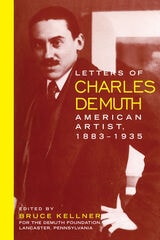
Letters Of Charles Demuth
Bruce Kellner
Temple University Press, 2000
This collection of 155 of his letters offers valuable views of the arts and letters colonies in Provincetown, New York, and Paris. Besides offering information on Demuth's own works, the letters also shed light on the output of his contemporaries, as well as references to their trips, liaisons, and idiosyncrasies. Demuth numbered among his correspondents some of the most famous artists and writers of his time, including Georgia O'Keeffe, Eugene O'Neill, John Reed, Gertrude Stein, Alfred Stieglitz, Carl Van Vechten, and William Carlos Willliams. In his travels in the United States and abroad, he encountered many other talented contemporaries: Peggy Bacon, Muriel Draper, Marcel Duchamp, the Stetthemer sisters, artists and writers, patrons, and gallery owners.
Whether he is offering to pick up a copy of Joyce's Ulysses for Eugene O'Neill or trying to convince Georgia O'Keeffe to decorate his music room ("just allow that red and yellow 'canna' one to spread until it fills the room"), Demuth is always in the thick of art and literary life. Flamboyant in attire but discreet in his homosexuality, Demuth also reveals in his letters the life of a talented homosexual in the teens and twenties. With his best friends Robert Locher and Marsden Hartley, he circulated through the art colonies of Greenwich Village, Provincetown, and Paris, meeting everyone.
The book also contains reprints of some short appraisals of Demuth and his work that were published during his lifetime, long out of print, including pieces by A. E. Gallatin, Angela E. Hagen, Marsden Hartley, Helen Henderson, Henry McBride, Carl Van Vechten, Rita Wells, and Willard Huntington Wright.
Letters and Orations
Cassandra Fedele
University of Chicago Press, 2000
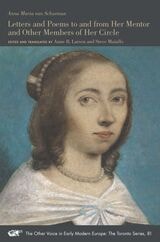
Letters and Poems to and from Her Mentor and Other Members of Her Circle
Anna Maria van Schurman
Iter Press, 2021
This volume presents in translation a remarkable collection of her letters and poems—many of which were previously unpublished—that span almost four decades of her life, from 1631 to 1669.
Letters around a Garden
Rainer Maria Rilke
Seagull Books, 2024
In July 1921, displaced European poet Rainer Maria Rilke sequestered himself in the chateau of Muzot, a thirteenth-century medieval tower perched in the vineyards above the town of Sierre in the Canton Valais, Switzerland. In this sun-flooded landscape of the Rhone Valley, he found beguiling echoes of Spain and his beloved Provence. Here, the Duino Elegies were famously completed and the Sonnets to Orpheus followed.
During this time, Rilke’s correspondence also bloomed, and Letters around a Garden collects some of those letters together into English for the first time. One intriguing exchange from 1924 to 1926 was with a young aristocratic Swiss woman Antoinette de Bonstetten, a passionate horticulturist who had been recommended as a potential advisor for the redesign and upkeep of the Muzot rose garden. In twenty-two precious letters originally written in French, Rilke relishes the prospect of their elusive meeting, keenly discusses the plans for his garden, and wittily laments the trials of his plants. Beyond the encomium for Paul Valéry and poignant memory of place are passages of exquisite writing, in which Rilke evokes with trademark sensitivity the delicate relationship between the changing seasons and the natural world of his adopted region. We also witness the loving relationship evolve between these sometime-fugitive correspondents and how questions of solitariness and companionship impinge on one who faces unaccustomed challenges as his health tragically declines.
Letters from Alabama, 1817–1822
Anne Newport Royall
University of Alabama Press, 1969
Anne Royall was a prominent woman journalist for more than a quarter of a century before her death in 1854, publishing some ten books of travel accounts, one novel, and two successive weekly newspapers in Washington, and sponsoring causes, often unpopular, in the manner of latter-day "muckrakers." She was a well-known habitue of the halls of Congress, looking for news and subscribers, sniffing out irregularities in governmental departments, and pressing claims for a pension which she believed should have been hers from her Revolutionary War husband. For those who helped her she had high, often inordinate, praise; for those who refused her or crossed her path she was a "holy terror," lashing out against them often in intemperate language. Through the columns of her paper she debated such public issues as the Bank, antiMasonry, Nullification, and the franking privilege; she was forever attacking what she considered a very diabolical plot to unite church and state. There was never a doubt where she stood on any of the issues on which she spoke out; she was no compromiser or "fence-straddler." She has the distinction of being the only woman in our national history who was tried (and convicted) for being a "common scold." She was, in short, an aggressive, intolerant, outspoken, suspicious, meddlesome, nonconforming but patriotic, and fascinating woman.
Anne Royall, we might say, began her journalistic career in Alabama. Although the letters were not published until 1830, some four years after Sketches of History, Life and Manners in the United States, they were her :first literary effort. Ostensibly written to a young lawyer friend “Matt” in Virginia, the letters are dated from November 28, 1817 to June 8, 1822.. The letters include, in addition to personal matters and comments on the inconveniences of travel, a considerable amount of description of the country through which she traveled and discussions -often lengthy-of religion, literature, education, social injustices, crops, and important personages she met in her travels. While she is often outspoken, her comments in these letters are more temperate than those in her later works.
Letters from Alabama
Chiefly Relating to Natural HIstoryPhilip Henry Gosse, introduction by Harvey H. Jackson III, edited by Virginia Hamilton
University of Alabama Press, 1993
A naturalist's captivating portrait of Alabama's wildlife, landscapes, and people.
Philip Henry Gosse (1810-1888), a British naturalist, left home at age 17 and made his way to Alabama in 1838, where he had heard educated people were in demand. He was employed by Judge Reuben Saffold at Pleasant Hill in Dallas County as a teacher for about a dozen children of local landowners, but his principal interest was natural history. During the eight months he lived in th Black Belt he watched, listened, thought, took notes, and made sketches--activities that eventually led to Letters from Alabama. He lived among Alabamians, talked and listened to them, saw them at their best and their worst, and came to understand their hopes and fears. They were a part of the natural world, and he paid attention to them as any good scientist would. With the skills of a scientist and the temperament of an artist, Gosse set down an account of natural life in frontier Alabama that has no equal. Written to no one in particular, a common literary device of the period, the letters were first published in a magazine, and in 1859 appeared as a book. By that time Gosse was an established scholar and one of England’s most noted scientific illustrators.
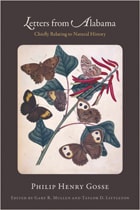
Letters from Alabama
Chiefly Relating to Natural HistoryPhilip Henry Gosse, Edited by Gary R. Mullen and Taylor D. Littleton
University of Alabama Press, 2013
New and improved edition of a naturalist's captivating portrait of Alabama's wildlife, landscapes, and people.
Philip Henry Gosse (1810–1888), a British naturalist, left home at age seventeen and made his way to Alabama in 1838. He was employed by Judge Reuben Saffold and other planters near Pleasant Hill in Dallas County as a teacher for about a dozen of their children, but his principal interest was natural history. Letters from Alabama is a personalized record of Gosse’s perceptive observations during his eight-month residence in this small antebellum community. The work addresses a Victorian readership, including entomologists, who Gosse believed were relatively uninformed about the novelty and beauty of this “hilly region of the State of Alabama.” Written in an engaging literary style and organized as a series of epistolary discussions, the book is unparalleled in its detailed evocations of the natural history and cultural conditions of frontier Alabama. By the time Letters from Alabama appeared in 1859, Gosse’s scientific publications and fine illustrations had led to his being elected a Fellow of the Royal Society of London.
Edited by Gary R. Mullen and Taylor D. Littleton, this authoritative edition features thirty grayscale lithographs shot directly from the 1859 edition, reset type for easier reading, a new introduction and index by the two foremost scholars of Gosse in Alabama, a new appendix that provides modern scientific and common names for the plant and animal species described by Gosse, and a four-color cover featuring one of the plates from Gosse’s Entomologia Alabamensis.

Letters from Clara
One Intrepid Woman's Travels on the Eve of War, 1936-1939Janet Newman
Wisconsin Historical Society Press, 2022
Letters from Limbo
Jeanne Marie Beaumont
CavanKerry Press, 2016

Letters from Lockdown
Sustaining Public Service Values During the Covid-19 PandemicClaire Foster-Gilbert
Haus Publishing, 2020
Letters from the Lockdown presents the twelve original letters alongside new, deeply personal accounts from public servants on the job. Together, this collection provides an opportunity to reflect on how public values meet practice as the global crisis unfolds.
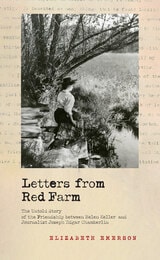
Letters from Red Farm
The Untold Story of the Friendship between Helen Keller and Journalist Joseph Edgar ChamberlinElizabeth Emerson
University of Massachusetts Press, 2021
Informed by previously unpublished letters and extensive research, Letters from Red Farm explores for the first time Keller's deep and enduring friendship with the man who became her literary mentor and friend for over forty years. Written by Chamberlin's great-great granddaughter, this engaging story imparts new insights into Keller's life and personality, introduces the irresistible Chamberlin to a modern public, and follows Keller's burgeoning interest in social activism, as she took up the causes of disability rights, women's issues, and pacifism.
Letters from Robben Island
A Selection of Ahmed Kathrada's Prison Correspondence, 1964-1989Robert D. Vassen
Michigan State University Press, 1999
Late one night in July, 1963, a South African police unit surrounded the African National Congress headquarters in Rivonia and arrested a group of Movement leaders gathered inside. Eventually eight of them, including Nelson Mandela, who was already serving a sentence, Walter Sisulu, Dennis Goldberg, Govan Mbeki, Raymond Mhlaba, Elias Motsoledi, Andrew Mangeni, and Ahmed Kathrada, were convicted of sabotage and, on June 12, 1964, sentenced to life in prison. Soon, these men became widely known as the "Rivonia Trialists." Despite their imprisonment, the Trialists played active roles in the struggle against South Africa's racist regime. Instead of being forgotten, as apartheid officials had hoped, they became enduring symbols in a struggle against injustice and racism.
Kathrada and his colleagues were classified as high security prisoners, segregated from others and closely watched. Every activity was regulated and monitored. Among the many indignities visited upon them, the prisoners were prohibited from keeping copies of incoming and outgoing correspondence. Kathrada, or "Kathy" as he is known, successfully hid both.
Letters From Robben Island contains a selection of 86 of the more than 900 pieces of correspondence Ahmed Kathrada wrote during his 26 years on Robben Island and at Pollsmoor Prison. Some were smuggled out by friends; others were written in code to hide meaning and content from prison censors. These are among his most poignant, touching, and eloquent communications. They are testimonies to Kathrada, his colleagues, and to their commitment to obtaining human dignity and freedom for all South Africans.
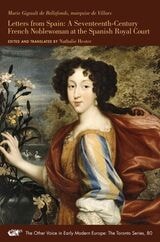
Letters from Spain
A Seventeenth-Century French Noblewoman at the Spanish Royal CourtMarie Gigault de Bellefonds
Iter Press, 2021
This volume includes her surviving letters from Madrid to her friend Madame de Coulanges and an appendix of her letters sent from Paris and Turin. The letters from Spain, written between 1679 and 1681, paint a vivid and engaging picture of the royal court and its new queen.

Letters from Togo
Susan Blake
University of Iowa Press, 1991
With her delightful prose and insight for detail Blake introduces us to Mahouna, her housekeeper, who runs a cold drink business from his refrigerator in a country where electricity is unreliable; to American Lee Ann and her Togolese family, who works at the American school to earn the fees for a private education for her children; and to the suave René, wearing silk shirts and a most seductive smile, who teeters on the edge of the Togolese and expatriate worlds.
Since Lomé is both an overgrown village and a cosmopolitan city, Blake's exhilarating, often humorous experiences range from buying a car to attending a traditional tom-tom funeral, from visiting people who hunt with bows and arrows to enduring faculty meetings, from negotiating the politics of buying produce to lecturing on Afro-American literature at the English Club. Together, her enlivening letters trace the pattern of adjusting to a foreign environment and probe the connections between Africa and this curious, energetic American. Not "out of Africa" but within it, they take advantage of time and perspective to penetrate the universal experience of being a stranger in a strange land.

Letters from Tove
Tove Jansson
University of Minnesota Press, 2021
A virtual memoir in letters by the beloved creator of the Moomins
Tove Jansson’s works, even her famed Moomin books, fairly teem with letters of one kind or another, from messages bobbing in bottles to whole epistolary novels. Fortunately for her countless readers, her life was no different, unfolding as it did in the letters to family, friends, and lovers that make up this volume, a veritable autobiography over the course of six decades—and the only one Jansson ever wrote. And just as letters carry a weight of significance in Jansson’s writing, those she wrote throughout her life reflect the gravity of her circumstances, the depth of her thoughts and feelings, and the critical moments of humor, sadness, and grace that mark an artist’s days.
These letters, penned with characteristic insight and wit, provide an almost seamless commentary on Jansson’s life within Helsinki’s bohemian circles and on her island home. Shifting between hope and despair, yearning and happiness, they describe her immersion in art studies and her ascension to fame with the Moomins. They speak frankly of friendship and love, loneliness and solidarity, and also of politics, art, literature, and society. They summon a particular place and time reflected through a mind finely attuned to her culture, her world, and her own nature—all clearly put into biographical and historical context by the volume’s editors, both longtime friends of Tove Jansson—and, in the end, draw a complex, intimate self-portrait of one of the world’s most beloved authors.
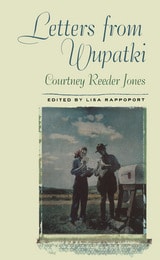
Letters from Wupatki
Courtney Reeder Jones; Edited by Lisa Rappoport
University of Arizona Press, 1995
The year was 1938, and the newlyweds had come to Wupatki National Monument as full-time National Park Service caretakers for the ruin. Remote in time and place, their story as described in Courtney's letters will take readers into a dramatic landscape of red rocks, purple volcanoes, and endless blue sky. Here, some 60 years ago, two young people came to terms with their new life together and with their nearly total reliance upon each other and their Navajo neighbors.
"They helped us in any way that a neighbor would, and we helped them as we could," wrote Courtney in her memoirs years later. Vivid and engaging, her letters home spill over with descriptions of their friendship with local Navajo families, their sings and celebrations, and her good luck in being able to be a part of it all.
Letters from Wupatki captures a more innocent era in southwestern archaeology and the history of the National Park Service before the post-war years brought paved roads, expanded park facilities, and ever-increasing crowds of visitors. Courtney's letters to her family and friends reflect all the charm of the earlier time as they convey the sense of rapid transition that came after the war.
Tracking those changes in the development of Wupatki National Monument and the National Park Service, the letters also—and perhaps more important—reveal changes in the Joneses themselves. Of particular interest to anthropologists and historians, their story also gives the general reader captivating glimpses of a partnership between two people who only grew stronger for the struggles they shared together.

Letters from a Young Emigrant in Manitoba
Ronald A. Wells
University of Manitoba Press, 1981

Letters from the Black Ark
D.S. Marriott
Omnidawn, 2023
The poems in this collection center on the word “dub,” which accrues a subtle lyrical connotation throughout its various forms and meanings—to bestow, vest, crown, and also to suspend, reverb, echo, and sever. Dub poetry plays with revealing and concealing, while also pointing the way to the conditions that produce black poetic music. In D.S. Marriott’s poetry, tragic catastrophes of current black existence—London knife crime, the Windrush scandal, Grenfell, and deadly race violence—are portrayed as questions of language. To speak this language, as Marriott’s poem show, is to take on the forces that cause rupture. Throughout these poems of loss, exile, and obliteration, the poet foresees his downfall and metamorphosis, ultimately realizing too late that he cannot transcend the reverberations and echoes laden with black social death.
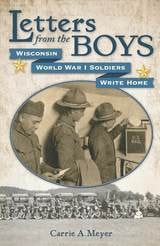
Letters from the Boys
Wisconsin World War I Soldiers Write HomeCarrie A Meyer
Wisconsin Historical Society Press, 2018
On the 100th anniversary of the arrival of the flood of American troops in Europe that would shift the tide of World War I in favor of the Allies, Letters from the Boys brings to life this terrible war as experienced by Wisconsinites writing home.
Technology had transformed the battlefield in alarming ways. Automatic rifles mowed down the young men who went “over the top” to attack enemy trenches; airplanes and improved artillery brought death unseen from miles away; terrifying clouds of poison gas choked and burned the European countryside; the internal combustion engine brought tanks to the battlefield for the first time and revolutionized the way troops deployed.
In the thick of it were young men from Wisconsin who found themselves caught up in geopolitical events half a world away. Professor Carrie A. Meyer combed through three newspapers in Green County, Wisconsin, to collect and synthesize the letters from the boys into a narrative that is both unique and representative, telling the stories of several Green County boys and what they saw, from preparing for war, to life among French families near the front, to the terror of the battlefield. Meyer gracefully removes the veil of obscurity and anonymity hanging over soldiers who participated in a war fought so long ago by great numbers of men, reminding us that armies are made of individuals who strove to do their part and then return to their families.

Letters from the Country
Carol Bly
University of Minnesota Press, 1999

Letters from the Editor
Lessons on Journalism and LifeWilliam F. Woo & Philip Meyer
University of Missouri Press, 2007
William F. Woo, born in China, was the first person outside the Pulitzer family to edit the St. Louis Post-Dispatch and the first Asian American to edit a major American newspaper. After forty years in the newsroom, Woo embarked on a second career in 1996 teaching journalism at Stanford University, where he wrote weekly informal essays to his students in the same personal style that characterized his columns for the Post-Dispatch. Each made a philosophical point about journalism and society and their delicate relationship over the last half of the twentieth century.
Woo was revered as both a writer and a reporter, and this volume collects some of the best of those essays to the next generation of journalists on their craft’s high purpose. As inspiration for students from someone who knew the ropes, it distills the essence of the values that define independent journalism while offering them invaluable food for thought about their future professions.
The essays touch on a wide range of subjects. Woo reflects on journalism as a public trust, requiring the publication of stories that give readers a better understanding of society and equip them to change it for the better. He also ponders print journalism conducted in the face of broadcast and online competition along with the transformation of newspapers from privately owned to publicly traded companies. Here too are personal reflections on the Pulitzer family’s impact on journalism and on the tensions between a journalist’s personal and professional life, as well as the conflicts posed by political advocacy versus free speech or a reporter’s expertise versus a newspaper’s credibility.
Woo’s idealistic spirit conveys the virtues of his era’s newspaper journalism to the next generation of journalists—and most likely to the next generation of news media as well. Even as new students of journalism have an eye on an electronic future, Woo’s essays come straight from a newsman’s heart and soul to remind them of values worth preserving.
Letters from the Federal Farmer to the Republican
Walter Bennett
University of Alabama Press, 1978
The Federal Farmer’s letters were written in opposition to the Constitution in the form in which it had come from the Federal Convention of 1787. Their immediate objective was to secure amendments to the Constitution before it was ratified by state convention. But the letters are valuable also for the basic political philosophy that they represent, specifically, the political philosophy of the revolution and the Bill of Rights. This philosophy stresses principles of federalism and republicanism and exemplifies the liberal idealism that took root in America during the Revolutionary War era.
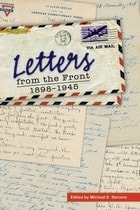
Letters from the Front, 1898-1945
Michael E. Stevens
Wisconsin Historical Society Press, 1992
This volume tells the stories of 62 men and women from Wisconsin who served in the Spanish-American War, World War I, and World War II. Letters from the Front is a vivid social history of wartime as told by those who took part in these foreign conflicts. Most of them are "ordinary" people, uprooted from farms, factories, and offices, who took part in extraordinary events. This work explores how war changed their lives and reveals the emotions they felt in uniform, in remote outposts, in combat, and in prison camps. These letters, diaries, oral histories, newspapers, and contemporary accounts provide a history of adaptation to military life; they also reflect the changes that occurred over the half-century encompassing these confilcts, an era of great technological innovation — and one in which America's vision of itself also changed.
Letters from the Headwaters
Aaron Abeyta
University Press of Colorado, 2014
Through epistolary essays and poems, American Book Award- and Colorado Book Award-winning author and poet Aaron A. Abeyta captures the soul of the cultural and geographical crossroads of the driest quadrant in the nation, the Colorado headwaters, source to all the rivers in the southwestern and mid-western United States. Originating from and expanding on the themes of twenty-five years of “Headwaters” conferences at Western State Colorado University, these essays and poems embrace the region’s past while also exploring the struggles of a present that seeks a sustainable future for the borderlands that define the very cross-cultural essence of the American experience.
Letters from the Leelanau
Essays of People and PlaceKathleen Stocking
University of Michigan Press, 1990
Letters from the Queen of Navarre with an Ample Declaration
Jeanne d’Albret
Iter Press, 2016
This edition presents in English, for the first time, Jeanne d’Albret’s Letters to the king, his mother, his brother, her own brother-in-law, and the queen of England, together with her Ample Declaration (1568) defending her decampment to the Protestant stronghold of La Rochelle. A historical-biographical introduction situates these writings in the larger context of Reformation politics and examines in detail the specific literary characteristics of her memoir. In her works, Jeanne d’Albret asserts her own position as legal sovereign of Béarn and Navarre and situates herself at the nexus of overlapping political, religious, and familial tensions.
Letters from the Southwest
Charles Lummis; Edited by James W. Byrkit
University of Arizona Press, 0
In the fall of 1884, journalist Charles Lummis set out on foot from Ohio to California on assignment for the Los Angeles Times. The reports he mailed ahead to that newspaper were later refashioned for the book A Tramp Across the Continent, a work that helped to establish Lummis as the most active promoter of Southwestern culture who ever lived.
Lummis wrote another set of letters during his journey, however, which he sent back to Ohio for publication by the Chillicothe Leader. Although these letters contain basically the same narrative as those sent to Los Angeles and later found in A Tramp, the Ohio letters more closely reflect the author’s thoughts and observations while on the journey. In fact, a comparison of the two drafts indicates that Lummis spent considerable effort removing spontaneous details from the Ohio letters in favor or a more commercial, self-promoting, and politic reporting for the California paper.
The twenty-four Ohio letters, assembled here by James W. Byrkit, offer a far more candid look at the Southwest than Lummis was later to bring to print, as well as greater insight into the author’s own personality. Byrkit’s introductory essay provides the background for Lummis’s career, compares the three bodies of work relating to the trek, and offers an account of Lummis’s transformation from chronicler to promoter.
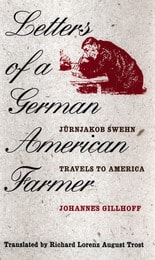
Letters of a German American Farmer
Juernjakob Swehn Travels to AmericaJohannes Gillhoff
University of Iowa Press, 2001
Early in the twentieth century, drawing upon the hundreds of letters written to his father by students who had emigrated to northeastern Iowa from Mecklenburg, in northeastern Germany, Johannes Gillhoff created the composite character of Juernjakob Swehn: the archetype of the upright, honest mensch who personified the German immigrant, on his way to a better life through ambition and hard work. Gillhoff's farmer-hero, planting and harvesting his Iowa acres, joking with his neighbors during the snowy winters, building a church with his own hands, proved so popular with the German public that a million copies of Jürnjakob Swehn der Amerikafahrer are in print. Now for the first time this wise and endearing book is available in English.
“First, let's talk about pigs,”Juernjakob Swehn writes from his farm in Iowa. “In America, pigs have a curly tail and talk in Low German so I can understand them.” Swehn builds a log house and makes a success of farming, marries a woman who's “a whole different nation that has its confidence from the inside,” raises a family, and becomes an elder in the Lutheran church. He recognizes his good fortune but acknowledges that memories of his village grow stronger every year, that “being homesick is the best thing that home can do for you …no power on earth holds on to you like your homeland.” It is this sense of home, both in Iowa and in Mecklenburg, that makes Juernjakob Swehn appeal to today's readers as much as he appealed to readers in 1916.
Letters of Blood
Rizia Rahman
Seagull Books, 0
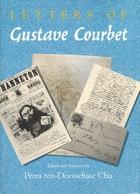
Letters of Gustave Courbet
Gustave Courbet
University of Chicago Press, 1992
pivotal figure in the emergence of modern painting, remains
an artist whose interests, attitudes, and friendships are
little understood. A voluminous correspondent, Courbet
himself, through his letters, offers a tantalizing avenue
toward a keener assessment of his character and
accomplishments. In her critical edition of over six hundred
of the artist's letters, Petra ten-Doesschate Chu presents
just such a look at the inner life of the artist; her
unparalleled feat of gathering together all of Courbet's
known letters, many heretofore unpublished and untranslated,
is sure to change our evaluation of Courbet's creativity and
of his place in nineteenth-century French life.
Beginning when Courbet left his provincial home at
eighteen and ending eight days before his death in exile in
Switzerland, this correspondence enables readers to follow
the artist's development from youth to mature artist of
international repute. Addressed to correspondents such as
the poet Charles Baudelaire, the painter Claude Monet, the
writers Champfleury, Victor Hugo, and Théeophile Gautier,
the political theorist Pierre-Joseph Proudhon, and the
politician Jules Simon, the letters offer numerous insights
into Courbet's life and art as well as the cultural and
political activity of his day. In fascinating detail, they
present the artist's relation to the contemporary media, his
deliberate choice of subject matter for Salon paintings, his
preoccupation with photography, and his participation in the
Commune.
Besides collecting, translating, and annotating the
letters, Chu provides an introduction, a chronology,
biographies of persons appearing frequently in the letters,
and a list of paintings and sculptures mentioned in the
letters. Her work is an essential resource of immediate use
to historians of art and culture, political and social
historians, and readers of biography.
Petra ten-Doesschate Chu is professor and head of the
Department of Art and Music at Seton Hall University.

Letters of Peter Abelard, Beyond the Personal
Peter Abelard
Catholic University of America Press, 2008
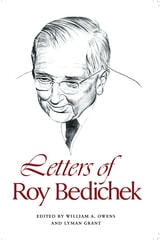
Letters of Roy Bedichek
Edited by William A. Owens and Lyman Grant
University of Texas Press, 1985
Although Roy Bedichek published less than his more famous friends J. Frank Dobie and Walter Prescott Webb, he wrote voluminously and, many say, with more distinction than the others. In addition to his four published books, Bedichek produced a great number of letters through which he communicated his broad interests and deep learning to a wide variety of correspondents.
Prefaced by a biographical sketch, this volume presents a collection of Bedichek letters that give us an insight into his literary and creative development—from his earliest years through his career at the University of Texas and on into his later years. They include letters to his closest associates, J. Frank Dobie and Walter Prescott Webb, and to many old friends, such as William A. Owens, John A. Lomax, and John Henry Faulk. Also included is Bedichek's correspondence with other contemporaries, not all old friends, among them Texas Governor James Ferguson, the recipient of some of Bedichek's most trenchant criticism. Throughout this collection, Bedichek's sparkling wit and profound learning are evident as he discusses his favorite subjects, among them ecology, education, literature, politics, and history, frequently related to Texas.
When Roy Bedichek gave his collection of letters to the Barker Collection in the University of Texas Library, he designated William A. Owens as the authorized editor of the letters, with the restriction that none of them be published until seven years following his death, which came in 1959.
Letters of Transit
Theodore Worozbyt
University of Massachusetts Press, 2008
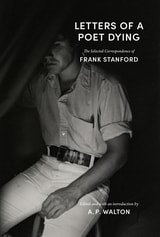
Letters of a Poet Dying
The Selected Correspondence of Frank StanfordFrank Stanford
University of Arkansas Press, 2026
Letters of a Poet Dying is a watershed publication—the first collection of correspondence by the virtuosic poet Frank Stanford (1948–78). Born in southeast Mississippi, Stanford lived most of his brief life in northern Arkansas, where he studied, loved, founded a publishing company, and wrote prolifically before ending his life at the age of twenty-nine. These strikingly original letters, postcards, and book inscriptions written in Stanford’s twenties to several dozen recipients—poets, editors, friends, lovers, and family members—illuminate his complicated and often tumultuous creative process.
Enhanced by A. P. Walton’s painstaking scholarship, Stanford’s correspondence reveals a poet intent on crafting and shaping his oeuvre as he approached the death he long anticipated. “I have never feared Death,” he wrote in 1972. For him, “Death was always there, a pale master holding the reins of my horse.” Yet these letters are much more than a contemplation of the poet’s own mortality—they demonstrate a lust for life and contain untold moments of beauty, providing intimate, moving glimpses into Stanford’s creativity, aesthetic beliefs, friendships, romances, and fears.
That these letters have survived obscurity for the many decades since the poet’s death is a small miracle. Stanford’s letters offer a clear window into the genius of one of the most gifted and prodigious poets of the twentieth century and stand in their own right as significant works of literature.
Letters on Ethics
To LuciliusLucius Annaeus Seneca
University of Chicago Press, 2015
Written as much for a general audience as for Lucilius, these engaging letters offer advice on how to deal with everything from nosy neighbors to sickness, pain, and death. Seneca uses the informal format of the letter to present the central ideas of Stoicism, for centuries the most influential philosophical system in the Mediterranean world. His lively and at times humorous expositions have made the Letters his most popular work and an enduring classic. Including an introduction and explanatory notes by Margaret Graver and A. A. Long, this authoritative edition will captivate a new generation of readers.
Letters on God and Letters to a Young Woman
Rainer Maria Rilke, Translated from the German by Annemarie S. Kidder
Northwestern University Press, 2012
For Rainer Maria Rilke, letter writing was a discipline and art unto itself. Some seven thousand of his letters have survived, among them works of profound beauty and insight to rival his poems and fiction. For the first time, this volume makes available to an English-speaking audience two of the earliest collections of Rilke letters published after his death, each with a nuanced introduction and notes by Annemarie S. Kidder.
The thematic collection Letters on God contains two letters by Rilke, the first an actual letter written during World War I, in 1915 in Munich, the second a fictional one composed after the war, in 1922 at Muzot in Switzerland. In these letters, Rilke builds on the mystical view of God conceived in The Book of Hours, but he moves beyond it, demonstrating a unique vision of God and Christ, the church and religious experience, friendship and death.
Like his famous Letters to a Young Poet, Rilke’s Letters to a Young Woman presents an intimate series of letters written to a young admirer. The nine letters collected here were written to Lisa Heise over the course of five years, from 1919 to 1924. Though Rilke and Heise never met, the poet emerges in these letters as a compassionate listener and patient teacher who with levelheaded sensitivity affirms and guides the movements of another person’s soul.
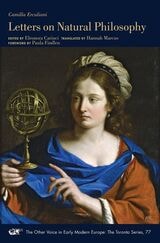
Letters on Natural Philosophy
The Scientific Correspondence of a Sixteenth-Century Pharmacist, with Related TextsCamilla Erculiani
Iter Press, 2020
This edition presents the first full English translation of Erculiani’s book and other relevant texts, bringing to light the cultural context and scientific thought of this unique natural philosopher.
Letters to Francesco Datini
Margherita Datini
Iter Press, 2012
—Jane Tylus
Professor of Italian Studies and vice provost for academic affairs, New York University
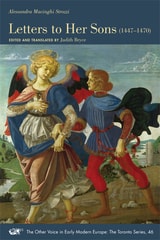
Letters to Her Sons, 1447–1470
Alessandra Macinghi Strozzi
Iter Press, 2016
The seventy-three surviving letters written by Florentine widow, Alessandra Macinghi Strozzi (c.1406–1471), to her distant sons first appeared in print well over a century ago, but are here translated into English in their entirety for the first time. Whether for the professional historian or for the general reader interested in Renaissance Florence, they constitute a most precious testimony regarding both private and public life in the mid-fifteenth century, with themes ranging from familial relations, motherhood, marriage, and aspects of material culture to the harsh realities of political exile meted out by the Medici to their perceived opponents, these latter including her husband and, subsequently, her sons.
Letters to J. D. Salinger
Edited by Chris Kubica and Will Hochman
University of Wisconsin Press, 2014
Salinger continues to maintain his silence, but Holden Caulfield, Franny and Zooey, and Seymour Glass—the unforgettable characters of his novel and short stories—continue to speak to generations of readers and writers. Letters to Salinger includes more than 150 personal letters addressed to Salinger from well-known writers, editors, critics, journalists, and other luminaries, as well as from students, teachers, and readers around the world, some of whom have just discovered Salinger for the first time. Their voices testify to the lasting impressions Salinger’s ideas and emotions have made on so many diverse lives.
Contributors include Marvin Bell, Frederick Busch, Stephen Collins, Nicholas Delbanco, Warren French, Herbert Gold, W. P. Kinsella, Molly McQuade, Stewart O’Nan, Robert O’Connor, Ellis Paul, Molly Peacock, Sanford Pinsker, George Plimpton, Gerald Rosen, Sid Salinger, David Shields, Joseph Skibell, Melanie Rae Thon, Alma Luz Villanueva, Katharine Weber, and many others

Letters to Jargon
The Correspondence between Larry Eigner and Jonathan WilliamsEdited and Introduced by Andrew Rippeon
University of Alabama Press, 2019
Celebrated by both the Black Mountain poets in the 1950s and 1960s and the Language poets in the 1970s and 1980s, Larry Eigner’s poems occupy an important place in American poetry and poetics, and his reputation and legacy grow seemingly stronger with each passing year. Letters to Jargon collects all of the known correspondence between Larry Eigner and Jonathan Williams, the influential publisher of Jargon Society Press and himself a poet.
Eigner’s correspondence with Williams began in the early 1950s, as the two were in conversation over the manuscript of On My Eyes, published by Jargon in 1960. Their correspondence continued for many years thereafter, extending into the period when Eigner’s work started to gain recognition from the nascent movement that would become known as “Language” writing.
The letters are quite broad in their range of reference and provide a fuller context for Eigner’s poetry and thinking. Eigner and Williams discuss their own poetic practices, including the source material for specific poems, general writing practices, and small press and little magazine publication. This volume offers considerable insight into their shared literary communities as Eigner reports on his readings in contemporary poetry and poetics, as well as his correspondence and contact with other poets including Charles Olson, Vincent Ferrini, Robert Duncan, Denise Levertov, Robert Grenier, and Barrett Watten.
Also recorded are Eigner’s reactions to current events and explications of his own poems, including the contexts for appropriated lines and distinctions of character spacing. Eigner also shares with Williams details of his home life, his financial difficulties and the daily challenges of his cerebral palsy. Finally, the book features a series of images of the original letters, enabling readers to see Eigner’s specific material-textual practices.