Results by title
151 books match the query 'Liberalism' and 22 start with l
Law as Politics
Carl Schmitt’s Critique of LiberalismDavid Dyzenhaus, ed.
Duke University Press, 1998
One of the major players in the 1920s debates, an outspoken critic of the Versailles Treaty and the Weimar Constitution, and a member of the Nazi party who provided juridical respectability to Hitler’s policies, Schmitt contended that people are a polity only to the extent that they share common enemies. He saw the liberal notion of a peaceful world of universal citizens as a sheer impossibility and attributed the problems of Weimar to liberalism and its inability to cope with pluralism and political conflict. In the decade since his death, Schmitt’s writings have been taken up by both the right and the left and scholars differ greatly in their evaluation of Schmitt’s ideas. Law as Politics thematically organizes in one volume the varying engagements and confrontations with Schmitt’s work and allows scholars to acknowledge—and therefore be in a better position to negotiate—an important paradox inscribed in the very nature of liberal democracy.
Law as Politics will interest political philosophers, legal theorists, historians, and anyone interested in Schmitt’s relevance to current discussions of liberalism.
Contributors. Heiner Bielefeldt, Ronald Beiner, Ernst-Wolfgang Bockenforde, Renato Cristi, David Dyzenhaus, Robert Howse, Ellen Kennedy, Dominique Leydet, Ingeborg Maus, John P. McCormick, Reinhard Mehring, Chantal Mouffe, William E. Scheuerman, Jeffrey Seitzer
Law, Legislation, and Liberty, Volume 19
F. A. Hayek
University of Chicago Press, 2021
In this critical entry in the University of Chicago’s Collected Works of F. A. Hayek series, political philosopher Jeremy Shearmur collates Hayek’s three-part study of law and liberty and places Hayek’s writings in careful historical context. Incisive and unrestrained, Law, Legislation, and Liberty is Hayek at his late-life best, making it essential reading for understanding the philosopher’s politics and worldview.
These three volumes constitute a scaling up of the framework offered in Hayek’s famed The Road to Serfdom. Volume 1, Rules and Order, espouses the virtues of classical liberalism; Volume 2, The Mirage of Social Justice, examines the societal forces that undermine liberalism and, with it, liberalism’s capacity to induce “spontaneous order”; and Volume 3, The Political Order of a Free People, proposes alternatives and interventions against emerging anti-liberal movements, including a rule of law that resides in stasis with personal freedom.
Shearmur’s treatment of this challenging work—including an immersive new introduction, a conversion of Hayek’s copious endnotes to footnotes, corrections to Hayek’s references and quotations, and the provision of translations to material that Hayek cited only in languages other than English—lends it new importance and accessibility. Rendered anew for the next generations of scholars, this revision of Hayek’s Law, Legislation, and Liberty is sure to become the standard.
Leave Me Alone and I'll Make You Rich
How the Bourgeois Deal Enriched the WorldDeirdre Nansen McCloskey and Art Carden
University of Chicago Press, 2020
For readers looking for a distillation of McCloskey’s magisterial work, Leave Me Alone and I’ll Make You Rich is what you’ve been waiting for. In this lively volume, McCloskey and the economist and journalist Carden bring together the trilogy’s key ideas and its most provocative arguments. The rise of the west, and now the rest, is the story of the rise of ordinary people to a dignity and liberty inspiring them to have a go. The outcome was an explosion of innovation after 1800, and a rise of real income by an astounding 3,000 percent. The Great Enrichment, well beyond the conventional Industrial Revolution, did not, McCloskey and Carden show, come from the usual suspects, capital accumulation or class struggle. It came from the idea of economic liberty in Holland and the Anglosphere, then Sweden and Japan, then Italy and Israel and China and India, an idea that bids fair in the next few generations to raise up the wretched of the earth. The original shift to liberalism arose from 1517 to 1789 from theological and political revolutions in northwest Europe, upending ancient hierarchies. McCloskey and Carden contend further that liberalism and “innovism” made us better humans as well as richer ones. Not matter but ideas. Not corruption but improvement.
Leave Me Alone and I’ll Make You Rich draws in entertaining fashion on history, economics, literature, philosophy, and popular culture, from growth theory to the Simpsons. It is the perfect introduction for a broad audience to McCloskey’s influential explanation of how we got rich. At a time when confidence in the economic system is under challenge, the book mounts an optimistic and persuasive defense of liberal innovism, and of the modern world it has wrought.
Liberal Suppression
Section 501(c)(3) and the Taxation of SpeechPhilip Hamburger
University of Chicago Press, 2018
Tracing the history of American liberalism, including theological liberalism and its expression in nativism, Hamburger shows the centrality of turbulent popular anxieties about the Catholic Church and other potentially orthodox institutions. He argues persuasively that such theopolitical fears about the political speech of churches and related organizations underlay the adoption, in 1934 and 1954, of section 501(c)(3)’s speech limits. He thereby shows that the speech restrictions have been part of a broad majority assault on minority rights and that they are grossly unconstitutional.
Along the way, Hamburger explores the role of the Ku Klux Klan and other nativist organizations, the development of American theology, and the cultural foundations of liberal “democratic” political theory. He also traces important legal developments such as the specialization of speech rights and the use of law to homogenize beliefs. Ultimately, he examines a wide range of contemporary speech restrictions and the growing shallowness of public life in America.
His account is an unflinching look at the complex history of American liberalism and at the implications for speech, the diversity of belief, and the nation’s future.
Liberalism
John Gray
University of Minnesota Press, 1995
Since the publication in 1986 of the first edition of Liberalism, both the world and the author’s views have changed significantly. In this new edition, John Gray argues that whereas liberalism was the political theory of modernity, it is ill-equipped to cope with the dilemmas of the postmodern condition. The task now, as Gray sees it, is to develop a pluralist theory, in which the liberal problem of finding a modus vivendi among rival communities and worldviews is solved in postliberal terms.
Copublished with Open University Press
Liberalism After Communism
The Implications of the 1993 Elections to the Federal AssemblyJerzy Szacki
Central European University Press, 1995
Liberalism Ancient and Modern
Leo Strauss
University of Chicago Press, 1995
Liberalism and Empire
A Study in Nineteenth-Century British Liberal ThoughtUday Singh Mehta
University of Chicago Press, 1999
Ironically, it is in the conservative Edmund Burke—a severe critic of Britain's arrogant, paternalistic colonial expansion—that Mehta finds an alternative and more capacious liberal vision. Shedding light on a fundamental tension in liberal theory, Liberalism and Empire reaches beyond post-colonial studies to revise our conception of the grand liberal tradition and the conception of experience with which it is associated.
Liberalism and Leadership
The Irony of Arthur Schlesinger, Jr.Emile Lester
University of Michigan Press, 2019
Most scholars and pundits today view Franklin Delano Roosevelt and John F. Kennedy as aggressive liberal leaders, while viewing Schlesinger’s famous histories of their presidencies as celebrations of their steadfast progressive leadership. A more careful reading of Schlesinger’s work demonstrates that he preferred an ironic political outlook emphasizing the virtues of restraint, patience, and discipline. For Schlesinger, Roosevelt and Kennedy were liberal heroes and models as much because they respected the constraints on their power and ideals as because they tested traditional institutions and redefined the boundaries of presidential power.
Aggressive liberalism involves the use of inspirational rhetoric and cunning political tactics to expand civil liberties and insure economic equality. Schlesinger’s emphasis on the crucial role that irony has played and should play in liberalism poses a challenge to the aggressive liberalism advocated by liberal activists, political thinkers, and pundits. That his counsel was grounded in conservative insights as well as liberal values makes it accessible to leaders across the political spectrum.
Liberalism and Transformation
The Global Politics of Violence and InterventionDillon Stone Tatum
University of Michigan Press, 2021
Liberalism and Transformation is the first scholarly work that explores the historical, philosophical, and intellectual development of global liberalism since the nineteenth century in the context of the deployment of violence, force, and intervention. Using an approach that includes interpretive and contextual analysis of texts from writers, philosophers, and policy-makers across nearly two centuries, as well as historiographical and historical analysis of archival documents (some of which have been recently declassified) and other media, Liberalism and Transformation narrates the messy history of emancipatory liberalism and its engagement with issues of war and peace. The book contributes to both a rethinking of liberal democracy and its relationship to world politics, as well as the effects of liberal internationalism on global processes. Furthermore, Liberalism and Transformation invites readers to reflect on global ethics and transformation in world politics. In the first place, it shows how ethical imaginings of the world have direct effects on actions of transformative importance. In the second place, it suggests that discourses are fluid, changing, and complex.
Liberalism and the Culture of Security
The Nineteenth-Century Rhetoric of ReformKatherine Henry
University of Alabama Press, 2011
Normal0falsefalsefalseMicrosoftInternetExplorer4
Liberalism and the Postcolony
Thinking the State in 20th-Century PhilippinesLisandro E. Claudio
National University of Singapore Press, 2017
Through the biographies of four Filipino scholar-bureaucrats—Camilo Osias, Salvador Araneta, Carlos P. Romulo, and Salvador P. Lopez—Lisandro E. Claudio argues that liberal thought served as the grammar of Filipino democracy in the twentieth century. Melding political philosophy and narrative history, he takes us through various articulations of liberalism in pedagogy, international affairs, economics, and literature. In this first book on Filipino liberals in the twentieth century, Claudio brings to light an obscured history of the Philippine state and also argues for a new liberalism rooted in the postcolonial experience, a timely intervention in light of the ascent of President Rodrigo Duterte and the current developments in Southeast Asian politics.
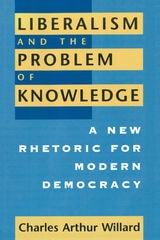
Liberalism and the Problem of Knowledge
A New Rhetoric for Modern DemocracyCharles Arthur Willard
University of Chicago Press, 1996
The problem of "unity" and the public sphere has driven a wedge between libertarians and communitarians. To mediate this conflict, Willard advocates a shift from the discourse of liberalism to that of epistemics. As a means of organizing the ebb and flow of consensus, epistemics regards democracy as a family of knowledge problems—as ways of managing discourse across differences and protecting multiple views.
Building a bridge between warring peoples and warring paradigms, this book also reminds those who presume to instruct government that they are obliged to enlighten it, and that to do so requires an enlightened public discourse.
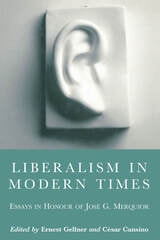
Liberalism in Modern Times
Ernest Gellner
Central European University Press, 1996

Liberalism in the Jungle
Race, Rubber, and the State in the Ecuadorian AmazonMatthew Ford
University of Texas Press, 0
The untold story of how liberal reform, Indigenous resistance, and the rubber trade transformed Ecuador’s Amazon.
Ecuador’s 1895 Liberal Revolution was a turning point for the nation. Along with crippling the power of the Catholic Church, the new Liberal government expanded the ranks of political participation, spearheaded projects to soften endemic regionalism, integrated the national economy into global markets through an export-oriented economic strategy, and launched a program of “Indian Redemption” aimed at “civilizing” what elites deemed as the “backward” Indigenous masses. The cacao economy was essential to the Liberal state reform, as it facilitated infrastructure modernizatoin and the ability to provide unprecedented public goods and services.
East of the Andes, the Liberal state launched the first attempt to incorporate the Amazonian frontier (the “Oriente”) and expand state power into the region. But, as Matthew Ford shows, a very different global commodity was transforming the Oriente. Unlike most economic booms, the global demand for rubber debilitated state efforts in the region. Liberalism in the Jungle traces how local, national, and global forces shaped the contours of Liberal efforts in the Amazon. By the end, readers will understand how the region transformed from an isolated outpost to the heart of the national economy and home to one of the world’s most powerful social movements.
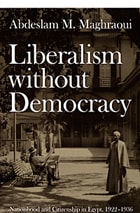
Liberalism without Democracy
Nationhood and Citizenship in Egypt, 1922–1936Abdeslam M. Maghraoui
Duke University Press, 2006
In the 1920s and 1930s, Egypt’s reformers equated liberal notions of nationhood and citizenship with European civilization and culture. As Maghraoui demonstrates, in their efforts to achieve liberalization, they sought to align Egypt with the West and to dissociate it from the Arab and Islamic worlds. Egypt’s professionals and leading cultural figures attempted to replace the fez with European-style hats; they discouraged literary critics from studying Arabic poetry, claiming it was alien to Egyptian culture. Why did they feel compelled to degrade local cultures in order to accommodate liberal principles?
Drawing on the thought of Lacan, Fanon, Said, and Bhabha, as well as contemporary political theory, Maghraoui points to liberalism’s inherent contradiction: its simultaneous commitments to individual liberty and colonial conquest. He argues that when Egypt’s reformers embraced the language of liberalism as their own, they adopted social prejudices built into that language. Efforts to achieve liberalization played out—and failed—within the realm of culture, not just within the political arena. Opinions voiced through literary works, cartoons, newspaper articles on controversial social issues, and other forms of cultural expression were ultimately more important to the fate of liberalism in Egypt than were questions of formal political participation and representation. Liberalism without Democracy demonstrates the powerful—and under appreciated—role of language and culture in defining citizenship and political community.
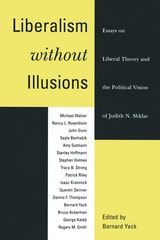
Liberalism without Illusions
Essays on Liberal Theory and the Political Vision of Judith N. ShklarEdited by Bernard Yack
University of Chicago Press, 1996
In this tightly organized collection of essays, sixteen distinguished political theorists explore Shklar's intellectual legacy, focussing on both her own ideas and the broad range of issues that most intrigued her. The volume opens with a series of varied and illuminating assessments of Shklar's conception of liberal politics. The second section, with essays on Descartes and Racine, Hobbes, Rousseau, and Laski, emphasizes the relation between individual freedom and moral psychology in modern political thought. The third section addresses contemporary issues, such as the role of hypocrisy, offensive speech, and constitutional courts in liberal democracies. The book concludes with an autobiographical essay by Shklar that provides a vivid sense of her singular voice and personality.
The contributors to this volume are Bruce Ackerman, Seyla Benhabib, John Dunn, Amy Gutmann, Stanley Hoffmann, Stephen Holmes, George Kateb, Isaac Kramnick, Patrick Riley, Nancy Rosenblum, Quentin Skinner, Rogers M. Smith, Tracy B. Strong, Dennis F. Thompson, Michael Walzer, and Bernard Yack.
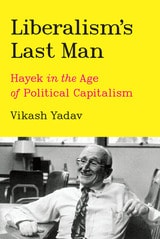
Liberalism's Last Man
Hayek in the Age of Political CapitalismVikash Yadav
University of Chicago Press, 2023
A modern reframing of Friedrich Hayek’s most famous work for the 21st century.
Friedrich Hayek’s The Road to Serfdom was both an intellectual milestone and a source of political division, spurring fiery debates around capitalism and its discontents. In the ensuing discord, Hayek’s true message was lost: liberalism is a thing to be protected above all else, and its alternatives are perilous.
In Liberalism’s Last Man, Vikash Yadav revives the core of Hayek’s famed work to map today’s primary political anxiety: the tenuous state of liberal meritocratic capitalism—particularly in North America, Europe, and Asia—in the face of strengthening political-capitalist powers like China, Vietnam, and Singapore. As open societies struggle to match the economic productivity of authoritarian-capitalist economies, the promises of a meritocracy fade; Yadav channels Hayek to articulate how liberalism’s moral backbone is its greatest defense against repressive social structures.
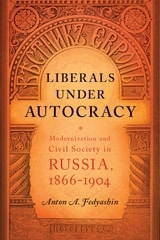
Liberals under Autocracy
Modernization and Civil Society in Russia, 1866–1904Anton A. Fedyashin
University of Wisconsin Press, 2012
With its rocky transition to democracy, post-Soviet Russia has made observers wonder whether a moderating liberalism could ever succeed in such a land of extremes. But in Liberals under Autocracy, Anton A. Fedyashin looks back at the vibrant Russian liberalism that flourished in the country’s late imperial era, chronicling its contributions to the evolution of Russia’s rich literary culture, socioeconomic thinking, and civil society.
For five decades prior to the revolutions of 1917, The Herald of Europe (Vestnik Evropy) was the flagship journal of Russian liberalism, garnering a large readership. The journal articulated a distinctively Russian liberal agenda, one that encouraged social and economic modernization and civic participation through local self-government units (zemstvos) that defended individual rights and interests—especially those of the peasantry—in the face of increasing industrialization. Through the efforts of four men who turned The Herald into a cultural nexus in the imperial capital of St. Petersburg, the publication catalyzed the growing influence of journal culture and its formative effects on Russian politics and society.
Challenging deep-seated assumptions about Russia’s intellectual history, Fedyashin’s work casts the country’s nascent liberalism as a distinctly Russian blend of self-governance, populism, and other national, cultural traditions. As such, the book stands as a contribution to the growing literature on imperial Russia's nonrevolutionary, intellectual movements that emphasized the role of local politics in both successful modernization and the evolution of civil society in an extraparliamentary environment.
Liberty and the Search for Identity
Ivan Zoltan Denes
Central European University Press, 2006
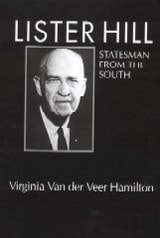
Lister Hill
Statesman from the SouthVirginia Van der Veer Hamilton
University of Alabama Press, 2004
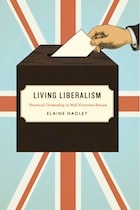
Living Liberalism
Practical Citizenship in Mid-Victorian BritainElaine Hadley
University of Chicago Press, 2010
In the mid-Victorian era, liberalism was a practical politics: it had a party, it informed legislation, and it had adherents who identified with and expressed it as opinion. It was also the first British political movement to depend more on people than property, and on opinion rather than interest. But how would these subjects of liberal politics actually live liberalism?
To answer this question, Elaine Hadley focuses on the key concept of individuation—how it is embodied in politics and daily life and how it is expressed through opinion, discussion and sincerity. These are concerns that have been absent from commentary on the liberal subject. Living Liberalism argues that the properties of liberalism—citizenship, the vote, the candidate, and reform, among others—were developed in response to a chaotic and antagonistic world. In exploring how political liberalism imagined its impact on Victorian society, Hadley reveals an entirely new and unexpected prehistory of our modern liberal politics. A major revisionist account that alters our sense of the trajectory of liberalism, Living Liberalism revises our understanding of the presumption of the liberal subject.