Results by title
1210 books match the query 'Mexico' and 38 start with l
La Consentida
Settlement, Subsistence, and Social Organization in an Early Formative Mesoamerican CommunityGuy David Hepp
University Press of Colorado, 2019
La Consentida explores Early Formative period transitions in residential mobility, subsistence, and social organization at the site of La Consentida in coastal Oaxaca, Mexico. Examining how this site transformed during one of the most fundamental moments of socioeconomic change in the ancient Americas, the book provides a new way of thinking about the social dynamics of Mesoamerican communities of the period.
Guy David Hepp summarizes the results of several seasons of fieldwork and laboratory analysis under the aegis of the La Consentida Archaeological Project, drawing on various forms of evidence—ground stone tools, earthen architecture, faunal remains, human dental pathologies, isotopic indicators, ceramics, and more— to reveal how transitions in settlement, subsistence, and social organization at La Consentida were intimately linked. While Mesoamerica is too diverse for research at a single site to lay to rest ongoing debates about the Early Formative period, evidence from La Consentida should inform those debates because of the site’s unique ecological setting, its relative lack of disturbance by later occupations, and because it represents the only well-documented Early Formative period village in a 300-mile stretch of Mexico’s Pacific coast.
One of the only studies to closely document multiple lines of evidence of the transition toward a sedentary, agricultural society at an individual settlement in Mesoamerica, La Consentida is a key resource for understanding the transition to settled life and social complexity in Mesoamerican societies.
La Gran Línea
Mapping the United States–Mexico Boundary, 1849–1857By Paula Rebert
University of Texas Press, 2001
The Treaty of Guadalupe Hildalgo, which officially ended the U.S.-Mexican War in 1848, cost Mexico half its territory, while the United States gained land that became California, Nevada, Utah, Texas, and parts of Colorado, Arizona, and New Mexico. Because the new United States-Mexico border ran through territory that was still incompletely mapped, the treaty also called for government commissions from both nations to locate and mark the boundary on the ground. This book documents the accomplishments of both the U.S. and the Mexican Boundary Commissions that mapped the boundary between 1849 and 1857, as well as the fifty-four pairs of maps produced by their efforts and the ongoing importance of these historical maps in current boundary administration. Paula Rebert explores how, despite the efforts of both commissions to draw neutral, scientific maps, the actual maps that resulted from their efforts reflected the differing goals and outlooks of the two countries. She also traces how the differences between the U.S. and Mexican maps have had important consequences for the history of the boundary.
La India María
Mexploitation and the Films of María Elena VelascoBy Seraina Rohrer
University of Texas Press, 2017
La India María—a humble and stubborn indigenous Mexican woman—is one of the most popular characters of the Mexican stage, television, and film. Created and portrayed by María Elena Velasco, La India María has delighted audiences since the late 1960s with slapstick humor that slyly critiques discrimination and the powerful. At the same time, however, many critics have derided the iconic figure as a racist depiction of a negative stereotype and dismissed the India María films as exploitation cinema unworthy of serious attention. By contrast, La India María builds a convincing case for María Elena Velasco as an artist whose work as a director and producer—rare for women in Mexican cinema—has been widely and unjustly overlooked.
Drawing on extensive interviews with Velasco, her family, and film industry professionals, as well as on archival research, Seraina Rohrer offers the first full account of Velasco’s life; her portrayal of La India María in vaudeville, television, and sixteen feature film comedies, including Ni de aquí, ni de allá [Neither here, nor there]; and her controversial reception in Mexico and the United States. Rohrer traces the films’ financing, production, and distribution, as well as censorship practices of the period, and compares them to other Mexploitation films produced at the same time. Adding a new chapter to the history of a much-understudied period of Mexican cinema commonly referred to as “la crisis,” this pioneering research enriches our appreciation of Mexploitation films.
La Malinche in Mexican Literature
From History to MythBy Sandra Messinger Cypess
University of Texas Press, 1991
Of all the historical characters known from the time of the Spanish conquest of the New World, none has proved more pervasive or controversial than that of the Indian interpreter, guide, mistress, and confidante of Hernán Cortés, Doña Marina—La Malinche—Malintzin. The mother of Cortés's son, she becomes not only the mother of the mestizo but also the Mexican Eve, the symbol of national betrayal.
Very little documented evidence is available about Doña Marina. This is the first serious study tracing La Malinche in texts from the conquest period to the present day. It is also the first study to delineate the transformation of this historical figure into a literary sign with multiple manifestations.
Cypess includes such seldom analyzed texts as Ireneo Paz's Amor y suplicio and Doña Marina, as well as new readings of well-known texts like Octavio Paz's El laberinto de la soledad. Using a feminist perspective, she convincingly demonstrates how the literary depiction and presentation of La Malinche is tied to the political agenda of the moment. She also shows how the symbol of La Malinche has changed over time through the impact of sociopolitical events on the literary expression.
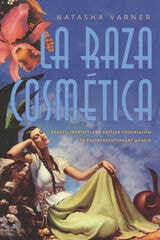
La Raza Cosmética
Beauty, Identity, and Settler Colonialism in Postrevolutionary MexicoNatasha Varner
University of Arizona Press, 2020
Critically examining beauty pageants, cinema, tourism propaganda, photography, murals, and more, Natasha Varner shows how postrevolutionary understandings of mexicanidad were fundamentally structured by legacies of colonialism, as well as shifting ideas about race, place, and gender. This interdisciplinary study smartly weaves together cultural history, Indigenous and settler colonial studies, film and popular culture analysis, and environmental and urban history. It also traces a range of Indigenous interventions in order to disrupt top-down understandings of national identity construction and to “people” this history with voices that have all too often been entirely ignored.
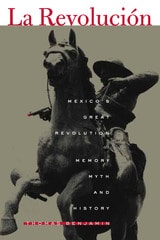
La Revolución
Mexico's Great Revolution as Memory, Myth, and HistoryBy Thomas Benjamin
University of Texas Press, 2000
The 1910 Revolution is still tangibly present in Mexico in the festivals that celebrate its victories, on the monuments to its heroes, and, most important, in the stories and memories of the Mexican people. Yet there has never been general agreement on what the revolution meant, what its objectives were, and whether they have been accomplished.
This pathfinding book shows how Mexicans from 1910 through the 1950s interpreted the revolution, tried to make sense of it, and, through collective memory, myth-making, and history writing, invented an idea called "la Revolución." In part one, Thomas Benjamin follows the historical development of different and often opposing revolutionary traditions and the state's efforts to forge them into one unified and unifying narrative. In part two, he examines ways of remembering the past and making it relevant to the present through fiestas, monuments, and official history. This research clarifies how the revolution has served to authorize and legitimize political factions and particular regimes to the present day. Beyond the Mexican case, it demonstrates how history is used to serve the needs of the present.
La proyección del neoliberalismo
Las transformaciones del cine mexicano (1988–2012)Ignacio M. Sánchez Prado
Vanderbilt University Press, 2019
Labor's Outcasts
Migrant Farmworkers and Unions in North America, 1934-1966Andrew J. Hazelton
University of Illinois Press, 2022
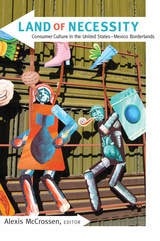
Land of Necessity
Consumer Culture in the United States–Mexico BorderlandsAlexis McCrossen, ed.
Duke University Press, 2009
In Land of Necessity, historians and anthropologists unravel the interplay of the national and transnational and of scarcity and abundance in the region split by the 1,969-mile boundary line dividing Mexico and the United States. This richly illustrated volume, with more than 100 images including maps, photographs, and advertisements, explores the convergence of broad demographic, economic, political, cultural, and transnational developments resulting in various forms of consumer culture in the borderlands. Though its importance is uncontestable, the role of necessity in consumer culture has rarely been explored. Indeed, it has been argued that where necessity reigns, consumer culture is anemic. This volume demonstrates otherwise. In doing so, it sheds new light on the history of the U.S.-Mexico borderlands, while also opening up similar terrain for scholarly inquiry into consumer culture.
The volume opens with two chapters that detail the historical trajectories of consumer culture and the borderlands. In the subsequent chapters, contributors take up subjects including smuggling, tourist districts and resorts, purchasing power, and living standards. Others address home décor, housing, urban development, and commercial real estate, while still others consider the circulation of cinematic images, contraband, used cars, and clothing. Several contributors discuss the movement of people across borders, within cities, and in retail spaces. In the two afterwords, scholars reflect on the U.S.-Mexico borderlands as a particular site of trade in labor, land, leisure, and commodities, while also musing about consumer culture as a place of complex political and economic negotiations. Through its focus on the borderlands, this volume provides valuable insight into the historical and contemporary aspects of the big “isms” shaping modern life: capitalism, nationalism, transnationalism, globalism, and, without a doubt, consumerism.
Contributors. Josef Barton, Peter S. Cahn, Howard Campbell, Lawrence Culver, Amy S. Greenberg, Josiah McC. Heyman, Sarah Hill, Alexis McCrossen, Robert Perez, Laura Isabel Serna, Rachel St. John, Mauricio Tenorio-Trillo, Evan R. Ward
Land, Labor, and Capital in Modern Yucatan
Essays in Regional History and Political EconomyJeffrey T. Brannon
University of Alabama Press, 1991
Owing to Yucatan’s relative isolation, many assume that the history and economy of the peninsula have evolved in a distinctive way, apart from the central government in Mexico City and insulated from world social and economic factors. The essays in this volume suggest that this has not been the case: the process of development in Yucatan has been linked firmly to national and global forces of change over the past two centuries. The essays are by U.S., Mexican, Canadian, and Belizean social scientists representing both well-established and younger scholars. The result is a perspective on Yucatan’s historical development that is at once international, interdisciplinary, and intergenerational.
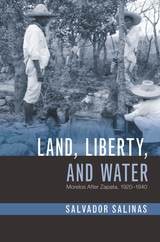
Land, Liberty, and Water
Morelos After Zapata, 1920–1940Salvador Salinas
University of Arizona Press, 2018
Salvador Salinas takes readers inside the diverse pueblos of the former Zapatistas during the 1920s and 1930s and recounts the first statewide land reform carried out in postrevolutionary Mexico. Based on extensive archival research, he reveals how an alliance with the national government that began in 1920 stimulated the revival of rural communities after ten years of warfare and helped once-landless villagers reclaim Morelos’s valley soils, forested mountains, and abundant irrigation waters.
During the presidency of Plutarco Elías Calles (1924–1928), pueblos forged closer ties to the centralized government in Mexico City through a plethora of new national institutions, such as ejidos, forestry cooperatives, water juntas, credit societies, and primary schools. At the same time, the expansion of charcoal production in the Sierra de Ajusco and rice cultivation in the lowland valleys accelerated deforestation and intensified water conflicts.
Salinas recounts how the federal reforms embraced by the countryside aided the revival of the pueblos, and in return, villagers repeatedly came to the defense of an embattled national regime. Salinas gives readers interested in modern Mexico, the Zapatista revolution, and environmental history a deeply researched analysis of the outcomes of the nation’s most famous revolutionary insurgency.
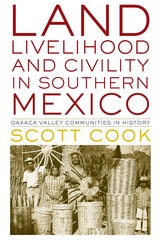
Land, Livelihood, and Civility in Southern Mexico
Oaxaca Valley Communities in HistoryBy Scott Cook
University of Texas Press, 2014
In the Valley of Oaxaca in Mexico’s Southern Highland region, three facets of sociocultural life have been interconnected and interactive from colonial times to the present: first, community land as a space to live and work; second, a civil-religious system managed by reciprocity and market activity wherein obligations of citizenship, office, and festive sponsorships are met by expenditures of labor-time and money; and third, livelihood. In this book, noted Oaxacan scholar Scott Cook draws on thirty-five years of fieldwork (1965–1990) in the region to present a masterful ethnographic historical account of how nine communities in the Oaxaca Valley have striven to maintain land, livelihood, and civility in the face of transformational and cumulative change across five centuries.
Drawing on an extensive database that he accumulated through participant observation, household surveys, interviews, case studies, and archival work in more than twenty Oaxacan communities, Cook documents and explains how peasant-artisan villagers in the Oaxaca Valley have endeavored over centuries to secure and/or defend land, worked and negotiated to subsist and earn a living, and striven to meet expectations and obligations of local citizenship. His findings identify elements and processes that operate across communities or distinguish some from others. They also underscore the fact that landholding is crucial for the sociocultural life of the valley. Without land for agriculture and resource extraction, occupational options are restricted, livelihood is precarious and contingent, and civility is jeopardized.
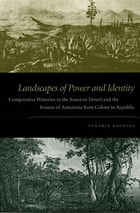
Landscapes of Power and Identity
Comparative Histories in the Sonoran Desert and the Forests of Amazonia from Colony to RepublicCynthia Radding
Duke University Press, 2005
Radding’s comparative approach illuminates what happened when similar institutions of imperial governance, commerce, and religion were planted in different physical and cultural environments. She draws on archival documents, published reports by missionaries and travelers, and previous histories as well as ecological studies and ethnographies. She also considers cultural artifacts, including archaeological remains, architecture, liturgical music, and religious dances. Radding demonstrates how colonial encounters were conditioned by both the local landscape and cultural expectations; how the colonizers and colonized understood notions of territory and property; how religion formed the cultural practices and historical memories of the Sonoran and Chiquitano peoples; and how the conflict between the indigenous communities and the surrounding creole societies developed in new directions well into the nineteenth century.
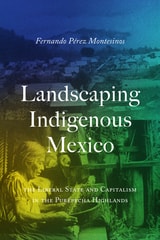
Landscaping Indigenous Mexico
The Liberal State and Capitalism in the Purépecha HighlandsFernando Pérez Montesinos
University of Texas Press, 2025
2026 Bolton-Johnson Prize, Conference on Latin American History
2026 María Elena Martínez Prize in Mexican History, Conference on Latin American History
2026 Honorable Mention, Environment Section of the Latin American Studies Association
A history of the Purépecha people's survival amid environmental and political changes.
Landscapes are more than geological formations; they are living records of human struggles. Landscaping Indigenous Mexico unearths the history of Juátarhu, an Indigenous landscape shaped and nurtured by the Purépecha—a formidable Mesoamerican people whose power once rivaled that of the Aztecs. Although cataclysmic changes came with European contact and colonization, Juátarhu’s enduring agroecology continued to sustain local life through centuries of challenges.
Contesting essentialist narratives of Indigenous penury, Pérez Montesinos shows how Purépechas thrived after Mexican independence in 1821, using Juátarhu’s diverse agroecology to negotiate continued autonomy amid waves of national economic and political upheaval. After 1870, however, autonomy waned under the pressure of land privatization policies, state intervention, and industrial logging. On the eve of the Mexican Revolution in 1910, Purépechas stood at a critical juncture: Would the Indigenous landscape endure or succumb? Offering a fresh perspective on a seemingly well-worn subject, Pérez Montesinos argues that Michoacán, long considered a peripheral revolutionary region, saw one of the era’s most radical events: the destruction of the liberal order and the timber capitalism of Juátarhu.

Las aventuras de Chupacabra Charlie
Frederick Luis Aldama / Ilustrado por Chris Escobar
The Ohio State University Press, 2021
Latin American Jewish Cultural Production
David William Foster
Vanderbilt University Press, 2008
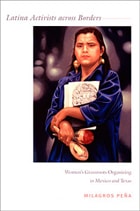
Latina Activists across Borders
Women's Grassroots Organizing in Mexico and TexasMilagros Peña
Duke University Press, 2007
Drawing on interviews with the leaders of more than two dozen women’s NGOs in Michoacán and El Paso/Ciudad Juárez, Peña examines the influence of the Roman Catholic Church and liberation theology on Latina activism, and she describes how activist affiliations increasingly cross ethnic, racial, and class lines. Women’s NGOs in Michoacán put an enormous amount of energy into preparations for the 1995 United Nations–sponsored World Conference on Women in Beijing, and they developed extensive activist networks as a result. As Peña demonstrates, activists in El Paso/Ciudad Juárez were less interested in the Beijing conference; they were intensely focused on issues related to immigration and to the murders and disappearances of scores of women in Ciudad Juárez. Ultimately, Peña’s study highlights the consciousness-raising work done by NGOs run by and for Mexican and Mexican American women: they encourage Latinas to connect their personal lives to the broader political, economic, social, and cultural issues affecting them.
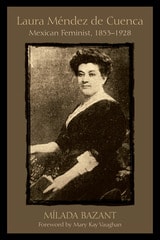
Laura Méndez de Cuenca
Mexican Feminist, 1853–1928Mílada Bazant; Foreword by Mary Kay Vaughan
University of Arizona Press, 2018
In the early 1870s, when conservative religious thought permeated all aspects of Mexican life, she was one of very few women to gain admission to an extraordinary constellation of male poets, playwrights, and novelists, who were also the publicists and statesmen of the time. She entered this world through her poetry, intellect, curiosity, assertiveness, but her personal life was fraught with tragedy: she had a child out of wedlock by poet Manuel Acuña, who killed himself shortly thereafter. She later married another poet, Agustín Fidencio Cuenca, and had seven other children. All but two of her children died, as did Agustín.
As a penniless young widow facing social rejection, Laura became a teacher and an important force in Mexico’s burgeoning educational reform program. She moved abroad—first to San Francisco, then St. Louis, then Berlin. In these places where she was not known and women had begun to move confidently in the public sphere, she could walk freely, observe, mingle, make friends across many circles, learn, think, and express her opinions. She wrote primarily for a Mexican public and always returned to Mexico because it was her country’s future that she strove to create.
Now, for the first time in English, Mílada Bazant shares with us the trajectory of a leading Mexican thinker who applied the power of the pen to human feeling, suffering, striving, and achievement.
Legacies of The Basin of Mexico
Carlos E. Cordova
University Press of Colorado, 2023
More than four decades after that book’s publication, the fourteen contributions in this volume review and analyze its theoretical and methodological influence in light of recent research across disciplines. Among a spectrum of authors representing several generations are those who participated directly in the Basin of Mexico surveys—including the late Jeffrey R. Parsons—as well as those who have been actively working on recent projects in the basin and neighboring regions.
Providing a broad and multidisciplinary perspective of the present and future state of research in the area, The Legacies of The Basin of Mexico will be of interest to Mesoamerican and Latin American archaeologists as well as geographers, geologists, historians, and specialists in the study of past environments.
Contributors: Guillermo Acosta Ochoa, Aleksander Borejsza, Destiny Crider, Charles Frederick, Raúl García-Chávez, Larry Gorenflo, Angela Huster, Georgina Ibarra Arzave, Charles Kolb, Frank Lehmkuhl, Abigail Meza Peñaloza, Emily McClung de Tapia, John K. Millhauser, Deborah Nichols, Jeffrey R. Parsons, Serafin Sánchez Pérez, Philipp Schulte, Sergey Sedov, Elizabeth Solleiro Rebolledo, Daisy Valera Fenández, Federico Zertuche
Life and Death in the Ancient City of Teotihuacan
A Modern Paleodemographic SynthesisRebecca Storey
University of Alabama Press, 1992
Cities arose independently in both the Old World and in the pre-Columbian New World. Lacking written records, many of these New World cities can be studied only through archaeology, including the earliest pre-Columbian city, Teotihuacan, Mexico, one of the largest cities of its time (150 B.C. to A.D. 750). Thus, an important question is how similar New World cities are to their Old World counterparts.
Before recent times, the dense populations of cities made them unhealthy places because of poor sanitation and inadequate food supplies. Storey's research shows clearly that although Teotihuacan was a very different environment and culture from 17th-century London, these two great cities are comparable in terms of health problems and similar death rates.
Life and Labor on the Border
Working People of Northeastern Sonora, Mexico, 1886–1986Josiah McC. Heyman
University of Arizona Press, 1991
Life and Labor on the Border traces the development of the urban working class in northern Sonora over the period of a century. Drawing on an extensive collection of life histories, Heyman describes what has happened to families over several generations as people have left the countryside to work for American-owned companies in northern Sonora or to cross the border to find other employment.
Heyman searches for the origins of "working classness" in these family histories, revealing aspects of life that strengthen people' s involvement with a consumer economy, including the role of everyday objects like sewing machines, cars, and stoves. He considers the consequences of changing political and economic tides, and also the effects on family life of the new role of women in the labor force. Within the broad sweep of family chronicles, key junctures in individual lives—both personal and historical crises—offer additional insights into social class dynamics.
Heyman's work dispels the notion that border inhabitants are uniformly impoverished or corrupted by proximity to the United States. These life stories instead convey the positive sense of people's goals in life and reveal the origins of a distinctive way of life in the Borderlands.
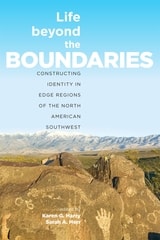
Life beyond the Boundaries
Constructing Identity in Edge Regions of the North American SouthwestKaren Harry
University Press of Colorado, 2018
Life beyond the Boundaries explores identity formation on the edges of the ancient Southwest. Focusing on some of the more poorly understood regions, including the Jornada Mogollon, the Gallina, and the Pimería Alta, the authors use methods drawn from material culture science, anthropology, and history to investigate themes related to the construction of social identity along the perimeters of the American Southwest.
Through an archaeological lens, the volume examines the social experiences of people who lived in edge regions. Through mobility and the development of extensive social networks, people living in these areas were introduced to the ideas and practices of other cultural groups. As their spatial distances from core areas increased, the degree to which they participated in the economic, social, political, and ritual practices of ancestral core areas increasingly varied. As a result, the social identities of people living in edge zones were often—though not always—fluid and situational.
Drawing on an increase of available information and bringing new attention to understudied areas, the book will be of interest to scholars of Southwestern archaeology and other researchers interested in the archaeology of low-populated and decentralized regions and identity formation. Life beyond the Boundaries considers the various roles that edge regions played in local and regional trajectories of the prehistoric and protohistoric Southwest and how place influenced the development of social identity.
Contributors: Lewis Borck, Dale S. Brenneman, Jeffery J. Clark, Severin Fowles, Patricia A. Gilman, Lauren E. Jelinek, Myles R. Miller, Barbara J. Mills, Matthew A. Peeples, Kellam Throgmorton, James T. Watson
Lifeways in the Northern Maya Lowlands
New Approaches to Archaeology in the Yucatán PeninsulaEdited by Jennifer P. Mathews and Bethany A. Morrison
University of Arizona Press, 2006
By exploring various social and political levels of Maya society through a broad expanse of time, Lifeways in the Northern Maya Lowlands not only reconstructs a little-known past, it also suggests the broad implications of archaeology for related studies of tourism, household economies, and ethnoarchaeology. It is a benchmark work that pointedly demonstrates the need for researchers in both north and south to ignore modern geographic boundaries in their search for new ideas to further their understanding of the ancient Maya.
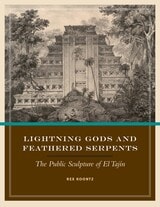
Lightning Gods and Feathered Serpents
The Public Sculpture of El TajínBy Rex Koontz
University of Texas Press, 2009
El Tajín, an ancient Mesoamerican capital in Veracruz, Mexico, has long been admired for its stunning pyramids and ballcourts decorated with extensive sculptural programs. Yet the city's singularity as the only center in the region with such a wealth of sculpture and fine architecture has hindered attempts to place it more firmly in the context of Mesoamerican history. In Lightning Gods and Feathered Serpents, Rex Koontz undertakes the first extensive treatment of El Tajín's iconography in over thirty years, allowing us to view its imagery in the broader Mesoamerican context of rising capitals and new elites during a period of fundamental historical transformations.
Koontz focuses on three major architectural features—the Pyramid of the Niches/Central Plaza ensemble, the South Ballcourt, and the Mound of the Building Columns complex—and investigates the meanings of their sculpture and how these meanings would have been experienced by specific audiences. Koontz finds that the iconography of El Tajín reveals much about how motifs and elite rites growing out of the Classic period were transmitted to later Mesoamerican peoples as the cultures centered on Teotihuacan and the Maya became the myriad city-states of the Early Postclassic period.
By reexamining the iconography of sculptures long in the record, as well as introducing important new monuments and contexts, Lightning Gods and Feathered Serpents clearly demonstrates El Tajín's numerous iconographic connections with other areas of Mesoamerica, while also exploring its roots in an indigenous Gulf lowlands culture whose outlines are only now emerging. At the same time, it begins to uncover a largely ignored regional artistic culture of which Tajín is the crowning achievement.
Lives of Dust and Water
An Anthropology of Change and Resistance in Northwestern MexicoMaría Luz Cruz-Torres
University of Arizona Press, 2004
A political ecology of human survival in one of the most important ecological regions of Mexico, it describes how these communities contest environmental degradation and economic impoverishment arising from political and economic forces beyond their control. María Luz Cruz-Torres evokes the rich and varied experiences of the people who live in the villages of Celaya and El Cerro, showing how they invent and utilize their own social capital to emerge as whole persons in the face of globalization. She traces the histories of the two villages to illustrate the complex variation involved in community formation and to show how people respond to and utilize Mexican law and reform. Surrounded by limited resources, poverty, illness, sudden death, and daily oppression, these men and women create innovative social and cultural forms that mitigate these impacts.
Cruz-Torres reveals not only how they manage to survive in the midst of horrendous circumstances but also how they transcend those impediments with dignity. She details the participation of household members in the subsistence, formal, and informal sectors of the economy, and how women use a variety of resources to guarantee their families’ survival. A sometimes tragic but ultimately vibrant story of human resistance, Lives of Dust and Water offers an important look at a little-studied but dynamically developing region of Mexico. It contributes to a more precise understanding of how rural coastal communities in Mexico emerged and continue to develop and adjust to the uncertainties of the globalizing world.
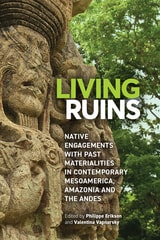
Living Ruins
Native Engagements with Past Materialities in Contemporary Mesoamerica, Amazonia, and the AndesPhilippe Erikson
University Press of Colorado, 2022
Ten case studies from the Maya region, Amazonia, and the Andes detail and contextualize narratives, rituals, and a range of practices and attitudes toward different kinds of vestiges. The chapters engage with recently debated issues such as regimes of historicity and knowledge, cultural landscapes, conceptions of personhood and ancestrality, artifacts, and materiality. They focus on Indigenous perspectives rather than mainstream narratives such as those mediated by UNESCO, Hollywood, travel agents, and sometimes even academics. The contributions provide critical analyses alongside a multifaceted account of how people relate to the place/time nexus, expanding our understanding of different ontological conceptualizations of the past and their significance in the present.
Living Ruins adds to the lively body of work on the invention of tradition, Indigenous claims on their lands and history, “retrospective ethnogenesis,” and neo-Indianism in a world where tourism, NGOs, and Western essentialism are changing Indigenous attitudes and representations. This book is significant to anyone interested in cultural heritage studies, Amerindian spirituality, and Indigenous engagement with archaeological sites in Latin America.
Contributors: Cedric Becquey, Laurence Charlier Zeineddine, Marie Chosson, Pablo Cruz, Philippe Erikson, Antoinette Molinié, Fernando Santos-Granero, Emilie Stoll, Valentina Vapnarsky, Pirjo Kristiina Virtanen
Living with Oil
Promises, Peaks, and Declines on Mexico’s Gulf CoastBy Lisa Breglia
University of Texas Press, 2013
For decades, Mexico has been one of the world’s top non-OPEC oil exporters, but since the 2004 peak and subsequent decline of the massive offshore oilfield—Cantarell—the prospects for the country have worsened. Living with Oil takes a unique look at the cultural and economic dilemmas in this locale, focusing on residents in the fishing community of Isla Aguada, Campeche, who experienced the long-term repercussions of a 1979 oil spill that at its height poured out 30,000 barrels a day, a blowout eerily similar to the 2010 Deepwater Horizon disaster.
Tracing the interplay of the global energy market and the struggle it creates between citizens, the state, and multinational corporations, this study also provides lessons in the tug-of-war between environmentalism and the lure of profits. In Mexico, oil has held status as a symbol of nationalist pride as well as a key economic asset that supports the state’s everyday operations. Capturing these dilemmas in a country now facing a national security crisis at the hands of violent drug traffickers, cultural anthropologist Lisa Breglia covers issues of sovereignty, security, and stability in Mexico’s post-peak future.
The first in-depth account of the local effects of peak oil in Mexico, emphasizing the everyday lives and livelihoods of coastal Campeche residents, Living with Oil demonstrates important aspects of the political economy of energy while showing vivid links between the global energy marketplace and the individual lives it affects.
Living with the Dead
Mortuary Ritual in MesoamericaEdited by James L. Fitzsimmons and Izumi Shimada
University of Arizona Press, 2011
This book results from a symposium organized by the editors for an annual meeting of the Society for American Archaeology. The contributors employ historical sources, comparative art history, anthropology, and sociology, as well as archaeology and anthropology, to uncover surprising commonalities across cultures, including the manner in which the dead were politicized, the perceptions of reciprocity between the dead and the living, and the ways that the dead were used by the living to create, define, and renew social as well as family ties. In exploring larger issues of a “good death” and the transition from death to ancestry, the contributors demonstrate that across Mesoamerica death was almost never accompanied by the extinction of a persona; it was more often the beginning of a social process than a conclusion.

Look at me
Photographs from Mexico City by Jed FieldingJed Fielding
University of Chicago Press, 2009
Sight is central to the medium of photography. But what happens when the subjects of photographic portraits cannot look back at the photographer or even see their own image? An in-depth pictorial study of blind schoolchildren in Mexico, Look at me draws attention to (and distinctions between) the activity of sight and the consciousness of form.
Combining aspects of his earlier, acclaimed street work with an innovative approach to portraiture, Chicago-based photographer Jed Fielding has concentrated closely on these children’s features and gestures, probing the enigmatic boundaries between surface and interior, innocence and knowing, beauty and grotesque. Design, composition, and the play of light and shadow are central elements in these photographs, but the images are much more than formal experiments; they confront disability in a way that affirms life. Fielding’s sightless subjects project a vitality that seems to extend beyond the limits of self-consciousness. In collaborative, joyful participation with the children, he has made pictures that reveal essential gestures of absorption and the basic expressions of our creatureliness.
Fielding’s work achieves what only great art, and particularly great portraiture can: it launches and then complicates a process of identification across the barriers that separate us from each other. Look at me contains more than sixty arresting images from which we often want to look away, but into which we are nevertheless drawn by their deep humanity and palpable tenderness. This is a monograph of uncommon significance by an important American photographer.
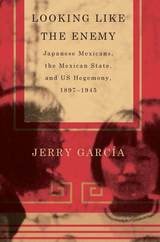
Looking Like the Enemy
Japanese Mexicans, the Mexican State, and US Hegemony, 1897–1945Jerry García
University of Arizona Press, 2014
Japanese citizens were initially lured to Mexico with promises of cheap and productive land in Chiapas. Many of the promises were false, and the immigrants were forced to fan out across the country, especially to the lands along the US border. As Jerry García reveals, they were victims of discrimination based on “difference,” but they also displayed “markers of whiteness” that linked them positively to Europeans and Americans, who were perceived as powerful and socially advanced. And, García reports, many Mexicans looked favorably on the Japanese as hardworking and family-centered.
The book delves deeply into the experiences of the Japanese on both sides of the border during World War II, illuminating the similarities and differences in their treatment. Although some Japanese Mexicans were eventually interned (at the urging of the US government), in general the fear and vitriol that Japanese Americans encountered never reached the same levels in Mexico.
Looking Like the Enemy is an ambitious study of a tumultuous half-century in Mexico. It is a significant contribution to our understanding of the immigrant experience in the Western Hemisphere and to the burgeoning field of borderlands studies.
Looking for Mexico
Modern Visual Culture and National IdentityJohn Mraz
Duke University Press, 2009
Turning to film, Mraz compares portrayals of the Mexican Revolution by Fernando de Fuentes to the later movies of Emilio Fernández and Gabriel Figueroa. He considers major stars of Golden Age cinema as gender archetypes for mexicanidad, juxtaposing the charros (hacienda cowboys) embodied by Pedro Infante, Pedro Armendáriz, and Jorge Negrete with the effacing women: the mother, Indian, and shrew as played by Sara García, Dolores del Río, and María Félix. Mraz also analyzes the leading comedians of the Mexican screen, representations of the 1968 student revolt, and depictions of Frida Kahlo in films made by Paul Leduc and Julie Taymor. Filled with more than fifty illustrations, Looking for Mexico is an exuberant plunge into Mexico’s national identity, its visual culture, and the connections between the two.
Lord Eight Wind of Suchixtlan and the Heroes of Ancient Oaxaca
Reading History in the Codex Zouche-NuttallBy Robert Lloyd Williams
University of Texas Press, 2009
In the pre-Hispanic Mesoamerican world, histories and collections of ritual knowledge were often presented in the form of painted and folded books now known as codices, and the knowledge itself was encoded into pictographs. Eight codices have survived from the Mixtec peoples of ancient Oaxaca, Mexico; a part of one of them, the Codex Zouche-Nuttall, is the subject of this book. As a group, the Mixtec codices contain the longest detailed histories and royal genealogies known for any indigenous people in the western hemisphere. The Codex Zouche-Nuttall offers a unique window into how the Mixtecs themselves viewed their social and political cosmos without the bias of western European interpretation. At the same time, however, the complex calendrical information recorded in the Zouche-Nuttall has made it resistant to historical, chronological analysis, thereby rendering its narrative obscure.
In this pathfinding work, Robert Lloyd Williams presents a methodology for reading the Codex Zouche-Nuttall that unlocks its essentially linear historical chronology. Recognizing that the codex is a combination of history in the European sense and the timelessness of myth in the Native American sense, he brings to vivid life the history of Lord Eight Wind of Suchixtlan (AD 935–1027), a ruler with the attributes of both man and deity, as well as other heroic Oaxacan figures. Williams also provides context for the history of Lord Eight Wind through essays dealing with Mixtec ceremonial rites and social structure, drawn from information in five surviving Mixtec codices.
Lords of Lambityeco
Political Evolution in the Valley of Oaxaca during the Xoo PhaseMichael Lind
University Press of Colorado, 2010
Los Primeros Mexicanos
Late Pleistocene and Early Holocene People of SonoraGuadalupe Sánchez
University of Arizona Press, 2016
Los Primeros Mexicanos explores the Clovis occupation of Mexico’s northwest region of Sonora. Using extensive primary data concerning specific artifacts, assemblages, and Paleoindian archaeology, Mexican archaeologist Guadalupe Sánchez presents a synopsis and critical review of current data and a unique summary of information about the First People of México that is difficult to find in Spanish and until now not available in English.
Sánchez’s essential framework for early Sonora prehistory includes the Sonoran landscape, the biotic communities, a history of investigations, the regional cultural-historical chronology of Sonora, and the Clovis record in the surrounding area. The Sonoran settlement pattern, she asserts, indicates that Clovis groups were hunter-gatherers who exploited a wide range of environments, locating their settlements near lithic sources for tool-making, water sources, large-prey animals, and a variety of edible plants and small animals.
In 1592, a Jesuit priest, José de Acosta, chronicled his puzzlement over when man first arrived in the New World. Four hundred years later, the peopling of the American continent is still intensely interesting to scientists and researchers. Los Primeros Mexicanos offers an exhaustive synthesis of available archaeological evidence to shed light on Clovis occupation in Sonora, Mexico.
Los Zetas Inc.
Criminal Corporations, Energy, and Civil War in MexicoBy Guadalupe Correa-Cabrera
University of Texas Press, 2017
The rapid growth of organized crime in Mexico and the government’s response to it have driven an unprecedented rise in violence and impelled major structural economic changes, including the recent passage of energy reform. Los Zetas Inc. asserts that these phenomena are a direct and intended result of the emergence of the brutal Zetas criminal organization in the Mexican border state of Tamaulipas. Going beyond previous studies of the group as a drug trafficking organization, Guadalupe Correa-Cabrera builds a convincing case that the Zetas and similar organizations effectively constitute transnational corporations with business practices that include the trafficking of crude oil, natural gas, and gasoline; migrant and weapons smuggling; kidnapping for ransom; and video and music piracy.
Combining vivid interview commentary with in-depth analysis of organized crime as a transnational and corporate phenomenon, Los Zetas Inc. proposes a new theoretical framework for understanding the emerging face, new structure, and economic implications of organized crime in Mexico. Correa-Cabrera delineates the Zetas establishment, structure, and forms of operation, along with the reactions to this new model of criminality by the state and other lawbreaking, foreign, and corporate actors. Since the Zetas share some characteristics with legal transnational businesses that operate in the energy and private security industries, she also compares this criminal corporation with ExxonMobil, Halliburton, and Blackwater (renamed “Academi” and now a Constellis company). Asserting that the elevated level of violence between the Zetas and the Mexican state resembles a civil war, Correa-Cabrera identifies the beneficiaries of this war, including arms-producing companies, the international banking system, the US border economy, the US border security/military-industrial complex, and corporate capital, especially international oil and gas companies.
Lost in the City
Tree of Desire and Serafin: Two novels by Ignacio SolaresBy Ignacio Solares
University of Texas Press, 1998
Cristina, the young protagonist of Tree of Desire, and her little brother Joaquín run away from a home that is outwardly normal, but inwardly disfunctional. Lost on the streets of Mexico City, they confront some of the most terrifying aspects of city life. Or is it all a dream? The story suggests, without confirming, that sexual abuse has driven Cristina to her desperate escape. But is it an escape? Are they awakening from a dream, or reentering a nightmare?
Serafín, too, is lost in the city. Searching for his father who has deserted the family, he is virtually helpless amid the city dangers. Serafín finds compassion in surprising places, but will he survive to return to his mother and their rural village?
These two novels by one of Mexico's premier writers illuminate many aspects of contemporary Mexican life. Solares describes Mexico's different social classes with Dickensian realism. His focus on young protagonists, unusual in Mexican literature, opens a window onto problems of children's vulnerability that know no national borders. At the same time, his use of elements of the fantastic and the paranormal, and his evocative writing style, make reading his novels a most pleasurable experience.

Love in the Drug War
Selling Sex and Finding Jesus on the Mexico-US BorderBy Sarah Luna
University of Texas Press, 2020
2020 — Ruth Benedict Prize – Association for Queer Anthropology, American Anthropological Association
2020 — Gloria E. Anzaldúa Book Prize – National Women’s Studies Association
2020 — Honorable Mention, Sara A. Whaley Book Prize
2021 — Best Book in Social Sciences – Mexico Section, Latin American Studies Association (LASA)
Sex, drugs, religion, and love are potent combinations in la zona, a regulated prostitution zone in the city of Reynosa, across the border from Hidalgo, Texas. During the years 2008 and 2009, a time of intense drug violence, Sarah Luna met and built relationships with two kinds of migrants, women who moved from rural Mexico to Reynosa to become sex workers and American missionaries who moved from the United States to forge a fellowship with those workers.
Luna examines the entanglements, both intimate and financial, that define their lives. Using the concept of obligar, she delves into the connections that tie sex workers to their families, their clients, their pimps, the missionaries, and the drug dealers—and to the guilt, power, and comfort of faith. Love in the Drug War scrutinizes not only la zona and the people who work to survive there, but also Reynosa itself—including the influences of the United States—adding nuance and new understanding to the current Mexico-US border crisis.
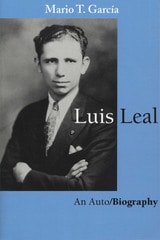
Luis Leal
An Auto/BiographyBy Mario T. García
University of Texas Press, 2000
Professor Luis Leal is one of the most outstanding scholars of Mexican, Latin American, and Chicano literatures and the dean of Mexican American intellectuals in the United States. He was one of the first senior scholars to recognize the viability and importance of Chicano literature, and, through his perceptive literary criticism, helped to legitimize it as a worthy field of study. His contributions to humanistic learning have brought him many honors, including Mexico's Aquila Azteca and the United States' National Humanities Medal.
In this testimonio or oral history, Luis Leal reflects upon his early life in Mexico, his intellectual formation at Northwestern University and the University of Chicago, and his work and publications as a scholar at the Universities of Illinois and California, Santa Barbara. Through insightful questions, Mario García draws out the connections between literature and history that have been a primary focus of Leal's work. He also elicits Leal's assessment of many of the prominent writers he has known and studied, including Mariano Azuela, William Faulkner, Octavio Paz, Carlos Fuentes, Juan Rulfo, Gabriel García Márquez, Jorge Luis Borges, Tomás Rivera, Rolando Hinojosa, Rudolfo Anaya, Elena Poniatowska, Sandra Cisneros, Richard Rodríguez, and Ana Castillo.