Results by title
355 books match the query 'Middle Atlantic (DC, DE, MD, NJ, NY, PA)' and 11 start with l
Latinas/os in New Jersey
Histories, Communities, and CulturesAldo A. Lauria Santiago
Rutgers University Press, 2025
Contributors: Yamil Avivi; Jennifer Ayala; Ulla D. Berg; Giovani Burgos; Elsa Candelario; Laura Curran; Lilia Fernández; Ismael García Colón; Olga Jiménez de Wagenheim; Benjamin Lapidus; Aldo A. Lauria Santiago; Johana Londoño; Kathleen Lopez; Giancarlo Muschi; Melanie Z. Plasencia; Ana Y. Ramos-Zayas; Elena Sabogal; Raymond Sanchez Mayers; William Suárez Gómez; Alex F. Trillo; Daniela Valdez; Anil Venkatesh; Lyna L. Wiggins
Let Us Alone
The Origins of Baltimore's Police StateMichael Casiano
University of Illinois Press, 2025
Life and Death on the New York Dance Floor, 1980–1983
Tim Lawrence
Duke University Press, 2016
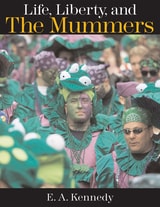
Life, Liberty, and the Mummers
Ed Kennedy
Temple University Press, 2007
Noted photographer E. A. Kennedy spent four years documenting the Mummers and their parade. He has personally selected the striking images included here -- more than 150 in all -- and he has written an engaging history of the parade itself. As Kennedy explains, and as his photos make clear, "mummery" is a way of life for Mummers, who have deep attachments to their clubs, associations, and brigades.
For all its glitz, the Mummers Parade remains a folk parade. This is the captivating story of the folks behind the parade.
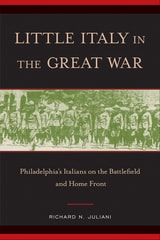
Little Italy in the Great War
Philadelphia's Italians on the Battlefield and Home FrontRichard N. Juliani
Temple University Press, 2020
The Great War challenged all who were touched by it. Italian immigrants, torn between their country of origin and country of relocation, confronted political allegiances that forced them to consider the meaning and relevance of Americanization. In his engrossing study, Little Italy in the Great War, Richard Juliani focuses on Philadelphia’s Italian community to understand how this vibrant immigrant population reacted to the war as they were adjusting to life in an American city that was ambivalent toward them.
Juliani explores the impact of the Great War on many immigrant soldiers who were called to duty as reservists and returned to Italy, while other draftees served in the U.S. Army on the Western Front. He also studies the impact of journalists and newspapers reporting the war in English and Italian, and reactions from civilians who defended the nation in industrial and civic roles on the home front.
Within the broader context of the American experience, Little Italy in the Great War examines how the war affected the identity and cohesion of Italians as a population still passing through the assimilation process.
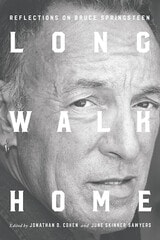
Long Walk Home
Reflections on Bruce SpringsteenJonathan D. Cohen
Rutgers University Press, 2019
Contributors to Long Walk Home include novelists like Richard Russo, rock critics like Greil Marcus and Gillian Gaar, and other noted Springsteen scholars and fans such as A. O. Scott, Peter Ames Carlin, and Paul Muldoon. They reveal how Springsteen’s albums served as the soundtrack to their lives while also exploring the meaning of his music and the lessons it offers its listeners. The stories in this collection range from the tale of how “Growin’ Up” helped a lonely Indian girl adjust to life in the American South to the saga of a group of young Australians who turned to Born to Run to cope with their country’s 1975 constitutional crisis. These essays examine the big questions at the heart of Springsteen’s music, demonstrating the ways his songs have resonated for millions of listeners for nearly five decades.
Commemorating the Boss’s seventieth birthday, Long Walk Home explores Springsteen’s legacy and provides a stirring set of testimonials that illustrate why his music matters.
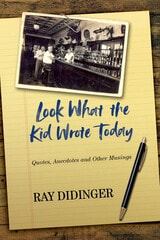
Look What the Kid Wrote Today
Quotes, Anecdotes and Other MusingsRay Didinger
Temple University Press, 2026
When Ray Didinger was a young sports columnist, his proud grandfather would tape his articles on the mirror of his Southwest Philadelphia bar and tell his customers, “Look what the kid wrote today.” That phrase is now the title of Didinger’s latest book, a fond look back on his award-winning career.
In Look What the Kid Wrote Today, Didinger reflects on walking the historic Merion golf course with Jack Nicklaus, shooting pool with Mean Joe Greene, touring Foxcatcher Farms with John du Pont and hanging out with Mark Wahlberg on the set of Invincible. He also writes about helping to heal the rift between the Philadelphia Eagles and arguably their greatest player, Chuck Bednarik. It is a story that went untold until now.
Didinger takes the reader through the many stages of his fifty-plus years in sports media, from his time as an Emmy Award-winning producer at NFL Films, which involved writing scripts for the likes of Tom Selleck, Gary Busey, and Oscar winner James Coburn. Now a playwright, Didinger also devotes a chapter to the 2025 premiere of his critically acclaimed production Spinner.
Candid and insightful, Look What the Kid Wrote Today is Didinger at his best.
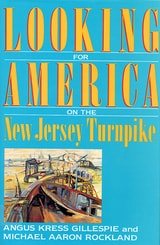
Looking for America on the New Jersey Turnpike
Gillespie, Angus K
Rutgers University Press, 1992
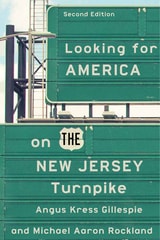
Looking for America on the New Jersey Turnpike, Second Edition
Angus Kress Gillespie
Rutgers University Press, 2024
When Angus Gillespie and Michael Rockland wrote Looking for America on the New Jersey Turnpike in 1989, they simply wanted to express their fascination with a road that many commuters regarded with annoyance or indifference. Little did they expect that it would be hailed as a classic, listed by the state library alongside works by Whitman and Fitzgerald as one of the ten best books ever written about New Jersey or by a New Jerseyan.
Now Looking for America on the New Jersey Turnpike is back in a special updated and expanded edition, examining how this great American motorway has changed over the past thirty-five years. You’ll learn how the turnpike has become an icon inspiring singers and poets. And you’ll meet the many people it has affected, including the homeowners displaced by its construction, the highway patrol and toll-takers who work on it, and the drivers who speed down its lanes every day.

Lord, Please Don't Take Me in August
African-Americans in Newport and Saratoga Springs, 1870-1930Myra B. Young Armstead
University of Illinois Press, 1999
The lives built by Black Americans in a pair of summer resort towns
In the late nineteenth and early twentieth centuries, northern resort towns were in their heyday as celebrated retreats for America's wealthy. Lord, Please Don't Take Me in August documents the experiences of African Americans in Saratoga Springs, New York, and Newport, Rhode Island--towns that provided a recurring season of expanded employment opportunities, enhanced social life, cosmopolitan experience, and, in a good year, enough money to last through the winter.
Affirming that the decision to live in their tiny resort communities was conscious and deliberate, Myra B. Young Armstead shows how Afro-Saratogians and Afro-Newporters organized their rhythms, their routines, and their communities to create meaningful identities for themselves. Living on streets close to their churches, developing social organizations that promoted their standards of gentility and respectability, and lobbying for wider opportunities, these African Americans actively shaped their lives within the structures and limitations imposed on them.
Armstead situates the resort town between the poles of the rural South and the large industrial cities of the North. She shows how these small northern towns, with their seasonal economic rhythms and domestic wage work, permitted an important continuity between rural and urban lifestyles and a path from rural South to urban North besides the jarring, disruptive journey that often ended in the ghetto.
"Lord, Please Don't Take Me in August" tells a story that is at once American and uniquely African American: a story of economic imperatives and enlarged social aspirations culminating in a season--June, July, and August--that brought Blacks as close as they could get to the American Dream.
Love
A Philadelphia AffairBeth Kephart
Temple University Press, 2017
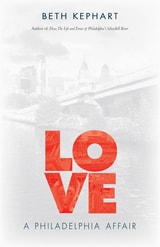
Philadelphia has been at the heart of many books by award-winning author Beth Kephart, but none more so than the affectionate collection Love. This volume of personal essays and photographs celebrates the intersection of memory and place. Kephart writes lovingly, reflectively about what Philadelphia means to her. She muses about meandering on SEPTA trains, spending hours among the armor in the Philadelphia Museum of Art, and taking shelter at Independence Mall during a downpour.
In Love, Kephart shares her loveof Reading Terminal Market at Thanksgiving: “This abundant, bristling market is, in November, the most unlonesome place around.” She waxes poetic about the shoulder-to-shoulder crowds, the mustard in a Salumeria sandwich, and the “coins slipped between the lips of Philbert the pig.”
Kephart also extends her journeys to the suburbs, Glenside and Ardmore—and beyond, to Lancaster County, Pennsylvania; Stone Harbor, New Jersey; and Wilmington, Delaware. What emerges is a valentine to the City of Brotherly Love and its environs. In Love, Philadelphia is “more than its icons, bigger than its tagline.”