Results by title
69 books match the query 'Middle class' and 3 start with l
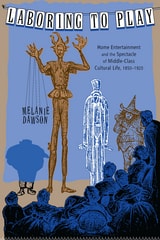
Laboring to Play
Home Entertainment and the Spectacle of Middle-Class Cultural Life, 1850-1920Melanie Dawson
University of Alabama Press, 2005
Where Leisure Became Labor and the Parlor Became a Stage for American Middle-Class Identity.
The changing styles of middle-class home entertainments, Melanie Dawson argues, point to evolving ideas of class identity in U.S. culture. Drawing from 19th- and early-20th-century fiction, guidebooks on leisure, newspaper columns, and a polemical examination of class structures, Laboring to Play interrogates the ways that leisure performances (such as parlor games, charades, home dramas, and tableaux vivants) encouraged participants to test out the boundaries that were beginning to define middle-class lifestyles.
From 19th-century parlor games involving grotesque physical contortions to early-20th-century recitations of an idealized past, leisure employments mediated between domestic and public spheres, individuals and class-based affiliations, and ideals of egalitarian social life and visible hierarchies based on privilege. Negotiating these paradigms, home entertainments provided their participants with unique ways of performing displays of individual ambitions within a world of polite social interaction.
Laboring to Play deals with subjects as wide ranging as social performances, social history (etiquette and gentility), literary history, representations of childhood, and the history of the book.
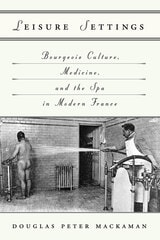
Leisure Settings
Bourgeois Culture, Medicine, and the Spa in Modern FranceDouglas P. Mackaman
University of Chicago Press, 1998
Taking us into the vibrant social world of France's great spas, Mackaman explores the links between class identity and vacationing. Mackaman shows how, after 1800, physicians and entrepreneurs zealously tried to break their milieu's strong association with aristocratic excess and indecency by promoting spas as a rational, ordered equivalent to the busy lives of the bourgeoisie. Rather than seeing leisure time as slothful, Mackaman argues, the bourgeoisie willingly became patients at spas and viewed this therapeutic vacation as a sensible, even productive, way of spending time. Mackaman analyzes this transformation, and ultimately shows how the premier vacation of an era made and was made by the bourgeoisie.

List
A NovelMatthew Roberson
University of Alabama Press, 2014
A suburban family of four—a man, woman, boy, and girl—struggle through claustrophobic days crowded with home improvement projects, conflicts at work and school, a job loss, illnesses, separation, and the wearying confrontation with aging. The accoutrements of modern life—electronic devices and vehicles—have ceased to be tools that support them and have become instead the central fulcrums around which their lives wheel as they chase “cleanliness” and other high virtues of middle American life.
In Matthew Roberson’s hands, the family’s list-making transcends the simple goal of planning. Their lists reveal the aspirations and anxieties that lie beneath the superficial clatter of everyday activities. Fearing the aimless chaos of unplanned days, the family compulsively compiles lists as maps to steer them away from uncertainty and failure, and yet at what point does a list stop being a map and become the final destination? The family creates an illusory cloud of meaningful activity but cannot stave off the mortal entropies that mark the suburban middle class.