Results by title
26 books match the query 'EDEN'
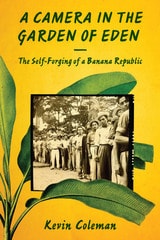
A Camera in the Garden of Eden
The Self-Forging of a Banana RepublicBy Kevin Coleman
University of Texas Press, 2016
In the early twentieth century, the Boston-based United Fruit Company controlled the production, distribution, and marketing of bananas, the most widely consumed fresh fruit in North America. So great was the company’s power that it challenged the sovereignty of the Latin American and Caribbean countries in which it operated, giving rise to the notion of company-dominated “banana republics.”
In A Camera in the Garden of Eden, Kevin Coleman argues that the “banana republic” was an imperial constellation of images and practices that was checked and contested by ordinary Central Americans. Drawing on a trove of images from four enormous visual archives and a wealth of internal company memos, literary works, immigration records, and declassified US government telegrams, Coleman explores how banana plantation workers, women, and peasants used photography to forge new ways of being while also visually asserting their rights as citizens. He tells a dramatic story of the founding of the Honduran town of El Progreso, where the United Fruit Company had one of its main divisional offices, the rise of the company now known as Chiquita, and a sixty-nine day strike in which banana workers declared their independence from neocolonial domination. In telling this story, Coleman develops a new set of conceptual tools and methods for using images to open up fresh understandings of the past, offering a model that is applicable far beyond this pathfinding study.
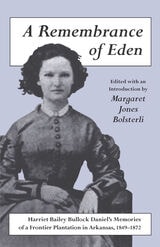
A Remembrance of Eden
Harriet Bailey Bullock Daniel's Memories of a Frontier Plantation in Arkansas, 1849–1872Margaret Jones Bolsterli
University of Arkansas Press, 1993
Amid the Fall, Dreaming of Eden
Du Bois, King, Malcolm X, and Emancipatory CompositionBradford T. Stull
Southern Illinois University Press, 1999
Whom, or what, does composition—defined here as an intentional process of study, either oral or written—serve? Bradford T. Stull contends that composition would do well to articulate, in theory and practice, what could be called "emancipatory composition." He argues that emancipatory composition is radically theopolitical: it roots itself in the foundational theological and political language of the American experience while it subverts this language in order to emancipate the oppressed and, thereby, the oppressors.
To articulate this vision, Stull looks to those who compose from an oppressed place, finding in the works of W. E. B. Du Bois, Martin Luther King Jr., and Malcolm X radical theopolitical practices that can serve as a model for emancipatory composition. While Stull acknowledges that there are many sites of oppression, he focuses on what Du Bois has called the problem of the twentieth century: the color line, positing that the unique and foundational nature of the color line provides a fecund place in which, from which, a theory and practice of emancipatory composition might be elucidated.
By focusing on four key theopolitical tropes—The Fall, The Orient, Africa, and Eden—that inform the work of Du Bois, King, and Malcolm X, Stull discovers the ways in which these civil rights leaders root themselves in the vocabulary of the American experience in order to subvert it so that they might promote emancipation for African Americans, and thus all Americans.
In drawing on the work of Paulo Freire, Kenneth Burke, Edward Said, Christopher Miller, Ernst Bloch, and others, Stull also locates this study within the larger cultural context. By reading Du Bois, King, and Malcolm X together in a way that they have never before been read, Stull presents a new vision of composition practice to the African American studies community and a reading of African American emancipatory composition to the rhetoric and composition community, thus extending the question of emancipatory composition into new territory.
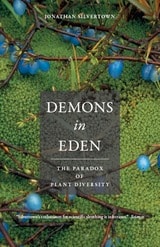
Demons in Eden
The Paradox of Plant DiversityJonathan Silvertown
University of Chicago Press, 2005
Demons in Eden considers these questions using the latest scientific discoveries from the plant world. Readers join Silvertown as he explores the astonishing diversity of plant life in regions as spectacular as the verdant climes of Japan, the lush grounds of the Royal Botanical Gardens at Kew, the shallow wetlands and teeming freshwaters of Florida, the tropical rainforests of southeast Mexico, and the Canary Islands archipelago, whose evolutionary novelties—and exotic plant life—have earned it the sobriquet "the Galapagos of botany." Along the way, Silvertown looks closely at the evolution of plant diversity in these locales and explains why such variety persists in light of ecological patterns and evolutionary processes. In novel and useful ways, he also investigates the current state of plant diversity on the planet to show the ever-challenging threats posed by invasive species and humans.
Bringing the secret life of plants into more colorful and vivid focus than ever before, Demons in Eden is an empathic and impassioned exploration of modern plant ecology that unlocks evolutionary mysteries of the natural world.
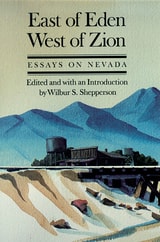
East Of Eden, West Of Zion
Essays On NevadaWilbur S. Shepperson
University of Nevada Press, 1989
A collection of essays in which a dozen historians and novelists present their impressions and concerns about "end of the century Nevada." Human expectations and illusions are seen as a backdrop for today's Nevada as a new human frontier. As an overview of Nevada society, this study deals with culture as well as economics, with tradition as well as rapid population growth. The essayists inquire whether the friction between acquisition and preservation, quick wealth and refined sensitivity, will build a more humane and enlightened society.
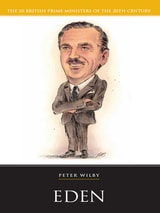
Eden
Peter Wilby
Haus Publishing, 2006
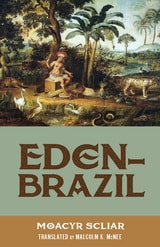
Eden-Brazil
Moacyr Scliar, Translated by Malcolm K. McNee
Tagus Press, 2019
Adamastor is a freshly divorced, frustrated bureaucrat trying to reinvent his life. Richie is a young, struggling actor. Together with Ernesto, a rakish, expat Argentine showman, they create Eden-Brazil, an ecotourism destination in a stunning swath of coastal rainforest. Inspired to provide visitors with the ultimate return to nature, they decide to stage the biblical story of the Garden of Eden, complete with Adam, Eve, snake, apple, the works. But recreating an earthly paradise as something more than another roadside attraction is no easy feat. In this charming, tragicomic tale, Moacyr Scliar employs his signature humor and talent for crisp storytelling, weaving together a playfully serious parable of environmentalist ideals clashing with the realities of local politics, global consumer culture, and competing visions of authentic nature.
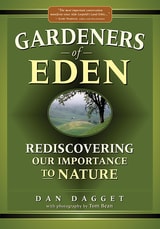
Gardeners of Eden
Rediscovering Our Importance to NatureDan Dagget
University of Nevada Press, 2005
Dagget recommends a new kind of environmentalism based on management, science, evolution, and holism, and served by humans who enrich the environment even as they benefit from it. His new environmentalism offers hopeful solutions to the current ecological crisis and a new purpose for our human energies and ideals. This book is essential reading for anyone concerned with the earth and anyone seeking a viable way for our burgeoning human population to continue to live upon it.
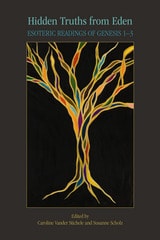
Hidden Truths from Eden
Esoteric Readings of Genesis 1-3Caroline Vander Stichele
SBL Press, 2014
Examine a rich history of spiritual interpretations from antiquity to the present
Since the sixteenth century CE, the field of biblical studies has focused on the literal meaning of texts. This collection seeks to rectify this oversight by integrating the study of esoteric readings into academic discourse. Case studies focusing on the first three chapters of Genesis cover different periods and methods from early Christian discourse through zoharic, kabbalistic and alchemical literature to modern and post-postmodern approaches.
Features:
- Discussions, comparisons, and analyses of esoteric appropriations of Genesis 1–3
- Essays on creation myths, gender, fate and free will, the concepts of knowledge, wisdom, and gnosis
- Repsonses to papers that provide a range of view points

History of Paradise
THE GARDEN OF EDEN IN MYTH AND TRADITIONJean Delumeau
University of Illinois Press, 1995
With erudition and wit, Jean Delumeau explores the medieval conviction that paradise existed in a precise although unreachable earthly location. Delving into the writings of dozens of medieval and Renaissance thinkers, from Augustine to Dante, Delumeau presents a luminous study of the meaning of Original Sin and the human yearning for paradise.
The finest minds of the Middle Ages wrote about where paradise was to be found, what it was like, and who dwelt in it. Explorers sailed into the unknown in search of paradisal gardens of wealth and delight that were thought to be near the original Garden. Cartographers drew Eden into their maps, often indicating the wilderness into which Adam and Eve were cast, along with the magical kingdom of Prester John, Jerusalem, Babel, the Happy Isles, Ophir, and other places described in biblical narrative or borrowed from other cultures. Later, Renaissance thinkers and writers meticulously reconstructed the details of the original Eden, even providing schedules of the Creation and physical descriptions of Adam and Eve.
Even when the Enlightenment, with its discovery of fossils and pre-Darwinian theories of evolution, gradually banished the dream of paradise on earth, a nostalgia for Eden shaped elements of culture from literature to gardening. In our own time, Eden's hold on the Western imagination continues to fuel questions such as whether land should be conserved or exploited and whether a return to innocence is possible.
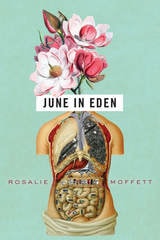
June in Eden
Rosalie Moffett
The Ohio State University Press, 2017
A sharp, darkly funny, and tender debut that exposes the fractures in our language, our technologies, and our attempts to call the world by its right name.
In June in Eden, Rosalie Ruth Moffett leads us through terrains that shift between the mythic and the modern. Sometimes the garden is wild and blooming; other times, the coveted tree is only hiding a cell tower, lungs become ATMs, and prayers travel by text message. This is a book for an age when “new kinds of war…keep / changing the maps,” and when even small slips—preying or praying—reveal the instability of the words we rely on.
At the heart of the collection lies an obsession with language: its power, its failures, and what remains when it falters. “Ruth,” our speaker notes, is “a kind of compassion / nobody wants anymore—the surviving half / of the pair of words is ruthless.” Throughout these poems, dark humor coexists with deep tenderness, reminding us of the human urge to “love the world / we made and all its shadows.
Moffett offers a speaker bewildered and awestruck by the world’s contradictions—its technological miracles, its medical uncertainties, its imaginative leaps. These poems, equal parts grief and wonder, give us a landscape that from some angles resembles paradise, and from others, something far stranger.
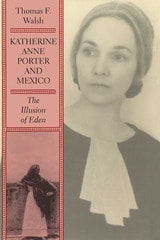
Katherine Anne Porter and Mexico
The Illusion of EdenBy Thomas F. Walsh
University of Texas Press, 1992
In 1920, an unknown journalist named Katherine Anne Porter first sojourned in Mexico. When she left her "familiar country" for the last time in 1931, she was the celebrated author of Flowering Judas and Other Stories and had accumulated a wealth of experiences and impressions that would inspire numerous short stories, essays, and reviews, as well as the opening section of her only novel, Ship of Fools.
In this perceptive study of Porter's Mexican experiences, Thomas Walsh traces the important connections between those events and her literary works. Separating fact from the fictions that Porter constantly created about her life, he follows the active role that she played in Mexican political and intellectual life—even to the discovery of a plot to overthrow the Mexican government, which eventually figured in Flowering Judas.
Most important, Walsh discerns how the great swings between depression and elation that characterized Porter's emotional life influenced her alternating visions of Mexico. In such works as "Xochimilco," Porter saw Mexico as an earthly Eden where hopes for a better society could be realized, but in other stories, including "The Fiesta of Guadalupe," she depicts Mexico as a place of hopeless oppression for the native peoples.
Mexico, Porter once said, gave her back her Texas past. Given the unhappiness of that past, her feelings toward Mexico would always be ambivalent, but her Mexican experiences influenced all her subsequent works to some degree, even those pieces not specifically Mexican in setting. Walsh's study, then, is an essential key for anyone seeking greater understanding of the life or works of Katherine Anne Porter.
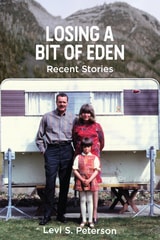
Losing a Bit of Eden
Recent StoriesLevi S. Peterson
Signature Books, 2021
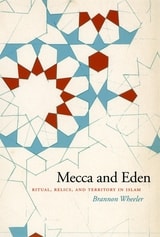
Mecca and Eden
Ritual, Relics, and Territory in IslamBrannon Wheeler
University of Chicago Press, 2006
Integrating Islamic examples into the comparative study of religion, Brannon Wheeler shows how the treatment of rituals, relics, and territory is related to the more general mythological depiction of the origins of Islamic civilization. Along the way, Wheeler considers the contrast between Mecca and Eden in Muslim rituals, the dispersal and collection of relics of the prophet Muhammad, their relationship to the sanctuary at Mecca, and long tombs associated with the gigantic size of certain prophets mentioned in the Quran.
Mecca and Eden succeeds, as few books have done, in making Islamic sources available to the broader study of religion.
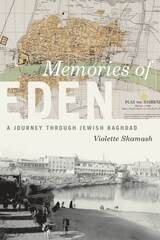
Memories of Eden
A Journey Through Jewish BaghdadViolette Shamash
Northwestern University Press, 2010
According to legend, the Garden of Eden was located in Iraq, and for millennia, Jews resided peacefully in metropolitan Baghdad. Memories of Eden: A Journey Through Jewish Baghdad reconstructs the last years of the oldest Jewish Diaspora community in the world through the recollections of Violette Shamash, a Jewish woman who was born in Baghdad in 1912, sent to her daughter Mira Rocca and son-in-law, the British journalist Tony Rocca. The result is a deeply textured memoir—an intimate portrait of an individual life, yet revealing of the complex dynamics of the Middle East in the twentieth century.
Toward the end of her long life, Violette Shamash began writing letters, notes, and essays and sending them to the Roccas. The resulting book begins near the end of Ottoman rule and runs through the British Mandate, the emergence of an independent Iraq, and the start of dictatorial government. Shamash clearly loved the world in which she grew up but is altogether honest in her depiction of the transformation of attitudes toward Baghdad’s Jewish population. Shamash’s world is finally shattered by the Farhud, the name given to the massacre of hundreds of Iraqi Jews over three days in 1941. An event that has received very slight historical coverage, the Farhud is further described and placed in context in a concluding essay by Tony Rocca.
Michoacán and Eden
Vasco de Quiroga and the Evangelization of Western MexicoBy Bernardino Verástique
University of Texas Press, 2000
Don Vasco de Quiroga (1470-1565) was the first bishop of Michoacán in Western Mexico. Driven by the desire to convert the native Purhépecha-Chichimec peoples to a purified form of Christianity, free of the corruptions of European Catholicism, he sought to establish New World Edens in Michoacán by congregating the people into pueblo-hospital communities, where mendicant friars could more easily teach them the fundamental beliefs of Christianity and the values of Spanish culture.
In this broadly synthetic study, Bernardino Verástique explores Vasco de Quiroga's evangelizing project in its full cultural and historical context. He begins by recreating the complex and not wholly incompatible worldviews of the Purhépecha and the Spaniards at the time of their first encounter in 1521. With Quiroga as a focal point, Verástique then traces the uneasy process of assimilation and resistance that occurred on both sides as the Spaniards established political and religious dominance in Michoacán. He describes the syncretisms, or fusions, between Christianity and indigenous beliefs and practices that arose among the Purhépecha and relates these to similar developments in other regions of Mexico.
Written especially for students and general readers, this book demonstrates how cultural and geographical environments influence religious experience, while it adds to our understanding of the process of indigenous appropriation of Christian theological concepts in the New World.

Milton’s Earthly Paradise
A Historical Study of EdenJoseph E. Duncan
University of Minnesota Press, 1972
Milton's Earthly Paradise was first published in 1972. Minnesota Archive Editions uses digital technology to make long-unavailable books once again accessible, and are published unaltered from the original University of Minnesota Press editions.
This study provides a history of the changing interpretations of the first earthly paradise—the garden of Eden—in Western thought and relates Paradise Lost and other literary works to this paradise tradition. The author traces the beginnings of the tradition as they appear in the Bible and in classical literature and shows how these two strains were joined in early Christian and medieval literature. His emphasis, however, is on the relation of Paradise Lost to Renaissance commentary and to other literary works of the period dealing with the paradise story.
Professor Duncan views Paradise Lost as one of many Renaissance works that reveal an untiring effort to understand and explain the first chapters of Genesis. In the rational and humanistic commentary of the Renaissance, he explains, the aim was to provide an interpretation of the literal sense of the Scriptural account that was credible, detailed, and historically valid. He finds that the cumulative influence of the commentary is reflected in Milton's attention to the location of paradise, the emphasis on the natural and the rational in his description of paradise, and in the importance of the typological relationship between the terrestrial and celestial paradises. This illuminating discussion makes it clear that Milton's re-creation of paradise is not only superb poetry but also a penetrating account of the origins of man, involving highly complex and controversial issues.
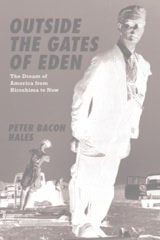
Outside the Gates of Eden
The Dream of America from Hiroshima to NowPeter Bacon Hales
University of Chicago Press, 2014
Born under the shadow of the bomb, with little security but the cold comfort of duck-and-cover, the postwar generations lived through—and led—some of the most momentous changes in all of American history. Hales explores those decades through perceptive accounts of a succession of resonant moments, spaces, and artifacts of everyday life—drawing unexpected connections and tracing the intertwined undercurrents of promise and peril. From sharp analyses of newsreels of the first atomic bomb tests and the invention of a new ideal American life in Levittown; from the music emerging from the Brill Building and the Beach Boys, and a brilliant account of Bob Dylan’s transformations; from the painful failures of communes and the breathtaking utopian potential of the early days of the digital age, Hales reveals a nation, and a dream, in transition, as a new generation began to make its mark on the world it was inheriting.
Full of richly drawn set-pieces and countless stories of unforgettable moments, Outside the Gates of Eden is the most comprehensive account yet of the baby boomers, their parents, and their children, as seen through the places they built, the music and movies and shows they loved, and the battles they fought to define their nation, their culture, and their place in what remains a fragile and dangerous world.
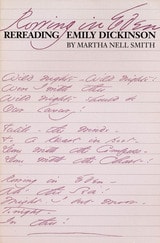
Rowing in Eden
Rereading Emily DickinsonBy Martha Nell Smith
University of Texas Press, 1992
Emily Dickinson wrote a "letter to the world" and left it lying in her drawer more than a century ago. This widely admired epistle was her poems, which were never conventionally published in book form during her lifetime. Since the posthumous discovery of her work, general readers and literary scholars alike have puzzled over this paradox of wanting to communicate widely and yet apparently refusing to publish. In this pathbreaking study, Martha Nell Smith unravels the paradox by boldly recasting two of the oldest and still most frequently asked questions about Emily Dickinson: Why didn't she publish more poems while she was alive? and Who was her most important contemporary audience?
Regarding the question of publication, Smith urges a reconception of the act of publication itself. She argues that Dickinson did publish her work in letters and in forty manuscript books that circulated among a cultured network of correspondents, most important of whom was her sister-in-law, Susan Huntington Gilbert Dickinson. Rather than considering this material unpublished because unprinted, Smith views its alternative publication as a conscious strategy on the poet's part, a daring poetic experiment that also included Dickinson's unusual punctuation, line breaks, stanza divisions, calligraphic orthography, and bookmaking—all the characteristics that later editors tried to standardize or eliminate in preparing the poems for printing.
Dickinson's relationship with her most important reader, Sue Dickinson, has also been lost or distorted by multiple levels of censorship, Smith finds. Emphasizing the poet-sustaining aspects of the passionate bonds between the two women, Smith shows that their relationship was both textual and sexual. Based on study of the actual holograph poems, Smith reveals the extent of Sue Dickinson's collaboration in the production of poems, most notably "Safe in Their Alabaster Chambers." This finding will surely challenge the popular conception of the isolated, withdrawn Emily Dickinson.
Well-versed in poststructuralist, feminist, and new textual criticism, Rowing in Eden uncovers the process by which the conventional portrait of Emily Dickinson was drawn and offers readers a chance to go back to original letters and poems and look at the poet and her work through new eyes. It will be of great interest to a wide audience in literary and feminist studies.
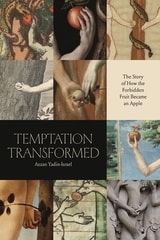
Temptation Transformed
The Story of How the Forbidden Fruit Became an AppleAzzan Yadin-Israel
University of Chicago Press, 2022
How did the apple, unmentioned by the Bible, become the dominant symbol of temptation, sin, and the Fall? Temptation Transformed pursues this mystery across art and religious history, uncovering where, when, and why the forbidden fruit became an apple.
Azzan Yadin-Israel reveals that Eden’s fruit, once thought to be a fig or a grape, first appears as an apple in twelfth-century French art. He then traces this image back to its source in medieval storytelling. Though scholars often blame theologians for the apple, accounts of the Fall written in commonly spoken languages—French, German, and English—influenced a broader audience than cloistered Latin commentators. Azzan Yadin-Israel shows that, over time, the words for “fruit” in these languages narrowed until an apple in the Garden became self-evident. A wide-ranging study of early Christian thought, Renaissance art, and medieval languages, Temptation Transformed offers an eye-opening revisionist history of a central religious icon.
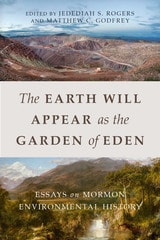
The Earth Will Appear as the Garden of Eden
Essays on Mormon Environmental HistoryJedediah S. Rogers and Matthew C. Godfrey
University of Utah Press, 2018
Since Joseph Smith’s revelations, Mormons have interacted with nature in significant ways—whether perceiving it as a place to find God, uncorrupted spaces in which to build communities to usher in the Second Coming, wildness needing domestication and control, or a world brimming with natural resources to ensure economic well-being. The essays in this volume—written by leading scholars in both environmental history and Mormon history—explore how nature has influenced Mormon beliefs and how these beliefs inform Mormons’ encounters with nature. Introducing overarching environmental ideas, contributors examine specific aspects of nature and Mormon theology to glean new insights into the Mormon experience.
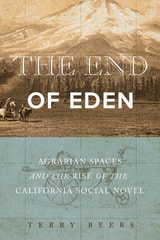
The End of Eden
Agrarian Spaces and the Rise of the California Social NovelTerry Beers
University of Nevada Press, 2018
Drawing on history and cultural theory, The End of Eden traces the rise of the California social novel, its embrace of the agrarian dream, and its ambivalence about technology and the development it enables. It relies on various cultural conceptions of space, among them, the American Public Land Survey (the source of the “grid” allotments shaping homestead claims), Mexican-era diseños, and Native American traditions that defined a fluid relationship between human beings and the land.
This animation of four California social novels of the late eighteenth and early nineteenth centuries demonstrates how conflicts over space and place signify cultural conflict. It is deeply informed by the author’s understanding of historical land issues. The works include Joaquin Miller’s Unwritten History: Life Amongst the Modocs, Helen Hunt Jackson’s Ramona, Frank Norris’ The Octopus, and Mary Austin’s The Ford.
Miller’s Unwritten History: Life Amongst the Modocs and Jackson’s Ramona examine the tragic but inevitable consequences for native people of making space—inhabited already by Native American and Hispanic populations—safe for Americans who pursue the agrarian dream without regard to its effects upon those who claim prior tenure on the land. Norris’ The Octopus and Austin’s The Ford examine the murkier story of trying to preserve or to reclaim the agrarian dream when confronted by the unchecked materialist interests of American capitalism.
A wide-reaching interdisciplinary approach to various cultural conceptions of space, The End of Eden provides a crucial understanding of the conflicts depicted in social novels that lament the ways in which land is allocated and developed, the ways in which American agrarianism—and its promise of local, sustainable land use—is undermined, and how it applies to contemporary California. In an era where California confronts, yet again, the complicated patterns of land use: fracking, water use and water rights, coastal regulation and management, and agribusiness, this groundbreaking work provides an ever-relevant context.
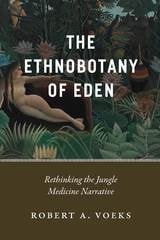
The Ethnobotany of Eden
Rethinking the Jungle Medicine NarrativeRobert A. Voeks
University of Chicago Press, 2018
By exploring the interconnected worlds of anthropology, botany, and geography, Voeks shows that well-intentioned scientists and environmentalists originally crafted the jungle narrative with the primary goal of saving the world’s tropical rainforests from destruction. It was a strategy deployed to address a pressing environmental problem, one that appeared at a propitious point in history just as the Western world was taking a more globalized view of environmental issues. And yet, although supported by science and its practitioners, the story was also underpinned by a persuasive mix of myth, sentimentality, and nostalgia for a long-lost tropical Eden. Resurrecting the fascinating history of plant prospecting in the tropics, from the colonial era to the present day, The Ethnobotany of Eden rewrites with modern science the degradation narrative we’ve built up around tropical forests, revealing the entangled origins of our fables of forest cures.
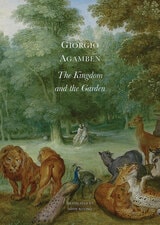
The Kingdom and the Garden
Giorgio Agamben
Seagull Books, 2020
What happened to paradise after Adam and Eve were expelled? The question may sound like a theological quibble, or even a joke, but in The Kingdom and the Garden, Giorgio Agamben uses it as a starting point for an investigation of human nature and the prospects for political transformation. In a tour-de-force reinterpretation of the Christian tradition, Agamben shows that the Garden of Eden has always served as a symbol of humanity’s true nature. Where earlier theologians viewed the expulsion as temporary, Augustine’s doctrine of original sin makes it permanent, reimagining humanity as the paradoxical creature that has been completely alienated from its own nature. From this perspective, there can be no return to paradise, only the hope for the messianic kingdom. Yet there have always been thinkers who rebelled against this idea, and Agamben highlights two major examples. The first is the early medieval philosopher John Scotus Eriugena, who argued for a radical unity of humanity with all living things. The second is Dante, whose vision of the earthly paradise points towards the possibility of genuine human happiness in this world. In place of the messianic kingdom, which has provided the model for modern revolutionary movements, Agamben contends that we should place our hopes for political change in a return to our origins, by reclaiming the earthly paradise.
Three Comedies
Behind the Scenes in Eden, Rigamaroles, and The Other WilliamG Racz
University Press of Colorado, 2004
VISIONS OF EDEN
Environmentalism, Urban Planning, and City Building in St. Petersburg, Florida, 1900–1995R. Bruce Stephenson
The Ohio State University Press, 1997