Results by title
491 books match the query 'Moral and ethical aspects' and 19 start with l

Lab Dog
What Global Science Owes American BeaglesBrad Bolman
University of Chicago Press, 2025
Intrepid, docile, and cloaked in coats of white, black, and tan, beagles were one of the most popular breeds in the United States in the twentieth century. From Snoopy to dog shows, many Americans loved and identified with beagles. But during the same period, as scientists searched for a standard research dog, beagles emerged as something else: an ideal animal for laboratory experimentation.
In Lab Dog, historian Brad Bolman explains how the laboratory dog became a subject of intense focus for twentieth-century scientists and charts the beagle’s surprising trajectory through global science. Following beagles as they moved from eugenics to radiobiology, pharmaceutical testing to Alzheimer’s studies, Lab Dog sheds new light on pivotal stories of twentieth-century science, including the Manhattan Project, tobacco controversies, contraceptive testing, and behavioral genetics research. Bolman shows how these experiments shaped our understanding of dogs as intelligent companions who deserve moral protection and socialization—and in some cases, daily medication. Compelling and accessible, Lab Dog tells the thorny story of the participation of beagles in science, including both their sacrifices and their contributions, and offers a glimpse into the future of animal experimentation.
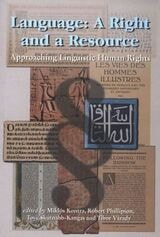
Language
A Right and a Resource: Approaches to Linguistic Human RightsTibor Várady
Central European University Press, 2000
Linguistic Human Rights (LHR) is a fast growing new area of study combining the principles of national and international law with the study of language as a central dimension of ethnicity. Implementation of these principles is aimed at ensuring that no state or society violates these basic rights.
This path breaking study broadens our knowledge of the important role of language in minority rights and in social and political struggles for LHRs. Exploring the interactions of linguistic diversity, biodiversity, the free market and human rights, the contributors present case studies to highlight such issues as Kurdish satellite TV attempting to create a virtual state on the air through trying to achieve basic LHR’s for Kurds in Turkey; the implementation of LHRs in the Baltic states; language rights activism in Canada; the spread of English as an international language; and the obstacles met in education by Roma and the Deaf in Hungary because of lack of appropriate LHRs.
Language: A Right and a Resource is a valuable multi-disciplinary text which can be used in a variety of different areas of study in the legal profession, linguistics, cultural and political studies.
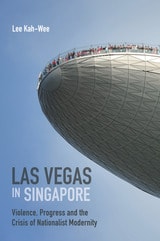
Las Vegas in Singapore
Violence, Progress and the Crisis of Nationalist ModernityLee Kah-Wee
National University of Singapore Press, 2018
The first history begins in colonial Singapore in the 1880s, when British administrators revised gambling laws in response to the political threat posed by Chinese-run gambling syndicates. Following the tracks of these punitive laws and practices, the book moves into the 1960s when the newly independent city-state created a national lottery while criminalizing both organized and petty gambling in the name of nation-building. The second history shifts the focus to corporate Las Vegas in the 1950s when digital technology and corporate management practices found each other on the casino floor. Tracing the emergence of the specialist casino designer, the book reveals how casino development evolved into a highly rationalized spatial template designed to maximize profits. Today an iconic landmark of Singapore, Marina Bay Sands is also an artifact of these two histories, an attempt by Singapore to normalize what was once criminalized in its nationalist history.
Lee Kah-Wee argues that the historical project of the control of vice is also about the control of space and capital. The result is an uneven landscape where the legal and moral status of gambling is contingent on where it is located. As the current wave of casino expansion spreads across Asia, he warns that these developments should not be seen as liberalization but instead as a continuation of the project of concentrating power by modern states and corporations.
Law & Capitalism
What Corporate Crises Reveal about Legal Systems and Economic Development around the WorldCurtis J. Milhaupt and Katharina Pistor
University of Chicago Press, 2008
Using comparative case studies that address the United States, China, Germany, Japan, Korea, and Russia, Curtis J. Milhaupt and Katharina Pistor argue that a disparate blend of legal and nonlegal mechanisms have supported economic growth around the world. Their groundbreaking findings show that law and markets evolve together in a “rolling relationship,” and legal systems, including those of the most successful economies, therefore differ significantly in their organizational characteristics. Innovative and insightful, Law and Capitalism will change the way lawyers, economists, policy makers, and business leaders think about legal regulation in an increasingly global market for capital and corporate governance.

Law and Moral Action in World Politics
Cecelia Lynch
University of Minnesota Press, 2000
Law in the Laboratory
A Guide to the Ethics of Federally Funded Science ResearchRobert P. Charrow
University of Chicago Press, 2010
The National Institutes of Health and the National Science Foundation together fund more than $40 billon of research annually in the United States and around the globe. These large public expenditures come with strings, including a complex set of laws and guidelines that regulate how scientists may use NIH and NSF funds, how federally funded research may be conducted, and who may have access to or own the product of the research.
Until now, researchers have had little instruction on the nature of these laws and how they work. But now, with Robert P. Charrow’s Law in the Laboratory, they have a readable and entertaining introduction to the major ethical and legal considerations pertaining to research under the aegis of federal science funding. For any academic whose position is grant funded, or for any faculty involved in securing grants, this book will be an essential reference manual. And for those who want to learn how federal legislation and regulations affect laboratory research, Charrow’s primer will shed light on the often obscured intersection of government and science.
Lawyers in Practice
Ethical Decision Making in ContextEdited by Leslie C. Levin and Lynn Mather
University of Chicago Press, 2012
How do lawyers resolve ethical dilemmas in the everyday context of their practice? What are the issues that commonly arise, and how do lawyers determine the best ways to resolve them? Until recently, efforts to answer these questions have focused primarily on rules and legal doctrine rather than the real-life situations lawyers face in legal practice.
The first book to present empirical research on ethical decision making in a variety of practice contexts, including corporate litigation, securities, immigration, and divorce law, Lawyers in Practice fills a substantial gap in the existing literature. Following an introduction emphasizing the increasing importance of understanding context in the legal profession, contributions focus on ethical dilemmas ranging from relatively narrow ethical issues to broader problems of professionalism, including the prosecutor’s obligation to disclose evidence, the management of conflicts of interest, and loyalty to clients and the court. Each chapter details the resolution of a dilemma from the practitioner’s point of view that is, in turn, set within a particular community of practice. Timely and practical, this book should be required reading for law students as well as students and scholars of law and society.
Learned Patriots
Debating Science, State, and Society in the Nineteenth-Century Ottoman EmpireM. Alper Yalçinkaya
University of Chicago Press, 2015
In Learned Patriots, M. Alper Yalçinkaya examines what it meant for nineteenth-century Ottoman elites themselves to have a debate about science. Yalçinkaya finds that for anxious nineteenth-century Ottoman politicians, intellectuals, and litterateurs, the chief question was not about the meaning, merits, or dangers of science. Rather, what mattered were the qualities of the new “men of science.” Would young, ambitious men with scientific education be loyal to the state? Were they “proper” members of the community? Science, Yalçinkaya shows, became a topic that could hardly be discussed without reference to identity and morality.
Approaching science in culture, Learned Patriots contributes to the growing literature on how science travels, representations and public perception of science, science and religion, and science and morality. Additionally, it will appeal to students of the intellectual history of the Middle East and Turkish politics.

Leave Me Alone and I'll Make You Rich
How the Bourgeois Deal Enriched the WorldDeirdre Nansen McCloskey and Art Carden
University of Chicago Press, 2020
For readers looking for a distillation of McCloskey’s magisterial work, Leave Me Alone and I’ll Make You Rich is what you’ve been waiting for. In this lively volume, McCloskey and the economist and journalist Carden bring together the trilogy’s key ideas and its most provocative arguments. The rise of the west, and now the rest, is the story of the rise of ordinary people to a dignity and liberty inspiring them to have a go. The outcome was an explosion of innovation after 1800, and a rise of real income by an astounding 3,000 percent. The Great Enrichment, well beyond the conventional Industrial Revolution, did not, McCloskey and Carden show, come from the usual suspects, capital accumulation or class struggle. It came from the idea of economic liberty in Holland and the Anglosphere, then Sweden and Japan, then Italy and Israel and China and India, an idea that bids fair in the next few generations to raise up the wretched of the earth. The original shift to liberalism arose from 1517 to 1789 from theological and political revolutions in northwest Europe, upending ancient hierarchies. McCloskey and Carden contend further that liberalism and “innovism” made us better humans as well as richer ones. Not matter but ideas. Not corruption but improvement.
Leave Me Alone and I’ll Make You Rich draws in entertaining fashion on history, economics, literature, philosophy, and popular culture, from growth theory to the Simpsons. It is the perfect introduction for a broad audience to McCloskey’s influential explanation of how we got rich. At a time when confidence in the economic system is under challenge, the book mounts an optimistic and persuasive defense of liberal innovism, and of the modern world it has wrought.
Lesser Harms
The Morality of Risk in Medical ResearchSydney A. Halpern
University of Chicago Press, 2004
Today's scientists follow federal guidelines for research on human subjects developed during the 1960s and 1970s. But long before these government regulations, medical investigators observed informal rules when conducting human research. They insisted that the dangers of natural disease should outweigh the risks of a medical intervention, and they struggled to accurately assess the relative hazards. Halpern explores this logic of risk in immunization controversies extending as far back as the eighteenth century. Then, focusing on the period between 1930 and 1960, she shows how research physicians and their sponsors debated the moral quandaries involved in moving vaccine use from the laboratory to the clinic.
This probing work vividly describes the efforts of clinical investigators to balance the benefits and dangers of untested vaccines, to respond to popular sentiment about medical hazards, and to strategically present risk laden research to sponsors and the public.
Lessons from the Past
The Moral Use of History in Fourth-Century ProseFrances Pownall
University of Michigan Press, 2003
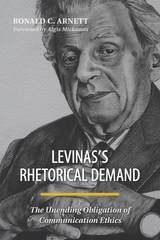
Levinas's Rhetorical Demand
The Unending Obligation of Communication EthicsRonald C. Arnett. Foreword by Algis Mickunas
Southern Illinois University Press, 2017
Distinguished Book Award, Philosophy of Communication Division, National Communication Association, 2017
Top Book Award, Communication Ethics Division, National Communication Association, 2017
Philosopher Emmanuel Levinas’s ethics as first philosophy explicates a human obligation and responsibility to and for the Other that is an unending and imperfect commitment. In Levinas’s Rhetorical Demand: The Unending Obligation of Communication Ethics, Ronald C. Arnett underscores the profundity of Levinas’s insights for communication ethics.Arnett outlines communication ethics as a primordial call of responsibility central to Levinas’s writing and mission, analyzing it through a Levinasian lens with examination of social artifacts ranging from the Heidegger-Cassirer debate to Rupert Murdoch’s News of the World story concerning illicit possession of information.
Levinas’s Rhetorical Demand offers an account of Levinas’s project and the pragmatic implications of attending to a call of responsibility to and for the Other. This book yields a rich and nuanced understanding of Levinas’s work, revealing the practical importance of his insights, and including a discussion of related theorists and thinkers.
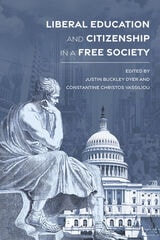
Liberal Education and Citizenship in a Free Society
Justin Buckley Dyer
University of Missouri Press, 2023
With Liberal Education and Citizenship in a Free Society, a collection of 19 original essays, editors Justin Dyer and Constantine Vassiliou present the work of a diverse group of scholars to assess the value of a liberal arts education in the face of market, technological, cultural, and political forces shaping higher learning today.
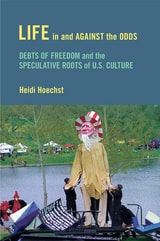
Life in and against the Odds
Debts of Freedom and the Speculative Roots of U.S. CultureHeidi Hoechst
Temple University Press, 2015
Somehow people continue to imagine a world of justice against the odds of a deck that has been stacked against them. In her urgent and perceptive book, Life in and against the Odds, Hoechst focuses on the particular circumstances and conditions of different phases of speculative expansion in the United States. She traces the roots of the nation-state to nineteenth-century land markets and slave exchanges. Hoechst also chronicles how these racial foundations extend through corporate capitalism from the 1920s and ´30s to the present era of financialized capitalism and the recent housing bubble.
Life in and against the Odds identifies where and how speculative nationalism creates roadblocks to freedom. Hoechst retells the history of the United States with a perspective on how human lives are made, destroyed, reconfigured, and claimed under the systemic violence of a nation that is rooted in the racializing futurity of speculative capitalism.

Life on Ice
A History of New Uses for Cold BloodJoanna Radin
University of Chicago Press, 2017
The Cold War projects Radin tracks were meant to form an enduring total archive of indigenous blood before it was altered by the polluting forces of modernity. Freezing allowed that blood to act as a time-traveling resource. Radin explores the unique cultural and technical circumstances that created and gave momentum to the phenomenon of life on ice and shows how these preserved blood samples served as the building blocks for biomedicine at the dawn of the genomic age. In an era of vigorous ethical, legal, and cultural debates about genetic privacy and identity, Life on Ice reveals the larger picture—how we got here and the promises and problems involved with finding new uses for cold human blood samples.
Limiting Secularism
The Ethics of Coexistence in Indian Literature and FilmPriya Kumar
University of Minnesota Press, 2008
With a backdrop of religious violence and escalating regional tensions in South Asia, Priya Kumar’s Limiting Secularism probes the urgent topic of secularism and tolerance in Indian culture and life. Kumar explores Partition as the founding trauma of the Indian nation-state and traces the consequences of its marking off of “Indian” from “Pakistani” and the positioning of Indian Muslims as strangers within the nation.
Kumar unpacks the implications of the Nehruvian doctrine of tolerance-with all of its resonances of condescension and inequality-and asks whether more ethical cohabitation can replace the “arrogant compulsive tolerance” of the state and the majority. Informed by Jacques Derrida’s recent work on hospitality and living together, Kumar argues for the emergence of an “ethics of coexistence” in Indian fiction and film. Considering narratives ranging from the cosmopolitan English novels of Rushdie and Ghosh to literature in South Asian languages as well as recent Hindi cinema, Kumar demonstrates that these fictions are important resources for reimagining tolerance and coexistence.
Distinctive and timely in its investigation of secularism and communalism, Limiting Secularism works to envision the radical possibilities of going beyond tolerance to living well together.
Priya Kumar is associate professor of English at the University of Iowa.
Listening to the Whispers
Re-thinking Ethics in HealthcareEdited by Christine Sorrell Dinkins and Jeanne Merkle Sorrell
University of Wisconsin Press, 2006
Listening to the Whispers gives voice to scholars in philosophy, medical anthropology, physical therapy, and nursing, helping readers re-think ethics across the disciplines in the context of today's healthcare system. Diverse voices, often unheard, challenge readers to enlarge the circle of their ethical concerns and look for hidden pathways toward new understandings of ethics. Essays range from a focus on the context of corporatization and managed care environments to a call for questioning the fundamental values of society as these values silently affect many others in healthcare. Each chapter is followed by a brief essay that highlights issues useful for scholarly research and classroom discussion. The conversations of interpretive research in healthcare contained in this volume encourage readers to re-think ethics in ways that will help to create an ethical healthcare system with a future of new possibilities.
Outstanding Academic Title, Choice Magazine

Living Worth
Value and Values in Global Pharmaceutical MarketsStefan Ecks
Duke University Press, 2022

Loving Sports When They Don't Love You Back
Dilemmas of the Modern FanBy Jessica Luther and Kavitha A. Davidson
University of Texas Press, 2020
Triumphant wins, gut-wrenching losses, last-second shots, underdogs, competition, and loyalty—it’s fun to be a fan. But when a football player takes a hit to the head after yet another study has warned of the dangers of CTE, or when a team whose mascot was born in an era of racism and bigotry takes the field, or when a relief pitcher accused of domestic violence saves the game, how is one to cheer? Welcome to the club for sports fans who care too much.
In Loving Sports When They Don’t Love You Back, acclaimed sports writers Jessica Luther and Kavitha A. Davidson tackle the most pressing issues in sports, why they matter, and how we can do better. For the authors, “sticking to sports” is not an option—not when our taxes are paying for the stadiums, and college athletes aren’t getting paid at all. But simply quitting a favorite team won’t change corrupt and deplorable practices, and the root causes of many of these problems are endemic in our wider society. An essential read for modern fans, Loving Sports When They Don’t Love You Back challenges the status quo and explores how we might begin to reconcile our conscience with our fandom.