Results by title
968 books match the query 'Movements' and 25 start with l
Laboratory Epistemologies
A Hands-On PerspectiveJenny Boulboullé
Duke University Press, 2024
Labyrinths
Explorations in the Critical History of IdeasRichard Wolin
University of Massachusetts Press, 1995
This book offers a series of probing reflections on issues at the heart of recent debates in philosophy, literary theory, and intellectual history. In ten powerfully articulated essays, Richard Wolin calls into question the implied radicalism of the so-called postmodern turn, exposes the unstated agenda of neoconservative cultural theory, and provides a major reinterpretation of Walter Benjamin’s place in contemporary cultural studies.
At the center of the book lie the peculiar and troubling affinities between two groups of cultural critics usually seen as antithetical: the radical conservative thinkers of Germany’s Weimar Republic and the French poststructuralists who came to the prominence in the aftermath of the May 1968 uprising.
Wolin concludes the volume with a cogent reappraisal of “antihumanism” as a leitmotif of postwar French intellectual culture, along with a reassessment of the “de Man affair” and its implications for the poststructuralist interpretation of fascism.
Land and the Given Economy
The Hermeneutics and Phenomenology of DwellingTodd S. Mei
Northwestern University Press, 2017
Alarming environmental degradation makes ever more urgent the reconciliation of political economy and sustainability. Land and the Given Economy examines how the landed basis of human existence converges with economics, and it offers a persuasive new conception of land that transcends the flawed and inadequate accounts in classical and neoclassical economics.
Todd S. Mei grounds this work in a rigorous review of problematic economic conceptions of land in the work of John Locke, Adam Smith, David Ricardo, John Stuart Mill, Karl Marx, Henry George, Alfred Marshall, and Thorstein Veblen.
Mei then draws on the thought of Martin Heidegger to posit a philosophical clarification of the meaning of land—its ontological nature. He argues that central to rethinking land is recognizing its unique manner of being, described as its "givenness." Concluding with a discussion of ground rent, Mei reflects on specific strategies for incorporating the philosophical account of land into contemporary economic policies.
Revivifying economic frameworks that fail to resolve the impasse between economic development and sustainability, Land and the Given Economy offers much of interest to scholars and readers of philosophy, environmentalism, and the full spectrum of political economy.
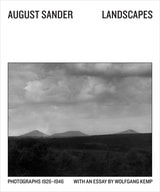
Landscapes
Photographs 1926-1946August Sander
University of Chicago Press, 2016
These photographs showcase a variety of scenes, from a sunrise over Cologne to the slopes of the Rhine valley. The Rhine River flows through many of these pictures, its dynamic curves and lively current leading the eye through an intriguing mix of natural and urban landscapes. A new essay by art historian Wolfgang Kemp provides context for Sander’s work while introducing his contemporaries, including the writer Hans Ludwig Mathar and the painter Franz M. Jansen. Also explored are the ties between Sander’s landscapes and his portrait photography, which is celebrated worldwide. Crucially, Kemp highlights the need to consider the Rhineland’s unique political situation in the 1920s and 1930s for any discussion of Sander’s artistic approach.
Shining welcome light on the full range of Sander’s practice, this book offers a glorious journey through the landscapes that most affected him.
Language Beyond Postmodernism
Saying and Thinking in Gendlin PhilosophyDavid Kleinberg-Levin
Northwestern University Press, 1997
Language and Death
The Place of NegativityGiorgio Agamben
University of Minnesota Press, 2006
Late Theory
Fredric Jameson, or The Persistence of ReadingPhillip E. Wegner
University of Minnesota Press, 2026
A bold, dialectic engagement with Fredric Jameson’s thought
Fredric Jameson (1934–2024) is widely regarded as the most influential literary and cultural theorist of the past fifty years. The culmination of more than three decades of sustained engagement with Jameson’s work, Late Theory offers a critical response to his late writings, namely the final volumes of his “Poetics of Social Forms,” to develop an original and dialectical reading practice in conversation with his evolving thought.
Jameson’s final works bring renewed clarity to three foundational concerns that structure his intellectual legacy. These are the problem of periodization and the challenge of grasping the present as a historical category, the dangers posed by the rise of moralizing modes of critique in literary and cultural studies, and the radical interpretive potential unlocked by allegory and the semiotic method. Phillip E. Wegner shows how these late interventions mark not a conclusion but an extension of Jameson’s long-standing project: envisioning the dialectic as a living, collective form of reasoning—a “thought mode of the future” capable of transforming our lives.
At its core, Late Theory is a passionate argument for cultural and aesthetic education as a practice of solidarity and imagination. Foregrounding Jameson’s enduring effort to build heterogeneous communities of readers committed to shared inquiry, Wegner affirms the urgency of reading, teaching, and thinking together in a moment of crisis for the university and global culture.
Retail e-book files for this title are screen-reader friendly with images accompanied by short alt text and/or extended descriptions.
Laughing and Crying
A Study of the Limits of Human BehaviorHelmuth Plessner; Translated from the German by James Spencer Churchill and Marjorie Grene and with a new foreword by J. M. Bernstein
Northwestern University Press, 2020
With a new foreword by J. M. Bernstein that situates the book within the broader framework of Plessner’s philosophical anthropology and his richly suggestive and powerful account of human bodily life, Laughing and Crying is essential reading for anyone interested in the philosophy of the body, emotions, and human behavior.
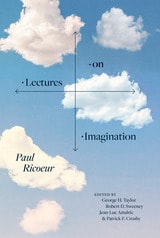
Lectures on Imagination
Paul Ricoeur
University of Chicago Press, 2024
The eminent philosopher Paul Ricoeur was devoted to the imagination. These previously unpublished lectures offer Ricoeur’s most significant and sustained reflections on creativity as he builds a new theory of imagination through close examination, moving from Aristotle, Pascal, Spinoza, Hume, and Kant to Ryle, Price, Wittgenstein, Husserl, and Sartre. These thinkers, he contends, underestimate humanity’s creative capacity. While the Western tradition generally views imagination as derived from the reproductive example of the image, Ricoeur develops a theory about the mind’s power to produce new realities. Modeled most clearly in fiction, this productive imagination, Ricoeur argues, is available across conceptual domains. His theory provocatively suggests that we are not constrained by existing political, social, and scientific structures. Rather, our imaginations have the power to break through our conceptual horizons and remake the world.
Levinas on the Primacy of the Ethical
Philosophy as ProphecyJeffrey Bloechl
Northwestern University Press, 2023
The philosophy of Emmanuel Levinas affirms both the urgency of peace and the fact that peace is never finally assured. This tension is a question of responsibility and of the ethical relation in which that responsibility is grounded. Jeffrey Bloechl pursues this prophetic dimension of Levinas’s philosophy—his commitment to phenomenology and to a philosophy of religion—to make the case for the mutual reinforcement and intelligibility of these two threads.
Levinas on the Primacy of the Ethical traces the emergence of Levinas’s early thought in relation to modern political philosophy, his revision of Martin Heidegger’s existential phenomenology, the consolidation of his mature position, his important differences with Freudian psychoanalysis, the turn from metaphysics to language in his later philosophy, and his complex relationship with Christian theology. Starting with an exposition of how positive notions of religious transcendence are already present in some of Levinas’s early phenomenological texts, Bloechl then stakes the reverse claim: that Levinas’s conception of God is dependent on his existential phenomenology. Proceeding chronologically, but with frequent nods to later developments, this book builds toward the ultimate assertion that Levinas offers us a phenomenology of event and of relation without appeal to any foundation, ground, or causal principle. Only in this way is Levinas able to generate an argument—and not merely an exhortation—for the primacy of the ethical as he conceives it.
Levinas's Existential Analytic
A Commentary on Totality and InfinityJames R. Mensch
Northwestern University Press, 2015
Life Death
Jacques Derrida
University of Chicago Press, 2020
One of Jacques Derrida’s most provocative works, Life Death deconstructs a deeply rooted dichotomy of Western thought: life and death. In rethinking the relationship between life and death, Derrida undertakes a multi-disciplinary analysis of a range of topics across philosophy, linguistics, and the life sciences. Derrida gave this seminar over fourteen sessions between 1975 and 1976 at the École normale supérieure in Paris to prepare students for the agrégation, a notoriously competitive exam. The theme for the exam that year was “Life and Death,” but Derrida made a critical modification to the title by dropping the coordinating conjunction. The resulting title of Life Death poses a philosophical question about the close relationship between life and death. Through close readings of Freudian psychoanalysis, the philosophy of Nietzsche and Heidegger, French geneticist François Jacob, and epistemologist Georges Canguilhem, Derrida argues that death must be considered neither as the opposite of life nor as the truth or fulfillment of it, but rather as that which both limits life and makes it possible. Derrida thus not only questions traditional understandings of the relationship between life and death but also ultimately develops a new way of thinking about what he calls “life death.”

Life of Henry David Thoreau
Henry S. SaltEdited by George Hendrick, Willene Hendrick, and Fritz Oehlschlaeger
University of Illinois Press, 1993
In 1890 Salt published the initial version of Thoreau's Life. With the help of American friends, he revised the book and published it anew six years later. The present volume is the third version of the biography, completed in 1908 but never published in Salt's lifetime.
Combining a concise narrative of Thoreau's life with a perceptive treatment of his ideas and writings, it stands as a penetrating study of Thoreau, stressing his distinctive individuality. Through an astute analysis of the text and a concise biography, the editors illustrate Salt's growth as a scholar and his changing views on Thoreau and Thoreau's philosophy.
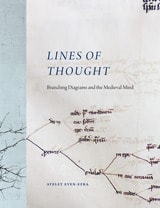
Lines of Thought
Branching Diagrams and the Medieval MindAyelet Even-Ezra
University of Chicago Press, 2021
These diagrams not only allow a glimpse into the thinking practices of the past but also constitute a chapter in the history of how people learned to rely on external devices—from stone to parchment to slide rules to smartphones—for recording, storing, and processing information. Beautifully illustrated throughout with previously unstudied and unedited diagrams, Lines of Thought is a historical overview of an important cognitive habit, providing a new window into the world of medieval scholars and their patterns of thinking.
Listening in the Afterlife of Data
Aesthetics, Pragmatics, and IncommunicationDavid Cecchetto
Duke University Press, 2022
Listening to the Whispers
Re-thinking Ethics in HealthcareEdited by Christine Sorrell Dinkins and Jeanne Merkle Sorrell
University of Wisconsin Press, 2006
Listening to the Whispers gives voice to scholars in philosophy, medical anthropology, physical therapy, and nursing, helping readers re-think ethics across the disciplines in the context of today's healthcare system. Diverse voices, often unheard, challenge readers to enlarge the circle of their ethical concerns and look for hidden pathways toward new understandings of ethics. Essays range from a focus on the context of corporatization and managed care environments to a call for questioning the fundamental values of society as these values silently affect many others in healthcare. Each chapter is followed by a brief essay that highlights issues useful for scholarly research and classroom discussion. The conversations of interpretive research in healthcare contained in this volume encourage readers to re-think ethics in ways that will help to create an ethical healthcare system with a future of new possibilities.
Outstanding Academic Title, Choice Magazine
Literary Conclusions
The Poetics of Ending in Lessing, Goethe, and KleistOliver Simons
Northwestern University Press, 2022
Simons examines the interrelations of Lessing’s literary endings with modes of logical conclusion; he highlights how Goethe’s narrative closures are forestalled by an uncontrollable vital force that was discussed in the sciences of the time; and he reveals that Kleist conceived of literary genres themselves as forms of reasoning. Kleist’s endings, Simons demonstrates, mark the beginning of modernism. Through close readings of these authors and supplemental analyses of works by Walter Benjamin, Friedrich Hölderlin, and Georg Wilhelm Friedrich Hegel, he crafts an elegant theory of conclusions that revises established histories of literary genres and forms.
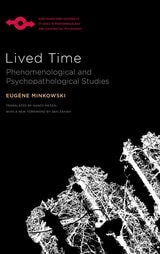
Lived Time
Phenomenological and Psychopathological StudiesEugène Minkowski; translated by Nancy Metzel; with a new foreword by Dan Zahavi
Northwestern University Press, 2019
First published in French in 1933 as Le temps vécu, this edition of this classic work of phenomenological psychiatry and psychopathology includes a new foreword by Dan Zahavi that presents some of Minkowski’s main ideas and discusses his contemporary relevance.
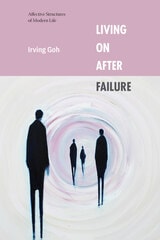
Living On After Failure
Affective Structures of Modern LifeIrving Goh
Duke University Press, 2025
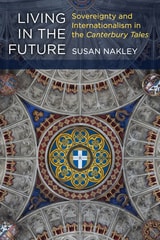
Living in the Future
Sovereignty and Internationalism in the Canterbury TalesSusan Nakley
University of Michigan Press, 2017
Chaucer uses two extant national ideals, sovereignty and domesticity, to introduce the concept of an English nation into the contemporary popular imagination and reinvent an idealized England as a hallowed homeland. For nationalist thinkers, sovereignty governs communities with linguistic, historical, cultural, and religious affinities. Chaucerian sovereignty appears primarily in romantic and household contexts that function as microcosms of the nation, reflecting a pseudo-familial love between sovereign and subjects and relying on a sense of shared ownership and judgment. This notion also has deep affinities with popular and political theories flourishing throughout Europe. Chaucer’s internationalism, matched with his artistic use of the vernacular and skillful distortions of both time and space, frames a discrete sovereign English nation within its diverse interconnected world.
As it opens up significant new points of resonance between postcolonial theories and medieval ideas of nationhood, Living in the Future marks an important contribution to medieval literary studies. It will be essential for scholars of Middle English literature, literary history, literary political and postcolonial theory, and literary transnationalism.
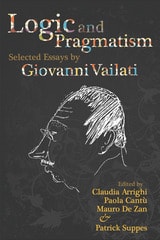
Logic and Pragmatism
Selected Essays by Giovanni VailatiClaudia Arrighi, Paola Cantu, Mauro de Zan, and Patrick Suppes
CSLI, 2009
Logic and Pragmatism features a number of the key writings of Giovanni Vailati (1863–1909), the Italian mathematician and philosopher renowned for his work in mechanics, geometry, logic, and epistemology. The selections in this book—many of which are available here for the first time in English—focus on Vailati’s significant contributions to the field of pragmatism. Accompanying these pieces are introductory essays by the volume’s editors that outline the traits of Vailati’s pragmatism and provide insights into the scholar’s life.
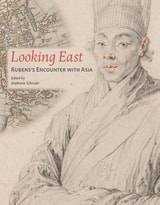
Looking East
Rubens’s Encounter with AsiaStephanie Schrader
J. Paul Getty Trust, The, 2013
Peter Paul Rubens’s fascinating depiction of a man wearing Korean costume of around 1617, in the collection of the J. Paul Getty Museum, has been considered noteworthy since it was made. Published to accompany an exhibition of Rubens’s Man in Korean Costume at the J. Paul Getty Museum from March 5 to June 9, 2013, Looking East: Rubens’s Encounter with Asia explores the various facets of Rubens’s compelling drawing of this Asian man that appears in later Rubens works. This large drawing was copied in Rubens’s studio during his own time and circulated as a reproductive print in the eighteenth century. Despite the drawing’s renown, however, the reasons why it was made and whether it actually depicts a specific Asian person remain a mystery. The intriguing story that develops involves a shipwreck, an unusual hat, the earliest trade between Europe and Asia, the trafficking of Asian slaves, and the role of Jesuit missionaries in Asia.
The book’s editor, Stephanie Schrader, traces the interpretations and meanings ascribed to this drawing over the centuries. Could Rubens have actually encountered a particular Korean man who sailed to Europe, or did he instead draw a model wearing Asian clothing or simply hear about such a person? What did Europeans really know about Korea during that period, and what might the Jesuits have had to do with the production of this drawing? All of these questions are asked and explored by the book’s contributors, who look at the drawing from various points of view.
Love Seeking Understanding
Aquinas, Balthasar, and the Renewal of Sapiential TheologyMichael Altenburger
Catholic University of America Press, 2024
Lumen
The Art and Science of Light, 800–1600Kristen Collins
J. Paul Getty Trust, The, 2024
Through the manipulation of materials, such as gold, crystal, and glass, medieval artists created dazzling light-filled environments, evoking, in the everyday world, the layered realms of the divine. While contemporary society separates science and spirituality, the medieval world harnessed the science of light to better perceive and understand the sacred. From 800 to 1600, the study of astronomy, geometry, and optics emerged as a framework that was utilized by theologians and artists to comprehend both the sacred realm and the natural world.
Through essays written by contributors from the fields of art history, the history of science, and neuroscience, and with more than two hundred illustrations, including glimmering golden reliquaries, illuminated manuscripts, rock crystal vessels, astronomical instruments, and more, Lumen cuts across religious, political, and geographic boundaries to reveal the ways medieval Christian, Jewish, and Islamic artists, theologians, and thinkers studied light. To convey the sense of wonder created by moving light on precious materials, a number of contemporary artworks are placed in dialogue with historic objects.
This volume is published to accompany an exhibition on view at the J. Paul Getty Museum at the Getty Center from September 10 to December 8, 2024.
L’impressionnisme à ses frontières
Le cas Meier-Graefe et la lutte pour l’art moderne en AllemagneVictor Claass
Diaphanes, 2023
Par ses écrits pionniers sur l’histoire du développement de l’art moderne, le critique d’art allemand Julius Meier-Graefe (1867-1935) joua un rôle décisif pour la canonisation de l’impressionnisme dans l’Europe de 1900. En défendant avec subversion et énergie la peinture de Manet, Renoir ou Cézanne outre-Rhin, il se mit à dos les élites conservatrices de l’Empire, qui observaient avec méfiance la propagation des valeurs de la modernité artistique. Tout au long de sa trajectoire franco-allemande, ponctuée de virulentes polémiques et cisaillée par le surgissement de la Première Guerre mondiale, Meier-Graefe lutta contre l’emprise d’un nationalisme obtus sur les récits artistiques. Son projet de régénération de la culture allemande fut ainsi indissociable de ses efforts pour la fédération d’une Europe pacifiée des images.
Si le progressisme francophile tout comme le vitalisme de son approche de la peinture ont parfois été soulignés, l’étude de son implication dans les débats politico-culturels de son temps révèle une personnalité plus nuancée. Ce livre analyse ainsi les surprenants à-coups et paradoxes ayant émaillé la carrière transnationale de Meier-Graefe, où alternèrent phases d’enthousiasme débridé et d’intense désillusion. Le personnage s’y dévoile comme un penseur du déclin et le chantre d’une modernité idéalisée, dont l’impressionnisme représentait à la fois la quintessence et le chant du cygne.