Results by title
1947 books match the query 'Music' and 79 start with l

L'Italiana in Algeri
Dramma giocoso in Two Acts by Angelo AnelliGioachino Rossini
University of Chicago Press, 1981

L'occasione fa il ladro, ossia Il cambio della valigia
Burletta per musica in One Act by Luigi PrividaliGioachino Rossini
University of Chicago Press, 1995

La Cenerentola, ossia La bonta in trionfo
Melodramma giocoso In two acts by Jacopo FerrettiGioachino Rossini
University of Chicago Press, 1998
For the hastily-prepared premiere of La Cenerentola in Rome in 1817 a collaborator wrote the simple recitatives, a chorus, and arias for Alidoro (the Prince's tutor) and Clorinda (a stepsister). The chorus was soon dropped, and in 1821 Rossini wrote a new aria for Alidoro. This critical edition provides all the music for the first version, including variants for Clorinda. Appendixes include Rossini's own aria for Alidoro and his variations for Cinderella's final Rondo.

La Gazza Ladra
Melodramma in Two Acts by Giovanni GherardiniGioachino Rossini
University of Chicago Press, 1979

La Riconoscenza / Il vero omaggio
Gioachino Rossini
University of Chicago Press, 2003
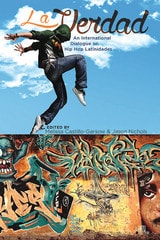
La Verdad
An International Dialogue on Hip Hop LatinidadesEdited by Melissa Castillo-Garsow and Jason Nichols
The Ohio State University Press, 2016
A truly international effort, La Verdad: An International Dialogue on Hip Hop Latinidades brings together exciting new work about Latino/a hip hop across more than a dozen countries, from scholars and practitioners in the United States and in Latin America, highlighting in new ways the participation of women, indigenous peoples, and Afro-descendants in a reimagined global, hip hop nation. From graffitera crews in Costa Rica and Nicaragua to Mexican hip hop in New York, from Aymara rap in Bolivia to Chicano rap in Taiwan, this volume explodes stereotypes of who and how hip hop is consumed, lived, and performed. Examining hip hop movements in Spanish, English, Portuguese, Aymara, and Creole, La Verdad demonstrates that Latino hip hop is a multilingual expression of gender, indigeneity, activism, and social justice.

La gazzetta
Dramma (giocoso) in Two Acts by Giuseppe Palomba, revised by Andrea Leone TottolaGioachino Rossini
University of Chicago Press, 2003

La scala di seta
Farsa comica in One Act by Giuseppe FoppaGioachino Rossini
University of Chicago Press, 1991
La traviata
Critical Edition Study ScoreGiuseppe Verdi
University of Chicago Press, 2017
The University of Chicago Press, in collaboration with Casa Ricordi, has undertaken to publish the first critical edition of the complete works of Giuseppe Verdi. The series, based exclusively on original sources, is the only one to present authentic versions of all of the composer’s works; together with his operas, the critical edition presents his songs, his choral music and sacred pieces, and his string quartet and other instrumental works.
The Works of Giuseppe Verdi will be an invaluable standard reference work—a necessary acquisition for all music libraries and a joy to own for all lovers of opera. The new series of study scores presents an adaptation of each critical edition that provides scholars with an affordable and portable option for exploring Verdi’s oeuvre. The study scores have been designed to distinguish editors’ marks from Verdi’s own notations while remaining clear enough for use in performance. The introduction to each score discusses the work’s sources, composition, and performance history, as well as performance practices, instrumentation, and problems of notation. The newest editions of the study scores examine two of Verdi’s three-act operas: La traviata and Rigoletto.
La traviata
Melodramma in Three Acts, Libretto by Francesco Maria PiaveGiuseppe Verdi
University of Chicago Press, 1997
This critical edition presents the 1854 version as the main score, and also makes available for the first time in full score the original 1853 settings of the revised pieces. For this edition Fabrizio della Seta used not only the composer's autograph and many secondary sources, but also Verdi's previously unknown sketches. These sketches helped corroborate the original readings and illuminate the work's compositional stages. The editor's wide-ranging introduction traces the opera's genesis, sources, performance history and practices, and a detailed critical commentary discusses source problems and ambiguities.
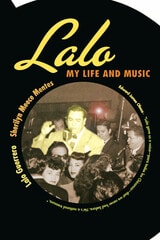
Lalo
My Life and MusicLalo Guerrero and Sherilyn Meece Mentes
University of Arizona Press, 2002
Lalo's autobiography takes readers on a musical rollercoaster, from his earliest enjoyment of Latino and black sounds in Tucson to his burgeoning career in Los Angeles singing with Los Carlistas, the quartet with which he began his recording career in 1938. During the fifties and sixties his music dominated the Latin American charts in both North and South America, and his song "Canción Mexicana" has become the unofficial anthem of Mexico. Through the years, Lalo mastered boleros, rancheras, salsas, mambos, cha-chas, and swing; he performed protest songs, children's music, and corridos that told of his people's struggles. Riding the crest of changing styles, he wrote pachuco boogies in one period and penned clever Spanish parodies of American hit songs in another. For all of these contributions to American music, Lalo was awarded a National Medal of the Arts from President Clinton.
Lalo's story is also the story of his times. We meet his family and earliest musical associates—including his long relationship with Manuel Acuña, who first got Lalo into the recording studio—and the many performers he counted as friends, from Frank Sinatra to Los Lobos. We relive the spirit of the nightclubs where he was a headliner and the one-night stands he performed all over the Southwest. We also discover what life was like in old Tucson and in mid-century L.A. as seen through the eyes of this uniquely creative artist. "In 1958," Guerrero recalls, "I wrote a song about a Martian who came to Earth to clear up certain misunderstandings about Mars. Now I have decided that it is time to set some things straight about Lalo Guerrero." Lalo does just that, in an often funny, sometimes sentimental story that traces the musical genius of a man whose talent has taken him all over the world, but who still believes in giving back to the community. His story is a gift to that community.
The book also features a detailed discography, compiled by Lalo's son Mark, tracing his recorded output from the days of 78s to his most recent CDs.
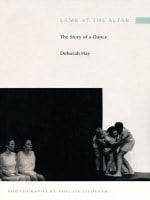
Lamb at the Altar
The Story of a DanceDeborah Hay
Duke University Press, 1994
Her movements are uncharacteristic, her words subversive, her dances unlike anything done before—and this is the story of how it all works. A founding member of the famed Judson Dance Theater and a past performer in the Merce Cunningham Dance Company, Deborah Hay is well known for choreographing works using large groups of trained and untrained dancers whose surprising combinations test the limits of the art. Lamb at the Altar is Hay’s account of a four-month seminar on movement and performance held in Austin, Texas, in 1991. There, forty-four trained and untrained dancers became the human laboratory for Hay’s creation of the dance Lamb, lamb, lamb . . . , a work that she later distilled into an evening-length solo piece, Lamb at the Altar. In her book, in part a reflection on her life as a dancer and choreographer, Hay tells how this dance came to be. She includes a movement libretto (a prose dance score) and numerous photographs by Phyllis Liedeker documenting the dance’s four-month emergence.
In an original style that has marked her teaching and writing, Hay describes her thoughts as the dance progresses, commenting on the process and on the work itself, and ultimately creating a remarkable document on the movements—precise and mysterious, mental and physical—that go into the making of a dance. Having replaced traditional movement technique with a form she calls a performance meditation practice, Hay describes how dance is enlivened, as is each living moment, by the perception of dying and then involves a freeing of this perception from emotional, psychological, clinical, and cultural attitudes into movement. Lamb at the Altar tells the story of this process as specifically practiced in the creation of a single piece.
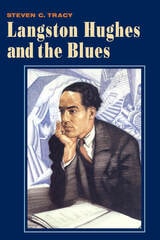
Langston Hughes and the Blues
Steven C. Tracy
University of Illinois Press, 2024
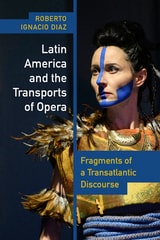
Latin America and the Transports of Opera
Fragments of a Transatlantic DiscourseRoberto Ignacio Díaz
Vanderbilt University Press, 2023
Latin America and the Transports of Opera studies a series of episodes in the historical and textual convergence of a hallowed art form and a part of the world often regarded as peripheral. Perhaps unexpectedly, the archives of opera generate new arguments about several issues at the heart of the established discussion about Latin America: the allure of European cultural models; the ambivalence of exoticism; the claims of nationalism and cosmopolitanism; and, ultimately, the place of the region in the global circulation of the arts. Opera’s transports concern literal and imagined journeys as well as the emotions that its stories and sounds trigger as they travel back and forth between Europe—the United States, too—and Latin America.
Focusing mostly on librettos and other literary forms, this book analyzes Calderón de la Barca’s baroque play on the myth of Venus and Adonis, set to music by a Spanish composer at Lima’s viceregal court; Alejo Carpentier’s neobaroque novella on Vivaldi’s opera about Moctezuma; the entanglements of opera with class, gender, and ethnicity throughout Cuban history; music dramas about enslaved persons by Carlos Gomes and Hans Werner Henze, staged in Rio de Janeiro and Copenhagen; the uses of Latin American poetry and magical realism in works by John Adams and Daniel Catán; and a novel by Manuel Mujica Lainez set in Buenos Aires’s Teatro Colón, plus a chamber opera about Victoria Ocampo with a libretto by Beatriz Sarlo. Close readings of these texts underscore the import and meanings of opera in Latin American cultural history.
This book is the recipient of the 2024 Norman L. and Roselea J. Goldberg Prize from Vanderbilt University Press for the best book in the area of art or medicine.
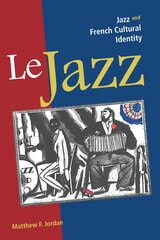
Le Jazz
Jazz and French Cultural IdentityMatthew F. Jordan
University of Illinois Press, 2010
In Le Jazz, Matthew F. Jordan deftly blends textual analysis, critical theory, and cultural history in a wide-ranging and highly readable account of how jazz progressed from a foreign cultural innovation met with resistance by French traditionalists to a naturalized component of the country's identity. Jordan draws on sources including ephemeral critical writing in the press and twentieth-century French literature to trace the country's reception of jazz, from the Cakewalk dance craze and the music's significance as a harbinger of cultural recovery after World War II to its place within French ethnography and cultural hybridity.
Countering the histories of jazz's celebratory reception in France, Jordan delves in to the reluctance of many French citizens to accept jazz with the same enthusiasm as the liberal humanists and cosmopolitan crowds of the 1930s. Jordan argues that some listeners and critics perceived jazz as a threat to traditional French culture, and only as France modernized its identity did jazz become compatible with notions of Frenchness. Le Jazz speaks to the power of enlivened debate about popular culture, art, and expression as the means for constructing a vibrant cultural identity, revealing crucial keys to understanding how the French have come to see themselves in the postwar world.

Le trouvère
Opera in Four Acts by Salvadore Cammarano, French Translation by Émilien PaciniGiuseppe Verdi
University of Chicago Press, 2025
By the time Le trouvère premiered at the Paris Opéra in 1857, Giuseppe Verdi had first-hand knowledge of the unique demands of French theater. He had adapted his earlier work I Lombardi alla prima crociata (La Scala, 1843) as Jérusalem in 1847, and in 1855 he composed Les vêpres siciliennes, especially for the Opéra. Il trovatore, set in Spain against the backdrop of civil unrest, was especially suited to Parisian tastes, which required spectacular performances with plenty of choreography. Verdi expanded the score with a four-part ballet in the third act and rewrote the ending, where he introduced a reprise of his celebrated “Miserere,” which is first heard at the start of the fourth act. By all accounts, the resulting work displayed extraordinary musical and dramatic efficacy and, after a successful premiere, Le trouvère remained in the Opéra repertory through the opening decades of the twentieth century.
There is no extant autograph manuscript for Le trouvère. This critical edition is based primarily on a manuscript full score used at the premiere and during rehearsals, preserved at the Bibliothèque de l’Opéra in Paris. Editor David Lawton’s introduction to this edition discusses the origins, rehearsals, and reception of Le trouvère, the numerous sources preserved in French, Belgian, Italian, and British archives, and performance issues including staging, vocal style, and orchestral considerations.
Learning to Listen
A Handbook for MusicGrosvenor Cooper
University of Chicago Press, 1962
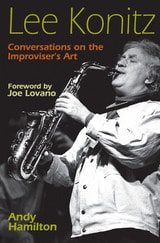
Lee Konitz
Conversations on the Improviser's ArtAndy Hamilton
University of Michigan Press, 2007
“Meticulously researched, detailed and documented, this long awaited overview justly establishes Konitz as one of the most consistently brilliant, adventurous and original improvisers in the jazz tradition—a genius as rare as Bird himself.”
—John Zorn
“Hamilton’s work may well mark the inception of a format new to writing on Western music, one which avoids both the self-aggrandizing of autobiography and the stylized subjectification of biography.”
—The Wire
“An extraordinary approach to a biography, with the man himself speaking for extended sessions. The main vibration I felt from Lee’s words was total honesty, almost to a fault. Konitz shows himself to be an acute observer of the scene, full of wisdom and deep musical insights, relevant to any historical period regardless of style. The asides by noted musicians are beautifully woven throughout the pages. I couldn’t put the book down—it is the definition of a living history.”
—David Liebman
The preeminent altoist associated with the “cool” school of jazz, Lee Konitz was one of the few saxophonists of his generation to forge a unique sound independent of the influence of Charlie Parker. In the late 1940s, Konitz began his career with the Claude Thornhill band, during which time he came into contact with Miles Davis, with whom he would later work on the legendary Birth of the Cool sessions. Konitz is perhaps best known through his association with Lennie Tristano, under whose influence much of his sound evolved, and for his work with Stan Kenton and Warne Marsh. His recordings have ranged from cool bop to experimental improvisation and have appeared on such labels as Prestige, Atlantic, Verve, and Polydor.
Crafted out of numerous interviews between the author and his subject, the book offers a unique look at the story of Lee Konitz’s life and music, detailing Konitz’s own insights into his musical education and his experiences with such figures as Miles Davis, Stan Kenton, Warne Marsh, Lennie Tristano, Charles Mingus, Bud Powell, and Bill Evans.
Andy Hamilton is a jazz pianist and contributor to major jazz and contemporary music magazines. He teaches philosophy, and the history and aesthetics of jazz, at Durham University in the United Kingdom. He is also the author of the book Aesthetics and Music (Continuum 2007).
Joe Lovano is a Grammy Award–winning tenor saxophonist. His most recent album is Streams of Expression.
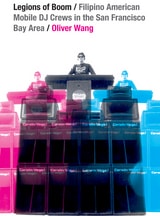
Legions of Boom
Filipino American Mobile DJ Crews in the San Francisco Bay AreaOliver Wang
Duke University Press, 2015
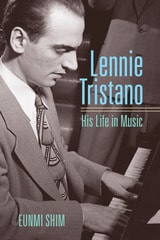
Lennie Tristano
His Life in MusicEunmi Shim
University of Michigan Press, 2007
“In Lennie Tristano: His Life in Music, Shim has provided a comprehensive biographical and analytical account of one of jazz’s most important and most frequently misunderstood figures. Her insights into Tristano’s personality are well nuanced, and the focus on his teaching makes a unique contribution to the history of jazz. This vividly written study is likely to become a standard work.”
—Brian Priestley, author of Chasin’ the Bird: The Life and Legacy of Charlie Parker and coauthor of The Rough Guide to Jazz
“Eunmi Shim’s book is clearly a labor of love. Her thorough examination of Tristano’s teaching is particularly important, for no one previously has assembled the thoughts of so many former students. Her illuminating transcriptions of, and commentaries on, Tristano’s solos are also valuable. Lennie Tristano is an important contribution to the literature on jazz.”
—Thomas Owens, author of Bebop: The Music and Its Players
“Comprehensive, objective, and acute in its judgments, this is the biography of Lennie Tristano we have been waiting for.”
—Larry Kart, author of Jazz in Search of Itself
Lennie Tristano occupies a rare position not only in jazz history but in the history of twentieth-century music. Emerging from an era when modernism was the guiding principle in art, Tristano explored musical avenues that were avant-garde even by modernism’s experimental standards. In so doing, he tested and transcended the boundaries of jazz.
In 1949, years before musicians such as Ornette Coleman and Cecil Taylor took credit for the movement, Tristano made the first recordings of “free jazz,” a new kind of group improvisation based on spontaneous interaction among band members without any regard for predetermined form, harmony, or rhythm. Then, in the 1950s, Tristano broke new ground by his use of multitracking.
Tristano was also a pioneer in the teaching of jazz, devoting the latter part of his career almost exclusively to music instruction. He founded a jazz school—the first of its kind—among whose students were saxophonists Warne Marsh and Lee Konitz, and pianist Sal Mosca.
With its blend of oral history, archival research, and musical analysis, Lennie Tristano sheds new light on the important role Tristano played in the jazz world and introduces this often-overlooked musician to a new generation of jazz aficionados.
Eunmi Shim received her Ph.D. in musicology from the University of Illinois at Urbana-Champaign and is now Assistant Professor of Music at Worcester Polytechnic Institute. This is her first book.
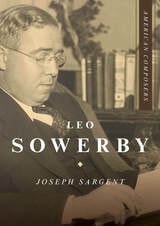
Leo Sowerby
Joseph Sargent
University of Illinois Press, 2024
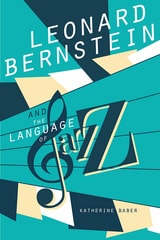
Leonard Bernstein and the Language of Jazz
Katherine Baber
University of Illinois Press, 2019
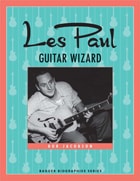
Les Paul
Guitar WizardBob Jacobson
Wisconsin Historical Society Press, 2012
This addition to the Badger Biographies series for young readers tells the story of Les Paul, the legendary “Wizard of Waukesha,” who pioneered the solid body electric guitar, multi-track recording, and many other musical inventions. Fascinated since boyhood with musical technology, the young Les moved from experimenting with his mother’s player piano and phonograph to developing his own amplifier and tinkering with crystal radios.
After leaving his hometown of Waukesha at age 17 to pursue a musical career—a decision his mother supported—the budding jazz guitarist lived in Chicago, New York, and Los Angeles, in each city finding a new audience and new musical partnerships. A regular on the radio, Les became a fixture in early television, appearing on the Ed Sullivan Show, and later, a show of his own with partner Mary Ford. Along the way, he overcame numerous physical challenges, including recovery from electric shock and rehabilitation after a horrific car accident—both of which threatened his musical career. And yet, Les Paul pushed musical technology forward more than any other musician of the twentieth century. This Grammy Hall of Fame inductee died in 2009, making Les Paul: Guitar Wizard a timely addition to the series. This lively story is rounded out with sidebars on radio call letters and how an electric guitar works, a full discography, and over 60 historic photographs.
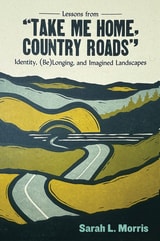
Lessons from "Take Me Home, Country Roads"
Identity, (Be)Longing, and Imagined LandscapesSarah L. Morris
West Virginia University Press, 2025
This book examines “Country Roads” as it illuminates a universal sense of belonging to place even as it obscures the literality of the place it names. In examining “Country Roads” as anthem, text, artifact, and rhetoric, this work untangles ideas related to place, belonging, identity, and pedagogy. Sarah L. Morris uses the Welsh term hiraeth, which is an existential longing for an idealized, sometimes imaginary home, as a governing framework for this work. She explores the song in various contexts, such as how it pertains to West Virginia geography and heritage and the diversity of these beliefs, external perceptions of the state, concepts of home and belonging, and the song as a phenomenon across different media platforms. “Take Me Home, Country Roads,” while being about West Virginia, has registered as a global phenomenon.

Lessons in Gratitude
A Memoir on Race, the Arts, and Mental HealthAaron P. Dworkin
University of Michigan Press, 2024
Aaron’s unique journey, which begins with his adoption by a white Jewish couple from Chicago at two weeks of age, leads him to the ultimate reunification with his birth family at the age of 31. Lessons of Gratitude is a coming of age story that examines the difficulties of biracial identity across generations and the challenges that mixed race families still face today. It is also a painful and honest adoption memoir, further complicating the narrator’s experiences of racial identity throughout his life and shaping his experiences with his own children. Through his work in the arts and the impact of this work, Dworkin has been able to “pay forward” the first thing that offered him unconditional love—music.
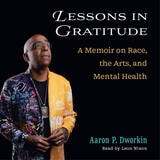
Lessons in Gratitude
A Memoir on Race, the Arts, and Mental HealthAaron P. Dworkin
University of Michigan Press, 2024
Aaron’s unique journey, which begins with his adoption by a white Jewish couple from Chicago at two weeks of age, leads him to the ultimate reunification with his birth family at the age of 31. Lessons in Gratitude is a coming of age story that examines the difficulties of biracial identity across generations and the challenges that mixed race families still face today. It is also a painful and honest adoption memoir, further complicating the narrator’s experiences of racial identity throughout his life and shaping his experiences with his own children. Through his work in the arts and the impact of this work, Dworkin has been able to “pay forward” the first thing that offered him unconditional love—music.
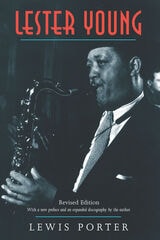
Lester Young
Lewis Porter
University of Michigan Press, 2005
". . . a schematic of unparalleled insight and detail."
---Down Beat
"A monumental work."
---Dizzy Gillespie
". . . a major contribution to jazz scholarship . . . for its illumination of Lester Young's music and for setting the biographical record straight."
---Dan Morgenstern
Several new biographies of Lester Young have been published in the years since Lewis Porter's Lester Young first appeared, but none have supplanted or even attempted the in-depth study that Porter brings to his subject's music. With the same care and scholarship that characterized his John Coltrane, Porter analyzes the music that made Lester Young "the most original tenor sax in jazz."
In addition to helping us understand Lester Young's playing and stylistic evolution, Porter's analysis demonstrates that Young's playing at the end of his career did not mark a serious decline over his earlier style, as many critics have claimed.
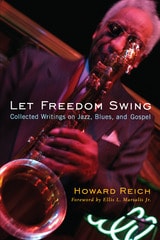
Let Freedom Swing
Collected Writings on Jazz, Blues, and GospelHoward Reich
Northwestern University Press, 2010
Each section of Let Freedom Swing composes a suite, focusing on either a person, place, or scene. Reich gives new life to the standards with his profiles and elegies for such giants as Gershwin, Ellington, and Sinatra. A profile of Louis Armstrong brings out the often angry side of Satchmo but also reveals a more remarkable musician and human being.
His open-mindedness makes Reich a particularly astute observer of the experimental and new, from Ornette Coleman to Chicago experimentalist Ken Vandermark. And his observations about street music open our ears to the songs of everyday life. Reich’s fearlessness is evident in his writing about daunting subjects, such as the New Orleans music scene after Katrina, the lost legacy of jazz in Panama, and the complicated legacy of "race music" in America.
Howard Reich combines a deep enthusiasm for music, a breadth of knowledge, and an ability to share his world with his readers, and Let Freedom Swing is essential reading for anyone interested in the continuing vitality of jazz, gospel, blues, and American music in general.
Let Jasmine Rain Down
Song and Remembrance among Syrian JewsKay Kaufman Shelemay
University of Chicago Press, 1998
Shelemay views the intersection of music, individual remembrances, and collective memory through the pizmonim. Reconstructing a century of pizmon history in America based on research in New York, Mexico, and Israel, she explains how verbal and musical memories are embedded in individual songs and how these songs perform both what has been remembered and what otherwise would have been forgotten. In confronting issues of identity and meaning in a postmodern world, Shelemay moves ethnomusicology into the domain of memory studies.

Let Me Take You Down
Penny Lane and Strawberry Fields ForeverJonathan Cott
University of Minnesota Press, 2024
The conception, creation, recording, and significance of the Beatles’ “Penny Lane” and “Strawberry Fields Forever”
John Lennon wrote “Strawberry Fields Forever” in Almería, Spain, in fall 1966, and in November, in response to that song, Paul McCartney wrote “Penny Lane” at his home in London. A culmination of what was one of the most life-altering and chaotic years in the Beatles’ career, these two songs composed the 1967 double A-side 45 rpm record that has often been called the greatest single in the history of popular music and was, according to Beatles producer George Martin, “the best record we ever made.”
In Let Me Take You Down: Penny Lane and Strawberry Fields Forever, Jonathan Cott recounts the conception and creation of these songs; describes the tumultuous events and experiences that led the Beatles to call it quits as a touring band and redefine themselves solely as recording artists; and details the complex, seventy-hour recording process that produced seven minutes of indelible music. In writing about these songs, he also focuses on them as inspired artistic expressions of two unique ways of experiencing and being in the world, as Lennon takes us down to Strawberry Fields and McCartney takes us back to Penny Lane.
In order to gain new vistas and multiple perspectives on these multifaceted songs, Cott also engages in conversation with five remarkable people: media artist Laurie Anderson; guitarist Bill Frisell; actor Richard Gere; Jungian analyst Margaret Klenck; and urban planner, writer, and musician Jonathan F. P. Rose. The result is a wide-ranging, illuminating exploration of the musical, literary, psychological, cultural, and spiritual aspects of two of the most acclaimed songs in rock and roll history.

Libby Larsen
Composing an American LifeDenise Glahn
University of Illinois Press, 2017
Denise Von Glahn’s in-depth examination of Larsen merges traditional biography with a daring scholarly foray: an ethnography of one active artist. Drawing on musical analysis, the composer’s personal archive, and seven years of interviews with Larsen and those in her orbit, Von Glahn illuminates the polyphony of achievements that make up Larsen’s public and private lives. In considering Larsen’s musical impact, Von Glahn delves into how elements of the personal—a 1950s childhood, spiritual seeking, love of nature, and status as an “important woman artist”—inform her work. The result is a portrait of a musical pathfinder who continues to defy expectations and reject labels.
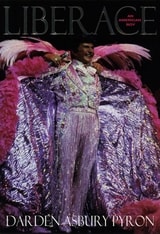
Liberace
An American BoyDarden Asbury Pyron
University of Chicago Press, 2000
Liberace's career follows the trajectory of the classic American dream. Born in the Midwest to Polish-Italian immigrant parents, he was a child prodigy who, by the age of twenty, had performed with the Chicago Symphony Orchestra. Abandoning the concert stage for the lucrative and glittery world of nightclubs, celebrities, and television, Liberace became America's most popular entertainer. While wildly successful and good natured outwardly, Liberace, Pyron reveals, was a complicated man whose political, social, and religious conservativism existed side-by-side with a lifetime of secretive homosexuality. Even so, his swishy persona belied an inner life of ferocious aggression and ambition. Pyron relates this private man to his public persona and places this remarkable life in the rapidly changing cultural landscape of twentieth-century America.
Pyron presents Liberace's life as a metaphor, for both good and ill, of American culture, with its shopping malls and insatiable hunger for celebrity. In this fascinating biography, Pyron complicates and celebrates our image of the man for whom the streets were paved with gold lamé.
Lieder in America
On Stages and In ParlorsHeather Platt
University of Illinois Press, 2023
Though viewed as quintessentially German, lieder became a centerpiece of nineteenth century song recitals in the United States. By the 1890s, these songs, which were often sung in English, were a sensation among tutored and untutored music lovers alike. Heather Platt examines the varied supporters and singers who both established the lied as a concert repertoire and shaped a new kind of recital dedicated to art songs. Lieder were embraced and spread by performers like Max Heinrich and advocates like John Sullivan Dwight, as well as by the women’s clubs that flourished nationwide. At the same time as examining the critical reception of the artists and songs, Platt reveals ways in which US recital programs anticipated trends in European recitals. She also places lieder against the backdrop of the time, when factors like the growth in the sheet music industry, the evolution of American art song, and emerging anti-German feeling had a profound impact on the genre’s popularity.
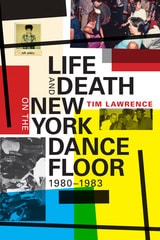
Life and Death on the New York Dance Floor, 1980–1983
Tim Lawrence
Duke University Press, 2016
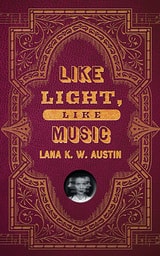
Like Light, Like Music
Lana K. W. Austin
West Virginia University Press, 2020
But to help her hometown’s haunted women, Emme must also face the things that haunt her, things she thought she had lost when she chose to move away: the majestic music of her family’s beloved hills and hollows, the mysterious old ways of her Appalachian kin, and the memory of her remarkable first love, Evan. Through it all, she must reckon with her magical “mountain gift”—is it real, or merely a unique synesthesia? And can she trust it to help heal her family and her town, a place still plagued by the social injustice that first drove her away? Can she trust it to help heal herself?

Lion Songs
Thomas Mapfumo and the Music That Made ZimbabweBanning Eyre
Duke University Press, 2015
Lion's Share
Remaking South African CopyrightVeit Erlmann
Duke University Press, 2022
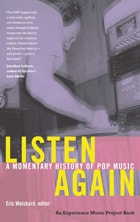
Listen Again
A Momentary History of Pop MusicEric Weisbard, ed.
Duke University Press, 2007
Building a history of pop music out of unexpected instances, critics and musicians delve into topics from the early-twentieth-century black performer Bert Williams’s use of blackface, to the invention of the Delta blues category by a forgotten record collector named James McKune, to an ER cast member’s performance as the Germs’ front man Darby Crash at a Germs reunion show. Cuban music historian Ned Sublette zeroes in on the signature riff of the garage-band staple “Louie, Louie.” David Thomas of the pioneering punk band Pere Ubu honors one of his forebears: Ghoulardi, a late-night monster-movie host on Cleveland-area TV in the 1960s. Benjamin Melendez discusses playing in a band, the Ghetto Brothers, that Latinized the Beatles, while leading a South Bronx gang, also called the Ghetto Brothers. Michaelangelo Matos traces the lineage of the hip-hop sample “Apache” to a Burt Lancaster film. Whether reflecting on the ringing freedom of an E chord or the significance of Bill Tate, who performed once in 1981 as Buddy Holocaust and was never heard from again, the essays reveal why Robert Christgau, a founder of rock criticism, has called the EMP Pop Conference “the best thing that’s ever happened to serious consideration of pop music.”
Contributors. David Brackett, Franklin Bruno, Daphne Carr, Henry Chalfant, Jeff Chang, Drew Daniel, Robert Fink, Holly George-Warren, Lavinia Greenlaw, Marybeth Hamilton, Jason King, Josh Kun, W. T. Lhamon, Jr., Greil Marcus, Michaelangelo Matos, Benjamin Melendez, Mark Anthony Neal, Ned Sublette, David Thomas, Steve Waksman, Eric Weisbard
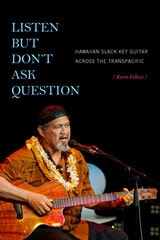
Listen but Don't Ask Question
Hawaiian Slack Key Guitar across the TransPacificKevin Fellezs
Duke University Press, 2019
Listening Awry
Music And Alterity In German CultureDavid Schwarz
University of Minnesota Press, 2006
Listening Subjects
Music, Psychoanalysis, CultureDavid Schwarz
Duke University Press, 1997
Schwarz applies the ideas of post-Lacanian psychoanalytic theorists Slavoj Zizek, Julia Kristeva, and Kaja Silverman to an analysis of diverse works. In a discussion of John Adams’s opera Nixon in China, he presents music listening as a fantasy of being enclosed in a second skin of enveloping sound. He looks at the song cycles of Franz Schubert as an examination and expression of epistemological doubts at the advent of modernism, and traverses fantasy "space" in his exploration of the white noise at the end of the Beatles’ "I Want You (She’s So Heavy)." Schwarz also considers the psychosexual undercurrent in Peter Gabriel’s "Intruder" and the textual and ideological structures of German Oi Musik. Concluding with a reading of two compositions by Diamanda Galás, he reveals how some performances can simultaneously produce terror and awe, abjection and rage, pleasure and displeasure. This multilayered study transcends other interventions in the field of musicology, particularly in its groundbreaking application of literary theory to popular and classical music.
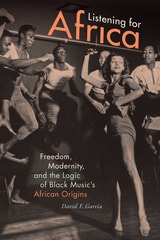
Listening for Africa
Freedom, Modernity, and the Logic of Black Music's African OriginsDavid F. Garcia
Duke University Press, 2017
Listening in Detail
Performances of Cuban MusicAlexandra T. Vazquez
Duke University Press, 2013
Listening to Bob Dylan
Larry Starr
University of Illinois Press, 2021
Reader-friendly and revealing, Listening to Bob Dylan encourages hardcore fans and Dylan-curious seekers alike to rediscover the music legend.
Listening to China
Sound and the Sino-Western Encounter, 1770-1839Thomas Irvine
University of Chicago Press, 2020
Through these stories, Irvine not only investigates how the Sino-Western encounter sounded, but also traces the West’s shifting response to China. As the trading relationships between China and the West broke down, travelers and music theorists abandoned the vision of shared musical approaches, focusing instead on China’s noisiness and sonic disorder and finding less to like in its music. At the same time, Irvine reconsiders the idea of a specifically Western music history, revealing that it was comparison with China, the great “other,” that helped this idea emerge. Ultimately, Irvine draws attention to the ways Western ears were implicated in the colonial and imperial project in China, as well as to China’s importance to the construction of musical knowledge during and after the European Enlightenment. Timely and original, Listening to China is a must-read for music scholars and historians of China alike.

Listening to Popular Music
Or, How I Learned to Stop Worrying and Love Led ZeppelinTheodore Gracyk
University of Michigan Press, 2007
It has long been assumed that people who prefer Led Zeppelin to Mozart live aesthetically impoverished lives. But why? In Listening to Popular Music, award-winning popular music scholar Theodore Gracyk argues that aesthetic value is just as important in popular listening as it is with “serious” music. And we don’t have to treat popular music as art in order to recognize its worth. Aesthetic values are realized differently in different musical styles, and each requires listening skills that people must learn.
—William Echard, Department of Music, and Institute for Comparative Studies in Literature, Art, and Culture, Carleton University
—Stephen Davies, Department of Philosophy, University of Auckland, and author of The Philosophy of Art
—Mark Katz, Assistant Professor of Music, University of North Carolina at Chapel Hill, and author of Capturing Sound: How Technology Has Changed Music
Listening to the Lomax Archive
The Sonic Rhetorics of African American Folksong in the 1930sJonathan W. Stone
University of Michigan Press, 2021
In 1933, John A. Lomax and his son Alan set out as emissaries for the Library of Congress to record the folksong of the “American Negro” in several southern African-American prisons. Listening to the Lomax Archive: The Sonic Rhetorics of African American Folksong in the 1930s asks how the Lomaxes’ field recordings—including their prison recordings and a long-form oral history of jazz musician Jelly Roll Morton—contributed to a new mythology of Americana for a nation in the midst of financial, social, and identity crises. Jonathan W. Stone argues that folksongs communicate complex historical experiences in a seemingly simple package, and can thus be a key element—a sonic rhetoric—for interpreting the ebb and flow of cultural ideals within contemporary historical moments. He contends that the Lomaxes, aware of the power folk music, used the folksongs they collected to increase national understanding of and agency for the subjects of their recordings (including the reconstitution of prevailing stereotypes about African American identity) even as they used the recordings to advance their own careers. Listening to the Lomax Archive gives readers the opportunity to listen in on these seemingly contradictory dualities, demonstrating that they are crucial to the ways that we remember and write about the subjects of the Lomaxes archive and other repositories of historicized sound.
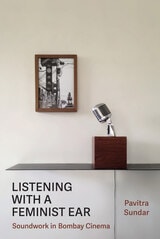
Listening with a Feminist Ear
Soundwork in Bombay CinemaPavitra Sundar
University of Michigan Press, 2023
Honorable Mention of the 2023 MLA Aldo and Jeanne Scaglione Prize for South Asian Studies
- Longlist Finalist of the 2024 Kraszna-Krausz Foundation Moving Image Book Award
Listening with a Feminist Ear is a study of the cultural politics and possibilities of sound in cinema. Eschewing ocularcentric and siloed disciplinary formations, the book takes seriously the radical theoretical and methodological potential of listening. It models a feminist interpretive practice that is not just attuned to how power and privilege are materialized in sound, but that engenders new, counter-hegemonic imaginaries.
Focusing on mainstream Bombay cinema, Sundar identifies singing, listening, and speaking as key sites in which gendered notions of identity and difference take form. Charting new paths through seven decades of film, media, and cultural history, Sundar identifies key shifts in women’s playback voices and the Islamicate genre of the qawwali. She also conceptualizes spoken language as sound, and turns up the volume on a capacious, multilingual politics of belonging that scholarly and popular accounts of nation typically render silent. All in all, Listening with a Feminist Ear offers a critical sonic sensibility that reinvigorates debates about the gendering of voice and body in cinema, and the role of sound and media in conjuring community.
Literature and the Arts
Interdisciplinary Essays in Memory of James Anderson WinnAnna Battigelli
University of Delaware Press, 2024
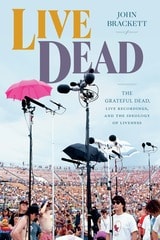
Live Dead
The Grateful Dead, Live Recordings, and the Ideology of LivenessJohn Brackett
Duke University Press, 2023