Results by title
754 books match the query 'Native American Studies' and 22 start with l
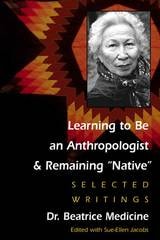
LEARNING TO BE AN ANTHROPOLOGIST
SELECTED WRITINGSDr. Beatrice Medicine
University of Illinois Press, 2001
For half a century, Dr. Medicine has defied stereotypes, racism, and sexism in her life and work while combating the reductive, patronizing views of Native Americans perpetuated by mainstream anthropologists. This retrospective collection reflects her unswerving commitment to furthering Native Americans' ability to speak for themselves and deal with the problems of contemporary life.
Learning to Be an Anthropologist and Remaining "Native" includes Medicine's clear-eyed views of assimilation, bilingual education, and the adaptive strategies by which Native Americans have conserved and preserved their ancestral languages. Her discussions of sex roles in contemporary Native American societies encompass homosexual orientation among males and females and the "warrior woman" role among Plains Indians as one of several culturally accepted positions according power and prestige to women. The volume also includes Medicine's thoughtful assessments of kinship and family structures, alcoholism and sobriety, the activism implicit in the religious ritual of the Lakota Sioux Sun Dance, and the ceremonial uses of Lakota star quilts.
"The Native American is possibly the least understood ethnic minority in contemporary American society," Medicine observes. Her decades of deliberate, generous, dedicated work have done much to reveal the workings of Native culture while illuminating the effects of racism and oppression on Indian families, kinship units, and social and cultural practices.
La Florida del Inca and the Struggle for Social Equality in Colonial Spanish America
Jonathan D. Steigman
University of Alabama Press, 2005
A cross-disciplinary view of an important De Soto chronicle.
Among the early Spanish chroniclers who contributed to popular images of the New World was the Amerindian-Spanish (mestizo) historian and literary writer, El Inca Garcilaso de la Vega (1539-1616). He authored several works, of which La Florida del Inca (1605) stands out as the best because of its unique Amerindian and European perspectives on the De Soto expedition (1539-1543). As the child of an Indian mother and a Spanish father, Garcilaso lived in both worlds--and saw value in each. Hailed throughout Europe for his excellent contemporary Renaissance writing style, his work was characterized as literary art. Garcilaso revealed the emotions, struggles, and conflicts experienced by those who participated in the historic and grandiose adventure in La Florida. Although criticized for some lapses in accuracy in his attempts to paint both the Spaniards and the Amerindians as noble participants in a world-changing event, his work remains the most accessible of all the chronicles.
In this volume, Jonathan Steigman explores El Inca’s rationale and motivations in writing his chronicle. He suggests that El Inca was trying to influence events by influencing discourse; that he sought to create a discourse of tolerance and agrarianism, rather than the dominant European discourse of intolerance, persecution, and lust for wealth. Although El Inca's purposes went well beyond detailing the facts of De Soto’s entrada, his skill as a writer and his dual understanding of the backgrounds of the participants enabled him to paint a more complete picture than most--putting a sympathetic human face on explorers and natives alike.

La Partera
Story of a MidwifeFran Leeper Buss
University of Michigan Press, 2001
This is Jesusita's story, told in her own words. She describes her early training as a midwife, her forced departure from home due to two unmarried pregnancies, and her solitary struggle to support her children. La Partera tells how she gradually emerged as a leader in her community, painstakingly building by hand a small maternity center for her patients while gaining the respect of the Anglo medical community.
As Jesusita's story unfolds, so too does the story of the women of the region. Supplemental sections by the author illuminate Jesusita's culture and past, along with a historical account of the network of medical care provided by Hispanic and Anglo female healers. Illustrated with photographs of both people and places, La Partera reflects the culture of an era through the prism of Jesusita's hard and useful life.
Fran Leeper Buss lives and teaches in Tucson, Arizona.
Land Uprising
Native Story Power and the Insurgent Horizons of Latinx IndigeneitySimón Ventura Trujillo
University of Arizona Press, 2020
Trujillo situates his inquiry in the cultural production of La Alianza Federal de Mercedes, a formative yet understudied organization of the Chicanx movement of the 1960s and 1970s. La Alianza sought to recover Mexican and Spanish land grants in New Mexico that had been dispossessed after the Mexican-American War. During graduate school, Trujillo realized that his grandparents were activists in La Alianza. Written in response to this discovery, Land Uprising bridges La Alianza’s insurgency and New Mexican land grant struggles to the writings of Leslie Marmon Silko, Ana Castillo, Simon Ortiz, and the Zapatista Uprising in Chiapas, Mexico. In doing so, the book reveals uncanny connections between Chicanx, Latinx, Latin American, and Native American and Indigenous studies to grapple with Native land reclamation as the future horizon for Chicanx and Latinx indigeneities.
Land of Water, City of the Dead
Religion and Cahokia's EmergenceSarah E. Baires
University of Alabama Press, 2017
Explores the embodiment of religion in the Cahokia land and how places create, make meaningful, and transform practices and beliefs
Cahokia, the largest city of the Mississippian mound cultures, lies outside present-day East St. Louis. Land of Water, City of the Dead reconceptualizes Cahokia’s emergence and expansion (ca. 1050–1200), focusing on understanding a newly imagined religion and complexity through a non-Western lens. Sarah E. Baires argues that this system of beliefs was a dynamic, lived component, based on a broader ontology, with roots in other mound societies. This religion was realized through novel mortuary practices and burial mounds as well as through the careful planning and development of this early city’s urban landscape.
Baires analyzes the organization and alignment of the precinct of downtown Cahokia with a specific focus on the newly discovered and excavated Rattlesnake Causeway and the ridge-top mortuary mounds located along the site axes. Land of Water, City of the Dead also presents new data from the 1954 excavations of the ridge-top mortuary Wilson Mound and a complete analysis of the associated human remains. Through this skeletal analysis, Baires discusses the ways that Cahokians processed and buried their ancestors, identifying unique mortuary practices that include the intentional dismemberment of human bodies and burial with marine shell beads and other materials.
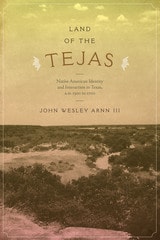
Land of the Tejas
Native American Identity and Interaction in Texas, A.D. 1300 to 1700By John Wesley Arnn III
University of Texas Press, 2012
Combining archaeological, historical, ethnographic, and environmental data, Land of the Tejas represents a sweeping, interdisciplinary look at Texas during the late prehistoric and early historic periods. Through this revolutionary approach, John Wesley Arnn reconstructs Native identity and social structures among both mobile foragers and sedentary agriculturalists. Providing a new methodology for studying such populations, Arnn describes a complex, vast, exotic region marked by sociocultural and geographical complexity, tracing numerous distinct peoples over multiple centuries.
Drawing heavily on a detailed analysis of Toyah (a Late Prehistoric II material culture), as well as early European documentary records, an investigation of the regional environment, and comparisons of these data with similar regions around the world, Land of the Tejas examines a full scope of previously overlooked details. From the enigmatic Jumano Indian leader Juan Sabata to Spanish friar Casanas's 1691 account of the vast Native American Tejas alliance, Arnn's study shines new light on Texas's poorly understood past and debunks long-held misconceptions of prehistory and history while proposing a provocative new approach to the process by which we attempt to reconstruct the history of humanity.
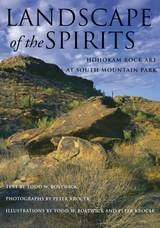
Landscape of the Spirits
Hohokam Rock Art at South Mountain ParkText by Todd W. Bostwick; Photographs by Peter Krocek; Illustrations by Todd W. Bostwick and Peter Krocek
University of Arizona Press, 2002
Todd Bostwick, an archaeologist who has studied the Hohokam for more than twenty years, and Peter Krocek, a professional photographer with a passion for archaeology, have combed the South Mountains to locate nearly all of the ancient petroglyphs found in the canyons and ridges. Their years of learning the landscape and investigating the ancient designs have resulted in a book that explores this wealth of prehistoric rock art within its natural and cultural contexts, revealing what these carvings might mean, how they got there, and when they were made.
Landscape of the Spirits is the first book to cover these ancient images and is one of the most comprehensive treatments of a rock art location ever published. It conveys the range of different rock art elements and compositions found in the South Mountains—animals, humans, and geometric shapes, as well as celestial and calendrical markings at key sites—through accurate descriptions, drawings, and photographs. Interpretations of the petroglyphs are based on Native American ethnographic accounts and consider the most recent theories concerning shamanism and archaeoastronomy.
Written in a simple and accessible style, Landscape of the Spirits is an indispensable volume for anyone exploring the South Mountains, and for rock art enthusiasts everywhere who wish to broaden their understanding of the prehistoric world. It is both an authoritative overview of these ancient wonders and an unprecedented benchmark in southwestern rock art research at a single geographic location.
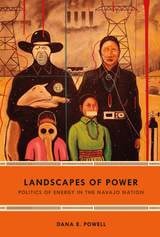
Landscapes of Power
Politics of Energy in the Navajo NationDana E. Powell
Duke University Press, 2018
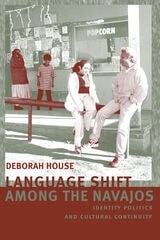
Language Shift among the Navajos
Identity Politics and Cultural ContinuityDeborah House
University of Arizona Press, 2002
Language Shift among the Navajos provides a close look at the ideological factors that intervene between the desire of the Navajos to maintain their language as an important aspect of their culture and their actual linguistic practice. Based on more than ten years of fieldwork within a Navajo institution and community, it points to ideologies held by Navajo people about their unequal relationship with the dominant American society as a primary factor in the erosion of traditional language use. House suggests that the Navajos employ their own paradigm—Sa’ah Naagháí Bik’eh Hózhóón—to learn both Western language and culture and their own without denigrating either perspective. By building on the traditional Navajo belief in harmony and balance, she advocates that those who value the language should use and teach it not just in school but also in the home, in the ceremonial hogans, and among those who cherish their heritage. Now is the time when language choices and behavior will influence whether the Navajo language lives or dies. House's book carries important lessons for anyone concerned with cultural continuity. It is a wake-up call for educators, youth, politicians, or family and community members who value Native language and culture. It remains to be seen in what language that call will be answered.
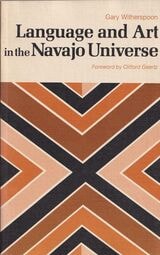
Language and Art in the Navajo Universe
Gary Witherspoon
University of Michigan Press, 1977
Language, History, and Identity
Ethnolinguistic Studies of the Arizona TewaPaul V. Kroskrity
University of Arizona Press, 1993
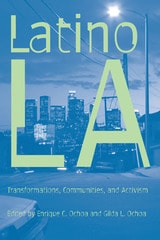
Latino Los Angeles
Transformations, Communities, and ActivismEdited by Enrique C. Ochoa and Gilda L. Ochoa
University of Arizona Press, 2005
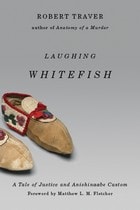
Laughing Whitefish
Robert Traver
Michigan State University Press, 2011
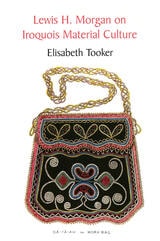
Lewis H. Morgan on Iroquois Material Culture
Elisabeth Tooker
University of Arizona Press, 1994
Life Among the Piutes
Their Wrongs and ClaimsSarah Winnemucca Hopkins
University of Nevada Press, 1994
This autobiographical work was written by one of the country's most well-known Native American women, Sarah Winnemucca. She was a Paiute princess and a major figure in the history of Nevada; her tribe still resides primarily in the state. Life Among the Piutes deals with Winnemucca's life and the plight of the Paiute Indians. Life Among the Piutes is Winnemucca's powerful legacy to both white and Paiute cultures. Following the oral tradition of Native American people, she reaches out to readers with a deeply personal appeal for understanding. She also records historical events from a unique perspective. She managed to record the Native American viewpoint of whites settling the West, told in a language that was not her own and by a woman during the time when even white women were not allowed to vote. Sarah Winnemucca dedicated her life to improving the living and social conditions for her people. She gave more than 400 speeches across the United States and Europe to gain support for the Paiutes. She died of tuberculosis in 1891. Life Among the Piutes was originally published in 1883.
Life in a Mississippian Warscape
Common Field, Cahokia, and the Effects of WarfareMeghan E. Buchanan
University of Alabama Press, 2022
Analyzes Mississippian daily life at Cahokia’s environs during wartime
In Life in a Mississippian Warscape: Common Field, Cahokia, and the Effects of Warfare Meghan E. Buchanan posits that to understand the big histories of warfare, political fragmentation, and resilience in the past archaeologists must also analyze and interpret the microscale actions of the past. These are the daily activities of people before, during, and after historical events. Within warscapes, battles take place in peoples’ front yards, family members die, and the impacts of violence in near and distant places are experienced on a daily basis. This book explores the microscale of daily lives of people living at Common Field, a large, palisaded mound center, during the period of Cahokia’s abandonment and the spread of violence and warfare throughout the Southeast.
Linking together ethnographic, historic, and archaeological sources, Buchanan discusses the evidence that the people of Common Field engaged in novel and hybrid practices in these dangerous times. At the microscale, they adopted new ceramic tempering techniques, produced large numbers of serving vessels decorated with warfare-related imagery, adapted their food practices, and erected a substantial palisade with specially prepared deposits. The overall picture that emerges at Common Field is of a people who engaged in risk-averse practices that minimized their exposure to outside of the palisade and attempted to seek intercession from otherworldly realms through public ceremonies involving warfare-related iconography.
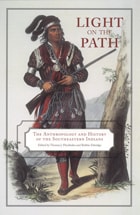
Light on the Path
The Anthropology and History of the Southeastern IndiansThomas J. Pluckhahn
University of Alabama Press, 2006
The scholarship underlying this shift comes from many directions, but much of the groundwork can be attributed to Charles Hudson. The papers in this volume were contributed by Hudson’s colleagues and former students (many now leading scholars themselves) in his honor. The assumption links these papers is that of a historical transformation between Mississippian societies and the Indian societies of the historic era that requires explanation and critical analysis.
In all of the chapters, the legacy of Hudson’s work is evident. Anthropologists, archaeologists, and historians are storming the bridge that connects prehistory and history in a manner unimaginable 20 years ago. While there remains much work to do on the path toward understanding this transformation and constructing a complete social history of the Southeastern Indians, the work of Charles Hudson and his colleagues have shown the way.

Listen but Don't Ask Question
Hawaiian Slack Key Guitar across the TransPacificKevin Fellezs
Duke University Press, 2019
Living Ruins
Native Engagements with Past Materialities in Contemporary Mesoamerica, Amazonia, and the AndesPhilippe Erikson
University Press of Colorado, 2022
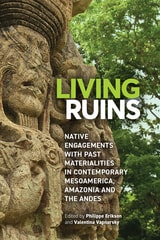
Ten case studies from the Maya region, Amazonia, and the Andes detail and contextualize narratives, rituals, and a range of practices and attitudes toward different kinds of vestiges. The chapters engage with recently debated issues such as regimes of historicity and knowledge, cultural landscapes, conceptions of personhood and ancestrality, artifacts, and materiality. They focus on Indigenous perspectives rather than mainstream narratives such as those mediated by UNESCO, Hollywood, travel agents, and sometimes even academics. The contributions provide critical analyses alongside a multifaceted account of how people relate to the place/time nexus, expanding our understanding of different ontological conceptualizations of the past and their significance in the present.
Living Ruins adds to the lively body of work on the invention of tradition, Indigenous claims on their lands and history, “retrospective ethnogenesis,” and neo-Indianism in a world where tourism, NGOs, and Western essentialism are changing Indigenous attitudes and representations. This book is significant to anyone interested in cultural heritage studies, Amerindian spirituality, and Indigenous engagement with archaeological sites in Latin America.
Contributors: Cedric Becquey, Laurence Charlier Zeineddine, Marie Chosson, Pablo Cruz, Philippe Erikson, Antoinette Molinié, Fernando Santos-Granero, Emilie Stoll, Valentina Vapnarsky, Pirjo Kristiina Virtanen
Living Through the Generations
Continuity and Change in Navajo Women’s LivesJoanne McCloskey
University of Arizona Press, 2007
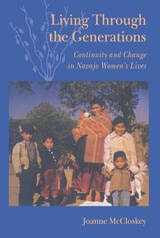
Drawing on ethnographic interviews with 77 women in Crownpoint, New Mexico, and surrounding chapters in the Eastern Navajo Agency, Joanne McCloskey examines the cultural traditions evident in Navajo women’s lives. Navajo women balance the demands of Western society with the desire to preserve Navajo culture for themselves and their families.
Living in the Land of Death
The Choctaw Nation, 1830-1860Donna L. Akers
Michigan State University Press, 2004
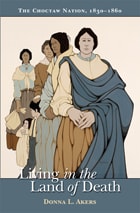
With the Indian Removal Act of 1830, the Choctaw people began their journey over the Trail of Tears from their homelands in Mississippi to the new lands of the Choctaw Nation. Suffering a death rate of nearly 20 percent due to exposure, disease, mismanagement, and fraud, they limped into Indian Territory, or, as they knew it, the Land of the Dead (the route taken by the souls of Choctaw people after death on their way to the Choctaw afterlife). Their first few years in the new nation affirmed their name for the land, as hundreds more died from whooping cough, floods, starvation, cholera, and smallpox.
Living in the Land of the Dead depicts the story of Choctaw survival, and the evolution of the Choctaw people in their new environment. Culturally, over time, their adaptation was one of homesteads and agriculture, eventually making them self-sufficient in the rich new lands of Indian Territory. Along the Red River and other major waterways several Choctaw families of mixed heritage built plantations, and imported large crews of slave labor to work cotton fields. They developed a sub-economy based on interaction with the world market. However, the vast majority of Choctaws continued with their traditional subsistence economy that was easily adapted to their new environment.
The immigrant Choctaws did not, however, move into land that was vacant. The U.S. government, through many questionable and some outright corrupt extralegal maneuvers, chose to believe it had gained title through negotiations with some of the peoples whose homelands and hunting grounds formed Indian Territory. Many of these indigenous peoples reacted furiously to the incursion of the Choctaws onto their rightful lands. They threatened and attacked the Choctaws and other immigrant Indian Nations for years. Intruding on others’ rightful homelands, the farming-based Choctaws, through occupation and economics, disrupted the traditional hunting economy practiced by the Southern Plains Indians, and contributed to the demise of the Plains ways of life.
Looking for Lost Lore
Studies in Folklore, Ethnology, and IconographyGeorge E. Lankford
University of Alabama Press, 2008