Results by title
62 books match the query 'Naturalists' and 5 start with l
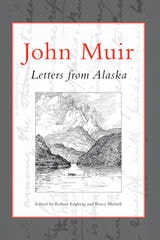
Letters From Alaska
John Muir
University of Alaska Press, 2009
John Muir (1838–1914), founder of the Sierra Club, was one of the most famous and influential environmental conservationists of all time. From 1879 to 1880 Muir traveled the waters of southeastern Alaska in a Tlingit Indian dugout canoe and reported his encounters in a series of letters published in the San Francisco Daily Evening Bulletin. Collected here are Muir’s original letters, bearing the immediacy and candor of his best work and providing a rare account of southeastern Alaska history, alongside breathtaking observations of glaciers and the untamed landscape. Through Muir we encounter gold miners, rogue towns, Taku Inlet, Glacier Bay, profiles of Tlingit Indians, and the infancy of the tourist industry. This collection of work by one of America’s foremost naturalists provides a magnificent look into early conservationist thought and one individual’s encounter with nature.
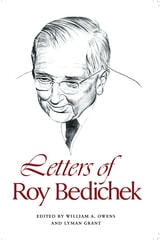
Letters of Roy Bedichek
Edited by William A. Owens and Lyman Grant
University of Texas Press, 1985
Although Roy Bedichek published less than his more famous friends J. Frank Dobie and Walter Prescott Webb, he wrote voluminously and, many say, with more distinction than the others. In addition to his four published books, Bedichek produced a great number of letters through which he communicated his broad interests and deep learning to a wide variety of correspondents.
Prefaced by a biographical sketch, this volume presents a collection of Bedichek letters that give us an insight into his literary and creative development—from his earliest years through his career at the University of Texas and on into his later years. They include letters to his closest associates, J. Frank Dobie and Walter Prescott Webb, and to many old friends, such as William A. Owens, John A. Lomax, and John Henry Faulk. Also included is Bedichek's correspondence with other contemporaries, not all old friends, among them Texas Governor James Ferguson, the recipient of some of Bedichek's most trenchant criticism. Throughout this collection, Bedichek's sparkling wit and profound learning are evident as he discusses his favorite subjects, among them ecology, education, literature, politics, and history, frequently related to Texas.
When Roy Bedichek gave his collection of letters to the Barker Collection in the University of Texas Library, he designated William A. Owens as the authorized editor of the letters, with the restriction that none of them be published until seven years following his death, which came in 1959.

Life of Henry David Thoreau
Henry S. SaltEdited by George Hendrick, Willene Hendrick, and Fritz Oehlschlaeger
University of Illinois Press, 1993
In 1890 Salt published the initial version of Thoreau's Life. With the help of American friends, he revised the book and published it anew six years later. The present volume is the third version of the biography, completed in 1908 but never published in Salt's lifetime.
Combining a concise narrative of Thoreau's life with a perceptive treatment of his ideas and writings, it stands as a penetrating study of Thoreau, stressing his distinctive individuality. Through an astute analysis of the text and a concise biography, the editors illustrate Salt's growth as a scholar and his changing views on Thoreau and Thoreau's philosophy.
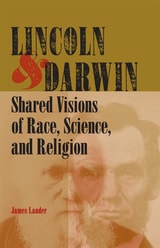
Lincoln and Darwin
Shared Visions of Race, Science, and ReligionJames Lander
Southern Illinois University Press, 2010
Born on the same day in 1809, Abraham Lincoln and Charles Darwin were true contemporaries. Though shaped by vastly different environments, they had remarkably similar values, purposes, and approaches. In this exciting new study, James Lander places these two iconic men side by side and reveals the parallel views they shared of man and God.
While Lincoln is renowned for his oratorical prowess and for the Emancipation Proclamation, as well as many other accomplishments, his scientific and technological interests are not widely recognized; for example, many Americans do not know that Lincoln is the only U.S. president to obtain a patent. Darwin, on the other hand, is celebrated for his scientific achievements but not for his passionate commitment to the abolition of slavery, which in part drove his research in evolution. Both men took great pains to avoid causing unnecessary offense despite having abandoned traditional Christianity. Each had one main adversary who endorsed scientific racism: Lincoln had Stephen A. Douglas, and Darwin had Louis Agassiz.
With graceful and sophisticated writing, Lander expands on these commonalities and uncovers more shared connections to people, politics, and events. He traces how these two intellectual giants came to hold remarkably similar perspectives on the evils of racism, the value of science, and the uncertainties of conventional religion.
Separated by an ocean but joined in their ideas, Lincoln and Darwin acted as trailblazers, leading their societies toward greater freedom of thought and a greater acceptance of human equality. This fascinating biographical examination brings the mid-nineteenth-century discourse about race, science, and humanitarian sensibility to the forefront using the mutual interests and pursuits of these two historic figures.

Living at the End of Time
Two Years in a Tiny HouseJohn Hanson Mitchell
University Press of New England, 2014