Results by title
413 books match the query 'New York' and 17 start with l
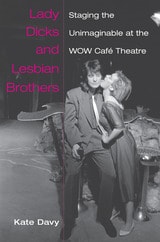
Lady Dicks and Lesbian Brothers
Staging the Unimaginable at the WOW Café TheatreKate Davy
University of Michigan Press, 2010
"A rich and detailed picture of a particular historical moment that has now passed . . . I found myself immersed in the world of the East Village theatre scene and its connections to the larger world of feminism, theatre, and politics. Davy's long-standing association with this world pays off handsomely---it is impossible to imagine that anyone could write a more informative portrait."
---Charlotte Canning, University of Texas at Austin
"After hosting two annual international women's performance festivals in 1980 and '81, Peggy Shaw, Lois Weaver, and comrades put on such extravaganzas as the Freudian Slip party and the Debutante Ball (a coming-out party if ever there was one) to raise the first several months' rent for a narrow vestibule on East 11th Street, where they could keep the creativity going year-round. There, on a stage no bigger than a queen-sized mattress, . . . artists honed their craft, giving birth to a celebratory feminist-and-tinsel-tinged queer aesthetic. By the mid '80s . . . the rent quadrupled, and WOW moved to a city-owned building on East 4th Street, where it has flourished ever since, presenting hundreds---if not thousands---of plays, solo shows, concerts, dance pieces, cabarets, and sundry performances that defy classification."
---Alisa Solomon, Village Voice
Out of a small, hand-to-mouth, women's theater collective called the WOW Café located on the lower east side of Manhattan, there emerged some of the most important theater troupes and performance artists of the 1980s and 1990s, including the Split Britches Company, the Five Lesbian Brothers, Carmelita Tropicana, Holly Hughes, Lisa Kron, Deb Margolin, Reno, Peggy Shaw, and Lois Weaver. The WOW (Women's One World) Café Theatre appeared on the cultural scene at a critical turning point in both the women's movement and feminist theory, putting a witty, hilarious, gender-bending and erotically charged aesthetic on the stage for women in general and lesbians in particular.
The storefront that became the WOW Café Theatre saw dozens of excitingly original and enormously funny performances created, performed, and turned over at lightning speed---a kind of "hit and run" theater. As the demands on the space increased, the women behind WOW organized as a collective and moved their theater to an abandoned doll factory where it continues to operate today. For three decades the WOW Café has nurtured fledgling women writers, designers, and performers who continue to create important performance work.
Lady Dicks and Lesbian Brothers provides a critical history of this avant-garde venture whose ongoing "system of anarchy" has been largely responsible for its thirty-year staying power, after dozens of other women's theaters have collapsed. WOW artists were creating a wholly original cultural landscape across which women could represent themselves on their own terms. Parody, cross-dressing, zany comedy, and an unbridled eroticism are hallmarks of WOW's aesthetic, combined---importantly and powerfully---with a presumptive address to the audience as if everyone onstage, in the audience, and in the world is lesbian. Author Kate Davy's extensive research included in-depth interviews with WOW veterans; newspaper reviews of the earliest productions; and rare, unpublished photographs. The book also includes a chronology of productions that have highlighted WOW's performance schedule since the early '80s.
Kate Davy is currently Provost and Vice Chancellor for Academic Affairs at the University of Michigan-Dearborn. Her previous books include Richard Foreman: Plays and Manifestos and Richard Foreman and the Ontological-Hysteric Theatre.
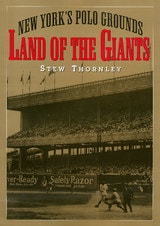
Land of the Giants
New York's Polo GroundsStewart Thornley
Temple University Press, 2000
The Polo Grounds was the home of the New York Giants from John McGraw and Christy Mathewson to Carl Hubbell and Mel Ott to Willie Mays and Leo Durocher. It was also home to the Yankees when Babe Ruth's home run production was soaring (which led to "the House that Ruth built") and home to the Mets in their painful early years.
From "Merkle's Boner," which cost the New York Giants a pennant, to Bobby Thomson's homer, which won them one, Stew Thornley retells the legendary events of the park and its legendary personalities. He reveals little-known facts too:
When the championship Giants and Yankees played in the 1921 and 1922 World Series, it
wasn't a "subway series," because the two teams shared the same ballpark.
The team Bays was playing for when he hit his firstd home run in the Polo Grounds was
not the Giants, but the Birmingham Black Barons. The Polo Grounds was also the site for
the Negro World Series games in 1946 and 1947.
Fans cherish not only the historic moments and team traditions of these stadiums, but treasure their physical peculiarities. Like the "Green Monster" at Fenway Park, the unusual horseshoe shape of the Polo Grounds made the park a special place to play. Stew Thornley analyzes the effect of the very short porches along the foul lines and of a cavernous center field on home run production and hitting in general.
Baseball wasn't the only sport played in the Polo Grounds. The footbal Giants played here from 1925 to 1955, but the stadium was better known for some of the great college games, including the 1924 Army-Notre Dame game in which the "Four Horsemen" of Notre Dame were christened. Numerous boxing title bouts were held at the Polo Grounds, and it also hosted tennis, rodeo, midget auto racing, outdoor opera, ice skating, and religious rallies.
Landscape of Modernity
Essays on New York City, 1900-1940David Ward
Russell Sage Foundation, 1992
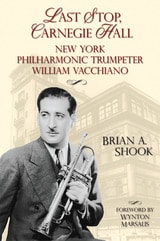
Last Stop, Carnegie Hall
New York Philharmonic Trumpeter William VacchianoBrian A. Shook
University of North Texas Press, 2011
Latino Urban Ethnography and the Work of Elena Padilla
Merida M. Rua
University of Illinois Press, 2010
Learning from Bryant Park
Revitalizing Cities, Towns, and Public SpacesAndrew M. Manshel
Rutgers University Press, 2020
In this new book, Andrew M. Manshel draws from both urbanist theory and his first-hand experiences as a urban public space developer and manager who worked on Bryant Park and later applied its strategies to an equally successful redevelopment project in a very different New York neighborhood: Jamaica, Queens. He candidly describes what does (and doesn’t) work when coordinating urban redevelopment projects, giving special attention to each of the many details that must be carefully observed and balanced, from encouraging economic development to fostering creative communities to delivering appropriate services to the homeless. Learning from Bryant Park is thus essential reading for anyone who cares about giving new energy to downtowns and public spaces.
Leonard Covello and the Making of Benjamin Franklin High School
Education As If Citizenship MatteredMichael C. Johanek and John L. Puckett
Temple University Press, 2006
Life and Death on the New York Dance Floor, 1980–1983
Tim Lawrence
Duke University Press, 2016
Literary Sisters
Dorothy West and Her Circle, A Biography of the Harlem RenaissanceMitchell, Verner D
Rutgers University Press, 2012
Harlem Renaissance writer Dorothy West led a charmed life in many respects. Born into a distinguished Boston family, she appeared in Gershwin’s Porgy and Bess, then lived in the Soviet Union with a group that included Langston Hughes, to whom she proposed marriage. She later became friends with Jacqueline Kennedy Onassis, who encouraged her to finish her second novel, The Wedding, which became the octogenarian author’s first bestseller.
Literary Sisters reveals a different side of West’s personal and professional lives—her struggles for recognition outside of the traditional literary establishment, and her collaborations with talented African American women writers, artists, and performers who faced these same problems. West and her “literary sisters”—women like Zora Neale Hurston and West’s cousin, poet Helene Johnson—created an emotional support network that also aided in promoting, publishing, and performing their respective works. Integrating rare photos, letters, and archival materials from West’s life, Literary Sisters is not only a groundbreaking biography of an increasingly important author but also a vivid portrait of a pivotal moment for African American women in the arts.

Live and Be Well
A Celebration of Yiddish Culture in AmericaVicki Gold Levi
Rutgers University Press, 2000
Like a warm family album, this lively book heralds and documents the rich and vibrant traditions of Yiddish-speaking immigrants and their children in “the golden land,” from the first arrivals to the Second World War.
Meet the famous, the infamous, and the unknown—from hotelier Jenny Grossinger to mobster Jake “Greasy Thumb” Guzik to Moses Solomon, the would-be “Jewish Babe Ruth;” from anarchist Emma Goldman to entertainer Eddie Cantor.
Share the struggles and the triumphs of the labor unions, of Yiddish playwrights and poets. Enter the sweatshops of New York’s Lower East Side and the first Jewish settlements in Los Angeles and Chicago. Taste pastrami from Canter’s Deli in Los Angeles, knishes from Yonah Shimmel’s in New York City, and the famous “smookmit” of the Montreal ghetto.
Lavishly illustrated with photos, cartoons, theater posters, and song sheets, here is a book to delight and inform. It is a joyous celebration of life.
Living in the Lightning
A Cancer JournalRobins, Natalie
Rutgers University Press, 1999
* How should I tell my mother?
* Will my husband remarry after I die?
* What should I wear to chemotherapy?
* What would happen if I jumped off the table during radiation treatment?
* Can I ever forget I have cancer? Robins's warm and sincerely uplifting portrait of quiet courage will give encouragement to the millions of people with cancer, and the millions more who love them.
Loft Living
Culture and Capital in Urban ChangeZukin, Sharon
Rutgers University Press, 2014
Loft Living
Culture and Capital in Urban ChangeZukin, Sharon
Rutgers University Press, 1989
Love Saves the Day
A History of American Dance Music Culture, 1970-1979Tim Lawrence
Duke University Press, 2003
Tales of nocturnal journeys, radical music making, and polymorphous sexuality flow through the arteries of Love Saves the Day like hot liquid vinyl. They are interspersed with a detailed examination of the era’s most powerful djs, the venues in which they played, and the records they loved to spin—as well as the labels, musicians, vocalists, producers, remixers, party promoters, journalists, and dance crowds that fueled dance music’s tireless engine.
Love Saves the Day includes material from over three hundred original interviews with the scene's most influential players, including David Mancuso, Nicky Siano, Tom Moulton, Loleatta Holloway, Giorgio Moroder, Francis Grasso, Frankie Knuckles, and Earl Young. It incorporates more than twenty special dj discographies—listing the favorite records of the most important spinners of the disco decade—and a more general discography cataloging some six hundred releases. Love Saves the Day also contains a unique collection of more than seventy rare photos.
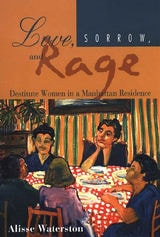
Love, Sorrow, And Rage
Alisse Waterston
Temple University Press, 1999
From drug addiction and the spread of AIDS to the growing gap between rich and poor in the U.S., the topics in this book get front-page coverage in daily newspapers across the country. Waterston seeks to understand, to explain, and to solve the human crisis that surrounds us. Towards this end, she challenges us to look at the ways in which our society and the workings of our political, economic, and popular culture contribute to the suffering experienced by our most vulnerable citizens. An important corrective to popular depictions of the urban poor, Love, Sorrow, and Rage provides a penetrating analysis of the causes and consequences of poverty. It offers a deeper understanding of what leads to and perpetuates poverty and of the human complex of love, sorrow, and rage felt by those who experience it.
Love, Sorrow, and Rage will engage readers interested in urban studies, women's studies, social issues and policies, anthropology, sociology, political economy, and New York City life.
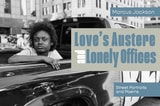
Love’s Austere and Lonely Offices
Street Portraits and PoemsMarcus Jackson
Northwestern University Press, 2026
An astounding collection of photographs from a renowned poet
Created during the tumultuous years of 2020 and 2021, Love’s Austere and Lonely Offices: Street Portraits and Poems intersects the lens of accomplished poet and photographer Marcus Jackson with his words. The focus: the Black experience and existence. Amid isolation, protest, and survival, Jackson is the aperture and scribe giving visual consciousness and breath to these human portraits. His camera strips the view of endless cycles of social and moral injustices, presenting a resonant collection of photographs that make space for the moments and the people whose beings represent the ongoing interplay between history, society, and the individual soul.
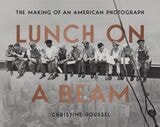
Lunch on a Beam
The Making of an American PhotographChristine Roussel
Brandeis University Press, 2026
Lunch on a Beam, also known as Lunch Atop a Skyscraper, shows ironworkers eating lunch on a steel beam during the construction of Rockefeller Center’s RCA Building in 1932. It’s a photo so famous you can likely picture it in your mind: seated in a row, eleven men chat and break bread 850 feet above the ground, the dense cityscape behind them. While the scene may look spontaneous, the photo was taken during a publicity shoot to promote Rockefeller Center’s new skyscraper. And despite the image’s renown, for years, little information was available about its subjects or its photographer.
In Lunch on a Beam, Rockefeller Center archivist Christine Roussel interweaves the art, architectural, and social history behind the photograph with her personal experience as a confidante to the financiers who developed Rockefeller Center. She tells the stories of the fearless photographers, brazen publicity men, the ironworkers, and their immigrant and Indigenous communities. This portrait of eleven construction workers, she points out, is also a celebration of the nation’s richest man. She examines how, in the depths of the Great Depression, John D. Rockefeller, Jr., took it upon himself to build a monument to American industry and sell it to the public.
Featuring striking images from the Rockefeller Center Archives, Lunch on a Beam calls attention to the fascinating paradoxes contained in a single photo and celebrates the men who built an architectural marvel at great personal risk. This is a story of art and commerce, and the role of a photograph in the mythmaking of New York City.