Results by title
210 books match the query 'Philosophy, Theory & Social Aspects' and 9 start with l

Leadership and Organizational Culture
New Perspectives on Administrative Theory and PracticeEdited by Thomas J. Sergiovanni and John E. Corbally
University of Illinois Press, 1984
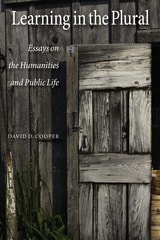
Learning in the Plural
Essays on the Humanities and Public LifeDavid D. Cooper
Michigan State University Press, 2014
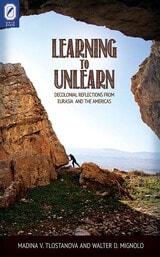
Learning to Unlearn
Decolonial Reflections from Eurasia and the AmericasMadina V. Tlostanova and Walter D. Mignolo
The Ohio State University Press, 2012
Learning to Unlearn: Decolonial Reflections from Eurasia and the Americas is a complex, multisided rethinking of the epistemic matrix of Western modernity and coloniality from the position of border epistemology. Colonial and imperial differences are the two key concepts to understanding how the logic of coloniality creates ontological and epistemic exteriorities. Being at once an enactment of decolonial thinking and an attempt to define its main grounds, mechanisms, and concepts, the book shifts the politics of knowledge from “studying the other” (culture, society, economy, politics) toward “the thinking other” (the authors).
Addressing areas as diverse as the philosophy of higher education, gender, citizenship, human rights, and indigenous agency, and providing fascinating and little-known examples of decolonial thinking, education, and art, Madina V. Tlostanova and Walter D. Mignolo deconstruct the modern architecture of knowledge—its production and distribution as manifested in the corporate university. In addition, the authors dwell on and define the echoing global decolonial sensibilities as expressed in the Americas and in peripheral Eurasia. The book is an important addition to the emerging transoceanic inquiries that introduce decolonial thought and non-Western border epistemologies not only to update or transform disciplines but also to act and think decolonially in the global futures to come.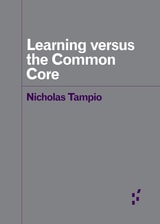
Learning versus the Common Core
Nicholas Tampio
University of Minnesota Press, 2019
An open challenge to Common Core’s drive for uniformity
Nicholas Tampio watched as his kindergartner’s class shifted from one where teachers, aides, parents, and students worked hard to create a rewarding educational experience to one in which teachers delivered hours-long lectures using packaged lesson plans. Learning versus the Common Core explains how standards-based education reform is transforming nearly every aspect of public education by looking closely at the standards, the agenda of people pushing standards-based reform, and how these fit within a global pattern of education reform. With a nod to the philosophy of John Dewey, Tampio concludes with a vision of what democratic education can look like today—and how people can form rhizomatic alliances across different political and ethical backgrounds to fight the Common Core.
Forerunners: Ideas First
Short books of thought-in-process scholarship, where intense analysis, questioning, and speculation take the lead
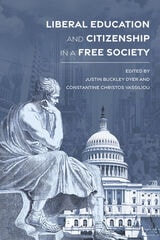
Liberal Education and Citizenship in a Free Society
Justin Buckley Dyer
University of Missouri Press, 2023
With Liberal Education and Citizenship in a Free Society, a collection of 19 original essays, editors Justin Dyer and Constantine Vassiliou present the work of a diverse group of scholars to assess the value of a liberal arts education in the face of market, technological, cultural, and political forces shaping higher learning today.
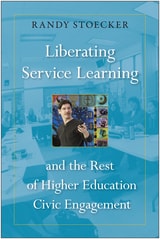
Liberating Service Learning and the Rest of Higher Education Civic Engagement
Randy Stoecker
Temple University Press, 2016
Randy Stoecker has been “practicing” forms of community-engaged scholarship, including service learning, for thirty years now, and he readily admits, “Practice does not make perfect.” In his highly personal critique, Liberating Service Learning and the Rest of Higher Education Civic Engagement, the author worries about the contradictions, unrealized potential, and unrecognized urgency of the causes as well as the risks and rewards of this work.
Here, Stoecker questions the prioritization and theoretical/philosophical underpinnings of the core concepts of service learning: 1. learning, 2. service, 3. community, and 4. change. By “liberating” service learning, he suggests reversing the prioritization of the concepts, starting with change, then community, then service, and then learning. In doing so, he clarifies the benefits and purpose of this work, arguing that it will create greater pedagogical and community impact.
Liberating Service Learning and the Rest of Higher Education Civic Engagement challenges—and hopefully will change—our thinking about higher education community engagement.
Liberation and Education
Perspectives on Black Educational ThoughtRonald E. Chennault
Rutgers University Press, 2026
Liberation and Education brings together a collection of essays about Black educators’ and organizations’ quests to cultivate and employ educational strategies for the liberation of Black people. The contributions examine the enduring nature of Black people’s thinking about education prior to and through enslavement to the present. It documents a variety of critical accounts of how Black people have developed ways to free themselves mentally from the legacies of slavery, the view of Black inferiority, and historical and systemic racism.
Living with Moral Disagreement
The Enduring Controversy about Affirmative ActionMichele S. Moses
University of Chicago Press, 2016
Central to Moses’s analysis is the argument that we need to understand disagreements about affirmative action as inherently moral, products of conflicts between deeply held beliefs that shape differing opinions on what justice requires of education policy. As she shows, differing opinions on affirmative action result from different conceptual values, for instance, between being treated equally and being treated as an equal or between seeing race-consciousness as a pernicious political force or as a necessary variable in political equality. As Moses shows, although moral disagreements about race-conscious policies and similar issues are often seen as symptoms of dysfunctional politics, they in fact create rich opportunities for discussions about diversity that nourish democratic thought and life.
Luckpilled
Compassion, Justice, and Hope in a World Nobody DeservesAaron Rabinowitz
Rutgers University Press, 2027
What if everything we experience comes down to luck? Humans have struggled with anxiety about the pervasiveness of luck since the concept first arose in ancient societies, and attempts to address the problem have shaped the modern world. Yet the problem of luck has persisted because resolving it requires letting go of a tenacious group of deeply rooted illusions centered on the need to feel that people mostly get what they deserve.
In Luckpilled: Compassion, Justice, and Hope in a World Nobody Deserves, Aaron Rabinowitz combines cutting-edge work on the philosophy, psychology, politics, and pedagogy of luck to argue that we are better off embracing the pervasiveness of luck and abandoning harmful illusions that preserve an unjust status-quo. Using the luckpilling techniques offered in this book can help readers to cultivate compassion, empathy, gratitude and humility, as well as a stronger connection to activities they find meaningful.