Results by title
1066 books match the query 'Political' and 43 start with l
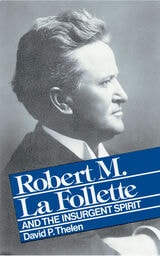
La Follette Insurgent Spirit
David P. Thelen
University of Wisconsin Press, 1986
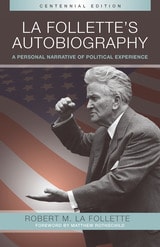
La Follette’s Autobiography
A Personal Narrative of Political ExperiencesRobert M. La Follette; Foreword by Matthew Rothschild
University of Wisconsin Press, 2013
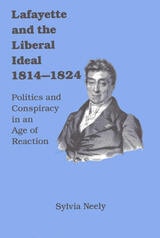
Lafayette and the Liberal Ideal 1814-1824
Politics and Conspiracy in an Age of ReactionSylvia Neely
Southern Illinois University Press, 1991
Sylvia Neely provides both the first scholarly study of Lafayette’s life after the French Revolution and a detailed analysis of French politics during the early Restoration.
Lafayette, advocating a liberalism based on the American example, used both legal and illegal means to overturn a conservative government. The personification of liberalism for many of his contemporaries, he and his friends Benjamin Constant, Voyer d’Argenson, and Charles Goyet saw themselves as fighters in an international struggle that set liberalism against the forces of reaction and obscurantism. Although he ultimately failed, Lafayette was convinced that the liberal ideals derived from the Enlightenment and from his personal mentor, George Washington, would prevail.
Neely makes Lafayette’s actions clear by considering seriously the principles that guided his life and by describing the political climate of the early nineteenth century. She discloses previously overlooked features of the revolutions of the 1820s which account for the divisions among the revolutionary groups. She also examines relationships between Lafayette and the prominent writers and thinkers of the period, among them Augustin Thierry, Jeremy Bentham, Lady Morgan, and Frances Wright.
Latinos in Nevada
A Political, Economic, and Social ProfileJohn P. Tuman
University of Nevada Press, 2021
This extensive study by a distinguished and multidisciplinary team of scholars discusses the impact of the Latinx population from the early development of the state of Nevada and highlights their roles in society, as well as the specific implications of their growing presence in the state. It also contemplates the future of the Latinx population and the role they will continue to play in politics and the economy.
This in-depth examination of a large and relatively understudied population will be of interest to scholars and students who study disparities in health and education opportunities as well as the political and economic climate among Latinos and other groups in Nevada and beyond. A political, economic, and demographic profile, this book:
- Explores the history, growth, and diversity of the Latinx population.
- Draws on an array of census data, voter surveys, statistics, interviews, and health, education, employment, wages, and immigration statistics.
- Evaluates key trends in employment, education, religion, and health.
- Analyzes the dynamics of political participation, including implications of a growing Latino political electorate in a western swing state.
- Assesses key determinants of health disparities, educational inequities, and civic engagement among Latinos in the state.
- Demonstrates the impact of the Great Recession of 2008 and provides a preliminary assessment of the COVID-19 pandemic on Latino employment.
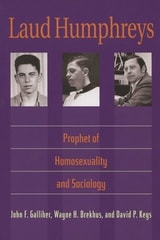
Laud Humphreys
Prophet of Homosexuality and SociologyJohn F. Galliher, Wayne Brekhus, and David P. Keys
University of Wisconsin Press, 2004
Law and the Good Life
On the Political Philosophy of AristotleRobert C. Bartlett
University of Chicago Press, 2026
A fresh reading of the relationship between moral and political philosophy in Aristotle’s thought.
Our democracies promise the rights to life, liberty, and the pursuit of happiness—at least, within the confines of the law. Yet the law is an ineffective guide to the good life; laws can be arbitrary, even immoral. What other limit, then, should direct us as we pursue our own fulfillment?
In Law and the Good Life, philosopher Robert C. Bartlett examines Aristotle’s consideration of this question. Rather than defer to authority, Aristotle invites us to ground ourselves in moral virtue and intellectual fulfillment, an argument he develops in both Politics and Nicomachean Ethics. As political creatures, Aristotle tells us, we are capable of moral action and therefore must embrace that capacity; at the same time, as rational creatures, we must understand what is true, even without regard to action. In taking these insights together, Bartlett offers a new reading of Aristotle’s political philosophy, one he hopes might serve as a prudent lodestar in our own turbulent times.
Law, Legislation, and Liberty, Volume 19
F. A. Hayek
University of Chicago Press, 2021
In this critical entry in the University of Chicago’s Collected Works of F. A. Hayek series, political philosopher Jeremy Shearmur collates Hayek’s three-part study of law and liberty and places Hayek’s writings in careful historical context. Incisive and unrestrained, Law, Legislation, and Liberty is Hayek at his late-life best, making it essential reading for understanding the philosopher’s politics and worldview.
These three volumes constitute a scaling up of the framework offered in Hayek’s famed The Road to Serfdom. Volume 1, Rules and Order, espouses the virtues of classical liberalism; Volume 2, The Mirage of Social Justice, examines the societal forces that undermine liberalism and, with it, liberalism’s capacity to induce “spontaneous order”; and Volume 3, The Political Order of a Free People, proposes alternatives and interventions against emerging anti-liberal movements, including a rule of law that resides in stasis with personal freedom.
Shearmur’s treatment of this challenging work—including an immersive new introduction, a conversion of Hayek’s copious endnotes to footnotes, corrections to Hayek’s references and quotations, and the provision of translations to material that Hayek cited only in languages other than English—lends it new importance and accessibility. Rendered anew for the next generations of scholars, this revision of Hayek’s Law, Legislation, and Liberty is sure to become the standard.
Leadership
Lessons from a Life in DiplomacySimon Mcdonald
Haus Publishing, 2023
Simon McDonald argues that we should reflect on the nature and strategies of leadership before entering a leadership role, and we should look to examples of others to help us in shaping our own approaches.
Over nearly four decades in Her Majesty's Diplomatic Service, McDonald worked for four permanent under-secretaries and a dozen senior ambassadors before becoming a permanent under-secretary himself and leading the Service—which has over 14,000 staff members in 270 countries—for five years. He also worked directly for six foreign secretaries and under five prime ministers. Observing these people undertaking such important and difficult work, McDonald saw the behaviors which helped them achieve their objectives, as well as those which hindered them.
In this book, McDonald synthesizes the skills he’s learned through his many years working in diplomacy, offering an insightful contribution amid heightening debates over the leadership of the United Kingdom. Considering the future of British leadership, he makes a case for the reform of the monarchy, the cabinet, civil service, and, in particular, the House of Lords, of which he has been a member since 2021.
Lectures on Kant's Political Philosophy
Hannah Arendt
University of Chicago Press, 1982
Lenin
Seán Sheehan
Haus Publishing, 2003
Leo Strauss and His Catholic Readers
Geoffrey M. Vaughan
Catholic University of America Press, 2018
Leo Strauss and the Problem of Political Philosophy
Michael P. Zuckert and Catherine H. Zuckert
University of Chicago Press, 2014
Leo Strauss and the Rediscovery of Maimonides
Kenneth Hart Green
University of Chicago Press, 2013
An invaluable companion to Green’s comprehensive collection of Strauss’s writings on Maimonides, this volume shows how Strauss confronted the commonly accepted approaches to the medieval philosopher, resulting in both a new understanding of Maimonides and a new depth and direction for his own thought. It will be welcomed by anyone engaged with the work of either philosopher.
Leo Strauss on Hegel
Leo Strauss
University of Chicago Press, 2019
Leo Strauss on Hegel reconstructs Strauss’s seminar on Hegel, supplemented by passages from an earlier version of the seminar from which only fragments of a transcript remain. Strauss focused his seminar on the lectures collected in The Philosophy of History, which he considered more accessible than Hegel’s written works. In his own lectures on Hegel, Strauss continues his project of demonstrating how modern philosophers related to ancient thought and explores the development and weaknesses of modern political theory. Strauss is especially concerned with the relationship in Hegel between empirical history and his philosophy of history, and he argues for the primacy of religion in Hegel’s understanding of history and society. In addition to a relatively complete transcript, Leo Strauss on Hegel also includes annotations, which bring context and clarity to the text.
Leo Strauss on Hobbes
Leo Strauss
University of Chicago Press, 0
Leo Strauss’s final seminar on Thomas Hobbes, representing the culmination of more than four decades of close engagement.
Leo Strauss spent more than four decades studying the work of Thomas Hobbes. In Strauss’s distinctive genealogy of political thought, Hobbes emerges as a decisive counterpoint, not only to the Ancients, but also to Strauss’s own project. Strauss saw Hobbes as both the founder of modern natural rights and the modern esoteric writer par excellence.
Strauss’s final seminar on Hobbes from 1964 is the culmination of his engagement with Hobbes’s corpus and contains the richest account of Strauss’s final insight into the nerve of Hobbes’s thought, linking human consciousness to power and passion. The seminar reflects on the tension between Hobbes’s scientific and political frameworks, Hobbes’s emphasis on rights over duties, Hobbes’s atheism, and Hobbes’s attention to causal thinking as the core capacity that sets humans apart from other animals. It also includes Strauss’s most sustained exchange with the Marxist political theorist, C. B. Macpherson. Their rival interpretations of why the state of nature takes the form of a war of all against all led Strauss to reconsider his earlier writings on Hobbes, including those parts that pertain to other thinkers, such as Aristotle, Locke, and Spinoza.
With an introductory essay by Karl Dahlquist that traces the evolution of Strauss’s thinking on Hobbes and frames Strauss’s dialogue with Macpherson, this 1964 seminar on Hobbes is a vital contribution to political thought and intellectual history.
Leo Strauss on Maimonides
The Complete WritingsLeo Strauss
University of Chicago Press, 2013
With Leo Strauss on Maimonides, Kenneth Hart Green presents for the first time a comprehensive, annotated collection of Strauss’s writings on Maimonides, comprising sixteen essays, three of which appear in English for the first time. Green has also provided careful translations of materials that had originally been quoted in Hebrew, Arabic, Latin, German, and French; written an informative introduction highlighting the original contributions found in each essay; and brought references to out-of-print editions fully up to date. The result will become the standard edition of Strauss’s writings on Maimonides.
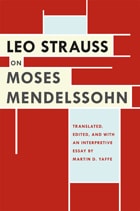
Leo Strauss on Moses Mendelssohn
Leo Strauss
University of Chicago Press, 2012
Moses Mendelssohn (1729–86) was the leading Jewish thinker of the German Enlightenment and the founder of modern Jewish philosophy. His writings, especially his attempt during the Pantheism Controversy to defend the philosophical legacies of Spinoza and Leibniz against F. H. Jacobi’s philosophy of faith, captured the attention of a young Leo Strauss and played a critical role in the development of his thought on one of the fundamental themes of his life’s work: the conflicting demands of reason and revelation.
Leo Strauss on Moses Mendelssohn is a superbly annotated translation of ten introductions written by Strauss to a multi-volume critical edition of Mendelssohn’s work. Commissioned in Weimar Germany in the 1920s, the project was suppressed and nearly destroyed during Nazi rule and was not revived until the 1960s. In addition to Strauss’s introductions, Martin D. Yaffe has translated Strauss’s editorial remarks on each of the passages he annotates in Mendelssohn’s texts and brings those together with the introductions themselves. Yaffe has also contributed an extensive interpretive essay that both analyzes the introductions on their own terms and discusses what Strauss writes elsewhere about the broader themes broached in his Mendelssohn studies.
Strauss’s critique of Mendelssohn represents one of the largest bodies of work by the young Strauss on a single thinker to be made available in English. It illuminates not only a formerly obscure phase in the emergence of his thought but also a critical moment in the history of the German Enlightenment.
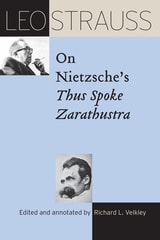
Leo Strauss on Nietzsche's "Thus Spoke Zarathustra"
Leo Strauss
University of Chicago Press, 2017
With Leo Strauss on Nietzsche’s “Thus Spoke Zarathustra,” eminent Strauss scholar Richard L. Velkley presents Strauss’s lectures on Zarathustra with superb annotations that bring context and clarity to the critical role played by Nietzsche in shaping Strauss’s thought. In addition to the broad relationship between Nietzsche and political philosophy, Strauss adeptly guides readers through Heidegger’s confrontations with Nietzsche, laying out Heidegger’s critique of Nietzsche’s “will to power” while also showing how Heidegger can be read as a foil for his own reading of Nietzsche. The lectures also shed light on the relationship between Heidegger and Strauss, as both philosophers saw Nietzsche as a central figure for understanding the crisis of philosophy and Western civilization.
Strauss’s reading of Nietzsche is one of the important—yet little appreciated—philosophical inquiries of the past century, both an original interpretation of Nietzsche’s thought and a deep engagement with the core problems that modernity posed for political philosophy. It will be welcomed by anyone interested in the work of either philosopher.
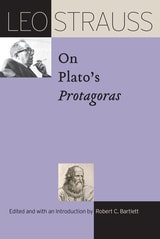
Leo Strauss on Plato’s "Protagoras"
Leo Strauss
University of Chicago Press, 2022
This book offers a transcript of Strauss’s seminar on Plato’s Protagoras taught at the University of Chicago in the spring quarter of 1965, edited and introduced by renowned scholar Robert C. Bartlett. These lectures have several important features. Unlike his published writings, they are less dense and more conversational. Additionally, while Strauss regarded himself as a Platonist and published some work on Plato, he published little on individual dialogues. In these lectures Strauss treats many of the great Platonic and Straussian themes: the difference between the Socratic political science or art and the Sophistic political science or art of Protagoras; the character and teachability of virtue, its relation to knowledge, and the relations among the virtues, courage, justice, moderation, and wisdom; the good and the pleasant; frankness and concealment; the role of myth; and the relation between freedom of thought and freedom of speech.
In these lectures, Strauss examines Protagoras and the sophists, providing a detailed discussion of Protagoras as it relates to Plato’s other dialogues and the work of modern thinkers. This book should be of special interest to students both of Plato and of Strauss.
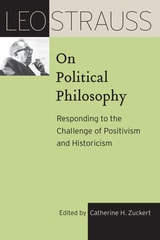
Leo Strauss on Political Philosophy
Responding to the Challenge of Positivism and HistoricismLeo Strauss
University of Chicago Press, 2018
Leo Strauss on Political Philosophy brings together the lectures that comprise Strauss’s “Introduction to Political Philosophy.” Strauss begins by emphasizing the importance of political philosophy in determining the common good of society and critically examining the two most powerful contemporary challenges to the possibility of using political theory to learn about and develop the best political order: positivism and historicism. In seeking the common good, classical political philosophers like Plato and Aristotle did not distinguish between political philosophy and political science. Today, however, political philosophy must contend with the contemporary belief that it is impossible to know what the good society really is. Strauss emphasizes the need to study the history of political philosophy to see whether the changes in the understanding of nature and conceptions of justice that gradually led people to believe that it is not possible to determine what the best political society is are either necessary or valid. In doing so, he ranges across the entire history of political philosophy, providing a valuable, thematically coherent foundation, including explications of many canonical thinkers, such as Auguste Comte and Immanuel Kant, about whom Strauss did not write extensively in his published writings.
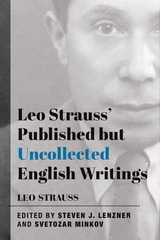
Leo Strauss' Published but Uncollected English Writings
Leo Strauss
St. Augustine's Press, 2023
The most complete record of Strauss's thought includes his books together with his other published and unpublished writings and lectures. The achievement of this volume is to present in one collection every piece Strauss chose to publish in English that he did not himself include in a collection or a book. The material is arranged chronologically so as to avoid undue categorization by the editors.
Among the highlights of these works published between 1937 and 1972 are striking formulations not to be found in his books on the relationship between philosophy and society, which is perhaps the most prominent theme in Strauss’s corpus taken as a whole; rare ‘personal’ statements that shed light on his self-understanding as a philosopher; his first writing devoted solely to a classical thinker (“The Spirit of Sparta or the Taste of Xenophon”); his first piece devoted to Plato, “On a New Interpretation of Plato’s Political Philosophy,” his most searching engagement with Jean-Jacques Rousseau; his first treatment of the thought of Niccolò Machiavelli and a wonderful, later treatment of Machiavelli’s relation to ancient writers; and a critical review of a book on Xenophon’s Hellenica.
This complete collection of Strauss’s scattered work in English is invaluable for those interested in the political philosopher, to be sure. But it is also an important contribution to the field in general as well as the history of philosophy.
Leo Strauss's Defense of the Philosophic Life
Reading "What Is Political Philosophy?"Edited by Rafael Major
University of Chicago Press, 2012
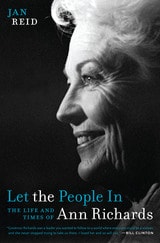
Let the People In
The Life and Times of Ann RichardsBy Jan Reid
University of Texas Press, 2012
Winner, Coral Horton Tullis Memorial Prize, Texas State Historical Association, 2012
Liz Carpenter Award for Research in the History of Women, Texas State Historical Association, 2012
When Ann Richards delivered the keynote of the 1988 Democratic National Convention and mocked President George H. W. Bush—“Poor George, he can’t help it. He was born with a silver foot in his mouth”—she instantly became a media celebrity and triggered a rivalry that would alter the course of American history. In 1990, Richards won the governorship of Texas, upsetting the GOP’s colorful rancher and oilman Clayton Williams. The first ardent feminist elected to high office in America, she opened up public service to women, blacks, Hispanics, Asian Americans, gays, and the disabled. Her progressive achievements and the force of her personality created a lasting legacy that far transcends her rise and fall as governor of Texas.
In Let the People In, Jan Reid draws on his long friendship with Richards, interviews with her family and many of her closest associates, her unpublished correspondence with longtime companion Bud Shrake, and extensive research to tell a very personal, human story of Ann Richards’s remarkable rise to power as a liberal Democrat in a conservative Republican state. Reid traces the whole arc of Richards’s life, beginning with her youth in Waco, her marriage to attorney David Richards, her frustration and boredom with being a young housewife and mother in Dallas, and her shocking encounters with Lyndon Johnson and Jimmy Carter. He follows Richards to Austin and the wild 1970s scene and describes her painful but successful struggle against alcoholism. He tells the full, inside story of Richards’s rise from county office and the state treasurer’s office to the governorship, where she championed gun control, prison reform, environmental protection, and school finance reform, and he explains why she lost her reelection bid to George W. Bush, which evened his family’s score and launched him toward the presidency. Reid describes Richards’s final years as a world traveler, lobbyist, public speaker, and mentor and inspiration to office holders, including Hillary Clinton. His nuanced portrait reveals a complex woman who battled her own frailties and a good-old-boy establishment to claim a place on the national political stage and prove “what can happen in government if we simply open the doors and let the people in.”
Liberalism and Empire
A Study in Nineteenth-Century British Liberal ThoughtUday Singh Mehta
University of Chicago Press, 1999
Ironically, it is in the conservative Edmund Burke—a severe critic of Britain's arrogant, paternalistic colonial expansion—that Mehta finds an alternative and more capacious liberal vision. Shedding light on a fundamental tension in liberal theory, Liberalism and Empire reaches beyond post-colonial studies to revise our conception of the grand liberal tradition and the conception of experience with which it is associated.
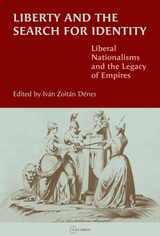
Liberty and the Search for Identity
Ivan Zoltan Denes
Central European University Press, 2006
Liberty, Equality, Fraternity
And Three Brief EssaysJames Fitzjames Stephen
University of Chicago Press, 1992
"His writing is strong meat—full of the threat of hellfrire, the virtue of government by the lash and a fervent belief that the state cannot remain neutral but has a duty to espouse a moral code."—Roderick Munday, Cambridge Law Journal

Libraries Promoting Reflective Dialogue In A Time Of Political
Andrea Baer
Assoc of College & Research Libraries, 2019
Lies, Passions, and Illusions
The Democratic Imagination in the Twentieth CenturyFrançois Furet
University of Chicago Press, 2014
This conversation would be, sadly, Furet’s last—he died while Ricoeur was completing his edits. Ricoeur did not want to publish his half without Furet’s approval, so what remains is Furet’s alone, an astonishingly cohesive meditation on the political passions of the twentieth century. With strokes at once broad and incisive, he examines the many different trajectories that nations of the West have followed over the past hundred years. It is a dialogue with history as it happened but also as a form of thought. It is a dialogue with his critics, with himself, and with those major thinkers—from Tocqueville to Hannah Arendt—whose ideas have shaped our understanding of the tragic dramas and upheavals of the modern era. It is a testament to the crucial role of the historian, a reflection on how history is made and lived, and how the imagination is a catalyst for political change. Whether new to Furet or deeply familiar with his work, readers will find thought-provoking assessments on every page, a deeply moving look back at one of the most tumultuous periods of history and how we might learn and look forward from it.
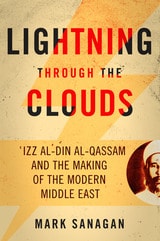
Lightning through the Clouds
?Izz al-Din al-Qassam and the Making of the Modern Middle EastBy Mark Sanagan
University of Texas Press, 2020
Lightning through the Clouds is the first English-language life-and-times biography of ‘Izz al-Din al-Qassam, a preeminent figure who helped to reshape the political and religious landscape of the region. A Syrian-born, Egyptian-educated cleric, he went from the battlefields of World War I to join the anticolonialist fight against the French in Syria. Sentenced to be executed by the French military, he managed to escape to Palestine, where he became an increasingly popular presence, moved by the plight of the poor and disenfranchised. Outraged by British rule and the encroachment of Zionism, he formed a secret society to resist the colonization of Palestine first by the British and then by Jewish immigrants from Europe, once again taking up arms and advocating for a moral, political, and military jihad as the only solution. His death at the hands of Palestine Police in 1935 drew thousands to his funeral and sparked the 1936–1939 Arab Revolt.
His influence continues to be felt in the region; for example, the military wing of the Palestinian Hamas organization is named the ‘Izz al-Din al-Qassam Brigades. Al-Qassam is either revered or reviled, depending on the observers’ perspective, but he is without doubt a fascinating and historically significant individual whose influence on the past, and our present, makes this examination of his life both important and timely.
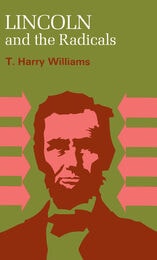
Lincoln and the Radicals
T. Harry Williams
University of Wisconsin Press, 1960
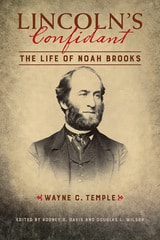
Lincoln's Confidant
The Life of Noah BrooksWayne C. Temple, Edited by Douglas L. Wilson and Rodney O. Davis: Introduction by Michael Burlingame
University of Illinois Press, 2019
Best remembered as one of the president's few true intimates, Brooks was also a nationally recognized man of letters, who mingled with the likes of Mark Twain and Bret Harte. Temple draws on archives and papers long thought lost to re-create Brooks's colorful life and relationship with Lincoln. Brooks's closeness to the president made him privy to Lincoln's thoughts on everything from literature to spirituality. Their frank conversations contributed to the wealth of journalism and personal observations that would make Brooks's writings a much-quoted source for historians and biographers of Lincoln.
A carefully researched and well-documented scholarly resource, Lincoln's Confidant is the story of an extraordinary friendship by one of the luminaries of Lincoln scholarship.

Lincoln's Rail-Splitter
GOVERNOR RICHARD J. OGLESBYMark A. Plummer
University of Illinois Press, 2001
Like Lincoln, Oglesby was born in Kentucky and spent most of his youth in central Illinois, apprenticing as a lawyer in Springfield and standing for election to the Illinois legislature, Congress, and U.S. Senate. Oglesby participated in the battles of Cerro Gordo and Vera Cruz during the Mexican-American War and made a small fortune in the gold rush of 1849. A superlative speaker, he ran unsuccessfully for Congress in a campaign that featured the Lincoln-Douglas debates of 1858, then was elected to the Illinois senate as Lincoln was being elected president.
When the Civil War came, Oglesby resigned his senate seat to lead a regiment of the Union Army. Critically wounded at the Battle of Corinth, he was promoted to major general before resigning his commission to run successfully for governor of Illinois. Oglesby was at Lincoln's deathbed and led the effort to build the sixteenth president's tomb in Springfield, delivering the major oration at its dedication. In the postwar years, Oglesby drew on his popularity, his association with the martyred Lincoln, and his extraordinary stump-speaking skills to rescue the Illinois Republican Party in a time of political crisis. In his third term as governor, Oglesby faced massive labor unrest in the aftermath of the Haymarket affair.
A mature and thoughtful biography, Lincoln's Rail-Splitter chronicles Oglesby's pivotal contribution to American political life while also providing a sensitive portrait of this able, energetic man.
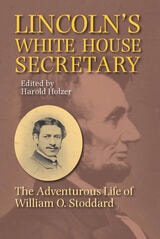
Lincoln's White House Secretary
The Adventurous Life of William O.StoddardEdited by Harold Holzer
Southern Illinois University Press, 2007
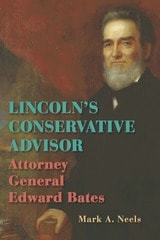
Lincoln’s Conservative Advisor
Attorney General Edward BatesMark A. Neels
Southern Illinois University Press, 2025
How a traditionalist became part of Lincoln's volatile team of rivals
Edward Bates, a founding father of Missouri and leader of the Missouri Whig Party, served as Abraham Lincoln’s attorney general during the American Civil War. The first full biography of Bates in nearly sixty years, Lincoln’s Conservative Advisor reveals a striking portrait of this complex figure in Lincoln’s cabinet.
Author Mark A. Neels begins with Bates’s youth in Virginia and follows him through his political and judicial career, his candidacy as a Republican presidential nominee in 1860, and his appointment to Abraham Lincoln’s cabinet as attorney general. Bates became an essential advisor to the president on key legal, military, and political matters from emancipation to civil liberties and equal rights, and his official opinion on Habeas Corpus would have a permanent effect on presidential authority and separation of powers. When Lincoln drafted the Emancipation Proclamation, Bates found himself at odds with the president and the radical anti-slavery members of the cabinet. But more than simply highlighting the conflict within Lincoln’s administration, Bates’s example lays bare the strong philosophical divisions within the Republican Party during the Civil War era. These divisions were present at the party’s inception, crystallized during the war, and ultimately sparked a political realignment during Reconstruction. Bates was at the center of this divide for most of its existence, and in some cases assisted in its promulgation.
Bates, a fierce opponent of radical Republicanism, embodies the conflict among Republicans over issues of slavery and citizenship. In both judicial and elective office, he was compelled by a sense of duty to defy the populism of President Andrew Jackson and Senator Thomas Hart Benton, and, later, the proslavery forces that threatened to tear the nation apart. Though he had owned slaves, Bates represented at least one enslaved woman’s suit for freedom, released from bondage the people he had enslaved, and aided Lincoln in his efforts to end slavery nationwide. Bates’s opinion on citizenship as attorney general helped pave the way for equal rights. His opinions were not always popular with either his colleagues or the greater populace, but Bates remained true to his conservative principles—a set of values shared by a large swath of Lincoln’s Republican Party—which positioned him as a leading opponent of radical Republicanism during the Reconstruction Era.
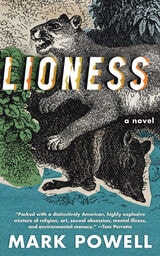
Lioness
A NovelMark Powell
West Virginia University Press, 2022
In the fall of 2018, a bomb goes off at a water-bottling plant in the mountains of southwest Virginia, an incident the FBI declares an act of ecoterrorism. Arrested at the scene is Chris Bright, a mountain hermit with a long history of activism. Unaccounted for—and presumed dead—is Mara Wood, an installation artist who in the last two years has lost her son and left her husband.
But Mara’s estranged husband David cannot quite believe she is dead, and as he goes about reconstructing the story of what happened, he begins to imagine an alternate narrative—one in which their son doesn’t die and his wife doesn’t leave him, one in which his wife doesn’t carry on a secret relationship with Chris Bright, a man bent on fighting back against the environmental despoliation of his Appalachian home. Lioness is a page-turning, heart-wrenching examination of extremism: What pushes people to act violently, and is that violence ever justified?
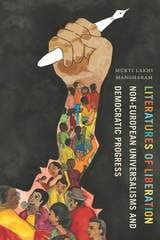
Literatures of Liberation
Non-European Universalisms and Democratic ProgressMukti Lakhi Mangharam
The Ohio State University Press, 2017
In this way, she posits that these universalisms reconceptualize democratic ideals not as Western imports into precolonial societies but as regional phenomena tied to local relations of power and resistance. In charting these alternative democratic trajectories, Mangharam examines oft-overlooked regional and vernacular literary forms and provides a fresh approach to current theorizations of postcolonial and world literatures.
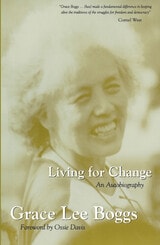
Living For Change
An AutobiographyGrace Lee Boggs
University of Minnesota Press, 1998
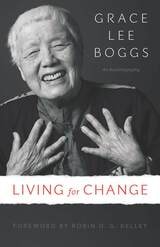
Living for Change
An AutobiographyGrace Lee Boggs
University of Minnesota Press, 2016
No one can tell in advance what form a movement will take. Grace Lee Boggs’s fascinating autobiography traces the story of a woman who transcended class and racial boundaries to pursue her passionate belief in a better society. Now with a new foreword by Robin D. G. Kelley, Living for Change is a sweeping account of a legendary human rights activist whose network included Malcolm X and C. L. R. James. From the end of the 1930s, through the Cold War, the Civil Rights era, and the rise of the Black Panthers to later efforts to rebuild crumbling urban communities, Living for Change is an exhilarating look at a remarkable woman who dedicated her life to social justice.
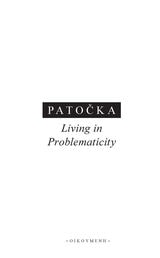
Living in Problematicity
Jan Patocka
Karolinum Press, 2020
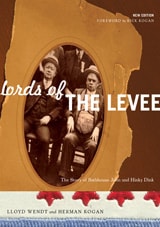
Lords of the Levee
The Story of Bathhouse John and Hinky DinkLloyd Wendt and Herman Kogan
Northwestern University Press, 2005
In the early twentieth century, John Coughlin and Mike Kenna ruled Chicago's First Ward, the lucrative lakefront territory and nerve center of the city. It was one of the most infamous havens for vice in the entire country, home to gambling palaces with marble floors and mahogany bars, to a mini-city of thugs and prostitutes and down-and-outers, to dives and saloons of every description and a few beyond description. In short, the First was a gold mine. In a city where money talked, it made boisterous Bathhouse John and the laconic Hinky Dink Kenna the most powerful men in town. This classic of Chicago-style journalism traces the careers of these two operators as they rose to the top of the city's political world.
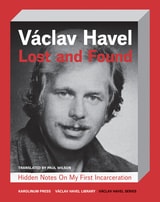
Lost and Found
Hidden Notes on My First IncarcerationVáclav Havel
Karolinum Press, 2026
An English translation of a lost manuscript of reflections from former Czech dissident Václav Havel.
In the fall of 1977, after the dramatic events of the “Year of Charter 77,” Václav Havel wrote a report recounting the first hours after the Charter 77 Declaration, the four months of investigative detention imposed on him by the communist regime, his release, and the agonizing self-examination that followed. In this text, the former dissident describes not only the investigation but also the Faustian guilt he felt after promising to scale back his political activities in exchange for his freedom. As he later recalled in a book-length interview with journalist Karel Hvíždala titled Dálkový výslech (Long-distance interrogation), he hid the roughly one-hundred-page manuscript somewhere, admitting: “I don’t know where it is anymore. Maybe I’ll find it someday.” He never did. The manuscript resurfaced only recently, discovered among the papers of his close friend Zdenek Urbánek. Fragmentary yet strikingly immediate, the text has been reconstructed and published by the Václav Havel Library, with the English translation appearing on the occasion of the world-renowned intellectual’s ninetieth birthday.
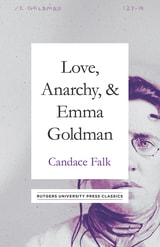
Love, Anarchy, & Emma Goldman
A BiographyCandace Serena Falk
Rutgers University Press, 2019
“Fascinating …With marvelous clarity and depth, Candace Falk illuminates for us an Emma Goldman shaped by her time yet presaging in her life the situation and conflicts of women in our time.” —Tillie Olsen
One of the most famous political activists of all time, Emma Goldman was also infamous for her radical anarchist views and her “scandalous” personal life. In public, Goldman was a firebrand, confidently agitating for labor reform, anarchism, birth control, and women’s independence. But behind closed doors she was more vulnerable, especially when it came to the love of her life.
Love, Anarchy, & Emma Goldman is an account of Goldman’s legendary career as a political activist. But it is more than that—it is a biography that offers an intimate look at how Goldman’s passion for social reform dovetailed with her passion for one man: Chicago activist, hobo king, and red-light district gynecologist Ben Reitman. Candace Falk takes us into the heart of their tumultuous love affair, finding that even as Goldman lectured on free love, she confronted her own intense jealousy.
As director of the Emma Goldman papers, Falk had access to over 40,000 writings by Goldman—including her private letters and notes—and she draws upon these archives to give us a rare insight into this brilliant, complex woman’s thoughts. The result is both a riveting love story and a primer on an exciting, explosive era in American politics and intellectual life.
L’étrange survie du néolibéralisme
Colin Crouch
Diaphanes, 2016
L'Étrange Survie du néolibéralisme s'efforce en effet de révéler comment ce combat s'est soldé par l'avènement de très grandes entreprises, un nouveau pouvoir qui fait désormais pièce à l'État comme aux marchés. Loin de s'apparenter à un aride examen des théories néolibérales, ce texte très accessible cherche à penser le rôle de la « société civile », la seule force, selon l'auteur, en mesure de faire face à la triade formée par le marché, l’État et les conglomérats.