Results by title
1427 books match the query 'Politics' and 34 start with l

La Pinta
Chicana/o Prisoner Literature, Culture, and PoliticsBy B. V. Olguín
University of Texas Press, 2009
In this groundbreaking study based on archival research about Chicana and Chicano prisoners—known as Pintas and Pintos—as well as fresh interpretations of works by renowned Pinta and Pinto authors and activists, B. V. Olguín provides crucial insights into the central roles that incarceration and the incarcerated have played in the evolution of Chicana/o history, cultural paradigms, and oppositional political praxis.
This is the first text on prisoners in general, and Chicana/o and Latina/o prisoners in particular, that provides a range of case studies from the nineteenth century to the present. Olguín places multiple approaches in dialogue through the pairing of representational figures in the history of Chicana/o incarceration with specific themes and topics. Case studies on the first nineteenth-century Chicana prisoner in San Quentin State Prison, Modesta Avila; renowned late-twentieth-century Chicano poets Raúl Salinas, Ricardo Sánchez, and Jimmy Santiago Baca; lesser-known Chicana pinta and author Judy Lucero; and infamous Chicano drug baron and social bandit Fred Gómez Carrasco are aligned with themes from popular culture such as prisoner tattoo art and handkerchief art, Hollywood Chicana/o gangxploitation and the prisoner film American Me, and prisoner education projects.
Olguín provides a refreshing critical interrogation of Chicana/o subaltern agency, which too often is celebrated as unambiguously resistant and oppositional. As such, this study challenges long-held presumptions about Chicana/o cultures of resistance and proposes important explorations of the complex and contradictory relationship between Chicana/o agency and ideology.
Labor Histories
Class, Politics, and the Working-Class ExperienceEdited by Eric Arnesen, Julie Greene, and Bruce Laurie
University of Illinois Press, 1998
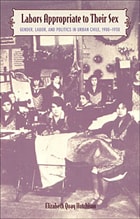
Labors Appropriate to Their Sex
Gender, Labor, and Politics in Urban Chile, 1900–1930Elizabeth Quay Hutchison
Duke University Press, 2001
In addition to population and industrial censuses, Hutchison culls published and archival sources to illuminate such misconceptions and to reveal how women’s paid labor became a locus of anxiety for a society confronting social problems—both real and imagined—that were linked to industrialization and modernization. The limited options of working women were viewed by politicians, elite women, industrialists, and labor organizers as indicative of a society in crisis, she claims, yet their struggles were also viewed as the potential springboard for reform. Labors Appropriate to Their Sex thus demonstrates how changing norms concerning gender and work were central factors in conditioning the behavior of both male and female workers, relations between capital and labor, and political change and reform in Chile.
Land, Politics, and Memory in Five Nija'ib' K'iche' Títulos
"The Title and Proof of Our Ancestors"Mallory Matsumoto
University Press of Colorado, 2017
Land, Politics, and Memory in Five Nija’ib’ K’iche’ Títulos is a careful analysis and translation of five Highland Maya títulos composed in the sixteenth century by the Nija’ib’ K’iche’ of Guatemala. The Spanish conquest of Highland Guatemala entailed a series of sweeping changes to indigenous society, not the least of which were the introduction of the Roman alphabet and the imposition of a European system of colonial government. Introducing the history of these documents and placing them within the context of colonial-era Guatemala, this volume provides valuable information concerning colonial period orthographic practice, the K’iche’ language, and language contact in Highland Guatemala.
For each text, author Mallory E. Matsumoto provides a photographic copy of the original document, a transliteration of its sixteenth-century modified Latin script, a transcription into modern orthography, an extensive morphologic analysis, and a line-by-line translation into English, as well as separate prose versions of the transcription and translation. No complete English translation of this set of manuscripts has been available before, nor has any Highland Maya título previously received such extensive analytical treatment.
Offering insight into the reality of indigenous Highland communities during this period, Land, Politics, and Memory in Five Nija’ib’ K’iche’ Títulos is an important primary source for linguists, historians, and experts in comparative literature. It will also be of significant interest to students and scholars of ethnohistory, linguistics, Latin American studies, anthropology, and archaeology.
Late Colonial Sublime
Neo-Epics and the End of RomanticismG. S. Sahota
Northwestern University Press, 2018
By bringing together distinct literary canons—both metropolitan and colonial, hegemonic and subaltern, Western and Eastern, all of which took shape upon the common realities of imperial capitalism—Late Colonial Sublime takes an original dialectical approach. It experiments with fragments, parallaxes, and constellational form to explore the aporias of modernity as well as the possible futures they may signal in our midst. A bold intervention into contemporary debates that synthesizes a wealth of sources, this book will interest readers and scholars in world literature, critical theory, postcolonial criticism, and South Asian studies.
Late Theory
Fredric Jameson, or The Persistence of ReadingPhillip E. Wegner
University of Minnesota Press, 2026
A bold, dialectic engagement with Fredric Jameson’s thought
Fredric Jameson (1934–2024) is widely regarded as the most influential literary and cultural theorist of the past fifty years. The culmination of more than three decades of sustained engagement with Jameson’s work, Late Theory offers a critical response to his late writings, namely the final volumes of his “Poetics of Social Forms,” to develop an original and dialectical reading practice in conversation with his evolving thought.
Jameson’s final works bring renewed clarity to three foundational concerns that structure his intellectual legacy. These are the problem of periodization and the challenge of grasping the present as a historical category, the dangers posed by the rise of moralizing modes of critique in literary and cultural studies, and the radical interpretive potential unlocked by allegory and the semiotic method. Phillip E. Wegner shows how these late interventions mark not a conclusion but an extension of Jameson’s long-standing project: envisioning the dialectic as a living, collective form of reasoning—a “thought mode of the future” capable of transforming our lives.
At its core, Late Theory is a passionate argument for cultural and aesthetic education as a practice of solidarity and imagination. Foregrounding Jameson’s enduring effort to build heterogeneous communities of readers committed to shared inquiry, Wegner affirms the urgency of reading, teaching, and thinking together in a moment of crisis for the university and global culture.
Retail e-book files for this title are screen-reader friendly with images accompanied by short alt text and/or extended descriptions.
Latin America in Caricature
By John J. Johnson
University of Texas Press, 1993
“Not many readers will thank the author as he deserves, for he has told us more about ourselves than we perhaps wish to know,” predicted Latin America in Books of Latin America in Caricature—an exploration of more than one hundred years of hemispheric relations through political cartoons collected from leading U.S. periodicals from the 1860s through 1980.
The cartoons are grouped according to recurring themes in diplomacy and complementing visual imagery. Each one is accompanied by a lengthy explanation of the incident portrayed, relating the drawing to public opinion of the day. Johnson’s thoughtful introduction and the comments that precede the individual chapters provide essential background for understanding U.S. attitudes and policies toward Latin America.
Latinx Art
Artists, Markets, and PoliticsArlene Dávila
Duke University Press, 2020
Law as Politics
Carl Schmitt’s Critique of LiberalismDavid Dyzenhaus, ed.
Duke University Press, 1998
One of the major players in the 1920s debates, an outspoken critic of the Versailles Treaty and the Weimar Constitution, and a member of the Nazi party who provided juridical respectability to Hitler’s policies, Schmitt contended that people are a polity only to the extent that they share common enemies. He saw the liberal notion of a peaceful world of universal citizens as a sheer impossibility and attributed the problems of Weimar to liberalism and its inability to cope with pluralism and political conflict. In the decade since his death, Schmitt’s writings have been taken up by both the right and the left and scholars differ greatly in their evaluation of Schmitt’s ideas. Law as Politics thematically organizes in one volume the varying engagements and confrontations with Schmitt’s work and allows scholars to acknowledge—and therefore be in a better position to negotiate—an important paradox inscribed in the very nature of liberal democracy.
Law as Politics will interest political philosophers, legal theorists, historians, and anyone interested in Schmitt’s relevance to current discussions of liberalism.
Contributors. Heiner Bielefeldt, Ronald Beiner, Ernst-Wolfgang Bockenforde, Renato Cristi, David Dyzenhaus, Robert Howse, Ellen Kennedy, Dominique Leydet, Ingeborg Maus, John P. McCormick, Reinhard Mehring, Chantal Mouffe, William E. Scheuerman, Jeffrey Seitzer
Learning from Other Worlds
Estrangement, Cognition, and the Politics of Science Fiction and UtopiaPatrick Parrinder, ed.
Duke University Press, 2001
In exploring the relationship between imaginative invention and that of allegory or fable, the essays in Learning from Other Worlds comment on the field’s most abiding concerns and employ a variety of critical approaches—from intellectual history and genre studies to biographical criticism, feminist cultural studies, and political textual analysis. Among the topics discussed are the works of John Wyndham, Kim Stanley Robinson, Stanislau Lem, H.G. Wells, and Ursula Le Guin, as well as the media’s reactions to the 1997 cloning of Dolly the Sheep. Darko Suvin’s characteristically outspoken and penetrating afterword responds to the essays in the volume and offers intimations of a further stage in his long and distinguished career.
This useful compendium and companion offers a coherent view of science fiction studies as it has evolved while paying tribute to the debt it owes Suvin, one of its first champions. As such, it will appeal to critics and students of science fiction, utopia, and fantasy writing.
Contributors. Marc Angenot, Marleen S. Barr, Peter Fitting, Carl Freedman, Edward James, Fredric Jameson, David Ketterer, Gerard Klein, Tom Moylan, Rafail Nudelman, Darko Suvin

Leaving Art
Writings on Performance, Politics, and Publics, 1974-2007Suzanne Lacy
Duke University Press, 2010
Legal Inversions
Lesbians, Gay Men, and the Politics of the Lawedited by Didi Herman and Carl Stychin
Temple University Press, 1995
Law reform struggles have always been a part of the grassroots lesbian and gay agenda. These critical essays examine the politics of these engagements, of lesbians, gay men, and the law in the United States, Canada, and the United Kingdom. From a wide range of perspectives, the contributors combine new conceptual insights with a concern for the practicalities of political engagements, tackling such vital topics as legal definitions of homosexuality, AIDS activism, and race and sexuality.
Contributors: Katherine Arnup, Susan Boyd, Peter M. Cicchino, Davina Cooper, Bruce R. Deming, Mary Eaton, William F. Flanagan, Leo Flynn, Shelley A. M. Gavigan, Leslie J. Moran, Katherine M. Nicholson, Cynthia Petersen, Ruthann Robson, and the editors.
Lenin Reloaded
Toward a Politics of Truth, sic viiSebastian Budgen, Stathis Kouvelakis, and Slavoj Žižek, eds.
Duke University Press, 2007
These essays, some of which are appearing in English for the first time, bring Lenin face-to-face with the problems of today, including war, imperialism, the imperative to build an intelligentsia of wage earners, the need to embrace the achievements of bourgeois society and modernity, and the widespread failure of social democracy. Lenin Reloaded demonstrates that truth and partisanship are not mutually exclusive as is often suggested. Quite the opposite—in the present, truth can be articulated only from a thoroughly partisan position.
Contributors. Kevin B. Anderson, Alain Badiou, Etienne Balibar, Daniel Bensaïd, Sebastian Budgen, Alex Callinicos, Terry Eagleton, Fredric Jameson, Stathis Kouvelakis, Georges Labica, Sylvain Lazarus, Jean-Jacques Lecercle, Lars T. Lih, Domenico Losurdo, Savas Michael-Matsas, Antonio Negri, Alan Shandro, Slavoj Žižek
Leo Strauss and the Politics of Exile
The Making of a Political PhilosopherEugene Sheppard
Brandeis University Press, 2007
Leo Strauss, Max Weber, and the Scientific Study of Politics
Nasser Behnegar
University of Chicago Press, 2002
Behnegar's impressive book argues that Strauss was not against the scientific study of politics, but he did reject the idea that it could be built upon political science's unexamined assumption of the distinction between facts and values. Max Weber was, for Strauss, the most profound exponent of values relativism in social science, and Behnegar's explication artfully illuminates Strauss's critique of Weber's belief in the ultimate insolubility of all value conflicts.
Strauss's polemic against contemporary political science was meant to make clear the contradiction between its claim of value-free premises and its commitment to democratic principles. As Behnegar ultimately shows, values—the ethical component lacking in a contemporary social science—are essential to Strauss's project of constructing a genuinely scientific study of politics.
Lessons from Sarajevo
A War Stories PrimerJim Hicks
University of Massachusetts Press, 2013
Hicks explores the limitations of the sentimental tradition in war representation and asks how the work of artists and writers can help us to move beyond the constraints of that tradition. Ranging from Walt Whitman's writings on the Civil War to the U.S. wars in Iraq and Afghanistan, and focusing on the innovative and creative artistic expressions arising out of the wars of the former Yugoslavia, Hicks examines how war has been perceived, described, and interpreted. He analyzes the limitations on knowledge caused by perspective and narrative position and looks closely at the distinct yet overlapping roles of victims, observers, and aggressors. In the end, he concludes, war stories today should be valued according to the extent they make it impossible for us to see these positions as assigned in advance, and immutable.
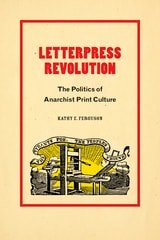
Letterpress Revolution
The Politics of Anarchist Print CultureKathy E. Ferguson
Duke University Press, 2023
Libraries amid Protest
Books, Organizing, and Global ActivismSherrin Frances
University of Massachusetts Press, 2020
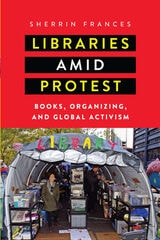
Libraries amid Protest unpacks how these protest libraries—labor-intensive, temporary installations in parks and city squares, poorly protected from the weather, at odds with security forces—continue to arise. In telling the stories of these surprising and inspiring spaces through interviews and other research, Sherrin Frances confronts the complex history of American public libraries. She argues that protest libraries function as the spaces of opportunity and resistance promised, but not delivered, by American public libraries.
Lincoln and the Politics of Christian Love
Grant N. Havers
University of Missouri Press, 2009
In this provocative book, Grant Havers argues that charity is a central tenet of what Lincoln once called America’s “political religion.” He explores the implications of making Christian love the highest moral standard for American democracy, showing how Lincoln’s legacy demands that a true democracy be charitable toward all—and that only a people who lived according to such ideals could succeed in building democracy as Lincoln understood it.
Havers argues that it is simplistic to conflate Lincoln’s invocation of “with charity for all” with his abiding support for the ideal of human equality. The ethic of charity in his view also brought a uniquely Christian realism to the universalism of democracy. He also describes how, since World War I, intellectuals and political leaders have denied that there exists a necessary relation between democracy and Christian love, proposing that democracy is sufficiently ethical without reliance on a specific religious tradition. Today’s neoconservatives and liberals instead posit a universal yearning for democracy that requires no foundation in the ethic of charity. Havers shows that this democratic universalism, espoused by those who believe a “chosen people” should uphold the natural rights of humanity, is alien to the sober thought of both the founders and Lincoln.
This carefully argued work defends Lincoln’s understanding of charity as essential to democracy while emphasizing the difficulty of fusing this ethic with the desire to spread democracy to people who do not share America’s Christian heritage. In considering the prospect of America’s leaders rediscovering a moral foreign policy based on charity rather than the costly idolization of democracy, Lincoln and the Politics of Christian Love makes a timely contribution to the wider debate over both the meaning of religion in American politics and the mission of America in the world—and opens a new window on Lincoln’s lasting legacy.
Lincoln's Defense of Politics
The Public Man and His Opponents in the Crisis Over SlaveryThomas E. Schneider
University of Missouri Press, 2005
Lincoln's Legacy
Ethics and PoliticsEdited by Phillip Shaw Paludan
University of Illinois Press, 2007
The four new essays in Lincoln's Legacy describe major ethical problems that the sixteenth president navigated what can be learned from how he did so. The distinguished and award-winning Lincoln scholars William Miller, Mark E. Neely Jr., Phillip Shaw Paludan, and Mark Summers describe Lincoln’s attitudes and actions during encounters with questions of politics, law, constitutionalism, patronage, and democracy. The remarkably focused essays include an assessment of Lincoln's virtues in the presidency, the first study on Lincoln and patronage in more than a decade, a challenge to the cliché of Lincoln the democrat, and a study of habeas corpus, Lincoln, and state courts. On the eve of the bicentennial celebration of Lincoln’s birth, Lincoln’s Legacy highlights his enduring importance in contemporary conversations about law, politics, and democracy.
Lincoln's Sense of Humor
Richard Carwardine
Southern Illinois University Press, 2017
Winner, ISHS Annual Award for a Scholarly Publication, 2018
Abraham Lincoln was the first president to make storytelling, jokes, and laughter tools of the office, and his natural sense of humor has become legendary. Lincoln’s Sense of Humor registers the variety, complexity of purpose, and ethical dimension of Lincoln’s humor and pinpoints the political risks Lincoln ran in telling jokes while the nation was engaged in a bloody struggle for existence.
Complete with amusing anecdotes, this book shows how Lincoln’s uses of humor evolved as he matured and explores its versatility, range of expressions, and multiple sources: western tall tales, morality stories, bawdy jokes, linguistic tricks, absurdities, political satire, and sharp wit. While Lincoln excelled at self-mockery, nothing gave him greater pleasure than satirical work lampooning hypocrisy and ethical double standards. He particularly enjoyed David R. Locke’s satiric writings by Petroleum V. Nasby, a fictional bigoted secessionist preacher, and the book explores the nuances of Lincoln’s enthusiasm for what he called Locke’s genius, showing the moral springs of Lincoln’s humor.
Richard Carwardine methodically demonstrates that Lincoln’s funny stories were the means of securing political or personal advantage, sometimes by frontal assault on opponents but more often by depiction through parable, obfuscation through hilarity, refusal through wit, and diversion through cunning. Throughout his life Lincoln worked to develop the humorist’s craft and hone the art of storytelling. His jokes were valuable in advancing his careers as politician and lawyer and in navigating his course during a storm-tossed presidency. His merriness, however, coexisted with self-absorbed contemplation and melancholy. Humor was his lifeline; dark levity acted as a tonic, giving Lincoln strength to tackle the severe challenges he faced. At the same time, a reputation for unrestrained, uncontrollable humor gave welcome ammunition to his political foes. In fact, Lincoln’s jocularity elicited waves of criticism during his presidency. He was dismissed as a “smutty joker,” a “first rate second rate man,” and a “joke incarnated.”
Since his death, Lincoln’s anecdotes and jokes have become detached from the context that had given them their political and cultural bite, losing much of the ironic and satiric meaning that he had intended. With incisive analysis and laugh-inducing examples, Carwardine helps to recapture a strong component of Lincoln’s character and reanimates the good humor of our sixteenth president.
Literacy and Racial Justice
The Politics of Learning after Brown v. Board of EducationCatherine Prendergast. Foreword by Gloria Ladson-Billings
Southern Illinois University Press, 2003
In anticipation of the fiftieth anniversary of the landmark Brown v. Board of Education decision, Catherine Prendergast draws on a combination of insights from legal studies and literacy studies to interrogate contemporary multicultural literacy initiatives, thus providing a sound historical basis that informs current debates over affirmative action, school vouchers, reparations, and high-stakes standardized testing.
As a result of Brown and subsequent crucial civil rights court cases, literacy and racial justice are firmly enmeshed in the American imagination—so much so that it is difficult to discuss one without referencing the other. Breaking with the accepted wisdom that the Brown decision was an unambiguous victory for the betterment of race relations, Literacy and Racial Justice: The Politics of Learning after Brown v. Board of Education finds that the ruling reinforced traditional conceptions of literacy as primarily white property to be controlled and disseminated by an empowered majority. Prendergast examines civil rights era Supreme Court rulings and immigration cases spanning a century of racial injustice to challenge the myth of assimilation through literacy. Advancing from Ways with Words, Shirley Brice Heath’s landmark study of desegregated communities, Prendergast argues that it is a shared understanding of literacy as white property which continues to impact problematic classroom dynamics and education practices.
To offer a positive model for reimagining literacy instruction that is truly in the service of racial justice, Prendergast presents a naturalistic study of an alternative public secondary school. Outlining new directions and priorities for inclusive literacy scholarship in America, Literacy and Racial Justice concludes that a literate citizen is one who can engage rather than overlook longstanding legacies of racial strife.
Literature and Politics in the Central American Revolutions
By John Beverley and Marc Zimmerman
University of Texas Press, 1990
“This book began in what seemed like a counterfactual intuition . . . that what had been happening in Nicaraguan poetry was essential to the victory of the Nicaraguan Revolution,” write John Beverley and Marc Zimmerman. “In our own postmodern North American culture, we are long past thinking of literature as mattering much at all in the ‘real’ world, so how could this be?” This study sets out to answer that question by showing how literature has been an agent of the revolutionary process in Nicaragua, El Salvador, and Guatemala.
The book begins by discussing theory about the relationship between literature, ideology, and politics, and charts the development of a regional system of political poetry beginning in the late nineteenth century and culminating in late twentieth-century writers. In this context, Ernesto Cardenal of Nicaragua, Roque Dalton of El Salvador, and Otto René Castillo of Guatemala are among the poets who receive detailed attention.
Literature and Revolution
British Responses to the Paris Commune of 1871Owen Holland
Rutgers University Press, 2022
This book examines how a heterogeneous group of authors in Britain responded to the Commune. In doing so, it provides the first full-length critical study of the reception and representation of the Commune in Britain during the closing decades of the nineteenth century, showing how discussions of the Commune functioned as a screen to project hope and fear, serving as a warning for some and an example to others. Writers considered in the book include John Ruskin, Edward Bulwer-Lytton, Eliza Lynn Linton, Mary Elizabeth Braddon, Anne Thackeray Ritchie, Margaret Oliphant, George Gissing, Henry James, William Morris, Alfred Austin and H.G. Wells. As the book shows, many, but not all, of these writers responded to the Commune with literary strategies that sought to stabilize bourgeois subjectivity in the wake of the traumatic shock of a revolutionary event. The book extends critical understanding of the Commune’s cultural afterlives and explores the relationship between literature and revolution.
Living Legislation
Durability, Change, and the Politics of American LawmakingEdited by Jeffery A. Jenkins and Eric M. Patashnik
University of Chicago Press, 2012
Living Rome
Space, Identity, and the Politics of BelongingEdited by Isabella Clough Marinaro and Will Haynes
Lever Press, 2026
Living Rome: Space, Identity, and the Politics of Belonging looks beyond the romanticized image of Rome, towards a kaleidoscopic view of the city shaped by inequalities, socio-political challenges, and acts of resistance and solidarity. In the wake of urban developments related to migration, housing shortages, COVID-19, crime, and other social changes, this volume offers a grounded approach, mapping the contemporary realities of Italy’s capital from a variety of methodological standpoints. Contributors argue that the unseen fringes, both geographically peripheral and those embedded within the very heart of Rome, are crucial for understanding its social dynamics. These ‘hidden’ geographies foster vibrant communities, challenge ideas of home and belonging, and act as key sites of creativity, resistance and everyday life.
Bringing together urban sociologists, anthropologists, geographers, demographers, criminologists, decolonizing and feminist scholars, this study contributes to a growing body of research on the city and its social movements, aiming to inform policy and contribute to a more just and sustainable Rome. Using a variety of methods, from quantitative cartography and policy analysis to (auto)ethnography and creative methodologies, this volume speaks well beyond Rome, to conversations about cities worldwide.
Living in Arcadia
Homosexuality, Politics, and Morality in France from the Liberation to AIDSJulian Jackson
University of Chicago Press, 2009
In Paris in 1954, a young man named André Baudry founded Arcadie, an organization for “homophiles” that would become the largest of its kind that has ever existed in France, lasting nearly thirty years. In addition to acting as the only public voice for French gays prior to the explosion of radicalism of 1968, Arcadie—with its club and review—was a social and intellectual hub, attracting support from individuals as diverse as Jean Cocteau and Michel Foucault and offering support and solidarity to thousands of isolated individuals. Yet despite its huge importance, Arcadie has largely disappeared from the historical record.
The main cause of this neglect, Julian Jackson explains in Living in Arcadia, is that during the post-Stonewall era of queer activism, Baudry’s organization fell into disfavor, dismissed as conservative, conformist, and closeted. Through extensive archival research and numerous interviews with the reclusive Baudry, Jackson challenges this reductive view, uncovering Arcadie’s pioneering efforts to educate the European public about homosexuality in an era of renewed repression. In the course of relating this absorbing history, Jackson offers a startlingly original account of the history of homosexuality in modern France.
Local Interests
Politics, Policy, and Interest Groups in US City GovernmentsSarah F. Anzia
University of Chicago Press, 2022
Local politics in the United States once seemed tranquil compared to the divisiveness and dysfunction of the country’s national politics. Those days have passed. As multiple wide-ranging crises have thrust America’s local governments into the spotlight, they have also exposed policy failures and systemic problems that have mounted for years. While issues such as policing and the cost of housing are debated nationally, much of the policymaking surrounding these issues occurs locally. In Local Interests, Sarah F. Anzia explores how local governments—and the interest groups that try to influence them—create the policies that drive the national conversation: policing, economic development, housing, and challenges of taxing and spending.
Anzia examines local interest groups in terms of the specific policies they pursue, including how these groups get active in politics and what impact they have. By offering new perspectives on these issues, Anzia contributes to our knowledge of how interest groups function and the significant role they play in shaping broader social outcomes.

Local Interests
Politics, Policy, and Interest Groups in US City GovernmentsSarah F. Anzia
University of Chicago Press, 2022
A policy-focused approach to understanding the role of interest groups in US municipal governments.
Local politics in the United States once seemed tranquil compared to the divisiveness and dysfunction of the country’s national politics. Those days have passed. As multiple wide-ranging crises have thrust America’s local governments into the spotlight, they have also exposed policy failures and systemic problems that have mounted for years. While issues such as policing and the cost of housing are debated nationally, much of the policymaking surrounding these issues occurs locally. In Local Interests, Sarah F. Anzia explores how local governments—and the interest groups that try to influence them—create the policies that drive the national conversation: policing, economic development, housing, and challenges of taxing and spending.
Anzia examines local interest groups in terms of the specific policies they pursue, including how these groups get active in politics and what impact they have. By offering new perspectives on these issues, Anzia contributes to our knowledge of how interest groups function and the significant role they play in shaping broader social outcomes.
Loser Sons
Politics and AuthorityAvital Ronell
University of Illinois Press, 2013

Love and Politics in the Contemporary Spanish American Novel
By Aníbal González
University of Texas Press, 2010
The Latin American Literary Boom was marked by complex novels steeped in magical realism and questions of nationalism, often with themes of surreal violence. In recent years, however, those revolutionary projects of the sixties and seventies have given way to quite a different narrative vision and ideology. Dubbed the new sentimentalism, this trend is now keenly elucidated in Love and Politics in the Contemporary Spanish American Novel.
Offering a rich account of the rise of this new mode, as well as its political and cultural implications, Aníbal González delivers a close reading of novels by Miguel Barnet, Elena Poniatowska, Isabel Allende, Alfredo Bryce Echenique, Gabriel García Márquez, Antonio Skármeta, Luis Rafael Sánchez, and others. González proposes that new sentimental novels are inspired principally by a desire to heal the division, rancor, and fear produced by decades of social and political upheaval. Valuing pop culture above the avant-garde, such works also tend to celebrate agape—the love of one's neighbor—while denouncing the negative effects of passion (eros). Illuminating these and other aspects of post-Boom prose, Love and Politics in the Contemporary Spanish American Novel takes a fresh look at contemporary works.
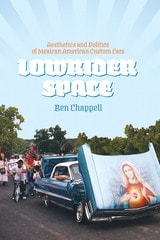
Lowrider Space
Aesthetics and Politics of Mexican American Custom CarsBy Ben Chappell
University of Texas Press, 2012
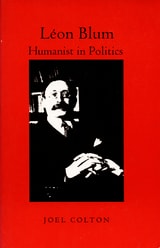
Léon Blum
Humanist in PoliticsJoel Colton
Duke University Press, 0