Results by title
194 books match the query 'Practice' and 10 start with l
Language Diversity in the Classroom
From Intention to PracticeEdited by Geneva Smitherman and Victor Villanueva. Foreword by Suresh Canagarajah
Southern Illinois University Press, 2003
It’s no secret that, in most American classrooms, students are expected to master standardized American English and the conventions of Edited American English if they wish to succeed. Language Diversity in the Classroom: From Intention to Practice works to realign these conceptions through a series of provocative yet evenhanded essays that explore the ways we have enacted and continue to enact our beliefs in the integrity of the many languages and Englishes that arise both in the classroom and in professional communities.
Edited by Geneva Smitherman and Victor Villanueva, the collection was motivated by a survey project on language awareness commissioned by the National Council of Teachers of English and the Conference on College Composition and Communication.
All actively involved in supporting diversity in education, the contributors address the major issues inherent in linguistically diverse classrooms: language and racism, language and nationalism, and the challenges in teaching writing while respecting and celebrating students’ own languages. Offering historical and pedagogical perspectives on language awareness and language diversity, the essays reveal the nationalism implicit in the concept of a “standard English,” advocate alternative training and teaching practices for instructors at all levels, and promote the respect and importance of the country’s diverse dialects, languages, and literatures.
Contributors include Geneva Smitherman, Victor Villanueva, Elaine Richardson, Victoria Cliett, Arnetha F. Ball, Rashidah Jammi` Muhammad, Kim Brian Lovejoy, Gail Y. Okawa, Jan Swearingen, and Dave Pruett.
The volume also includes a foreword by Suresh Canagarajah and a substantial bibliography of resources about bilingualism and language diversity.
Lawyers in Practice
Ethical Decision Making in ContextEdited by Leslie C. Levin and Lynn Mather
University of Chicago Press, 2012
How do lawyers resolve ethical dilemmas in the everyday context of their practice? What are the issues that commonly arise, and how do lawyers determine the best ways to resolve them? Until recently, efforts to answer these questions have focused primarily on rules and legal doctrine rather than the real-life situations lawyers face in legal practice.
The first book to present empirical research on ethical decision making in a variety of practice contexts, including corporate litigation, securities, immigration, and divorce law, Lawyers in Practice fills a substantial gap in the existing literature. Following an introduction emphasizing the increasing importance of understanding context in the legal profession, contributions focus on ethical dilemmas ranging from relatively narrow ethical issues to broader problems of professionalism, including the prosecutor’s obligation to disclose evidence, the management of conflicts of interest, and loyalty to clients and the court. Each chapter details the resolution of a dilemma from the practitioner’s point of view that is, in turn, set within a particular community of practice. Timely and practical, this book should be required reading for law students as well as students and scholars of law and society.
Learner-Centered Pedagogy
Principles and PracticeKevin Michael Klipfel
American Library Association, 2017
Today's emphasis on metrics and personalization make evidence-based instruction an imperative. In this practice-based handbook, the authors draw on the research of the humanistic psychologist and educator Carl Rogers to present an empathetic approach to information literacy sessions, reference service, and outreach. With an eye on everyday library work, they offer concrete, empirically-based strategies to connect with learners at all levels. Offering plentiful examples of pedagogy in action, this book covers:
- 6 cognitive principles for organizing information literacy instruction, with sample worksheets and organization tools for instruction planning;
- how to establish rapport and kindle learners' motivation;
- tactics for transcending "cite 5 sources" and other uninspiring research assignments;
- educational evidence debunking the mythical perception that because students are skilled at computers and mobile technology, they already know how to do research;
- questions to keep in mind for inspiring autonomous learning;
- the power of story, as described by Joan Didion, Brené Brown's Ted Talk, and educational psychology research;
- the science behind information overload; and
- a balanced framework for evaluating specific educational technology tools.
Fusing theory with practice, this handbook is a valuable resource to help every practitioner connect with learners more effectively.
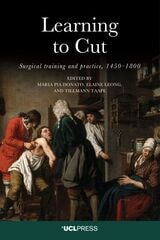
Learning to Cut
Surgical Training and Practice, 1450–1800Edited by Maria Pia Donato, Elaine Leong, and Tillmann Taape
University College London, 2026
The first-ever volume to offer a broader European narrative on surgical training and education in the early modern era.
This volume brings together case studies from the French, Italian, German, and English contexts to reveal diverse modes of surgical teaching and learning that were shaped by local contexts in early modern towns and cities. The chapters reveal the many spaces where practitioners learned and experienced surgery, shedding new light on the practice of early modern surgery.
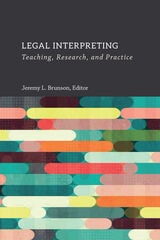
Legal Interpreting
Teaching, Research, and PracticeJeremy L. Brunson
Gallaudet University Press, 2022
Each chapter features discussion questions and prompts that interpreter educators can use in the classroom. While intended as a foundational text for use in courses, this body of work also provides insight into the current state of the legal interpreting field and will be a valuable resource for scholars, practitioners, and consumers.
Legal Writing, Legal Practice
The Biblical Bailment Law and Divine JusticeYael Landman
SBL Press, 2022
Library Marketing
From Passion to PracticeJill Stover Heinze
Against the Grain, LLC, 2017
The Charleston Briefings are written by authorities who provide an effective, readable overview of their topics—not an academic monograph. The intended audience is busy nonspecialist readers who want to be informed concerning important issues in our industry in an accessible and timely manner.
Why do librarians have so many problems with marketing?
At a time when universities and colleges demand that libraries demonstrate their value and users have so many other options to discover information, it seems bizarre that librarians would be so much against a tool that allows them to engage closely with the very users who are the lifeblood of libraries.
As Jill Heinze makes clear in this lively and passionate briefing, marketing is a tool that allows an institution to assess their place in a market and to communicate value to their users based on the users’ needs and problems. This marketing tool need have no relationship to traditional business concerns, and, indeed, mission- based marketing is now important even to for- profit institutions.
Embracing key marketing concepts and planning, says Heinze, can demand that libraries rethink organizational structures, operations, and missions, but she also demonstrates that this rethinking can be entirely commensurate with the mission of libraries within an educational context.
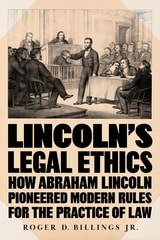
Lincoln’s Legal Ethics
How Abraham Lincoln Pioneered Modern Rules for the Practice of LawRoger D. Billings Jr.
University of Illinois Press, 2027
Roger D. Billings Jr. examines how Lincoln’s practices in Illinois helped shape the development of the legal standards that lawyers follow today. Lincoln learned the law through self-study, experience, and mentorship. Billings focuses on actual cases to show Lincoln’s ethical choices when confronted with issues like conflict of interest, client trust, and honesty with the court. In addition, the studies shine a light on the future president’s on-the-job performance. Though an imperfect practitioner, Lincoln and his energetic work on behalf of clients and way of doing business, among other practices, influenced the evolution of the ABA Model Rules of Professional Conduct in the United States.
An original study of Lincoln’s years at the bar, Lincoln’s Legal Ethics connects the self-styled country lawyer with modern legal standards.
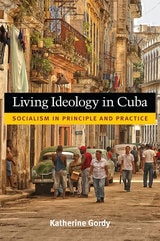
Living Ideology in Cuba
Socialism in Principle and PracticeKatherine A. Gordy
University of Michigan Press, 2015
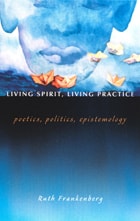
Living Spirit, Living Practice
Poetics, Politics, EpistemologyRuth Frankenberg
Duke University Press, 2004
Christians, Jews, Muslims, Buddhists, Hindus, and other practitioners come together here, speaking in terms both familiar and surprising. Whether discussing an Episcopalian deacon, a former Zen Buddhist who is now a rabbi, a Chicano monastic, an immigrant Muslim woman, a Japanese American Tibetan Buddhist, or a gay African American practicing in the Hindu tradition, Frankenberg illuminates the most intimate, local, and singular aspects of individual lives while situating them within the broad, dynamic canvas of the U.S. religious landscape.