Results by title
111 books match the query 'Science Fiction' and 9 start with l
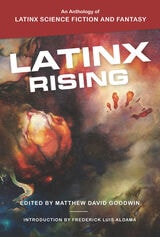
Latinx Rising
An Anthology of Latinx Science Fiction and FantasyEdited by Matthew David Goodwin / Introduction by Frederick Luis Aldama
The Ohio State University Press, 2020
The new and established voices assembled here (including Kathleen Alcalá, Carmen Maria Machado, Ernest Hogan, and other luminaries) invite us to imagine a Latinx past, present, and future that have not been whitewashed by mainstream perspectives. As in the best mixtapes, this anthology moves satisfyingly through the loud and brash, the quiet and thoughtful. There are ghosts, space aliens, robots—and a grandmother who unwittingly saves the universe through her cooking. The result is a deeply pleasurable read that pushes beyond magical realism and social realism to demonstrate all the thrilling possibilities of what Latinx literature can be.

Learning Processes with a Deadly Outcome
Alexander Kluge
Duke University Press, 1996
Whether describing the scene in China where the devastated landscape is reconstructed according to old paintings, or in the galactic realm of the Starway where giant, turf-battling, corporate colonizing forces exploit the universe’s resources, Kluge tells his tale by inventing various forms of “evidence” that satirize the discourses of administrative bureaucracy, the law, military security, and the media. He gives us some of his most bizarre and hilarious characters in this peculiar world in which the remains of the past are mixed with the most advanced elements of the future. The cast includes highly specialized women workers who have adapted to the massive gravitational field of their heavy-metal planets, a commander with lethal foot-fungus, and ex-Nazi space pioneers who, in their lonely exile from the conflagrations on earth, spend their time carving enormous facsimiles of operatic sheet music in the forests of uninhabited planets.
With parody, and humor, Kluge shows how the survivors of Armageddon attempt to learn the art of civilization, and, despite the disaster they have suffered, how they set out to reproduce at new sites a caricature of a classic and fascistic feudal capitalism.
Learning from Other Worlds
Estrangement, Cognition, and the Politics of Science Fiction and UtopiaPatrick Parrinder, ed.
Duke University Press, 2001
In exploring the relationship between imaginative invention and that of allegory or fable, the essays in Learning from Other Worlds comment on the field’s most abiding concerns and employ a variety of critical approaches—from intellectual history and genre studies to biographical criticism, feminist cultural studies, and political textual analysis. Among the topics discussed are the works of John Wyndham, Kim Stanley Robinson, Stanislau Lem, H.G. Wells, and Ursula Le Guin, as well as the media’s reactions to the 1997 cloning of Dolly the Sheep. Darko Suvin’s characteristically outspoken and penetrating afterword responds to the essays in the volume and offers intimations of a further stage in his long and distinguished career.
This useful compendium and companion offers a coherent view of science fiction studies as it has evolved while paying tribute to the debt it owes Suvin, one of its first champions. As such, it will appeal to critics and students of science fiction, utopia, and fantasy writing.
Contributors. Marc Angenot, Marleen S. Barr, Peter Fitting, Carl Freedman, Edward James, Fredric Jameson, David Ketterer, Gerard Klein, Tom Moylan, Rafail Nudelman, Darko Suvin

Lesbian Potentiality and Feminist Media in the 1970s
Jed Samer
Duke University Press, 2022

Level 7
Mordecai Roshwald; Edited and with a new foreword by David Seed
University of Wisconsin Press, 2004
Level 7 is the diary of Officer X-127, who is assigned to stand guard at the "Push Buttons," a machine devised to activate the atomic destruction of the enemy, in the country’s deepest bomb shelter. Four thousand feet underground, Level 7 has been built to withstand the most devastating attack and to be self-sufficient for five hundred years. Selected according to a psychological profile that assures their willingness to destroy all life on Earth, those who are sent down may never return.
Originally published in 1959, and with over 400,000 copies sold, this powerful dystopian novel remains a horrific vision of where the nuclear arms race may lead, and is an affirmation of human life and love. Level 7 merits comparison to Huxley’s A Brave New World and Orwell’s 1984 and should be considered a must-read by all science fiction fans.
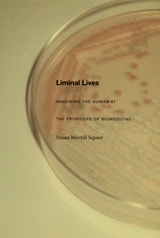
Liminal Lives
Imagining the Human at the Frontiers of BiomedicineSusan Merrill Squier
Duke University Press, 2004
Drawing on archival materials of twentieth-century biology; little-known works of fiction and science fiction; and twentieth- and twenty-first century U.S. and U.K. government reports by the National Institutes of Health, the Parliamentary Advisory Group on the Ethics of Xenotransplantation, and the President’s Council on Bioethics, she examines a number of biomedical changes as each was portrayed by scientists, social scientists, and authors of fiction and poetry. Among the scientific developments she considers are the cultured cell, the hybrid embryo, the engineered intrauterine fetus, the child treated with human growth hormone, the process of organ transplantation, and the elderly person rejuvenated by hormone replacement therapy or other artificial means. Squier shows that in the midst of new phenomena such as these, literature helps us imagine new ways of living. It allows us to reflect on the possibilities and perils of our liminal lives.
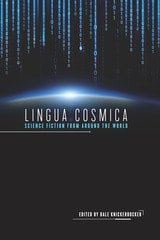
Lingua Cosmica
Science Fiction from around the WorldEdited by Dale Knickerbocker
University of Illinois Press, 2018
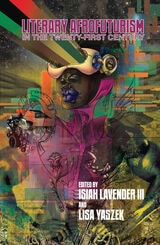
Literary Afrofuturism in the Twenty-First Century
Edited by Isiah Lavender III and Lisa Yaszek
The Ohio State University Press, 2020
In Literary Afrofuturism in the Twenty-First Century, eminent contributors pay tribute to Afrofuturism as a powerful and evolving aesthetic practice that communicates the experience of science, technology, and race across centuries, continents, and cultures. While Ryan Coogler and Janelle Monáe may have helped bring the genre into contemporary pop consciousness, it in fact extends back to the writing of eighteenth-century poet Phyllis Wheatley and has continued in the work of Samuel R. Delany, Octavia E. Butler, N. K. Jemisin, and many others. In examining this heritage, contributors in this volume question generic boundaries, recover lost artists and introduce new ones, and explore how the meteoric rise of a new, pan-African speculative literary tradition may or may not connect with Afrofuturism.
Additionally, the editors have marshaled some of today’s most exciting writers for a roundtable discussion of the genre: Bill Campbell, Minister Faust, Nalo Hopkinson, N. K. Jemisin, Chinelo Onwualu, Nisi Shawl, and Nick Wood. Pioneering author and editor Sheree R. Thomas limns how black women have led new developments in contemporary Afrofuturism, and artist Stacey Robinson’s illustrations orient readers to the spirited themes of this enduring and consequential literary tradition.
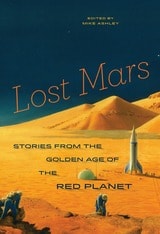
Lost Mars
Stories from the Golden Age of the Red PlanetEdited by Mike Ashley
University of Chicago Press, 2018
An antique-shop owner gets a glimpse of the Red Planet through an intriguing artifact. A Martian’s wife contemplates the possibility of life on Earth. A resident of Venus describes his travels across the two alien planets. From an arid desert to an advanced society far superior to that of Earth, portrayals of Mars have differed radically in their attempts to uncover the truth about our neighboring planet.
Since the 1880s, after an astronomer first described “channels” on the surface of Mars, writers have been fascinated with the planet, endlessly speculating on what life on Mars might look like and what might happen should we make contact with the planet's inhabitants. This wonderful collection offers ten wildly imaginative short stories from the golden age of science fiction by such classic sci-fi writers as H.G. Wells, Ray Bradbury, and J. G. Ballard, as well as hard-to-find stories by unjustly forgotten writers from the genre.
Assembled and introduced by acclaimed anthologist Mike Ashley, these stories vividly evoke a time when notions of life on other planets—from vegetation and water to space invaders and utopian societies—were new and startling. As we continue to imagine landing people on Mars, these stories are well worth revisiting as gripping and vivid dispatches from futurists past.