Results by title
34 books match the query 'Automation'
A Will for the Machine
Computerization, Automation, and the Arts in South AfricaMark Sanders
University of Chicago Press, 2026
There are many books about the history and discourses of computerization in the United States but relatively little about these phenomena anywhere in the Global South. In A Will for the Machine, Mark Sanders outlines South Africa’s entry into the computer age in the 1960s and ’70s and explains how it coincided with the high point of apartheid. South Africa’s government viewed automation and computerization as one way of barring Black Africans from skilled work and reserving it for whites. Sanders unpacks this peculiar history, relates it to early twentieth-century struggles around mechanization in mining and telephony in South Africa, and analyzes responses to it by the writers Miriam Tlali and J. M. Coetzee, the artist William Kentridge, and Handspring Puppet Company. Showing how the arts realize ideas about the ethics and politics of automation, Sanders contributes to debates about locally divergent understandings of computer technology and human-computer interaction.
After the Map
Cartography, Navigation, and the Transformation of Territory in the Twentieth CenturyWilliam Rankin
University of Chicago Press, 2016
In After the Map, William Rankin argues that although this shift did not render traditional maps obsolete, it did radically change our experience of geographic knowledge, from the God’s-eye view of the map to the embedded subjectivity of GPS. Likewise, older concerns with geographic truth and objectivity have been upstaged by a new emphasis on simplicity, reliability, and convenience. After the Map shows how this change in geographic perspective is ultimately a transformation of the nature of territory, both social and political.

Age Factors in Biometric Processing
Michael Fairhurst
The Institution of Engineering and Technology, 2013

An Introduction to Fractional Control
Duarte Valério
The Institution of Engineering and Technology, 2012
Artificial Intelligence In Libraries And Publishing
Ruth Pickering
Against the Grain, LLC, 2022
This Charleston Briefing seeks to provide some answers to these very important questions, offering both general essays on AI and more specific essays on AI in scholarly publishing, academic libraries, and AI in information discovery and knowledge building. The essays will help publishers, librarians, and researchers better understand the actual impact of AI on libraries and publishing so that they can respond to the potentially transformative impact of AI in a measured and knowledgeable manner.
Charleston Briefings: Trending Topics for Information Professionals is a thought-provoking series of brief books concerning innovation in the sphere of libraries, publishing, and technology in scholarly communication. The briefings, growing out of the vital conversations characteristic of the Charleston Conference and Against the Grain, will offer valuable insights into the trends shaping our professional lives and the institutions in which we work.
Augmented Exploitation
Artificial Intelligence, Automation and WorkPhoebe Moore
Pluto Press, 2021
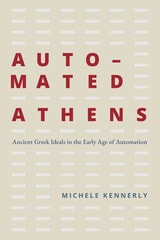
Automated Athens
Ancient Greek Ideals in the Early Age of AutomationMichele Kennerly
University of Chicago Press, 2026
A critical history of the recurring idea that technology will free us from work and bring about a truly democratic society.
In popular thought, ancient Athens endures as a place ahead of its time—the birthplace of democracy, a cultural center, and a model toward which modern societies should strive. In Automated Athens, Michele Kennerly examines the many and frequent appeals to this nostalgic vision of the ancient city-state throughout the early age of computerized automation. In the mid-twentieth century, people hoped that automation would free us from mindless, dehumanizing work so that we could attend to creative and communal pursuits. Proponents appealed to ancient Athens, saying automated systems and machines would stand in for the craftsmen, enslaved people, and subordinated women who performed the undesirable work that enabled that city-state’s flourishing. Automated Athens scrutinizes this appeal as it moves chronologically into present debates about the promise of automation and AI. For Kennerly, our inability to settle debates about where accelerating automation may take us, especially politically, reveals a deeper cultural indecisiveness about how to live well and live well together.
Community Technology Projects
Making Them WorkMargaret Heller
American Library Association, 2019

Designing a School Library Media Center for the Future
Rolf Erikson
American Library Association, 2007
Distribution System Analysis and Automation
Juan M. Gers
The Institution of Engineering and Technology, 2013
Distribution Systems Analysis and Automation
Juan Manuel Gers
The Institution of Engineering and Technology, 2020
Future Libraries
Dreams, Madness and RealityAmerican Library Association, 1995
Human Machine Collaboration and Interaction for Smart Manufacturing
Automation, robotics, sensing, artificial intelligence, 5G, IoTs and BlockchainWai Yie Leong
The Institution of Engineering and Technology, 2022
Labor's End
How the Promise of Automation Degraded WorkJason Resnikoff
University of Illinois Press, 2022
A forceful intellectual history, Labor's End challenges entrenched assumptions about automation's transformation of the American workplace.
Library Technology Buying Strategies
Marshall Breeding
American Library Association, 2016
Life by Algorithms
How Roboprocesses Are Remaking Our WorldEdited by Catherine Besteman and Hugh Gusterson
University of Chicago Press, 2019
Although automatic processes are designed to be engines of rational systems, the stories in Life by Algorithms reveal how they can in fact produce absurd, inflexible, or even dangerous outcomes. Joining the call for “algorithmic transparency,” the contributors bring exceptional sensitivity to everyday sociality into their critique to better understand how the perils of modern technology affect finance, medicine, education, housing, the workplace, food production, public space, and emotions—not as separate problems but as linked manifestations of a deeper defect in the fundamental ordering of our society.
Contributors
Catherine Besteman, Alex Blanchette, Robert W. Gehl, Hugh Gusterson, Catherine Lutz, Ann Lutz Fernandez, Joseph Masco, Sally Engle Merry, Keesha M. Middlemass, Noelle Stout, Susan J. Terrio
Machine
Thomas Pringle
University of Minnesota Press, 2018
On the social consequences of machines
Automation, animation, and ecosystems are terms of central media-philosophical concern in today’s society of humans and machines. This volume describes the social consequences of machines as a mediating concept for the animation of life and automation of technology. Bernard Stiegler’s automatic society illustrates how digital media networks establish a new proletariat of knowledge workers. Gertrud Koch offers the animation of the technical to account for the pathological relations that arise between people and their devices. And Thomas Pringle synthesizes how automation and animation explain the history of intellectual exchanges that led to the hybrid concept of the ecosystem, a term that blends computer and natural science. All three contributions analyse how categories of life and technology become mixed in governmental policies, economic exploitation and pathologies of everyday life thereby both curiously and critically advancing the term that underlies those new developments: ‘machine.’
Making Your Tools Work for You
Max Eckard
Society of American Archivists, 2020
Marx and the Robots
Networked Production, AI, and Human LabourFlorian Butollo
Pluto Press, 2022
It covers a broad range of digital aspects now proliferating across our work and lives, including chapters on the digitalization of agriculture, robotics in the factory and the labor process on crowdworking platforms. It looks to how 20th century Marxist predictions of the 'workerless factory' are, or are not, coming true, and how 'Platform Capitalism' should be understood and critiqued.
Through rich empirical, theoretical and historical material, this book is necessary reading for those wanting a clear overview of our digital world.

Robots and Automated Manufacture
J. Billingsley
The Institution of Engineering and Technology, 1985
Surrogate Humanity
Race, Robots, and the Politics of Technological FuturesNeda Atanasoski and Kalindi Vora
Duke University Press, 2019
Technology for Results
American Library Association, 2005
Technology for Small and One-Person Libraries
A LITA GuideRene J. Erlandson
American Library Association, 2013
The Digital Factory
The Human Labor of AutomationMoritz Altenried
University of Chicago Press, 2022
The workers of today’s digital factory include those in Amazon warehouses, delivery drivers, Chinese gaming workers, Filipino content moderators, and rural American search engine optimizers. Repetitive yet stressful, boring yet often emotionally demanding, these jobs require little formal qualification, but can demand a large degree of skills and knowledge. This work is often hidden behind the supposed magic of algorithms and thought to be automated, but it is in fact highly dependent on human labor.
The workers of today’s digital factory are not as far removed from a typical auto assembly line as we might think. Moritz Altenried takes us inside today’s digital factories, showing that they take very different forms, including gig economy platforms, video games, and Amazon warehouses. As Altenried shows, these digital factories often share surprising similarities with factories from the industrial age. As globalized capitalism and digital technology continue to transform labor around the world, Altenried offers a timely and poignant exploration of how these changes are restructuring the social division of labor and its geographies as well as the stratifications and lines of struggle.
The Digital Factory
The Human Labor of AutomationMoritz Altenried
University of Chicago Press, 2022
This is an auto-narrated audiobook edition of this book.
The Digital Factory reveals the hidden human labor that supports today’s digital capitalism.
The workers of today’s digital factory include those in Amazon warehouses, delivery drivers, Chinese gaming workers, Filipino content moderators, and rural American search engine optimizers. Repetitive yet stressful, boring yet often emotionally demanding, these jobs require little formal qualification, but can demand a large degree of skills and knowledge. This work is often hidden behind the supposed magic of algorithms and thought to be automated, but it is in fact highly dependent on human labor.
The workers of today’s digital factory are not as far removed from a typical auto assembly line as we might think. Moritz Altenried takes us inside today’s digital factories, showing that they take very different forms, including gig economy platforms, video games, and Amazon warehouses. As Altenried shows, these digital factories often share surprising similarities with factories from the industrial age. As globalized capitalism and digital technology continue to transform labor around the world, Altenried offers a timely and poignant exploration of how these changes are restructuring the social division of labor and its geographies as well as the stratifications and lines of struggle.
The Electric Car
Development and future of battery, hybrid and fuel-cell carsMike H. Westbrook
The Institution of Engineering and Technology, 2001
The Unaccountability Machine
Why Big Systems Make Terrible Decisions—and How the World Lost Its MindDan Davies
University of Chicago Press, 2025
Passengers get bumped from flights. Phone menus disconnect. Automated financial trades produce market collapse. Of all the challenges in modern life, some of the most vexing come from our relationships with automation: a large system does us wrong, and there’s nothing we can do about it.
The problem, economist Dan Davies shows, is accountability sinks: systems in which decisions are delegated to a complex rule book or set of standard procedures, making it impossible to identify the source of mistakes when they happen. In our increasingly unhuman world—lives dominated by algorithms, artificial intelligence, and large organizations—these accountability sinks produce more than just aggravation. They make life and economy unknowable—a black box for no reason.
In The Unaccountability Machine, Davies lays bare how markets, institutions, and even governments systematically generate outcomes that no one—not even those involved in making them—seems to want. Since the earliest days of the computer age, theorists have foreseen the dangers of complex systems without personal accountability. In response, British business scholar Stafford Beer developed an accountability-first approach to management called “cybernetics,” which might have taken off had his biggest client (the Chilean government) not fallen to a bloody coup in 1973.
With his signature blend of economic and journalistic rigor, Davies examines what’s gone wrong since Beer, including what might have been had the world embraced cybernetics when it had the chance. The Unaccountability Machine is a revelatory and resonant account of how modern life became predisposed to dysfunction.
The Unaccountability Machine
Why Big Systems Make Terrible Decisions—and How the World Lost Its MindDan Davies
University of Chicago Press, 2025
Longlisted for the 2024 Financial Times Book of the Year. How life and the economy became a black box—a collection of systems no one understands, producing outcomes no one likes.
Passengers get bumped from flights. Phone menus disconnect. Automated financial trades produce market collapse. Of all the challenges in modern life, some of the most vexing come from our relationships with automation: a large system does us wrong, and there’s nothing we can do about it.
The problem, economist Dan Davies shows, is accountability sinks: systems in which decisions are delegated to a complex rule book or set of standard procedures, making it impossible to identify the source of mistakes when they happen. In our increasingly unhuman world—lives dominated by algorithms, artificial intelligence, and large organizations—these accountability sinks produce more than just aggravation. They make life and economy unknowable—a black box for no reason.
In The Unaccountability Machine, Davies lays bare how markets, institutions, and even governments systematically generate outcomes that no one—not even those involved in making them—seems to want. Since the earliest days of the computer age, theorists have foreseen the dangers of complex systems without personal accountability. In response, British business scholar Stafford Beer developed an accountability-first approach to management called “cybernetics,” which might have taken off had his biggest client (the Chilean government) not fallen to a bloody coup in 1973.
With his signature blend of economic and journalistic rigor, Davies examines what’s gone wrong since Beer, including what might have been had the world embraced cybernetics when it had the chance. The Unaccountability Machine is a revelatory and resonant account of how modern life became predisposed to dysfunction.
Waiting for Robots
The Hired Hands of AutomationAntonio A. Casilli
University of Chicago Press, 2025
Artificial Intelligence fuels both enthusiasm and panic. Technologists are inclined to give their creations leeway, pretend they’re animated beings, and consider them efficient. As users, we may complain when these technologies don’t obey, or worry about their influence on our choices and our livelihoods. And yet, we also yearn for their convenience, see ourselves reflected in them, and treat them as something entirely new. But when we overestimate the automation of these tools, award-winning author Antonio A. Casilli argues, we fail to recognize how our fellow humans are essential to their efficiency. The danger is not that robots will take our jobs, but that humans will have to do theirs.
In this bracing and powerful book, Casilli uses up-to-the-minute research to show how today’s technologies, including AI, continue to exploit human labor—even ours. He connects the diverse activities of today’s tech laborers: platform workers, like Uber drivers and Airbnb hosts; “micro workers,” including those performing atomized tasks like data entry on Amazon Mechanical Turk; and the rest of us, as we evaluate text or images to show we’re not robots, react to Facebook posts, or approve or improve the output of generative AI. As Casilli shows us, algorithms, search engines, and voice assistants wouldn’t function without unpaid or underpaid human contributions. Further, he warns that if we fail to recognize this human work, we risk a dark future for all human labor.
Waiting for Robots urges us to move beyond the simplistic notion that machines are intelligent and autonomous. As the proverbial Godot, robots are the bearers of a messianic promise that is always postponed. Instead of bringing prosperity for all, they discipline the workforce, so we don’t dream of a world without drudgery and exploitation. Casilli’s eye-opening book makes clear that most “automation” requires human labor—and likely always will—shedding new light on today’s consequences and tomorrow’s threats of failing to recognize and compensate the “click workers” of today.
Web 2.0 Tools and Strategies for Archives and Local History Collections
American Library Association, 2010
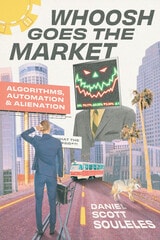
Whoosh Goes the Market
Algorithms, Automation, and AlienationDaniel Scott Souleles
University of Chicago Press, 2024
Markets are messy, and no one knows this better than traders who work tirelessly to predict what they will do next. In Whoosh Goes the Market, Daniel Scott Souleles takes us into the day-to-day experiences of a team at a large trading firm, revealing what it’s actually like to make and lose money on contemporary capital markets.
The traders Souleles shadows have mostly moved out of the pits and now work with automated, glitch-prone computer systems. They remember the days of trading manually, and they are suspicious of algorithmically driven machine-learning systems. Openly musing about their own potential extinction, they spend their time expressing fear and frustration in profanity-laced language. With Souleles as our guide, we learn about everything from betting strategies to inflated valuations, trading swings, and market manipulation. This crash course in contemporary finance vividly reveals the existential anxiety at the evolving front lines of American capitalism.
Wiring The Writing Center
Eric Hobson
Utah State University Press, 1998
Writing Successful Technology Grant Proposals
Pamela H. MacKellar
American Library Association, 2010