Results by title
94 books match the query 'Services for' and 5 start with l

Legal Reference for Librarians
How and Where to Find the AnswersPaul D. Healey
American Library Association, 2014
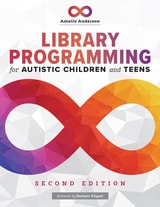
Library Programming for Autistic Children and Teens
Amelia Anderson and Barbara Klipper
American Library Association, 2021
Since the first edition of this landmark guide was published, there has been increased interest in services for library patrons on the autism spectrum; indeed, more people of all ages now self-identify as autistic. Those who understand the unique characteristics of autistic young people know that ordinary library programming guides are not up to the task of effectively serving these library users. Well qualified to speak to this need, Anderson is an educator, library researcher, and former public librarian who has helped to develop two IMLS funded initiatives that train library workers to better understand and serve autistic patrons. Here, she offers librarians who work with children and teens in both public library and K-12 educational settings an updated, comprehensive resource that includes
- an updated introduction to the basics of autism, including language, symbolism, and best practices in the library rooted in the principles of Universal Design;
- step-by-step programs from librarians across the country, adaptable for both public and school library settings, that are cost-effective and easy to replicate;
- contributions from autistic self-advocates throughout the text, demonstrating that the program ideas included are truly designed with their preferences in mind;
- suggestions for securing funding and establishing partnerships with community organizations; and
- many helpful appendices, with handy resources for training and education, building a collection, storytimes, sensory integration activities, and a “Tips for a Successful Library Visit” template.

Life after Death Row
Exonerees' Search for Community and IdentitySaundra D. Westervelt and Kimberly J. Cook
Rutgers University Press, 2012
Life after Death Row examines the post-incarceration struggles of individuals who have been wrongly convicted of capital crimes, sentenced to death, and subsequently exonerated.
Saundra D. Westervelt and Kimberly J. Cook present eighteen exonerees’ stories, focusing on three central areas: the invisibility of the innocent after release, the complicity of the justice system in that invisibility, and personal trauma management. Contrary to popular belief, exonerees are not automatically compensated by the state or provided adequate assistance in the transition to post-prison life. With no time and little support, many struggle to find homes, financial security, and community. They have limited or obsolete employment skills and difficulty managing such daily tasks as grocery shopping or banking. They struggle to regain independence, self-sufficiency, and identity.
Drawing upon research on trauma, recovery, coping, and stigma, the authors weave a nuanced fabric of grief, loss, resilience, hope, and meaning to provide the richest account to date of the struggles faced by people striving to reclaim their lives after years of wrongful incarceration.
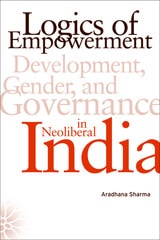
Logics of Empowerment
Development, Gender, and Governance in Neoliberal IndiaAradhana Sharma
University of Minnesota Press, 2008
A critical look at the globally dominant development strategy of “empowerment”
Celebratory news features about India’s thriving middle class tell only part of the story of the country’s recent economic rise, frequently glossing over the 300 million Indians who live on the margins and struggle to survive under economic liberalization. How do those cast out of their country’s successes perceive and respond to their position and mobilize against disempowerment?
In Logics of Empowerment, Aradhana Sharma takes up these questions, focusing on the work of an innovative women’s program called Mahila Samakhya that is part governmental and part nongovernmental and strives to empower those rural Indian women who have been pushed aside. She details the awkward ideological articulations and paradoxical outcomes of this unique activist-cum-government organizational structure and usage of empowerment. Bringing much-needed specificity to the study of neoliberalism, Logics of Empowerment fosters a deeper understanding of development and politics in contemporary India.
Lone Pursuit
Distrust and Defensive Individualism Among the Black PoorSandra Susan Smith
Russell Sage Foundation, 2007