3027 books match the query 'Sociology' and 106 start with l
cover of L.A. Story: Immigrant Workers and the Future of the U.S. Labor Movement

L.A. Story

Immigrant Workers and the Future of the U.S. Labor Movement

Ruth Milkman

Russell Sage Foundation, 2006
Sharp decreases in union membership over the last fifty years have caused many to dismiss organized labor as irrelevant in today's labor market. In the private sector, only 8 percent of workers today are union members, down from 24 percent as recently as 1973. Yet developments in Southern California—including the successful Justice for Janitors campaign—suggest that reports of organized labor's demise may have been exaggerated. In L.A. Story, sociologist and labor expert Ruth Milkman explains how Los Angeles, once known as a company town hostile to labor, became a hotbed for unionism, and how immigrant service workers emerged as the unlikely leaders in the battle for workers' rights. L.A. Story shatters many of the myths of modern labor with a close look at workers in four industries in Los Angeles: building maintenance, trucking, construction, and garment production. Though many blame deunionization and deteriorating working conditions on immigrants, Milkman shows that this conventional wisdom is wrong. Her analysis reveals that worsening work environments preceded the influx of foreign-born workers, who filled the positions only after native-born workers fled these suddenly undesirable jobs. Ironically, L.A. Story shows that immigrant workers, who many union leaders feared were incapable of being organized because of language constraints and fear of deportation, instead proved highly responsive to organizing efforts. As Milkman demonstrates, these mostly Latino workers came to their service jobs in the United States with a more group-oriented mentality than the American workers they replaced. Some also drew on experience in their native countries with labor and political struggles. This stock of fresh minds and new ideas, along with a physical distance from the east-coast centers of labor's old guard, made Los Angeles the center of a burgeoning workers' rights movement. Los Angeles' recent labor history highlights some of the key ingredients of the labor movement's resurgence—new leadership, latitude to experiment with organizing techniques, and a willingness to embrace both top-down and bottom-up strategies. L.A. Story's clear and thorough assessment of these developments points to an alternative, high-road national economic agenda that could provide workers with a way out of poverty and into the middle class.
[more]
cover of LA Sports: Play, Games, and Community in the City of Angels

LA Sports

Play, Games, and Community in the City of Angels

Wayne Wilson

University of Arkansas Press, 2018

LA Sports brings together sixteen essays covering various aspects of the development and changing nature of sport in one of America’s most fascinating and famous cities. The writers cover a range of topics, including the history of car racing and ice skating, the development of sport venues, the power of the Mexican fan base in American soccer leagues, the intersecting life stories of Jackie and Mack Robinson, the importance of the Showtime Lakers, the origins of Muscle Beach and surfing, sport in Hollywood films, and more.
[more]
cover of La Partera: Story of a Midwife

La Partera

Story of a Midwife

Fran Leeper Buss

University of Michigan Press, 1980

Jesusita Aragon earned the title "la partera," or midwife, at the age of fourteen. Apprenticed to her grandmother, she learned the traditional Hispanic methods of assisting childbirth. She won the coveted title by performing her first delivery when an expectant mother went into labor in her grandmother's absence. In the years that followed, she was often the only source of medical care available in an isolated, mountainous area of New Mexico. Jesusita was so prized for her medical wisdom that she came to deliver more than 12,000 babies in the course of her career.This is Jesusita's story, told in her own words. She describes her early training as a midwife, her forced departure from home due to two unmarried pregnancies, and her solitary struggle to support her children. La Partera tells how she gradually emerged as a leader in her community, painstakingly building by hand a small maternity center for her patients while gaining the respect of the Anglo medical community.As Jesusita's story unfolds, so too does the story of the women of the region. Supplemental sections by the author illuminate Jesusita's culture and past, along with a historical account of the network of medical care provided by Hispanic and Anglo female healers. Illustrated with photographs of both people and places, La Partera reflects the culture of an era through the prism of Jesusita's hard and useful life.
[more]
cover of La réalité des médias de masse

La réalité des médias de masse

Niklas Luhmann

Diaphanes, 2012
Les médias de masse forment un système qui s’autoalimente indépendamment de toute intervention extérieure, dans lequel nous avons pris l’habitude d’évoluer sans le questionner. Niklas Luhmann propose une analyse minutieuse des modes de fonctionnement de ce système, de ses implications et des sélections simplificatrices qu’il opère au sein de la complexité et de la contingence définissant le monde. Selon lui, l’actualité émerge ainsi au sein des médias de masse en suivant des règles précises et en respectant les constructions que ceux qui l’écrivent ou la filment plaquent sur le réel. Ils façonnent la réalité tout autant qu’ils la décrivent. D’une actualité indiscutable, cet essai invite à reconsidérer la manière dont le monde se conçoit lui-même.
[more]
cover of Labor and Community: Mexican Citrus Worker Villages in a Southern California County, 1900-1950

Labor and Community

Mexican Citrus Worker Villages in a Southern California County, 1900-1950

Gilbert G. González

University of Illinois Press, 1994
The emergence, maturity, and decline of the southern California citrus industry is seen here through the network of citrus worker villages that dotted part of the state's landscape from 1910 to 1960.  Labor and Community shows how Mexican immigrants shaped a partially independent existence within a fiercely hierarchical framework of economic and political relationships. González relies on a variety of published sources and interviews with longtime residents to detail the education of village children; the Americanization of village adults; unionization and strikes; and the decline of the citrus picker village and rise of the urban barrio. His insightful study of the rural dimensions of Mexican-American life prior to World War II adds balance to a long-standing urban bias in Chicano historiography.
 
[more]
cover of Labor in State-Socialist Europe, 1945–1989: Contributions to a History of Work

Labor in State-Socialist Europe, 1945–1989

Contributions to a History of Work

Marsha Siefert

Central European University Press, 2020

Labor regimes under communism in East-Central Europe were complex, shifting, and ambiguous. This collection of sixteen essays offers new conceptual and empirical ways to understand their history from the end of World War II to 1989, and to think about how their experiences relate to debates about labor history, both European and global.

The authors reconsider the history of state socialism by re-examining the policies and problems of communist regimes and recovering the voices of the workers who built them. The contributors look at work and workers in Albania, Bulgaria, Czechoslovakia, the German Democratic Republic, Hungary, Poland, Romania, and Yugoslavia. They explore the often contentious relationship between politics and labor policy, dealing with diverse topics including workers’ safety and risks; labor rights and protests; working women’s politics and professions; migrant workers and social welfare; attempts to control workers’ behavior and stem unemployment; and cases of incomplete, compromised, or even abandoned processes of proletarianization. Workers are presented as active agents in resisting and supporting changes in labor policies, in choosing allegiances, and in defining the very nature of work.
[more]
cover of Labor of Fire: The Ontology of Labor between Economy and Culture

Labor of Fire

The Ontology of Labor between Economy and Culture

Bruno Gullì

Temple University Press, 2005

In Labor of Fire, Bruno Gullì offers a timely and much needed re-examination of the concept of labor. Distinguishing between "productive labor" (working for money or subsistence) and "living labor" (working for artistic creation), Gullì convincingly argues for a definition of work that recognizes the importance of artistic and social creativity to our definition of labor and the self.

Gullì lays the groundwork for his book by offering a critique of productive labor, and then maps out his productive/living labor distinction in detail, reviewing the work of Marx and others.

[more]
cover of Labor of Love: Gestational Surrogacy and the Work of Making Babies

Labor of Love

Gestational Surrogacy and the Work of Making Babies

Jacobson, Heather

Rutgers University Press, 2016

While the practice of surrogacy has existed for millennia, new fertility technologies have allowed women to act as gestational surrogates, carrying children that are not genetically their own. While some women volunteer to act as gestational surrogates for friends or family members, others get paid for performing this service. The first ethnographic study of gestational surrogacy in the United States, Labor of Love examines the conflicted attitudes that emerge when the ostensibly priceless act of bringing a child into the world becomes a paid occupation.  
 
Heather Jacobson interviews not only surrogate mothers, but also their family members, the intended parents who employ surrogates, and the various professionals who work to facilitate the process. Seeking to understand how gestational surrogates perceive their vocation, she discovers that many regard surrogacy as a calling, but are reluctant to describe it as a job. In the process, Jacobson dissects the complex set of social attitudes underlying this resistance toward conceiving of pregnancy as a form of employment. 
 
 
[more]
cover of Labor's Love Lost: The Rise and Fall of the Working-Class Family in America

Labor's Love Lost

The Rise and Fall of the Working-Class Family in America

Andrew J. Cherlin is the Benjamin H. Griswold III Professor of Public Policy in the Department of Sociology at the Johns Hopkins University.

Russell Sage Foundation, 2014
Two generations ago, young men and women with only a high-school degree would have entered the plentiful industrial occupations which then sustained the middle-class ideal of a male-breadwinner family. Such jobs have all but vanished over the past forty years, and in their absence ever-growing numbers of young adults now hold precarious, low-paid jobs with few fringe benefits. Facing such insecure economic prospects, less-educated young adults are increasingly forgoing marriage and are having children within unstable cohabiting relationships. This has created a large marriage gap between them and their more affluent, college-educated peers. In Labor’s Love Lost, noted sociologist Andrew Cherlin offers a new historical assessment of the rise and fall of working-class families in America, demonstrating how momentous social and economic transformations have contributed to the collapse of this once-stable social class and what this seismic cultural shift means for the nation’s future. Drawing from more than a hundred years of census data, Cherlin documents how today’s marriage gap mirrors that of the Gilded Age of the late-nineteenth century, a time of high inequality much like our own. Cherlin demonstrates that the widespread prosperity of working-class families in the mid-twentieth century, when both income inequality and the marriage gap were low, is the true outlier in the history of the American family. In fact, changes in the economy, culture, and family formation in recent decades have been so great that Cherlin suggests that the working-class family pattern has largely disappeared. Labor's Love Lost shows that the primary problem of the fall of the working-class family from its mid-twentieth century peak is not that the male-breadwinner family has declined, but that nothing stable has replaced it. The breakdown of a stable family structure has serious consequences for low-income families, particularly for children, many of whom underperform in school, thereby reducing their future employment prospects and perpetuating an intergenerational cycle of economic disadvantage. To address this disparity, Cherlin recommends policies to foster educational opportunities for children and adolescents from disadvantaged families. He also stresses the need for labor market interventions, such as subsidizing low wages through tax credits and raising the minimum wage. Labor's Love Lost provides a compelling analysis of the historical dynamics and ramifications of the growing number of young adults disconnected from steady, decent-paying jobs and from marriage. Cherlin’s investigation of today’s “would-be working class” shines a much-needed spotlight on the struggling middle of our society in today’s new Gilded Age.
[more]
cover of Laboring Below the Line: The New Ethnography of Poverty, Low-Wage Work, and Survival in the Global Economy

Laboring Below the Line

The New Ethnography of Poverty, Low-Wage Work, and Survival in the Global Economy

Frank Munger

Russell Sage Foundation, 2002
As the distribution of wealth between rich and poor in the United States grew more and more unequal over the past twenty years, this economic gap assumed a life of its own in the popular culture. The news and entertainment media increasingly portrayed the lives of the poor with such stereotypes as the lazy welfare mother and the thuggish teen, offering Americans few ways to learn how the "other half" really lives. Laboring Below the Line works to bridge this gap by synthesizing a wide range of qualitative scholarship on the working poor. The result is a coherent, nuanced portrait of how life is lived below the poverty line, and a compelling analysis of the systemic forces in which poverty is embedded, and through which it is perpetuated. Laboring Below the Line explores the role of interpretive research in understanding the causes and effects of poverty. Drawing on perspectives of the working poor, welfare recipients, and marginally employed men and women, the contributors—an interdisciplinary roster of ethnographers, oral historians, qualitative sociologists, and narrative analysts—dissect the life circumstances that affect the personal outlook, ability to work, and expectations for the future of these people. For example, Carol Stack views the work aspirations of an Oakland teenager for whom a job is important, even though it strains her academic performance. And Ruth Buchanan looks at low-wage telemarketing workers who are attempting to move up the economic ladder while balancing family, education, and other important commitments. What emerges is a compelling picture of low-wage workers—one that illustrates the precarious circumstances of individuals struggling with the economic conditions and institutions that surround them Each chapter also explores the capacity for economic survival from a different angle, with ancillary commentary complementing the ethnographies with perspectives from other fields of study, such as economics. At this moment of governmental retrenchment, ethnography's complex, nonstereotypical portraits of individual people fighting against poverty are especially important. Laboring Below the Line reveals the ambiguities of real lives, the potential for individuals to change in unexpected ways, and the even greater intricacy of the collective life of a community.
[more]
cover of Laboring to Learn: Women's Literacy and Poverty in the Post-Welfare Era

Laboring to Learn

Women's Literacy and Poverty in the Post-Welfare Era

Lorna Rivera

University of Illinois Press, 2007

The American adult education system has become an alternative for school dropouts, with some state welfare policies requiring teen mothers and women without high school diplomas to participate in adult education programs to receive aid. Currently, low-income women of color are more likely to be enrolled in the lowest levels of adult basic education. Very little has been published about women's experiences in these mandatory programs and whether the programs reproduce the conditions that forced women to drop out in the first place.

Lorna Rivera bridges the gap with this important study, the product of ten years' active ethnographic research with formerly homeless women who participated in adult literacy education classes before and after welfare reform. She draws on rich interviews with organizers and participants in the Adult Learners Program at Project Hope, a women's shelter and community development organization in Boston's Dudley neighborhood, one of the poorest in the city.

Analyzing the web of ideological contradictions regarding "work first" welfare reform policies, Rivera argues that poverty is produced and reproduced when women with low literacy skills are pushed into welfare-to-work programs and denied education. She examines how various discourses about individual choice and self-sufficiency shape the purposes of literacy, how low-income women express a sense of personal responsibility for being poor, and how neoliberal ideologies and practices compromise the goals of critical literacy programs. Throughout this study, the voices and experiences of formerly homeless women challenge cultural stereotypes about poor women, showing in personal and structural terms how social and economic forces shape and restrict opportunities for low-income women of color.
[more]
cover of Land of Necessity: Consumer Culture in the United States–Mexico Borderlands

Land of Necessity

Consumer Culture in the United States–Mexico Borderlands

Alexis McCrossen, ed.

Duke University Press, 2009

Published in cooperation with the William P. Clements Center for Southwest Studies, Southern Methodist University.

In Land of Necessity, historians and anthropologists unravel the interplay of the national and transnational and of scarcity and abundance in the region split by the 1,969-mile boundary line dividing Mexico and the United States. This richly illustrated volume, with more than 100 images including maps, photographs, and advertisements, explores the convergence of broad demographic, economic, political, cultural, and transnational developments resulting in various forms of consumer culture in the borderlands. Though its importance is uncontestable, the role of necessity in consumer culture has rarely been explored. Indeed, it has been argued that where necessity reigns, consumer culture is anemic. This volume demonstrates otherwise. In doing so, it sheds new light on the history of the U.S.-Mexico borderlands, while also opening up similar terrain for scholarly inquiry into consumer culture.

The volume opens with two chapters that detail the historical trajectories of consumer culture and the borderlands. In the subsequent chapters, contributors take up subjects including smuggling, tourist districts and resorts, purchasing power, and living standards. Others address home décor, housing, urban development, and commercial real estate, while still others consider the circulation of cinematic images, contraband, used cars, and clothing. Several contributors discuss the movement of people across borders, within cities, and in retail spaces. In the two afterwords, scholars reflect on the U.S.-Mexico borderlands as a particular site of trade in labor, land, leisure, and commodities, while also musing about consumer culture as a place of complex political and economic negotiations. Through its focus on the borderlands, this volume provides valuable insight into the historical and contemporary aspects of the big “isms” shaping modern life: capitalism, nationalism, transnationalism, globalism, and, without a doubt, consumerism.

Contributors. Josef Barton, Peter S. Cahn, Howard Campbell, Lawrence Culver, Amy S. Greenberg, Josiah McC. Heyman, Sarah Hill, Alexis McCrossen, Robert Perez, Laura Isabel Serna, Rachel St. John, Mauricio Tenorio-Trillo, Evan R. Ward
[more]
cover of Land, Memory, Reconstruction, and Justice: Perspectives on Land Claims in South Africa

Land, Memory, Reconstruction, and Justice

Perspectives on Land Claims in South Africa

Cherryl Walker

Ohio University Press, 2010

Land is a significant and controversial topic in South Africa. Addressing the land claims of those dispossessed in the past has proved to be a demanding, multidimensional process. In many respects the land restitution program that was launched as part of the county’s transition to democracy in 1994 has failed to meet expectations, with ordinary citizens, policymakers, and analysts questioning not only its progress but also its outcomes and parameters.

Land, Memory, Reconstruction, and Justice brings together a wealth of topical material and case studies by leading experts in the field who present a rich mix of perspectives from politics, sociology, geography, social anthropology, law, history, and agricultural economics. The collection addresses both the material and the symbolic dimensions of land claims, in rural and urban contexts, and explores the complex intersection of issues confronting the restitution program, from the promotion of livelihoods to questions of rights, identity, and transitional justice.

A valuable contribution to the field of land and agrarian studies, both in South Africa and internationally, it is undoubtedly the most comprehensive treatment to date of South Africa’s postapartheid land claims process and will be essential reading for scholars and students of land reform for years to come.
[more]
cover of Landing in Las Vegas: Commercial Aviation and the Making of a Tourist City

Landing in Las Vegas

Commercial Aviation and the Making of a Tourist City

Daniel K. Bubb

University of Nevada Press, 2017

At the beginning of the twentieth century, Las Vegas was a dusty, isolated desert town. By century’s end, it was the country’s fastest-growing city, a world-class travel destination with a lucrative tourist industry hosting millions of visitors a year. This transformation came about in large part because of a symbiotic relationship between airlines, the city, and the airport, facilitated by the economic democratization and deregulation of the airline industry, the development of faster and more comfortable aircraft, and the ambitious vision of Las Vegas city leaders and casino owners. Landing in Las Vegas is a compelling study of the role of fast, affordable transportation in overcoming the vast distances of the American West and binding western urban centers to the national and international tourism, business, and entertainment industries.
[more]
cover of Landmarked: Land Claims and Land Restitution in South Africa

Landmarked

Land Claims and Land Restitution in South Africa

Cherryl Walker

Ohio University Press, 2008

The year 2008 is the deadline set by President Mbeki for the finalization of all land claims by people who were dispossessed under the apartheid and previous white governments. Although most experts agree this is an impossible deadline, it does provide a significant political moment for reflection on the ANC government’s program of land restitution since the end of apartheid.

Land reform (and land restitution within that) remains a highly charged issue in South Africa, one that deserves more in–depth analysis. Drawing on her experience as Rural Land Claims Commissioner in KwaZulu–Natal from 1995 to 2000, Professor Cherryl Walker provides a multilayered account of land reform in South Africa, one that covers general critical commentary, detailed case material, and personal narrative. She explores the master narrative of loss and restoration, which has been fundamental in shaping the restitution program; offers a critical overview of the achievements of the program as a whole; and discusses what she calls the “non–programmatic limits to land reform,” including urbanization, environmental constraints and the impact of HIV/AIDS.

[more]
cover of Landscape of Modernity: Essays on New York City, 1900-1940

Landscape of Modernity

Essays on New York City, 1900-1940

David Ward

Russell Sage Foundation, 1992
New York City stands as the first expression of the modern city, a mosaic of disparate neighborhoods born in 1898 with the amalgamation of the five boroughs and shaped by the passions of developers and regulators, architects and engineers, politicians and reformers, immigrant entrepreneurs and corporate builders. Through their labor, their ideals, and their often fierce battles, the physical and social dimensions—the landscape—of the modern city were forged. The original essays in The Landscape of Modernity tell the compelling story of the growth of New York City from 1900 to 1940, from the beginnings of its skyscraper skyline to the expanding reaches of suburbanization. At the beginning of the century, New York City was already one of the world's leading corporate and commercial centers. The Zoning Ordinance of 1916, initially proposed by Fifth Avenue merchants as a means of halting the uptown spread of the garment industry, became the nation's first comprehensive zoning law and the proving ground for a new occupation—the urban planner. During the 1920s, frenzied development created a vertical metamorphosis in Manhattan's booming business district, culminating in its most spectacularly modern icon, the Empire State Building. The city also spread laterally, with the controversial development of subway systems and the creation of the powerful Port of New York Authority, whose new bridges and tunnels decentralized the population and industry of New York. New York's older ethnic enclaves were irrevocably altered by this new urban landscape: the Lower East Side's Jewish community was nearly dismantled by the flight of the garment industry and the attractiveness of new suburbs, while Little Italy fought government forces eager to homogenize commercial use of the streets by eliminating the traditional pushcart peddlers. Illustrated with striking photographs and maps, The Landscape of Modernity links important scenes of growth and development to the larger political, economic, social, and cultural processes of the early twentieth century.
[more]
cover of Landscapes of Activism: Civil Society, HIV and AIDS Care in Northern Mozambique

Landscapes of Activism

Civil Society, HIV and AIDS Care in Northern Mozambique

Reed, Joel Christian

Rutgers University Press, 2018

AIDS activists are often romanticized as extremely noble and selfless. However, the relationships among HIV support group members highlighted in Landscapes of Activism are hardly utopian or ideal. At first, the group has everything it needs, a thriving membership, and support from major donors. Soon, the group undergoes an identity crisis over money and power, eventually fading from the scene. As government and development institutions embraced activist demands—decentralizing AIDS care through policies of health systems strengthening—civil society was increasingly rendered obsolete. Charting this transition—from subjects, to citizens, and back again—reveals the inefficacy of protest, and the importance of community resilience. The product of in-depth ethnography and focused anthropological inquiry, this is the first book on AIDS activists in Mozambique. AIDS activism’s strange decline in southern Africa, rather than a reflection of citizen apathy, is the direct result of targeted state and donor intervention.
[more]
cover of Language Use and Language Change in Brunei Darussalam: Mis Sea#100

Language Use and Language Change in Brunei Darussalam

Mis Sea#100

Peter W. Martin

Ohio University Press, 1996

The oil-rich sultanate of Brunei Darussalam is located on the northern coast of Borneo between the two Malaysian states of Sarawak and Sabah. Though the country is small in size and in population, the variety of language use there provides a veritable laboratory for linguists in the fields of Austronesian linguistics, bilingual studies, and sociolinguistic studies, particularly those dealing with language shift.

This useful reference is divided into three sections: one on varieties of the Malay language used in the country, one on other indigenous languages, and one on the role and form of the English used there. Contributors to the collection include Bruneian scholars as well as established experts in the fields of Austronesian linguistics, sociolinguistics studies, and the description of new varieties of English.
[more]
cover of Las Vegas in Singapore: Violence, Progress and the Crisis of Nationalist Modernity

Las Vegas in Singapore

Violence, Progress and the Crisis of Nationalist Modernity

Lee Kah-Wee

National University of Singapore Press, 2018

Las Vegas in Singapore looks at the collision of the histories of Singapore and Las Vegas in the form of Marina Bay Sands, one of Singapore’s two integrated resorts.

The first history begins in colonial Singapore in the 1880s, when British administrators revised gambling laws in response to the political threat posed by Chinese-run gambling syndicates. Following the tracks of these punitive laws and practices, the book moves into the 1960s when the newly independent city-state created a national lottery while criminalizing both organized and petty gambling in the name of nation-building. The second history shifts the focus to corporate Las Vegas in the 1950s when digital technology and corporate management practices found each other on the casino floor. Tracing the emergence of the specialist casino designer, the book reveals how casino development evolved into a highly rationalized spatial template designed to maximize profits. Today an iconic landmark of Singapore, Marina Bay Sands is also an artifact of these two histories, an attempt by Singapore to normalize what was once criminalized in its nationalist history.

Lee Kah-Wee argues that the historical project of the control of vice is also about the control of space and capital. The result is an uneven landscape where the legal and moral status of gambling is contingent on where it is located. As the current wave of casino expansion spreads across Asia, he warns that these developments should not be seen as liberalization but instead as a continuation of the project of concentrating power by modern states and corporations.
[more]
cover of Las Vegas: A Centennial History

Las Vegas

A Centennial History

Eugene P. Moehring

University of Nevada Press, 2005
            The meteoric rise of Las Vegas from a remote Mormon outpost to an international entertainment center was never a sure thing. In its first decades, the town languished, but when Nevada legalized casino gambling in 1931, Las Vegas met its destiny. This act—combined with the growing popularity of the automobile, cheap land and electricity, and changing national attitudes toward gambling—led to the fantastic casinos and opulent resorts that became the trademark industry of the city and created the ambiance that has made Las Vegas an icon of pleasure.
            This volume celebrates the city’s unparalleled growth, examining both the development of its gaming industry and the creation of an urban complex that over two million people proudly call home. Here are the colorful characters who shaped the city as well as the political, business, and civic decisions that influenced its growth. The story extends chronologically from the first Paiute people to the construction of the latest megaresorts, and geographically far beyond the original township to include the several municipalities that make up today’s vast metropolitan Las Vegas area.
[more]
cover of Las Vegas: The Great American Playground

Las Vegas

The Great American Playground

Robert D. Mccracken

University of Nevada Press, 1996

This expanded edition is the perfect book for the southern Nevada-bound traveler or the armchair adventurer. The very name of the city conjures a collection of images: fun, excitement, escape . . . or, more concretely, mega-sized hotels and casinos, spectacular showrooms, theme parks, and marquees as large as office buildings lit with the names of the biggest stars.
Las Vegas: The Great American Playground, illustrated with many fine historical photographs, traces the city’s history from its first Native American occupants more than 10,000 years ago to its present status as a premier tourist destination. It is the story of a group of colorful, enterprising individuals who made the desert bloom with undreamed-of possibilities.

[more]
cover of Last Best Gifts: Altruism and the Market for Human Blood and Organs

Last Best Gifts

Altruism and the Market for Human Blood and Organs

Kieran Healy

University of Chicago Press, 2006

More than any other altruistic gesture, blood and organ donation exemplifies the true spirit of self-sacrifice. Donors literally give of themselves for no reward so that the life of an individual—often anonymous—may be spared. But as the demand for blood and organs has grown, the value of a system that depends solely on gifts has been called into question, and the possibility has surfaced that donors might be supplemented or replaced by paid suppliers.
 
Last Best Gifts offers a fresh perspective on this ethical dilemma by examining the social organization of blood and organ donation in Europe and the United States. Gifts of blood and organs are not given everywhere in the same way or to the same extent—contrasts that allow Kieran Healy to uncover the pivotal role that institutions play in fashioning the contexts for donations. Procurement organizations, he shows, sustain altruism by providing opportunities to give and by producing public accounts of what giving means. In the end, Healy suggests, successful systems rest on the fairness of the exchange, rather than the purity of a donor’s altruism or the size of a financial incentive.


[more]
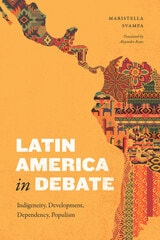
cover of Latin America in Debate: Indigeneity, Development, Dependency, Populism

Latin America in Debate

Indigeneity, Development, Dependency, Populism

Maristella Svampa

Duke University Press, 2025
In Latin America in Debate, eminent Argentine social theorist, novelist, and activist Maristella Svampa provides a broad and accessible overview of the key political and intellectual debates in Latin America from the early twentieth century to the present. She examines four main topics: the place of indigenous peoples in postcolonial nation-states; the impact of development on the Latin American political imagination; the impact of being economically dependent within a global capitalist order; and the turn to populism as a particular political response to these various challenges. Svampa traces each debate’s genealogy, contextualizes them over the course of the twentieth century, and demonstrates how intellectual and sociological currents have redefined and reshaped them in the twenty-first. Svampa also maps the tensions in each and shows how they influence contemporary Latin American politics. By focusing on indigeneity, development, dependency, and populism, Svampa provides a clear entry point to understand the most pressing issues confronting Latin America while showcasing how the region’s intellectuals have been thinking about and debating these issues in ways that generate social theory with global implications.
[more]
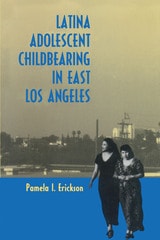
cover of Latina Adolescent Childbearing in East Los Angeles

Latina Adolescent Childbearing in East Los Angeles

By Pamela I. Erickson

University of Texas Press, 1998

Preventing teen pregnancy has become a national goal, but a one-size-fits-all strategy for achieving it may never be found. Because varying social and cultural factors lead to pregnancy among different ethnic/class groups, understanding these factors is essential in designing pregnancy prevention programs that work. This book explores the factors that lead to childbearing among Latina adolescents.

Pamela Erickson draws on both quantitative data and case histories to trace the pathways to motherhood for Latina teens. After situating her study within current research on teen pregnancy, she looks specifically at teen mothers enrolled in programs at Women's Hospital in East L.A. She describes the teens' relationships to their babies' fathers and their own families and discusses how these relationships affect whether teen mothers want to become pregnant, their use of prenatal, postpartum, and family planning services, and their ability to prevent a repeat pregnancy. Erickson describes culturally appropriate intervention efforts and assesses the limitations of prevention programs in institutional settings such as schools and clinics.

[more]
cover of Latina/o Sexualities: Probing Powers, Passions, Practices, and Policies

Latina/o Sexualities

Probing Powers, Passions, Practices, and Policies

Asencio, Marysol

Rutgers University Press, 2010

Latina/os are currently the largest minority population in the United States. They are also one of the fastest growing. Yet, we have very limited research and understanding of their sexualities. Instead, stereotypical images flourish even though scholars have challenged the validity and narrowness of these images and the lack of attention to the larger social context. Gathering the latest empirical work in the social and behavioral sciences, this reader offers us a critical lens through which to understand these images and the social context framing Latina/os and their sexualities.

Situated at the juncture of Latina/o studies and sexualities studies, Latina/o Sexualities provides a single resource that addresses the current state of knowledge from a multidisciplinary perspective. Contributors synthesize and critique the literature and carve a separate space where issues of Latina/o sexualities can be explored given the limitations of prevalent research models. This work compels the current wave in sexuality studies to be more inclusive of ethnic minorities and sets an agenda that policy makers and researchers will find invaluable.
[more]
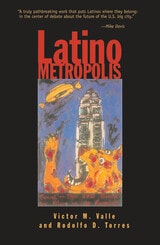
cover of Latino Metropolis

Latino Metropolis

Victor M. Valle

University of Minnesota Press, 2000

A readable look at culture and politics in Los Angeles through a Latino lens.

Los Angeles: scratch the surface of the city’s image as a rich mosaic of multinational cultures and a grittier truth emerges-its huge, shimmering economy was built on the backs of largely Latino immigrants and still depends on them. This book exposes the underside of the development and restructuring that have turned Los Angeles into a global city, and in doing so it reveals the ways in which ideas about ethnicity-Latino identity itself-are implicated and elaborated in the process. A penetrating analysis of the social, economic, cultural, and political consequences of the growth of the Latino working-class populations in Los Angeles, Latino Metropolis is also a nuanced account of the complex links between political economy and the social construction of ethnicity.

Lifting examples from recent news stories, political encounters, and cultural events, the authors demonstrate how narratives about Latinos are used to maintain the status quo-particularly the existing power grid-in the city. In media representations of riots, in the recasting (and "whitening") of Mexican food as Spanish-American cuisine, in the community displacement that occurred as part of the development of the Staples Center-in telling instances large and small, we see how Los Angeles and its Latino population are mutually transforming. And we see how an old Latino politics of "racial" identity is inevitably giving way to a new politics of class. Combining political and economic insight with trenchant social and cultural analysis, this work offers the clearest statement to date of how ethnicity and class intersect in defining racialized social relations in the contemporary metropolis.Globalization and Community Series, volume 7Translation Inquiries: University of Minnesota Press
[more]
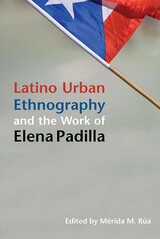
cover of Latino Urban Ethnography and the Work of Elena Padilla

Latino Urban Ethnography and the Work of Elena Padilla

Merida M. Rua

University of Illinois Press, 2010

This study reclaims and builds upon the classic work of anthropologist Elena Padilla in an effort to examine constructions of space and identity among Latinos. The volume includes an annotated edition of Padilla's 1947 University of Chicago master's thesis, "Puerto Rican Immigrants in New York and Chicago: A Study in Comparative Assimilation," which broke with traditional urban ethnographies and examined racial identities and interethnic relations. Weighing the importance of gender and the interplay of labor, residence, and social networks, Padilla examined the integration of Puerto Rican migrants into the social and cultural life of the larger community where they settled. Also included are four comparative and interdisciplinary original essays that foreground the significance of Padilla's early study about Latinos in Chicago. Contributors discuss the implications of her groundbreaking contributions to urban ethnographic traditions and to the development of Puerto Rican studies and Latina/o studies.
 
Contributors are Nicholas De Genova, Zaire Z. Dinzey-Flores, Elena Padilla, Ana Y. Ramos-Zayas, Mérida M. Rúa, and Arlene Torres.
[more]
cover of Latinos in New England

Latinos in New England

edited by Andrés Torres

Temple University Press, 2006
More than one million Latinos now live in New England. This is the first book to examine their impact on the region's culture, politics, and economics. At the same time, it investigates the effects of the locale on Latino residents' lives, traditions, and institutions.Employing methodologies from a variety of disciplines, twenty-one contributors explore topics in three broad areas: demographic trends, migration and community formation, and identity and politics. They utilize a wide range of approaches, including oral histories, case studies, ethnographic inquiries, focus group research, surveys, and statistical analyses. From the "Dominicanization" of the Latino community in Waterbury, Connecticut, to the immigration experiences of Brazilians in Massachusetts, from the influence of Latino Catholics on New England's Catholic churches to the growth of a Latino community in Providence, Rhode Island, the essays included here contribute to a new and multifaceted view of the growing Pan-Latino presence in the birthplace of the United States.
[more]
cover of Latinx Belonging: Community Building and Resilience in the United States

Latinx Belonging

Community Building and Resilience in the United States

Edited by Natalia Deeb-Sossa and Jennifer Bickham Mendez

University of Arizona Press, 2022

What does it mean to be Latinx? This pressing question forms the core of Latinx Belonging, which brings together cutting-edge research to discuss the multilayered ways this might be answered.

Latinx Belonging is anchored in the claim that Latinx people are not defined by their marginalization but should instead be understood as active participants in their communities and contributors to U.S. society. The volume’s overarching analytical approach recognizes the differences, identities, and divisions among people of Latin American origin in the United States, while also attending to the power of mainstream institutions to shape their lives and identities. Contributors to this volume view “belonging” as actively produced through struggle, survival, agency, resilience, and engagement.

This work positions Latinxs’ struggles for recognition and inclusion as squarely located within intersecting power structures of gender, race, sexuality, and class and as shaped by state-level and transnational forces such as U.S. immigration policies and histories of colonialism. From the case of Latinxs’ struggles for recognition in the arts, to queer Latinx community resilience during COVID-19 and in the wake of mass shootings, to Indigenous youth’s endurance and survival as unaccompanied minors in Los Angeles, the case studies featured in this collection present a rich and textured picture of the diversity of the U.S. Latinx experience in the twenty-first century.

Contributors
Andrés Acosta
Jack “Trey” Allen
Jennifer Bickham Mendez
Stephanie L. Canizales
Christopher Cuevas
Natalia Deeb-Sossa
Yvette G. Flores
Melanie Jones Gast
Monika Gosin
Pierrette Hondagneu-Sotelo
Nolan Kline
Verónica Montes
Yvonne Montoya
Michael De Anda Muñiz
Suzanne Oboler
Gilda L. Ochoa
Dina G. Okamoto
Marco Antonio Quiroga
Michelle Téllez

[more]
cover of Laud Humphreys: Prophet of Homosexuality and Sociology

Laud Humphreys

Prophet of Homosexuality and Sociology

John F. Galliher, Wayne Brekhus, and David P. Keys

University of Wisconsin Press, 2004

Laud Humphreys (1930–1988) was a pioneering and fearless sociologist, an Episcopal priest, and a civil rights, gay, and antiwar activist. In graduate school during the late 1960s, he conducted extensive fieldwork in public restrooms in a St. Louis city park to discover patterns of impersonal sex among men. He published the results in Tearoom Trade. Three decades later the book still triggers many debates about the ethics of his research methods. In 1974, he was the first sociologist to come out as gay. Laud Humphreys: Prophet of Homosexuality and Sociology examines the groundbreaking work through the life of a complex man and the life of the man through his controversial work. It is an invaluable contribution to sociology and a fascinating record of a courageous life.
[more]
cover of Laughing Mad: The Black Comic Persona in Post-Soul America

Laughing Mad

The Black Comic Persona in Post-Soul America

Haggins, Bambi

Rutgers University Press, 2007

Winner of the 2008 Katherine Singer Kovacs Book Award

Prior to the civil rights movement, comedians performed for audiences that were clearly delineated by race. Black comedians performed for black audiences and white comedians performed for whites. Yet during the past forty-five years, black comics have become progressively more central to mainstream culture.

In Laughing Mad , Bambi Haggins looks at how this transition occurred in a variety of media and shows how this integration has paved the way for black comedians and their audiences to affect each other. Historically, African American performers have been able to use comedy as a pedagogic tool, interjecting astute observations about race relations while the audience is laughing. And yet, Haggins makes the convincing argument that the potential of African American comedy remains fundamentally unfulfilled as the performance of blackness continues to be made culturally digestible for mass consumption.

Rather than presenting biographies of individual performers, Haggins focuses on the ways in which the comic persona is constructed and changes across media, from stand-up, to the small screen, to film. She examines the comic televisual and cinematic personae of Dick Gregory, Bill Cosby, Flip Wilson, and Richard Pryor and considers how these figures set the stage for black comedy in the next four decades. She reads Eddie Murphy and Chris Rock as emblematic of the first and second waves of post-civil rights era African American comedy, and she looks at the socio-cultural politics of Whoopi Goldberg's comic persona through the lens of gender and crossover. Laughing Mad also explores how the comedy of Dave Chappelle speaks to and for the post-soul generation.

A rigorous analytic analysis, this book interrogates notions of identity, within both the African American community and mainstream popular culture. Written in engaging and accessible prose, it is also a book that will travel from the seminar room, to the barbershop, to the kitchen table, allowing readers to experience the sketches, stand-up, and film comedies with all the laughter they deserve.
[more]
cover of Laughing Saints and Righteous Heroes: Emotional Rhythms in Social Movement Groups

Laughing Saints and Righteous Heroes

Emotional Rhythms in Social Movement Groups

Erika Summers Effler

University of Chicago Press, 2010

Why do people keep fighting for social causes in the face of consistent failure? Why do they risk their physical, emotional, and financial safety on behalf of strangers? How do these groups survive high turnover and emotional burnout?

To explore these questions, Erika Summers Effler undertook three years of ethnographic fieldwork with two groups: anti–death penalty activists STOP and the Catholic Workers, who strive to alleviate poverty. In both communities, members must contend with problems that range from the broad to the intimately personal. Adverse political conditions, internal conflict, and fluctuations in financial resources create a backdrop of daily frustration—but watching an addict relapse or an inmate’s execution are much more devastating setbacks. Summers Effler finds that overcoming these obstacles, recovering from failure, and maintaining the integrity of the group require a constant process of emotional fine-tuning, and she demonstrates how activists do this through thoughtful analysis and a lucid rendering of their deeply affecting stories.
[more]
cover of Law Stories

Law Stories

Gary Bellow and Martha Minow, Editors

University of Michigan Press, 1998

"War stories" is the phrase used by academic lawyers to disparage the ways practicing lawyers talk about their experiences. Gary Bellow and Martha Minow in Law Stories have gathered a group of stories that explore the actual experiences of clients and lawyers in concrete legal contexts.
The essays in Law Stories are all first-person accounts of law problems and the way they were handled, written by lawyers involved in the problems. They offer the voice and insight of the self-reflective practitioner. As such they provide us with a dimension missing from many third-person accounts of cases, a layer of emotion and perspective on legal institutions experienced by people caught or working within them.
Focusing on cases arising in public interest practices, the stories deal with problems arising from child custody, parental rights in a Head Start program, the consequences of large corporate bankruptcy for the corporation's retirees, juvenile crime, unemployment benefits, the rights of a victim of crime, the rights of welfare recipients, and the rights of small shareholders. These stories raise a variety of questions, including the nature and extent of the lawyer's role, the way the system listens to certain kinds of stories told in certain ways and refuses to hear other stories, how participation in the legal system affects the identity of those who are involved in it and how the popular image of law and legal processes differs from the reality depicted in these cases.
This book will appeal to both practitioners and teachers of law as well as social scientists interested in studying the role and place of law in the system.
The contributors include Anthony Alfieri, Gary Bellow, Lenora M. Lapidus, Alice and Staughton Lynd, Martha Minow, Nell Minow, Charles Ogletree, Abbe Smith, Lynne Weaver, and Lucie E. White.
"[Law Stories will] enlighten not only law students but the general and professional public who will find these accounts as compelling as any work of popular fiction. Unhappily, these accounts of law's inadequacy as a vehicle for social justice are not fictions. . . ." --Law and Politics Book Review
Gary Bellow and Martha Minow are Professors of Law, Harvard Law School.
[more]
cover of Law and the Social Sciences

Law and the Social Sciences

Leon Lipson

Russell Sage Foundation, 1987

The notion of law as a social phenomenon would have surprised educators and scholars a century ago. For them, law was a science and the library was the ultimate source of all legal knowledge. Our contemporary willingness to see law in a social context—reflecting social relations, for example, or precipitating social changes—is a relatively recent development, spurred during the last quarter century by the work of a generation of scholars (mostly social scientists and law professors) who believe the perspectives of the social sciences are essential to a better understanding of the law.

Law and the Social Sciences provides a unique and authoritative assessment of modern sociolegal research. Its impressive range and depth, the centrality of its concerns, and the stature of its contributors all attest to the vitality of the law-and-society movement and the importance of interdisciplinary work in this field.

Each chapter is both an exposition of its author’s point of view and a survey of the pertinent literature. In treating such topics as law and the economic order, legal systems of the world, the deterrence doctrine, and access to justice, the authors explore overlapping themes—the tension between public and private domains, between diffused and concentrated power, between the goals of uniformity and flexibility, between costs and benefits—that are significant to observers not only of our legal institutions but of other social systems as well.

[more]
cover of Lawfully Wedded Husband: How My Gay Marriage Will Save the American Family

Lawfully Wedded Husband

How My Gay Marriage Will Save the American Family

Joel Derfner

University of Wisconsin Press, 2013

When Joel Derfner's boyfriend proposed to him, there was nowhere in America the two could legally marry. That changed quickly, however, and before long the two were on what they expected to be a rollicking journey to married bliss. What they didn't realize was that, along the way, they would confront not just the dilemmas every couple faces on the way to the altar—what kind of ceremony would they have? what would they wear? did they have to invite Great Aunt Sophie?—but also questions about what a relationship can and can't do, the definition of marriage, and, ultimately, what makes a family.

Add to the mix a reality show whose director forces them to keep signing and notarizing applications for a wedding license until the cameraman gets a shot she likes; a family marriage history that includes adulterers, arms smugglers, and poisoners; and discussions of civil rights, Sophocles, racism, grammar, and homemade Ouija boards—coupled with Derfner's gift for getting in his own way—and what results is a story not just of gay marriage and the American family but of what it means to be human.

[more]
cover of Laws of Chance: Brazil's Clandestine Lottery and the Making of Urban Public Life

Laws of Chance

Brazil's Clandestine Lottery and the Making of Urban Public Life

Amy Chazkel

Duke University Press, 2011
The lottery called the jogo do bicho, or “animal game,” originated as a raffle at a zoo in Rio de Janeiro in 1892. During the next decade, it became a cultural phenomenon all over Brazil, where it remains popular today. Laws of Chance chronicles the game’s early history, as booking agents, dealers, and players spread throughout Rio and the lottery was outlawed and driven underground. Analyzing the game’s popularity, its persistence despite bouts of state repression, and its sociocultural meanings, Amy Chazkel unearths a rich history of popular participation in urban public life in the decades after the abolition of slavery in 1888 and the establishment of the Brazilian republic in 1889. Contending that the jogo do bicho was a precursor to the massive informal economies that developed later in the twentieth century, she sheds new light on the roots of the informal trade that is central to daily life in urban Latin America. The jogo do bicho operated as a form of unlicensed petty commerce in the vast gray area between the legal and the illegal. Police records show that players and ticket sellers were often arrested but rarely prosecuted. Chazkel argues that the animal game developed in dialogue with the official judicial system. Ticket sellers, corrupt police, and lenient judges worked out a system of everyday justice that would characterize public life in Brazil throughout the twentieth century.
[more]
cover of Leadership From the Margins: Women and Civil Society Organizations in Argentina, Chile, and El Salvador

Leadership From the Margins

Women and Civil Society Organizations in Argentina, Chile, and El Salvador

Cosgrove, Serena

Rutgers University Press, 2010

Women have experienced decades of economic and political repression across Latin America, where many nations are built upon patriarchal systems of power. However, a recent confluence of political, economic, and historical factors has allowed for the emergence of civil society organizations (CSOs) that afford women a voice throughout the region.

Leadership from the Margins describes and analyzes the unique leadership styles and challenges facing the women leaders of CSOs in Argentina, Chile, and El Salvador. Based on ethnographic research, Serena Cosgrove's analysis offers a nuanced account of the distinct struggles facing women, and how differences of class, political ideology, and ethnicity have informed their outlook and organizing strategies. Using a gendered lens, she reveals the power and potential of women's leadership to impact the direction of local, regional, and global development agendas.
[more]
cover of Learned Patriots: Debating Science, State, and Society in the Nineteenth-Century Ottoman Empire

Learned Patriots

Debating Science, State, and Society in the Nineteenth-Century Ottoman Empire

M. Alper Yalçinkaya

University of Chicago Press, 2015

The nineteenth century was, for many societies, a period of coming to grips with the growing, and seemingly unstoppable, domination of the world by the “Great Powers” of Europe. The Ottoman Empire was no exception: Ottomans from all walks of life—elite and non-elite, Muslim and non-Muslim—debated the reasons for what they considered to be the Ottoman decline and European ascendance. One of the most popular explanations was deceptively simple: science. If the Ottomans would adopt the new sciences of the Europeans, it was frequently argued, the glory days of the empire could be revived.
           
In Learned Patriots, M. Alper Yalçinkaya examines what it meant for nineteenth-century Ottoman elites themselves to have a debate about science. Yalçinkaya finds that for anxious nineteenth-century Ottoman politicians, intellectuals, and litterateurs, the chief question was not about the meaning, merits, or dangers of science. Rather, what mattered were the qualities of the new “men of science.” Would young, ambitious men with scientific education be loyal to the state? Were they “proper” members of the community? Science, Yalçinkaya shows, became a topic that could hardly be discussed without reference to identity and morality.
           
Approaching science in culture, Learned Patriots contributes to the growing literature on how science travels, representations and public perception of science, science and religion, and science and morality. Additionally, it will appeal to students of the intellectual history of the Middle East and Turkish politics.
[more]
cover of Learning the Hard Way: Masculinity, Place, and the Gender Gap in Education

Learning the Hard Way

Masculinity, Place, and the Gender Gap in Education

Morris, Edward

Rutgers University Press, 2012

An avalanche of recent newspapers, weekly newsmagazines, scholarly journals, and academic books has helped to spark a heated debate by publishing warnings of a “boy crisis” in which male students at all academic levels have begun falling behind their female peers. In Learning the Hard Way, Edward W. Morris explores and analyzes detailed ethnographic data on this purported gender gap between boys and girls in educational achievement at two low-income high schools—one rural and predominantly white, the other urban and mostly African American. Crucial questions arose from his study of gender at these two schools. Why did boys tend to show less interest in and more defiance toward school? Why did girls significantly outperform boys at both schools? Why did people at the schools still describe boys as especially “smart”?

Morris examines these questions and, in the process, illuminates connections of gender to race, class, and place. This book is not simply about the educational troubles of boys, but the troubled and complex experience of gender in school. It reveals how particular race, class, and geographical experiences shape masculinity and femininity in ways that affect academic performance. His findings add a new perspective to the “gender gap” in achievement.

[more]
cover of Learning to Leave: The Irony of Schooling in a Coastal Community

Learning to Leave

The Irony of Schooling in a Coastal Community

Michael Corbett

West Virginia University Press, 2020
Published with a new preface, this innovative case study from Nova Scotia analyzes the relationship between rural communities and contemporary education. Rather than supporting place-sensitive curricula and establishing networks within community populations, the rural school has too often stood apart from local life, with the generally unintended consequence that many educationally successful rural youth come to see their communities and lifestyles as places to be left behind. They face what Michael Corbett calls a mobility imperative, which, he shows, has been central to contemporary schooling. Learning to Leave argues that if education is to be democratic and serve the purpose of economic, social, and cultural development, then it must adapt and respond to the specificity of its locale, the knowledge practices of the people, and the needs of those who struggle to remain in challenged rural places.
[more]
cover of Learning to Love: Arranged Marriages and the British Indian Diaspora

Learning to Love

Arranged Marriages and the British Indian Diaspora

Raksha Pande

Rutgers University Press, 2021
Learning to Love moves beyond the media and policy stereotypes that conflate arranged marriages with forced marriages. Using in-depth interviews and participant observations, this book assembles a rich and diverse array of everyday marriage narratives and trajectories and highlights how considerations of romantic love are woven into traditional arranged marriage practices. It shows that far from being a homogeneous tradition, arranged marriages involve a variety of different matchmaking practices where each family tailors its own cut-and-paste version of British-Indian arranged marriages to suit modern identities and ambitions. Pande argues that instead of being wedded to traditions, people in the British-Indian diaspora have skillfully adapted and negotiated arranged marriage cultural norms to carve out an identity narrative that portrays them as "modern and progressive migrants"–ones who are changing with the times and cultivating transnational forms of belonging.
 
[more]
cover of Left to Chance: Hurricane Katrina and the Story of Two New Orleans Neighborhoods

Left to Chance

Hurricane Katrina and the Story of Two New Orleans Neighborhoods

By Steve Kroll-Smith, Vern Baxter, and Pam Jenkins

University of Texas Press, 2015

How do survivors recover from the worst urban flood in American history, a disaster that destroyed nearly the entire physical landscape of a city, as well as the mental and emotional maps that people use to navigate their everyday lives? This question has haunted the survivors of Hurricane Katrina and informed the response to the subsequent flooding of New Orleans across many years.

Left to Chance takes us into two African American neighborhoods—working-class Hollygrove and middle-class Pontchartrain Park—to learn how their residents have experienced “Miss Katrina” and the long road back to normal life. The authors spent several years gathering firsthand accounts of the flooding, the rushed evacuations that turned into weeks- and months-long exile, and the often confusing and exhausting process of rebuilding damaged homes in a city whose local government had all but failed. As the residents’ stories make vividly clear, government and social science concepts such as “disaster management,” “restoring normality,” and “recovery” have little meaning for people whose worlds were washed away in the flood. For the neighbors in Hollygrove and Pontchartrain Park, life in the aftermath of Katrina has been a passage from all that was familiar and routine to an ominous world filled with raw existential uncertainty. Recovery and rebuilding become processes imbued with mysteries, accidental encounters, and hasty adaptations, while victories and defeats are left to chance.

[more]
cover of Leftist Theories of Sport: A Critique and Reconstruction

Leftist Theories of Sport

A Critique and Reconstruction

William J. Morgan

University of Illinois Press, 1994

The degradation of modern sport--its commercialization, trivialization, widespread cheating, cult of athletic stars and celebrities, and manipulation by the media--has led to calls for its transformation. William J. Morgan constructs a critical theory of sport that shores up the weak arguments of past attempts and points a way forward to making sport more humane, compelling, and substantive. Drawing on the work of social theorists, Morgan challenges scholars and fans alike to explore new spaces in sport culture and imagine the rich cultural and political possibilities to be found in the pastimes we follow with such passion.
[more]
cover of Legal Advocacy: Lawyers and Nonlawyers at Work

Legal Advocacy

Lawyers and Nonlawyers at Work

Herbert M. Kritzer

University of Michigan Press, 1998

Because of concern over the cost and quality of legal representation in this country many have argued that formally trained lawyers are not the best advocates in many situations. However, the professional bar has fought to maintain its monopoly on the provision of legal services. Can nonlawyers be effective legal advocates? Herbert Kritzer provides the first systematic comparative study of the work of lawyers and nonlawyers that evaluates the quality of representation provided by lawyers and nonlawyers. The book describes lawyers and nonlawyer advocates at work in four different legal settings: unemployment compensation claims appeals, Social Security disability appeals, state tax appeals, and labor grievance arbitrations.
The analysis shows clearly that nonlawyers can be effective advocates and, in some situations, more effective than many lawyers. Kritzer combines an examination of case outcomes with a systematic observation of advocates in the hearing room, providing a compelling portrait of their work and a solid basis for understanding the differences in the effectiveness of advocates with different training. The author's findings have important implications for our policies toward restrictions on those who can provide legal assistance, specialization in training and practice, and the meaning of professional monopolies in a world of increasing complexity.
This book will appeal to student of the legal process, the sociology of professions, and all concerned with the operation of the U.S. legal system.
Herbert M. Kritzer is Professor of Political Science and Law, University of Wisconsin--Madison. He is the author of Let's Make a Deal and The Justice Broker.
[more]
cover of Legalizing Moves: Salvadoran Immigrants' Struggle for U.S. Residency

Legalizing Moves

Salvadoran Immigrants' Struggle for U.S. Residency

Susan Bibler Coutin

University of Michigan Press, 2003

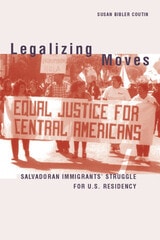
Legalizing Moves analyzes the battle Salvadoran immigrants have fought for two decades to win legal permanent residency in the United States. Drawing on interviews with Salvadoran asylum applicants, observations of deportation hearings, and fieldwork within the Salvadoran community in Los Angeles, Susan Bibler Coutin illustrates the profound effects of increasingly restrictive immigration laws on the lives of undocumented immigrants in the U.S.

Susan Bibler Coutin is Assistant Professor in the Department of Criminology, Law, and Society, at the University of California, Irvine.

[more]
cover of Legalizing Plural Marriage: The Next Frontier in Family Law

Legalizing Plural Marriage

The Next Frontier in Family Law

Mark Goldfeder

Brandeis University Press, 2017
Polygamous marriages are currently recognized in nearly fifty countries worldwide. Although polygamy is technically illegal in the United States, it is practiced by members of some religious communities and a growing number of other “poly” groups. In the radically changing and increasingly multicultural world in which we live, the time has come to define polygamous marriage and address its legal feasibilities. Although Mark Goldfeder does not argue the right or wrong of plural marriage, he maintains that polygamy is the next step—after same-sex marriage—in the development of U.S. family law. Providing a road map to show how such legalization could be handled, he explores the legislative and administrative arguments which demonstrate that plural marriage is not as farfetched—or as far off—as we might think. Goldfeder argues not only that polygamy is in keeping with the legislative values and freedoms of the United States, but also that it would not be difficult to manage or administrate within our current legal system. His legal analysis is enriched throughout with examples of plural marriage in diverse cultural and historical contexts. Tackling the issue of polygamy in the United States from a legal perspective, this book will engage anyone interested in constitutional law, family law, or criminal law, along with sociologists and those who study gender and culture in modern times.
[more]
cover of Legions of Boom: Filipino American Mobile DJ Crews in the San Francisco Bay Area

Legions of Boom

Filipino American Mobile DJ Crews in the San Francisco Bay Area

Oliver Wang

Duke University Press, 2015

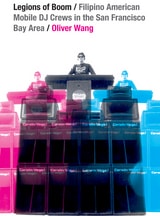
Armed with speakers, turntables, light systems, and records, Filipino American mobile DJ crews, such as Ultimate Creations, Spintronix, and Images, Inc., rocked dance floors throughout the San Francisco Bay Area from the late 1970s through the mid-1990s. In Legions of Boom noted music and pop culture writer and scholar Oliver Wang chronicles this remarkable scene that eventually became the cradle for turntablism. These crews, which were instrumental in helping to create and unify the Bay Area's Filipino American community, gave young men opportunities to assert their masculinity and gain social status. While crews regularly spun records for school dances, weddings, birthdays, or garage parties, the scene's centerpieces were showcases—or multi-crew performances—which drew crowds of hundreds, or even thousands. By the mid-1990s the scene was in decline, as single DJs became popular, recruitment to crews fell off, and aspiring scratch DJs branched off into their own scene. As the training ground for a generation of DJs, including DJ Q-Bert, Shortkut, and Mix Master Mike, the mobile scene left an indelible mark on its community that eventually grew to have a global impact.
[more]
cover of Legitimating Life: Adoption in the Age of Globalization and Biotechnology

Legitimating Life

Adoption in the Age of Globalization and Biotechnology

van Wichelen, Sonja

Rutgers University Press, 2019
The phenomenon of transnational adoption is changing in the age of globalization and biotechnology. In Legitimating Life, Sonja van Wichelen boldly describes how contemporary justifications of cross-border adoption navigate between child welfare, humanitarianism, family making, capitalism, science, and health. Focusing on contemporary institutional practices of adoption in the United States and the Netherlands, she traces how professionals, bureaucrats, lawyers, politicians, social workers, and experts legitimate a practice that became progressively controversial. Throughout the past few decades transnational adoption transformed from a humanitarian response to a means of making family. In this new manifestation, life becomes necessarily economized. While push and pull factors, demand and supply dynamics, and competition between agencies set the stage for the globalization of adoption, international conventions, scientific knowledge, and the language of human rights universalized the phenomenon. Van Wichelen argues that such technoscientific legitimations of a globalizing practice are rearticulating colonial logics of race and civilization. Yet, she also lets us see beyond the biopolitical project and into alternative ways of making kin. 


[more]
cover of Legitimating New Religions

Legitimating New Religions

Lewis, James R

Rutgers University Press, 2003

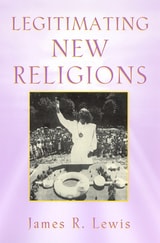
James R. Lewis has written the first book to deal explicitly with the issue of how emerging religions legitimate themselves. He contends that a new religion has at least four different, though overlapping, areas where legitimacy is a concern: making converts, maintaining followers, shaping public opinion, and appeasing government authorities. The legitimacy that new religions seek in the public realm is primarily that of social acceptance. Mainstream society's acknowledgement of a religion as legitimate means recognizing its status as a genuine religion and thus recognizing its right to exist. Through a series of wide-ranging case studies Lewis explores the diversification of legitimation strategies of new religions as well the tactics that their critics use to de-legitimate such groups. Cases include the Movement for Spiritual Inner Awareness, Native American prophet religions, spiritualism, the Church of Christ-Scientist, Scientology, Church of Satan, Heaven's Gate, Unitarianism, Hindu reform movements, and Soka Gakkai, a new Buddhist sect.

Since many of the issues raised with respect to newer religions can be extended to the legitimation strategies deployed by established religions, this book sheds an intriguing new light on classic questions about the origin of all religions.
[more]
cover of Let Us Alone: The Origins of Baltimore's Police State

Let Us Alone

The Origins of Baltimore's Police State

Michael Casiano

University of Illinois Press, 2025

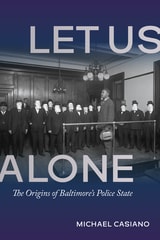
By the early twentieth century, postbellum assaults on civil rights and the advent of Jim Crow expanded Baltimore’s law enforcement into a vast network designed to oppress Black people. Michael Casiano’s history charts the institutional consolidation of the city’s post–Civil War police state. Authorities in Baltimore organized and established municipal power in distinct but connected sites that included jails, areas of political and social activism, public schools, street corners, courtrooms, and homes. Casiano analyzes policing in light of two parallel and inextricable realities of the city’s governance. First, policing evolved from an inefficient and vigilante-driven system into a modern and paramilitary endeavor focused on suppressing citizens and maximizing the power, wealth, and reach of capitalists. Second, decades of racial antagonism shaped Baltimore policing into an apparatus primarily oriented around subduing Black freedom. A compelling urban history, Let Us Alone uses voices from all levels of society to examine police power, incarceration, and the perils of being Black in post–Civil War Baltimore.
[more]