501 books match the query 'South' and 21 start with l
cover of Land, Memory, Reconstruction, and Justice: Perspectives on Land Claims in South Africa

Land, Memory, Reconstruction, and Justice

Perspectives on Land Claims in South Africa

Cherryl Walker

Ohio University Press, 2010

Land is a significant and controversial topic in South Africa. Addressing the land claims of those dispossessed in the past has proved to be a demanding, multidimensional process. In many respects the land restitution program that was launched as part of the county’s transition to democracy in 1994 has failed to meet expectations, with ordinary citizens, policymakers, and analysts questioning not only its progress but also its outcomes and parameters.

Land, Memory, Reconstruction, and Justice brings together a wealth of topical material and case studies by leading experts in the field who present a rich mix of perspectives from politics, sociology, geography, social anthropology, law, history, and agricultural economics. The collection addresses both the material and the symbolic dimensions of land claims, in rural and urban contexts, and explores the complex intersection of issues confronting the restitution program, from the promotion of livelihoods to questions of rights, identity, and transitional justice.

A valuable contribution to the field of land and agrarian studies, both in South Africa and internationally, it is undoubtedly the most comprehensive treatment to date of South Africa’s postapartheid land claims process and will be essential reading for scholars and students of land reform for years to come.
[more]
cover of Landmarked: Land Claims and Land Restitution in South Africa

Landmarked

Land Claims and Land Restitution in South Africa

Cherryl Walker

Ohio University Press, 2008

The year 2008 is the deadline set by President Mbeki for the finalization of all land claims by people who were dispossessed under the apartheid and previous white governments. Although most experts agree this is an impossible deadline, it does provide a significant political moment for reflection on the ANC government’s program of land restitution since the end of apartheid.

Land reform (and land restitution within that) remains a highly charged issue in South Africa, one that deserves more in–depth analysis. Drawing on her experience as Rural Land Claims Commissioner in KwaZulu–Natal from 1995 to 2000, Professor Cherryl Walker provides a multilayered account of land reform in South Africa, one that covers general critical commentary, detailed case material, and personal narrative. She explores the master narrative of loss and restoration, which has been fundamental in shaping the restitution program; offers a critical overview of the achievements of the program as a whole; and discusses what she calls the “non–programmatic limits to land reform,” including urbanization, environmental constraints and the impact of HIV/AIDS.

[more]
cover of Language Variety in the South: Perspectives in Black and White

Language Variety in the South

Perspectives in Black and White

Michael B. Montgomery

University of Alabama Press, 1986

This volume evolved from a research conference on the English Language in the Southern United States sponsored by the National Endowment for the Humanities and held at Columbia, South Carolina.
[more]
cover of Last Outpost on the Zulu Frontiers: Fort Napier and the British Imperial Garrison

Last Outpost on the Zulu Frontiers

Fort Napier and the British Imperial Garrison

Graham Dominy

University of Illinois Press, 2016
Small and isolated in the Colony of Natal, Fort Napier was long treated like a temporary outpost of the expanding British Empire. Yet British troops manned this South African garrison for over seventy years. Tasked with protecting colonists, the fort became even more significant as an influence on, and reference point for, settler society. Graham Dominy's Last Outpost on the Zulu Frontier reveals the unexamined but pivotal role of Fort Napier in the peacetime public dramas of the colony. Its triumphalist colonial-themed pageantry belied colonists's worries about their own vulnerability. As Dominy shows, the cultural, political, and economic methods used by the garrison compensated for this perceived weakness. Settler elites married their daughters to soldiers to create and preserve an English-speaking oligarchy. At the same time, garrison troops formed the backbone of a consumer market that allowed colonists to form banking and property interests that consolidated their control.
[more]
cover of Law and the Economy in Colonial India

Law and the Economy in Colonial India

Tirthankar Roy and Anand V. Swamy

University of Chicago Press, 2021

Since the economic reforms of the 1990s, India’s economy has grown rapidly. To sustain growth and foreign investment over the long run requires a well-developed legal infrastructure for conducting business, including cheap and reliable contract enforcement and secure property rights. But it’s widely acknowledged that India’s legal infrastructure is in urgent need of reform, plagued by problems, including slow enforcement of contracts and land laws that differ from state to state. How has this situation arisen, and what can boost business confidence and encourage long-run economic growth?
           
Tirthankar Roy and Anand V. Swamy trace the beginnings of the current Indian legal system to the years of British colonial rule. They show how India inherited an elaborate legal system from the British colonial administration, which incorporated elements from both British Common Law and indigenous institutions. In the case of property law, especially as it applied to agricultural land, indigenous laws and local political expediency were more influential in law-making than concepts borrowed from European legal theory. Conversely, with commercial law, there was considerable borrowing from Europe. In all cases, the British struggled with limited capacity to enforce their laws and an insufficient knowledge of the enormous diversity and differentiation within Indian society. A disorderly body of laws, not conducive to production and trade, evolved over time. Roy and Swamy’s careful analysis not only sheds new light on the development of legal institutions in India, but also offers insights for India and other emerging countries through a look at what fosters the types of institutions that are key to economic growth.
[more]
cover of Law and the Economy in a Young Democracy: India 1947 and Beyond

Law and the Economy in a Young Democracy

India 1947 and Beyond

Tirthankar Roy and Anand V. Swamy

University of Chicago Press, 2022

An essential history of India's economic growth since 1947, including the legal reforms that have shaped the country in the shadow of colonial rule.

Economists have long lamented how the inefficiency of India's legal system undermines the country’s economic capacity. How has this come to be? The prevailing explanation is that the postcolonial legal system is understaffed and under-resourced, making adjudication and contract enforcement slow and costly.

Taking this as given, Law and the Economy in a Young Democracy examines the contents and historical antecedents of these laws, including how they have stifled economic development. Economists Roy and Swamy argue that legal evolution in independent India has been shaped by three factors: the desire to reduce inequality and poverty; the suspicion that market activity, both domestic and international, can be detrimental to these goals; and the strengthening of Indian democracy over time, giving voice to a growing fraction of society, including the poor.

Weaving the story of India's heralded economic transformation with its social and political history, Roy and Swamy show how inadequate legal infrastructure has been a key impediment to the country's economic growth during the last century. A stirring and authoritative history of a nation rife with contradictions, Law and the Economy in a Young Democracy is essential reading for anyone seeking to understand India's current crossroads—and the factors that may keep its dreams unrealized.
[more]
cover of Learning to Live with the Past

Learning to Live with the Past

Krishna Kumar

Seagull Books, 2023

This essay examines the history of the Indian subcontinent and the Partition of 1947 from a pedagogical perspective.
 
How does education shape political rivalry and hostility? The Partition of the Indian subcontinent in 1947—the violence that followed it, and its living legacy of rival nationalisms—has made a deep and pervasive impact on education in both India and Pakistan. In Learning to Live with the Past, educationist Krishna Kumar dwells on the complex terrain every history teacher has to navigate: how to make the past come alive without running the risk of creating a desire to lose this “pastness.”
 
Substantiating this question with a wealth of experiences gained from his extensive research on history textbooks, as well as his interactions with students and teachers in both countries, Kumar explores the integral function the discipline of history plays in the project of nation-building. To help children learn to live with the past, Kumar amplifies the need for spaces that create possibilities for inquiries into a “longer” common heritage shared by South Asia without necessarily denying a national narrative or encouraging an urge to undo the past.

 
[more]
cover of Lethal Punishment: Lynchings and Legal Executions in the South

Lethal Punishment

Lynchings and Legal Executions in the South

Vandiver, Margaret

Rutgers University Press, 2005

Why did some offenses in the South end in mob lynchings while similar crimes led to legal executions? Why did still other cases have nonlethal outcomes? In this well-researched and timely book, Margaret Vandiver explores the complex relationship between these two forms of lethal punishment, challenging the assumption that executions consistently grew out of-and replaced-lynchings.

Vandiver begins by examining the incidence of these practices in three culturally and geographically distinct southern regions. In rural northwest Tennessee, lynchings outnumbered legal executions by eleven to one and many African Americans were lynched for racial caste offenses rather than for actual crimes. In contrast, in Shelby County, which included the growing city of Memphis, more men were legally executed than lynched. Marion County, Florida, demonstrated a firmly entrenched tradition of lynching for sexual assault that ended in the early 1930s with three legal death sentences in quick succession.

With a critical eye to issues of location, circumstance, history, and race, Vandiver considers the ways that legal and extralegal processes imitated, influenced, and differed from each other. A series of case studies demonstrates a parallel between mock trials that were held by lynch mobs and legal trials that were rushed through the courts and followed by quick executions.

Tying her research to contemporary debates over the death penalty, Vandiver argues that modern death sentences, like lynchings of the past, continue to be influenced by factors of race and place, and sentencing is comparably erratic.
[more]
cover of Liberalization's Children: Gender, Youth, and Consumer Citizenship in Globalizing India

Liberalization's Children

Gender, Youth, and Consumer Citizenship in Globalizing India

Ritty A. Lukose

Duke University Press, 2009

Liberalization’s Children explores how youth and gender have become crucial sites for a contested cultural politics of globalization in India. Popular discourses draw a contrast between “midnight’s children,” who were rooted in post-independence Nehruvian developmentalism, and “liberalization’s children,” who are global in outlook and unapologetically consumerist. Moral panics about beauty pageants and the celebration of St. Valentine’s Day reflect ambivalence about the impact of an expanding commodity culture, especially on young women. By simply highlighting the triumph of consumerism, such discourses obscure more than they reveal. Through a careful analysis of “consumer citizenship,” Ritty A. Lukose argues that the breakdown of the Nehruvian vision connects with ongoing struggles over the meanings of public life and the cultural politics of belonging. Those struggles play out in the ascendancy of Hindu nationalism; reconfigurations of youthful, middle-class femininity; attempts by the middle class to alter understandings of citizenship; and assertions of new forms of masculinity by members of lower castes.

Moving beyond elite figurations of globalizing Indian youth, Lukose draws on ethnographic research to examine how non-elite college students in the southern state of Kerala mediate region, nation, and globe. Kerala sits at the crossroads of development and globalization. Held up as a model of left-inspired development, it has also been transformed through an extensive and largely non-elite transnational circulation of labor, money, and commodities to the Persian Gulf and elsewhere. Focusing on fashion, romance, student politics, and education, Lukose carefully tracks how gender, caste, and class, as well as colonial and postcolonial legacies of culture and power, affect how students navigate their roles as citizens and consumers. She explores how mass-mediation and an expanding commodity culture have differentially incorporated young people into the structures and aspirational logics of globalization.
[more]
cover of Liberation and Development: Black Consciousness Community Programs in South Africa

Liberation and Development

Black Consciousness Community Programs in South Africa

Leslie Anne Hadfield

Michigan State University Press, 2016

Liberation and Development: Black Consciousness Community Programs in South Africa is an account of the community development programs of the Black Consciousness movement in South Africa. It covers the emergence of the movement’s ideas and practices in the context of the late 1960s and early 1970s, then analyzes how activists refined their practices, mobilized resources, and influenced people through their work. The book examines this history primarily through the Black Community Programs organization and its three major projects: the yearbook Black Review, the Zanempilo Community Health Center, and the Njwaxa leatherwork factory. As opposed to better-known studies of antipolitical, macroeconomic initiatives, this book shows that people from the so-called global South led development in innovative ways that promised to increase social and political participation. It particularly explores the power that youth, women, and churches had in leading change in a hostile political environment. With this new perspective on a major liberation movement, Hadfield not only causes us to rethink aspects of African history but also offers lessons from the past for African societies still dealing with developmental challenges similar to those faced during apartheid.
[more]
cover of Lifelines: The Traffic of Trauma

Lifelines

The Traffic of Trauma

Harris Solomon

Duke University Press, 2022
In Lifelines Harris Solomon takes readers into the trauma ward of one of Mumbai’s busiest public hospitals, narrating the stories of the patients, providers, and families who experience and care for traumatic injuries due to widespread traffic accidents. He traces trauma’s moves after the accident: from scenes of road and railway injuries to ambulance interiors; through emergency triage, surgery, and intensive care; and from the morgue for patients who do not survive into the homes of those who do. These pathways reveal how trauma shifts inequalities, infrastructures, and institutions through the lives and labors of clinical spaces. Solomon contends that medicine itself must be understood in terms of lifelines: patterns of embodied movement that determine survival. In reflecting on the centrality of traffic to life, Lifelines explores a fundamental question: How does medicine move us?
[more]
cover of Limits to Liberation after Apartheid: Citizenship, Governance, & Culture

Limits to Liberation after Apartheid

Citizenship, Governance, & Culture

Steven L. Robins

Ohio University Press, 2005

Postapartheid South Africa struggles with race tensions, social inequalities, and unemployment that are contributing to widespread crises. In addressing the transition to democracy, Limits to Liberation After Apartheid examines issues of culture and identity, drawing attention to the creative agency of citizens of the “new” South Africa. The writers question the classical western model of citizenship and procedural democracy in the face of the inability of many African states to provide basic needs. Their bold, interdisciplinary inquiry contributes to South African and international scholarship on urban planning, governance, and citizenship.
[more]
cover of Lion Songs: Thomas Mapfumo and the Music That Made Zimbabwe

Lion Songs

Thomas Mapfumo and the Music That Made Zimbabwe

Banning Eyre

Duke University Press, 2015

Like Fela Kuti and Bob Marley, singer, composer, and bandleader Thomas Mapfumo and his music came to represent his native country's anticolonial struggle and cultural identity. Mapfumo was born in 1945 in what was then the British colony of Rhodesia (now Zimbabwe). The trajectory of his career—from early performances of rock 'n' roll tunes to later creating a new genre based on traditional Zimbabwean music, including the sacred mbira, and African and Western pop—is a metaphor for Zimbabwe's evolution from colony to independent nation. Lion Songs is an authoritative biography of Mapfumo that narrates the life and career of this creative, complex, and iconic figure.
 
Banning Eyre ties the arc of Mapfumo's career to the history of Zimbabwe. The genre Mapfumo created in the 1970s called chimurenga, or "struggle" music, challenged the Rhodesian government—which banned his music and jailed him—and became important to Zimbabwe achieving independence in 1980. In the 1980s and 1990s Mapfumo's international profile grew along with his opposition to Robert Mugabe's dictatorship. Mugabe had been a hero of the revolution, but Mapfumo’s criticism of his regime led authorities and loyalists to turn on the singer with threats and intimidation. Beginning in 2000, Mapfumo and key band and family members left Zimbabwe. Many of them, including Mapfumo, now reside in Eugene, Oregon.
 
A labor of love, Lion Songs is the product of a twenty-five-year friendship and professional relationship between Eyre and Mapfumo that demonstrates Mapfumo's musical and political importance to his nation, its freedom struggle, and its culture.
 
[more]
cover of Lion's Share: Remaking South African Copyright

Lion's Share

Remaking South African Copyright

Veit Erlmann

Duke University Press, 2022

In the aftermath of apartheid, South Africa undertook an ambitious revision of its intellectual property system. In Lion’s Share Veit Erlmann traces the role of copyright law in this process and its impact on the South African music industry. Although the South African government tied the reform to its postapartheid agenda of redistributive justice and a turn to a postindustrial knowledge economy, Erlmann shows how the persistence of structural racism and Euro-modernist conceptions of copyright threaten the viability of the reform project. In case studies ranging from antipiracy police raids and the crafting of legislation to protect indigenous expressive practices to the landmark lawsuit against Disney for its appropriation of Solomon Linda’s song "Mbube" for its hit “The Lion Sleeps Tonight” from The Lion King, Erlmann follows the intricacies of musical copyright through the criminal justice system, parliamentary committees, and the offices of a music licensing and royalty organization. Throughout, he demonstrates how copyright law is inextricably entwined with race, popular music, postcolonial governance, indigenous rights, and the struggle to create a more equitable society.
[more]
cover of Lister Hill: Statesman from the South

Lister Hill

Statesman from the South

Virginia Van der Veer Hamilton

University of Alabama Press, 2004

"Hamilton makes clear in this intelligent and sensitive biography [that] Hill, whose 45 years in Congress spanned the presidents from Calvin Coolidge to Lyndon Johnson, deserves to be remembered, both for the impressive legislative record he compiled and for the light he shed on southern liberalism in the 20th century." -- Journal of Southern History "Hamilton's fine book is based on extensive research [and] it will be of interest to a general audience as well as to scholars." -- Journal of American History "This is an important work about a highly influential lawmaker." Choice Virginia Van der Veer Hamilton is Professor Emerita of History at The University of Alabama at Birmingham and author of Hugo Black: The Alabama Years.
[more]
cover of Living Class in Urban India

Living Class in Urban India

Dickey, Sara

Rutgers University Press, 2016

Honorable mention, 2018 Ananda Kentish Coomaraswamy Book Prize from the South Asia Council of the Association for Asian Studies

Many Americans still envision India as rigidly caste-bound, locked in traditions that inhibit social mobility. In reality, class mobility has long been an ideal, and today globalization is radically transforming how India’s citizens perceive class. Living Class in Urban India examines a nation in flux, bombarded with media images of middle-class consumers, while navigating the currents of late capitalism and the surges of inequality they can produce. 
 
Anthropologist Sara Dickey puts a human face on the issue of class in India, introducing four people who live in the “second-tier” city of Madurai: an auto-rickshaw driver, a graphic designer, a teacher of high-status English, and a domestic worker. Drawing from over thirty years of fieldwork, she considers how class is determined by both subjective perceptions and objective conditions, documenting Madurai residents’ palpable day-to-day experiences of class while also tracking their long-term impacts. By analyzing the intertwined symbolic and economic importance of phenomena like wedding ceremonies, religious practices, philanthropy, and loan arrangements, Dickey’s study reveals the material consequences of local class identities. Simultaneously, this gracefully written book highlights the poignant drive for dignity in the face of moralizing class stereotypes.  
 
Through extensive interviews, Dickey scrutinizes the idioms and commonplaces used by residents to justify class inequality and, occasionally, to subvert it. Along the way, Living Class in Urban India reveals the myriad ways that class status is interpreted and performed, embedded in everything from cell phone usage to religious worship.  

This book is also freely available online as an open-access digital edition, published with the support of the National Endowment for the Humanities.

 
[more]
cover of Living Politics in South Africa’s Urban Shacklands

Living Politics in South Africa’s Urban Shacklands

Kerry Ryan Chance

University of Chicago Press, 2018

While much has been written on post-apartheid social movements in South Africa, most discussion centers on ideal forms of movements, disregarding the reality and agency of the activists themselves. In Living Politics, Kerry Ryan Chance radically flips the conversation by focusing on the actual language and humanity of post-apartheid activists rather than the external, idealistic commentary of old.
 
Tracking everyday practices and interactions between poor residents and state agents in South Africa’s shack settlements, Chance investigates the rise of nationwide protests since the late 1990s. Based on ethnography in Durban, Cape Town, and Johannesburg, the book analyzes the criminalization of popular forms of politics that were foundational to South Africa’s celebrated democratic transition. Chance argues that we can best grasp the increasingly murky line between “the criminal” and “the political” with a “politics of living” that casts slum and state in opposition to one another. Living Politics shows us how legitimate domains of politics are redefined, how state sovereignty is forcibly enacted, and how the production of new citizen identities crystallize at the intersections of race, gender, and class. 

 
[more]
cover of Living Worth: Value and Values in Global Pharmaceutical Markets

Living Worth

Value and Values in Global Pharmaceutical Markets

Stefan Ecks

Duke University Press, 2022
In Living Worth Stefan Ecks draws on ethnographic research on depression and antidepressant usage in India to develop a new theory of value. Framing depressive disorder as a problem of value, Ecks traces the myriad ways antidepressants come to have value, from their ability to help make one’s life worth living to the wealth they generate in the multibillion-dollar global pharmaceutical market. Through case studies that include analyses of the different valuation of generic and brand-name drugs, the origins of rising worldwide depression rates, and the marketing, prescription, and circulation of antidepressants, Ecks theorizes value as a process of biocommensuration. Biocommensurations—transactions that aim or claim to make life better—are those forms of social, medical, and corporate actions that allow value to be measured, exchanged, substituted, and redistributed. Ecks’s theory expands value beyond both a Marxist labor theory of value and a free market subjective theory, thereby offering new insights into how the value of lives and things become entangled under neoliberal capitalism.
[more]
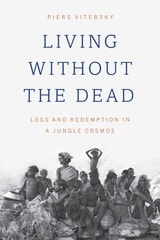
cover of Living without the Dead: Loss and Redemption in a Jungle Cosmos

Living without the Dead

Loss and Redemption in a Jungle Cosmos

Piers Vitebsky

University of Chicago Press, 2017

Just one generation ago, the Sora tribe in India lived in a world populated by the spirits of their dead, who spoke to them through shamans in trance. Every day, they negotiated their wellbeing  in heated arguments or in quiet reflections on their feelings of love, anger, and guilt.
 
Today, young Sora are rejecting the worldview of their ancestors and switching their allegiance to warring sects of fundamentalist Christianity or Hinduism. Communion with ancestors is banned as sacred sites are demolished, female shamans are replaced by male priests, and debate with the dead gives way to prayer to gods. For some, this shift means liberation from jungle spirits through literacy, employment, and democratic politics; others despair for fear of being forgotten after death.
 
How can a society abandon one understanding of reality so suddenly and see the world in a totally different way? Over forty years, anthropologist Piers Vitebsky has shared the lives of shamans, pastors, ancestors, gods, policemen, missionaries, and alphabet worshippers, seeking explanations from social theory, psychoanalysis, and theology. Living without the Dead lays bare today’s crisis of indigenous religions and shows how historical reform can bring new fulfillments—but also new torments and uncertainties.
 
Vitebsky explores the loss of the Sora tradition as one for greater humanity: just as we have been losing our wildernesses, so we have been losing a diverse range of cultural and spiritual possibilities, tribe by tribe. From the award-winning author of The Reindeer People, this is a heartbreaking story of cultural change and the extinction of an irreplaceable world, even while new religious forms come into being to take its place.
[more]
cover of Logics of Empowerment: Development, Gender, and Governance in Neoliberal India

Logics of Empowerment

Development, Gender, and Governance in Neoliberal India

Aradhana Sharma

University of Minnesota Press, 2008

A critical look at the globally dominant development strategy of “empowerment”

Celebratory news features about India’s thriving middle class tell only part of the story of the country’s recent economic rise, frequently glossing over the 300 million Indians who live on the margins and struggle to survive under economic liberalization. How do those cast out of their country’s successes perceive and respond to their position and mobilize against disempowerment?

In Logics of Empowerment, Aradhana Sharma takes up these questions, focusing on the work of an innovative women’s program called Mahila Samakhya that is part governmental and part nongovernmental and strives to empower those rural Indian women who have been pushed aside. She details the awkward ideological articulations and paradoxical outcomes of this unique activist-cum-government organizational structure and usage of empowerment. Bringing much-needed specificity to the study of neoliberalism, Logics of Empowerment fosters a deeper understanding of development and politics in contemporary India.

[more]
cover of Lynching Beyond Dixie: American Mob Violence Outside the South

Lynching Beyond Dixie

American Mob Violence Outside the South

Edited by Michael J. Pfeifer

University of Illinois Press, 2013

 
In recent decades, scholars have explored much of the history of mob violence in the American South, especially in the years after Reconstruction. However, the lynching violence that occurred in American regions outside the South, where hundreds of persons, including Hispanics, whites, African Americans, Native Americans, and Asian Americans died at the hands of lynch mobs, has received less attention. This collection of essays by prominent and rising scholars fills this gap by illuminating the factors that distinguished lynching in the West, the Midwest, and the Mid-Atlantic. The volume adds to a more comprehensive history of American lynching and will be of interest to all readers interested in the history of violence across the varied regions of the United States.
 
Contributors are Jack S. Blocker Jr., Brent M. S. Campney, William D. Carrigan, Sundiata Keita Cha-Jua, Dennis B. Downey, Larry R. Gerlach, Kimberley Mangun, Helen McLure, Michael J. Pfeifer, Christopher Waldrep, Clive Webb, and Dena Lynn Winslow.

[more]