Results by title
100 books match the query 'Sovereignty' and 2 start with l
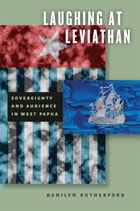
Laughing at Leviathan
Sovereignty and Audience in West PapuaDanilyn Rutherford
University of Chicago Press, 2012
For West Papua and its people, the promise of sovereignty has never been realized, despite a long and fraught struggle for independence from Indonesia. In Laughing at Leviathan, Danilyn Rutherford examines this struggle through a series of interlocking essays that drive at the core meaning of sovereignty itself—how it is fueled, formed, and even thwarted by pivotal but often overlooked players: those that make up an audience. Whether these players are citizens, missionaries, competing governmental powers, nongovernmental organizations, or the international community at large, Rutherford shows how a complex interplay of various observers is key to the establishment and understanding of the sovereign nation-state.
Drawing on a wide array of sources, from YouTube videos to Dutch propaganda to her own fieldwork observations, Rutherford draws the history of Indonesia, empire, and postcolonial nation-building into a powerful examination of performance and power. Ultimately she revises Thomas Hobbes, painting a picture of the Leviathan not as a coherent body but a fragmented one distributed across a wide range of both real and imagined spectators. In doing so, she offers an important new approach to the understanding of political struggle.
[more]
Living in the Future
Sovereignty and Internationalism in the Canterbury TalesSusan Nakley
University of Michigan Press, 2017
Nationalism, like medieval romance literature, recasts history as a mythologized and seamless image of reality. Living in the Future analyzes how the anachronistic nationalist fantasies in Geoffrey Chaucer’s Canterbury Tales create a false sense of England’s historical continuity that in turn legitimized contemporary political ambitions. This book spells out the legacy of the Tales that still resonates throughout English literature, exploring the idea of England in the medieval literary imagination as well as critiquing more recent centuries’ conceptions of Chaucer’s nationalism.
Chaucer uses two extant national ideals, sovereignty and domesticity, to introduce the concept of an English nation into the contemporary popular imagination and reinvent an idealized England as a hallowed homeland. For nationalist thinkers, sovereignty governs communities with linguistic, historical, cultural, and religious affinities. Chaucerian sovereignty appears primarily in romantic and household contexts that function as microcosms of the nation, reflecting a pseudo-familial love between sovereign and subjects and relying on a sense of shared ownership and judgment. This notion also has deep affinities with popular and political theories flourishing throughout Europe. Chaucer’s internationalism, matched with his artistic use of the vernacular and skillful distortions of both time and space, frames a discrete sovereign English nation within its diverse interconnected world.
As it opens up significant new points of resonance between postcolonial theories and medieval ideas of nationhood, Living in the Future marks an important contribution to medieval literary studies. It will be essential for scholars of Middle English literature, literary history, literary political and postcolonial theory, and literary transnationalism.
[more]