1927 books match the query 'Technology & Engineering' and 47 start with l
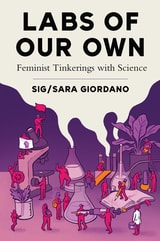
cover of Labs of Our Own: Feminist Tinkerings with Science

Labs of Our Own

Feminist Tinkerings with Science

Sig / Sara Giordano

Rutgers University Press, 2025
From climate change to COVID-19 to reproductive justice, there has been deep political polarization around science. Labs of Our Own provides a unique entry point into these twenty-first-century science wars by focusing on our affective relationships to science. The book delves into various sites where scientists, teachers, artists, and activists claim to create more democratic access to science—from DIY biology community labs to feminist classrooms to activist science practitioners. The reader will find that these claims for and attempts at democratic sciences not only impact what counts as science and who counts as a scientist but reconfigure who is included in the proper public. Instead of arguing for a knee-jerk defense of science against right-wing attacks, Labs of Our Own builds the case for a feminist, antiracist, decolonial, queer science tinkering practice that intentionally, politically, and ethically acts to produce new challenges to the definition and boundaries of the human.
[more]
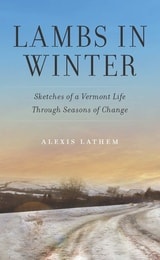
cover of Lambs in Winter: Sketches of a Vermont Life Through Seasons of Change

Lambs in Winter

Sketches of a Vermont Life Through Seasons of Change

Alexis Lathem

University of Massachusetts Press, 2025

Finding hope in a small farm, an engaged community, and an age-old connection to the earth

After half a lifetime spent moving from place to place, Alexis Lathem at last settled down with her husband on a small farm near Vermont’s largest city. The lyric essays of Lambs in Winter take readers through the seasonal cycles of raising sheep and hens and growing fruits and vegetables while confronting the challenges of winter storms, summer floods, invasive weeds, and pests and diseases.

Ever conscious of her place in a historically colonized and ecologically degraded landscape, Lathem wrestles with ethical questions that come to many rural dwellers who—following Thoreau—set out to “live deliberately,” in a time of climate crisis, persistent racial inequity, and growing economic inequality. Likewise, she grapples with the moral complexities of small-scale animal husbandry. Through her efforts at self-provisioning, without holding illusions of the self-reliant individual, Lathem finds herself deeply embedded in the community and reliant on others, especially as her region deals with repeated catastrophic flooding brought on by climate change.

Through elegant prose and insightful investigations into pressing contemporary issues, Lathem evokes the world of her farm and the surrounding countryside with a spiritual awareness of the human journey on this earth. Living in place, attuned to the unfolding changes in the world around her, gives her much to grieve, but the pages of Lambs in Winter are luminous with moments of joy and beauty.
[more]
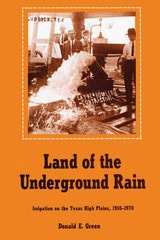
cover of Land of the Underground Rain: Irrigation on the Texas High Plains, 1910-1970

Land of the Underground Rain

Irrigation on the Texas High Plains, 1910-1970

By Donald E. Green

University of Texas Press, 1973

The scarcity of surface water which has so marked the Great Plains is even more characteristic of its subdivision, the Texas High Plains. Settlers on the plateau were forced to use pump technology to tap the vast ground water resources—the underground rain—beneath its flat surface.

The evolution from windmills to the modern high-speed irrigation pumps took place over several decades. Three phases characterized the movement toward irrigation. In the period from 1910 to 1920, large-volume pumping plants first appeared in the region, but, due to national and regional circumstances, these premature efforts were largely abortive. The second phase began as a response to the drouth of the Dust Bowl and continued into the 1950s. By 1959, irrigation had become an important aspect of the flourishing High Plains economy. The decade of the 1960s was characterized chiefly by a growing alarm over the declining ground water table caused by massive pumping, and by investigations of other water sources.

Land of the Underground Rain is a study in human use and threatened exhaustion of the High Plains' most valuable natural resource. Ground water was so plentiful that settlers believed it flowed inexhaustibly from some faraway place or mysteriously from a giant underground river. Whatever the source, they believed that it was being constantly replenished, and until the 1950s they generally opposed effective conservation of ground water. A growing number of weak and dry wells then made it apparent that Plains residents were "mining" an exhaustible resource.

The Texas High Plains region has been far more successful in exploiting its resource than in conserving it. The very success of its pump technology has produced its environmental crisis. The problem brought about by the threatened exhaustion of this resource still awaits a solution.

This study is the first comprehensive history of irrigation on the Texas High Plains, and it is the first comprehensive treatment of the development of twentieth-century pump irrigation in any area of the United States.
[more]
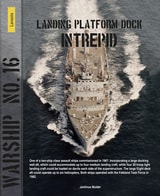
cover of Landing Platform Dock Intrepid

Landing Platform Dock Intrepid

Jantinus Mulder

Amsterdam University Press, 2024
One of a two-ship class assault ships commissioned in 1967. Incorporating a large docking well aft, which could accommodate up to four medium landing craft, while four 30 troop light landing craft could be loaded on davits each side of the superstructure. The large flight deck aft could operate up to six helicopters. Both ships operated with the Falkland Task Force in 1982.
[more]
cover of Language and Learning for Robots

Language and Learning for Robots

Colleen Crangle and Patrick Suppes

CSLI, 1994

Robot technology will find wide-scale use only when a robotic device can be given commands and taught new tasks in a natural language. How could a robot understand instructions expressed in English? How could a robot learn from instructions? Crangle and Suppes begin to answer these questions through a theoretical approach to language and learning for robots and by experimental work with robots.

The authors develop the notion of an instructable robot—one which derives its intelligence in part from interaction with humans. Since verbal interaction with a robot requires a natural language semantics, the authors propose a natural-model semantics which they then apply to the interpretation of robot commands. Two experimental projects are described which provide natural-language interfaces to robotic aids for the physically disabled. The authors discuss the specific challenges posed by the interpretation of "stop" commands and the interpretation of spatial prepositions.

The authors also examine the use of explicit verbal instruction to teach a robot new procedures, propose ways a robot can learn from corrective commands containing qualitative spatial expressions, and discuss the machine-learning of a natural language use to instruct a robot in the performance of simple physical tasks. Two chapters focus on probabilistic techniques in learning.
[more]
cover of Language and the Rise of the Algorithm

Language and the Rise of the Algorithm

Jeffrey M. Binder

University of Chicago Press, 2022

A wide-ranging history of the algorithm.

Bringing together the histories of mathematics, computer science, and linguistic thought, Language and the Rise of the Algorithm reveals how recent developments in artificial intelligence are reopening an issue that troubled mathematicians well before the computer age: How do you draw the line between computational rules and the complexities of making systems comprehensible to people? By attending to this question, we come to see that the modern idea of the algorithm is implicated in a long history of attempts to maintain a disciplinary boundary separating technical knowledge from the languages people speak day to day.
 
Here, Jeffrey M. Binder offers a compelling tour of four visions of universal computation that addressed this issue in very different ways: G. W. Leibniz’s calculus ratiocinator; a universal algebra scheme Nicolas de Condorcet designed during the French Revolution; George Boole’s nineteenth-century logic system; and the early programming language ALGOL, short for algorithmic language. These episodes show that symbolic computation has repeatedly become entangled in debates about the nature of communication. Machine learning, in its increasing dependence on words, erodes the line between technical and everyday language, revealing the urgent stakes underlying this boundary.
 
The idea of the algorithm is a levee holding back the social complexity of language, and it is about to break. This book is about the flood that inspired its construction.
[more]
cover of Large Scale Grid Integration of Renewable Energy Sources

Large Scale Grid Integration of Renewable Energy Sources

Antonio Moreno-Munoz

The Institution of Engineering and Technology, 2017
As renewable energy sources have reached grid parity in many countries, the key to further growth of the share of renewables in the power mix is their integration with the power system. This requires a number of technical developments, for example in power electronics, to meet the need for increased flexibility and rapid dispatch. This book explores the new approaches to meet these challenges, such as increasing interconnection capacity among geographical areas, hybridization of different distributed energy resources and building up demand response capabilities.
[more]
cover of Large Scale Grid Integration of Renewable Energy Sources: Solutions and technologies

Large Scale Grid Integration of Renewable Energy Sources

Solutions and technologies

Antonio Moreno-Muñoz

The Institution of Engineering and Technology, 2024
Key to the further growth of shares of renewables is their integration with the existing grid system including EV and sector coupling. This in turn requires technical developments to enable flexibility and dispatch. Approaches to meeting these challenges include hybridization of different distributed energy resources, forecasting and control, storage and demand response, and modelling. Technological advances are also being accompanied by changes in business models.
[more]
cover of Last Words: Large Language Models and the AI Apocalypse

Last Words

Large Language Models and the AI Apocalypse

Paul Kockelman

Prickly Paradigm Press, 2024

What kind of meaning can machines make—and why does it matter that it’s not the same as ours?

Anthropologist Paul Kockelman's Last Words offers a rigorous but accessible account of how large language models actually work—and why the meaning they produce is fundamentally different from human meaning-making. Drawing on the semiotics of C.S. Peirce, Kockelman’s witty and insightful pamphlet shows how LLMs are trained to predict word-word relations, not word-world relations, which explains both their uncanny fluency and their systematic blind spots. The result is a compact, essential guide to cutting through the hype: not a dismissal of AI, but a precise account of what it can and cannot do—and who profits from the confusion.
 

[more]
cover of Latin* Students in Engineering: An Intentional Focus on a Growing Population

Latin* Students in Engineering

An Intentional Focus on a Growing Population

Lara Perez-Felkner

Rutgers University Press, 2024

Winner of the American Association of Hispanics in Higher Education Edited Volume Book of the Year Award

Winner of the 2026 Distinguished Contributions to Gender Equity in Educational Research Award from the American Educational Research Association

The growing population of engineering students who identify as Latin* are underrepresented in the field of engineering. Latin* refers to an individual of Latin American origin or descent, without restricting to a specific gender. The asterisk (*) includes related identity terms such as Latina/é/o/u/x.There is, however, a rising need to train U.S. students in engineering skills to meet the demands of our increasingly technological workforce. Structurally excluding Latin* students hinders their economic and educational opportunities in engineering. Latin* Students in Engineering examines the state of Latin* engineering education at present as well as considerations for policy and practice regarding engineering education aimed at enhancing opportunity and better serving Latin* students. The essays in this volume first consider, theoretically and empirically, the experiences of Latin* students in engineering education and then expand beyond the student level to focus on institutional and social structures that challenge Latin* students' success and retention. Finally, it illuminates emergent work and considers future research, policy, and practice.
 

[more]
cover of Leaky Waves in Electromagnetics

Leaky Waves in Electromagnetics

Paolo Burghignoli

The Institution of Engineering and Technology, 2027
Leaky waves can explain observed phenomena associated with both antennas and fundamental electromagnetic propagation with minimal numerical calculation. The subject is of current interest as various forms of leaky-wave antennas continue to be developed. Also, the underlying theory is proving useful to explain new phenomena such as giant transmission through arrays of sub-wavelength holes, a discovery that has generated considerable interest in the physics and engineering communities.
[more]
cover of Lean Product Development: A manager's guide

Lean Product Development

A manager's guide

Colin Mynott

The Institution of Engineering and Technology, 2012
Lean product development (LPD) is the application of lean principles to product development, aiming to develop new or improved products that are successful in the market. It is a cross-functional activity that seeks to uncover product knowledge hidden within the end-to-end production flow, typically in the hand-over points between functional units. LPD deals with the complete process from gathering and generating ideas, through assessing potential success, to developing concepts, evaluating them to create a best concept, detailing the product, testing/developing it and handing over to the manufacture. LPD is performed against a background of continuously assessing and reducing risk of market failure.
[more]
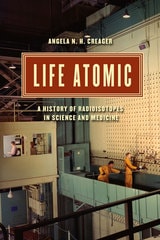
cover of Life Atomic: A History of Radioisotopes in Science and Medicine

Life Atomic

A History of Radioisotopes in Science and Medicine

Angela N. H. Creager

University of Chicago Press, 2013
After World War II, the US Atomic Energy Commission (AEC) began mass-producing radioisotopes, sending out nearly 64,000 shipments of radioactive materials to scientists and physicians by 1955. Even as the atomic bomb became the focus of Cold War anxiety, radioisotopes represented the government’s efforts to harness the power of the atom for peace—advancing medicine, domestic energy, and foreign relations.
           
In Life Atomic, Angela N. H. Creager tells the story of how these radioisotopes, which were simultaneously scientific tools and political icons, transformed biomedicine and ecology. Government-produced radioisotopes provided physicians with new tools for diagnosis and therapy, specifically cancer therapy, and enabled biologists to trace molecular transformations. Yet the government’s attempt to present radioisotopes as marvelous dividends of the atomic age was undercut in the 1950s by the fallout debates, as scientists and citizens recognized the hazards of low-level radiation. Creager reveals that growing consciousness of the danger of radioactivity did not reduce the demand for radioisotopes at hospitals and laboratories, but it did change their popular representation from a therapeutic agent to an environmental poison. She then demonstrates how, by the late twentieth century, public fear of radioactivity overshadowed any appreciation of the positive consequences of the AEC’s provision of radioisotopes for research and medicine.
[more]
cover of Life Out of Sequence: A Data-Driven History of Bioinformatics

Life Out of Sequence

A Data-Driven History of Bioinformatics

Hallam Stevens

University of Chicago Press, 2013
Thirty years ago, the most likely place to find a biologist was standing at a laboratory bench, peering down a microscope, surrounded by flasks of chemicals and petri dishes full of bacteria. Today, you are just as likely to find him or her in a room that looks more like an office, poring over lines of code on computer screens. The use of computers in biology has radically transformed who biologists are, what they do, and how they understand life. In Life Out of Sequence, Hallam Stevens looks inside this new landscape of digital scientific work.
           
Stevens chronicles the emergence of bioinformatics—the mode of working across and between biology, computing, mathematics, and statistics—from the 1960s to the present, seeking to understand how knowledge about life is made in and through virtual spaces. He shows how scientific data moves from living organisms into DNA sequencing machines, through software, and into databases, images, and scientific publications. What he reveals is a biology very different from the one of predigital days: a biology that includes not only biologists but also highly interdisciplinary teams of managers and workers; a biology that is more centered on DNA sequencing, but one that understands sequence in terms of dynamic cascades and highly interconnected networks. Life Out of Sequence thus offers the computational biology community welcome context for their own work while also giving the public a frontline perspective of what is going on in this rapidly changing field.

[more]
cover of Life and Research: A Survival Guide for Early-Career Biomedical Scientists

Life and Research

A Survival Guide for Early-Career Biomedical Scientists

Paris H. Grey and David G. Oppenheimer

University of Chicago Press, 2022

Life in a research lab can be daunting, especially for early-career scientists. Personal and professional hurdles abound in bench research, and this book by two seasoned lab professionals is here to help graduate students, postdocs, and staff scientists recognize stumbling blocks and avoid common pitfalls.
 
Building and maintaining a mentoring network, practicing self-care and having a life outside of the lab, understanding that what works perfectly for a labmate might not work for you—these are just a few of the strategies that lab manager and molecular biologist Paris H. Grey and PI and geneticist David G. Oppenheimer wished they had implemented far sooner in their careers. They also offer practical advice on managing research projects, sharing your work on social media, and attending conferences. Above all, they coach early-career scientists to avoid burnout and make the most of every lab experience to grow and learn.  

 
[more]
cover of Life on Ice: A History of New Uses for Cold Blood

Life on Ice

A History of New Uses for Cold Blood

Joanna Radin

University of Chicago Press, 2017

After the atomic bombing at the end of World War II, anxieties about survival in the nuclear age led scientists to begin stockpiling and freezing hundreds of thousands of blood samples from indigenous communities around the world. These samples were believed to embody potentially invaluable biological information about genetic ancestry, evolution, microbes, and much more. Today, they persist in freezers as part of a global tissue-based infrastructure. In Life on Ice, Joanna Radin examines how and why these frozen blood samples shaped the practice known as biobanking.
 
The Cold War projects Radin tracks were meant to form an enduring total archive of indigenous blood before it was altered by the polluting forces of modernity. Freezing allowed that blood to act as a time-traveling resource. Radin explores the unique cultural and technical circumstances that created and gave momentum to the phenomenon of life on ice and shows how these preserved blood samples served as the building blocks for biomedicine at the dawn of the genomic age. In an era of vigorous ethical, legal, and cultural debates about genetic privacy and identity, Life on Ice reveals the larger picture—how we got here and the promises and problems involved with finding new uses for cold human blood samples.
[more]
cover of Life, Work, and Rebellion in the Coal Fields: The Southern West Virginia Miners, 1880-1922 2nd Edition

Life, Work, and Rebellion in the Coal Fields

The Southern West Virginia Miners, 1880-1922 2nd Edition

David Corbin

West Virginia University Press, 2015

Between 1880 and 1922, the coal fields of southern West Virginia witnessed two bloody and protracted strikes, the formation of two competing unions, and the largest armed conflict in American labor history—a week-long battle between 20,000 coal miners and 5,000 state police, deputy sheriffs, and mine guards. These events resulted in an untold number of deaths, indictments of over 550 coal miners for insurrection and treason, and four declarations of martial law. Corbin argues that these violent events were collective and militant acts of aggression interconnected and conditioned by decades of oppression. His study goes a long way toward breaking down the old stereotypes of Appalachian and coal mining culture. This second edition contains a new preface and afterword by author David A. Corbin.
[more]
cover of Light Filaments: Structures, challenges and applications

Light Filaments

Structures, challenges and applications

Jean-Claude Diels

The Institution of Engineering and Technology, 2022

A laser of sufficient intensity traveling through air will - by itself - engineer a narrow channel over which light will propagate for tens or even hundreds of meters. Such filaments of laser light were first created at the end of the twentieth century, and investigators are now beginning to explore new applications for them.
[more]
cover of Lightning Electromagnetics

Lightning Electromagnetics

Vernon Cooray

The Institution of Engineering and Technology, 2012
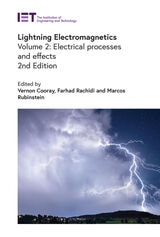
Lightning research is an interdisciplinary subject where several branches of engineering and physics converge. Lightning Electromagnetics is a book that caters for the needs of both physicists and engineers. It provides: The physicist with information on how to simulate: the charge generation in thunderclouds, different discharge processes in air that ultimately lead to a lightning flash, and the mechanism through which energetic radiation in the form of X-rays and Gamma rays are produced by lightning flashes; The power engineer with several numerical tools to study the interaction of lightning flashes with power transmission and distribution systems; The telecommunication engineer with numerical procedures with which to calculate the electromagnetic fields generated by lightning flashes and their interactions with overhead and underground telecommunication systems; The electromagnetic specialist with the basic theory necessary to simulate the propagation of lightning electromagnetic fields over the surface of the Earth; The atmospheric scientist with numerical procedures to quantify interactions between lightning flashes and the Earth's atmosphere, including the production of NOx by lightning flashes occurring in the atmosphere. This book also contains a chapter on the stimulation of visual phenomena in humans by electromagnetic fields of lightning flashes, which is essential reading for those who are interested in ball lightning.
[more]
cover of Lightning Electromagnetics: Electrical processes and effects, Volume 2

Lightning Electromagnetics

Electrical processes and effects, Volume 2

Vernon Cooray

The Institution of Engineering and Technology, 2022
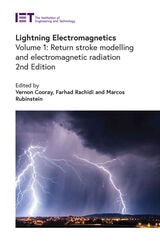
Lightning is important for all scientists and engineers involved with electric installations. It is gaining further relevance since climate warming is causing an increase in lightning strikes, and since the rising numbers of renewable power generators, the electricity grid, and charging infrastructure are susceptible to lightning damage. This is the second edition to this comprehensive work.
[more]
cover of Lightning Electromagnetics: Return stroke modelling and electromagnetic radiation, Volume 1

Lightning Electromagnetics

Return stroke modelling and electromagnetic radiation, Volume 1

Vernon Cooray

The Institution of Engineering and Technology, 2022

Lightning is important for all scientists and engineers involved with electric installations. It is gaining further relevance since climate warming is causing an increase in lightning strikes, and since the rising numbers of renewable power generators, the electricity grid, and charging infrastructure are susceptible to lightning damage. This is the second edition to this comprehensive work.
[more]
cover of Lightning Interaction with Power Systems

Lightning Interaction with Power Systems

Alexandre Piantini

The Institution of Engineering and Technology, 2019

The need to improve the reliability and robustness of power systems and smart grids makes protection of sensitive equipment and power transmission and distribution lines against lightning-related effects a primary concern. Renewable electricity generation capacity has been increasing all over the world, and lightning can cause failures either by hitting the turbines or panels directly or inducing transients on the control systems that lead to equipment failure, malfunction or degradation.
[more]
cover of Lightning Interaction with Power Systems

Lightning Interaction with Power Systems

Alexandre Piantini

The Institution of Engineering and Technology, 2019

The need to improve the reliability and robustness of power systems and smart grids makes protection of sensitive equipment and power transmission and distribution lines against lightning-related effects a primary concern. Renewable electricity generation capacity has been increasing all over the world, and lightning can cause failures either by hitting the turbines or panels directly or inducing transients on the control systems that lead to equipment failure, malfunction or degradation.
[more]
cover of Lightning Interaction with Power Systems: Applications, Volume 2

Lightning Interaction with Power Systems

Applications, Volume 2

Alexandre Piantini

The Institution of Engineering and Technology, 2020
The need to improve the reliability and robustness of power systems and smart grids makes protection of sensitive equipment and power transmission and distribution lines against lightning-related effects a primary concern. Renewable electricity generation capacity has been increasing all over the world, and lightning can cause failures either by hitting the turbines or panels directly or inducing transients on the control systems that lead to equipment failure, malfunction or degradation.
[more]
cover of Lightning Interaction with Power Systems: Fundamentals and modelling, Volume 1

Lightning Interaction with Power Systems

Fundamentals and modelling, Volume 1

Alexandre Piantini

The Institution of Engineering and Technology, 2020
The need to improve the reliability and robustness of power systems and smart grids makes protection of sensitive equipment and power transmission and distribution lines against lightning-related effects a primary concern. Renewable electricity generation capacity has been increasing all over the world, and lightning can cause failures either by hitting the turbines or panels directly or inducing transients on the control systems that lead to equipment failure, malfunction or degradation.
[more]
cover of Lightning Protection

Lightning Protection

Vernon Cooray

The Institution of Engineering and Technology, 2009
Lightning is a natural phenomenon that has always fascinated humans. It is also a destructive force, and the science of protecting humans and their belongings on earth is called lightning protection. This book provides the reader with a thorough background in almost every aspect of lightning protection. The contents of the book, distributed over 23 chapters, covers all aspects of lightning protection including lightning parameters of engineering interest, the evaluation of the risk imposed by lightning strikes, the art of installing lightning protection systems on various structures, basic principles and procedures necessary to protect electronic equipment in buildings from lightning flashes, grounding in lightning protection, the function of surge protection devices, protection of power transmission lines and telecommunication towers from lightning, the interaction of lightning flashes with wind turbines, various aspects of lightning strikes to trees, medical and engineering aspects of lightning strikes to humans, and lightning warning systems. In addition to providing essential information on lightning protection for engineers and scientists, the book is intended for use as a textbook on lightning protection at both undergraduate and postgraduate level.
[more]
cover of Lightning-Induced Effects in Electrical and Telecommunication Systems

Lightning-Induced Effects in Electrical and Telecommunication Systems

Yoshihiro Baba

The Institution of Engineering and Technology, 2021
Power and telecommunications systems are growing increasingly complex. This increases their vulnerability to lightning-related effects.
[more]
cover of Lithium-ion Batteries Enabled by Silicon Anodes

Lithium-ion Batteries Enabled by Silicon Anodes

Chunmei Ban

The Institution of Engineering and Technology, 2021

Deploying lithium-ion (Li-ion) batteries depends on cost-effective electrode materials with high energy and power density to facilitate lower weight and volume. Si-based anode materials theoretically offer superior lithium storage capacity. Replacing a graphite anode with high-capacity materials such as silicon will further improve the energy density. Durable, low-cost, and high-energy-density materials are vital to developing plug-in electric vehicles as affordable and convenient as gasoline-powered ones, while reducing carbon emissions.
[more]
cover of Livestock/Deadstock: Working with Farm Animals from Birth to Slaughter

Livestock/Deadstock

Working with Farm Animals from Birth to Slaughter

Authored by Rhoda M. Wilkie

Temple University Press, 2010

The connection between people and companion animals has received considerable attention from scholars. In her original and provocative ethnography Livestock/Deadstock, sociologist Rhoda Wilkie asks, how do the men and women who work on farms, in livestock auction markets, and slaughterhouses, interact with—or disengage from—the animals they encounter in their jobs?

Wilkie provides a nuanced appreciation of how those men and women who breed, rear, show, fatten, market, medically treat, and slaughter livestock, make sense of their interactions with the animals that constitute the focus of their work lives. Using a sociologically informed perspective, Wilkie explores their attitudes and behaviors to explain how agricultural workers think, feel, and relate to food animals.

Livestock/Deadstock looks at both people and animals in the division of labor and shows how commercial and hobby productive contexts provide male and female handlers with varying opportunities to bond with and/or distance themselves from livestock. Exploring the experiences of stockpeople, hobby farmers, auction workers, vets and slaughterers, she offers timely insight into the multifaceted, gendered, and contradictory nature of human roles in food animal production.  
[more]
cover of Local Access Network Technologies

Local Access Network Technologies

Paul France

The Institution of Engineering and Technology, 2004
The business of telecommunications is undergoing a period of change driven by changes in regulation, increasing demands for services and the development of new access technologies. The market structure of telecommunications is evolving rapidly as new and existing players strive to compete in an increasingly volatile market, while the advent of new data services is placing greater demands on the network as operators strive to offer new broadband services. Underpinning much of this change is the access technology itself, not only in the transitional form of copper twisted pairs, but also increasingly through the use of new fibre, radio and copper systems. The dominant cost of most telecommunication networks is the access network itself, which typically can demand up to 80% of the total investment required.
[more]
cover of Local Energy: Distributed generation of heat and power

Local Energy

Distributed generation of heat and power

Janet Wood

The Institution of Engineering and Technology, 2008
In future the UK's energy supplies, for both heat and power, will come from much more diverse sources. In many cases this will mean local energy projects serving a local community or even a single house. What technologies are available? Where and at what scale can they be used? How can they work effectively with our existing energy networks? This book explores these power and heat sources, explains the characteristics of each and examines how they can be used.
[more]
cover of Location and Personalisation: Delivering online and mobility services

Location and Personalisation

Delivering online and mobility services

Daniel Ralph

The Institution of Engineering and Technology, 2004
The world is charging towards the new network technologies of broadband and 3G, and new application technologies face the challenge of where they can be used. This book takes a pragmatic look at two particular application technologies - location and personalisation - and presents an understanding of the technical and business impact of these technologies. With a combination of overview papers, detailed technical case studies and a deep understanding of actual implementatio of these services within a telecommunications environment, this book will help those wishing to deliver improved services based on these capabilities. Other key topics covered include CRM and content management.
[more]
cover of Locomotive to Aeromotive: Octave Chanute and the Transportation Revolution

Locomotive to Aeromotive

Octave Chanute and the Transportation Revolution

Simine Short. Foreword by Tom D. Crouch

University of Illinois Press, 2014

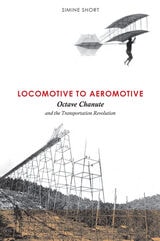
French-born and self-trained civil engineer Octave Chanute designed America's two largest stockyards, created innovative and influential structures such as the Kansas City Bridge over the previously "unbridgeable" Missouri River, and was a passionate aviation pioneer whose collaborative approach to aeronautical engineering problems encouraged other experimenters, including the Wright brothers. Drawing on rich archival material and exclusive family sources, Locomotive to Aeromotive is the first detailed examination of Chanute's life and his immeasurable contributions to engineering and transportation, from the ground transportation revolution of the mid-nineteenth century to the early days of aviation.

Aviation researcher and historian Simine Short brings to light in colorful detail many previously overlooked facets of Chanute's professional and personal life. In the late nineteenth century, few considered engineering as a profession on par with law or medicine, but Chanute devoted much time and energy to the newly established professional societies that were created to set standards and serve the needs of civil engineers. Though best known for his aviation work, he became a key figure in the opening of the American continent by laying railroad tracks and building bridges, experiences that later gave him the engineering knowledge to build the first stable aircraft structure. Chanute also introduced a procedure to treat wooden railroad ties with an antiseptic that increased the wood’s lifespan in the tracks. Establishing the first commercial plants, he convinced railroad men that it was commercially feasible to make money by spending money on treating ties to conserve natural resources. He next introduced the date nail to help track the age and longevity of railroad ties.

A versatile engineer, Chanute was known as a kind and generous colleague during his career. Using correspondence and other materials not previously available to scholars and biographers, Short covers Chanute's formative years in antebellum America as well as his experiences traveling from New Orleans to New York, his apprenticeship on the Hudson River Railroad, and his early engineering successes. His multiple contributions to railway expansion, bridge building, and wood preservation established his reputation as one of the nation's most successful and distinguished civil engineers. Instead of retiring, he utilized his experiences and knowledge as a bridge builder in the development of motorless flight. Through the reflections of other engineers, scientists, and pioneers in various fields who knew him, Short characterizes Chanute as a man who believed in fostering and supporting people who were willing to learn. This well-researched biography cements Chanute's place as a preeminent engineer and mentor in the history of transportation in the United States and the development of the airplane.

[more]
cover of London: The Selden Map and the Making of a Global City, 1549-1689

London

The Selden Map and the Making of a Global City, 1549-1689

Robert K. Batchelor

University of Chicago Press, 2013
If one had looked for a potential global city in Europe in the 1540s, the most likely candidate would have been Antwerp, which had emerged as the center of the German and Spanish silver exchange as well as the Portuguese spice and Spanish sugar trades. It almost certainly would not have been London, an unassuming hub of the wool and cloth trade with a population of around 75,000, still trying to recover from the onslaught of the Black Plague. But by 1700 London’s population had reached a staggering 575,000—and it had developed its first global corporations, as well as relationships with non-European societies outside the Mediterranean. What happened in the span of a century and half? And how exactly did London transform itself into a global city?
           
London’s success, Robert K. Batchelor argues, lies not just with the well-documented rise of Atlantic settlements, markets, and economies. Using his discovery of a network of Chinese merchant shipping routes on John Selden’s map of China as his jumping-off point, Batchelor reveals how London also flourished because of its many encounters, engagements, and exchanges with East Asian trading cities. Translation plays a key role in Batchelor’s study—translation not just of books, manuscripts, and maps, but also of meaning and knowledge across cultures—and Batchelor demonstrates how translation helped London understand and adapt to global economic conditions. Looking outward at London’s global negotiations, Batchelor traces the development of its knowledge networks back to a number of foreign sources and credits particular interactions with England’s eventual political and economic autonomy from church and King. 
           
London offers a much-needed non-Eurocentric history of London, first by bringing to light and then by synthesizing the many external factors and pieces of evidence that contributed to its rise as a global city. It will appeal to students and scholars interested in the cultural politics of translation, the relationship between merchants and sovereigns, and the cultural and historical geography of Britain and Asia.

[more]
cover of Looking Forward: Prediction and Uncertainty in Modern America

Looking Forward

Prediction and Uncertainty in Modern America

Jamie L. Pietruska

University of Chicago Press, 2017

In the decades after the Civil War, the world experienced monumental changes in industry, trade, and governance. As Americans faced this uncertain future, public debate sprang up over the accuracy and value of predictions, asking whether it was possible to look into the future with any degree of certainty. In Looking Forward, Jamie L. Pietruska uncovers a culture of prediction in the modern era, where forecasts became commonplace as crop forecasters, “weather prophets,” business forecasters, utopian novelists, and fortune-tellers produced and sold their visions of the future. Private and government forecasters competed for authority—as well as for an audience—and a single prediction could make or break a forecaster’s reputation. 

Pietruska argues that this late nineteenth-century quest for future certainty had an especially ironic consequence: it led Americans to accept uncertainty as an inescapable part of both forecasting and twentieth-century economic and cultural life. Drawing together histories of science, technology, capitalism, environment, and culture, Looking Forward explores how forecasts functioned as new forms of knowledge and risk management tools that sometimes mitigated, but at other times exacerbated, the very uncertainties they were designed to conquer. Ultimately Pietruska shows how Americans came to understand the future itself as predictable, yet still uncertain.
[more]
cover of Lord Kelvin: His influence on electrical measurements and units

Lord Kelvin

His influence on electrical measurements and units

Paul Tunbridge

The Institution of Engineering and Technology, 1992
Lord Kelvin (William Thomson), arguably Britain's most eminent scientist after Newton, spent much of his life in work which led to the development of today's electrical units and standards. Despite his influence, there are few biographies of stature (largely due to the abstruse nature of much of his technical research). This treatment concentrates upon his work in three phases; discovery of the fundamental concepts and coding them into universal laws, leading the adoption of the metric system, and securing worldwide use of units and standards (now the IEC system).
[more]
cover of Lore of the Lumber Camps

Lore of the Lumber Camps

Earl Clifton Beck

University of Michigan Press, 1948

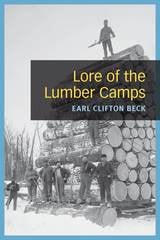
Lore of the Lumber Camps by Earl Clifton Beck offers a comprehensive historical account of Michigan's lumber industry, focusing on the vital role played by rivers in transporting timber, primarily pine and hardwood, from Michigan's vast forests. The Saginaw, Muskegon, and Menominee rivers were among the most active, supporting numerous sawmills that lined their banks. 

The text discusses the cultural life of the lumberjacks, who, despite their rugged lifestyle, adhered to a chivalrous code of conduct. Beck details their traditions, storytelling, music, and dance, emphasizing the rich folklore that emerged from the camps. The book promises further exploration of the log-marking system, notable lumber figures, and the impact of deforestation on Michigan’s landscape.
[more]
cover of Losing Control: Global Security in the Twenty-first Century

Losing Control

Global Security in the Twenty-first Century

Paul Rogers

Pluto Press, 2021

'Outstanding ... combines a glimpse behind the security screens with a sharp analysis of the real global insecurities - growing inequality and unsustainability' - New Internationalist

Written in the late 1990s, Losing Control was years, if not decades, ahead of its time, predicting the 9/11 attacks, a seemingly endless war on terror and the relentless increase in revolts from the margins and bitter opposition to wealthy elites.

Now, more than two decades later and in an era of pandemics, climate breakdown and potential further military activity in the Middle East, Asia and Africa, Paul Rogers has revised and expanded the original analysis, pointing to the 2030s and '40s as the decades that will see a showdown between a bitter, environmentally wrecked and deeply insecure world and a possible world order rooted in justice and peace.
[more]
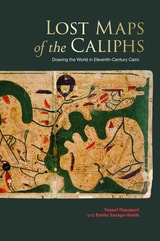
cover of Lost Maps of the Caliphs

Lost Maps of the Caliphs

Yossef Rapoport

Bodleian Library Publishing, 2018
[more]
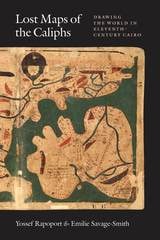
cover of Lost Maps of the Caliphs: Drawing the World in Eleventh-Century Cairo

Lost Maps of the Caliphs

Drawing the World in Eleventh-Century Cairo

Yossef Rapoport and Emilie Savage-Smith

University of Chicago Press, 2018

About a millennium ago, in Cairo, an unknown author completed a large and richly illustrated book. In the course of thirty-five chapters, this book guided the reader on a journey from the outermost cosmos and planets to Earth and its lands, islands, features, and inhabitants. This treatise, known as The Book of Curiosities, was unknown to modern scholars until a remarkable manuscript copy surfaced in 2000.

Lost Maps of the Caliphs provides the first general overview of The Book of Curiosities and the unique insight it offers into medieval Islamic thought. Opening with an account of the remarkable discovery of the manuscript and its purchase by the Bodleian Library, the authors use The Book of Curiosities to re-evaluate the development of astrology, geography, and cartography in the first four centuries of Islam. Their account assesses the transmission of Late Antique geography to the Islamic world, unearths the logic behind abstract maritime diagrams, and considers the palaces and walls that dominate medieval Islamic plans of towns and ports. Early astronomical maps and drawings demonstrate the medieval understanding of the structure of the cosmos and illustrate the pervasive assumption that almost any visible celestial event had an effect upon life on Earth. Lost Maps of the Caliphs also reconsiders the history of global communication networks at the turn of the previous millennium. It shows the Fatimid Empire, and its capital Cairo, as a global maritime power, with tentacles spanning from the eastern Mediterranean to the Indus Valley and the East African coast.

As Lost Maps of the Caliphs makes clear, not only is The Book of Curiosities one of the greatest achievements of medieval mapmaking, it is also a remarkable contribution to the story of Islamic civilization that opens an unexpected window to the medieval Islamic view of the world.
[more]
cover of Low Carbon Mobility for Future Cities: Principles and applications

Low Carbon Mobility for Future Cities

Principles and applications

Hussein Dia

The Institution of Engineering and Technology, 2017
Urban Transport energy efficiency and environmental sustainability continue to present big challenges for city leaders and policy think tanks. As the share of the world's population living in cities grows to nearly 70 per cent between now and 2050, urban transport energy consumption is forecast to double to meet the travel demand in the world's future cities. This urban growth will also dramatically change the scale and nature of our communities, and put a tremendous strain on the built environment and infrastructure that delivers vital services like transport.
[more]
cover of Low Electromagnetic Emission Wireless Network Technologies: 5G and beyond

Low Electromagnetic Emission Wireless Network Technologies

5G and beyond

Muhammad Ali Imran

The Institution of Engineering and Technology, 2020

Mobile communication systems rely on radiofrequency waves to operate. Given the popularity and ubiquity of mobile communication devices as well as network densification, the level of Electromagnetic Field (EMF) exposure to the public is expected to rise significantly over the next few years. Although there is no clear evidence linking short-term exposure to EMF emission from wireless communication systems with adverse health effects, the International Agency for Research on Cancer (IARC) has concluded that EMF radiation is possibly carcinogenic. To cope with the concerns of the general public, the European Environmental Agency has recommended non-technical precautionary approaches to minimize exposure to EMF emissions. Rather than relying on these non-technical approaches, EMF, latency, network resilience and connection density, alongside traditional criteria such as spectral efficiency and energy efficiency are expected to take centre stage in the development of 5G systems.
[more]
cover of Low Power and Low Voltage Circuit Design with the FGMOS Transistor

Low Power and Low Voltage Circuit Design with the FGMOS Transistor

Esther Rodriguez-Villegas

The Institution of Engineering and Technology, 2006

Motivated by consumer demand for smaller, more portable electronic devices that offer more features and operate for longer on their existing battery packs, cutting edge electronic circuits need to be ever more power efficient. For the circuit designer, this requires an understanding of the latest low voltage and low power (LV/LP) techniques, one of the most promising of which makes use of the floating gate MOS (FGMOS) transistor.
[more]
cover of Low-power HF Microelectronics: A unified approach

Low-power HF Microelectronics

A unified approach

Gerson A.S. Machado

The Institution of Engineering and Technology, 1996
This book presents a thorough and integrated treatment of key topics in the field of low-voltage, low-power, mixed-mode design for the manufacture of low-cost, high-performance, robust integrated circuits. It brings together innovative modelling, simulation and design techniques in CMOS, SOI, GaAs and BJT, optimally combining process, device and design knowledge of low-voltage, high-frequency systems, including smart sensors.
[more]
cover of Lowering the Boom: Critical Studies in Film Sound

Lowering the Boom

Critical Studies in Film Sound

Edited by Jay Beck and Tony Grajeda

University of Illinois Press, 2007

As the first collection of new work on sound and cinema in over a decade, Lowering the Boom addresses the expanding field of film sound theory and its significance in rethinking historical models of film analysis. The contributors consider the ways in which musical expression, scoring, voice-over narration, and ambient noise affect identity formation and subjectivity. Lowering the Boom also analyzes how shifting modulation of the spoken word in cinema results in variations in audience interpretation. Introducing new methods of thinking about the interaction of sound and music in films, this volume also details avant-garde film sound, which is characterized by a distinct break from the narratively based sound practices of mainstream cinema. This interdisciplinary, global approach to the theory and history of film sound opens the eyes and ears of film scholars, practitioners, and students to film's true audio-visual nature.

Contributors are Jay Beck, John Belton, Clark Farmer, Paul Grainge, Tony Grajeda, David T. Johnson, Anahid Kassabian, David Laderman, James Lastra, Arnt Maasø, Matthew Malsky, Barry Mauer, Robert Miklitsch, Nancy Newman, Melissa Ragona, Petr Szczepanik, Paul Théberge, and Debra White-Stanley.
[more]
cover of Lunar: A History of the Moon in Myths, Maps, and Matter

Lunar

A History of the Moon in Myths, Maps, and Matter

Edited by Matthew Shindell

University of Chicago Press, 2024

The first book to combine exquisite cartographical charts of the Moon with a thorough exploration of the Moon’s role in popular culture, science, and myth.
 
President John F. Kennedy’s rousing “We will go to the Moon” speech in 1961 before the US Congress catalyzed the celebrated Apollo program, spurring the US Geological Survey’s scientists to map the Moon. Over the next eleven years a team of twenty-two, including a dozen illustrator-cartographers, created forty-four charts that forever changed the path of space exploration.
 
For the first time, each of those beautifully hand-drawn, colorful charts is presented together in one stunning book. In Lunar, National Air and Space Museum curator Matthew Shindell’s expert commentary accompanies each chart, along with the key geological characteristics and interpretations that were set out in the original Geologic Atlas of the Moon. Interwoven throughout the book are contributions from scholars devoted to studying the multifaceted significance of the Moon to humankind around the world. Traveling from the Stone Age to the present day, they explore a wide range of topics: the prehistoric lunar calendar; the role of the Moon in creation myths of Ancient Egypt, Greece, and Rome; the role of the Moon in astrology; the importance of the Moon in establishing an Earth-centered solar system; the association of the Moon with madness and the menstrual cycle; how the Moon governs the tides; and the use of the Moon in surrealist art.
 
Combining a thoughtful retelling of the Moon’s cultural associations throughout history with the beautifully illustrated and scientifically accurate charting of its surface, Lunar is a stunning celebration of the Moon in all its guises.
 
[more]