Results by title
660 books match the query 'Texas' and 26 start with l
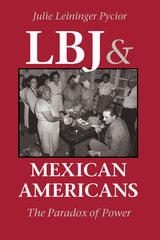
LBJ and Mexican Americans
The Paradox of PowerBy Julie Leininger Pycior
University of Texas Press, 1997
T. R. Fehrenbach Award, 1997
As he worked to build his Great Society, Lyndon Johnson often harkened back to his teaching days in the segregated "Mexican" school at Cotulla, Texas. Recalling the poverty and prejudice that blighted his students' lives, Johnson declared, "It never occurred to me in my fondest dreams that I might have the chance to help the sons and daughters of those students and to help people like them all over this country. But now I do have that chance—and I'll let you in on a secret—I mean to use it."
This book explores the complex and sometimes contradictory relations between LBJ and Mexican Americans. Julie Pycior shows that Johnson's genuine desire to help Mexican Americans—and reap the political dividends—did not prevent him from allying himself with individuals and groups intent on thwarting Mexican Americans' organizing efforts. Not surprisingly, these actions elicited a wide range of response, from grateful loyalty to, in some cases, outright opposition. Mexican Americans' complicated relationship with LBJ influenced both their political development and his career with consequences that reverberated in society at large.
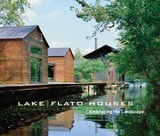
Lake|Flato Houses
Embracing the LandscapeLake|Flato Architects
University of Texas Press, 2014
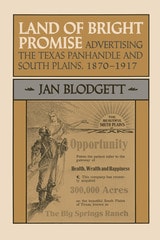
Land of Bright Promise
Advertising the Texas Panhandle and South Plains, 1870-1917By Jan Blodgett
University of Texas Press, 1988
“It shall be the chosen land, perpetual sunshine shall kiss its trees and vines, and, being storied in luscious fruits and compressed into ruddy wine, will be sent to the four points of the compass to gladden the hearts of all mankind . . . They will breathe the pure and bracing air, bask in the healing sunshine, drink the invigorating wine, and eat the life prolonging fruit.” —from a brochure advertising the Staked Plains from the Missouri Pacific Railway Company, 1889
Land of Bright Promise is a fascinating exploration of the multitude of land promotions and types of advertising that attracted more than 175,000 settlers to the Panhandle–South Plains area of Texas from the late years of the nineteenth century to the early years of the twentieth. Shunned by settlers for decades because of its popular but forbidding image as a desert filled with desperados, savage Indians, and solitary ranchers, the region was seen as an agricultural and cultural wasteland. The territory, consequently, was among the last to be settled in the United States.
But from 1890 to 1917, land companies and agents competed to attract new settlers to the plains. To this end, the combined efforts of local residents, ranchers and landowners, railroads, and professional real estate agents were utilized. Through brochures, lectures, articles, letters, fairs, and excursion trips, midwestern farmers were encouraged to find new homes on what was once feared as the “Great American Desert.” And successful indeed were these efforts: from 13,787 in 1890, the population grew to 193,371 in 1920, with a corresponding increase in the amount of farms and farm acreage.
The book looks at the imagination, enthusiasm, and determination of land promoters as they approached their task, including their special advertisements and displays to show the potential of the area. Treating the important roles of the cattlemen, the railroads, the professional land companies, and local boosters, Land of Bright Promise also focuses on the intentions and expectations of the settlers themselves. Of special interest are the fifteen historical photographs and reproductions of promotional pieces from the era used to spur the land boom. What emerges is an engaging look at a critical period in the development of the Texas Panhandle and an overview of the shift from cattle to agriculture as the primary industry in the area.
Land of the Tejas
Native American Identity and Interaction in Texas, A.D. 1300 to 1700By John Wesley Arnn III
University of Texas Press, 2012
Combining archaeological, historical, ethnographic, and environmental data, Land of the Tejas represents a sweeping, interdisciplinary look at Texas during the late prehistoric and early historic periods. Through this revolutionary approach, John Wesley Arnn reconstructs Native identity and social structures among both mobile foragers and sedentary agriculturalists. Providing a new methodology for studying such populations, Arnn describes a complex, vast, exotic region marked by sociocultural and geographical complexity, tracing numerous distinct peoples over multiple centuries.
Drawing heavily on a detailed analysis of Toyah (a Late Prehistoric II material culture), as well as early European documentary records, an investigation of the regional environment, and comparisons of these data with similar regions around the world, Land of the Tejas examines a full scope of previously overlooked details. From the enigmatic Jumano Indian leader Juan Sabata to Spanish friar Casanas's 1691 account of the vast Native American Tejas alliance, Arnn's study shines new light on Texas's poorly understood past and debunks long-held misconceptions of prehistory and history while proposing a provocative new approach to the process by which we attempt to reconstruct the history of humanity.

Landmarks of Texas Architecture
Lawrence W. Speck
University of Texas Press, 1986
"This selection of twenty of Texas' proudest architectural achievements is a tiny sampling of the state's rich, but little-heralded, architectural heritage. The visual presentation of these buildings in Richard Payne's insightful photographs is evidence enough to any student of Texas culture that there are deep and meaningful tracks of our civilization in the state's built environment. . . . In the stones of the Alamo and the steel and glass of our downtown skyscrapers lie the silent embodiment of who we are and where we have been."
—from the Introduction
Texas architecture has never been, nor is it likely to be in the future, an easily digested whole. This collection, drawn from the 1983 Texas Society of Architects' exhibit "Creating Tomorrow's Heritage," provides a look at twenty of the most interesting responses to the challenges posed by Texas history and geography. It reveals that what Texas architecture lacks in cohesiveness, it more than compensates for in vitality. Variations in circumstance and background, coupled with the kind of freedom which heterogeneity breeds, have produced a lively climate for architectural development in Texas—a place where, in the absence of pat answers, intriguing questions have been raised. The same freedom which has produced a dearth of cohesion has encouraged exploration and invention. The same disparities which have made tidy categorization of historical movements or periods difficult have led to some evocative hybrids—new and telling syntheses which are genuinely of their place.
Of interest to anyone who has strolled the Paseo del Rio in San Antonio or admired the dramatically lit State Capitol at night, Landmarks of Texas Architecture is a book to be looked at and enjoyed, a place to start in creating one's own list of architectural favorites. Part of the growing interest in Texas history and culture, Landmarks adds to our understanding of the forces which shaped the Texas of yesterday and will build the Texas of tomorrow.
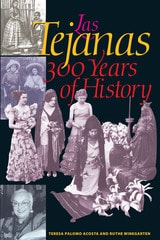
Las Tejanas
300 Years of HistoryBy Teresa Palomo Acosta and Ruthe Winegarten
University of Texas Press, 2003
Winner, Texas Reference Source Award, Reference Round Table, Texas Library Association, 2003
T.R. Fehrenbach Award, Texas Historical Commission, 2004
Since the early 1700s, women of Spanish/Mexican origin or descent have played a central, if often unacknowledged, role in Texas history. Tejanas have been community builders, political and religious leaders, founders of organizations, committed trade unionists, innovative educators, astute businesswomen, experienced professionals, and highly original artists. Giving their achievements the recognition they have long deserved, this groundbreaking book is at once a general history and a celebration of Tejanas' contributions to Texas over three centuries.
The authors have gathered and distilled a wide range of information to create this important resource. They offer one of the first detailed accounts of Tejanas' lives in the colonial period and from the Republic of Texas up to 1900. Drawing on the fuller documentation that exists for the twentieth century, they also examine many aspects of the modern Tejana experience, including Tejanas' contributions to education, business and the professions, faith and community, politics, and the arts. A large selection of photographs, a historical timeline, and profiles of fifty notable Tejanas complete the volume and assure its usefulness for a broad general audience, as well as for educators and historians.

Last Gangster in Austin
Frank Smith, Ronnie Earle, and the End of a Junkyard MafiaJesse Sublett
University of Texas Press, 2021
Ronnie Earle was a Texas legend. During his three decades as the district attorney responsible for Austin and surrounding Travis County, he prosecuted corrupt corporate executives and state officials, including the notorious US congressman Tom DeLay. But Earle maintained that the biggest case of his career was the one involving Frank Hughey Smith, the ex-convict millionaire, alleged criminal mastermind, and Dixie Mafia figure.
With the help of corrupt local authorities, Smith spent the 1970s building a criminal empire in auto salvage and bail bonds. But there was one problem: a rival in the salvage business threatened his dominance. Smith hired arsonists to destroy the rival; when they botched the job, he sent three gunmen, but the robbery they planned was a bloody fiasco. Investigators were convinced that Smith was guilty, but many were skeptical that the newly elected and inexperienced Earle could get a conviction. Amid the courtroom drama and underworld plots the book describes, Willie Nelson makes a cameo. So do the private eyes, hired guns, and madams who kept Austin not only weird but also riddled with vice. An extraordinary true story, Last Gangster in Austin paints an unusual picture of the Texas capital as a place that was wild, wonderful, and as crooked as the dirt road to paradise.
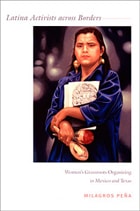
Latina Activists across Borders
Women's Grassroots Organizing in Mexico and TexasMilagros Peña
Duke University Press, 2007
Drawing on interviews with the leaders of more than two dozen women’s NGOs in Michoacán and El Paso/Ciudad Juárez, Peña examines the influence of the Roman Catholic Church and liberation theology on Latina activism, and she describes how activist affiliations increasingly cross ethnic, racial, and class lines. Women’s NGOs in Michoacán put an enormous amount of energy into preparations for the 1995 United Nations–sponsored World Conference on Women in Beijing, and they developed extensive activist networks as a result. As Peña demonstrates, activists in El Paso/Ciudad Juárez were less interested in the Beijing conference; they were intensely focused on issues related to immigration and to the murders and disappearances of scores of women in Ciudad Juárez. Ultimately, Peña’s study highlights the consciousness-raising work done by NGOs run by and for Mexican and Mexican American women: they encourage Latinas to connect their personal lives to the broader political, economic, social, and cultural issues affecting them.
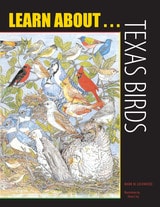
Learn About . . . Texas Birds
By Mark W. Lockwood
University of Texas Press, 2007
Children from six to twelve are introduced to the most frequently seen and interesting Texas birds. Youngsters can color eye-catching line drawings of various birds in typical habitats, while an easy-to-read text gives important facts about the birds, and several fun games are instructive and challenging.
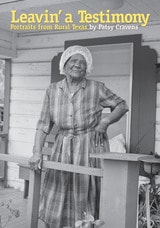
Leavin' a Testimony
Portraits from Rural TexasBy Patsy Cravens
University of Texas Press, 2006
First settled by Stephen F. Austin's colonists in the early nineteenth century, Colorado County has deep roots in Texas history. Mainly rural and agrarian until late in the twentieth century, Colorado County was a cotton-growing region whose population was about evenly divided between blacks and whites. These life-long neighbors led separate and unequal lives, memories of which still linger today. To preserve those memories, Patsy Cravens began interviewing and photographing the older residents of Colorado County in the 1980s. In this book, she presents photographs and recollections of the last generation, black and white, who grew up in the era of Jim Crow segregation.
The folks in Colorado County have engrossing stories to tell. They recall grinding poverty and rollicking fun in the Great Depression, losing crops and livestock to floods, working for the WPA, romances gone wrong and love gone right, dirty dancing, church and faith, sharecropping, quilting, raising children, racism and bigotry, and even the horrific lynching of two African American teenagers in 1935. The Colorado County residents' stories reveal an amazing resiliency and generosity of spirit, despite the hardships that have filled most of their lives. They also capture a rural way of life that was once common across the South, but is now gone forever.

Legendary Ladies of Texas
Francis Edward Abernethy
University of North Texas Press, 1994
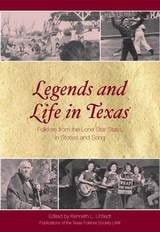
Legends and Life in Texas
Folklore from the Lone Star State, in Stories and SongKenneth L. Untiedt
University of North Texas Press, 2017
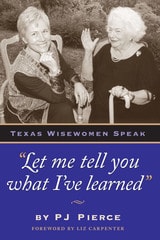
Let me tell you what I've learned
Texas Wisewomen SpeakBy PJ Pierce
University of Texas Press, 2002
Barbara Jordan spoke for many Texas women when she told a reporter, "I get from the soil and spirit of Texas the feeling that I, as an individual, can accomplish whatever I want to, and that there are no limits, that you can just keep going, just keep soaring. I like that spirit." Indeed, the sense of limitless possibilities has inspired countless Texas women—sometimes in the face of daunting obstacles—to build lives rich in work, family, friends, faith, and community involvement.
In this collection of interviews conducted by PJ Pierce, twenty-five Texas women ranging in age from 53 to 93 share the wisdom they've acquired through living unconventional lives. Responding to the question "What have you found that really matters about life?" they offer keen insights into motherhood, career challenges, being a minority, marriage and widowhood, anger, assertiveness, managing change, persevering, power, speaking out, fashioning success from failure, writing your own job description, loving a younger man, and recognizing opportunities disguised as disaster—to name only a few of their topics. In her introduction, Pierce describes how she came to write the book and how she chose her subjects to represent a cross-section of career paths and ethnic groups and all geographic areas of Texas. A topical index makes it easy to compare several women's views on a given subject.
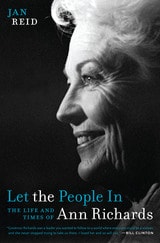
Let the People In
The Life and Times of Ann RichardsBy Jan Reid
University of Texas Press, 2012
Winner, Coral Horton Tullis Memorial Prize, Texas State Historical Association, 2012
Liz Carpenter Award for Research in the History of Women, Texas State Historical Association, 2012
When Ann Richards delivered the keynote of the 1988 Democratic National Convention and mocked President George H. W. Bush—“Poor George, he can’t help it. He was born with a silver foot in his mouth”—she instantly became a media celebrity and triggered a rivalry that would alter the course of American history. In 1990, Richards won the governorship of Texas, upsetting the GOP’s colorful rancher and oilman Clayton Williams. The first ardent feminist elected to high office in America, she opened up public service to women, blacks, Hispanics, Asian Americans, gays, and the disabled. Her progressive achievements and the force of her personality created a lasting legacy that far transcends her rise and fall as governor of Texas.
In Let the People In, Jan Reid draws on his long friendship with Richards, interviews with her family and many of her closest associates, her unpublished correspondence with longtime companion Bud Shrake, and extensive research to tell a very personal, human story of Ann Richards’s remarkable rise to power as a liberal Democrat in a conservative Republican state. Reid traces the whole arc of Richards’s life, beginning with her youth in Waco, her marriage to attorney David Richards, her frustration and boredom with being a young housewife and mother in Dallas, and her shocking encounters with Lyndon Johnson and Jimmy Carter. He follows Richards to Austin and the wild 1970s scene and describes her painful but successful struggle against alcoholism. He tells the full, inside story of Richards’s rise from county office and the state treasurer’s office to the governorship, where she championed gun control, prison reform, environmental protection, and school finance reform, and he explains why she lost her reelection bid to George W. Bush, which evened his family’s score and launched him toward the presidency. Reid describes Richards’s final years as a world traveler, lobbyist, public speaker, and mentor and inspiration to office holders, including Hillary Clinton. His nuanced portrait reveals a complex woman who battled her own frailties and a good-old-boy establishment to claim a place on the national political stage and prove “what can happen in government if we simply open the doors and let the people in.”

Lethal Injection
Capital Punishment in Texas during the Modern EraBy Jon Sorensen and Rocky LeAnn Pilgrim
University of Texas Press, 2006
Few state issues have attracted as much controversy and national attention as the application of the death penalty in Texas. In the years since the death penalty was reinstated in 1976, Texas has led the nation in passing death sentences and executing prisoners. The vigor with which Texas has implemented capital punishment has, however, raised more than a few questions. Why has Texas been so fervent in pursuing capital punishment? Has an aggressive death penalty produced any benefits? Have dangerous criminals been deterred? Have rights been trampled in the process and, most importantly, have innocents been executed? These important questions form the core of Lethal Injection: Capital Punishment in Texas during the Modern Era.
This book is the first comprehensive empirical study of Texas's system of capital punishment in the modern era. Jon Sorensen and Rocky Pilgrim use a wealth of information gathered from formerly confidential prisoner records and a variety of statistical sources to test and challenge traditional preconceptions concerning racial bias, deterrence, guilt, and the application of capital punishment in this state. The results of their balanced analysis may surprise many who have followed the recent debate on this important issue.
Life After Welfare
Reform and the Persistence of PovertyBy Laura Lein and Deanna T. Schexnayder; with Karen Manges Douglas and Daniel G. Schroeder
University of Texas Press, 2007
A Choice Outstanding Academic Book
In the decade since President Clinton signed the Personal Responsibility and Work Opportunity Reconciliation Act of 1996 into law—amidst promises that it would "end welfare as we know it"—did the reforms ending entitlements and moving toward time limits and work requirements lift Texas families once living on welfare out of poverty, or merely strike their names from the administrative rolls?
Under welfare reform, Texas continued with low monthly payments and demanding eligibility criteria. Many families who could receive welfare in other states do not qualify in Texas, and virtually any part-time job makes a family ineligible. In Texas, most families who leave welfare remain in or near poverty, and many are likely to return to the welfare rolls in the future.
This compelling work, which follows 179 families after leaving welfare, is set against a backdrop of multiple types of data and econometric modeling. The authors' multi-method approach draws on administrative data from nine programs serving low-income families and a statewide survey of families who have left welfare. Survey data on health problems, transportation needs, and child-care issues shed light on the patterns of employment and welfare use seen in the administrative data. In their lives after welfare, the families chronicled here experience poverty even when employed; a multiplicity of barriers to employment that work to exacerbate one another; and a failing safety net of basic human services as they attempt to sustain low-wage employment.

Life of the Marlows
A True Story of Frontier Life of Early DaysWilliam Rathmell
University of North Texas Press, 2004
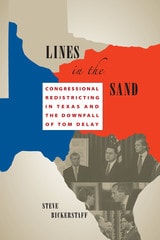
Lines in the Sand
Congressional Redistricting in Texas and the Downfall of Tom DeLayBy Steve Bickerstaff
University of Texas Press, 2007
The events of 2003 in Texas were important to the political history of this country. Congressman Tom DeLay led a Republican effort to gerrymander the state's thirty-two congressional districts to defeat all ten of the Anglo Democratic incumbents and to elect more Republicans; Democratic state lawmakers fled the state in an effort to defeat the plan. The Lone Star State uproar attracted attention worldwide. The Republicans won this showdown, gaining six additional seats from Texas and protecting the one endangered Republican incumbent. Some of the methods used by DeLay to achieve this result, however, led to his criminal indictment and ultimately to his downfall.
With its eye-opening research, readable style, and insightful commentary, Lines in the Sand provides a front-line account of what happened in 2003, often through the personal stories of members of both parties and of the minority activist groups caught in a political vortex. Law professor Steve Bickerstaff provides much-needed historical perspective and also probes the aftermath of the 2003 redistricting, including the criminal prosecutions of DeLay and his associates and the events that led to DeLay's eventual resignation from the U.S. House of Representatives. As a result, Bickerstaff graphically shows a dark underside of American politics—the ruthless use of public institutional power for partisan gain.
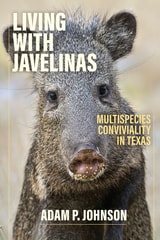
Living with Javelinas
Multispecies Conviviality in TexasAdam P. Johnson
University of Texas Press, 2026
An ethnography on how both humans and javelinas can thrive in shared space.
As human settlements expand into formerly wild lands, coexistence with wildlife is no longer optional––it’s a daily negotiation. In Living with Javelinas, Adam Johnson explores what it means to share space and adapt in a more-than-human world. Often mistaken for wild pigs, javelinas unsettle the boundaries between nuisance and neighbor. Johnson traces the other species that shape their lives––feral hogs, prickly pear, mountain cedar––and examines how folklore, perception, and memory influence human–javelina encounters. Drawing on ethnographic, ecological, and ethological research across Texas, he shows how coexistence becomes a practical, albeit often uneasy, conviviality.
In much of Texas, decades of hunting have made javelinas wary. Through extended time with rancher Roger Gray, who encounters and feeds javelinas daily, Johnson reveals how repeated contact can foster a mutually responsive relationship. Bringing anthropology into dialogue with ecology, Living with Javelinas argues that coexistence is not harmony but an ongoing adjustment. In a time of ecological strain, situated acts of accommodation point toward more ethical and sustainable ways of living together.
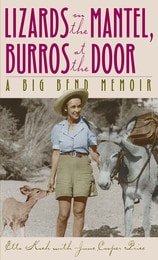
Lizards on the Mantel, Burros at the Door
A Big Bend MemoirBy Etta Koch with June Cooper Price
University of Texas Press, 1999
A woman who went West with her husband in the 1840s must have expected hardships and privation, but during the 1940s, when Etta Koch stopped off in Big Bend with her young family and a 23-foot travel trailer in tow, she anticipated no more than a civilized camping trip between her old home in Ohio and a new one in Arizona. It was only when she found herself moving into an old rock house without plumbing or electricity in the new Big Bend National Park that Etta realized, "From the sheltered life of a city girl of moderate circumstances, I too would have to face the reality of frontier living."
In this book based on her journals and letters, Etta Koch and her daughter June Cooper Price chronicle their family's first years (1944-1946) in the Big Bend. Etta describes how her photographer husband Peter Koch became captivated by the region as a place for natural history filmmaking-and how she and their three young daughters slowly adapted to a pioneer lifestyle during his months' long absences on the photo-lecture circuit. In vivid, often humorous anecdotes, she describes making the rock house into a home, getting to know the Park Service personnel and other neighbors, coping with the local wildlife, and, most of all, learning to love the rugged landscape and the hardy individuals who call it home.
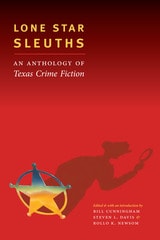
Lone Star Sleuths
An Anthology of Texas Crime FictionEdited and with an introduction by Bill Cunningham, Steven L. Davis, and Rollo K. Newsom
University of Texas Press, 2007
Texas has always staked a large claim on the nation's imagination, and its mystery literature is no exception. Hundreds of crime novels are set within the state, most of which have been published in the last twenty years. From the highest point atop the Guadalupe Mountains in West Texas to the Piney Woods of East Texas, from the High Plains of the Panhandle to the subtropical climate of the lower Rio Grande Valley, mystery writers have covered every aspect of Texas's extraordinarily diverse geography.
The first book to emphasize the wealth of Texas's mystery writers and the images they convey of the state's wide range of regions and cultures, Lone Star Sleuths is a noteworthy introduction not only to the literary genre but also to a sense of Texas as a place in fiction. Celebrating a genre that has expanded to include women and an increasing diversity of cultures, the book features selections from the works of such luminaries as Kinky Friedman and Mary Willis Walker, lesser-known stars in the making, and even some outsiders like Nevada Barr and Carolyn Hart who have succumbed to the allure of the state's weather, geography, and colorful history.
Lone Star Sleuths captures the sense of place that distinguishes much of the great literature set in Texas, and is a must-read for mystery lovers.

Lone Star Vistas
Travel Writing on Texas, 1821-1861By Astrid Haas
University of Texas Press, 2021
Every place is a product of the stories we tell about it—stories that do not merely describe but in fact shape geographic, social, and cultural spaces. Lone Star Vistas analyzes travelogues that created the idea of Texas. Focusing on the forty-year period between Mexico’s independence from Spain (1821) and the beginning of the US Civil War, Astrid Haas explores accounts by Anglo-American, Mexican, and German authors—members of the region’s three major settler populations—who recorded their journeys through Texas. They were missionaries, scientists, journalists, emigrants, emigration agents, and military officers and their spouses. They all contributed to the public image of Texas and to debates about the future of the region during a time of political and social transformation. Drawing on sources and scholarship in English, Spanish, and German, Lone Star Vistas is the first comparative study of transnational travel writing on Texas. Haas illuminates continuities and differences across the global encounter with Texas, while also highlighting how individual writers’ particular backgrounds affected their views on nature, white settlement, military engagement, Indigenous resistance, African American slavery, and Christian mission.

Lone Stars III
A Legacy of Texas Quilts, 1986-2011By Karoline Patterson Bresenhan and Nancy O'Bryant Puentes
University of Texas Press, 2011
From frontier times in the Republic of Texas until today, Texans have been making gorgeous quilts. Karoline Patterson Bresenhan and Nancy O'Bryant Puentes documented the first 150 years of the state's rich heritage of quilt art in Lone Stars: A Legacy of Texas Quilts, 1836–1936 and Lone Stars II: A Legacy of Texas Quilts, 1936–1986. Now in Lone Stars III, they bring the Texas quilt story into the twenty-first century, presenting two hundred traditional and art quilts that represent "the best of the best" quilts created since 1986.
The quilts in Lone Stars III display the explosion of creativity that has transformed quilting over the last quarter century. Some of the quilts tell stories, create landscapes, record events, and memorialize people. Others present abstract designs that celebrate form and color. Their makers have embraced machine quilting, as well as hand sewing, and they often embellish their quilts with buttons, beads, lace, ribbon, and even more exotic items. Each quilt is pictured in its entirely, and some entries also include photographs of quilt details. The accompanying text describes the quilt's creation, its maker, and its physical details.
With 16.3 million American quilters who spend $3.6 billion annually on their pastime, the quilting community has truly become a force to reckon with both artistically and socially. Lone Stars III is the perfect introduction to this world of creativity.
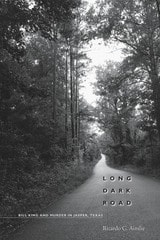
Long Dark Road
Bill King and Murder in Jasper, TexasBy Ricardo C. Ainslie
University of Texas Press, 2004
On a long dark road in deep East Texas, James Byrd Jr. was dragged to his death behind a pickup truck one summer night in 1998. The brutal modern-day lynching stunned people across America and left everyone at a loss to explain how such a heinous crime could possibly happen in our more racially enlightened times. Many eventually found an answer in the fact that two of the three men convicted of the murder had ties to the white supremacist Confederate Knights of America. In the ex-convict ringleader, Bill King, whose body was covered in racist and satanic tattoos, people saw the ultimate monster, someone so inhuman that his crime could be easily explained as the act of a racist psychopath. Few, if any, asked or cared what long dark road of life experiences had turned Bill King into someone capable of committing such a crime.
In this gripping account of the murder and its aftermath, Ricardo Ainslie builds an unprecedented psychological profile of Bill King that provides the fullest possible explanation of how a man who was not raised in a racist family, who had African American friends in childhood, could end up on death row for viciously killing a black man. Ainslie draws on exclusive in-prison interviews with King, as well as with Shawn Berry (another of the perpetrators), King's father, Jasper residents, and law enforcement and judicial officials, to lay bare the psychological and social forces—as well as mere chance—that converged in a murder on that June night. Ainslie delves into the whole of King's life to discover how his unstable family relationships and emotional vulnerability made him especially susceptible to the white supremacist ideology he adopted while in jail for lesser crimes.
With its depth of insight, Long Dark Road not only answers the question of why such a racially motivated murder happened in our time, but it also offers a frightening, cautionary tale of the urgent need to intervene in troubled young lives and to reform our violent, racist-breeding prisons. As Ainslie chillingly concludes, far from being an inhuman monster whom we can simply dismiss, "Bill King may be more like the rest of us than we care to believe."

Lost Causes
Blended Sentencing, Second Chances, and the Texas Youth CommissionBy Chad R. Trulson, Darin R. Haerle, Jonathan W. Caudill, and Matt DeLisi<br>Foreword by James W. Marquart
University of Texas Press, 2016
What should be done with minors who kill, maim, defile, and destroy the lives of others? The state of Texas deals with some of its most serious and violent youthful offenders through “determinate sentencing,” a unique sentencing structure that blends parts of the juvenile and adult justice systems. Once adjudicated via determinate sentencing, offenders are first incarcerated in the Texas Youth Commission (TYC). As they approach age eighteen, they are either transferred to the Texas prison system to serve the remainder of their original determinate sentence or released from TYC into Texas’s communities.
The first long-term study of determinate sentencing in Texas, Lost Causes examines the social and delinquent histories, institutionalization experiences, and release and recidivism outcomes of more than 3,000 serious and violent juvenile offenders who received such sentences between 1987 and 2011. The authors seek to understand the process, outcomes, and consequences of determinate sentencing, which gave serious and violent juvenile offenders one more chance to redeem themselves or to solidify their place as the next generation of adult prisoners in Texas. The book’s findings—that about 70 percent of offenders are released to the community during their most crime-prone years instead of being transferred to the Texas prison system and that about half of those released continue to reoffend for serious crimes—make Lost Causes crucial reading for all students and practitioners of juvenile and criminal justice.
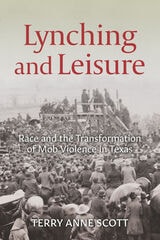
Lynching and Leisure
Race and the Transformation of Mob Violence in TexasTerry Anne Scott
University of Arkansas Press, 2022
Winner, 2022 Ottis Lock Endowment “Best Book” Award from the East Texas Historical Association
In Lynching and Leisure, Terry Anne Scott examines how white Texans transformed lynching from a largely clandestine strategy of extralegal punishment into a form of racialized recreation in which crowd involvement was integral to the mode and methods of the violence. Scott powerfully documents how lynchings came to function not only as tools for debasing the status of Black people but also as highly anticipated occasions for entertainment, making memories with friends and neighbors, and reifying whiteness. In focusing on the sense of pleasure and normality that prevailed among the white spectatorship, this comprehensive study of Texas lynchings sheds new light on the practice understood as one of the chief strategies of racial domination in the nineteenth- and twentieth-century South.