Results by title
303 books match the query 'Time' and 12 start with l
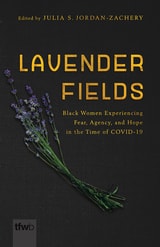
Lavender Fields
Black Women Experiencing Fear, Agency, and Hope in the Time of COVID-19Edited by Julia S. Jordan-Zachery
University of Arizona Press, 2023
Black women and girls in the United States are among the hardest hit by the pandemic in terms of illnesses, deaths, evictions, and increasing economic inequality. Riffing off Alice Walker’s telling of her search for Zora Neal Hurston, the authors of these essays and reflections offer raw tellings of Black girls’ and women’s experiences written in real time, as some of the contributors battled COVID-19 themselves.
The essays center Black girls and women and their testimonies in hopes of moving them from the margin to the center. With a diversity of voices and ages, this volume taps into the Black feminine interior, that place where Audre Lorde tells us that feelings lie, to access knowledge—generational, past, and contemporary—to explore how Black women navigate COVID-19. Using womanism and spirituality, among other modalities, the authors explore deep feelings, advancing Black feminist theorizing on Black feminist praxis and methodology.
In centering the stories of Black girls and women’s experiences with COVID-19, this work brings much-needed justice and equity to conversations about the pandemic. Just as Walker worked diligently to find Hurston, Lavender Fields attempts to “find” Black women amid all we are experiencing, ensuring visibility and attention.
Contributors
Tamaya Bailey
reelaviolette botts-ward
Kyrah K. Brown
Brianna Y. Clark
Kenyatta Dawson
LeConté J. Dill
Maryam O. Funmilayo
Brandie Green
Courtney Jackson
Sara Jean-Francois
Julia S. Jordan-Zachery
Angela K. Lewis-Maddox
Annet Matebwe
Mbali Mazibuko
Radscheda Nobles
Nimot Ogunfemi
J. Mercy Okaalet
Chizoba Uzoamaka Okoroma
Peace Ossom-Williamson
Elizabeth Peart
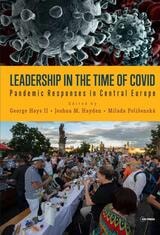
Leadership in the Time of Covid
Pandemic Responses in Central EuropeMilada Polisenská
Central European University Press, 2023
The Covid pandemic has put all modern societies to a serious test of resilience. The interdisciplinary research on which this book is based examined how four European governments behaved in these circumstances. During the months of the crisis, the team of experts coordinated by the editors of this volume took a close look at the decision-making processes in the Czech Republic, Hungary, Poland, and Slovakia – the so-called Visegrad Four.
The inquiries focused on experiences from the academic, health, economic and social fields. The methods of comparison included surveys, interviews, discourse analysis, for which the adaptive leadership theory provided the conceptual framework.
The conclusions are both academic and practical. Aside the description of the pandemic responses, the research had a formative dimension: how can an adaptive leadership approach better help societies manage the health and societal impacts of similar challenges? The spectrum of emerging anti-democratic tendencies in the region provided the specific context of the exercise. The four states face varying degrees of democratic backsliding as well as illiberal influences that have affected their response to the pandemic, which gives this research on the Visegrad Four a worldwide resonance.

Libraries Promoting Reflective Dialogue In A Time Of Political
Andrea Baer
Assoc of College & Research Libraries, 2019

Lifespan Narratives
Ten Stories from a Time of Disruption; Chronicle of Emotions, Notebook 3Alexander Kluge
Seagull Books, 2025
A poignant exploration of post–World War II life, blending fictional and non-fictional stories that challenge traditions and reflect on the enduring impact of historical disruptions.
Lifespan Narratives has to do with stories, fictitious and not, which present a sad chronicle and question tradition from several different perspectives. Originally comprising Alexander Kluge’s first book, these stories were written between the years 1958 and 1962, in which he emphasizes the importance of continuously questioning our past. He underscores the necessity of recounting lifespan narratives even from today’s viewpoint, proposing that “life in a time of disruption” should be viewed as a constant experiential substance, transcending any single era.
In Lifespan Narratives, readers are invited to explore the enduring impact of historical disruptions through Kluge’s masterful storytelling, which remains as relevant today as it was in the years following the Second World War. For this edition, the English translation of a selection of stories by Leila Vennewitz has been expanded by Alexander Booth in conjunction with the author.
Linguistic Diversity in Space and Time
Johanna Nichols
University of Chicago Press, 1992
"An awe-inspiring book, unequalled in scope, originality, and the range of language data considered."—Anna Siewierska, Linguistics
"Fascinating. . . . A brilliant pioneering study."—Journal of Indo-European Studies
"A superbly reasoned book."—John A. C. Greppin, Times Literary Supplement

Living at the End of Time
Two Years in a Tiny HouseJohn Hanson Mitchell
University Press of New England, 2014

Logics of Time and Computation
Robert Goldblatt
CSLI, 1992
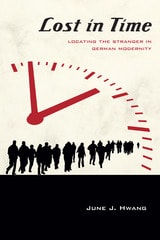
Lost in Time
Locating the Stranger in German ModernityJune J. Hwang
Northwestern University Press, 2014
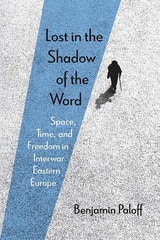
Lost in the Shadow of the Word
Space, Time, and Freedom in Interwar Eastern EuropeBenjamin Paloff
Northwestern University Press, 2016
Scholars of modernism have long addressed how literature, painting, and music reflected the radical reconceptualization of space and time in the early twentieth century—a veritable revolution in both physics and philosophy that has been characterized as precipitating an “epistemic trauma” around the world. In this wide-ranging study, Benjamin Paloff contends that writers in Central and Eastern Europe felt this impact quite distinctly from their counterparts in Western Europe. For the latter, the destabilization of traditional notions of space and time inspired works that saw in it a new kind of freedom. However, for many Central and Eastern European authors, who were writing from within public discourses about how to construct new social realities, the need for escape met the realization that there was both nowhere to escape to and no stable delineation of what to escape from. In reading the prose and poetry of Czech, Polish, and Russian writers, Paloff imbues the term “Kafkaesque” with a complexity so far missing from our understanding of this moment in literary history.

Love In A Time Of Hate
Hollander, Nancy Caro
Rutgers University Press, 1997
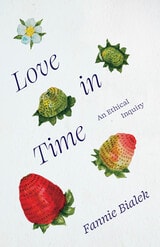
Love in Time
An Ethical InquiryFannie Bialek
University of Chicago Press, 2025
We live in time, and so we love in time. Our beloveds change, and we change beside them. Sometimes we change apart, but it is this very changeableness, the braving of an unknown future together, that endears us to our lovers. Far from an ideal of constancy and commitment, then, love is an endeavor fraught with uncertainty.
In this book, Fannie Bialek sketches a view of love that does not ignore the vagaries of life but embraces them. In contrast to philosophical and religious attempts to secure love against finitude, Bialek’s love embraces its susceptibility to change and accepts the ethical challenges such change introduces. Attentive to our deepest vulnerabilities, Bialek develops a fresh ethics of love grounded by our humility before time.

Love in the Time of Zika
Environmental Crisis and the Future of ReproductionPaige Marie Patchin
Duke University Press, 2026