Results by title
104 books match the query 'Times' and 7 start with l

Last Cavalier
The Life and Times of John A. Lomax, 1867-1948Nolan Porterfield
University of Illinois Press, 1996
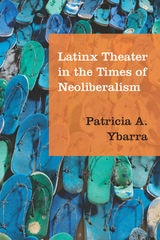
Latinx Theater in the Times of Neoliberalism
Patricia A. Ybarra
Northwestern University Press, 2018
Patricia A. Ybarra examines IMF interventions, NAFTA, shifts in immigration policy, the escalation of border industrialization initiatives, and austerity programs. She demonstrates how these policies have created the conditions for many of the most tumultuous events in the Americas in the last forty years, including dictatorships in the Southern Cone; the 1994 Cuban Rafter Crisis; femicides in Juárez, Mexico; the Zapatista uprising in Chiapas, Mexico; and the rise of narcotrafficking as a violent and vigorous global business throughout the Americas.
Latinx artists have responded to these crises by writing and developing innovative theatrical modes of representation about neoliberalism. Ybarra analyzes the work of playwrights María Irene Fornés, Cherríe Moraga, Michael John Garcés, Caridad Svich, Quiara Alegría Hudes, Victor Cazares, Jorge Ignacio Cortiñas, Tanya Saracho, and Octavio Solis. In addressing histories of oppression in their home countries, these playwrights have newly imagined affective political and economic ties in the Americas. They also have rethought the hallmark movements of Latin politics in the United States—cultural nationalism, third world solidarity, multiculturalism—and their many discontents.
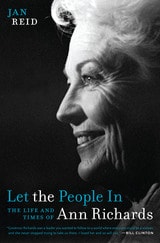
Let the People In
The Life and Times of Ann RichardsBy Jan Reid
University of Texas Press, 2012
Winner, Coral Horton Tullis Memorial Prize, Texas State Historical Association, 2012
Liz Carpenter Award for Research in the History of Women, Texas State Historical Association, 2012
When Ann Richards delivered the keynote of the 1988 Democratic National Convention and mocked President George H. W. Bush—“Poor George, he can’t help it. He was born with a silver foot in his mouth”—she instantly became a media celebrity and triggered a rivalry that would alter the course of American history. In 1990, Richards won the governorship of Texas, upsetting the GOP’s colorful rancher and oilman Clayton Williams. The first ardent feminist elected to high office in America, she opened up public service to women, blacks, Hispanics, Asian Americans, gays, and the disabled. Her progressive achievements and the force of her personality created a lasting legacy that far transcends her rise and fall as governor of Texas.
In Let the People In, Jan Reid draws on his long friendship with Richards, interviews with her family and many of her closest associates, her unpublished correspondence with longtime companion Bud Shrake, and extensive research to tell a very personal, human story of Ann Richards’s remarkable rise to power as a liberal Democrat in a conservative Republican state. Reid traces the whole arc of Richards’s life, beginning with her youth in Waco, her marriage to attorney David Richards, her frustration and boredom with being a young housewife and mother in Dallas, and her shocking encounters with Lyndon Johnson and Jimmy Carter. He follows Richards to Austin and the wild 1970s scene and describes her painful but successful struggle against alcoholism. He tells the full, inside story of Richards’s rise from county office and the state treasurer’s office to the governorship, where she championed gun control, prison reform, environmental protection, and school finance reform, and he explains why she lost her reelection bid to George W. Bush, which evened his family’s score and launched him toward the presidency. Reid describes Richards’s final years as a world traveler, lobbyist, public speaker, and mentor and inspiration to office holders, including Hillary Clinton. His nuanced portrait reveals a complex woman who battled her own frailties and a good-old-boy establishment to claim a place on the national political stage and prove “what can happen in government if we simply open the doors and let the people in.”
Life and Times of Cultural Studies
The Politics and Transformation of the Structures of KnowledgeRichard E. Lee
Duke University Press, 2003
Lee tracks the intellectual project of cultural studies as it developed over three decades, beginning with its institutional foundation at the University of Birmingham’s Centre for Contemporary Cultural Studies (CCCS). He links work at the CCCS to the events of 1968 and explores cultural studies’ engagement with theory in the debates on structuralism. He considers the shift within the discipline away from issues of working-class culture toward questions of identity politics in the fields of race and gender. He follows the expansion of the cultural studies project from Britain to Australia, Canada, South Africa, and the United States. Contextualizing the development and spread of cultural studies within the longue durée structures of knowledge in the modern world-system, Lee assesses its past and future as an agent of political and social change.

Life and Times of a Big River
An Uncommon Natural History of Alaska's Upper YukonPeter J. Marchand
University of Alaska Press, 2015
Life and Times of a Big River follows Peter J. Marchand and his team of biologists as they set out to explore the land that would ultimately become the Yukon-Charley Rivers National Preserve. Their encounters with strange plants, rare insects, and little-known mammals bring to life a land once thought to be static and monotonous. And their struggles to navigate and adapt to an unforgiving environment capture the rigorous demands of remote field work. Weaving in and out of Marchand's narrative is an account of the natural and cultural history of the area as it relates to the expedition and the region’s Native peoples. Life and Times of a Big River chorincles this riveting, one-of-a-kind journey of uncertainty and discovery from a disparate (and at one point desperate) group of biologists.
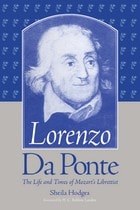
Lorenzo Da Ponte
The Life and Times of Mozart’s LibrettistSheila Hodges
University of Wisconsin Press, 2002
Three of the greatest operas ever written—The Marriage of Figaro, Don Giovanni, and Così fan tutte—join the exquisite music of Wolfgang Amadeus Mozart with the perfectly matched libretti of Lorenzo Da Ponte. Da Ponte’s own long life (1749–1838), however, was more fantastic than any opera plot. A poor Jew who became a Catholic priest; a priest who became a young gambler and rake; a teacher, poet, and librettist of genius who became a Pennsylvania greengrocer; an impoverished immigrant to America who became professor of Italian at Columbia University—wherever Da Ponte went, he arrived a penniless fugitive and made a new and eventful life. Sheila Hodges follows him from the last glittering years of the Venetian Republic to the Vienna of Mozart and Salieri, and from George III’s London to New York City.
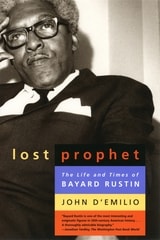
Lost Prophet
The Life and Times of Bayard RustinJohn D'Emilio
University of Chicago Press, 2004