71 books match the query 'Training of' and 7 start with l
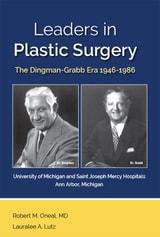
cover of Leaders in Plastic Surgery: The Dingman-Grabb Era 1946-1986

Leaders in Plastic Surgery

The Dingman-Grabb Era 1946-1986

Robert M. Oneal, MD, and Lauralee A. Lutz

Michigan Publishing Services, 2017
Leaders in Plastic Surgery traces the inspirational leadership of Reed O. Dingman, DDS, MD, and William C. Grabb, MD, and details the origins and growth of plastic and reconstructive surgery and the training of residents in Ann Arbor, Michigan, and the University of Michigan. It covers the years before and during the period of explosive innovations that have led the specialty to provide hope, correction, and rehabilitation to vast numbers of people suffering from a wide range of congenital abnormalities and acquired deformities. The authors, because of their long, personal association with plastic surgery in Ann Arbor, have brought to life the extensive accomplishments of the two leaders in terms of surgical techniques, surgical education, and important applied research while also documenting the many important contributions from the younger faculty and the trainees to the training program during those forty years. Many from that time frame have contributed their own memories, which has greatly enriched the documentation of an amazing history of an era past but not forgotten.
[more]
cover of Learner-Centered Pedagogy: Principles and Practice

Learner-Centered Pedagogy

Principles and Practice

Kevin Michael Klipfel

American Library Association, 2017

Today's emphasis on metrics and personalization make evidence-based instruction an imperative. In this practice-based handbook, the authors draw on the research of the humanistic psychologist and educator Carl Rogers to present an empathetic approach to information literacy sessions, reference service, and outreach.  With an eye on everyday library work, they offer concrete, empirically-based strategies to connect with learners at all levels. Offering plentiful examples of pedagogy in action, this book covers:

  • 6 cognitive principles for organizing information literacy instruction, with sample worksheets and organization tools for instruction planning;
  • how to establish rapport and kindle learners' motivation;
  • tactics for transcending "cite 5 sources" and other uninspiring research assignments;
  • educational evidence debunking the mythical perception that because students are skilled at computers and mobile technology, they already know how to do research;
  • questions to keep in mind for inspiring autonomous learning;
  • the power of story, as described by Joan Didion, Brené Brown's Ted Talk, and educational psychology research;
  • the science behind information overload; and
  • a balanced framework for evaluating specific educational technology tools.

Fusing theory with practice, this handbook is a valuable resource to help every practitioner connect with learners more effectively.
[more]
cover of Learning To See: American Sign Language as a Second Language

Learning To See

American Sign Language as a Second Language

Sherman Wilcox

Gallaudet University Press, 1997

As more and more secondary schools and colleges accept American Sign Language (ASL) as a legitimate choice for second language study, Learning to See has become even more vital in guiding instructors on the best ways to teach ASL as a second language. And now this groundbreaking book has been updated and revised to reflect the significant gains in recognition that deaf people and their native language, ASL, have achieved in recent years.

       Learning to See lays solid groundwork for teaching and studying ASL by outlining the structure of this unique visual language. Myths and misconceptions about ASL are laid to rest at the same time that the fascinating, multifaceted elements of Deaf culture are described. Students will be able to study ASL and gain a thorough understanding of the cultural background, which will help them to grasp the language more easily. An explanation of the linguistic basis of ASL follows, leading into the specific, and above all, useful information on teaching techniques.

       This practical manual systematically presents the steps necessary to design a curriculum for teaching ASL, including the special features necessary for training interpreters. The new Learning to See again takes its place at the forefront of texts on teaching ASL as a second language, and it will prove to be indispensable to educators and administrators in this special discipline.
[more]
cover of Learning to Work: The Case for Reintegrating Job Training and Education

Learning to Work

The Case for Reintegrating Job Training and Education

W. Norton Grubb

Russell Sage Foundation, 1996

"Grubb's powerful vision of a workforce development system connected by vertical ladders for upward mobility adds an important new dimension to our continued efforts at system reform. The unfortunate reality is that neither our first-chance education system nor our second-chance job training system have succeeded in creating clear pathways out of poverty for many of our citizens. Grubb's message deserves a serious hearing by policy makers and practitioners alike." —Evelyn Ganzglass, National Governors' Association Over the past three decades, job training programs have proliferated in response to mounting problems of unemployment, poverty, and expanding welfare rolls. These programs and the institutions that administer them have grown to a number and complexity that make it increasingly difficult for policymakers to interpret their effectiveness. Learning to Work offers a comprehensive assessment of efforts to move individuals into the workforce, and explains why their success has been limited. Learning to Work offers a complete history of job training in the United States, beginning with the Department of Labor's manpower development programs in the1960s and detailing the expansion of services through the Comprehensive Employment and Training Act in the 1970s and the Job Training Partnership Act in the 1980s.Other programs have sprung from the welfare system or were designed to meet the needs of various state and corporate development initiatives. The result is a complex mosaic of welfare-to-work, second-chance training, and experimental programs, all with their own goals, methodology, institutional administration, and funding. Learning to Work examines the findings of the most recent and sophisticated job training evaluations and what they reveal for each type of program. Which agendas prove most effective? Do their effects last over time? How well do programs benefit various populations, from welfare recipients to youths to displaced employees in need of retraining? The results are not encouraging. Many programs increase employment and reduce welfare dependence, but by meager increments, and the results are often temporary. On average most programs boosted earnings by only $200 to $500 per year, and even these small effects tended to decay after four or five years.Overall, job training programs moved very few individuals permanently off welfare, and provided no entry into a middle-class occupation or income. Learning to Work provides possible explanations for these poor results, citing the limited scope of individual programs, their lack of linkages to other programs or job-related opportunities, the absence of academic content or solid instructional methods, and their vulnerability to local political interference. Author Norton Grubb traces the root of these problems to the inherent separation of job training programs from the more successful educational system. He proposes consolidating the two domains into a clearly defined hierarchy of programs that combine school- and work-based instruction and employ proven methods of student-centered, project-based teaching. By linking programs tailored to every level of need and replacing short-term job training with long-term education, a system could be created to enable individuals to achieve increasing levels of economic success. The problems that job training programs address are too serious too ignore. Learning to Work tells us what's wrong with job training today, and offers a practical vision for reform.
[more]
cover of Legal Interpreting: Teaching, Research, and Practice

Legal Interpreting

Teaching, Research, and Practice

Jeremy L. Brunson

Gallaudet University Press, 2022

Linguistic minorities are often severely disadvantaged in legal events, with consequences that could impact one’s very liberty. Training for interpreters to provide full access in legal settings is paramount. In this volume, Jeremy L. Brunson has gathered deaf and hearing scholars and practitioners from both signed and spoken language interpreting communities in the United States, Canada, and the United Kingdom. Their contributions include research-driven, experience-driven, and theoretical discussions on how to teach and assess legal interpreting. The topics covered include teaming in a courtroom, introducing students to legal interpreting, being an expert witness, discourses used by deaf lawyers, designing assessment tools for legal settings, and working with deaf jurors. In addition, this volume interrogates the various ways power, privilege, and oppression appear in legal interpreting.

Each chapter features discussion questions and prompts that interpreter educators can use in the classroom. While intended as a foundational text for use in courses, this body of work also provides insight into the current state of the legal interpreting field and will be a valuable resource for scholars, practitioners, and consumers.
[more]
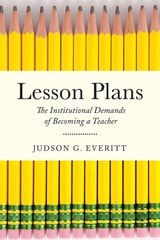
cover of Lesson Plans: The Institutional Demands of Becoming a Teacher

Lesson Plans

The Institutional Demands of Becoming a Teacher

Everitt, Judson G.

Rutgers University Press, 2017

Winner of the 2019-20 Distinguished Book Award - Midwest Sociological Society

In Lesson Plans, Judson G. Everitt takes readers into the everyday worlds of teacher training, and reveals the complexities and dilemmas teacher candidates confront as they learn how to perform a job that many people assume anybody can do. Using rich qualitative data, Everitt analyzes how people make sense of their prospective jobs as teachers, and how their introduction to this profession is shaped by the institutionalized rules and practices of higher education, K-12 education, and gender. Trained to constantly adapt to various contingencies that routinely arise in schools and classrooms, teacher candidates learn that they must continually try to reconcile the competing expectations of their jobs to meet students’ needs in an era of accountability. Lesson Plans reveals how institutions shape the ways we produce teachers, and how new teachers make sense of the multiple and complicated demands they face in their efforts to educate students.   

[more]
cover of Listening Myths: Applying Second Language Research to Classroom Teaching

Listening Myths

Applying Second Language Research to Classroom Teaching

Steven Brown

University of Michigan Press, 2011

This volume was conceived as a "best practices" resource for teachers of ESL listening courses in the way that Vocabulary Myths by Keith S. Folse (and Writing Myths by Joy Reid) is one for reading and vocabulary teachers. It was written to help ensure that teachers of listening are not perpetuating the myths of teaching listening.

Both the research and pedagogy in this book are based on the newest research in the field of second language acquisition. Steven Brown is the author of the Active Listening textbook series and is a teacher trainer.

The myths debunked in this book are:

§ Listening is the same as reading.

§ Listening is passive.

§ Listening equals comprehension.

§ Because L1 language ability is effortlessly acquired, L2 listening ability is too.

§ Listening means listening to conversations.

§ Listening is an individual, inside-the-head process.

§ Students should only listen to authentic materials.

§ Listening can’t be taught

[more]