Results by title
1185 books match the query 'Travel' and 42 start with l
La Harpe's Post
Tales of French-Wichita Contact on the Eastern PlainsGeorge H. Odell
University of Alabama Press, 2002
This major contribution to contact period studies points to the Lasley Vore site in modern Oklahoma as the most likely first meeting place of Plains Indians and Europeans more than 300 years ago.
In 1718, Jean-Baptiste Bénard, Sieur de la Harpe, departed St. Malo in Brittany for the New World. La Harpe, a member of the French bourgeoisie, arrived at Dauphin Island on the Gulf coast to take up the entrepreneurial concession provided by the director of the French colony, Jean Baptiste LeMoyne de Bienville. La Harpe's charge was to open a trading post on the Red River just above a Caddoan village not far from present-day Texarkana. Following the establishment of this post, La Harpe ventured farther north to extend his trade market into the region occupied by the Wichita Indians. Here he encountered a Tawakoni village with an estimated 6,000 inhabitants, a number that swelled to 7,000 during the ten-day visit.
Despite years of ethnohistoric and archaeological research, no scholar had successfully established where this important meeting took place. Then in 1988, George Odell and his crew surveyed and excavated an area 13 miles south of Tulsa, along the Arkansas River, that revealed undeniable association of Native American habitation refuse with 18th-century European trade goods.
Odell here presents a full account of the presumed location of the Tawakoni village as revealed through the analysis of excavated materials from nine specialist collaborators. In a strikingly well-written narrative report, employing careful study and innovative analysis supported by appendixes containing the excavation data, Odell combines documentary history and archaeological evidence to pinpoint the probable site of the first European contact with North American Plains Indians.
Ladies of the Canyons
A League of Extraordinary Women and Their Adventures in the American SouthwestLesley Poling-Kempes
University of Arizona Press, 2015
Educated, restless, and inquisitive, Natalie Curtis, Carol Stanley, Alice Klauber, and Mary Cabot Wheelwright were plucky, intrepid women whose lives were transformed in the first decades of the twentieth century by the people and the landscape of the American Southwest. Part of an influential circle of women that included Louisa Wade Wetherill, Alice Corbin Henderson, Mabel Dodge Luhan, Mary Austin, and Willa Cather, these ladies imagined and created a new home territory, a new society, and a new identity for themselves and for the women who would follow them.
Their adventures were shared with the likes of Theodore Roosevelt and Robert Henri, Edgar Hewett and Charles Lummis, Chief Tawakwaptiwa of the Hopi, and Hostiin Klah of the Navajo. Their journeys took them to Monument Valley and Rainbow Bridge, into Canyon de Chelly, and across the high mesas of the Hopi, down through the Grand Canyon, and over the red desert of the Four Corners, to the pueblos along the Rio Grande and the villages in the mountains between Santa Fe and Taos.
Although their stories converge in the outback of the American Southwest, the saga of Ladies of the Canyons is also the tale of Boston’s Brahmins, the Greenwich Village avant-garde, the birth of American modern art, and Santa Fe’s art and literary colony.
Ladies of the Canyons is the story of New Women stepping boldly into the New World of inconspicuous success, ambitious failure, and the personal challenges experienced by women and men during the emergence of the Modern Age.
Lady Chatterley's Villa
D. H. Lawrence on the Italian RivieraRichard Owen
Haus Publishing, 2014
But before long Frieda found herself irresistibly attracted to their landlord, a dashing Italian army officer, and the resulting affair served as the background for Lawrence’s writing: while in the villa, he turned out two stories, “Sun” and “The Virgin and the Gypsy,” both prefiguring Lady Chatterley’s Lover in their depiction of women fatally drawn to earthy, muscular men.
Built on the unpublished, and previously unexplored, letters and diaries of Rina Secker, the Anglo-Italian wife of Lawrence’s publisher, and featuring never-before-published letters from Lawrence, Lady Chatterley’s Villa reconstructs the drama of the tempestuous marriage, and the ways it fired Lawrence’s creativity. Along the way, Richard Owen offers a new accounting of Lawrence’s passion for Italy, tracing his travels along the coasts and islands and his deep engagement with Italian culture. This exploration of a little-studied, but crucial period of the writer’s life will be a must for Lawrence’s many fans.
Lake Country
A Series of JourneysKathleen Stocking
University of Michigan Press, 1994
Lake Mead National Recreation Area
A History of America’s First National PlaygroundJonathan Foster
University of Nevada Press, 2016
First named the Boulder Dam Recreation Area, this parkland was created in 1936 by a memorandum of agreement between the National Park Service and the U.S. Bureau of Reclamation. Over the course of its existence, the area has served as a model for a subsequent system of National Recreation Areas. The area’s extreme popularity has, in combination with changing public attitudes regarding preservation and safety, presented the National Park Service with tremendous challenges in recent decades. Jonathan Foster’s examination of these challenges and the responses to them reveal an increasingly anxious relationship between the government, the public, and special interest groups in the American West.
Land Beyond
A MemoirJack Ives
University of Alaska Press, 2010
Geographer Jack Ives moved to Canada in 1954, and soon after he played an instrumental role in the establishment of the McGill Sub-Arctic Research Laboratory in central Labrador-Ungava. This fascinating account of his fifty-plus years living and working in the arctic is simultaneously a light-hearted, winning memoir and a call to action on the issues of environmental awareness and conservation that are inextricably intertwined with life in the north. Mixing personal impressions of key figures of the postwar scientific boom with the intellectual drama of field research, The Land Beyond is a memorable depiction of a life in science.
Land and Wine
The French TerroirCharles Frankel
University of Chicago Press, 2014
For centuries, France has long been the world’s greatest wine-producing country. Its wines are the global gold standard, prized by collectors, and its winemaking regions each offer unique tasting experiences, from the spice of Bordeaux to the berry notes of the Loire Valley. Although grape variety, climate, and the skill of the winemaker are essential in making good wine, the foundation of a wine’s character is the soil in which its grapes are grown. Who could better guide us through the relationship between the French land and the wine than a geologist, someone who deeply understands the science behind the soil? Enter scientist Charles Frankel.
In Land and Wine, Frankel takes readers on a tour of the French winemaking regions to illustrate how the soil, underlying bedrock, relief, and microclimate shape the personality of a wine. The book’s twelve chapters each focus in-depth on a different region, including the Loire Valley, Alsace, Burgundy, Champagne, Provence, the Rhône valley, and Bordeaux, to explore the full meaning of terroir. In this approachable guide, Frankel describes how Cabernet Franc takes on a completely different character depending on whether it is grown on gravel or limestone; how Sauvignon yields three different products in the hills of Sancerre when rooted in limestone, marl, or flint; how Pinot Noir will give radically different wines on a single hill in Burgundy as the vines progress upslope; and how the soil of each château in Bordeaux has a say in the blend ratios of Merlot and Cabernet-Sauvignon. Land and Wine provides a detailed understanding of the variety of French wine as well as a look at the geological history of France, complete with volcanic eruptions, a parade of dinosaurs, and a menagerie of evolution that has left its fossils flavoring the vineyards.
Both the uninitiated wine drinker and the confirmed oenophile will find much to savor in this fun guide that Frankel has spiked with anecdotes about winemakers and historic wine enthusiasts—revealing which kings, poets, and philosophers liked which wines best—while offering travel tips and itineraries for visiting the wineries today.
Landscape Of Desire
Greg Gordon
Utah State University Press, 2003
Landscape of Desire powerfully documents and celebrates a place and the evolutions that occur when human beings are intimately connected to their surroundings. Greg Gordon accomplishes this with a tapestry of writing that interweaves land use history, natural history, experiential education, and personal reflection. He tracks the geomorphology of southern Utah as well as the creatures and plants his student group encounters, the history lessons (planned and unplanned), the trials and joys of gathering so many individuals into a cohesive will, and his own personal epiphanies, restraints, insights, and disillusionments.
Landscape of Desire examines the plight of the western landscape. It discusses a wide range of issues, including mining, grazing, dams, recreation, wilderness, and land management. Since recreation has replaced extraction industries as the primary use of wilderness, especially in southern Utah, Gordon addresses its impactful qualities. He overviews the history of the conflict between preservation and development and places these issues in a cultural context. The text is presented in a narrative format, following the individuals of one field course Gordon lead that explored Muddy Creek and the Dirty Devil River from Interstate 70 to Lake Powell. Though each chapter focuses on the geologic formation the group is traveling through, the plants, animals, ecology, and human impacts are all tightly woven into the narrative. Not only does the land affect the members of the field course, but their attitudes and insights affect the land.
In Landscape of Desire Gordon achieves a vision of wholeness of this popular and contested region of Utah that centers around the implications of being human and also stewards of the wild.
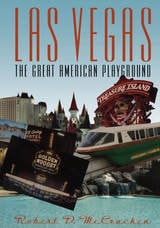
Las Vegas
The Great American PlaygroundRobert D. Mccracken
University of Nevada Press, 1996
Las Vegas: The Great American Playground, illustrated with many fine historical photographs, traces the city’s history from its first Native American occupants more than 10,000 years ago to its present status as a premier tourist destination. It is the story of a group of colorful, enterprising individuals who made the desert bloom with undreamed-of possibilities.
Leavetakings
EssaysCorinna Cook
University of Alaska Press, 2020
Letters From Alaska
John Muir
University of Alaska Press, 2009
John Muir (1838–1914), founder of the Sierra Club, was one of the most famous and influential environmental conservationists of all time. From 1879 to 1880 Muir traveled the waters of southeastern Alaska in a Tlingit Indian dugout canoe and reported his encounters in a series of letters published in the San Francisco Daily Evening Bulletin. Collected here are Muir’s original letters, bearing the immediacy and candor of his best work and providing a rare account of southeastern Alaska history, alongside breathtaking observations of glaciers and the untamed landscape. Through Muir we encounter gold miners, rogue towns, Taku Inlet, Glacier Bay, profiles of Tlingit Indians, and the infancy of the tourist industry. This collection of work by one of America’s foremost naturalists provides a magnificent look into early conservationist thought and one individual’s encounter with nature.

Letters from Clara
One Intrepid Woman's Travels on the Eve of War, 1936-1939Janet Newman
Wisconsin Historical Society Press, 2022

Letters from Togo
Susan Blake
University of Iowa Press, 1991
With her delightful prose and insight for detail Blake introduces us to Mahouna, her housekeeper, who runs a cold drink business from his refrigerator in a country where electricity is unreliable; to American Lee Ann and her Togolese family, who works at the American school to earn the fees for a private education for her children; and to the suave René, wearing silk shirts and a most seductive smile, who teeters on the edge of the Togolese and expatriate worlds.
Since Lomé is both an overgrown village and a cosmopolitan city, Blake's exhilarating, often humorous experiences range from buying a car to attending a traditional tom-tom funeral, from visiting people who hunt with bows and arrows to enduring faculty meetings, from negotiating the politics of buying produce to lecturing on Afro-American literature at the English Club. Together, her enlivening letters trace the pattern of adjusting to a foreign environment and probe the connections between Africa and this curious, energetic American. Not "out of Africa" but within it, they take advantage of time and perspective to penetrate the universal experience of being a stranger in a strange land.
Life Under the Palms
The Sublime World of the Anti-colonialist Jacob HaafnerPaul van der Velde
National University of Singapore Press, 2019
With the help of generous excerpts from Haafner's own writings, including material newly translated into English, Paul van der Velde tells an affecting story of a young man who made a world for himself along the Coromandel Coast, in Ceylon and Calcutta, but who returned to Europe to live the last years of his life in Amsterdam, suffering an acute nostalgia for Asia. This will be compelling reading for anyone interested in European response to the cultures of Asia.
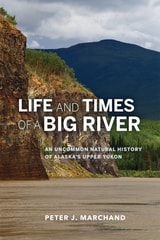
Life and Times of a Big River
An Uncommon Natural History of Alaska's Upper YukonPeter J. Marchand
University of Alaska Press, 2015
Life and Times of a Big River follows Peter J. Marchand and his team of biologists as they set out to explore the land that would ultimately become the Yukon-Charley Rivers National Preserve. Their encounters with strange plants, rare insects, and little-known mammals bring to life a land once thought to be static and monotonous. And their struggles to navigate and adapt to an unforgiving environment capture the rigorous demands of remote field work. Weaving in and out of Marchand's narrative is an account of the natural and cultural history of the area as it relates to the expedition and the region’s Native peoples. Life and Times of a Big River chorincles this riveting, one-of-a-kind journey of uncertainty and discovery from a disparate (and at one point desperate) group of biologists.
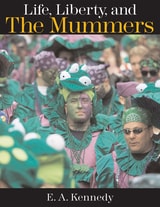
Life, Liberty, and the Mummers
Ed Kennedy
Temple University Press, 2007
Noted photographer E. A. Kennedy spent four years documenting the Mummers and their parade. He has personally selected the striking images included here -- more than 150 in all -- and he has written an engaging history of the parade itself. As Kennedy explains, and as his photos make clear, "mummery" is a way of life for Mummers, who have deep attachments to their clubs, associations, and brigades.
For all its glitz, the Mummers Parade remains a folk parade. This is the captivating story of the folks behind the parade.
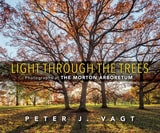
Light Through the Trees
Photographs at The Morton ArboretumPeter J. Vagt
University of Illinois Press, 2022
“I don’t compose pictures, I find them in the colors, patterns, and shadows of the trees in front of me. While I walk, I let my feelings well up in my consciousness. My feelings guide me to find what I’m seeing and feeling and distill it into a picture.”
A beloved and popular Illinois institution, The Morton Arboretum welcomes one million annual visitors to walk its trails and view the 4,200 tree species on the grounds. Peter Vagt has photographed the Arboretum for over twenty years. This collection showcases eighty-five of his favorite works, each one in full color. Vagt's close attention to place and time reflects both his profound connection to the Arboretum and its preeminence as a sanctuary for anyone in search of transcendence in nature.
A celebration of The Morton Arboretum in its centenary year, Light Through the Trees is the perfect keepsake or gift for anyone who admires trees and believes in their restorative power.
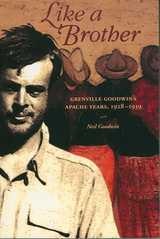
Like a Brother
Grenville Goodwin’s Apache Years, 1928-1939Neil Goodwin
University of Arizona Press, 2004
Assembled by Goodwin's son Neil, who never knew his father, these writings are gathered in thematic chapters that extend Neil Goodwin's earlier work, The Apache Diaries, and shed light on Grenville Goodwin's deepening understanding of the Apache people and their culture, and of the wrenching problems which reservation life forced on them. In two of the chapters Neil tells how he retraced his father's search for the Sierra Madre Apache, re-discovering abandoned Apache campsites and conveying even more personally than his father's diaries what was for both father and son the adventure of a lifetime. Other chapters trace Goodwin's interest in children of the Sierra Madre Apaches who were captured in Mexican raids on these camps during the early decades of the twentieth century. The full stories of the lives of three of these children are for the first time pieced together from newly gathered research.
Grenville was quiet, self-effacing and rarely revealed his inner life, but one chapter affords a closer look: a portrait of his marriage to Neil's mother, Jan. Her diary entries, juxtaposed with her vivid poetry and her paintings and drawings, illuminate her relationship with Grenville and throw his elusive personality into deeper relief than his own writings do. Here too are letters from Goodwin's Apache friends that paint a powerful and poignant portrait of their daily lives and of their relationship with him. Goodwin's daily diary excerpts relate his own experiences on the San Carlos Apache reservation from 1928 to 1936: what was happening at the store, how the cattle were doing, who was in jail, and thousands of other details that give readers a sharp sense of what the reservation was like in the 1930s. As these writings also show, Goodwin was powerfully drawn to Apache spirituality and became steeped in their sacred knowledge. His simple description of a day in the life of an Apache family captures the expression of this spirituality in the rhythms of everyday life, whether greeting the rising sun, curing an injury, plowing the earth, or simply being good to one's family.
More than half a century after his death, Grenville Goodwin continues to be regarded as one of the most enigmatic and romantic figures in American anthropology. Like a Brother gives us a fuller understanding of the man and his work as it broadens our knowledge of Apache history and culture.
Lincoln in Indiana
Brian R. Dirck
Southern Illinois University Press, 2017
Lincoln in Indiana tells the story of Lincoln’s life in Indiana, from his family’s arrival to their departure. Dirck explains the Lincoln family’s ancestry and how they and their relatives came to settle near Pigeon Creek. He shows how frontier families like the Lincolns created complex farms out of wooded areas, fashioned rough livelihoods, and developed tight-knit communities in the unforgiving Indiana wilderness. With evocative prose, he describes the youthful Lincoln’s relationship with members of his immediate and extended family. Dirck illuminates Thomas Lincoln by setting him into his era, revealing the concept of frontier manhood, and showing the increasingly strained relationship between father and son. He illustrates how pioneer women faced difficulties as he explores Nancy Lincoln’s work and her death from milk sickness; how Lincoln’s stepmother, Sarah Bush, fit into the family; and how Lincoln’s sister died in childbirth. Dirck examines Abraham’s education and reading habits, showing how a farming community could see him as lazy for preferring book learning over farmwork. While explaining how he was both similar to and different from his peers, Dirck includes stories of Lincoln’s occasional rash behavior toward those who offended him. As Lincoln grew up, his ambitions led him away from the family farm, and Dirck tells how Lincoln chafed at his father’s restrictions, why the Lincolns decided to leave Indiana in 1830, and how Lincoln eventually broke away from his family.
In a triumph of research, Dirck cuts through the myths about Lincoln’s early life, and along the way he explores the social, cultural, and economic issues of early nineteenth-century Indiana. The result is a realistic portrait of the youthful Lincoln set against the backdrop of American frontier culture.
Lisu
Far from the RulerMichele Zack
University Press of Colorado, 2017
This book brings the ironic worldview of the Lisu to life through vivid, often amusing accounts of individuals, communities, regions, and practices. One of the smallest and last groups of stateless people, and the most egalitarian of all Southeast Asian highland minorities, the Lisu have not only survived extremes at the crossroads of civil wars, the drug trade, and state-sponsored oppression but adapted to modern politics and technology without losing their identity.
The Lisu weaves a lively narrative that condenses humanity’s transition from border-free tribal groupings into today’s nation-states and global market economy. Journalist and historian Michele Zack first encountered the Lisu in the 1980s and conducted research and fieldwork among them in the 1990s. In 2014 she again traveled extensively in tribal areas of Thailand, Myanmar, and China, when she documented the transformative changes of globalization. Some Lisu have adopted successful new urban occupations in business and politics, while most continue to live as agriculturists “far from the ruler.”
The cohesiveness of Lisu culture has always been mysterious—they reject hierarchical political organization and traditionally had no writing system—yet their culture provides a particular skillset that has helped them navigate the terrain of the different religious and political systems they have recently joined. They’ve made the transition from living in lawless, self-governing highland peripheries to becoming residents and citizens of nation-states in a single generation.
Ambitious and written with journalist’s eye for detail and storytelling, The Lisu introduces the unique and fascinating culture of this small Southeast Asian minority. Their path to national and global citizenship illustrates the trade-offs all modern people have made, and their egalitarian culture provides insight into current political choices in a world turning toward authoritarianism.
Literary Celebrity, Gender, and Victorian Authorship, 1850-1914
Alexis Easley
University of Delaware Press, 2011
This study examines literary celebrity in Britain from 1850 to 1914. Through lively analysis of rare cultural materials, Easley demonstrates the crucial role of the celebrity author in the formation of British national identity. As Victorians toured the homes and haunts of famous writers, they developed a sense of shared national heritage. At the same time, by reading sensational accounts of writers’ lives, they were able to reconsider conventional gender roles and domestic arrangements. As women were featured in interviews and profiles, they were increasingly associated with the ephemerality of the popular press and were often excluded from emerging narratives of British literary history, which defined great literature as having a timeless appeal. Nevertheless, women writers were able to capitalize on celebrity media as a way of furthering their own careers and retelling history on their own terms. Press attention had a more positive effect on men’s literary careers since they were expected to assume public identities; however, in some cases, media exposure had the effect of sensationalizing their lives, bodies, and careers. With the development of proto-feminist criticism and historiography, the life stories of male writers were increasingly used to expose unhealthy domestic relationships and imagine ideal forms of British masculinity.
The first section of Literary Celebrity explores the practice of literary tourism in Victorian Britain, focusing specifically on the homes and haunts of Charles Dickens, Christina Rossetti, George Eliot, Elizabeth Barrett Browning, and Harriet Martineau. This investigation incorporates analysis of fascinating cultural texts, including maps, periodicals, and tourist guidebooks. Easley links the practice of literary tourism to a variety of cultural developments, including nationalism, urbanization, spiritualism, the women’s movement, and the expansion of popular print culture. The second section provides fresh insight into the ways that celebrity culture informed the development of Victorian historiography. Easley demonstrates how women were able to re-tell history from a proto-feminist perspective by writing contemporary history, participating in architectural reform movements, and becoming active in literary societies. In this chapter she returns to the work of Harriet Martineau and introduces a variety of lesser-known contributors to the field, including Mary Gillies and Mary Ward. Literary Celebrity concludes with a third section focused on the expansion of celebrity media at the fin de siècle. These chapters and a brief coda link the popularization of celebrity news to the de-canonization of women writers, the professionalization of medicine, the development of the open space movement, and the institutionalization of English studies. These investigations elucidate the role of celebrity media in the careers of Charlotte Robinson, Marie Corelli, Mary Braddon, Harriet Martineau, Thomas Carlyle, Ernest Hart, and Octavia Hill.
Published by University of Delaware Press. Distributed worldwide by Rutgers University Press.

Living Medjugorje
Saverio Gaeta
St. Augustine's Press, 2025
What is happening in Medjugorje and why do hundreds of thousands of people visit each year? In June of 1981, the Blessed Virgin Mary, Mother of God, began appearing to six young people with messages above all of peace and conversion. She calls herself the "Queen of Peace," and these apparitions have continued to this day. First coming to the children in the rocky hills outside the small city ravaged by war and Communism, throngs of pilgrims walk the unfriendly trails to the original spot every day of the year and often with bare feet. The miracles and spiritual experiences attributed to this place are impossible to count.
The pilgrimage to Rome is historical and deeply woven into the custom of piety and devotion in the Catholic Church. But for the post-modern world, Medjugorje is the pre-eminent 'destination' for all people seeking to encounter God, especially those who have fallen away or have no religious affiliation. The Jubilee Year will bring many more to Medjugorje and Saverio Gaeta's guidebook provides a necessary service of how to do it and what to do while one is there. The introduction to the English edition is provided by the official chaplain to English-speaking pilgrims, Leon Pereira.
There are over 200 color photographs and graphs.
Living the Jubilee
Saverio Gaeta
St. Augustine's Press, 2025
Saverio Gaeta provides a concise and insightful history of Jubilee celebrations, tracing the custom to biblical norms and following developments up to present day. Jubilees are joyous remembrances of God's consistent paternal intervention in human life, and a time to acknowledge a common orientation toward the encounter with his Son, Jesus Christ, who brings salvation and life in the Trinity.
Living the Jubilee is indispensable for the reader who wishes to embark on a journey of faith, to live as a pilgrim and not tourist in this life. Gaeta inspires everyone to partake of the Jubilee celebrations. He also provides everything a traveler to Rome needs to know to make this trip––public transportation routes, event schedules, how one acquires the Vatican-issued pilgrim card and tickets needed to attend many of these events, plus much more. Even if readers do not make the voyage to Rome, Gaeta's account of the Jubilee in the Catholic Church is a wondrous display of thousands of years of tradition and history that has never lost a sense of joy and gratitude for the God who remains among us. It is a remarkable keepsake and helpful even for Jubilee celebrations in parishes and local communities.

Living with Earthquakes in the Pacific Northwest
Robert S. Yeats
Oregon State University Press, 1998
Living with the Puerto Rico Shore
David M. Bush, Richard M. T. Webb, José González Liboy, Lisbeth Hyman, and William J. Neal
Duke University Press, 1995
The book provides detailed descriptions of the entire shoreline, noting the specific coastal hazards of each coastal reach. These hazards include coastal erosion, storm surge flooding, and potential damage from earthquakes. Where high-density development or significant roads and utilities are particularly at risk, these are also noted. The effects that sand mining, seawalls, jetties, and other attempts at coastal engineering have had on the island are examined. Finally, the authors discuss historical and legal aspects of coastal planning in Puerto Rico, presenting guidelines for selecting building sites.
Of interest to all concerned with protecting our shores and beaches and useful to the coastal planner and manager, Living With the Puerto Rico Shore contains an extensive bibliography and a list of agencies involved in coastal issues.
Local Vino
The Winery Boom in the HeartlandJames R. Pennell
University of Illinois Press, 2016
In Local Vino, James R. Pennell tracks among the hardy vines and heartland terroir of wineries across Illinois, Iowa, Indiana, and Ohio. Blending history and observation, Pennell gives us a top-down view of the business from cuttings and cultivation to sales and marketing. He also invites entrepreneurs to share stories of their ambitions, hard work, and strategies. Together, author and subjects trace the hows and whys of progress toward that noblest of goals: a great vintage that puts their winery on the map.
London Fragments
A Literary ExpeditionRüdiger Görner
Haus Publishing, 2007
Long Way Round
Through the Heartland by RiverJohn Hildebrand
University of Wisconsin Press, 2022
Wisconsin is in the midst of an identity crisis, torn by new political divisions and the old gulf between city and countryside. Cobbling rivers together, from the burly Mississippi to the slender wilds of Tyler Forks, Hildebrand navigates the beautiful but complicated territory of home. In once prosperous small towns, he discovers unsung heroes—lockmasters, river rats, hotelkeepers, mechanics, environmentalists, tribal leaders, and perennial mayors—struggling to keep their communities afloat.
While history doesn't flow in a circle, it doesn't always move in a straight line either. Hildebrand charts the improbable ox-bows along its course. Long Way Round shows us the open road as a river with possibility around the next bend.
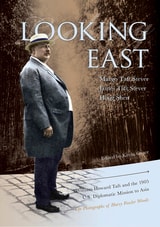
Looking East
William Howard Taft and the 1905 U.S. Diplomatic Mission to Asia: the Photographs of Harry Fowler WoodsMargo Taft Stever, James Taft Stever, and Hong Shen
University of Minnesota Press, 2015
Since the mid-19th century, relations between the United States in the West and Asian countries in the East have been an aggregate of diplomatic miscues and achievements, of trade policy successes and failures, and of cultural chasms and bridges. From the Treaty of Wangxia in 1844 that provided America with trading rights in China on a par with European countries to the contemporary political debates and educational partnerships in nations like Japan, Vietnam, India, and China, the element of understanding and appreciating differences has been paramount.
A singular event in this heritage of almost 150 years in the 1905 mission that sent William Howard Taft on a combination trade and culture junket to Asian countries. Occurring just a few years after U.S. Secretary of State's John Hay's 1899 Open Door Note that sought to keep China open to equitable trade with all countries, the Taft delegation primarily visited China, Japan, and the Philippines to shore up America's interests and to learn more about their emerging partners in the new century.
In Looking East, authors Margo Taft Stever, James Taft Stever, and Hong Shen explore this journey not only by an assiduous use of archives and historical analyses, but especially through the extraordinary images captured by photographer Harry Fowler Woods. Both Taft and Woods are ancestors of two of the authors so there is a particular interest on their part. With scholar Shen, they uncovered these photos and created exhibitions and published the initial Chinese-language edition of this volume by Zhejiang University Press in 2012. In this new, English-language edition, William Howard Taft's 1905 endeavors in Asia are freshly accorded the insight and appreciation they deserve in American diplomatic history.
Looking for America on the New Jersey Turnpike
Gillespie, Angus K
Rutgers University Press, 1992

Looking for America on the New Jersey Turnpike, Second Edition
Angus Kress Gillespie
Rutgers University Press, 2024
When Angus Gillespie and Michael Rockland wrote Looking for America on the New Jersey Turnpike in 1989, they simply wanted to express their fascination with a road that many commuters regarded with annoyance or indifference. Little did they expect that it would be hailed as a classic, listed by the state library alongside works by Whitman and Fitzgerald as one of the ten best books ever written about New Jersey or by a New Jerseyan.
Now Looking for America on the New Jersey Turnpike is back in a special updated and expanded edition, examining how this great American motorway has changed over the past thirty-five years. You’ll learn how the turnpike has become an icon inspiring singers and poets. And you’ll meet the many people it has affected, including the homeowners displaced by its construction, the highway patrol and toll-takers who work on it, and the drivers who speed down its lanes every day.
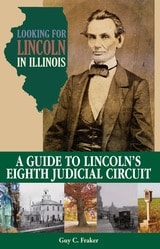
Looking for Lincoln in Illinois
A Guide to Lincoln's Eighth Judicial CircuitGuy C. Fraker
Southern Illinois University Press, 2017
For twenty-three years Abraham Lincoln practiced law on the Eighth Judicial Circuit in east central Illinois, and his legal career is explored in Looking for Lincoln in Illinois: A Guide to Lincoln’s Eighth Judicial Circuit. Guy C. Fraker directs readers and travelers through the prairies to the towns Lincoln visited regularly. Twice a year, spring and fall, Lincoln’s work took him on a journey covering more than four hundred miles. As his stature as a lawyer grew, east central Illinois grew in population and influence, and the Circuit provided Lincoln with clients, friends, and associates who became part of the network that ultimately elevated him to the presidency.
This guidebook to the Circuit features Illinois courthouses, Looking for Lincoln Wayside Exhibits, and other Lincoln points of interest. Fraker guides travelers down the long stretches of quiet country roads that gave Lincoln time to read and think to the locations where Lincoln’s broad range of cases expanded his sense of the economic and social forces changing America.
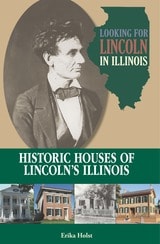
Looking for Lincoln in Illinois
Historic Houses of Lincoln’s IllinoisErika Holst
Southern Illinois University Press, 2018
This richly illustrated compendium of twenty-two historic buildings in the Abraham Lincoln National Heritage Area includes houses, a hotel, and an art center, all of which are open to the public. Each site links today’s visitors with a place Lincoln lived, a home of a Lincoln friend or colleague, or a spot that illuminates Lincoln’s era and legacy in central Illinois. Along with dozens of modern and historical photographs, entries contain explorations of historical connections to Lincoln and detailed information about exceptional features and artifacts. Complete with maps, this showcase of Illinois heritage is a handy guide for day trips, extended tours, or armchair adventures.
Looking for Lincoln in Illinois
Lincoln and Mormon CountryBryon C. Andreasen
Southern Illinois University Press, 2015
Although they inhabited different political, social, and cultural arenas, Abraham Lincoln and the pioneer generation of Latter-day Saints, or Mormons, shared the same nineteenth-century world. Bryon C. Andreasen’s Looking for Lincoln in Illinois: Lincoln and Mormon Country relates more than thirty fascinating and surprising stories that show how the lives of Lincoln and the Mormons intersected.
This richly illustrated and carefully researched book expands on some of the storyboards found on the Looking for Lincoln Story Trail, from the Mormon capital of Nauvoo to the state capital of Springfield. Created by the Looking for Lincoln Heritage Coalition, this trail consists of wayside exhibits posted in sites of significance to Lincoln’s life and career across fifty-two communities in Illinois. The book’s keyed maps, historic photos, and descriptions of battles, Mormon expeditions, and events at inns, federal buildings, and even Lincoln’s first Illinois log cabin connect the stories to their physical locations.
Exploring the intriguing question of whether Lincoln and Mormon founder Joseph Smith ever met, the book reveals that they traveled the same routes and likely stayed at the same inns. The book also includes colorful and engaging looks at key figures such as Brigham Young, various Mormon apostles, and more. Anyone inspired by Lincoln, as well as Mormon and Illinois history enthusiasts, will appreciate this look back at a long-past, but not forgotten, landscape.
Looping Detroit
A People Mover TravelogueNick Tobier
Michigan Publishing Services, 2016
Looping Detroit invites artists and writers to ride the small loop as an explorer, mining the environs around each station as a poetic ramble, a psycho geographic wander, a cultural inquiry that simultaneously ponders the poetics of circulating above the city streets while probing the greater narrative of Detroit’s public transit conundrum.
Contributors include award-winning Detroit novelists Lolita Hernandez and Michael Zardoorian, poets Gloria House and Walter Lacy, music producer Cornelius Harris, Chace MicWrite Morris, frontman of the Detroit hip-hop trio Coldmen Young, and radio producer Zak Rosen.
Lost Among the Baining
Adventure, Marriage, and Other FieldworkGail Pool
University of Missouri Press, 2015
In the late sixties, Gail Pool and her husband set off for an adventure in New Guinea. He was a graduate student in anthropology; she was an aspiring writer. They prepared, as academics do, by reading, practicing with language tapes, consulting with the nearest thing to experts, and then, excited and optimistic, off they went. But all their research could not prepare them for the reality of life in the jungle. As they warded off gargantuan insects, slogged through seemingly endless mud, and turned on each other in fatigue and frustration, they struggled to somehow connect with their enigmatic hosts, the Baining—a people who showed no desire to be studied.
Sixteen months later they returned home. Despite months of trying, they had not been able to make sense of the Baining’s culture. Worse yet, their lives no longer seemed to make sense. Pool put her journals away. Her husband abandoned the study of anthropology.
Decades later, Pool returned to her journals and found in her jumbled notes the understanding that had eluded her twenty-three–year-old self. Finally, she and her husband returned to New Guinea for a shorter visit and a warm reunion with the tribe that challenged them on so many levels and, Pool now realized, made their journey and lives deeper and richer.
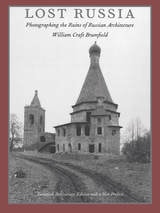
Lost Russia
Photographing the Ruins of Russian ArchitectureWilliam Craft Brumfield
Duke University Press, 1995
The twentieth century in Russia has been a cataclysm of rare proportions, as war, revolution, famine, and massive political terror tested the limits of human endurance. The results of this assault on Russian culture are particularly evident in ruined architectural monuments, some of which are little known even within Russia itself. Over the past four decades William Craft Brumfield, noted historian and photographer of Russian architecture, has traveled throughout Russia and photographed many of these neglected, lost buildings, poignant and haunting in their ruin. Lost Russia provides a unique view of Brumfield’s acclaimed work, which illuminates Russian culture as reflected in these remnants of its distinctive architectural traditions.
Capturing the quiet, ineffable beauty that graces these buildings, these photographs are accompanied by a text that provides not only a brief historical background for Russian architecture, but also Brumfield’s personal impressions, thoughts, and insights on the structures he views. Churches and monasteries from the fifteenth to the twentieth century as well as abandoned, ruined manor houses are shown—ravaged by time, willful neglect, and cultural vandalism. Brumfield also illustrates examples of recent local initiatives to preserve cultural landmarks from steady decline and destruction.
Concluding with photographs of the remarkable log architecture found in Russia’s far north, Lost Russia is a book for all those concerned with the nation’s cultural legacy, history, and architecture, and with historic and cultural preservation generally. It will also interest those who appreciate the fine art of exceptional photography.
Lost in the Yellowstone
"Thirty-Seven Days of Peril" and a Handwritten Account of Being LostTruman Everts; Edited by Lee H. Whittlesey
University of Utah Press, 2015
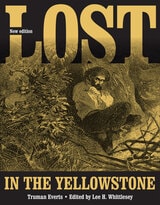
In 1870, Truman Everts visited what would two years later become Yellowstone National Park, traveling with an exploration party intent on mapping and investigating that mysterious region. Scattered reports of a mostly unexplored wilderness filled with natural wonders had caught the public’s attention and the fifty-four-year-old Everts, near-sighted and an inexperienced woodsman, had determined to join the expedition. He was soon separated from the rest of the party and from his horse, setting him on a grueling quest for survival. For over a month he wandered Yellowstone alone and injured, with little food, clothing, or other equipment. In “Thirty-seven Days of Peril” he recounted his experiences for the readers of Scribner’s Monthly.
In June 1996, Everts’s granddaughter arrived at Mammoth Hot Springs in Yellowstone National Park to meet with park archivist Lee Whittlesey. She brought two documents that her father had kept hidden and both were handwritten by Everts. One was a brief autobiography that gave new insight into his early life. The other was a never-published alternative account of his confused 1870 journey through Yellowstone. Both have been added to this volume, further enhancing Everts’s unlikely tale of survival.
Love of Country
A Journey through the HebridesMadeleine Bunting
University of Chicago Press, 2017
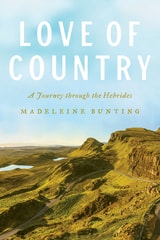
After years of hearing about Scotland as a place deeply interwoven with the story of her family, Madeleine Bunting was driven to see for herself this place so symbolic and full of history. Most people travel in search of the unfamiliar, to leave behind the comfort of what’s known to explore some suitably far-flung corner of the globe. From the first pages, it’s clear that Madeleine Bunting’s Love of Country marks a different kind of journey—one where all paths lead to a closer understanding of home, but a home bigger than Bunting’s corner of Britain, the drizzly, busy streets of London with their scream of sirens and high-rise developments crowding the sky. Over six years, Bunting returned again and again to the Hebrides, fascinated by the question of what it means to belong there, a question that on these islands has been fraught with tenacious resistance and sometimes tragedy. With great sensitivity, she takes readers through the Hebrides’ history of dispossession and displacement, a history that can be understand only in the context of Britain’s imperial past, and she shows how the Hebrides have been repeatedly used to define and imagine Britain. In recent years, the relationship between Britain and Scotland has been subject to its most testing scrutiny, and Bunting’s travels became a way to reflect on what might be lost and what new possibilities might lie ahead.
For all who have wondered how it might feel to stand face-out at the edge of home, Love of Country is a revelatory journey through one of the world’s most remote, beautiful landscapes that encourages us to think of the many identities we wear as we walk our paths, and how it is possible to belong to many places while at the same time not wholly belonging to any.
Love
A Philadelphia AffairBeth Kephart
Temple University Press, 2017
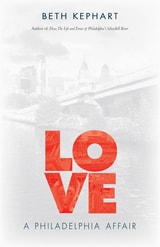
Philadelphia has been at the heart of many books by award-winning author Beth Kephart, but none more so than the affectionate collection Love. This volume of personal essays and photographs celebrates the intersection of memory and place. Kephart writes lovingly, reflectively about what Philadelphia means to her. She muses about meandering on SEPTA trains, spending hours among the armor in the Philadelphia Museum of Art, and taking shelter at Independence Mall during a downpour.
In Love, Kephart shares her loveof Reading Terminal Market at Thanksgiving: “This abundant, bristling market is, in November, the most unlonesome place around.” She waxes poetic about the shoulder-to-shoulder crowds, the mustard in a Salumeria sandwich, and the “coins slipped between the lips of Philbert the pig.”
Kephart also extends her journeys to the suburbs, Glenside and Ardmore—and beyond, to Lancaster County, Pennsylvania; Stone Harbor, New Jersey; and Wilmington, Delaware. What emerges is a valentine to the City of Brotherly Love and its environs. In Love, Philadelphia is “more than its icons, bigger than its tagline.”

Lunch With a Bigot
The Writer in the WorldAmitava Kumar
Duke University Press, 2015
Lustron Stories
Charles Mintz
The Ohio State University Press, 2016
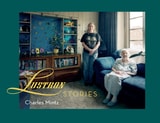
A remarkable cross section of individuals and families live in these modest (~1100 sq. ft.) homes. While certainly diverse in age and place in life, the homeowners are still firmly working class. Everyone who lives in a Lustron home has an opinion about it. The material is miserable to cut or drill into. Repairs are more about metalworking and enamel finishing than carpentry or house painting. And magnets tend to be a popular solution for hanging objects inside and outside the steel walls.
Four years ago, Charles Mintz set out to photograph the people living in these homes. The residents, owners, or both were photographed outside and occasionally inside. Mintz used a large format wooden camera and available light. This book features 65 of the resulting photographs and essays from Shannon Thomas Perich, Curator of the Photographic History Collection at Smithsonian’s National Museum of American History, and Jeffrey Head, author and architecture critic.