141 books match the query 'Twentieth Century' and 5 start with l
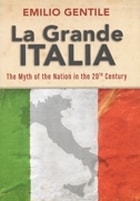
cover of La Grande Italia: The Rise and Fall of the Myth of the Nation in the Twentieth Century

La Grande Italia

The Rise and Fall of the Myth of the Nation in the Twentieth Century

Emilio Gentile

University of Wisconsin Press, 2008

La Grande Italia traces the history of the myth of the nation in Italy along the curve of its rise and fall throughout the twentieth century. Starting with the festivities for the fiftieth anniversary of the unification of Italy in 1911 and ending with the centennial celebrations of 1961, Emilio Gentile describes a dense sequence of events: from victorious Italian participation in World War I through the rise and triumph of Fascism to Italy’s transition to a republic.
    Gentile’s definition of “Italians” encompasses the whole range of political, cultural, and social actors: Liberals and Catholics, Monarchists and Republicans, Fascists and Socialists. La Grande Italia presents a sweeping study of the development of Italian national identity in all its incarnations throughout the twentieth century. This important contribution to the study of modern Italian nationalism and the ambition to achieve a “great Italy” between the unification of Italy and the advent of the Italian Republic will appeal to anyone interested in modern European history, Fascism, and nationalism.

Best Books for Special Interests, selected by the American Association of School Librarians, and Best Books for Regional General Interests, selected by the Public Library Association
[more]
cover of Lies, Passions, and Illusions: The Democratic Imagination in the Twentieth Century

Lies, Passions, and Illusions

The Democratic Imagination in the Twentieth Century

François Furet

University of Chicago Press, 2014

François Furet needs little introduction. Widely considered one of the leading historians of the French Revolution, he was a maverick for his time, shining a critical light on the entrenched Marxist interpretations that prevailed during the mid-twentieth century. Shortly after his death in 1997, the New York Review of Books called him “one of the most influential men in contemporary France.” Lies, Passions, and Illusions is a fitting capstone to this celebrated author’s oeuvre: a late-career conversation with philosopher Paul Ricoeur on the twentieth century writ large, a century of violence and turmoil, of unprecedented wealth and progress, in which history advanced, for better or worse, in quantum leaps.
           
This conversation would be, sadly, Furet’s last—he died while Ricoeur was completing his edits. Ricoeur did not want to publish his half without Furet’s approval, so what remains is Furet’s alone, an astonishingly cohesive meditation on the political passions of the twentieth century. With strokes at once broad and incisive, he examines the many different trajectories that nations of the West have followed over the past hundred years. It is a dialogue with history as it happened but also as a form of thought. It is a dialogue with his critics, with himself, and with those major thinkers—from Tocqueville to Hannah Arendt—whose ideas have shaped our understanding of the tragic dramas and upheavals of the modern era. It is a testament to the crucial role of the historian, a reflection on how history is made and lived, and how the imagination is a catalyst for political change. Whether new to Furet or deeply familiar with his work, readers will find thought-provoking assessments on every page, a deeply moving look back at one of the most tumultuous periods of history and how we might learn and look forward from it. 
 
 
[more]
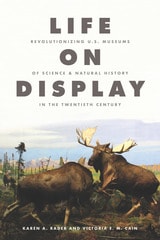
cover of Life on Display: Revolutionizing U.S. Museums of Science and Natural History in the Twentieth Century

Life on Display

Revolutionizing U.S. Museums of Science and Natural History in the Twentieth Century

Karen A. Rader and Victoria E. M. Cain

University of Chicago Press, 2014

Rich with archival detail and compelling characters, Life on Display uses the history of biological exhibitions to analyze museums’ shifting roles in twentieth-century American science and society. Karen A. Rader and Victoria E. M. Cain chronicle profound changes in these exhibitions—and the institutions that housed them—between 1910 and 1990, ultimately offering new perspectives on the history of museums, science, and science education.
           
Rader and Cain explain why science and natural history museums began to welcome new audiences between the 1900s and the 1920s and chronicle the turmoil that resulted from the introduction of new kinds of biological displays. They describe how these displays of life changed dramatically once again in the 1930s and 1940s, as museums negotiated changing, often conflicting interests of scientists, educators, and visitors. The authors then reveal how museum staffs, facing intense public and scientific scrutiny, experimented with wildly different definitions of life science and life science education from the 1950s through the 1980s. The book concludes with a discussion of the influence that corporate sponsorship and blockbuster economics wielded over science and natural history museums in the century’s last decades.
           
A vivid, entertaining study of the ways science and natural history museums shaped and were shaped by understandings of science and public education in the twentieth-century United States, Life on Display will appeal to historians, sociologists, and ethnographers of American science and culture, as well as museum practitioners and general readers.         
[more]
cover of Literary Journalism in the Twentieth Century

Literary Journalism in the Twentieth Century

Norman Sims

Northwestern University Press, 2008

This wide-ranging collection of critical essays on literary journalism addresses the shifting border between fiction and non-fiction, literature and journalism.

Literary Journalism in the Twentieth Century addresses general and historical issues, explores questions of authorial intent and the status of the territory between literature and journalism, and offers a case study of Mary McCarthy’s 1953 piece, "Artists in Uniform," a classic of literary journalism.

Sims offers a thought-provoking study of the nature of perception and the truth, as well as issues facing journalism today.
[more]
cover of Looking at Lives: American Longitudinal Studies of the Twentieth Century

Looking at Lives

American Longitudinal Studies of the Twentieth Century

Erin Phelps

Russell Sage Foundation, 2002

The impact of long-term longitudinal studies on the landscape of twentieth century social and behavioral science cannot be overstated. The field of life course studies has grown exponentially since its inception in the 1950s, and now influences methodologies as well as expectations for all academic research. Looking at Lives offers an unprecedented "insider's view" into the intentions, methods, and findings of researchers engaged in some of the 20th century's landmark studies. In this volume, eminent American scholars—many of them pioneers in longitudinal studies—provide frank and illuminating insights into the difficulties and the unique scientific benefits of mounting studies that track people's lives over a long period of time. Looking at Lives includes studies from a range of disciplines, including psychology, sociology, and education, which together cover a span of more than fifty years. The contributors pay particular attention to the changing historical, cultural, and scientific context of their work, as well as the theoretical and methodological changes that have occurred in their fields over decades. What emerges is a clear indication of the often unexpected effects these studies have had on public policies and public opinion—especially as they relate to such issues as the connection between poverty and criminal behavior, or the consequences of teen-age pregnancy and drug use for inner-city youth. For example, David Weikart reveals how his long-term research on preschool intervention projects, begun in 1959, permitted him to show how surprisingly effective preschool education can be in improving the lives of disadvantaged children. In another study, John Laub and Robert Sampson build on findings from a groundbreaking study begun by Sheldon and Eleanor Glueck in the 1950s to reveal the myriad ways in which juvenile delinquency can predict criminal behavior in adults. And Arland Thornton, Ronald Freedman, and William Axinn employ an intergenerational study of women and their children begun in 1962 to examine the substantial relaxation of social mores for family and individual behavior in the latter decades of the 20th century. Looking at Lives is full of striking testimony to the importance of long-term, longitudinal studies. As a unique chronicle of the origins and development of longitudinal studies in America, this collection will be an invaluable aid to 21st century investigators who seek to build on the successes and the experiences of the pioneers in life-course studies.
[more]