Results by title
67 books match the query 'War and society' and 2 start with l
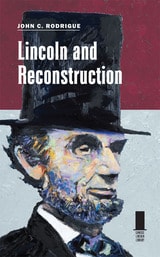
Lincoln and Reconstruction
John C. Rodrigue
Southern Illinois University Press, 2013
Although Abraham Lincoln dominates the literature on the American Civil War, he remains less commonly associated with reconstruction. Previous scholarly works touch on Lincoln and reconstruction, but they tend either to speculate on what Lincoln might have done after the war had he not been assassinated or to approach his reconstruction plans merely as a means of winning the war. In this thought-provoking study, John C. Rodrigue offers a succinct but significant survey of Lincoln’s wartime reconstruction initiatives while providing a fresh interpretation of the president’s plans for postwar America.
Revealing that Lincoln concerned himself with reconstruction from the earliest days of his presidency, Rodrigue details how Lincoln’s initiatives unfolded, especially in the southern states where they were attempted. He explores Lincoln’s approach to various issues relevant to reconstruction, including slavery, race, citizenship, and democracy; his dealings with Congressional Republicans, especially the Radicals; his support for and eventual abandonment of colonization; his dealings with the border states; his handling of the calls for negotiations with the Confederacy as a way of reconstructing the Union; and his move toward emancipation and its implications for his approach to reconstruction.
As the Civil War progressed, Rodrigue shows, Lincoln’s definition of reconstruction transformed from the mere restoration of the seceded states to a more fundamental social, economic, and political reordering of southern society and of the Union itself. Based on Lincoln’s own words and writings as well as an extensive array of secondary literature, Rodrigue traces the evolution of Lincoln’s thinking on reconstruction, providing new insight into a downplayed aspect of his presidency.
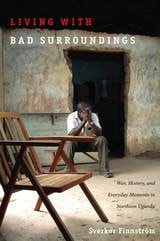
Living with Bad Surroundings
War, History, and Everyday Moments in Northern UgandaSverker Finnström
Duke University Press, 2008
Finnström draws on fieldwork conducted in northern Uganda between 1997 and 2006 to describe how the Acholi—especially the younger generation, those born into the era of civil strife—understand and attempt to control their moral universe and material circumstances. Structuring his argument around indigenous metaphors and images, notably the Acholi concepts of good and bad surroundings, he vividly renders struggles in war and the related ills of impoverishment, sickness, and marginalization. In this rich ethnography, Finnström provides a clear-eyed assessment of the historical, cultural, and political underpinnings of the civil war while maintaining his focus on Acholi efforts to achieve “good surroundings,” viable futures for themselves and their families.