Results by title
8 books match the query 'Apuleius'
Crisis and Conversion in Apuleius' Metamorphoses
Nancy Shumate
University of Michigan Press, 1996
Shumate draws on a wide range of literary and nonliterary representations of conversion in order to establish a useful theoretical framework. The Metamorphoses is exposed as a text anticipating later narratives in its concern with world-building, with the narrator's subjective reality, and with the invocation and critique of religious experience.
Crisis and Conversion in Apuleius' "Metamorphoses" will be of interest to classicists and scholars of Silver Latin and of the increasingly popular ancient novel, as well as to students of psychology and the sociology of religious experience.
Nancy Shumate is Associate Professor of Classical Languages and Literatures, Smith College.
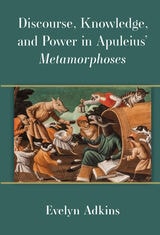
Discourse, Knowledge, and Power in Apuleius’ Metamorphoses
Evelyn Adkins
University of Michigan Press, 2022
In ancient Rome, where literacy was limited and speech was the main medium used to communicate status and identity face-to-face in daily life, an education in rhetoric was a valuable form of cultural capital and a key signifier of elite male identity. To lose the ability to speak would have caused one to be viewed as no longer elite, no longer a man, and perhaps even no longer human. We see such a fantasy horror story played out in the Metamorphoses or The Golden Ass, written by Roman North African author, orator, and philosopher Apuleius of Madauros—the only novel in Latin to survive in its entirety from antiquity. In the novel’s first-person narrative as well as its famous inset tales such as the Tale of Cupid and Psyche, the Metamorphoses is invested in questions of power and powerlessness, truth and knowledge, and communication and interpretation within the pluralistic but hierarchical world of the High Roman Empire (ca. 100–200 CE).
Discourse, Knowledge, and Power presents a new approach to the Metamorphoses: it is the first in-depth investigation of the use of speech and discourse as tools of characterization in Apuleius’ novel. It argues that discourse, broadly defined to include speech, silence, written text, and nonverbal communication, is the primary tool for negotiating identity, status, and power in the Metamorphoses. Although it takes as its starting point the role of discourse in the characterization of literary figures, it contends that the process we see in the Metamorphoses reflects the real world of the second century CE Roman Empire. Previous scholarship on Apuleius’ novel has read it as either a literary puzzle or a source-text for social, philosophical, or religious history. In contrast, this book uses a framework of discourse analysis, an umbrella term for various methods of studying the social political functions of discourse, to bring Latin literary studies into dialogue with Roman rhetoric, social and cultural history, religion, and philosophy as well as approaches to language and power from the fields of sociology, linguistics, and linguistic anthropology. Discourse, Knowledge, and Power argues that a fictional account of a man who becomes an animal has much to tell us not only about ancient Roman society and culture, but also about the dynamics of human and gendered communication, the anxieties of the privileged, and their implications for swiftly shifting configurations of status and power whether in the second or twenty-first centuries.
Identity Crises in Apuleius
The Empire and the Ass in Ancient RomeAshli J. E. Baker
University of Wisconsin Press, 2026
In the second century CE, the multiethnic, multilingual, and religiously diverse Roman Empire grew to its greatest extent. To maintain order, Rome relied heavily on strict social hierarchies, established not only through legal frameworks like citizenship, but also through cultural markers (such as clothing and language) and personal traits (such as educational achievement). Even as Rome grew into one of the world’s most powerful empires, however, its social systems strained under the stresses caused by that very growth, which encouraged cultural interaction, long-distance travel, and social mobility—all of which threatened the hierarchies that underpinned Roman order.
It was during this time that the North African–born, Latin-speaking, Greek-educated Apuleius—whose own background showcases the multiplicity of identities available then to Roman individuals—flourished. He remains one of the ancient world’s best-known authors today, thanks particularly to his famous novel, Metamorphoses, known also as The Golden Ass. Taking a bird’s-eye view of his work, Ashli J. E. Baker proffers a bold new reading of Apuleius, proposing that across his writings there is a consistent focus on the theme of identity and its instability. By placing close readings in conversation with sociocultural and material contexts, she shows that because the structures of Roman power depended on inherently unreliable markers of identity, Apuleius’ work can be read as a biting critique of the fraught relationship between the individual, society, and the state in his contemporary Rome.
Imperial Plato
Albinus, Maximus, Apuleius: Text and Translation, with an Introduction and CommentaryRyan C. Fowler
Parmenides Publishing, 2016
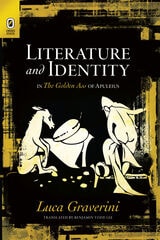
Literature and Identity in The Golden Ass of Apuleius
Luca Graverini
The Ohio State University Press, 2012
Metamorphosis of Language in Apuleius
A Study of Allusion in the NovelEllen D. Finkelpearl
University of Michigan Press, 1998
When Apuleius wrote his Metamorphoses, the novel--indeed the very concept of fiction in prose--was new. This study argues that Apuleius' repeated allusions to earlier Latin authors such as Vergil, Ovid, and Seneca represent an exploration on his part of the relationship between the novel and more established genres of the era. Apuleius' struggle with this tradition, Finkelpearl maintains, parallels the protagonist's move from an acceptance of the dominance of traditional forms to a sense of arrival and self- discovery.
An introductory chapter includes general discussion of the theory and practice of allusion. Finkelpearl then revisits the issues of parody in Apuleius. She also includes discussion of Apuleius' use of Vergil's Sinon, the Charite episode in relation to Apuleius' African origins, and the stepmother episode. Finally a new reading of Isis is offered, which emphasizes her associations with writing and matches the multiformity of the goddess with the novel's many voices.
This book will be of interest to scholars of literature and the origins of the novel, multiculturalism, and classical literature.
Ellen D. Finkelpearl is Associate Professor of Classics at Scripps College, Claremont, California.
The Afterlife of Apuleius
Edited by F. Bistagne, C. Boidin, and R. Mouren
University of London Press, 2020
The volume gathers the proceedings of an international conference held in March 2016 at the Warburg Institute in London, in association with the Institute of Classical Studies. It includes both diachronic overviews and specific case-studies. A first series of papers focuses on The Golden Ass and its historical and geographical diffusion, from High Medieval Europe to early modern Mexico. The oriental connections of the book are also taken into account. The second part of the book examines the textual and visual destiny of Psyche’s story from the Apuleian fabula to allegorical retellings, in poetical or philosophical books and on stage. As the third series of essays indicates, the fortunes of the book led many ancient and early modern writers and translators to use it as a canonical model for reflections about the status of fiction. It also became, mostly around the beginning of the fifteenth century, a major linguistic and stylistic reference for lexicographers and neo-Latin writers. The last papers of the book deal with Renaissance polemics about "‘Apuleianism" and the role of editors and commentators.
This is the sixth and last of the volumes in the series of ‘Afterlives’ of the Classics, which is being produced jointly by the Institute of Classical Studies and the Warburg Institute.
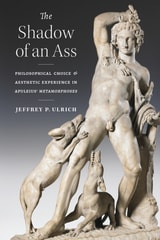
The Shadow of an Ass
Philosophical Choice and Aesthetic Experience in Apuleius' MetamorphosesJeffrey P. Ulrich
University of Michigan Press, 2024
Situating the novel in a long history of philosophical and literary conversations, Ulrich suggests that the Metamorphoses anticipates much of the philosophical burlesque we tend to associate with early modern fiction, from Don Quixote to Lewis Carroll.