Results by title
130 books match the query 'Women's rights' and 7 start with l
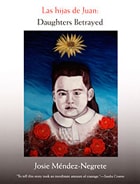
Las hijas de Juan
Daughters BetrayedJosie Méndez-Negrete
Duke University Press, 2006
Méndez-Negrete was born in Mexico, in the state of Zacatecas. She recalls a joyous childhood growing up in the midst of Tabasco, a vibrant town filled with extended family. Her father, though, had dreams of acquiring wealth in el norte. He worked sun-up to sun-down in the fields of south Texas. Returning home to Mexico, his pockets full of dollars, he spent evenings drinking and womanizing.
When Méndez-Negrete was eleven, her father moved the family to the United States, where they eventually settled in California’s Santa Clara Valley. There her father began molesting his daughters, viciously beating them and their mother. Within the impoverished immigrant family, the abuse continued for years, until a family friend brought it to the attention of child welfare authorities. Méndez-Negrete’s father was tried, convicted, and imprisoned.
Las hijas de Juan is told chronologically, from the time Méndez-Negrete was a child until she was a young adult trying, along with the rest of her family, to come to terms with her father’s brutal legacy. It is a harrowing story of abuse and shame compounded by cultural and linguistic isolation and a system of patriarchy that devalues the experiences of women and girls. At the same time, Las hijas de Juan is an inspiring tale, filled with strong women and hard-won solace found in traditional Mexican cooking, songs, and storytelling.
Latin American Women and the Search for Social Justice
Francesca Miller
University Press of New England, 1991
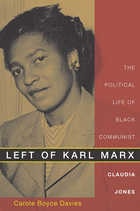
Left of Karl Marx
The Political Life of Black Communist Claudia JonesCarole Boyce Davies
Duke University Press, 2007
Claudia Cumberbatch Jones was born in Trinidad. In 1924, she moved to New York, where she lived for the next thirty years. She was active in the Communist Party from her early twenties onward. A talented writer and speaker, she traveled throughout the United States lecturing and organizing. In the early 1950s, she wrote a well-known column, “Half the World,” for the Daily Worker. As the U.S. government intensified its efforts to prosecute communists, Jones was arrested several times. She served nearly a year in a U.S. prison before being deported and given asylum by Great Britain in 1955. There she founded The West Indian Gazette and Afro-Asian Caribbean News and the Caribbean Carnival, an annual London festival that continues today as the Notting Hill Carnival. Boyce Davies examines Jones’s thought and journalism, her political and community organizing, and poetry that the activist wrote while she was imprisoned. Looking at the contents of the FBI file on Jones, Boyce Davies contrasts Jones’s own narration of her life with the federal government’s. Left of Karl Marx establishes Jones as a significant figure within Caribbean intellectual traditions, black U.S. feminism, and the history of communism.
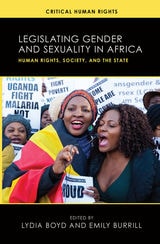
Legislating Gender and Sexuality in Africa
Human Rights, Society, and the StateEdited by Lydia Boyd and Emily Burrill
University of Wisconsin Press, 2020
Legislating Gender and Sexuality in Africa details how legal efforts in the continent can often be moralizing enterprises, illuminating how these processes are closely tied to notions of ethics, personhood, and citizenship. The contributors provide new appraisals of recent events, with fresh arguments about the relationships between local and global fights for rights. This interdisciplinary approach will appeal to scholars in African studies, anthropology, history, and gender studies.

Letters
A Bilingual EditionHortense Mancini
Iter Press, 2025
During the seventeenth century, Hortense Mancini, Duchess of Mazarin (1646–99), became an icon of women’s emancipation. In 1668, she shocked Europe when she fled her coercive husband and began a nomadic exile. Her notoriety increased in 1675 with the publication of her memoir—one of the first to appear in French by a woman—and was later magnified by her stint as the royal mistress of Charles II of England and by her establishment of a freethinking salon in London. As a salonnière, an exile, and a litigant fighting for legal separation from her husband, Mancini’s letters were a means of connection, collusion, and survival as well as cultural collaboration. Collected and translated here for the first time, this correspondence charts her struggle for autonomy in her own words.

Living Between Danger and Love
The Limits of ChoiceJones, Kathleen B.
Rutgers University Press, 1999
Living the Changes
Joan Turner
University of Manitoba Press, 1990