Results by title
991 books match the query 'Writing' and 27 start with l
Labor-Based Grading Contracts
Building Equity and Inclusion in the Compassionate ClassroomAsao B. Inoue
University Press of Colorado, 2023
Labor-Based Grading Contracts
Building Equity and Inclusion in the Compassionate Writing ClassroomAsao B. Inoue
University Press of Colorado, 2019
Language Diversity in the Classroom
From Intention to PracticeEdited by Geneva Smitherman and Victor Villanueva. Foreword by Suresh Canagarajah
Southern Illinois University Press, 2003
It’s no secret that, in most American classrooms, students are expected to master standardized American English and the conventions of Edited American English if they wish to succeed. Language Diversity in the Classroom: From Intention to Practice works to realign these conceptions through a series of provocative yet evenhanded essays that explore the ways we have enacted and continue to enact our beliefs in the integrity of the many languages and Englishes that arise both in the classroom and in professional communities.
Edited by Geneva Smitherman and Victor Villanueva, the collection was motivated by a survey project on language awareness commissioned by the National Council of Teachers of English and the Conference on College Composition and Communication.
All actively involved in supporting diversity in education, the contributors address the major issues inherent in linguistically diverse classrooms: language and racism, language and nationalism, and the challenges in teaching writing while respecting and celebrating students’ own languages. Offering historical and pedagogical perspectives on language awareness and language diversity, the essays reveal the nationalism implicit in the concept of a “standard English,” advocate alternative training and teaching practices for instructors at all levels, and promote the respect and importance of the country’s diverse dialects, languages, and literatures.
Contributors include Geneva Smitherman, Victor Villanueva, Elaine Richardson, Victoria Cliett, Arnetha F. Ball, Rashidah Jammi` Muhammad, Kim Brian Lovejoy, Gail Y. Okawa, Jan Swearingen, and Dave Pruett.
The volume also includes a foreword by Suresh Canagarajah and a substantial bibliography of resources about bilingualism and language diversity.
Language and Power Reader
Representations of Race in a "Post-Racist" EraRobert Eddy
Utah State University Press, 2014
A Language and Power Reader organizes reading and writing activities for undergraduate students, guiding them in the exploration of racism and cross-racial rhetorics.
Introducing texts written from and about versions of English often disrespected by mainstream Americans, A Language and Power Reader highlights English dialects and discourses to provoke discussions of racialized relations in contemporary America. Thirty selected readings in a range of genres and from writers who work in ?alternative? voices (e.g., Pidgin, African American Language, discourse of international and transnational English speakers) focus on disparate power relations based on varieties of racism in America and how those relations might be displayed, imposed, or resisted across multiple rhetorics. The book also directs student participation and discourse. Each reading is followed by comments and guides to help focus conversation.
Research has long shown that increasing a student?s metalinguistic awareness improves a student?s writing. No other reader available at this time explores the idea of multiple rhetorics or encourages their use, making A Language and Power Reader a welcome addition to writing classrooms.
LatinAsian Cartographies
History, Writing, and the National ImaginaryThananopavarn, Susan
Rutgers University Press, 2018
Thananopavarn creates a new “LatinAsian” view of the United States that emphasizes previously suppressed aspects of national history, including imperialism, domestic racism during World War II, Cold War operations in Latin America and Asia, and the politics of borders in an age of globalization. LatinAsian Cartographies ultimately reimagines national narratives in a way that transforms dominant ideas of what it means to be American.
Lazy Virtues
Teaching Writing in the Age of WikipediaRobert E. Cummings
Vanderbilt University Press, 2008
Focusing largely on the controversial website Wikipedia, the author explores the challenges confronting teachers of college writing in the increasingly electronic and networked writing environments their students use every day. Rather than praising or condemning that site for its role as an encyclopedia, Cummings instead sees it as a site for online collaboration between writers and a way to garner audience for student writing.
Applying an understanding of Commons-Based Peer Production theory, as developed by Yochai Benkler, this text is arranged around the following propositions:
-- Commons-Based Peer Production is a novel economic phenomenon which informs our current teaching model and describes a method for making sense of future electronic developments.
-- College writers are motivated to do their best work when they write for an authentic audience, external to the class.
-- Writing for a networked knowledge community invites students to participate in making knowledge, rather than only consuming it.
-- A plan for integrating networked writing for an external audience helps students understand the transition from high school to college writing.
-- Allowing students to review and self-select points of entry into electronic discourse fosters "laziness," or a new work dynamic where writers seek to better understand their own creativity in terms of a project's demands.
Lazy Virtues offers networked writing assignments to foster development of student writers by exposing them to the demands of professional audiences, asking them to identify and assess their own creative impulses in terms of a project's needs, and removing the writing teacher from the role of sole audience.
Learning a Trade
A Craftsman's Notebooks: 1955-1997Reynolds Price
Duke University Press, 1998
Whether Price is reflecting on the rhythm of his day-to-day writing process or ruminating about the central character in what would become, for instance, Kate Vaiden—should she be a woman, what would be her name, why would the story be told in the first person?—he envelops the reader in the task at hand, in the trade being practiced. Instead of personal memoir or a collection of literary fragments, Learning a Trade presents what Price has called the “ongoing minutes” of his effort to learn his craft. Equally enlightening as an overview of a career of developing prominence or as a perspective on the building of individual literary works, this volume not only allows the reader to hear the author’s internal dialogue on the hundreds of questions that must be turned and mulled during the planning and writing of a novel but, in an unplanned way, creates its own compelling narrative.
These notebooks begin in “that distant summer in dazed Eisenhower America,” a month after Price’s graduation from Duke University, and conclude in “the raucous millennial present” with plans for his most recent novel, Roxanna Slade. Revealing the genesis and resolution of such works as The Surface of Earth, The Source of Light, Kate Vaiden, Clear Pictures, and Blue Calhoun, Learning a Trade offers a rich reward to those seeking to enter the guild of writers, as well as those intrigued by the process of the literary life or captured by the work of Reynolds Price.
Learning from the Lived Experiences of Graduate Student Writers
Shannon Madden
Utah State University Press, 2020
Learning from the Lived Experiences of Graduate Student Writers is a timely resource for understanding and resolving some of the issues graduate students face, particularly as higher education begins to pay more critical attention to graduate student success. Offering diverse approaches for assisting this demographic, the book bridges the gap between theory and practice through structured examination of graduate students’ narratives about their development as writers, as well as researched approaches for enabling these students to cultivate their craft.
The first half of the book showcases the voices of graduate student writers themselves, who describe their experiences with graduate school literacy through various social issues like mentorship, access, writing in communities, and belonging in academic programs. Their narratives illuminate how systemic issues significantly affect graduate students from historically oppressed groups. The second half accompanies these stories with proposed solutions informed by empirical findings that provide evidence for new practices and programming for graduate student writers.
Learning from the Lived Experiences of Graduate Student Writers values student experience as an integral part of designing approaches that promote epistemic justice. This text provides a fresh, comprehensive, and essential perspective on graduate writing and communication support that will be useful to administrators and faculty across a range of disciplines and institutional contexts.
Contributors: Noro Andriamanalina, LaKela Atkinson, Daniel V. Bommarito, Elizabeth Brown, Rachael Cayley, Amanda E. Cuellar, Kirsten T. Edwards, Wonderful Faison, Amy Fenstermaker, Jennifer Friend, Beth Godbee, Hope Jackson, Karen Keaton Jackson, Haadi Jafarian, Alexandria Lockett, Shannon Madden, Kendra L. Mitchell, Michelle M. Paquette, Shelley Rodrigo, Julia Romberger, Lisa Russell-Pinson, Jennifer Salvo-Eaton, Richard Sévère, Cecilia D. Shelton, Pamela Strong Simmons, Jasmine Kar Tang, Anna K. Willow Treviño, Maurice Wilson, Anne Zanzucchi
Learning from the Mess
Method/ological Praxis in Rhetoric and Writing StudiesAshley J. Holmes
University Press of Colorado, 2024
Legacy
A Step-By-Step Guide To Writing Personal HistoryLinda Spence
Ohio University Press, 1997
When Linda Spence asked her aging mother to write her life story, her mother stared at a blank sheet of paper and asked—“How? Where do I begin?” In this practical guide to capturing those memories that have been stored away, Linda Spence provides the questions that are the keys to unlocking the memories that make up a life.
Beyond the vital statistics are the personal stories that tell what it was like, what we did, and why we did it, how we feel about our choices, and what our circumstances were. Through encouraging coaching, shared memories, and open-ended questions, the process of producing a personal history becomes intriguing and engaging.
With Legacy the possibilities expand: a personal record is preserved—with its myths, traditions, joys, pains, gains, and losses; a family opens a potential dialogue that will last for generations; the writer has an opportunity for insight and resolution; the culture of a time and place is noted; the tradition of personal story is revitalized, and our present and future find nourishment and knowledge in the past.
Either as a gift that can act as a shared experience as the memories are recounted or as a personal way to take account of one’s experiences, often long since forgotten, Legacy is indeed a way to get one’s story down.
Legal Writing in Plain English, Second Edition
A Text with ExercisesBryan A. Garner
University of Chicago Press, 2013
Accessible and witty, Legal Writing in Plain English draws on real-life writing samples that Garner has gathered through decades of teaching experience. Trenchant advice covers all types of legal materials, from analytical and persuasive writing to legal drafting, and the book’s principles are reinforced by sets of basic, intermediate, and advanced exercises in each section.
In this new edition, Garner preserves the successful structure of the original while adjusting the content to make it even more classroom-friendly. He includes case examples from the past decade and addresses the widespread use of legal documents in electronic formats. His book remains the standard guide for producing the jargon-free language that clients demand and courts reward.
Legal Writing in Plain English, Third Edition
A Text with ExercisesBryan A. Garner
University of Chicago Press, 2023
Admirably clear, concise, down-to-earth, and powerful—all too often, legal writing embodies none of these qualities. Its reputation for obscurity and needless legalese is widespread. Since 2001, Bryan A. Garner’s Legal Writing in Plain English has helped address this problem by providing lawyers, judges, paralegals, law students, and legal scholars with sound advice and practical tools for improving their written work. Now the leading guide to clear writing in the field, this indispensable volume encourages legal writers to challenge conventions and offers valuable insights into the writing process: how to organize ideas, create and refine prose, and improve editing skills.
Accessible and witty, Legal Writing in Plain English draws on real-life writing samples that Garner has gathered through decades of teaching experience. Trenchant advice covers all types of legal materials, from analytical and persuasive writing to legal drafting, and the book’s principles are reinforced by sets of basic, intermediate, and advanced exercises in each section.
For this third edition, Garner has retained the structure of the previous versions, with updates and new material throughout. There are new sections on making your writing vivid and concrete and on using graphics to enhance your argument. The coverage and examples of key topics such as achieving parallelism, avoiding legalese, writing effective openers and summaries, and weaving quotations into your text have also been expanded. And the sample legal documents and exercises have been updated, while newly added checklists provide quick summaries of each section.
Altogether, this new edition will be the most useful yet for legal professionals and students seeking to improve their prose.
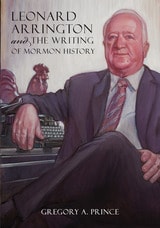
Leonard Arrington and the Writing of Mormon History
Gregory A. Prince
University of Utah Press, 2016
Leonard Arrington is considered by many the foremost twentieth-century historian of Mormonism. He played a key role in establishing the Western History Association and the Mormon History Association, and more than a half-century after its publication, his revised doctoral dissertation, Great Basin Kingdom: An Economic History of the Latter-day Saints 1830-1900, remains a standard. But Arrington’s career was not without controversy. Gregory Prince takes an in-depth look at this respected historian and, in telling Arrington’s story, gives readers insight into the workings of the LDS Church in the late twentieth century.
In 1972, during a major reorganization of the LDS Church, Arrington was asked to serve as the official church historian, thereby becoming the first—and thus far the only—professional historian to hold that title. He immediately set out to professionalize the entire Church History Division and open its extensive archives to scholarly researching. While the output of and from that division moved Mormon studies to a new level, the shift of historiography from faith promotion ecclesiastical, to scholarly and professional research and analysis was unacceptable to a handful of powerful senior apostles. In 1980 the History Division was disassembled and moved to Brigham Young University. That led to a shift in the professionalization of the Church History Division and Archives and in Arrington’s career but not to a loss of his broad influence.
This biography is the first to draw upon the remarkable Arrington diaries (over 20,000 pages); it is supplemented by the author’s interviews of more than 100 people who knew or worked with Arrington. The book is of additional significance given continuing battles between the LDS Church and scholars, which frequently gains national attention because of excommunications of prominent intellectuals.
Winner of the Evans Biography Award and the John Whitmer Historical Association's Brim Biography Book Award.
Life in the Leatherwoods
New EditionJohn Quincy Wolf
University of Arkansas Press, 2000
Originally published by Memphis State University Press in 1974, this new edition includes additional writings of John Q. Wolf and a continuation of the autobiographical narrative after his 1887 move to Batesville. Wolf’s writings are valuable resources for southern historians, folklorists, general readers, and scholars of Ozarkiana because they provide a rare glimpse into the social and family life of a largely misunderstood and stereotyped people—the independent hill farmers of the Arkansas Ozarks of the 1870s and 1880s. With Life in the Leatherwoods, Wolf bestows a benediction upon a society that existed vibrantly and humorously in his memory—one that has now forever disappeared from the American countryside.
Linguistics Of Maya Writing
Soren Wichmann
University of Utah Press, 2004
Linking Literacies
Perspectives on L2 Reading-Writing ConnectionsDiane Belcher and Alan Hirvela, Editors
University of Michigan Press, 2001
Linking Literacies provides the most up to date theoretical overview of the connection between reading and writing in second language acquisition. Belcher and Hirvela have brought together the definitive collection of developments in reading-writing relations research and pedagogy. Papers are organized into these parts:
Ground Practice: Theory, Research, and History
In the Classroom: Teaching Reading as Writing and Writing as Reading
(E)Merging Literacies and the Challenge of Textual Ownership
Technology-Assisted Reading and Writing.
In addition to examining the ways in which L1 influences have affected the development of L2 reading-writing theory and pedagogy, Linking Literacies looks at how L2 reading-writing scholarship has created an identity separate of an L1 framework. Linking Literacies examines a broad range of questions and concerns within the structure of L2 reading-writing connections and L2 academic literacy through discussions of theory, research, and
Listen to the Poet
Writing, Performance, and Community in Youth Spoken Word PoetryWendy R. Williams
University of Massachusetts Press, 2019
Listen to the Poet investigates two Arizona spoken word poetry groups—a community group and a high school club—that are both part of the same youth organization. Exploring the writing lives and poetry of several members, Wendy R. Williams takes readers inside a writing workshop and poetry slam and reveals that schools have much to learn about writing, performance, community, and authorship from groups like these and from youth writers themselves.
Listening to Our Elders
Working and Writing for ChangeSamantha Blackmon, Cristina Kirklighter, and Steve Parks, eds.
Utah State University Press, 2011
In 2011, the National Council of Teachers of English (NCTE) turned one hundred years old. But our profession is endlessly beginning, constantly transforming itself and its purpose as new voices and identities claim their rights in our classrooms and in our country. The recognition of such claims, however, does not occur without a struggle, without collective work.
Listening to our Elders attempts to capture the history of those collective moments where teachers across grade levels and institutions of higher education organized to insure that the voices, heritages, and traditions of their students and colleagues were recognized within our professional organizations as a vital part of our classrooms and our discipline. In doing so, Listening to Our Elders demonstrates this recognition was not always easily given. Instead, whether the issue was race, sexuality, class, or disability, committed activist organizations have often had to push against the existing limits of our field and its organizations to insure a broader sense of common responsibility and humanity was recognized.
Listening to Our Elders features interviews with Malea Powell (Native American Caucus), Joyce Rain Anderson (Native American Caucus), Jeffery Paul Chan (Asian/Asian American), James Hill (Black Caucus), James Dolmage (Committee for Disability Issue in College Composition), Geneva Smitherman (Language Policy Commitee), Carlota Cárdenas de Dwyer (Latino/a Caucus), Victor Villanueva (Latino/a Caucus), Louise Dunlap (Progressive Caucus), Karen Hollis (Progressive Caucus), Louie Crew (Queer Caucus), William Thelin (Working Class Culture and Pedagogy SIG), Bill Macauley (Working Class Culture and Pedagogy SIG).
Listening to People
A Practical Guide to Interviewing, Participant Observation, Data Analysis, and Writing It All UpAnnette Lareau
University of Chicago Press, 2021
In-depth interviews and close observation are essential to the work of social scientists, but inserting one’s researcher-self into the lives of others can be daunting, especially early on. Esteemed sociologist Annette Lareau is here to help. Lareau’s clear, insightful, and personal guide is not your average methods text. It promises to reduce researcher anxiety while illuminating the best methods for first-rate research practice.
As the title of this book suggests, Lareau considers listening to be the core element of interviewing and observation. A researcher must listen to people as she collects data, listen to feedback as she describes what she is learning, listen to the findings of others as they delve into the existing literature on topics, and listen to herself in order to sift and prioritize some aspects of the study over others. By listening in these different ways, researchers will discover connections, reconsider assumptions, catch mistakes, develop and assess new ideas, weigh priorities, ponder new directions, and undertake numerous adjustments—all of which will make their contributions clearer and more valuable.
Accessibly written and full of practical, easy-to-follow guidance, this book will help both novice and experienced researchers to do their very best work. Qualitative research is an inherently uncertain project, but with Lareau’s help, you can alleviate anxiety and focus on success.
Lit from Within
Contemporary Masters on the Art and Craft of WritingKevin Haworth; Dinty W. Moore
Ohio University Press, 2011
Lit to Lit
Composition/Rhetoric and the Literary ArtsEli Goldblatt
Utah State University Press, 2026
Lit to Lit examines the traditional split between the study of literature and composition and rhetoric programs, asking writing studies scholars to think critically and creatively about the role literature can play in the teaching of writing and the field’s conceptions of its own relation to writing. Grounded in diverse experiences and practices, contributors offer provocative but thoughtful analyses of how composition and literature can be brought together in the study and teaching of writing.
Complex forms of writing should not be the sole territory of one subfield or discipline but rather should benefit from multiple perspectives generated by those with keen and abiding interests in writing writ large. Many in the field of composition and rhetoric also have an active engagement in the literary arts, particularly the flowering of literature from diverse cultural experiences in the last decades. What new teaching and learning approaches could emerge from a synthesis of theoretical, literary, rhetorical, poetic, and compositional methods? This question becomes even more compelling when considering how English departments often house programs in journalism and creative writing, allowing robust opportunities for multiple ways of thinking about and studying complex texts.
Lit to Lit makes visible the generative overlap between subfields already present in the broad field of English, pointing to new ways forward that value each area’s separate endeavors while highlighting the possibilities for what could be built together.
Literacy as Involvement
The Acts of Writers, Readers, and TextsDeborah Brandt
Southern Illinois University Press, 1990
In Literacy as Involvement, Deborah Brandt examines the cultural and social roots of the acts of reading and writing. The book asks, for example, whether literacy is a natural growth of or a radical shift from orality. It questions the contrary views that literacy is either the learning of the conventions of language or is better understood as heightened social ability. Finally, it raises the possibility that knowing how to read and write is actually understanding how we respond during the acts of reading and writing.
This examination of literacy as process is also offered as a critique of prevailing theories of literacy advanced by such scholars as Walter J. Ong, S.J., David Olson, and E. D. Hirsch. They depict literacy as a textual experience that is socially and linguistically detached. Brandt critically examines the underlying assumptions from research on writing processes and argues that they call for a major reformation of prevailing conceptions of literacy. Specifically, she analyzes several expository texts from a process perspective to establish the interaction of reader and writer in even the most seemingly formal and detached writing. In her conclusion, Brandt brings together the major findings of her study to address pressing literacy issues, including the problem of illiteracy in our schools.
Literacy, Economy, and Power
Writing and Research after "Literacy in American Lives"Edited by John Duffy, Julie Nelson Christoph, Eli Goldblatt, Nelson Graff, Rebecca S. Nowacek, Bryan Trabold
Southern Illinois University Press, 2014
Following on the groundbreaking contributions of Deborah Brandt’s Literacy in American Lives—a literacy ethnography exploring how ordinary Americans have been affected by changes in literacy, public education, and structures of power—Literacy, Economy, and Power expands Brandt’s vision, exploring the relevance of her theoretical framework as it relates to literacy practices in a variety of current and historical contexts, as well as in literacy’s expanding and global future. Bringing together scholars from rhetoric, composition, and literacy studies, the book offers thirteen engrossing essays that extend and challenge Brandt’s commentary on the dynamics between literacy and power.
The essays cover many topics, including the editor of the first Native American newspaper, the role of a native Hawaiian in bringing literacy to his home islands, the influence of convents and academies on nineteenth-century literacy, and the future of globalized digital literacies. Contributors include Julie Nelson Christoph, Ellen Cushman, Kim Donehower, Anne Ruggles Gere, Eli Goldblatt, Harvey J. Graff, Gail E. Hawisher, Bruce Horner, David A. Jolliffe, Rhea Estelle Lathan, Min-Zhan Lu, Robyn Lyons-Robinson, Carol Mattingly, Beverly J. Moss, Paul Prior, Cynthia L. Selfe, Michael W. Smith, and Morris Young. Literacy, Economy, and Power also features an introduction exploring the scholarly impact of Brandt’s work, written by editors John Duffy, Julie Nelson Christoph, Eli Goldblatt, Nelson Graff, Rebecca Nowacek, and Bryan Trabold. An invaluable tool for literacy studies at the graduate or professional level, Literacy, Economy, and Power provides readers with a wide-ranging view of the work being done in literacy studies today and points to ways researchers might approach the study of literacy in the future.
Literacy, Sexuality, Pedagogy
Theory and Practice for Composition StudiesJonathan Alexander
Utah State University Press, 2008
In Literacy, Sexuality, Pedagogy, Jonathan Alexander argues for the development of students' "sexual literacy." Such a literacy is not just concerned with developing fluency with sexuality as a "hot" topic, but with understanding the intimate interconnectedness of sexuality and literacy in Western culture. Using the work of scholars in queer theory, sexuality studies, and the New Literacy Studies, Alexander unpacks what he sees as a crucial--if often overlooked--dimension of literacy: the fundamental ways in which sexuality has become a key component of contemporary literate practice, of the stories we tell about ourselves, our communities, and our political investments.
Alexander then demonstrates through a series of composition exercises and writing assignments how we might develop students' understanding of sexual literacy. Examining discourses of gender, heterosexuality, and marriage allows students (and instructors) a critical opportunity to see how the languages we use to describe ourselves and our communities are saturated with ideologies of sexuality. Understanding how sexuality is constructed and deployed as a way to "make meaning" in our culture gives us a critical tool both to understand some of the fundamental ways in which we know ourselves and to challenge some of the norms that govern our lives. In the process, we become more fluent with the stories that we tell about ourselves and discover how normative notions of sexuality enable (and constrain) narrations of identity, culture, and politics. Such develops not only our understanding of sexuality, but of literacy, as we explore how sexuality is a vital, if vexing, part of the story of who we are.
Literary Couplings
Writing Couples, Collaborators, and the Construction of AuthorshipEdited by Marjorie Stone and Judith Thompson
University of Wisconsin Press, 2007
This innovative collection challenges the traditional focus on solitary genius by examining the rich diversity of literary couplings and collaborations from the early modern to the postmodern period. Literary Couplings explores some of the best-known literary partnerships—from the Sidneys to Boswell and Johnson to Sylvia Plath and Ted Hughes—and also includes lesser-known collaborators such as Daphne Marlatt and Betsy Warland. The essays place famous authors such as Samuel Coleridge, Oscar Wilde, and William Butler Yeats in new contexts; reassess overlooked members of writing partnerships; and throw new light on texts that have been marginalized due to their collaborative nature. By integrating historical studies with authorship theory, Literary Couplings goes beyond static notions of the writing "couple" to explore literary couplings created by readers, critics, historians, and publishers as well as by writers themselves, thus expanding our understanding of authorship.
Literature as Intervention
Challenging Normativity in the Writing of Elisabeth Reichert, Charlotte Roche and Elfriede JelinekCornelia Wech
University of London Press, 2020
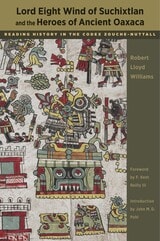
Lord Eight Wind of Suchixtlan and the Heroes of Ancient Oaxaca
Reading History in the Codex Zouche-NuttallBy Robert Lloyd Williams
University of Texas Press, 2009
In the pre-Hispanic Mesoamerican world, histories and collections of ritual knowledge were often presented in the form of painted and folded books now known as codices, and the knowledge itself was encoded into pictographs. Eight codices have survived from the Mixtec peoples of ancient Oaxaca, Mexico; a part of one of them, the Codex Zouche-Nuttall, is the subject of this book. As a group, the Mixtec codices contain the longest detailed histories and royal genealogies known for any indigenous people in the western hemisphere. The Codex Zouche-Nuttall offers a unique window into how the Mixtecs themselves viewed their social and political cosmos without the bias of western European interpretation. At the same time, however, the complex calendrical information recorded in the Zouche-Nuttall has made it resistant to historical, chronological analysis, thereby rendering its narrative obscure.
In this pathfinding work, Robert Lloyd Williams presents a methodology for reading the Codex Zouche-Nuttall that unlocks its essentially linear historical chronology. Recognizing that the codex is a combination of history in the European sense and the timelessness of myth in the Native American sense, he brings to vivid life the history of Lord Eight Wind of Suchixtlan (AD 935–1027), a ruler with the attributes of both man and deity, as well as other heroic Oaxacan figures. Williams also provides context for the history of Lord Eight Wind through essays dealing with Mixtec ceremonial rites and social structure, drawn from information in five surviving Mixtec codices.