Results by title
3258 books match the query 'Art' and 82 start with l
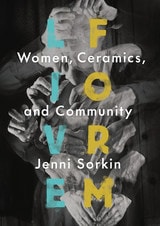
Live Form
Women, Ceramics, and CommunityJenni Sorkin
University of Chicago Press, 2016
Sorkin focuses on three Americans who promoted ceramics as an advanced artistic medium: Marguerite Wildenhain, a Bauhaus-trained potter and writer; Mary Caroline (M. C.) Richards, who renounced formalism at Black Mountain College to pursue new performative methods; and Susan Peterson, best known for her live throwing demonstrations on public television. Together, these women pioneered a hands-on teaching style and led educational and therapeutic activities for war veterans, students, the elderly, and many others. Far from being an isolated field, ceramics offered a sense of community and social engagement, which, Sorkin argues, crucially set the stage for later participatory forms of art and feminist collectivism.
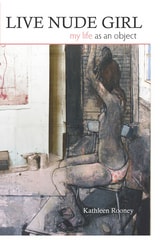
Live Nude Girl
My Life as an ObjectKathleen Rooney
University of Arkansas Press, 2008
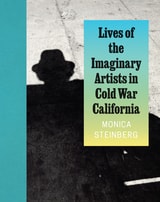
Lives of the Imaginary Artists in Cold War California
Monica Steinberg
University of Chicago Press, 2025
This book explores how a group of real California artists created imaginary artists, engaging with the political climate of the Cold War era and frustrating the discipline of art history. They employed pseudonymity, obfuscation, anonymity, (auto)biografiction, imaginary portraiture, heteronymity, role-playing, doubling, and alter ego. Often laced with humor, these exploits facilitated stylistic experimentation, provoking reactions from art viewers and governing authorities alike, and disrupting reliance on documentation and attribution within art history.
In the 1950s and early 1960s, Ed Kienholz, Walter Hopps, Robert Alexander, Wally Hedrick, George Herms, and Wallace Berman activated imagined and secret identities, provoking reactions within a conservative environment gripped by communist paranoia. As political concerns shifted in the 1960s and 1970s to movements for peace and equality, artists including Billy Al Bengston, Ed Ruscha, Joe Goode, Lynda Benglis, Larry Bell, Judy Chicago, Lowell Darling, and Eleanor Antin redirected these tactics to probe the rise of celebrity culture and the administrative state. These practices also became the precursor for later interventions by Bruce Conner, Asco, Allen Ruppersberg, Senga Nengudi, and others.
Considering a compelling range of visual material, including paintings, sculptures, and performed intrusions as well as publications, postcards, and advertisements, Monica Steinberg examines why these imaginary artists appeared when and where they did—and to what ends.
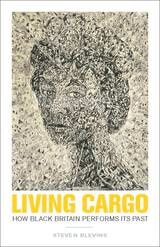
Living Cargo
How Black Britain Performs Its PastSteven Blevins
University of Minnesota Press, 2016
Offering a wide-ranging study of contemporary literature, film, visual art, and performance by writers and artists who live and work in the United Kingdom but also maintain strong ties to postcolonial Africa and the Caribbean, Living Cargo explores how contemporary black British culture makers have engaged with the institutional archives of colonialism and the Atlantic slave trade in order to reimagine blackness in British history and to make claims for social and political redress.
Steven Blevins calls this reimagining “unhousing history”—an aesthetic and political practice that animates and improvises on the institutional archive, repurposing it toward different ends and new possibilities. He discusses the work of novelists, including Caryl Phillips, Fred D’Aguiar, David Dabydeen, and Bernardine Evaristo; filmmakers Isaac Julien and Inge Blackman; performance poet Dorothea Smartt; fashion designer Ozwald Boateng; artists Hew Locke and Yinka Shonibare; and the urban redevelopment of Bristol, England, which unfolded alongside the public demand to remember the city’s slave-trading past.
Living Cargo argues that the colonial archive is neither static nor residual but emergent. By reassembling historical fragments and traces consolidated in the archive, these artists not only perform a kind of counter-historiography, they also imagine future worlds that might offer amends for the atrocities of the past.

Living Histories
Global Conversations in Art EducationEdited by Dustin Garnet and Anita Sinner
Intellect Books, 2022
Art education historians are not passive collectors of the past, but scholars engaged in new ways of doing history. The discipline is predicated on cultivating stories that move beyond representation to attend to aesthetic dimensions that bridge historiography, material culture, and teacher education. To keep pace with the movements of art and society, this edited collection considers that art education requires more inclusive and holistic versions of history from perspectives that break down barriers and cross borders in the pursuit of more informed and diverse understandings of the field. Living Histories is a collection of scholarship that explores the histories of art education through a series of international contexts, with contributions from more than thirty scholars based in eighteen countries.
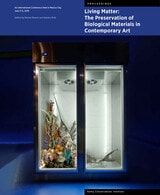
Living Matter
The Preservation of Biological Materials in Contemporary Art: An International Conference Held in Mexico City, June 3–5, 2019Rachel Rivenc
J. Paul Getty Trust, The, 2022
Eggshells, flowers, onion peels, sponge cake, dried bread, breast milk, bacteria, living organisms—these are just a few of the biological materials that contemporary artists are using to make art. But how can works made from such perishable ingredients be preserved? And what logistical, ethical, and conceptual dilemmas might be posed by doing so?
Because they are prone to rapid decay, even complete disappearance, biological materials used in art pose a range of unique conservation challenges. This groundbreaking book probes the issues associated with displaying, collecting, and preserving these unique works of art. The twenty-four papers from the conference present a range of case studies, prominently featuring artists’ perspectives, as well as conceptual discussions, thereby affording a comprehensive and richly detailed overview of current thinking and practices on this topic. Living Matter is the first publication to explore broadly the role of biological materials in the creative process and present a variety of possible approaches to their preservation.
The free online edition of this open-access publication is available at www.getty.edu/publications/living-matter/ and includes videos and zoomable illustrations. Also available are free PDF, EPUB, and Kindle/MOBI downloads of the book.
Living and Sustaining a Creative Life
Essays by 40 Working ArtistsEdited by Sharon Louden
Intellect Books, 2013
Living in the Future
Sovereignty and Internationalism in the Canterbury TalesSusan Nakley
University of Michigan Press, 2017
Chaucer uses two extant national ideals, sovereignty and domesticity, to introduce the concept of an English nation into the contemporary popular imagination and reinvent an idealized England as a hallowed homeland. For nationalist thinkers, sovereignty governs communities with linguistic, historical, cultural, and religious affinities. Chaucerian sovereignty appears primarily in romantic and household contexts that function as microcosms of the nation, reflecting a pseudo-familial love between sovereign and subjects and relying on a sense of shared ownership and judgment. This notion also has deep affinities with popular and political theories flourishing throughout Europe. Chaucer’s internationalism, matched with his artistic use of the vernacular and skillful distortions of both time and space, frames a discrete sovereign English nation within its diverse interconnected world.
As it opens up significant new points of resonance between postcolonial theories and medieval ideas of nationhood, Living in the Future marks an important contribution to medieval literary studies. It will be essential for scholars of Middle English literature, literary history, literary political and postcolonial theory, and literary transnationalism.
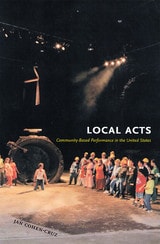
Local Acts
Community-Based Performance in the United StatesCohen-Cruz, Jan
Rutgers University Press, 2005
An eclectic mix of art, theatre, dance, politics, experimentation, and ritual,community-based performance has become an increasingly popular art movement in the United States. Forged by the collaborative efforts of professional artists and local residents, this unique field brings performance together with a range of political, cultural, and social projects, such as community-organizing, cultural self-representation, and education. Local Acts presents a long-overdue survey of community-based performance from its early roots, through its flourishing during the politically-turbulent 1960s, to present-day popular culture. Drawing on nine case studies, including groups such as the African American Junebug Productions, the Appalachian Roadside Theater, and the Puerto Rican Teatro Pregones, Jan Cohen-Cruz provides detailed descriptions of performances and processes, first-person stories, and analysis. She shows how the ritual side of these endeavors reinforces a sense of community identification while the aesthetic side enables local residents to transgress cultural norms, to question group habits, and to incorporate a level of craft that makes the work accessible to individuals beyond any one community. The book concludes by exploring how community-based performance transcends even national boundaries, connecting the local United States with international theater and cultural movements.
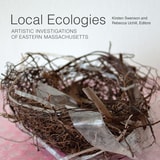
Local Ecologies
Artistic Investigations of Eastern MassachusettsEdited by Kirsten Swenson and Rebecca Uchill
Amherst College Press, 2026
Local Ecologies: Artistic Investigations of Eastern Massachusetts is an innovative multimedia exploration of the entangled natural and cultural ecologies of Eastern Massachusetts. The book’s rich archive of essays, interviews, and artistic projects reveals the region’s layered Indigenous, colonial, and industrial histories, showing how art can deepen understanding of place. The volume foregrounds multiple ways of knowing and making place—through observation, research, memory, and collective action—offering the reader models for ongoing engagement with the region and beyond.
Developed through a multiyear collaboration among artists, scholars, activists, and community stakeholders, this volume takes its name from an initiative hosted by three University of Massachusetts campuses (Boston, Dartmouth, and Lowell) in 2019 and 2020. Through essays, videos, sound artworks, artist books, and other intermedia offerings, the book’s contributors reflect on sites such as Walden Pond, Deer Island in Boston Harbor, New Bedford Harbor, and the Merrimack River, tracing histories of use and interpretation of place, and exploring contemporary responses to those legacies through creative acts of reclamation. At a moment when the infrastructures of cultural memory are increasingly under threat, Local Ecologies insists on art as a vital mode of collective reckoning and possibility.
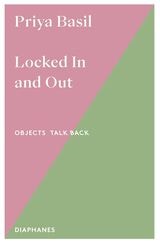
Locked In and Out
Priya Basil
Diaphanes, 2025
Having recently accepted German citizenship, writer and activist Priya Basil explores the Humboldt Forum from a deeply personal perspective. She delves into the question of what such a building, such a project, means for an understanding of the past and for belonging in the present. This much disputed, contested, celebrated monument now exists—but what exactly does it monumentalize? Basil writes, “In German, the word Schloss means a palace, and also a lock. The central question: Can a lock also be a key?”
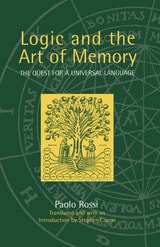
Logic and the Art of Memory
The Quest for a Universal LanguagePaolo Rossi
University of Chicago Press, 2001
Based on comprehensive analyses of original texts, Rossi traces the development of this idea from late medieval thinkers such as Ramon Lull through Bruno, Bacon, Descartes, and finally Leibniz in the seventeenth century. The search for a symbolic mode of communication that would be intelligible to everyone was not a mere vestige of magical thinking and occult sciences, but a fundamental component of Renaissance and Enlightenment thought. Seen from this perspective, modern science and combinatorial logic represent not a break from the past but rather its full maturity.
Available for the first time in English, this book (originally titled Clavis Universalis) remains one of the most important contributions to the history of ideas ever written. In addition to his eagerly anticipated translation, Steven Clucas offers a substantial introduction that places this book in the context of other recent works on this fascinating subject. A rich history and valuable sourcebook, Logic and the Art of Memory documents an essential chapter in the development of human reason.
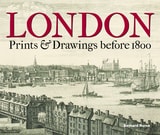
London
Prints & Drawings before 1800Bernard Nurse
Bodleian Library Publishing, 2017
This book presents more than a hundred images of Greater London from before 1800, all from the Gough Collection of the Bodleian Library. We see prints of London before and after the Great Fire, images of the 1780 tornado, panoramas of the Thames, depictions of the building and destruction of landmark bridges, and much more. Making brilliant use of the most extensive collection of London images amassed by any private collector of the period, the book will be essential to anyone delving into the history of the city.
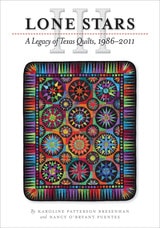
Lone Stars III
A Legacy of Texas Quilts, 1986-2011By Karoline Patterson Bresenhan and Nancy O'Bryant Puentes
University of Texas Press, 2011
From frontier times in the Republic of Texas until today, Texans have been making gorgeous quilts. Karoline Patterson Bresenhan and Nancy O'Bryant Puentes documented the first 150 years of the state's rich heritage of quilt art in Lone Stars: A Legacy of Texas Quilts, 1836–1936 and Lone Stars II: A Legacy of Texas Quilts, 1936–1986. Now in Lone Stars III, they bring the Texas quilt story into the twenty-first century, presenting two hundred traditional and art quilts that represent "the best of the best" quilts created since 1986.
The quilts in Lone Stars III display the explosion of creativity that has transformed quilting over the last quarter century. Some of the quilts tell stories, create landscapes, record events, and memorialize people. Others present abstract designs that celebrate form and color. Their makers have embraced machine quilting, as well as hand sewing, and they often embellish their quilts with buttons, beads, lace, ribbon, and even more exotic items. Each quilt is pictured in its entirely, and some entries also include photographs of quilt details. The accompanying text describes the quilt's creation, its maker, and its physical details.
With 16.3 million American quilters who spend $3.6 billion annually on their pastime, the quilting community has truly become a force to reckon with both artistically and socially. Lone Stars III is the perfect introduction to this world of creativity.
Looking East
Rubens’s Encounter with AsiaStephanie Schrader
J. Paul Getty Trust, The, 2013
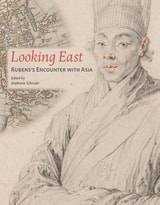
Peter Paul Rubens’s fascinating depiction of a man wearing Korean costume of around 1617, in the collection of the J. Paul Getty Museum, has been considered noteworthy since it was made. Published to accompany an exhibition of Rubens’s Man in Korean Costume at the J. Paul Getty Museum from March 5 to June 9, 2013, Looking East: Rubens’s Encounter with Asia explores the various facets of Rubens’s compelling drawing of this Asian man that appears in later Rubens works. This large drawing was copied in Rubens’s studio during his own time and circulated as a reproductive print in the eighteenth century. Despite the drawing’s renown, however, the reasons why it was made and whether it actually depicts a specific Asian person remain a mystery. The intriguing story that develops involves a shipwreck, an unusual hat, the earliest trade between Europe and Asia, the trafficking of Asian slaves, and the role of Jesuit missionaries in Asia.
The book’s editor, Stephanie Schrader, traces the interpretations and meanings ascribed to this drawing over the centuries. Could Rubens have actually encountered a particular Korean man who sailed to Europe, or did he instead draw a model wearing Asian clothing or simply hear about such a person? What did Europeans really know about Korea during that period, and what might the Jesuits have had to do with the production of this drawing? All of these questions are asked and explored by the book’s contributors, who look at the drawing from various points of view.
Looking at Fashion
A Guide to Terms, Styles, and TechniquesDebra N. Mancoff
J. Paul Getty Trust, The, 2024
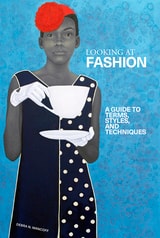
Whether in art or life, fashion makes a statement. It gives form to the temper of the times and the motives of the moment, charting shifts in society, status, technology, and economy. Fashion is shaped by both high and popular culture and reveals the influence of individuals from diverse socioeconomic backgrounds.
Spanning the centuries and representing a global point of view, Looking at Fashion is a guide to the elements that make clothing practical, wearable, stylish, and distinctive. Created for scholars, students, fashionistas, and anyone who wants to expand their understanding of world culture through the history of dress, this book provides a rich and varied lexicon of the vocabulary that describes and explains the most essential components of garments and techniques of clothing construction. Ranging from basic pieces and their individual parts to structure, embellishments, and innovations, Looking at Fashion offers insights into the evolution of dress in terms of style, fit, and design. Gorgeous color illustrations, including paintings, photographs, historical garments, and custom drawings, reveal the interrelationship of fashion and art from antiquity to now.
Looking at Jewelry
A Guide to Terms, Styles, and TechniquesSusanne Gänsicke
J. Paul Getty Trust, The, 2019
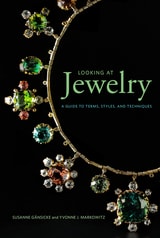
The fascination with personal adornment is universal. It is a preoccupation that is primal, instinctive, and uniquely human. Jewelry encompasses a seemingly endless number of ornaments produced across time and in all cultures. The range of materials and techniques used in its construction is extraordinary, even revolutionary, with new substances and methods of fabrication added with every generation. In any given society, master artisans have devoted their time, energy, and talent to the fine art of jewelry making, creating some of the most spectacular objects known to humankind.
This volume, geared toward jewelry makers, scholars, scientists, students, and fashionistas alike, begins with a lively introduction that offers a cultural history of jewelry and its production. The main text provides information on the most common, iconic, and culturally significant forms of jewelry and also covers materials, techniques, and manufacturing processes. Containing more than eighty color illustrations, this guide will be invaluable to all those wishing to increase their understanding and enjoyment of the art of jewelry.
Looping Detroit
A People Mover TravelogueNick Tobier
Michigan Publishing Services, 2016
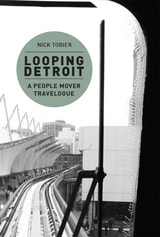
Looping Detroit invites artists and writers to ride the small loop as an explorer, mining the environs around each station as a poetic ramble, a psycho geographic wander, a cultural inquiry that simultaneously ponders the poetics of circulating above the city streets while probing the greater narrative of Detroit’s public transit conundrum.
Contributors include award-winning Detroit novelists Lolita Hernandez and Michael Zardoorian, poets Gloria House and Walter Lacy, music producer Cornelius Harris, Chace MicWrite Morris, frontman of the Detroit hip-hop trio Coldmen Young, and radio producer Zak Rosen.
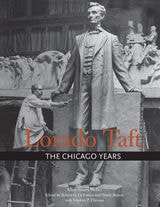
Lorado Taft
The Chicago YearsAllen Stuart Weller; Edited by Robert G. La France and Henry Adams with Stephen P. Thomas
University of Illinois Press, 2014
Returning to Chicago from France, Taft established a bustling studio and began a twenty-one-year career as an instructor at the Art Institute, succeeded by three decades as head of the Midway Studios at the University of Chicago. This triumphant era included ephemeral sculpture for the 1893 World's Columbian Exposition; a prolific turn-of-the-century period marked by the gold-medal-winning The Solitude of the Soul; the 1913 Fountain of the Great Lakes; the 1929 Alma Mater at the University of Illinois; and large-scale projects such as his ambitious program for Chicago's Midway with the monumental Fountain of Time. In addition, the book charts Taft's mentoring of women artists, including the so-called White Rabbits at the World's Fair, many of whom went on to achieve artistic success.
Lavishly illustrated with color images of Taft's most celebrated works, Lorado Taft: The Chicago Years completes the first major study of a great American artist.
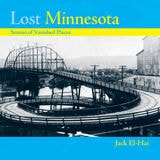
Lost Minnesota
Stories of Vanished PlacesJack El-Hai
University of Minnesota Press, 2000
Lost and
Jeff Griffin
University of Iowa Press, 2013
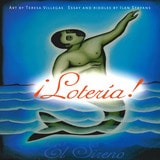
Lotería
Art by Theresa Villegas, Essay and Riddles by Ilan Stavans
University of Arizona Press, 2004
Chips, cards, and a table.
The riddles insightful,
the future, unstable! What is it?
It's Lotería, the Mexican game of chance! For the uninitiated, it might seem like bingo played with a riddling tarot deck. But this enthralling board game is more than entertainment. The images found on its cards—La Virgen, El Pan Dulce, La Telenovela—are miniature reflections of an entire culture, capturing the joys and sorrows of the Mexican people.
Wildly popular on both sides of the border, Lotería cards originated in the Iberian peninsula in the eighteenth century but have been redesigned so many times as to defy expectation, with boards devoted to ecclesiastical figures, soccer idols, and even vaudeville starlets. With the dawn of a new millennium, American artist Teresa Villegas created a new Lotería set that is already gaining popularity in Mexico, and her striking images are also widely exhibited in galleries across the United States.
This gift book, which will bring pleasure and bewilderment to children and adults alike, reproduces more than two dozen of Villegas's 54 colorful cards, pairing them with insightful, humorous riddles written by award-winning author Ilan Stavans. Stavans also revisits his childhood in an essay that examines the role of luck in Mexican life and recreates the sort of poetry jam that often accompanies Lotería contests wherever they might take place. Delve into the emblematic pages of this marvelous volume to find your own Calavera. Let yourself unravel the paths of El Deseo and the mysteries of El Corazón. Before too long, you'll realize that luck is never truly accidental—for a turn at ¡Lotería! is always an opportunity to come face to face with El Destino.
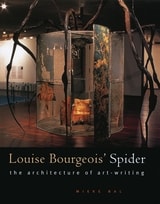
Louise Bourgeois' Spider
The Architecture of Art-WritingMieke Bal
University of Chicago Press, 2001
Known for her commentary on the issue of temporality in art, Bal argues that art must be understood in relationship to the present time of viewing as opposed to the less-immediate contexts of what has preceded the viewing, such as the historical past of influences and art movements, biography and interpretation. In ten short chapters, or "takes," Bal demonstrates that the closer the engagement with the work of art, the more adequate the result of the analysis. She also confronts issues of biography and autobiography—key themes in Bourgeois's work—and evaluates the consequences of "ahistorical" experiences for art criticism, drawing on diverse sources such as Bernini and Benjamin, Homer and Eisenstein.
This short, beautiful book offers both a theoretical model for analyzing art "out of context" and a meditation on a key work by one of the most engaging artists of our era.
Love That Works
Art & Science Of GivingBruce Brander
Templeton Press, 2004
This original, highly readable book poses a clear distinction between our customary form of love, which almost guarantees failure, and higher, more generous ways of loving that can succeed and enrich both individuals and society as a whole. Love That Works draws on history, psychology, and the theology and science of love to offer a proposal on how to be successful in love and romance. It starts by showing why love fails to meet expectations, often ending sadly or even tragically.
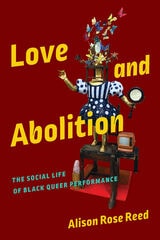
Love and Abolition
The Social Life of Black Queer PerformanceAlison Rose Reed
The Ohio State University Press, 2022
Reed identifies abolition literature as an emergent field of inquiry that emphasizes social relationships in the ongoing struggle to dismantle systems of coercion, criminalization, and control. Focusing on love as an affective modality and organizing tool rooted in the Black radical tradition’s insistence on collective sociality amidst unrelenting state violence, Reed provides fresh readings of visionaries such as James Baldwin, Ntozake Shange, Sharon Bridgforth, and vanessa german. Both abolitionist manifesto and examination of how Black queer performance offers affective modulations of tough and tender love, Love and Abolition ultimately calls for a critical reconsideration of the genre of prison literature—and the role of the humanities—during an age of mass incarceration.
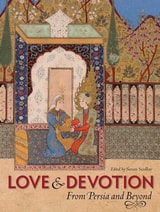
Love and Devotion
From Persia and BeyondEdited by Susan Scollay
Bodleian Library Publishing, 2012
Yusuf and Zulaykha. Khusrau and Shirin. Layla and Majnun. For hundreds of years, Persian poets have captivated audiences with recitations and reinterpretations of timeless tales of earthly and spiritual love. These tales were treasured not only in Iran, but also across the neighboring Mughal and Ottoman Empires.
In Love and Devotion, leading specialists in literature, art history, and philosophy reveal new perspectives on these evocative stories and the exquisite illustrated manuscripts that convey them. Particularly in courtly settings, poetry was a key component of Persian cultural life from the fourteenth through the eighteenth century, and elite patrons commissioned copies of lyrical poems and epics told in verse. Beautifully presented here in full-page reproductions are more than one hundred folios from these illustrated manuscripts, representing masterful works from Hafiz, Rumi, and many others. Echoes of works by Persian poets are manifest across European literature from Dante and Shakespeare to the present, and this lavishly illustrated book reveals new perspectives on the universal theme of love.
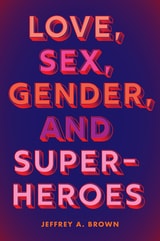
Love, Sex, Gender, and Superheroes
Jeffrey A. Brown
Rutgers University Press, 2022
Love, Sex, Gender, and Superheroes examines a full range of superhero media, from comics to films to television to merchandising. With a keen eye for the genre’s complex and internally contradictory mythology, comics scholar Jeffrey A. Brown considers its mixed messages. Superhero comics may reinforce sex roles with their litany of phallic musclemen and slinky femme fatales, but they also blur gender binaries with their emphasis on transformation and body swaps. Similarly, while most heroes have heterosexual love interests, the genre prioritizes homosocial bonding, and it both celebrates and condemns gendered and sexualized violence.
With examples spanning from the Golden Ages of DC and Marvel comics up to recent works like the TV series The Boys, this study provides a comprehensive look at how superhero media shapes our perceptions of love, sex, and gender.
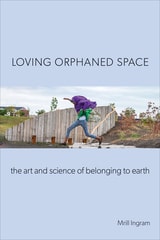
Loving Orphaned Space
The Art and Science of Belonging to EarthMrill Ingram
Temple University Press, 2022
How we relate to orphaned space matters. Voids, marginalia, empty spaces—from abandoned gas stations to polluted waterways—are created and maintained by politics, and often go unquestioned. In Loving Orphaned Space, Mrill Ingram provides a call to action to claim and to cherish these neglected spaces and make them a source of inspiration through art and/or remuneration.
Ingram advocates not only for “urban greening” and “green planning,” but also for “radical caring.” These efforts create awareness and understanding of ecological connectivity and environmental justice issues—from the expropriation of land from tribal nations, to how race and class issues contribute to creating orphaned space. Case studies feature artists, scientists, and community collaborations in Chicago, New York, and Fargo, ND, where grounded and practical work of a fundamentally feminist nature challenges us to build networks of connection and care.
The work of environmental artists who venture into and transform these disconnected sites of infrastructure allow us to rethink how to manage the enormous amount of existing overlooked and abused space. Loving Orphaned Space provides new ways humans can negotiate being better citizens of Earth.
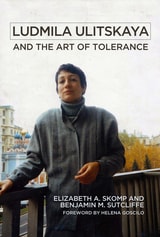
Ludmila Ulitskaya and the Art of Tolerance
Elizabeth Skomp and Benjamin M. Sutcliffe, Foreword by Helena Goscilo
University of Wisconsin Press, 2015
Drawing on interviews with Ulitskaya and sources not readily available to Western scholars, Elizabeth A. Skomp and Benjamin M. Sutcliffe explore the ethical ideals that make Ulitskaya’s novels resonate in today’s Russia—tolerance, sincerity, and diversity—and examine how she uses innovative imagery to personalize history through a focus on body and kinship. This is essential reading for anyone interested in contemporary Russian literature and society.
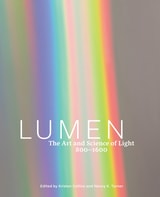
Lumen
The Art and Science of Light, 800–1600Kristen Collins
J. Paul Getty Trust, The, 2024
Through the manipulation of materials, such as gold, crystal, and glass, medieval artists created dazzling light-filled environments, evoking, in the everyday world, the layered realms of the divine. While contemporary society separates science and spirituality, the medieval world harnessed the science of light to better perceive and understand the sacred. From 800 to 1600, the study of astronomy, geometry, and optics emerged as a framework that was utilized by theologians and artists to comprehend both the sacred realm and the natural world.
Through essays written by contributors from the fields of art history, the history of science, and neuroscience, and with more than two hundred illustrations, including glimmering golden reliquaries, illuminated manuscripts, rock crystal vessels, astronomical instruments, and more, Lumen cuts across religious, political, and geographic boundaries to reveal the ways medieval Christian, Jewish, and Islamic artists, theologians, and thinkers studied light. To convey the sense of wonder created by moving light on precious materials, a number of contemporary artworks are placed in dialogue with historic objects.
This volume is published to accompany an exhibition on view at the J. Paul Getty Museum at the Getty Center from September 10 to December 8, 2024.
Lure of the Big Screen
Cinema in Rural Australia and the United KingdomKarina Aveyard
Intellect Books, 2015
L’impressionnisme à ses frontières
Le cas Meier-Graefe et la lutte pour l’art moderne en AllemagneVictor Claass
Diaphanes, 2023
Par ses écrits pionniers sur l’histoire du développement de l’art moderne, le critique d’art allemand Julius Meier-Graefe (1867-1935) joua un rôle décisif pour la canonisation de l’impressionnisme dans l’Europe de 1900. En défendant avec subversion et énergie la peinture de Manet, Renoir ou Cézanne outre-Rhin, il se mit à dos les élites conservatrices de l’Empire, qui observaient avec méfiance la propagation des valeurs de la modernité artistique. Tout au long de sa trajectoire franco-allemande, ponctuée de virulentes polémiques et cisaillée par le surgissement de la Première Guerre mondiale, Meier-Graefe lutta contre l’emprise d’un nationalisme obtus sur les récits artistiques. Son projet de régénération de la culture allemande fut ainsi indissociable de ses efforts pour la fédération d’une Europe pacifiée des images.
Si le progressisme francophile tout comme le vitalisme de son approche de la peinture ont parfois été soulignés, l’étude de son implication dans les débats politico-culturels de son temps révèle une personnalité plus nuancée. Ce livre analyse ainsi les surprenants à-coups et paradoxes ayant émaillé la carrière transnationale de Meier-Graefe, où alternèrent phases d’enthousiasme débridé et d’intense désillusion. Le personnage s’y dévoile comme un penseur du déclin et le chantre d’une modernité idéalisée, dont l’impressionnisme représentait à la fois la quintessence et le chant du cygne.