Results by title
5550 books match the query 'Biography & Autobiography' and 276 start with l
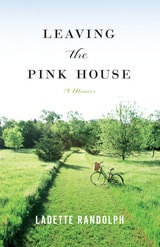
Leaving the Pink House
Ladette Randolph
University of Iowa Press, 2014
On September 12, 2001, Randolph and her husband bought a dilapidated farmhouse on twenty acres outside Lincoln, Nebraska, and set about gutting and rebuilding the house themselves. They had nine months to complete the work. The project, undertaken at a time of national unrest and uncertainty, led Randolph to reflect on the houses of her past and the stages of her life that played out in each, both painful and joyful. As the couple struggles to bring the dilapidated house back to life, Randolph simultaneously traces the contours of a life deeply shaped by the Nebraska plains, where her family has lived for generations, and how those roots helped her find the strength to overcome devastating losses as a young adult. Weaving together strands of departures and arrivals, new houses and deep roots, cycles of change and the cycles of the seasons, Leaving the Pink House is a richly layered and compelling memoir of the meaning of home and family, and how they can never really leave us, even if we leave them.
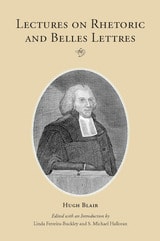
Lectures on Rhetoric and Belles Lettres
Hugh Blair. Edited by Linda Ferreira-Buckley and S. Michael Halloran
Southern Illinois University Press, 2005
This new edition of Hugh Blair’s Lectures on Rhetoric and Belles Lettres, edited by Linda Ferreira-Buckley and S. Michael Halloran, answers the need for a complete, reliable text. The book seeks to generate a renewed interest in Blair by provoking new inquiries into the tradition of belletristic rhetoric and by serving as both aid and incentive to others who may join in the project of improving understanding of this landmark rhetorical scholarship.
This editioncontains forty-seven lectures and remains faithful to the text of the 1785 London edition. The editors contextualize Hugh Blair’s motivations and thinking by providing in their introduction an extended account of Blair’s life and era. The bibliography of works by and about Blair is an invaluable aid, surpassing previous research on Blair.
Although the extent of its influence cannot be measured fully, Blair’s Lectures on Rhetoric and Belles Lettres was undoubtedly a primary vehicle for introducing many eighteenth- and nineteenth-century scholars to classical rhetoric and French belletristic rhetoric—its success due in part to the ease with which the lectures combine neoclassical and Enlightenment thought, accommodating emerging social concerns. Ferreira-Buckley and Halloran’s extensive treatment revives the tradition of belletristic rhetoric, improving the understanding of Blair’s place in the study of eighteenth- and nineteenth-century discourse, while finding him relevant in the twenty-first century.
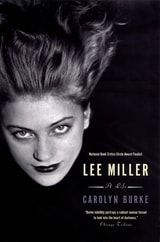
Lee Miller
A LifeCarolyn Burke
University of Chicago Press, 2007
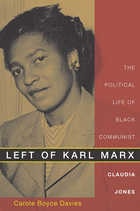
Left of Karl Marx
The Political Life of Black Communist Claudia JonesCarole Boyce Davies
Duke University Press, 2007
Claudia Cumberbatch Jones was born in Trinidad. In 1924, she moved to New York, where she lived for the next thirty years. She was active in the Communist Party from her early twenties onward. A talented writer and speaker, she traveled throughout the United States lecturing and organizing. In the early 1950s, she wrote a well-known column, “Half the World,” for the Daily Worker. As the U.S. government intensified its efforts to prosecute communists, Jones was arrested several times. She served nearly a year in a U.S. prison before being deported and given asylum by Great Britain in 1955. There she founded The West Indian Gazette and Afro-Asian Caribbean News and the Caribbean Carnival, an annual London festival that continues today as the Notting Hill Carnival. Boyce Davies examines Jones’s thought and journalism, her political and community organizing, and poetry that the activist wrote while she was imprisoned. Looking at the contents of the FBI file on Jones, Boyce Davies contrasts Jones’s own narration of her life with the federal government’s. Left of Karl Marx establishes Jones as a significant figure within Caribbean intellectual traditions, black U.S. feminism, and the history of communism.
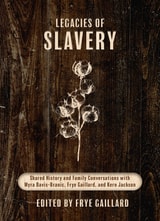
Legacies of Slavery
Shared History and Family Conversations with Myra Davis-Branic, Frye Gaillard, and Kern JacksonEdited by Frye Gaillard
University of Alabama Press, 2026
Documents conversations between two southern writers and friends whose families were intertwined in slavery
Legacies of Slavery commemorates a story of racial reconciliation in the South. Writers, educators, and friends Frye Gaillard and Myra Davis-Branic discovered a shared family history of slavery in Eutawville, South Carolina, where Davis-Branic’s family was enslaved by Gaillard’s family.
In 2024, the University of South Alabama’s Kern Jackson moderated three conversations with Davis-Branic and Gaillard in Mobile. These conversations are presented here in an edited format. Davis-Branic and Gaillard discussed their intertwined family history and what they each learned from research into their ancestors. They relay origin stories and the role of a key grandparent who greatly impacted their lives. They also talk about their own trajectories in a historical context, the issue of slavery in their families, and the legacy of slavery for their children and families.
The book concludes with short excerpts, one from Davis-Branic’s book Cornbread My Soul: The Davis Family of Eutawville, South Carolina, and one from Gaillard’s family history, Lessons from the Big House: One Family’s Passage Through the History of the South, a Memoir. Legacies of Slavery stands as a powerful and unique documentation for all who are interested in how two southern families, bound by slavery in the past and now by friendship and a degree of understanding, have found some measure of redemption.
Legacy of a False Promise
A Daughter's ReckoningMargaret Fuchs Singer
University of Alabama Press, 2009
Margaret Fuchs was thirteen in June 1955 when she learned that her parents had been Communists while working for the U.S. government in the 1930s and '40s. This book chronicles the years during which her parents were exposed and her father was subpoenaed before the House Un-American Activities Committee. Eventually he named names, and subsequently lost his job as a law professor at American University, and was blacklisted from teaching ever again. Legacy of a False Promise also details the author's quest as an adult to learn whether or not her parents ever spied for the Soviet Union.
Based on eight years of research using family records, FBI files, American University archives, personal interviews, and the recently declassified Venona cables, Legacy of a False Promise offers unique insights into the McCarthy Era. Most "red-diaper babies" who have written on the subject had parents who refused to give in to HUAC's demands. Singer's work instead recounts the shame and series of betrayals that her father's decision to name names brought to her family. Furthermore, it explores the campaign of the liberal anti-Communist movement to publicize its political position while defending a fired ex-Communist professor, the nature and activities of secret Communist underground cells, and the motivation of New Deal government workers who spied for the Soviets.
This is a poignant meditation on family secrets, father-daughter relationships in times of crisis, teenage loneliness in the midst of trauma, and the effects of parents' actions on the lives of their children. It also serves as a timely reminder of the dangers of sacrificing civil liberties in the name of national security.

Legacy on Ice
Blake Geoffrion and the Fastest Game on EarthSam Jefferies, Foreword by John Buccigross
University of Wisconsin Press, 2023
With sure-footed and swift-moving prose, Sam Jefferies tells Geoffrion’s story against the backdrop of modern North American hockey. Thorough research and scores of interviews fuel this tale of soaring success and terrible tragedy, offering insight not only into one man’s athletic journey but also into the rise of American hockey on the national and international stage. Geoffrion’s brief career, marked by tribulation and triumph, illustrates the subtle but omnipresent currents of American media, sports labor, and the interplay between college and professional athletics. It tells the story of what was, what is, and what may yet be for the fastest game on earth.
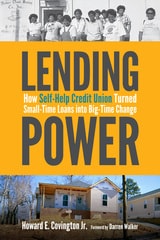
Lending Power
How Self-Help Credit Union Turned Small-Time Loans into Big-Time ChangeHoward E. Covington Jr.
Duke University Press, 2017
In Lending Power journalist and historian Howard E. Covington Jr. narrates the compelling story of Self-Help's founders and coworkers as they built a progressive and community-oriented financial institution. First established to assist workers displaced by closed furniture and textile mills, Self-Help created a credit union that expanded into providing home loans for those on the margins of the financial market, especially people of color and single mothers.
Using its own lending record, Self-Help convinced commercial banks to follow suit, extending its influence well beyond North Carolina. In 1999 its efforts led to the first state law against predatory lending. A decade later, as the Great Recession ravaged the nation's economy, its legislative victories helped influence the Dodd-Frank Wall Street Reform and Consumer Protection Act and the formation of the Consumer Financial Protection Bureau. Self-Help also created a federally chartered credit union to expand to California and later to Illinois and Florida, where it assisted ailing community-based credit unions and financial institutions.
Throughout its history, Self-Help has never wavered from its mission to use Dr. Martin Luther King Jr.'s vision of justice to extend economic opportunity to the nation's unbanked and underserved citizens. With nearly two billion dollars in assets, Self-Help also shows that such a model for nonprofits can be financially successful while serving the greater good. At a time when calls for economic justice are growing ever louder, Lending Power shows how hard-working and dedicated people can help improve their communities.
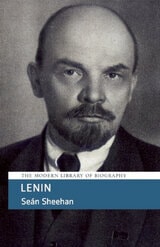
Lenin
Seán Sheehan
Haus Publishing, 2003
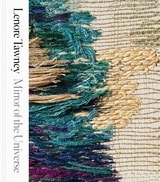
Lenore Tawney
Mirror of the UniverseEdited by Karen Patterson
University of Chicago Press, 2019
Raised and trained in Chicago before she moved to New York, Tawney had a storied career. She was known for employing an ancient Peruvian gauze weave technique to create a painterly effect that appeared to float in space rather than cling to the wall, as well as for being one of the first artists to blend sculptural techniques with weaving practices and, in the process, pioneered a new direction in fiber art. Despite her prominence on the New York art scene, however, she has only recently begun to receive her due from the greater art world. Accompanying a retrospective at the John Michael Kohler Arts Center, this catalog features a comprehensive biography of Tawney, additional essays on her work, and two hundred full-color illustrations, making it of interest to contemporary artists, art historians, and the growing audience for fiber art.
Copublished with the John Michael Kohler Arts Center.
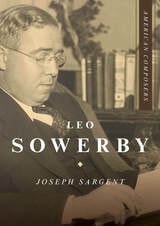
Leo Sowerby
Joseph Sargent
University of Illinois Press, 2024
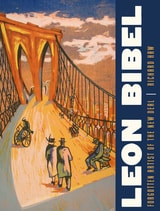
Leon Bibel
Forgotten Artist of the New DealRichard Haw
Rutgers University Press, 2025
Honorable Mention for the 2025 New Deal Book Award
Leon Bibel (1913–1995) was a prolific modern American artist who painted, printed, stamped, etched, sketched, and carved. He produced pieces that ranged from social realism to dreamy expressionism and was an aesthetic experimentalist, never working for too long in any medium or style. And despite Bibel's obvious talent, his work would have languished in obscurity were it not for the New Deal programs like the Federal Art Project and Public Works of Art Project.
Leon Bibel, the first biography of this eclectic artist, recounts his life from his birth in Szczebrzeszyn, Poland, in 1913, to his death in New Jersey in 1995. After immigrating to the United States in the 1920s, Bibel came of age during the Great Depression, when New Deal agencies recognized his abilities and supported his artistic endeavors. Working-class artists faced challenges after these programs folded, and Bibel would later spend twenty years as a New Jersey chicken farmer before resurrecting his art career in the 1960s.
Historian Richard Haw shows how Bibel's life was defined by the New Deal, his visionary artwork shaped by the era's commitment to social and economic justice. With reproductions of more than 240 of Bibel's works, most in vivid color, this book reveals how he depicted everything from the trauma of unemployment to the dignity of work, from the horrors of lynching to the pleasures of everyday life.
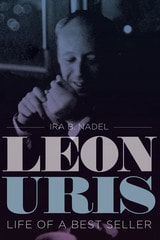
Leon Uris
Life of a Best SellerBy Ira B. Nadel
University of Texas Press, 2010
As the best-selling author of Exodus, Mila 18, QB VII, and Trinity, Leon Uris blazed a path to celebrity with books that readers could not put down. Uris's thirteen novels sold millions of copies, spent months on the best-seller lists, appeared in fifty languages, and have been adapted into equally popular movies and TV miniseries. Few other writers equaled Uris's fame in the mid-twentieth century. His success fueled the rise of mass-market paperbacks, movie tie-ins, and celebrity author tours. Beloved by the public, Uris was, not surprisingly, dismissed by literary critics. Until now, his own life—as full of drama as his fiction—has never been the subject of a book.
In Leon Uris: Life of a Best Seller, Ira Nadel traces Uris from his disruptive youth to his life-changing experiences as a marine in World War II. These experiences, coupled with Uris's embrace of his Judaism and desire to write, led to his unprecedented success and the lavish excesses of a career as a best-selling author. Nadel reveals that Uris lived the adventures he described, including his war experiences in the Pacific (Battle Cry), life-threatening travels in Israel (Exodus), visit to Communist Poland (Mila 18), libel trial in Britain (QB VII), and dangerous sojourn in fractious Northern Ireland and the Irish Republic (Trinity). Nadel also demonstrates that Uris's talent for writing action-packed, yet thoroughly researched, novels meshed perfectly with the public's desire to revisit and understand the tumultuous events of recent history. This made him far more popular (and wealthy) than more literary authors, while paving the way for writers such as Irving Wallace and Tom Clancy.
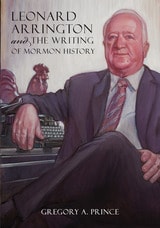
Leonard Arrington and the Writing of Mormon History
Gregory A. Prince
University of Utah Press, 2016
Leonard Arrington is considered by many the foremost twentieth-century historian of Mormonism. He played a key role in establishing the Western History Association and the Mormon History Association, and more than a half-century after its publication, his revised doctoral dissertation, Great Basin Kingdom: An Economic History of the Latter-day Saints 1830-1900, remains a standard. But Arrington’s career was not without controversy. Gregory Prince takes an in-depth look at this respected historian and, in telling Arrington’s story, gives readers insight into the workings of the LDS Church in the late twentieth century.
In 1972, during a major reorganization of the LDS Church, Arrington was asked to serve as the official church historian, thereby becoming the first—and thus far the only—professional historian to hold that title. He immediately set out to professionalize the entire Church History Division and open its extensive archives to scholarly researching. While the output of and from that division moved Mormon studies to a new level, the shift of historiography from faith promotion ecclesiastical, to scholarly and professional research and analysis was unacceptable to a handful of powerful senior apostles. In 1980 the History Division was disassembled and moved to Brigham Young University. That led to a shift in the professionalization of the Church History Division and Archives and in Arrington’s career but not to a loss of his broad influence.
This biography is the first to draw upon the remarkable Arrington diaries (over 20,000 pages); it is supplemented by the author’s interviews of more than 100 people who knew or worked with Arrington. The book is of additional significance given continuing battles between the LDS Church and scholars, which frequently gains national attention because of excommunications of prominent intellectuals.
Winner of the Evans Biography Award and the John Whitmer Historical Association's Brim Biography Book Award.

Leonard Bernstein and the Language of Jazz
Katherine Baber
University of Illinois Press, 2019
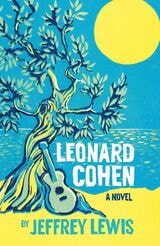
Leonard Cohen
A NovelJeffrey Lewis
Haus Publishing, 2025
The Leonard Cohen at the center of Leonard Cohen: A Novel is an everyman, a would-be artist, a would-be lover, a would-be tragic figure, yet a man haunted by the greatness of his namesake. He struggles to compete. He struggles to be more than a punchline in his own mind. He struggles, in particular, to write one song as great as the least of the great Leonard Cohen's songs.
At the center of Leonard's life is Daphne. In their meeting on a Greek island, a contemporary fable of Daphne and Apollo plays out. But even with Daphne, Leonard is shadowed by the other Leonard Cohen, whom he fears is the real Apollo. The ancient myth haunts the fated lovers, and the nobody Leonard Cohen’s life becomes at once a mystery, a miracle, and a myth on its own terms.
Once upon a time, Apollo fell hard for Daphne, who turned herself into a laurel tree. No less a fate awaits the protagonists of this slender yet universal novel, where art, love, and fame all fatefully intertwine.

Les Paul
Guitar WizardBob Jacobson
Wisconsin Historical Society Press, 2012
This addition to the Badger Biographies series for young readers tells the story of Les Paul, the legendary “Wizard of Waukesha,” who pioneered the solid body electric guitar, multi-track recording, and many other musical inventions. Fascinated since boyhood with musical technology, the young Les moved from experimenting with his mother’s player piano and phonograph to developing his own amplifier and tinkering with crystal radios.
After leaving his hometown of Waukesha at age 17 to pursue a musical career—a decision his mother supported—the budding jazz guitarist lived in Chicago, New York, and Los Angeles, in each city finding a new audience and new musical partnerships. A regular on the radio, Les became a fixture in early television, appearing on the Ed Sullivan Show, and later, a show of his own with partner Mary Ford. Along the way, he overcame numerous physical challenges, including recovery from electric shock and rehabilitation after a horrific car accident—both of which threatened his musical career. And yet, Les Paul pushed musical technology forward more than any other musician of the twentieth century. This Grammy Hall of Fame inductee died in 2009, making Les Paul: Guitar Wizard a timely addition to the series. This lively story is rounded out with sidebars on radio call letters and how an electric guitar works, a full discography, and over 60 historic photographs.

Lessons in Gratitude
A Memoir on Race, the Arts, and Mental HealthAaron P. Dworkin
University of Michigan Press, 2024
Aaron’s unique journey, which begins with his adoption by a white Jewish couple from Chicago at two weeks of age, leads him to the ultimate reunification with his birth family at the age of 31. Lessons of Gratitude is a coming of age story that examines the difficulties of biracial identity across generations and the challenges that mixed race families still face today. It is also a painful and honest adoption memoir, further complicating the narrator’s experiences of racial identity throughout his life and shaping his experiences with his own children. Through his work in the arts and the impact of this work, Dworkin has been able to “pay forward” the first thing that offered him unconditional love—music.
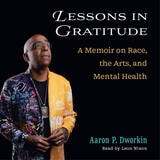
Lessons in Gratitude
A Memoir on Race, the Arts, and Mental HealthAaron P. Dworkin
University of Michigan Press, 2024
Aaron’s unique journey, which begins with his adoption by a white Jewish couple from Chicago at two weeks of age, leads him to the ultimate reunification with his birth family at the age of 31. Lessons in Gratitude is a coming of age story that examines the difficulties of biracial identity across generations and the challenges that mixed race families still face today. It is also a painful and honest adoption memoir, further complicating the narrator’s experiences of racial identity throughout his life and shaping his experiences with his own children. Through his work in the arts and the impact of this work, Dworkin has been able to “pay forward” the first thing that offered him unconditional love—music.
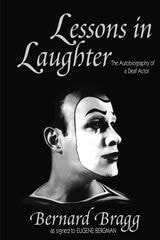
Lessons in Laughter
The Autobiography of a Deaf ActorBernard Bragg
Gallaudet University Press, 1989
To succeed as an actor is a rare feat. To succeed as a deaf actor is nothing short of amazing. Lessons in Laughter is the story of Bernard Bragg and his astonishing lifelong achievements in the performing arts.
Born deaf of deaf parents, Bernard Bragg has won international renown as an actor, director, playwright, and lecturer. Lessons in Laughter recounts in stories that are humorous, painful, touching, and outrageous, the growth of his dream of using the beauty of sign language to act. He starred in his own television show “The Quiet Man,” helped found The National Theatre of the Deaf, and traveled worldwide to teach his acting methods.

Let Burn
Rachel K. Wentz
Michigan State University Press, 2013
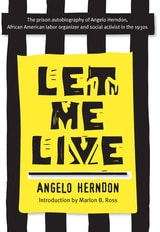
Let Me Live
Angelo Herndon
University of Michigan Press, 2007
Let Me Live tells the remarkable story of Angelo Herndon, a coal miner who worked as a labor organizer in Alabama and Georgia in the 1930s. Herndon led a racially integrated march of the unemployed in 1932 and was subsequently arrested when Communist Party literature was found in his bedroom. His trial made only small headlines at first, but eventually an international campaign to free him emerged, thanks to the efforts of the Communist Party and of labor unions interested in protecting the right to organize in the South. Herndon was finally set free by the U.S. Supreme Court, with the help of well-known leaders including C. Vann Woodward, Thurgood Marshall, A. Philip Randolph, and Whitney North Seymour, Sr.
Written while Herndon was in prison, Let Me Live tells the story behind his arrest and his struggle through the courts. It also describes his early life as a young boy in poverty, as a laborer in the Kentucky mines, and as a construction gang worker and traces the birth and development of his passion for the Communist Party. Originally published in 1937, this is the first new edition of Let Me Live since 1969, when Howard N. Meyer rescued it from obscurity. The book features texts from the Georgia and U.S. Supreme Court decisions, the text of Herndon’s speech, and newspaper editorials from the era. A substantive and thought-provoking introduction by Marlon B. Ross of the University of Virginia sheds light on this unique story and its importance to our understanding of the intersection of race and class in America—past and present.
“A book which every thoughtful American may do well to read. It is moving and challenging as the story of one man’s life and the question of one man’s fate.”
—New York Times
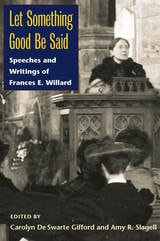
Let Something Good Be Said
Speeches and Writings of Frances E. WillardFrances E. Willard. Edited by Carolyn De Swarte Gifford and Amy R. Slagell
University of Illinois Press, 2007
Celebrated as the most famous woman in America at the time of her death in 1898, Frances E. Willard was a leading nineteenth-century American temperance and women's rights reformer and a powerful orator. President of Evanston College for Ladies (before it merged with Northwestern University) and then professor of rhetoric and aesthetics and the first dean of women at Northwestern, Willard is best known for leading the Woman's Christian Temperance Union (WCTU), America's largest women's organization. The WCTU shaped both domestic and international opinion on major political, economic, and social reform issues, including temperance, women's rights, and the rising labor movement. In what Willard regarded as her most important and far-reaching reform, she championed a new ideal of a powerful, independent womanhood and encouraged women to become active agents of social change. Willard's reputation as a powerful reformer reached its height with her election as president of the National Council of Women in 1888.
This definitive collection follows Willard's public reform career, providing primary documents as well as the historical context necessary to clearly demonstrate her skill as a speaker and writer who addressed audiences as diverse as political conventions, national women's organizations, teen girls, state legislators, church groups, and temperance advocates. Including Willard's representative speeches and published writings on everything from temperance and women's rights to the new labor movement and Christian socialism, Let Something Good Be Said is the first volume to collect the messages of one of America's most important social reformers who inspired a generation of women to activism.
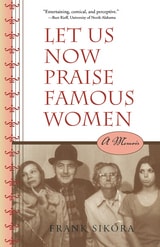
Let Us Now Praise Famous Women
A MemoirFrank Sikora
University of Alabama Press, 2005
An affectionate, humorous account of small town Alabama during the civil rights era.
When Frank Sikora's six-year-old daughter contracted pneumonia in 1962, his wife Millie vowed that would be the last winter she would spend in Ohio. Despite their misgivings about the racial tensions erupting there, they moved their family of six south, where Frank hoped to fulfill his dream of becoming a newspaper reporter. But when those dreams didn't materialize immediately, mounting bills, repossession, and eviction forced them to move in with Millie's parents, Dan and Minnie Belle Helms, in rural Wellington, Alabama.
With even slimmer prospects for employment in impoverished Calhoun County, the Sikoras came to depend heavily upon the Helmses and extended family members and all their lives became closely intertwined. The Helmses were uneducated, unpolished people, but Sikora's narration of his life with them—often humorous but never condescending—provides a compelling portrait of the attitudes and lifestyle of poor whites in Alabama during the second half of the 20th century, just as James Agee's monumental work, Let Us Now Praise Famous Men, illuminated the Depression years in Hale County, Alabama. Sikora illustrates how resourceful, southern women, in particular, held their families together through trying times.
Interwoven with this commentary on rural white culture in the Deep South is the story of Sikora's developing career as a newsman. Determined to succeed, he finally lands a job with the Gadsden Times reporting the news of black citizens. From that introduction to journalism, Sikora becomes one of Alabama's most acclaimed chroniclers of the civil rights movement, eventually writing some of the acknowledged masterpieces about the subject. Like his landmark book, Selma, Lord, Selma, Sikora's newest work tells the stories of ordinary Alabamians and their perspectives on extraordinary times.
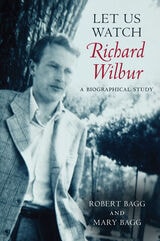
Let Us Watch Richard Wilbur
A Biographical StudyRobert Bagg
University of Massachusetts Press, 2017
Pulitzer Prize–winning poet Richard Wilbur (b. 1921) is part of a notable literary cohort, American poets who came to prominence in the mid-twentieth century. Wilbur's verse is esteemed for its fluency, wit, and optimism; his ingeniously rhymed translations of French drama by Molière, Racine, and Corneille remain the most often staged in the English-speaking world; his essays possess a scope and acumen equal to the era's best criticism. This biography examines the philosophical and visionary depth of his world-renowned poetry and traces achievements spanning seventy years, from political editorials about World War II to war poems written during his service to his theatrical career, including a contentious collaboration with Leonard Bernstein and Lillian Hellman.
Wilbur's life has been mistakenly seen as blessed, lacking the drama of his troubled contemporaries. Let Us Watch Richard Wilbur corrects that view and explores how Wilbur's perceived “normality” both enhanced and limited his achievement. The authors augment the life story with details gleaned from access to his unpublished journals, family archives, candid interviews they conducted with Wilbur and his wife, Charlee, and his correspondence with Robert Lowell, Elizabeth Bishop, John Berryman, John Malcolm Brinnin, James Merrill, and others.
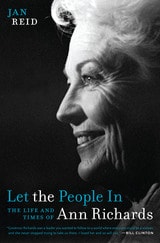
Let the People In
The Life and Times of Ann RichardsBy Jan Reid
University of Texas Press, 2012
Winner, Coral Horton Tullis Memorial Prize, Texas State Historical Association, 2012
Liz Carpenter Award for Research in the History of Women, Texas State Historical Association, 2012
When Ann Richards delivered the keynote of the 1988 Democratic National Convention and mocked President George H. W. Bush—“Poor George, he can’t help it. He was born with a silver foot in his mouth”—she instantly became a media celebrity and triggered a rivalry that would alter the course of American history. In 1990, Richards won the governorship of Texas, upsetting the GOP’s colorful rancher and oilman Clayton Williams. The first ardent feminist elected to high office in America, she opened up public service to women, blacks, Hispanics, Asian Americans, gays, and the disabled. Her progressive achievements and the force of her personality created a lasting legacy that far transcends her rise and fall as governor of Texas.
In Let the People In, Jan Reid draws on his long friendship with Richards, interviews with her family and many of her closest associates, her unpublished correspondence with longtime companion Bud Shrake, and extensive research to tell a very personal, human story of Ann Richards’s remarkable rise to power as a liberal Democrat in a conservative Republican state. Reid traces the whole arc of Richards’s life, beginning with her youth in Waco, her marriage to attorney David Richards, her frustration and boredom with being a young housewife and mother in Dallas, and her shocking encounters with Lyndon Johnson and Jimmy Carter. He follows Richards to Austin and the wild 1970s scene and describes her painful but successful struggle against alcoholism. He tells the full, inside story of Richards’s rise from county office and the state treasurer’s office to the governorship, where she championed gun control, prison reform, environmental protection, and school finance reform, and he explains why she lost her reelection bid to George W. Bush, which evened his family’s score and launched him toward the presidency. Reid describes Richards’s final years as a world traveler, lobbyist, public speaker, and mentor and inspiration to office holders, including Hillary Clinton. His nuanced portrait reveals a complex woman who battled her own frailties and a good-old-boy establishment to claim a place on the national political stage and prove “what can happen in government if we simply open the doors and let the people in.”
Letters around a Garden
Rainer Maria Rilke
Seagull Books, 2024
In July 1921, displaced European poet Rainer Maria Rilke sequestered himself in the chateau of Muzot, a thirteenth-century medieval tower perched in the vineyards above the town of Sierre in the Canton Valais, Switzerland. In this sun-flooded landscape of the Rhone Valley, he found beguiling echoes of Spain and his beloved Provence. Here, the Duino Elegies were famously completed and the Sonnets to Orpheus followed.
During this time, Rilke’s correspondence also bloomed, and Letters around a Garden collects some of those letters together into English for the first time. One intriguing exchange from 1924 to 1926 was with a young aristocratic Swiss woman Antoinette de Bonstetten, a passionate horticulturist who had been recommended as a potential advisor for the redesign and upkeep of the Muzot rose garden. In twenty-two precious letters originally written in French, Rilke relishes the prospect of their elusive meeting, keenly discusses the plans for his garden, and wittily laments the trials of his plants. Beyond the encomium for Paul Valéry and poignant memory of place are passages of exquisite writing, in which Rilke evokes with trademark sensitivity the delicate relationship between the changing seasons and the natural world of his adopted region. We also witness the loving relationship evolve between these sometime-fugitive correspondents and how questions of solitariness and companionship impinge on one who faces unaccustomed challenges as his health tragically declines.
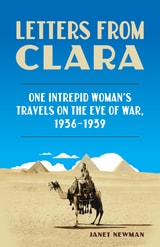
Letters from Clara
One Intrepid Woman's Travels on the Eve of War, 1936-1939Janet Newman
Wisconsin Historical Society Press, 2022
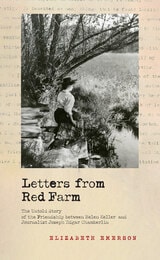
Letters from Red Farm
The Untold Story of the Friendship between Helen Keller and Journalist Joseph Edgar ChamberlinElizabeth Emerson
University of Massachusetts Press, 2021
Informed by previously unpublished letters and extensive research, Letters from Red Farm explores for the first time Keller's deep and enduring friendship with the man who became her literary mentor and friend for over forty years. Written by Chamberlin's great-great granddaughter, this engaging story imparts new insights into Keller's life and personality, introduces the irresistible Chamberlin to a modern public, and follows Keller's burgeoning interest in social activism, as she took up the causes of disability rights, women's issues, and pacifism.
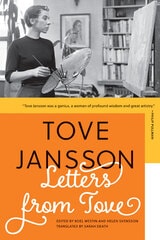
Letters from Tove
Tove Jansson
University of Minnesota Press, 2021
A virtual memoir in letters by the beloved creator of the Moomins
Tove Jansson’s works, even her famed Moomin books, fairly teem with letters of one kind or another, from messages bobbing in bottles to whole epistolary novels. Fortunately for her countless readers, her life was no different, unfolding as it did in the letters to family, friends, and lovers that make up this volume, a veritable autobiography over the course of six decades—and the only one Jansson ever wrote. And just as letters carry a weight of significance in Jansson’s writing, those she wrote throughout her life reflect the gravity of her circumstances, the depth of her thoughts and feelings, and the critical moments of humor, sadness, and grace that mark an artist’s days.
These letters, penned with characteristic insight and wit, provide an almost seamless commentary on Jansson’s life within Helsinki’s bohemian circles and on her island home. Shifting between hope and despair, yearning and happiness, they describe her immersion in art studies and her ascension to fame with the Moomins. They speak frankly of friendship and love, loneliness and solidarity, and also of politics, art, literature, and society. They summon a particular place and time reflected through a mind finely attuned to her culture, her world, and her own nature—all clearly put into biographical and historical context by the volume’s editors, both longtime friends of Tove Jansson—and, in the end, draw a complex, intimate self-portrait of one of the world’s most beloved authors.
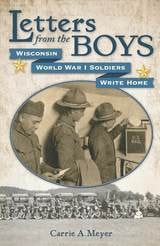
Letters from the Boys
Wisconsin World War I Soldiers Write HomeCarrie A Meyer
Wisconsin Historical Society Press, 2018
On the 100th anniversary of the arrival of the flood of American troops in Europe that would shift the tide of World War I in favor of the Allies, Letters from the Boys brings to life this terrible war as experienced by Wisconsinites writing home.
Technology had transformed the battlefield in alarming ways. Automatic rifles mowed down the young men who went “over the top” to attack enemy trenches; airplanes and improved artillery brought death unseen from miles away; terrifying clouds of poison gas choked and burned the European countryside; the internal combustion engine brought tanks to the battlefield for the first time and revolutionized the way troops deployed.
In the thick of it were young men from Wisconsin who found themselves caught up in geopolitical events half a world away. Professor Carrie A. Meyer combed through three newspapers in Green County, Wisconsin, to collect and synthesize the letters from the boys into a narrative that is both unique and representative, telling the stories of several Green County boys and what they saw, from preparing for war, to life among French families near the front, to the terror of the battlefield. Meyer gracefully removes the veil of obscurity and anonymity hanging over soldiers who participated in a war fought so long ago by great numbers of men, reminding us that armies are made of individuals who strove to do their part and then return to their families.
Letters from the Southwest
Charles Lummis; Edited by James W. Byrkit
University of Arizona Press, 0
In the fall of 1884, journalist Charles Lummis set out on foot from Ohio to California on assignment for the Los Angeles Times. The reports he mailed ahead to that newspaper were later refashioned for the book A Tramp Across the Continent, a work that helped to establish Lummis as the most active promoter of Southwestern culture who ever lived.
Lummis wrote another set of letters during his journey, however, which he sent back to Ohio for publication by the Chillicothe Leader. Although these letters contain basically the same narrative as those sent to Los Angeles and later found in A Tramp, the Ohio letters more closely reflect the author’s thoughts and observations while on the journey. In fact, a comparison of the two drafts indicates that Lummis spent considerable effort removing spontaneous details from the Ohio letters in favor or a more commercial, self-promoting, and politic reporting for the California paper.
The twenty-four Ohio letters, assembled here by James W. Byrkit, offer a far more candid look at the Southwest than Lummis was later to bring to print, as well as greater insight into the author’s own personality. Byrkit’s introductory essay provides the background for Lummis’s career, compares the three bodies of work relating to the trek, and offers an account of Lummis’s transformation from chronicler to promoter.
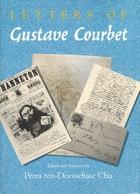
Letters of Gustave Courbet
Gustave Courbet
University of Chicago Press, 1992
pivotal figure in the emergence of modern painting, remains
an artist whose interests, attitudes, and friendships are
little understood. A voluminous correspondent, Courbet
himself, through his letters, offers a tantalizing avenue
toward a keener assessment of his character and
accomplishments. In her critical edition of over six hundred
of the artist's letters, Petra ten-Doesschate Chu presents
just such a look at the inner life of the artist; her
unparalleled feat of gathering together all of Courbet's
known letters, many heretofore unpublished and untranslated,
is sure to change our evaluation of Courbet's creativity and
of his place in nineteenth-century French life.
Beginning when Courbet left his provincial home at
eighteen and ending eight days before his death in exile in
Switzerland, this correspondence enables readers to follow
the artist's development from youth to mature artist of
international repute. Addressed to correspondents such as
the poet Charles Baudelaire, the painter Claude Monet, the
writers Champfleury, Victor Hugo, and Théeophile Gautier,
the political theorist Pierre-Joseph Proudhon, and the
politician Jules Simon, the letters offer numerous insights
into Courbet's life and art as well as the cultural and
political activity of his day. In fascinating detail, they
present the artist's relation to the contemporary media, his
deliberate choice of subject matter for Salon paintings, his
preoccupation with photography, and his participation in the
Commune.
Besides collecting, translating, and annotating the
letters, Chu provides an introduction, a chronology,
biographies of persons appearing frequently in the letters,
and a list of paintings and sculptures mentioned in the
letters. Her work is an essential resource of immediate use
to historians of art and culture, political and social
historians, and readers of biography.
Petra ten-Doesschate Chu is professor and head of the
Department of Art and Music at Seton Hall University.
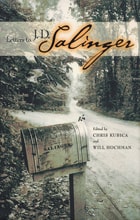
Letters to J. D. Salinger
Edited by Chris Kubica and Will Hochman
University of Wisconsin Press, 2014
Salinger continues to maintain his silence, but Holden Caulfield, Franny and Zooey, and Seymour Glass—the unforgettable characters of his novel and short stories—continue to speak to generations of readers and writers. Letters to Salinger includes more than 150 personal letters addressed to Salinger from well-known writers, editors, critics, journalists, and other luminaries, as well as from students, teachers, and readers around the world, some of whom have just discovered Salinger for the first time. Their voices testify to the lasting impressions Salinger’s ideas and emotions have made on so many diverse lives.
Contributors include Marvin Bell, Frederick Busch, Stephen Collins, Nicholas Delbanco, Warren French, Herbert Gold, W. P. Kinsella, Molly McQuade, Stewart O’Nan, Robert O’Connor, Ellis Paul, Molly Peacock, Sanford Pinsker, George Plimpton, Gerald Rosen, Sid Salinger, David Shields, Joseph Skibell, Melanie Rae Thon, Alma Luz Villanueva, Katharine Weber, and many others
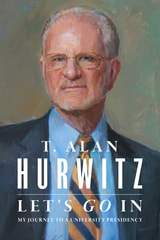
Let’s Go In
My Journey to a University PresidencyT. Alan Hurwitz
Gallaudet University Press, 2020
Additional images, videos, and supplemental readings are available at the Gallaudet University Press/Manifold online platform.
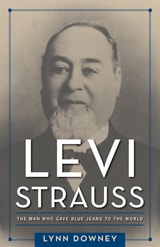
Levi Strauss
The Man Who Gave Blue Jeans to the WorldLynn Downey
University of Massachusetts Press, 2016
Blue jeans are globally beloved and quintessentially American. They symbolize everything from the Old West to the hippie counter-culture; everyone from car mechanics to high-fashion models wears jeans. And no name is more associated with blue jeans than Levi Strauss & Co., the creator of this classic American garment.
As a young man Levi Strauss left his home in Germany and immigrated to America. He made his way to San Francisco and by 1853 had started his company. Soon he was a leading businessman in a growing commercial city that was beginning to influence the rest of the nation. Family-centered and deeply rooted in his Jewish faith, Strauss was the hub of a wheel whose spokes reached into nearly every aspect of American culture: business, philanthropy, politics, immigration, transportation, education, and fashion.
But despite creating an American icon, Levi Strauss is a mystery. Little is known about the man, and the widely circulated "facts" about his life are steeped in mythology. In this first full-length biography, Lynn Downey sets the record straight about this brilliant businessman. Strauss's life was the classic American success story, filled with lessons about craft and integrity, leadership and innovation.
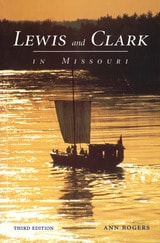
Lewis and Clark in Missouri
Ann Rogers
University of Missouri Press, 2002

Libby Larsen
Composing an American LifeDenise Glahn
University of Illinois Press, 2017
Denise Von Glahn’s in-depth examination of Larsen merges traditional biography with a daring scholarly foray: an ethnography of one active artist. Drawing on musical analysis, the composer’s personal archive, and seven years of interviews with Larsen and those in her orbit, Von Glahn illuminates the polyphony of achievements that make up Larsen’s public and private lives. In considering Larsen’s musical impact, Von Glahn delves into how elements of the personal—a 1950s childhood, spiritual seeking, love of nature, and status as an “important woman artist”—inform her work. The result is a portrait of a musical pathfinder who continues to defy expectations and reject labels.
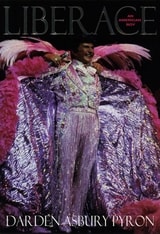
Liberace
An American BoyDarden Asbury Pyron
University of Chicago Press, 2000
Liberace's career follows the trajectory of the classic American dream. Born in the Midwest to Polish-Italian immigrant parents, he was a child prodigy who, by the age of twenty, had performed with the Chicago Symphony Orchestra. Abandoning the concert stage for the lucrative and glittery world of nightclubs, celebrities, and television, Liberace became America's most popular entertainer. While wildly successful and good natured outwardly, Liberace, Pyron reveals, was a complicated man whose political, social, and religious conservativism existed side-by-side with a lifetime of secretive homosexuality. Even so, his swishy persona belied an inner life of ferocious aggression and ambition. Pyron relates this private man to his public persona and places this remarkable life in the rapidly changing cultural landscape of twentieth-century America.
Pyron presents Liberace's life as a metaphor, for both good and ill, of American culture, with its shopping malls and insatiable hunger for celebrity. In this fascinating biography, Pyron complicates and celebrates our image of the man for whom the streets were paved with gold lamé.
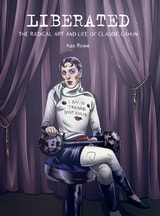
Liberated
The Radical Art and Life of Claude CahunKaz Rowe
J. Paul Getty Trust, The, 2023
At the turn of the twentieth century in Nantes, France, Lucy Schwob met Suzanne Malherbe, and lightning struck. The two became partners both artistically and romantically and transformed themselves into the creative personas Claude Cahun and Marcel Moore. Together, the couple embarked on a radical journey of Surrealist collaboration that would take them from conservative provincial France to the vibrancy of 1920s Paris to the oppression of Nazi-occupied Jersey during World War II, where they used art to undermine the Nazi regime.
Cahun and Moore challenged gender roles and championed freedom at a time when strict societal norms meant that the truth of their relationship had to remain secret. Featuring ten photographs by Cahun and Moore, this graphic biography by cartoonist Kaz Rowe brings Cahun’s inspiring story to life.
Ages thirteen to eighteen
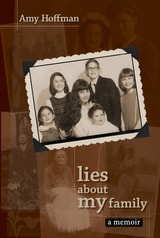
Lies About My Family
A MemoirAmy Hoffman
University of Massachusetts Press, 2013
All of Amy Hoffman's grandparents came to the United States during the early twentieth century from areas in Poland and Russia that are now Belarus and Ukraine. Like millions of immigrants, they left their homes because of hopeless poverty, looking for better lives or at the least a chance of survival. Because of the luck, hard work, and resourcefulness of the earlier generations, Hoffman and her five siblings grew up in a middle-class home, healthy, well fed, and well educated. An American success story? Not quite—or at least not quite the standard version. Hoffman's research in the Ellis Island archives along with interviews with family members reveal that the real lives of these relatives were far more complicated and interesting than their documents might suggest.
Hoffman and her siblings grew up as observant Jews in a heavily Catholic New Jersey suburb, as political progressives in a town full of Republicans, as readers in a school full of football players and their fans.
As a young lesbian, she distanced herself from her parents, who didn't understand her choice, and from the Jewish community, with its organization around family and unquestioning Zionism. However, both she and her parents changed and evolved, and by the end of this engaging narrative, they have come to new understandings, of themselves and one another.
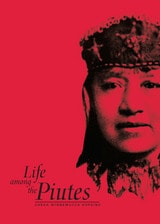
Life Among the Piutes
Their Wrongs and ClaimsSarah Winnemucca Hopkins
University of Nevada Press, 1994
This autobiographical work was written by one of the country's most well-known Native American women, Sarah Winnemucca. She was a Paiute princess and a major figure in the history of Nevada; her tribe still resides primarily in the state. Life Among the Piutes deals with Winnemucca's life and the plight of the Paiute Indians. Life Among the Piutes is Winnemucca's powerful legacy to both white and Paiute cultures. Following the oral tradition of Native American people, she reaches out to readers with a deeply personal appeal for understanding. She also records historical events from a unique perspective. She managed to record the Native American viewpoint of whites settling the West, told in a language that was not her own and by a woman during the time when even white women were not allowed to vote. Sarah Winnemucca dedicated her life to improving the living and social conditions for her people. She gave more than 400 speeches across the United States and Europe to gain support for the Paiutes. She died of tuberculosis in 1891. Life Among the Piutes was originally published in 1883.

Life Is What Happens While You Make Other Plans
A Memoir by Jerry Kolins
Michigan Publishing Services, 2021
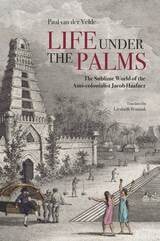
Life Under the Palms
The Sublime World of the Anti-colonialist Jacob HaafnerPaul van der Velde
National University of Singapore Press, 2019
With the help of generous excerpts from Haafner's own writings, including material newly translated into English, Paul van der Velde tells an affecting story of a young man who made a world for himself along the Coromandel Coast, in Ceylon and Calcutta, but who returned to Europe to live the last years of his life in Amsterdam, suffering an acute nostalgia for Asia. This will be compelling reading for anyone interested in European response to the cultures of Asia.
Life Writing in the Long Run
A Smith and Watson Autobiography Studies ReaderSidonie Smith and Julia Watson
Michigan Publishing Services, 2016
Available in print, eBook, and open access versions, this collection captures decades of exciting developments in the field, making it indispensable reading for courses on modes and media of self-presentation in cultural, gender, and literary studies and feminist theory.
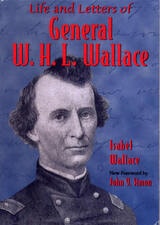
Life and Letters of General W. H. L. Wallace
Isabel Wallace. Foreword by John Y. Simon
Southern Illinois University Press, 2000
Originally published in 1909, this biography by Isabel Wallace recounts the life of her adoptive father, the little-recognized William Hervy Lamme Wallace, the highest-ranking Union officer to fall at the battle of Shiloh.
Born in 1821 in Ohio, Wallace and his family moved to Illinois in 1834, where he was educated at Rock Springs Seminary in Mount Morris. On his way to study law with Abraham Lincoln in Springfield in 1844, Wallace was persuaded by local attorney T. Lyle Dickey, a close friend of Lincoln, to join his practice in Ottawa instead. Wallace eventually married Dickey’s daughter, Martha Ann, in 1851.
When the Civil War broke out, both Wallace and Dickey immediately volunteered for service with the Eleventh Illinois, which assembled in Springfield. Wallace was elected as the unit’s colonel; a successful lawyer, a friend of President Lincoln, a generation older than most privates, and an officer with Mexican War experience, he was entirely suited for such command. Wallace was appointed brigadier general for his performance at Fort Donelson, the first notable Union victory in the Civil War. Wallace’s troops had saved the day, although the Eleventh Illinois had lost nearly two-thirds of its men. He then moved with his troops to Pittsburg Landing, Tennessee, where Confederates launched a surprise attack on the forces of Major General Ulysses S. Grant at Shiloh Church on Sunday, April 6, 1862. Wallace, who held only temporary command of one of Grant’s six divisions, fought bravely but was mortally wounded as he began to withdraw his men on the afternoon of the battle. His wife, who had arrived at Pittsburg Landing by steamer on the day of the battle, was at his side when he died three days later. Grant praised Wallace in 1868 as “the equal of the best, if not the very best, of the Volunteer Generals with me at the date of his death.”
Isabel Wallace traces her father’s life from his upbringing in Ottawa through his education, his service in the Mexican War, his law practice, his courtship of and marriage to her mother, and his service in the Eleventh Illinois until his mortal injury at Shiloh. She also details his funeral and her and her mother’s life in the postwar years. Based on the copious letters and family papers of the general and his wife, the biography also provides historical information on federal politics of the period, including commentary on Lincoln’s campaign and election and on state politics, especially regarding T. Lyle Dickey, Wallace’s father-in-law and law partner, prominent Illinois politician, and associate of Lincoln. It is illustrated with fifteen black-and-white halftones.
Life in the Leatherwoods
New EditionJohn Quincy Wolf
University of Arkansas Press, 2000
Originally published by Memphis State University Press in 1974, this new edition includes additional writings of John Q. Wolf and a continuation of the autobiographical narrative after his 1887 move to Batesville. Wolf’s writings are valuable resources for southern historians, folklorists, general readers, and scholars of Ozarkiana because they provide a rare glimpse into the social and family life of a largely misunderstood and stereotyped people—the independent hill farmers of the Arkansas Ozarks of the 1870s and 1880s. With Life in the Leatherwoods, Wolf bestows a benediction upon a society that existed vibrantly and humorously in his memory—one that has now forever disappeared from the American countryside.
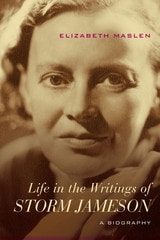
Life in the Writings of Storm Jameson
A BiographyElizabeth Maslen
Northwestern University Press, 2014
Margaret Storm Jameson (1891–1986) is primarily known as a compelling essayist; her stature as a novelist and champion of the dispossessed is largely forgotten. In Life in the Writings of Storm Jameson, Elizabeth Maslen reveals a figure who held her own beside fellow British women writers, including Virginia Woolf; anticipated the Angry Young Women, such as Doris Lessing; and was an early champion of such European writers as Arthur Koestler and Czesław Miłosz. Jameson was a complex character whose politics were grounded in social justice; she was passionately antifascist—her novel In the Second Year (1936) raised the alarm about Nazism—but always wary of communism. An eloquent polemicist, Jameson was, as president of the British P.E.N. during the 1930s and 1940s, of invaluable assistance to refugee writers. Elizabeth Maslen’s biography introduces a true twentieth century hedgehog, whose essays and subtly experimental fiction were admired in Europe and the States.
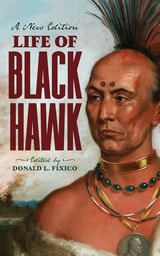
Life of Black Hawk
A New EditionDonald L. Fixico
Westholme Publishing, 2026
Born in 1767 at Saukenuk on the Rock River in western Illinois, Black Hawk of the Sauk and Fox Nation rose from young warrior to fierce defender of his people as the United States pushed relentlessly westward. His autobiography, originally dictated in 1833, is one of the earliest Native American life narratives recorded: a warrior’s unfiltered account of betrayal, resistance, and the patriotic fight to protect his homeland. In 1832, Black Hawk led his people to reclaim Saukenuk. Settlers had destroyed their homes and crops and illegally occupied their land that had been recognized as Sauk and Fox by treaty. After winning the first two battles against the U.S. military and volunteer militia in Wisconsin, Black Hawk’s band lost the final one at Bad Axe. Black Hawk’s people were forced to accept permanent removal to the west, and he became a prisoner of war at the Fort Jefferson barracks near St. Louis. It was there that he dictated his autobiography to an interpreter.
Introduced and edited by historian Donald L. Fixico, this new edition of Life of Black Hawk brings fresh context and cultural depth to Black Hawk’s words, illuminating the Sauk and Fox worldview, the sacred traditions of the Thunder Clan, and the spiritual life that shaped this remarkable leader. Black Hawk's account conveys what it was like to be a Sauk warrior in the early 1800s. He explains the Medicine Way of his people and how the traditional worldview of Black Hawk was quickly changing from a harmonious relationship with nature to unavoidable frontier hostilities with an expanding United States. You feel the frustrating dilemma of Black Hawk, who knows that defending his people and fighting to save his homeland is morally right. Timely, intimate, and essential, this volume is both a vivid window into the Indigenous experience on the frontier and a testament to a man who stands alongside the great Native patriots. For readers of Native American history, military history, and American biography, this is an extraordinary story that has never been more important to hear.

Life of Henry David Thoreau
Henry S. SaltEdited by George Hendrick, Willene Hendrick, and Fritz Oehlschlaeger
University of Illinois Press, 1993
In 1890 Salt published the initial version of Thoreau's Life. With the help of American friends, he revised the book and published it anew six years later. The present volume is the third version of the biography, completed in 1908 but never published in Salt's lifetime.
Combining a concise narrative of Thoreau's life with a perceptive treatment of his ideas and writings, it stands as a penetrating study of Thoreau, stressing his distinctive individuality. Through an astute analysis of the text and a concise biography, the editors illustrate Salt's growth as a scholar and his changing views on Thoreau and Thoreau's philosophy.