Results by title
30 books match the query 'Versions'
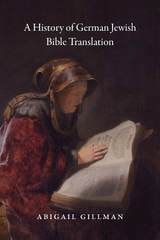
A History of German Jewish Bible Translation
Abigail Gillman
University of Chicago Press, 2018
This book is the first in English to offer a close analysis of German Jewish translations as part of a larger cultural project. Looking at four distinct waves of translations, Abigail Gillman juxtaposes translations within each that sought to achieve similar goals through differing means. As she details the history of successive translations, we gain new insight into the opportunities and problems the Bible posed for different generations and gain a new perspective on modern German Jewish history.
A Restless Search
A History of Persian Translations of the BibleKenneth J. Thomas
SBL Press, 2015
A literary detective story, a historical survey, and an important contribution to translation studies
This book from Kenneth J. Thomas is both a philological and linguistic analysis of Persian translations and a call for interfaith cooperation. Thomas appraises biblical translation efforts from the fifth to the twenty-first centuries of Persian history when successive translators and groups of translators, sometimes of different faiths, worked to reshape and refine versions of the Bible in the supple Persian language of their times. Restless, impelled, and wide-ranging, this is a story of translations commissioned by shahs, undertaken by Christian and Jewish communities, and produced by teams working outside the country.
Features
- Demonstration of the effects of the lack of a standard Persian vocabulary for key biblical terms on literary style and word choice
- Technical analyses and overviews of Persian biblical translations
- A careful examination of sixteen centuries' worth of Bible translations
A User's Guide to the Nestle-Aland 28 Greek New Testament
David Trobisch
SBL Press, 2013
Crainte de Dieu, Sagesse et Loi
Aspects théologiques à partir de Si 10,19-11,6Katharina Lentz
SBL Press, 2020
Peu d'études spécifiques ont été consacrées à Ben Sira 10,19-11,6. Lentz examine le texte en hébreu, grec, syriaque et latin, en essayant d'identifier les différences majeures entre ces versions et leurs orientations fondamentales respectives. Dans cette péricope, elle révèle trois thèmes importants: la crainte de Dieu, la sagesse et la loi. En prenant comme point de départ le thème de la crainte de Dieu dans le Deutéronome, les Psaumes et les Proverbes, Job et Qoheleth en plus de Ben Sira, Lentz examine la relation de ce thème avec la sagesse et la loi. La relation étroite entre la crainte de Dieu, la sagesse et la loi devrait inciter les spécialistes à se demander si celles-ci ne représentent pas trois aspects de la même réalité.
Few specific studies have been devoted to Ben Sira 10:19-11:6. Lentz examines the text in Hebrew, Greek, Syriac, and Latin, trying to identify the major differences between these versions and their respective fundamental orientations. In this pericope she reveals three important themes: the fear of God, wisdom, and the law. Taking as a point of departure the theme of the fear of God in Deuteronomy, Psalms, and Proverbs, Job, and Qoheleth, in addition to Ben Sira, Lentz examines the relationship of this theme with wisdom and the law. The close relationship between the fear of God, wisdom, and the law should lead scholars to ask if these do not represent three aspects of the same reality.
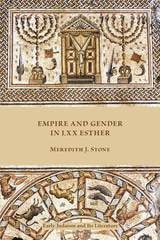
Empire and Gender in LXX Esther
Meredith J. Stone
SBL Press, 2018
A new perspective on essential aspects of Esther’s plot and characters for students and scholars
Empire and Gender in LXX Esther foregrounds and highlights empire as the central lens in this provocative new reading of Esther. This book provides a unique synchronic reading of LXX Esther with the Additions, allowing the presence and negotiation of imperial power to be further illuminated throughout the story’s plot. Stone explores and demonstrates how performances of gender are inextricably intertwined with the exertion and negotiation of imperial power portrayed in LXX Esther and offers examples of connections to the range of imperial power experienced by Jewish people during the late Second Temple period.
Features:
- An exploration of the tenets and methodology of imperial-critical approaches
- Focused attention to the final form of LXX Esther
- Construction of early audiences for LXX Esther in first-century BCE Ptolemaic Alexandria and Hasmonean Judea
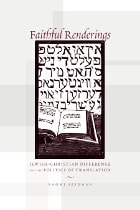
Faithful Renderings
Jewish-Christian Difference and the Politics of TranslationNaomi Seidman
University of Chicago Press, 2006
Bringing together central issues in translation studies with episodes in Jewish–Christian history, Naomi Seidman considers a range of texts, from the Bible to Elie Wiesel’s Night, delving into such controversies as the accuracy of various Bible translations, the medieval use of converts from Judaism to Christianity as translators, the censorship of anti-Christian references in Jewish texts, and the translation of Holocaust testimony. Faithful Renderings ultimately reveals that translation is not a marginal phenomenon but rather a crucial issue for understanding the relations between Jews and Christians and indeed the development of each religious community.
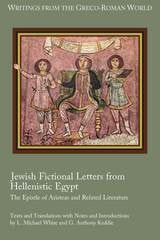
Jewish Fictional Letters from Hellenistic Egypt
The Epistle of Aristeas and Related LiteratureL. Michael White
SBL Press, 2017
The first Greek text of the Epistle of Aristeas published in more than a century
The Greek text Epistle of Aristeas is a Jewish work of the late Hellenistic period that recounts the origins of the Septuagint. Long recognized as a literary fiction, the Epistle of Aristeas has been variously dated from the third century BCE to the first century CE. As a result, its epistolary features, and especially those in which the putative author, Aristeas, addresses his brother and correspondent, Philocrates, have largely been ignored. In light of more recent scholarship on epistolary literature in the Greco-Roman world, however, this volume presents for the first time a complete Greek text and English Translation with introduction, notes, and commentary of the Epistle of Aristeas with key testimonia from Philo, Josephus, and Eusebius, as well as other related examples of Jewish fictional letters from the Apocrypha and Pseudepigrapha.
Features
- Relevant excerpts from Eupolemus, 2 Maccabees, 3 Maccabees, and the Greek Additions to Esther with translations and introductions
- A critical introduction to ancient Greek letter-writing
- An outline of epistolary features in the text
L'influence de l'arameen sur les traducteurs de la LXX principalement sur les traducteurs grecs poste
Anne-Françoise Loiseau
SBL Press, 2016
Further your understanding of the methods and peculiarities of the ancient Greek translators and revisers of the Hebrew Bible
Loiseau presents examples of Greek translations of verses from the Hebrew Bible that clearly illustrate the influence of Aramaic or Late Hebrew on the semantics of the Septuagint translators. The author postulates that the Greek translators based their translations on Hebrew-Aramaic equivalents maintained as lists or even on proto-targumim such as those found at Qumran, both predecessors of the later Aramaic targumic translations. Loiseau's examples provide convincing explanations for different coincidences occurring between the Greek translations and the interpretative traditions found in the targumim and help elucidate a number of puzzling translations where two Aramaic words that are very similar graphically or phonetically were erroneously interchanged.
Features
- Unique insight into ancient Jewish exegesis
- English summary
- The first extensive illustration of the influence of the Aramaic or Late Hebrew on the Septuagint
LXX Isaiah 24
1-26:6 as Interpretation and Translation: A Methodological DiscussionWilson de Angelo Cunha
SBL Press, 2014
Explore how interpretation affects translation
In this volume Cunha argues that the differences found between the Septuagint text of Isaiah and the Hebrew of the Masoretic Text must be weighed against the literary context in which they are found. The author demonstrates that LXX Isa 24:1–26:6 can be seen as a coherent ideological composition that differs greatly from the way scholars have interpreted MT Isa 24:1–26:6. This coherence comes across through the use of certain lexemes and conjunctions throughout the passage. The book lays the case that a scribe or translator already had an interpretation before he started the process of translation that shaped his translation of the Hebrew text into Greek.
Features:
- An introduction sketching the history of research on LXX Isa 24:1–26:6
- A focused comparision of the Masoretic Text to the Septuagint
- A thorough discussion of the coherence of LXX Isa 24:1–26:6
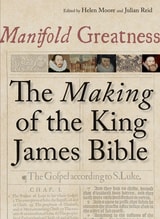
Manifold Greatness
The Making of the King James BibleEdited by Helen Moore and Julian Reid
Bodleian Library Publishing, 2011
Published to commemorate the four hundredth anniversary of the publication of the King James Bible, Manifold Greatness tells the story of the creation and immediate afterlife of the King James translation of the Bible, first published in 1611. Revolutionary at its time, the King James translation quickly became the dominant authorized translation of the Christian Bible in English. There are more than one billion copies in print, making it the best-selling book of all time, and its effect on the English language is incalculable, both in common speech and in literature.
This accessible and richly illustrated visual history contains eighty color illustrations, including images of rare manuscripts, artifacts, and archival material such as the annotated Bodleian Bishops’ Bible of 1602, pages from the Wycliffite and Tyndale Bibles, and an edition of the Bishop’s Bible owned by Elizabeth I. Eight chapters contributed by leading academics in the field discuss the history of biblical translation, the political background of the project, the Oxford Translators—including Henry Savile, John Rainolds, and John Harmar—and their working milieu, the cultural politics, and the reception and influence of the King James Bible up until the 1769 publication of the Oxford Standard Edition, which was the first revision of the original 1611 translation. Also included is a look at the later reception of the King James Bible in America, including a chapter specifically on the King James Bible and the Folger Shakespeare Library.
Manifold Greatness brings together key research and documentation to provide a lively and comprehensive visual account to celebrate one of the most important occasions in publishing and modern religious history.
NO Rhetoric(s)
Versions and Subversions of Resistance in Contemporary Global ArtEdited by Sara Alonso Gómez, Isabel J. Piniella Grillet, Nadia Radwan, and Elena Rosauro
Diaphanes, 2021
NO Rhetoric(s) examines a subject intensely debated during the last three decades but rarely a topic of its own: art as an agent of resistance, whether as a rhetorical stance or critical strategy. In the face of today’s discourse on revolt and insurrection, it is necessary to ask whether the gesture of “negation” still has an emancipatory potential. NO Rhetoric(s) contributes a deeper understanding of the different logics of resistance at play between art and politics. Showcasing a diverse array of voices, this volume presents contributions on topics as varied as sexual dissidence, ecology, and geopolitics in the digital age. Through this interdisciplinary show of force, the collected authors, artists, and scholars shed light on how art approaches the most urgent issues facing today’s society.
Postclassical Greek and Septuagint Lexicography
William A. Ross
SBL Press, 2022
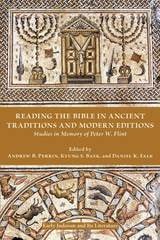
Reading the Bible in Ancient Traditions and Modern Editions
Studies in Memory of Peter W. FlintAndrew B. Perrin
SBL Press, 2017
A collection of essays commemorating the career contributions of Peter W. Flint
An international group of scholars specializing in various disciplines of biblical studies—Dead Sea Scrolls, Septuagint, Hebrew Bible/Old Testament, Second Temple Judaism, and Christian origins—present twenty-seven new contributions that commemorate the career of Peter W. Flint (1951–2016). Each essay interacts with and gives fresh insight into a field shaped by Professor Flint’s life work. Part 1 explores the interplay between text-critical methods, the growth and formation of the Hebrew Scriptures, and the making of modern critical editions. Part 2 maps dynamics of scriptural interpretation and reception in ancient Jewish and Christian literatures of the Second Temple period.
Features
- Essays that assess the state of the field and reflect on the methods, aims, and best practices for textual criticism and the making of modern critical text editions
- Demonstrations of how the processes of scriptural composition, transmission, and reception converge and may be studied together for mutual benefit
- Clarification of the state/forms of scripture in antiquity and how scripture was extended, rewritten, and recontextualized by ancient Jewish and Christian scribes and communities
Reinventing the South
Versions of a Literary RegionMark Royden Winchell
University of Missouri Press, 2006
Textual History and the Reception of Scripture in Early Christianity
Johannes de Vries
SBL Press, 2013
The Bible in Greek
Translation, Transmission, and Theology of the SeptuagintSiegfried Kreuzer
SBL Press, 2015
This volume presents English and German papers that give an overview on important stages, developments, and problems of the Septuagint and the research related to it. Four sections deal with the cultural and theological background and beginnings of the Septuagint, the Old Greek and recensions of the text, the Septuagint and New Testament quotations, and a discussion of Papyrus 967 and Codex Vaticanus.
Features:
- A complete list of Kreuzer’s publications on the text and textual history of the Hebrew Bible and the Septuagint
- Criteria for analysis of the Antiochene/Lucianic Text and the Kaige-Recension
- A close examination of the origins and development of the Septuagint in the context of Alexandrian and early Jewish culture and learning
The Coming of the King James Gospels
A Collection of the Translators’ Work-in-ProgressWard S. Allen
University of Arkansas Press, 1994
The Coming of the King James Gospels is a primary publication exploring the handwritten annotations of the Oxford New Testament Company, made as members completed Matthew, Mark, Luke, and John. Their original edited pages, gathered into one binding as the Bodleian Bishops’ Bible ([1602] b.1), offer us the only known surviving record of their monumental work.
Ward Allen’s painstakingly produced collation of this Bishops’ Bible is available for the first time in acessible visual layout. It allows a reader to study simultaneously the three texts, that of the original Bishops’ Bible, the revisions suggested for the 1602 text, and the final King James version of the Gospels. Rejected readings reveal the reasoning which led to the wording of the final text. Beautifully produced, The Coming of the King James Gospels is now a prime resource for all students of the Bible and the English language.
The Old Greek of Isaiah
An Analysis of Its Pluses and MinusesMirjam van der Vorm-Croughs
SBL Press, 2014
A concise study of a large number of examples of pluses and minus providing insight into translation from Hebrew to Greek
Van der Vorm-Croughs focuses this translation study on the processes leading to pluses and minuses including linguistic and stylistic aspects (i.e., cases in which elements have been added or omitted for the sake of a proper use of the Greek language), literary aspects (additions and omissions meant to embellish the Greek text), translation technical aspects (e.g., the avoidance of redundancy), and contextual and intertextual exegesis and harmonization. This work also covers the relation between the Greek Isaiah and its possible Hebrew Vorlage to try to determine which pluses and minuses may have been the result of the translator’s use of a different Hebrew text.
Features:
- Eleven categories for the pluses and minuses of the Greek Isaiah
- Examination of translation techniques and translator errors
- Use of Joseph Ziegler’s critical edition
The SBL Commentary on the Septuagint
An IntroductionDirk Büchner
SBL Press, 2017
Explore the groundwork for a new commentary series from SBL Press
This book contains verse by verse commentary on selections from the Greek text of the Hebrew Bible known as the Septuagint. Each chapter is from a different bible book, for which there will eventually be a full commentary published in the Society of Biblical Literature Commentary on the Septuagint. The commentary series focuses on the actual process of translation, so its authors try to describe and explain the kinds of decisions the ancient Alexandrian translators made about how to render Hebrew into Greek.
Features
- Translations from and commentary on Genesis, Exodus, Leviticus, Numbers, Esther, Job, and Psalms Contributions from eight experts on the Septuagint
- Guidelines and procedures used in the production of the translations in the series
The Samaritan Pentateuch
An Introduction to Its Origin, History, and Significance for Biblical StudiRobert T. Anderson
SBL Press, 2012
Toward a Theology of the Septuagint
Stellenbosch Congress on the Septuagint, 2018Johann Cook
SBL Press, 2020
Innovative Septuagint research from an international group of scholars
Toward a Theology of the Septuagint: Stellenbosch Congress on the Septuagint, 2018 focuses on the question of whether it is appropriate and possible to formulate a theology of the Septuagint. Nineteen English and German essays examine Old Testament, New Testament, and extrabiblical texts from a variety of methodological perspectives to demonstrate that such a theology is indeed necessary and possible.
Features
Tradition and Innovation
English and German Studies on the SeptuagintMartin Rösel
SBL Press, 2018
Explore the opportunities and challenges of Septuagint studies
Recent research into the Septuagint has revealed numerous examples of modifications of the meaning of the Hebrew text in the course of its translation into Greek. This collection of essays by one of the leading scholars on the Septuagint shows how complex the translation of individual books was, provides reasons for differences between the Hebrew and Greek Bibles, and paves the way for a theology of the Septuagint. Articles introduce the field of Septuagint studies, the problem of the Letter of Aristeas, and the Hellenistic environment and the hermeneutics of Hellenistic Judaism.
Features:
- A methodological discussion of whether and how a theology of the Septuagint can be written
- Essays introducing the field of Septuagint studies and its Hellenistic environment and the hermeneutics of Hellenistic Judaism
- Fifteen English and German essays covering twenty-five years of Septuagint research
Versions of Academic Freedom
From Professionalism to RevolutionStanley Fish
University of Chicago Press, 2014
Depending on who’s talking, academic freedom is an essential bulwark of democracy, an absurd fig leaf disguising liberal agendas, or, most often, some in-between muddle that both exaggerates its own importance and misunderstands its actual value to scholarship. Fish enters the fray with his typical clear-eyed, no-nonsense analysis. The crucial question, he says, is located in the phrase “academic freedom” itself: Do you emphasize “academic” or “freedom”? The former, he shows, suggests a limited, professional freedom, while the conception of freedom implied by the latter could expand almost infinitely. Guided by that distinction, Fish analyzes various arguments for the value of academic freedom: Is academic freedom a contribution to society's common good? Does it authorize professors to critique the status quo, both inside and outside the university? Does it license and even require the overturning of all received ideas and policies? Is it an engine of revolution? Are academics inherently different from other professionals? Or is academia just a job, and academic freedom merely a tool for doing that job?
No reader of Fish will be surprised by the deftness with which he dismantles weak arguments, corrects misconceptions, and clarifies muddy arguments. And while his conclusion—that academic freedom is simply a tool, an essential one, for doing a job—may surprise, it is unquestionably bracing. Stripping away the mystifications that obscure academic freedom allows its beneficiaries to concentrate on what they should be doing: following their intellectual interests and furthering scholarship.

Versions of Hollywood Crime Cinema
Studies in Ford, Wilder, Coppola, Scorsese, and OthersCarl Freedman
Intellect Books, 2013
Film, argues Carl Freedman, is an especially fruitful medium for considering questions like these. With Versions of Hollywood Crime Cinema, he offers a series of critical readings spanning several genres. From among the mob movies, Freedman focuses on Francis Ford Coppola’s Godfather trilogy—arguably the foremost work of crime cinema—crafting a convincing argument that the plot’s action is principally driven by the shift from Sicily to America, which marks the shift to a capitalist society. Turning his attention to other genres, Freedman also looks at film noir and Westerns, in addition to films for which crime is significant but not central, from horror movies like Stanley Kubrick’s The Shining to science fiction and social realist films like The Grapes of Wrath. In recent years, television has welcomed innovative works like Boardwalk Empire, The Wire, and The Sopranos, and Freedman discusses how television’s increasingly congenial creative environment has allowed it to turn out productions whose ability to engage with these larger social questions rivals that of films from the height of cinema’s Golden Age.
Worlds Built to Fall Apart
Versions of Philip K. DickDavid Lapoujade
University of Minnesota Press, 2024
Philosophically analyzing the work of one of the twentieth century’s most popular, and peculiar, science fiction authors
Despite his enduring popularity, Philip K. Dick (1928–1982)—whose short stories and novels were adapted into or influenced many major films and television shows, including Blade Runner, Total Recall, The Truman Show, and The Man in the High Castle—has long been a marginal figure in American literature, even in the science fiction genre he helped revolutionize. Here, an influential French philosopher offers a major new perspective on an author who was known as much for his eccentricities and excesses as for his writing. For David Lapoujade, it is precisely the many ways in which Dick’s works seem to hover on the brink of losing all touch with reality that make him such a singular figure, both as a sci-fi author and as a thinker of contemporary life.
In Worlds Built to Fall Apart, Lapoujade defines sci-fi as a way of thinking through the creation of worlds and argues that Dick does so by creating worlds that fall rapidly to pieces. Whatever his mechanism to bring this about (drugs or madness, alien satellite transmissions or encroaching parallel universes), the effect is always to reveal reality to be a construction, in which certain people determine what appears as real to the rest of us. Orienting Dick within philosophy and drawing connections to a wide variety of other thinkers and artists, this remarkable reading shows how he proposes unstable, fluctuating futures in which tinkering with reality has become the best means of resisting total control.
Engaging with most of Philip K. Dick’s published works, as well as with several of his essays and his notorious psychic autobiography The Exegesis, Lapoujade hones in on the “war of the psyches” that underlies Dick’s critique of reality. He puts Dick’s work in conversation with a vast array of subjects—from cybernetics to schizoanalysis, and from Pop art to David Lynch, J. G. Ballard, and William S. Burroughs—revealing Dick’s oeuvre to comprise a profound reality defined by artifice, precarity, and control.
Retail e-book files for this title are screen-reader friendly.
XIV Congress of the International Organization for Septuagint and Cognate Studies, Helsinki, 2010
Melvin K. Peters
SBL Press, 2013
XV Congress of the International Organization for Septuagint and Cognate Studies
Munich, 2013Wolfgang Kraus
SBL Press, 2016
Essays from experts in the field of Septuagint studies
The study of Septuagint offers essential insights in ancient Judaism and its efforts to formulate Jewish identity within a non-Jewish surrounding culture. This book includes the papers given at the XV Congress of the International Organization for Septuagint and Cognate Studies (IOSCS), held in Munich, Germany, in 2013. The first part of this book deals with questions of textual criticism. The second part is dedicated to philology. The third part underlines the increasing importance of Torah in Jewish self-definition.
Features:
- Essays dealing with questions of textual criticism, mostly concerning the historical books and wisdom literature and ancient editions and translations
- Philological essays covering the historical background, studies on translation technique and lexical studies underline the necessity of both exploring general perspectives and working in detail
XVI Congress of the International Organization for Septuagint and Cognate Studies
Stellenbosch, 2016Gideon R. Kotzé
SBL Press, 2019
Essays from experts in the field of Septuagint studies
This latest volume from the International Organization for Septuagint and Cognate Studies (IOSCS) includes the papers given at the XVI Congress of the IOSCS, South Africa, in 2016. The articles contribute to the study of the Septuagint and cognate literature by identifying and discussing new topics and lines of inquiry and developing fresh insights and arguments in existing areas of research. Scholars and students interested in different methods of studying the Septuagint corpora, the theology and reception of these texts, as well as the works of Josephus will find in this collection critical information for future work in Septuagint studies.
XVII Congress of the International Organization for Septuagint and Cognate Studies
Aberdeen, 2019Gideon R. Kotzé
SBL Press, 2022
This volume from the International Organization for Septuagint and Cognate Studies (IOSCS) includes the papers given at the XVII Congress of the IOSCS, which was held in Aberdeen in 2019. Essays in the collection fall into five areas of focus: textual history, historical context, syntax and semantics, exegesis and theology, and commentary. Scholars examine a range of Old Testament and New Testament texts. Contributors include Kenneth Atkinson, Bryan Beeckman, Elena Belenkaja, Beatrice Bonanno, Eberhard Bons, Cameron Boyd-Taylor, Ryan Comins, S. Peter Cowe, Claude Cox, Dries De Crom, Paul L. Danove, Crispin Fletcher-Louis, Frank Feder, W. Edward Glenny, Roger Good, Robert J. V. Hiebert, Gideon R. Kotzé, Robert Kugler, Nathan LaMontagne, Giulia Leonardi, Ekaterina Matusova, Jean Maurais, Michaël N. van der Meer, Martin Meiser, Douglas C. Mohrmann, Daniel Olariou, Vladimir Olivero, Luke Neubert, Daniel Prokop, Alison Salvesen, Daniela Scialabba, Leonardo Pessoa da Silva Pinto, Martin Tscheu, and Jelle Verburg.
Zer Rimonim
Studies in Biblical Literature and Jewish Exegesis Presented to Professor Rimon KasherMichael Avioz
SBL Press, 2013
An engaging collection of essays in honor of Professor Rimon Kasher
Zer Rimonim includes papers of interest to Professor Kasher in the areas of the Hebrew Bible and the ancient Near East and Jewish interpretations of the Hebrew Bible. Contributors from a variety of Israeli universities include Yairah Amit, Elie Assis, Jonathan Ben-Dov, Joshua Berman, Gershon Brin, Hezi Cohen, Tmima Davidovitz, David Elgavish, Brachi Elitzur, Yitzhaq Feder, Joseph Fleishman, Gershon Galil, Tova Ganzel, Isaac Gottlieb, Edward L. Greenstein, Jonathan Grossman, Mayer Gruber, Jair Haas, Jonathan Jacobs, Bustenay Oded, Yosef Ofer, Jordan S. Penkower, Yosi Peretz, Frank Polak, Meira Poliak, Moshe Rachimi, Ayelet Seidler, Yael Shemesh, Shimon Shtober, Nili Shupak, Uriel Simon, Miriam Sklarz, Yechiel Tzeitkin, Shmuel Vargon, Eran Viezel, and Yair Zakovitch.
Features:
- Essays in modern Hebrew
- Coverage of topics related to the Hebrew Bible, key rabbinic interpreters, and Karaitic and Byzantine interpretations
- English table of contents, front matter, and abstracts