Results by title
2728 books match the query 'Education' and 94 start with l
Learning to Work
The Case for Reintegrating Job Training and EducationW. Norton Grubb
Russell Sage Foundation, 1996
Learning versus the Common Core
Nicholas Tampio
University of Minnesota Press, 2019
An open challenge to Common Core’s drive for uniformity
Nicholas Tampio watched as his kindergartner’s class shifted from one where teachers, aides, parents, and students worked hard to create a rewarding educational experience to one in which teachers delivered hours-long lectures using packaged lesson plans. Learning versus the Common Core explains how standards-based education reform is transforming nearly every aspect of public education by looking closely at the standards, the agenda of people pushing standards-based reform, and how these fit within a global pattern of education reform. With a nod to the philosophy of John Dewey, Tampio concludes with a vision of what democratic education can look like today—and how people can form rhizomatic alliances across different political and ethical backgrounds to fight the Common Core.
Forerunners: Ideas First
Short books of thought-in-process scholarship, where intense analysis, questioning, and speculation take the lead
Leaving College
Rethinking the Causes and Cures of Student AttritionVincent Tinto
University of Chicago Press, 1994
Lend Me Your Ear
Brenda Jo Brueggemann
Gallaudet University Press, 1999
Leonard Covello and the Making of Benjamin Franklin High School
Education As If Citizenship MatteredMichael C. Johanek and John L. Puckett
Temple University Press, 2006
Lesson Plans
The Institutional Demands of Becoming a TeacherEveritt, Judson G.
Rutgers University Press, 2017
In Lesson Plans, Judson G. Everitt takes readers into the everyday worlds of teacher training, and reveals the complexities and dilemmas teacher candidates confront as they learn how to perform a job that many people assume anybody can do. Using rich qualitative data, Everitt analyzes how people make sense of their prospective jobs as teachers, and how their introduction to this profession is shaped by the institutionalized rules and practices of higher education, K-12 education, and gender. Trained to constantly adapt to various contingencies that routinely arise in schools and classrooms, teacher candidates learn that they must continually try to reconcile the competing expectations of their jobs to meet students’ needs in an era of accountability. Lesson Plans reveals how institutions shape the ways we produce teachers, and how new teachers make sense of the multiple and complicated demands they face in their efforts to educate students.

Lessons Inspired by Picture Books for Primary Grades
Maureen Schlosser
American Library Association, 2019
Drawing on compelling picture books that can be used to directly support the AASL National School Library Standards for Learners, School Librarians, and School Libraries, this ready-to-go toolkit of lessons, worksheets, anchor charts, assessments, and rubrics is specifically designed to build learner competencies while examining big ideas inspired by picture books. An invaluable timesaver, this resource provides
- 21 lesson units that cover the six Shared Foundations, each utilizing a formatted template that’s easy to follow and incorporates the four Domains (Think, Create, Share, Grow);
- a picture book synopsis for each unit, followed by lesson objectives, essential questions, materials, and duration;
- worksheets, anchor charts, and exit slips tailored for each picture book and lesson;
- “Quick Tips” that offer helpful ideas and suggestions to consider during the lesson; and
- an appendix that includes rubrics to facilitate assessment in all six foundations.
Lessons and Legacies II
Teaching the Holocaust in a Changing WorldDonald G. Schilling
Northwestern University Press, 1998
Lessons and Legacies II focuses on matters unique to Holocaust education. Consisting of selected papers delivered at the second Lessons and Legacies conference in 1992, the volume is organized in three sections: Issues, Resources, and Applications. Taken individually, the essays speak directly to specific concerns surrounding Holocaust education: the growing maturity of the Holocaust as a field of study; the difficult issue of explaining the perpetrators' behavior; the process of decision-making within Jewish communities during the Holocaust; issues of gender and family; the scope and content of survivor literature; and the structure of courses and the implications of being an educator in the field. Taken as a whole, the volume speaks to the reciprocal and mutually reinforcing relationship between teaching and scholarship in this important field.

Let's Talk About Critique
Reimagining Art and Design EducationElissa Armstrong and Mariah Doren
Intellect Books, 2023
Let’s Talk about Critique examines how critique in art education has evolved, how it falls short, and what else it could be. Elissa Armstrong and Mariah Doren contextualize current practices by discussing the history of critique, the field of education, and the characteristics of today’s students. Then they offer suggestions for ways to have more open, inclusive, and dynamic classroom conversations about art and design. The core of the book consists of critique format descriptions, written by experienced educators, that provide a wide variety of thoughtful approaches that can be readily adapted and used.
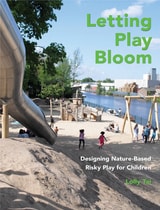
Letting Play Bloom
Designing Nature-Based Risky Play for ChildrenLolly Tai
Temple University Press, 2022
Children love to play in risky—often misunderstood to mean unsafe—ways. It is often how they learn. Research shows that activities like climbing on trees and boulders, hiking in nature, and playing in a creek are excellent ways for kids to develop their creativity and their senses, because playing outdoors evokes different sights, sounds, smells, and textures.
Letting Play Bloom analyzes five outstanding case studies of children’s nature-based risky play spaces—the Slide Hill at Governors Island in New York, the Berkeley (CA) Adventure Playground, and Wildwoods at Fernbank Museum in Atlanta, as well as sites in the Netherlands and Australia. Author Lolly Tai provides detailed explanations of their background and design, and what visitors can experience at each site.
She also outlines the six categories of risky—not hazardous—play, which involve great heights, rapid speeds, dangerous tools, dangerous elements, rough-and-tumble play, and wandering or getting lost. These activities allow children to explore and challenge themselves (testing their limits) to foster greater self-worth while also learning valuable risk-management skills such as dealing with fear-inducing situations.
Filled with more than 200 photographs, Letting Play Bloom advocates for a thoughtful landscape design process that incorporates the specific considerations children need to fully experience the thrill that comes from playing in nature.

Let’s Be Boldly Bearcat
Kimberlee Dobbs
University of Minnesota Press, 2019
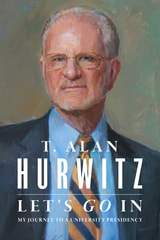
Let’s Go In
My Journey to a University PresidencyT. Alan Hurwitz
Gallaudet University Press, 2020
Additional images, videos, and supplemental readings are available at the Gallaudet University Press/Manifold online platform.
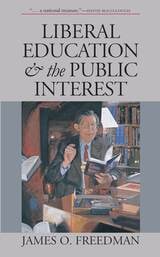
Liberal Education Public Interest
James O. Freedman
University of Iowa Press, 2003
In 1996 James Freedman published Idealism and Liberal Education, which discussed the ideals that shaped his life as an intellectual, a law professor, and a college and university president. In this new collection of essays, he convincingly explores his firm belief that a liberal education is the “surest instrument yet devised for developing those civilizing qualities of mind and character that enable men and women to lead satisfying lives and to make significant contributions to a democratic society.”
Freedman concentrates directly upon the problems facing university presidents and all university administrators. A passionate and beautifully written argument for the benefits of a liberal education, this book
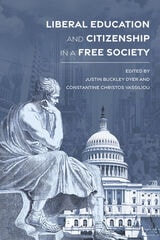
Liberal Education and Citizenship in a Free Society
Justin Buckley Dyer
University of Missouri Press, 2023
With Liberal Education and Citizenship in a Free Society, a collection of 19 original essays, editors Justin Dyer and Constantine Vassiliou present the work of a diverse group of scholars to assess the value of a liberal arts education in the face of market, technological, cultural, and political forces shaping higher learning today.
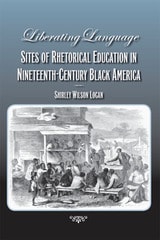
Liberating Language
Sites of Rhetorical Education in Nineteenth-Century Black AmericaShirley Wilson Logan
Southern Illinois University Press, 2008
Liberating Language identifies experiences of nineteenth-century African Americans—categorized as sites of rhetorical education—that provided opportunities to develop effective communication and critical text-interpretation skills. Author Shirley Wilson Logan considers how nontraditional sites, which seldom involved formal training in rhetorical instruction, proved to be effective resources for African American advancement.
Logan traces the ways that African Americans learned lessons in rhetoric through language-based activities associated with black survival in nineteenth-century America, such as working in political organizations, reading and publishing newspapers, maintaining diaries, and participating in literary societies. According to Logan, rhetorical training was manifested through places of worship and military camps, self-education in oratory and elocution, literary societies, and the black press. She draws on the experiences of various black rhetors of the era, such as
Frederick Douglass, Frances Harper, Fanny Coppin, Charles Chesnutt, Ida B. Wells, and the lesser-known Oberlin-educated Mary Virginia Montgomery, Virginia slave preacher "Uncle Jack," and former slave "Mrs. Lee."
Liberating Language addresses free-floating literacy, a term coined by scholar and writer Ralph Ellison, which captures the many settings where literacy and rhetorical skills were acquired and developed, including slave missions, religious gatherings, war camps, and even cigar factories. In Civil War camp- sites, for instance, black soldiers learned to read and write, corresponded with the editors of black newspapers, edited their own camp-based papers, and formed literary associations.
Liberating Language outlines nontraditional means of acquiring rhetorical skills and demonstrates how African Americans, faced with the lingering consequences of enslavement and continuing oppression, acquired rhetorical competence during the late eighteenth century and throughout the nineteenth century.
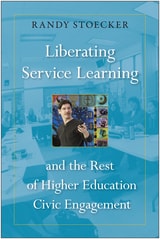
Liberating Service Learning and the Rest of Higher Education Civic Engagement
Randy Stoecker
Temple University Press, 2016
Randy Stoecker has been “practicing” forms of community-engaged scholarship, including service learning, for thirty years now, and he readily admits, “Practice does not make perfect.” In his highly personal critique, Liberating Service Learning and the Rest of Higher Education Civic Engagement, the author worries about the contradictions, unrealized potential, and unrecognized urgency of the causes as well as the risks and rewards of this work.
Here, Stoecker questions the prioritization and theoretical/philosophical underpinnings of the core concepts of service learning: 1. learning, 2. service, 3. community, and 4. change. By “liberating” service learning, he suggests reversing the prioritization of the concepts, starting with change, then community, then service, and then learning. In doing so, he clarifies the benefits and purpose of this work, arguing that it will create greater pedagogical and community impact.
Liberating Service Learning and the Rest of Higher Education Civic Engagement challenges—and hopefully will change—our thinking about higher education community engagement.
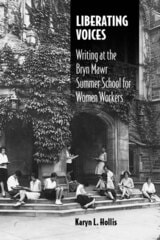
Liberating Voices
Writing at the Bryn Mawr Summer School for Women WorkersKaryn L. Hollis
Southern Illinois University Press, 2004
During the 1920s and 1930s at the Bryn Mawr Summer School for Women Workers, working-class women were educated in the liberal arts and instructed in writing to assume more powerful roles in the industrial workplace. In Liberating Voices: Writing at the Bryn Mawr Summer School for Women Workers, Karyn L. Hollis tells the remarkable story of how this multiclass, multiethnic American institution rooted in composition pedagogy, literary history, and leftist thought emerged from the broad social, economic, and ideological trends of the era. The summer school curriculum, Hollis shows, enhanced the individual and collective self-confidence of the 1,800 women who studied there between 1921 and 1938.
Drawing heavily on the women’s writings—including autobiography, poetry, labor drama, humor, and economic reporting—Liberating Voices adds significantly to the small oeuvre of published writing by working-class women, who were, in this case, mostly nontraditional students, immigrants, and minorities. Outlining a materialist pedagogy that centers on the women’s daily economic struggles as well as their family and community experiences, Hollis reveals the tensions that stemmed from differences in race, ethnicity, class, and religion. She also shows how the students exploited cultural scripts and drew strength from their diversity, eventually insisting on a democratic sharing of power with faculty and administrators at the Summer School.
Hollis provides a thorough ethnography of the Summer School with respect to its place in the social and political history of the 1920s and 1930s, and then situates the school’s pedagogy within the history of American education and composition instruction. Concepts from literary criticism and composition theory provide the framework for an analysis of the working women’s autobiographical writing, revealing how the narrative voice of their prose grew from weak and individualized to empowered and collective as the women described their families, childhood, work, unions, and education over time. The volume is complemented by sixteen illustrations.
Additional analysis of the women’s poetry points to their skill as both producers and consumers of literature. The common theme of body versus a powerful machine in the workplace bears witness to the industrial exploitation the women endured. Taking up postmodern questions of agency and voice, Hollis argues that the women used a variety of cultural texts to construct discourses that reflected their needs and desires. Liberating Voices not only provides a previously untold chapter in the history of American worker education, it also showcases a liberating pedagogy that has salient implications for contemporary classrooms.
Liberation and Education
Perspectives on Black Educational ThoughtRonald E. Chennault
Rutgers University Press, 2026
Liberation and Education brings together a collection of essays about Black educators’ and organizations’ quests to cultivate and employ educational strategies for the liberation of Black people. The contributions examine the enduring nature of Black people’s thinking about education prior to and through enslavement to the present. It documents a variety of critical accounts of how Black people have developed ways to free themselves mentally from the legacies of slavery, the view of Black inferiority, and historical and systemic racism.
Life Undocumented
Latinx Youth Navigating Place and BelongingEdelina M. Burciaga
University of Arizona Press, 2025
The book is about how undocumented young adults in these two contexts navigate the pathway to and through adulthood, and the powerful role state laws and policies play in shaping their prospects for social mobility and their sense of belonging. Edelina M. Burciaga examines how state laws and policies in California and Georgia shape the pathways to adulthood for these individuals. California, with its supportive legal frameworks, contrasts sharply with Georgia’s restrictive environment, highlighting the significant impact of state-level immigration policies.
The book highlights the complexities and contradictions that emerge from these distinct legal ecologies, which include the intersections of federal, state, local, familial, and individual dynamics, and shape the daily lives and future orientations of undocumented young adults. This book underscores the resilience and agency of undocumented youth as they confront and resist the structural constraints imposed by immigration laws, offering a vivid portrayal of their emotional and social journeys. This book is a vital resource for anyone committed to creating equitable and inclusive systems for undocumented students.
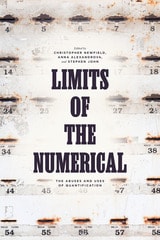
Limits of the Numerical
The Abuses and Uses of QuantificationEdited by Christopher Newfield, Anna Alexandrova, and Stephen John
University of Chicago Press, 2022
Numbers are both controlling and fragile. They drive public policy, figuring into everything from college rankings to vaccine efficacy rates. At the same time, they are frequent objects of obfuscation, manipulation, or outright denial. This timely collection by a diverse group of humanists and social scientists challenges undue reverence or skepticism toward quantification and offers new ideas about how to harmonize quantitative with qualitative forms of knowledge.
Limits of the Numerical focuses on quantification in several contexts: climate change; university teaching and research; and health, medicine, and well-being more broadly. This volume shows the many ways that qualitative and quantitative approaches can productively interact—how the limits of the numerical can be overcome through equitable partnerships with historical, institutional, and philosophical analysis. The authors show that we can use numbers to hold the powerful to account, but only when those numbers are themselves democratically accountable.
Lincoln Hall at the University of Illinois
John Hoffmann, Foreword by Richard H. Herman
University of Illinois Press, 2010
Lincoln Hall at the University of Illinois, named to commemorate the centennial of Abraham Lincoln's birth, has long been a familiar landmark on the Urbana-Champaign campus and the home for undergraduate and graduate work in the liberal arts and communication. Funded by the Illinois State Legislature in 1909, the building was dedicated in 1913 on Lincoln's birthday, February 12. In addition to its function as space for offices, classrooms, and departmental libraries, Lincoln Hall was commissioned, designed, and built to convey "the wisdom and patriotism of the democracy of learning."
That spirit of freedom and equality in education was manifest in Lincoln Hall's artistic design, which features terra cotta panels depicting Lincoln's life, quotations from his writings, and portraits of prominent figures of his day. At the outset of the building's conception, Evarts B. Greene, professor of history and dean of the College of Literature and Arts, provided detailed information about Lincoln that defined the building's artistic program. Wishing to retain the dignified simplicity of the overall design, he conferred with W. Carbys Zimmerman, the State Architect, about the nature and placement of the panels and other ornamental details that have become key features of the building's design.
Commemorating the bicentennial of Lincoln's birth, this magisterial volume chronicles the history of Lincoln Hall from its conception to its expansion and its present role on the campus. John Hoffmann identifies each of the building's historical panels and the portraits of Lincoln's contemporaries. Lavishly illustrated to show how much care was taken with the details of the design, this book provides a lasting historical record of the building's century-long place at the University of Illinois.
Supported by the Office of the Chancellor of the University of Illinois at Urbana-Champaign
Linking Assignments to Assessments
A Guide for TeachersDeborah Crusan and Todd Ruecker
University of Michigan Press, 2022
The book shares foundational information on the importance of assessment literacy and on how language acquisition, student backgrounds, and language standards need to be considered. Linking Assignments to Assessments offers step-by-step instructions on creating effective assessments for listening and reading, speaking and writing, grammar and vocabulary. Teachers are provided context for understanding standardized assessments and strategies to advocate for and prepare English learners in high-stakes assessment contexts. Each chapter includes activities, discussion questions, and strategies for developing an assessment philosophy to help educators link their theory and practice.
Listen to the Poet
Writing, Performance, and Community in Youth Spoken Word PoetryWendy R. Williams
University of Massachusetts Press, 2019
Listen to the Poet investigates two Arizona spoken word poetry groups—a community group and a high school club—that are both part of the same youth organization. Exploring the writing lives and poetry of several members, Wendy R. Williams takes readers inside a writing workshop and poetry slam and reveals that schools have much to learn about writing, performance, community, and authorship from groups like these and from youth writers themselves.
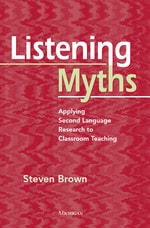
Listening Myths
Applying Second Language Research to Classroom TeachingSteven Brown
University of Michigan Press, 2011
This volume was conceived as a "best practices" resource for teachers of ESL listening courses in the way that Vocabulary Myths by Keith S. Folse (and Writing Myths by Joy Reid) is one for reading and vocabulary teachers. It was written to help ensure that teachers of listening are not perpetuating the myths of teaching listening.
Both the research and pedagogy in this book are based on the newest research in the field of second language acquisition. Steven Brown is the author of the Active Listening textbook series and is a teacher trainer.
The myths debunked in this book are:
§ Listening is the same as reading.
§ Listening is passive.
§ Listening equals comprehension.
§ Because L1 language ability is effortlessly acquired, L2 listening ability is too.
§ Listening means listening to conversations.
§ Listening is an individual, inside-the-head process.
§ Students should only listen to authentic materials.
§ Listening can’t be taught
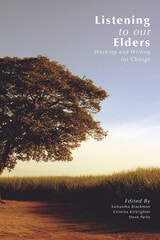
Listening to Our Elders
Working and Writing for ChangeSamantha Blackmon, Cristina Kirklighter, and Steve Parks, eds.
Utah State University Press, 2011
In 2011, the National Council of Teachers of English (NCTE) turned one hundred years old. But our profession is endlessly beginning, constantly transforming itself and its purpose as new voices and identities claim their rights in our classrooms and in our country. The recognition of such claims, however, does not occur without a struggle, without collective work.
Listening to our Elders attempts to capture the history of those collective moments where teachers across grade levels and institutions of higher education organized to insure that the voices, heritages, and traditions of their students and colleagues were recognized within our professional organizations as a vital part of our classrooms and our discipline. In doing so, Listening to Our Elders demonstrates this recognition was not always easily given. Instead, whether the issue was race, sexuality, class, or disability, committed activist organizations have often had to push against the existing limits of our field and its organizations to insure a broader sense of common responsibility and humanity was recognized.
Listening to Our Elders features interviews with Malea Powell (Native American Caucus), Joyce Rain Anderson (Native American Caucus), Jeffery Paul Chan (Asian/Asian American), James Hill (Black Caucus), James Dolmage (Committee for Disability Issue in College Composition), Geneva Smitherman (Language Policy Commitee), Carlota Cárdenas de Dwyer (Latino/a Caucus), Victor Villanueva (Latino/a Caucus), Louise Dunlap (Progressive Caucus), Karen Hollis (Progressive Caucus), Louie Crew (Queer Caucus), William Thelin (Working Class Culture and Pedagogy SIG), Bill Macauley (Working Class Culture and Pedagogy SIG).
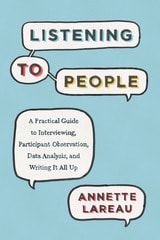
Listening to People
A Practical Guide to Interviewing, Participant Observation, Data Analysis, and Writing It All UpAnnette Lareau
University of Chicago Press, 2021
In-depth interviews and close observation are essential to the work of social scientists, but inserting one’s researcher-self into the lives of others can be daunting, especially early on. Esteemed sociologist Annette Lareau is here to help. Lareau’s clear, insightful, and personal guide is not your average methods text. It promises to reduce researcher anxiety while illuminating the best methods for first-rate research practice.
As the title of this book suggests, Lareau considers listening to be the core element of interviewing and observation. A researcher must listen to people as she collects data, listen to feedback as she describes what she is learning, listen to the findings of others as they delve into the existing literature on topics, and listen to herself in order to sift and prioritize some aspects of the study over others. By listening in these different ways, researchers will discover connections, reconsider assumptions, catch mistakes, develop and assess new ideas, weigh priorities, ponder new directions, and undertake numerous adjustments—all of which will make their contributions clearer and more valuable.
Accessibly written and full of practical, easy-to-follow guidance, this book will help both novice and experienced researchers to do their very best work. Qualitative research is an inherently uncertain project, but with Lareau’s help, you can alleviate anxiety and focus on success.
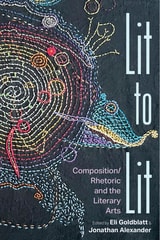
Lit to Lit
Composition/Rhetoric and the Literary ArtsEli Goldblatt
Utah State University Press, 2026
Lit to Lit examines the traditional split between the study of literature and composition and rhetoric programs, asking writing studies scholars to think critically and creatively about the role literature can play in the teaching of writing and the field’s conceptions of its own relation to writing. Grounded in diverse experiences and practices, contributors offer provocative but thoughtful analyses of how composition and literature can be brought together in the study and teaching of writing.
Complex forms of writing should not be the sole territory of one subfield or discipline but rather should benefit from multiple perspectives generated by those with keen and abiding interests in writing writ large. Many in the field of composition and rhetoric also have an active engagement in the literary arts, particularly the flowering of literature from diverse cultural experiences in the last decades. What new teaching and learning approaches could emerge from a synthesis of theoretical, literary, rhetorical, poetic, and compositional methods? This question becomes even more compelling when considering how English departments often house programs in journalism and creative writing, allowing robust opportunities for multiple ways of thinking about and studying complex texts.
Lit to Lit makes visible the generative overlap between subfields already present in the broad field of English, pointing to new ways forward that value each area’s separate endeavors while highlighting the possibilities for what could be built together.
Literacy and Deaf Education
Toward a Global UnderstandingQiuying Wang
Gallaudet University Press, 2020
Literacy and Deaf Education: Toward a Global Understanding is organized by region and country, with the first part discussing writing systems that use alphabetic scripts, and the second part focusing on countries that use non-alphabetic scripts. Some examples of the wide spectrum of topics covered include communication methodologies, curriculum, bilingual education, reading interventions, script diversity, and sociocultural development, including Deaf cultural developments. The contributors provide the results from literacy projects in fifteen countries and regions.
This volume aims to widen the knowledge base, familiarize others in the field with these initiatives, and improve global understandings and outcomes of literacy teaching and learning in deaf education from birth to high school.
Signed chapter summaries are available on the Gallaudet University Press YouTube channel.
Literacy and Deaf People
Cultural and Contextual PerspectivesBrenda Jo Brueggemann
Gallaudet University Press, 2004
This compelling collection advocates for an alternative view of deaf people’s literacy, one that emphasizes recent shifts in Deaf cultural identity rather than a student’s past educational context as determined by the dominant hearing society. Divided into two parts, the book opens with four chapters by leading scholars Tom Humphries, Claire Ramsey, Susan Burch, and volume editor Brenda Jo Brueggemann. These scholars use diverse disciplines to reveal how schools where deaf children are taught are the product of ideologies about teaching, about how deaf children learn, and about the relationship of ASL and English.
Part Two features works by Elizabeth Engen and Trygg Engen; Tane Akamatsu and Ester Cole; Lillian Buffalo Tompkins; Sherman Wilcox and BoMee Corwin; and Kathleen M. Wood. The five chapters contributed by these noteworthy researchers offer various views on multicultural and bilingual literacy instruction for deaf students. Subjects range from a study of literacy in Norway, where Norwegian Sign Language recently became the first language of instruction for deaf pupils, to the difficulties faced by deaf immigrant and refugee children who confront institutional and cultural clashes. Other topics include the experiences of deaf adults who became bilingual in ASL and English, and the interaction of the pathological versus the cultural view of deafness. The final study examines literacy among Deaf college undergraduates as a way of determining how the current social institution of literacy translates for Deaf adults and how literacy can be extended to deaf people beyond the age of 20.
Literacy and Historical Development
A ReaderEdited by Harvey J. Graff
Southern Illinois University Press, 2007
Representing three decades of research, Literacy and Historical Development: A Reader presents some of the most important historical scholarship on literacy in Europe and the United States. The approaches, research, and conclusions reflected in this collection of fifteen essays has changed how historians and many others conceptualize literacy and represents a body of scholarship that is transforming both contemporary and historical literacy theories.
In this revised and expanded edition of the groundbreaking volume Literacy and Social Development in the West, editor Harvey J. Graff provides a new introduction and nine new essays by nationally and internationally renowned contributors from a range of disciplines. Replacing an unquestioned certainty that literacy’s powers are universal, independent, and determinative, Graff brings together studies that support new concepts, contending that the importance and influences of literacy depend on specific social and historical contexts, the impacts of literacy are mediated and restricted, the effects of literacy are social and particular, and the role of literacy must be understood within the burgeoning array of communication technologies.
Literacy and Racial Justice
The Politics of Learning after Brown v. Board of EducationCatherine Prendergast. Foreword by Gloria Ladson-Billings
Southern Illinois University Press, 2003
In anticipation of the fiftieth anniversary of the landmark Brown v. Board of Education decision, Catherine Prendergast draws on a combination of insights from legal studies and literacy studies to interrogate contemporary multicultural literacy initiatives, thus providing a sound historical basis that informs current debates over affirmative action, school vouchers, reparations, and high-stakes standardized testing.
As a result of Brown and subsequent crucial civil rights court cases, literacy and racial justice are firmly enmeshed in the American imagination—so much so that it is difficult to discuss one without referencing the other. Breaking with the accepted wisdom that the Brown decision was an unambiguous victory for the betterment of race relations, Literacy and Racial Justice: The Politics of Learning after Brown v. Board of Education finds that the ruling reinforced traditional conceptions of literacy as primarily white property to be controlled and disseminated by an empowered majority. Prendergast examines civil rights era Supreme Court rulings and immigration cases spanning a century of racial injustice to challenge the myth of assimilation through literacy. Advancing from Ways with Words, Shirley Brice Heath’s landmark study of desegregated communities, Prendergast argues that it is a shared understanding of literacy as white property which continues to impact problematic classroom dynamics and education practices.
To offer a positive model for reimagining literacy instruction that is truly in the service of racial justice, Prendergast presents a naturalistic study of an alternative public secondary school. Outlining new directions and priorities for inclusive literacy scholarship in America, Literacy and Racial Justice concludes that a literate citizen is one who can engage rather than overlook longstanding legacies of racial strife.
Literacy and Your Deaf Child
What Every Parent Should KnowDavid A. Stewart
Gallaudet University Press, 2003
In the modern world, success depends upon literacy, a fact especially true for deaf children who, if they read and write well, can take full advantage of e-mail, the Internet, and other communication innovations. Literacy and Your Deaf Child: What Every Parent Should Know provides parents with the means to ensure that their deaf or hard of hearing child becomes a proficient reader and writer. In nine chapters, parents will learn about the relationship of language to reading and writing, including the associated terminology, the challenges that deaf children face, and the role of schools. They’ll also learn activities that they can engage in at home that will strengthen their children’s reading and writing capabilities.
Literacy and Your Deaf Child begins by introducing some common concepts, among them the importance of parental involvement in a deaf child’s education. It outlines how children acquire language and describes the auditory and visual links to literacy. With this information, parents can make informed decisions regarding hearing aids, cochlear implants, speechreading, and sign communication, all of which can have a marked influence on their child’s language development. Parents will discover how to create environments at home and in their community for fostering their child’s literacy, especially in school by learning how to work closely with their child’s teachers. The book also refers throughout to the developmental link between American Sign Language and English literacy for children who use sign communication, making it the best guide available for all deaf children and their parents.

Literacy in American Schools
Learning to Read and WriteEdited by Nancy L. Stein
University of Chicago Press, 1986
Literacy, Sexuality, Pedagogy
Theory and Practice for Composition StudiesJonathan Alexander
Utah State University Press, 2008
In Literacy, Sexuality, Pedagogy, Jonathan Alexander argues for the development of students' "sexual literacy." Such a literacy is not just concerned with developing fluency with sexuality as a "hot" topic, but with understanding the intimate interconnectedness of sexuality and literacy in Western culture. Using the work of scholars in queer theory, sexuality studies, and the New Literacy Studies, Alexander unpacks what he sees as a crucial--if often overlooked--dimension of literacy: the fundamental ways in which sexuality has become a key component of contemporary literate practice, of the stories we tell about ourselves, our communities, and our political investments.
Alexander then demonstrates through a series of composition exercises and writing assignments how we might develop students' understanding of sexual literacy. Examining discourses of gender, heterosexuality, and marriage allows students (and instructors) a critical opportunity to see how the languages we use to describe ourselves and our communities are saturated with ideologies of sexuality. Understanding how sexuality is constructed and deployed as a way to "make meaning" in our culture gives us a critical tool both to understand some of the fundamental ways in which we know ourselves and to challenge some of the norms that govern our lives. In the process, we become more fluent with the stories that we tell about ourselves and discover how normative notions of sexuality enable (and constrain) narrations of identity, culture, and politics. Such develops not only our understanding of sexuality, but of literacy, as we explore how sexuality is a vital, if vexing, part of the story of who we are.
Lives in Science
How Institutions Affect Academic CareersJoseph C. Hermanowicz
University of Chicago Press, 2009
What can we learn when we follow people over the years and across the course of their professional lives? Joseph C. Hermanowicz asks this question specifically about scientists and answers it here by tracking fifty-five physicists through different stages of their careers at a variety of universities across the country. He explores these scientists’ shifting perceptions of their jobs to uncover the meanings they invest in their work, when and where they find satisfaction, how they succeed and fail, and how the rhythms of their work change as they age. His candid interviews with his subjects, meanwhile, shed light on the ways career goals are and are not met, on the frustrations of the academic profession, and on how one deals with the boredom and stagnation that can set in once one is established.
An in-depth study of American higher education professionals eloquently told through their own words, Hermanowicz’s keen analysis of how institutions shape careers will appeal to anyone interested in life in academia.
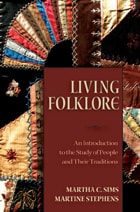
Living Folklore, 2nd Edition
An Introduction to the Study of People and Their TraditionsMartha Sims and Martine Stephens
Utah State University Press, 2011
Living Folklore is a comprehensive, straightforward introduction to folklore as it is lived, shared and practiced in contemporary settings. Drawing on examples from diverse American groups and experiences, this text gives the student a strong foundation—from the field's history and major terms to theories and interpretive approaches.
Living Folklore moves beyond genres and classifications, and encourages students who are new to the field to see the study of folklore as a unique approach to understanding people, communities, and day-to-day artistic communication.
This revised edition incorporates new examples, research, and theory along with added discussion of digital and online folklore.
Living Folklore
Introduction to the Study of People and their TraditionsMartha Sims and Martine Stephens
Utah State University Press, 2005
Living Folklore is a comprehensive, straightforward introduction to folklore as it is lived, shared and practiced in contemporary settings. Drawing on examples from diverse American groups and experiences, this text gives the student a strong foundation—from the field’s history and major terms to theories, interpretive approaches, and fieldwork.
Many teachers of undergraduates find the available folklore textbooks too complex or unwieldy for an introductory level course. It is precisely this criticism that Living Folklore addresses; while comprehensive and rigorous, the book is specifically intended to meet the needs of those students who are just beginning their study of the discipline. Its real strength lies in how it combines carefully articulated foundational concepts with relevant examples and a student-oriented teaching philosophy.
Living Histories
Global Conversations in Art EducationEdited by Dustin Garnet and Anita Sinner
Intellect Books, 2022
Art education historians are not passive collectors of the past, but scholars engaged in new ways of doing history. The discipline is predicated on cultivating stories that move beyond representation to attend to aesthetic dimensions that bridge historiography, material culture, and teacher education. To keep pace with the movements of art and society, this edited collection considers that art education requires more inclusive and holistic versions of history from perspectives that break down barriers and cross borders in the pursuit of more informed and diverse understandings of the field. Living Histories is a collection of scholarship that explores the histories of art education through a series of international contexts, with contributions from more than thirty scholars based in eighteen countries.
Living When Everything Changed
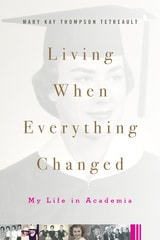
My Life in AcademiaMary Kay Thompson Tetreault
Rutgers University Press, 2019
In this compelling memoir, Mary Kay Thompson Tetreault describes how a Catholic girl from small-town Nebraska discovered her callings as a feminist, as an academic, and as a university administrator. She recounts her experiences at three very different schools: the small progressive Lewis & Clark College, the massive regional university of Cal State Fullerton, and the rapidly expanding Portland State University. Reflecting on both her accomplishments and challenges, she considers just how much second-wave feminism has transformed academia and how much reform is still needed.
With remarkable candor and compassion, Thompson Tetreault provides an intimate personal look at an era when both women’s lives and university culture changed for good.
The Acknowledgments were inadvertently left out of the first printing of this book. We apologize for the oversight, and offer them here instead. Future printings will include this information. (https://d3tto5i5w9ogdd.cloudfront.net/wp-content/uploads/2019/08/29185420/Thompson-Tetreault-Acknowledgments.pdf)
Living with Moral Disagreement
The Enduring Controversy about Affirmative ActionMichele S. Moses
University of Chicago Press, 2016
Central to Moses’s analysis is the argument that we need to understand disagreements about affirmative action as inherently moral, products of conflicts between deeply held beliefs that shape differing opinions on what justice requires of education policy. As she shows, differing opinions on affirmative action result from different conceptual values, for instance, between being treated equally and being treated as an equal or between seeing race-consciousness as a pernicious political force or as a necessary variable in political equality. As Moses shows, although moral disagreements about race-conscious policies and similar issues are often seen as symptoms of dysfunctional politics, they in fact create rich opportunities for discussions about diversity that nourish democratic thought and life.
Lobbying for Higher Education
How Colleges and Universities Influence Federal PolicyConstance Ewing Cook
Vanderbilt University Press, 1998
Lobbying for Higher Education is about how the major higher education associations and the constituent American colleges and universities try to influence federal policy, especially congressional policy. In clear prose Cook explains how the higher education community organizes itself in Washington, how it lobbies, and how its major interest groups are perceived both by their own members and by public officials. The book focuses on the crucial development in 1995-1996 of a new lobbying paradigm, which included the greater use of campus-based resources and ad hoc coalitions. The most engrossing part of its story is higher education's creative response to the policy turmoil and disruption of the status quo that resulted from the shift in congressional party control.
The author, Constance Cook, uses sources unique to this project: over 1,500 survey responses from college and university presidents (a 62% return rate) and nearly 150 interviews with institutional and association leaders. Fortuitously, the 1994 electoral upheaval provided her with an opportunity to capture, analyze, and interpret the responses of her subjects in a period of unusually sweeping change.
Lobbying for Higher Education is a timely book with an interesting and important story at its core.
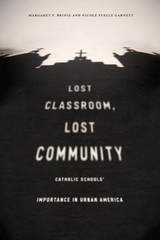
Lost Classroom, Lost Community
Catholic Schools' Importance in Urban AmericaMargaret F. Brinig and Nicole Stelle Garnett
University of Chicago Press, 2014
More than just educational institutions, Catholic schools promote the development of social capital—the social networks and mutual trust that form the foundation of safe and cohesive communities. Drawing on data from the Project on Human Development in Chicago Neighborhoods and crime reports collected at the police beat or census tract level in Chicago, Philadelphia, and Los Angeles, Margaret F. Brinig and Nicole Stelle Garnett demonstrate that the loss of Catholic schools triggers disorder, crime, and an overall decline in community cohesiveness, and suggest that new charter schools fail to fill the gaps left behind.
This book shows that the closing of Catholic schools harms the very communities they were created to bring together and serve, and it will have vital implications for both education and policing policy debates.
Lost Talent
Sandra L. Hanson
Temple University Press, 1996
Luckpilled
Compassion, Justice, and Hope in a World Nobody DeservesAaron Rabinowitz
Rutgers University Press, 2027
What if everything we experience comes down to luck? Humans have struggled with anxiety about the pervasiveness of luck since the concept first arose in ancient societies, and attempts to address the problem have shaped the modern world. Yet the problem of luck has persisted because resolving it requires letting go of a tenacious group of deeply rooted illusions centered on the need to feel that people mostly get what they deserve.
In Luckpilled: Compassion, Justice, and Hope in a World Nobody Deserves, Aaron Rabinowitz combines cutting-edge work on the philosophy, psychology, politics, and pedagogy of luck to argue that we are better off embracing the pervasiveness of luck and abandoning harmful illusions that preserve an unjust status-quo. Using the luckpilling techniques offered in this book can help readers to cultivate compassion, empathy, gratitude and humility, as well as a stronger connection to activities they find meaningful.