Results by title
3388 books match the query 'Fiction' and 128 start with l
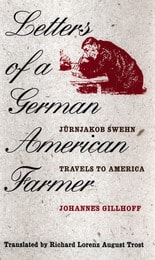
Letters of a German American Farmer
Juernjakob Swehn Travels to AmericaJohannes Gillhoff
University of Iowa Press, 2001
Early in the twentieth century, drawing upon the hundreds of letters written to his father by students who had emigrated to northeastern Iowa from Mecklenburg, in northeastern Germany, Johannes Gillhoff created the composite character of Juernjakob Swehn: the archetype of the upright, honest mensch who personified the German immigrant, on his way to a better life through ambition and hard work. Gillhoff's farmer-hero, planting and harvesting his Iowa acres, joking with his neighbors during the snowy winters, building a church with his own hands, proved so popular with the German public that a million copies of Jürnjakob Swehn der Amerikafahrer are in print. Now for the first time this wise and endearing book is available in English.
“First, let's talk about pigs,”Juernjakob Swehn writes from his farm in Iowa. “In America, pigs have a curly tail and talk in Low German so I can understand them.” Swehn builds a log house and makes a success of farming, marries a woman who's “a whole different nation that has its confidence from the inside,” raises a family, and becomes an elder in the Lutheran church. He recognizes his good fortune but acknowledges that memories of his village grow stronger every year, that “being homesick is the best thing that home can do for you …no power on earth holds on to you like your homeland.” It is this sense of home, both in Iowa and in Mecklenburg, that makes Juernjakob Swehn appeal to today's readers as much as he appealed to readers in 1916.
Letters of Blood
Rizia Rahman
Seagull Books, 0
Letters of Transit
Theodore Worozbyt
University of Massachusetts Press, 2008
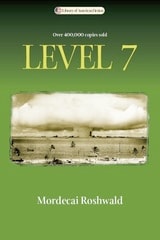
Level 7
Mordecai Roshwald; Edited and with a new foreword by David Seed
University of Wisconsin Press, 2004
Level 7 is the diary of Officer X-127, who is assigned to stand guard at the "Push Buttons," a machine devised to activate the atomic destruction of the enemy, in the country’s deepest bomb shelter. Four thousand feet underground, Level 7 has been built to withstand the most devastating attack and to be self-sufficient for five hundred years. Selected according to a psychological profile that assures their willingness to destroy all life on Earth, those who are sent down may never return.
Originally published in 1959, and with over 400,000 copies sold, this powerful dystopian novel remains a horrific vision of where the nuclear arms race may lead, and is an affirmation of human life and love. Level 7 merits comparison to Huxley’s A Brave New World and Orwell’s 1984 and should be considered a must-read by all science fiction fans.
Liberal Arts
A NovelDavid McGlynn
Northwestern University Press, 2027
A kaleidoscopic novel-in-stories set at a fictional Midwest college
Two centuries old and covered in ivy, Wisconsin’s Buchanan College is populated by an eclectic mix of students, staff, and professors hailing from the nearby suburbs to the far corners of the globe. From the outside, Buchanan seems an idyllic world of higher learning. Yet behind its bucolic exterior, a series of interconnected dramas play out: a slew of first-year students mysteriously disappear within days of moving in; an injured hockey star discovers an unlikely fountain of youth; an alumna returns to campus after fifty years in the hope of reconnecting with a former love. And throughout the novel we follow the story of Jenny Ramirez, a social worker and the wife of a popular professor, who commits an act that alters how the college sees her, and how she sees herself. Over a span of four years, from orientation to graduation, the characters in Liberal Arts are forced to weigh their ideals and aspirations against the harsh and often ridiculous realities of the world, and are left asking what, if anything, a liberal arts education has left to teach them.
Liberty Lanes
Robin Troy
University of Nevada Press, 2011
Liberty Lanes is a bowling alley in a small Montana town where a senior bowling league meets three times a week. Nelson Moore, one of the bowlers, has recently become a local hero by saving a teammate from choking on a happy hour chicken bone. Now he must deal with his newfound fame while coping with the early stages of dementia.
This is an engaging and often moving novel about a group of senior citizens bound together by old friendships and romances, and by their determination to live life to its fullest. Senescence is not for sissies, but these characters show us that it is still a time to love, dream, and explore their own potential.
Lies to Live By
Lois Beardslee
Michigan State University Press, 2003
Lies To Live By brings together two selections of stories by Ojibwe storyteller Lois Beardslee. “Lies to Live By,” a series of interdependent tales, reflects the storyteller’s role in interpreting traditional stories for contemporary audiences, while preserving traditions based not in mysticism but in pragmatism. In “Calm Days,” three generations—the narrator, her grandfather, and her son—spend a week together on a remote island during the course of which they demonstrate the continuity of Ojibwe life. Together these stories weave the contemporary and the traditional to show how cultural diversity can be preserved even as cultural boundaries are transcended.
Life and Adventures of Jack Engle
An Auto-Biography; A Story of New York at the Present Time in which the Reader Will Find Some Familiar CharactersWalt Whitman
University of Iowa Press, 2017
Then it disappeared.
No one laid eyes on it until 2016, when literary scholar Zachary Turpin, University of Houston, followed a paper trail deep into the Library of Congress, where the sole surviving copy of Jack Engle has lain waiting for generations. Now, after more than 160 years, the University of Iowa Press is honored to reprint this lost work, restoring a missing piece of American literature by one of the world’s greatest authors, written as he verged on immortality.
Life in Peacetime
Francesco Pecoraro
Seagull Books, 0
A close-up portrait of an ordinary existence, Life in Peacetime offers a new look at the postwar era in Italy and the fundamental contradictions of a secure, middle-class life.
Life is Good
Alex Capus
Haus Publishing, 2018
Max, alone with his three teenage sons for the first time, is left contemplating life and the daily routine of the little bar of which he is the proprietor. As he spends more time with the regulars their problems begin to become his own. This new novel by Alex Capus is a hymn to trust, friendship and life’s small pleasures. Told with his trademark humor, Life is Good is a novel about finding contentment in rootedness as the world speeds up.
Life with a Star
Jiri Weil
Northwestern University Press, 1998
Life, Brazen and Garish
A Tale of Three WomenDacia Maraini
Rutgers University Press, 2024
Life, Brazen and Garish offers a fresh take on the epistolary novel, telling the story of a family through the fragmented and disparate perspectives of daughter, mother, and grandmother. Yet even as each woman endures her private struggles with love and betrayal, youth and maturity, knowledge and ignorance, reality and illusion, the Cascadeis forge a solidarity that transcends generations. In turns heartbreaking and laugh-out-loud funny, this novel is a triumph of narrative voice and literary style from one of Italy’s most renowned writers.
Questo libro è stato tradotto grazie a un contributo del Ministero degli Affari Esteri e della Cooperazione Internazionale italiano.
This book has been translated thanks to a contribution from the Italian Ministry of Foreign Affairs and International Cooperation.

Life-Like
Toby Litt
Seagull Books, 2014
The twenty-six stories begin with Paddy and Agatha, an English couple last seen in Litt’s Ghost Story. Following the stillbirth of their second child, their marriage has gently begun to collapse. Paddy and Agatha both meet someone else. First, Paddy meets Kavita, and Agatha meets John. Then each of these four engages with a different new person—and so on, through a doubling and redoubling of intimately interconnected stories. The remaining short stories exemplify Litt’s impressive, unflinching prose.
Lifespan Narratives
Ten Stories from a Time of Disruption; Chronicle of Emotions, Notebook 3Alexander Kluge
Seagull Books, 2025
A poignant exploration of post–World War II life, blending fictional and non-fictional stories that challenge traditions and reflect on the enduring impact of historical disruptions.
Lifespan Narratives has to do with stories, fictitious and not, which present a sad chronicle and question tradition from several different perspectives. Originally comprising Alexander Kluge’s first book, these stories were written between the years 1958 and 1962, in which he emphasizes the importance of continuously questioning our past. He underscores the necessity of recounting lifespan narratives even from today’s viewpoint, proposing that “life in a time of disruption” should be viewed as a constant experiential substance, transcending any single era.
In Lifespan Narratives, readers are invited to explore the enduring impact of historical disruptions through Kluge’s masterful storytelling, which remains as relevant today as it was in the years following the Second World War. For this edition, the English translation of a selection of stories by Leila Vennewitz has been expanded by Alexander Booth in conjunction with the author.
Light without Heat
StoriesMatthew Kirkpatrick
University of Alabama Press, 2012

Like Blood in Water
Five MininovelsYuriy Tarnawsky
University of Alabama Press, 2007
In these five surrealist collages, waking life continually gives way before the onslaught of dreams. Yuriy Tarnawsky has condensed the vastness of scope typical of novels into shorter fragments—mininovels—that require the reader’s active participation. The tone is a balance of dead-pan comedy and solemn gothic, sometimes a near-parody of wide-eyed candor, sometimes recounting utterly mad or barely conceivable states of affairs.
A candidate for major surgery struggles unsuccessfully to avoid it. Two strangers meet, and eventually marry, after participating in scream therapy. A pianist stops playing because he believes his hand is not there when he sits at the keyboard. A character sees the giant blue and white flowers he has craved his whole life only at the instance of his electrocution. Tyler Pavarotti, a tailor, voluntarily takes a role in a production in which he will be killed.
Tarnawsky’s language is elegant and careful, and his studied concentration of rhythm allows his work to transcend prose, nestling somewhere within the realm of musical composition. Both tragic and beautiful, in these stories life dissolves in time like blood in water.
Like Ghosts of Eagles
Robert Francis
University of Massachusetts Press, 1974
Marianne Moore said of Robert Francis's poetry, “He is so penetrating, delicate, and wise, one goes away without having said a word, merely grateful to have received so much.”
Francis readers will welcome this new volume of verse which features poems in the whole technical gamut of Francis styles, including word count, with which he first delighted critics in Come out into the Sun.
Like Ghosts of Eagles also presents for the first time entirely new Francis styles and techniques. Such poems as “Bloodstains,” “Going to the Funeral,” and “Silent Poem” are distinguished by “fragmented surface,” a technique in which single words or short phrases are delivered without connecting tissue. Also new to his work are poems in which sentences are fused together in one continuous stream, as in “The Mountain,” “The Righteous,” and “The Peacock.”
The works are equally diversified in mood, ranging from the bitterly satirical through the elegiac, lyrical and playful, to poems of pure celebration. “Few others writing today work with such fragile sounds and with such delicate, almost pastel perceptions,” wrote David Clark upon first reading the manuscript of Like Ghosts of Eagles.
Like Light, Like Music
Lana K. W. Austin
West Virginia University Press, 2020
But to help her hometown’s haunted women, Emme must also face the things that haunt her, things she thought she had lost when she chose to move away: the majestic music of her family’s beloved hills and hollows, the mysterious old ways of her Appalachian kin, and the memory of her remarkable first love, Evan. Through it all, she must reckon with her magical “mountain gift”—is it real, or merely a unique synesthesia? And can she trust it to help heal her family and her town, a place still plagued by the social injustice that first drove her away? Can she trust it to help heal herself?
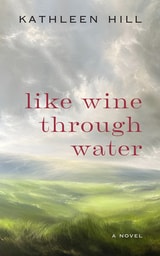
Like Wine Through Water
A NovelKathleen Hill
Northwestern University Press, 2027
A pivotal summer in the life of Maria Branwell, the mother of the Brontë sisters
In imagined diary entries from the summer of 1812, twenty-nine-year-old Maria Branwell is pondering a momentous choice. Far from her Cornish home, working with her aunt and uncle at their Methodist boys’ school on the moors of Yorkshire, she has just been introduced to the Irish clergyman Patrick Brontë. The two are powerfully drawn to one another, resulting in a proposal Maria accepts wholeheartedly—yet reservations begin to surface. From her earliest years she has felt marked by an uncommon destiny, one she had assumed incompatible with an ordinary life of marriage and children. Does marriage fit into that destiny? Or is there a different path to take? The choice of this woman forgotten by history will alter the course of literature forever.
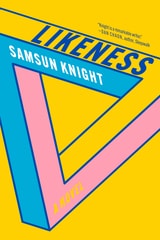
Likeness
Samsun Knight
University of Iowa Press, 2025
On a summer evening in the 1990s, Anne learns that one of her husband’s lovers is expecting his child, only a few weeks after learning that she too is pregnant. He tells her casually, as if it’s just another colorful story about his day. And the tenuous understanding between them—the careful balance of privacy and flexibility that has sustained their open marriage to date—is shattered.
Meanwhile, Sandy, the lover, works to find her own path forward through her surprise pregnancy and all the million tiny miracles and catastrophes that she must now navigate, often entirely on her own. Searching through diaries and grocery lists and seances with the dead, Sandy tries to remember just enough of her original sense of direction to make her own way home.
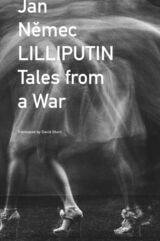
Lilliputin
Tales from a WarJan Nemec
Seagull Books, 2023
A Czech man in Ukraine in search of his alter ego. A gang of homeless kids driven from a cellar by tenants using it as a shelter from the war. A German couple who ‘rented a womb’ in Ukraine, whose child is now stuck in Kyiv. A teenager partnered with a Valkyrie for the distribution of lavash in besieged Mariupol delays his flight until it is too late. A Russian academic mounting a protest in the center of Moscow dressed in a costume from Swan Lake. They may not be soldiers at the front, but for the characters in these stories, life will never again be as it was before the Russian invasion of Ukraine. In this collection of short stories—two set in Ukraine, two in the West, and one in Russia—Czech author Jan Nemec has produced a work of remarkable immediacy.
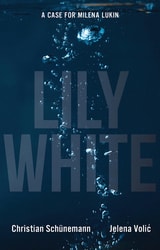
Lily White
Christian Schünemann and Jelena Volic
Haus Publishing, 2021
Jelena Volić and Christian Schünemann’s latest thriller follows a case for criminologist Milena Lukin, the protagonist of their previous novels Cornflower Blue and Peony Red. Set in Belgrade, a city of flux between East and West, Lily White is a complex and riveting new story that once again will take Lukin to the dark heart of Serbia’s past.
Bouquets of white lilies are mysteriously laid in a Belgrade street where, years earlier, a small Romani boy was beaten to death by two youths. One of the attackers was apprehended and imprisoned. The other was allowed to flee and, after twenty-five years on the run, he returns to Belgrade to confront his past. Days later, his corpse is found floating in the Danube River. After a cursory investigation, the police declare it to have been suicide and close the case, but the dead man’s lawyer and the criminologist Milena Lukin begin an investigation of their own. They soon stumble upon a clue that leads them into the darkest recesses of Serbian politics and to the root of a murder that shaped the fate of a country.
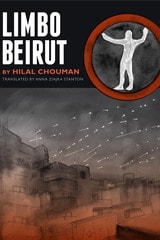
Limbo Beirut
By Hilal Chouman<br>Translated by Anna Ziajka Stanton
University of Texas Press, 2016
In Hilal Chouman’s Limbo Beirut, a gay artist, a struggling novelist, a pregnant woman, a disabled engineering student, a former militia member, and a medical intern all take turns narrating the violent events of May 2008, when Hezbollah militants and Sunni fighters clashed in the streets of Beirut. For most of these young men and women, the Lebanese Civil War (1975–1990) is but a vague recollection, but the brutality of May 2008 serves to reawaken forgotten memories and stir up fears of a revival of sectarian violence. Yet despite these fears, the violence these characters witness helps them to break free from the mundane details of their lives and look at the world anew.
The multiple narrative voices and the dozens of pen-and-ink illustrations that accompany the text allow Chouman to achieve a mesmerizing cinematic quality with this novel that is unique in modern Arabic fiction. Not only will readers appreciate the meaningful exploration of the effects of violence on the psyche, but they will also enjoy discovering how the lives of these characters—almost all of whom are strangers to one another—intersect in surprising ways.
Linda Perdido
A NovelMac Wellman
University of Alabama Press, 2013
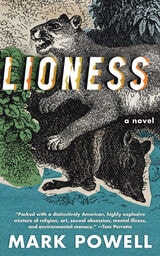
Lioness
A NovelMark Powell
West Virginia University Press, 2022
In the fall of 2018, a bomb goes off at a water-bottling plant in the mountains of southwest Virginia, an incident the FBI declares an act of ecoterrorism. Arrested at the scene is Chris Bright, a mountain hermit with a long history of activism. Unaccounted for—and presumed dead—is Mara Wood, an installation artist who in the last two years has lost her son and left her husband.
But Mara’s estranged husband David cannot quite believe she is dead, and as he goes about reconstructing the story of what happened, he begins to imagine an alternate narrative—one in which their son doesn’t die and his wife doesn’t leave him, one in which his wife doesn’t carry on a secret relationship with Chris Bright, a man bent on fighting back against the environmental despoliation of his Appalachian home. Lioness is a page-turning, heart-wrenching examination of extremism: What pushes people to act violently, and is that violence ever justified?
Lionheart
Thorvald Steen
Seagull Books, 2012
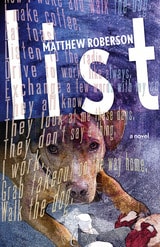
List
A NovelMatthew Roberson
University of Alabama Press, 2014
A suburban family of four—a man, woman, boy, and girl—struggle through claustrophobic days crowded with home improvement projects, conflicts at work and school, a job loss, illnesses, separation, and the wearying confrontation with aging. The accoutrements of modern life—electronic devices and vehicles—have ceased to be tools that support them and have become instead the central fulcrums around which their lives wheel as they chase “cleanliness” and other high virtues of middle American life.
In Matthew Roberson’s hands, the family’s list-making transcends the simple goal of planning. Their lists reveal the aspirations and anxieties that lie beneath the superficial clatter of everyday activities. Fearing the aimless chaos of unplanned days, the family compulsively compiles lists as maps to steer them away from uncertainty and failure, and yet at what point does a list stop being a map and become the final destination? The family creates an illusory cloud of meaningful activity but cannot stave off the mortal entropies that mark the suburban middle class.
Listen & Other Stories
Liam Callanan
Four Way Books, 2015

Listening to Mozart
Charles Wyatt
University of Iowa Press, 1995
With all the drama and complexity of a symphony, Listening to Mozart traces forty years in the life of flutist James Baxter. Many of the stories in this collection—actually a novel in stories—center on or revolve around James' relationship with Anna, a potter and artist. Each story is a separate movement, yet they combine to create a deeply textured whole work. The stories chronicle James' inward journey, as well as his life and loves, with a voice repeatedly transformed through the years.
“Bach Suite” serves as a prologue and deals with the split in consciousness that often accompanies musical performance. The story imitates the musical form it describes and tunes the reader's ear to the innermost thoughts of a musician. Each succeeding story introduces another episode in James' life—his music school days in Philadelphia with his first love, Zoe, his stint in the U.S. Marine Band during the Vietnam War when he meets Anna, his adventures with his friend Franklin, his experiences with the mysterious Dalawa, a trip with Anna to Toronto to immerse themselves in the culture and music of South India. James' friendships, affairs, experiences, and occasional angst resound in each story.
In all the stories, in all his relationships, James finds himself experiencing his life in much the way he experiences music. There is a moment for which he is waiting, yet for which he is never fully prepared, a moment which passes inexorably. Sometimes, in the rare musical experience, he is able to penetrate that moment and allow time to fall away. These moments are the signposts of his life, like the movements of the Bach suite, but unbidden, and they give him his only perspective and vision.
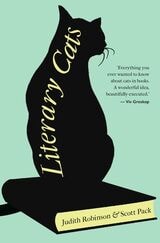
Literary Cats
Judith Robinson and Scott Pack
Bodleian Library Publishing, 2022
From Puss in Boots to T. S. Eliot’s Jellicles, cats have long inspired an incredible range of fiction, memoir, and poetry. This book celebrates the connections between our favorite feline friends and the literary imagination, diving into ancient myths and fables, much-loved children’s books, classic literature, and contemporary novels.
Featuring famous fictional characters such as Lewis Carroll’s Cheshire Cat, Beatrice Potter’s Tom Kitten, and Edgar Allan Poe’s Pluto, Literary Cats explores the role of felines across literary genres. This light-hearted history also uncovers their domestication, early cultural beginnings, and religious associations. The collection also reveals the history of several real-life cats such as Bob, the famous London street cat, as well as cats belonging to authors Ernest Hemingway, Patricia Highsmith, Muriel Spark, and more. A section on cats in world literature introduces narrator cats and cat companions from Japan, Eastern Europe, France, Greece, Germany, and Finland, demonstrating their enduring worldwide appeal.
Literary Identification from Charlotte Brontë to Tsitsi Dangarembga
Laura Green
The Ohio State University Press, 2012

Literature and Human Equality
Stewart Justman
Northwestern University Press, 2006
Only when influenced by the principle of equality does a narrative deliberately deny readers knowledge beyond those they are reading about--privileged knowledge. This book argues that such a turn, in the hands of masters of the novel, changed narrative itself into an exploration of the limits of knowledge; that the portrayal of persons unknown to history transformed the novel into an investigation of the unknown. If the novel is the literary form of limited knowledge, the fullest expression of that form is found in the great fictional experiments of the nineteenth century, the age when the social question--the question of human equality--broke upon the world. Justman looks into some of those experiments for their own sake, but also for the light they cast on the nature and history of the novel. Focusing on Great Expectations, War and Peace, The Death of Ivan Ilych, and The Brothers Karamazov, Justman explores what happens when we, as readers, are denied knowledge not only for the sake of suspense, but because ignorance belongs to what we have in common, the human condition.
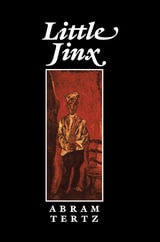
Little Jinx
Abram Tertz
Northwestern University Press, 1992
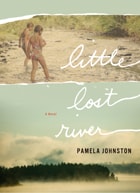
Little Lost River
A NovelPamela Johnston
University of Nevada Press, 2008
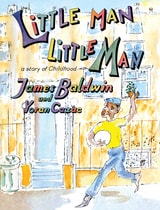
Little Man, Little Man
A Story of ChildhoodJames Baldwin
Duke University Press, 1976
Now available for the first time in forty years, this new edition of Little Man, Little Man—which retains the charming original illustrations by French artist Yoran Cazac—includes a foreword by Baldwin’s nephew Tejan "TJ" Karefa-Smart and an afterword by his niece Aisha Karefa-Smart, with an introduction by two Baldwin scholars. In it we not only see life in 1970s Harlem from a black child’s perspective, but we also gain a fuller appreciation of the genius of one of America’s greatest writers.
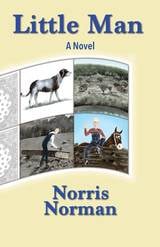
Little Man
A NovelNorris Norman
Parkhurst Brothers, Inc., 2017
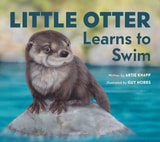
Little Otter Learns To Swim
Artie Knapp
Ohio University Press, 2018
Little Red Riding Hood in the Red Light District
Manlio Argueta
Northwestern University Press, 1998
Little Reef and Other Stories
Michael Carroll
University of Wisconsin Press, 2014
Winner, Sue Kaufman Prize for First Fiction, American Academy of Arts and Letters
Finalist, Gay Fiction, Lambda Literary Award
Finalist, Edmund White Award for Debut Fiction, Publishing Triangle
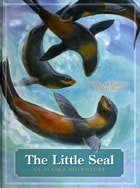
Little Seal
An Alaska AdventureWritten and Illustrated by Ram Papish
University of Alaska Press, 2009
The northern fur seal spends most of its life in the open ocean of the North Pacific, from California up through Alaska and down to Japan. These seals travel hundreds of miles, farther than any other seal or sea lion, to reach their remote breeding grounds. Most fur seals go to the Pribilof Islands of Alaska, where, historically, several million fur seals converged annually, but the population counted in the Pribilofs in 2008 was less than one million and dropping rapidly. Ram Papish’s richly illustrated story follows these magnificent—and increasingly vulnerable—creatures through the most important part of their lives.
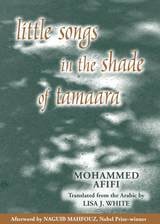
Little Songs in the Shade of Tamaara
Muhammed Afifi
University of Arkansas Press, 2000
Paradise, for the skeptic Mohammed Afifi, was just four steps down from his porch into a sunny garden. There he would sit, morning and evening, in the shadow of Tamaara, his beloved tamarhinna tree, soaking up the sights, sounds, and smells of his precious corner of the natural world. From an old yellow straw chair, Afifi would train his perceptive gaze on that garden in all its detail. Flora and fauna blessed him with honorary membership in their enchanted realm. Only the rare downpours of winter and the dust storms of spring could banish him indoors. Yet, whether inspired at the side of the heater, purring black cat on his lap, or next to the pansy bed, with ecstatic flocks of bee-eaters overhead, Afifi’s intimate, whimsical musings radiate a profound and unique sense of place.
Lisa J. White’s nuanced translation of Taramiim fii Dhill Taraara captures Afifi’s impish, ironic sense of humor and his unsparing honesty. She handles Afifi’s parting gift to the world with great care and honor. Mohammed Afifi died in 1981, in winter, just after completing this fictionalized memoir. Majestic and melancholy, mysterious and magical—the essence of his world, Afifi’s extraordinary garden, is here revealed to the English-speaking world.
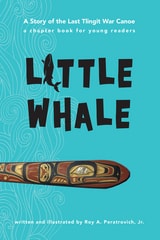
Little Whale
A Story of the Last Tlingit War CanoeRoy A. Peratrovich, Jr.
University of Alaska Press, 2016
And it’s mostly true. Roy Peratrovich here builds a wonderful children’s tale on the bones of a story his own grandfather passed down. His accompanying illustrations bring the people and landscapes of Alaska—to say nothing of the adventures!—to stunning life, drawing young readers into a long-gone time when the whims of nature and man could suddenly test a boy’s courage.
Live and Remember
Valentin Rasputin
Northwestern University Press, 1992
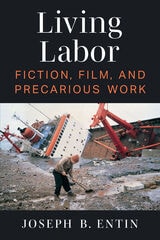
Living Labor
Fiction, Film, and Precarious WorkJoseph B. Entin
University of Michigan Press, 2023
Cover attribution: Allan Sekula, Shipwreck and worker, Istanbul, from TITANIC’s wake, 1998/2000. Courtesy of the Allan Sekula Studio.
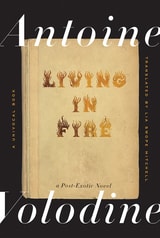
Living in Fire
A Post-Exotic NovelAntoine Volodine
University of Minnesota Press, 2026
A soldier engulfed in napalm suspends his death by composing a family saga in which he learns to live within the flames
Do not remain on the fire’s edge, find your way to the heart of the fire and do not leave. . . . Death does not exist as long as you reject it. A soldier watches an airplane dropping napalm on his position. In the instant before his fiery death, he does not see his life flash before his eyes. Instead, he improvises a novel, one that screams out of him at high speed.
In his story, Sam wanders a postapocalyptic landscape of broken cities and empty steppes for days, years, centuries. Through a series of blackly comic, dreamlike, bizarre scenes, he gleans lessons imparted by the weird and violent members of his family, including sorceress Aunt Yoanna, doomed Uncle Slutov, and two sharp-shooting cousins who try to persuade him to kill their mother. Sam’s clan teaches him how to accept his fate and live in the world of flames with no fear for the future.
The forty-ninth novel in the post-exotic series and the last to appear under the name Antoine Volodine, Living in Fire includes an interview with the writer about this book’s place in his overall project, its literary and cinematic influences, and its thematic connections with other works in the sequence. A triumphant conclusion to an epic experiment, Living in Fire cuts through a world aflame using dark humor, flights of fantasy, and radical acceptance.
Retail e-book files for this title are screen-reader friendly.
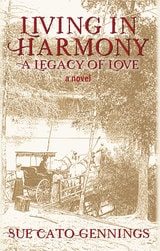
Living in Harmony
A Legacy of LoveSue Cato Gennings
Parkhurst Brothers, Inc., 2017
Sue Cato Gennings’ first novel traces two young immigrant brothers from early adulthood in Tidewater Virginia to successful entrepreneurship in northern Georgia during the late Nineteenth and early Twentieth Centuries. Penniless but energetic, the brothers struggle to refine and realize their dreams of family and business success. Their paths explore themes of family, ambition, honor, and maturation, finding resolutions as distinct as their characters.
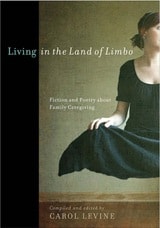
Living in the Land of Limbo
Fiction and Poetry about Family CaregivingCarol Levine
Vanderbilt University Press, 2014
Many of the authors are well-known poets and writers, but others have not been published in mainstream media. They represent a range of cultural backgrounds. Although their works approach caregiving in very different ways, the authors share a commitment to emotional truth, unvarnished by societal ideals of what caregivers should feel and do. These stories and poems paint profoundly moving and revealing portraits of family caregivers.
Lodgers
Nenad Velickovic
Northwestern University Press, 2005
Published as the siege of Sarajevo ended, Lodgers is a hilarious, unsentimental report from the front lines of the Balkan wars of the 1990s. Detergent mixed with flour, museum relics sold to U.N. peacekeepers, the magic power of laminated accreditation-all of the folly and the horror of that time are revealed in the sarcastic report of the novel's teenage would-be authoress.
Maja lives in the basement of a Sarajevo museum, enduring with equal annoyance Serb artillery and vegetarian meals that taste like fried sponge. Her father, the museum director, zealously guards the treasures upstairs while their aged co-lodger Julio plots to trade them away. Maja's mother copes with yoga while dour stepbrother Davor endures the endless crying and cravings of his pregnant wife. Floating amidst it all is Maja's grandmother, blind and deaf, yet drawn to any conversation involving food.
Need and crisis propel Maja and her companions from one humorous situation to another. Yet her pitch-perfect gallows humor makes it clear that the brutalities of war penetrate these small moments of life-and even the self-centeredness of a teenaged girl. A best seller in the Balkans and widely translated in Europe, Lodgers is an uncompromising novel about a modern tragedy.
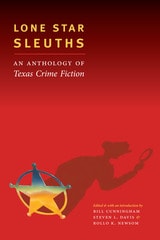
Lone Star Sleuths
An Anthology of Texas Crime FictionEdited and with an introduction by Bill Cunningham, Steven L. Davis, and Rollo K. Newsom
University of Texas Press, 2007
Texas has always staked a large claim on the nation's imagination, and its mystery literature is no exception. Hundreds of crime novels are set within the state, most of which have been published in the last twenty years. From the highest point atop the Guadalupe Mountains in West Texas to the Piney Woods of East Texas, from the High Plains of the Panhandle to the subtropical climate of the lower Rio Grande Valley, mystery writers have covered every aspect of Texas's extraordinarily diverse geography.
The first book to emphasize the wealth of Texas's mystery writers and the images they convey of the state's wide range of regions and cultures, Lone Star Sleuths is a noteworthy introduction not only to the literary genre but also to a sense of Texas as a place in fiction. Celebrating a genre that has expanded to include women and an increasing diversity of cultures, the book features selections from the works of such luminaries as Kinky Friedman and Mary Willis Walker, lesser-known stars in the making, and even some outsiders like Nevada Barr and Carolyn Hart who have succumbed to the allure of the state's weather, geography, and colorful history.
Lone Star Sleuths captures the sense of place that distinguishes much of the great literature set in Texas, and is a must-read for mystery lovers.
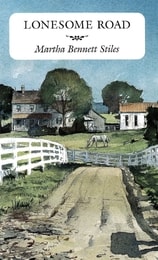
Lonesome Road
Martha Bennett Stiles
Ohio University Press, 1998
Originally published by Gnomon Press in 1998 Lonesome Road is a compelling novel of loss, endurance, and the fragile bonds that hold families together. Set in Kentucky’s famed Bluegrass horse country, Martha Bennett Stiles's story follows Ruth Brough, whose seemingly content life is shattered when her young son disappears without a trace. As hopes for his return fade and tensions strain her marriage, Ruth struggles to navigate grief, uncertainty, and isolation while searching for a way forward. Blending psychological suspense with a richly observed portrait of rural Kentucky life, Lonesome Road explores the impact of tragedy on a family, the complexities of love and loyalty, and the resilience required to confront the unknown. Both an engrossing family drama and an evocative portrait of the Bluegrass region, this novel offers a moving examination of loss, faith, and the enduring search for wholeness.